
 Guards + Retainers
 Custom Night Guard
 Retainer
 Emergency Order

 Whitening
 Whitening Kit
 Teeth Whitening Gel
 Dual-Action Foam
 Cleaning + Care
 Ultrasonic Cleaner Pro
 Water Flosser
 UV Toothbrush Sanitizer
 Deep Clean + Freshening Tablets
 Accessories
 Guard Removal Tool
 Replacement Nozzles
 Bundles

When you search for Mayo Clinic teeth whitening guidance, you're doing something smart, looking for advice rooted in medical expertise rather than marketing hype. The Mayo Clinic is one of the most trusted names in healthcare, and their stance on whitening treatments carries real weight. But finding clear, actionable takeaways from their recommendations can be harder than it should be, especially when you're sorting through conflicting claims from dozens of product brands.
Here's what matters: not every whitening method is safe for every person, and results vary significantly depending on the approach you choose. Professional treatments, over-the-counter strips, and whitening foams all work differently, and understanding those differences helps you protect your enamel while actually getting the shade you want. At Remi, we develop our Teeth Whitening + Night Guard Cleaning Foam alongside dental professionals, so breaking down the science behind safe whitening hits close to home for us.
This article covers what the Mayo Clinic recommends about teeth whitening safety, how different options compare in terms of effectiveness, and what results you can realistically expect. Whether you're considering an in-office procedure or an at-home solution, you'll walk away with the information you need to make a confident choice. We'll also address common risks, ingredient concerns, and who should avoid certain treatments altogether.
Why Mayo Clinic guidance on whitening matters
The Mayo Clinic sits in a different category than most sources you'll encounter when researching whitening treatments. Founded in 1864, it operates as a nonprofit academic medical center with no financial stake in whether you buy a whitening kit or not. That independence matters, because most information about whitening online comes from brands with products to sell. When you find Mayo Clinic teeth whitening guidance, you're reading recommendations shaped by clinical evidence and patient outcomes, not conversion rates.
What sets institutional medical guidance apart
Most whitening advice you'll encounter focuses on results: how many shades brighter your teeth can get, how fast. Medical institutions like the Mayo Clinic take a different approach, starting with safety and risk factors before addressing effectiveness. Their guidance acknowledges that whitening is not a one-size-fits-all treatment. Variables like enamel thickness, existing dental work, and gum health all affect how a person responds to whitening agents, and ignoring those variables can lead to real harm.
The Mayo Clinic notes that teeth whitening is generally safe when used correctly, but side effects like tooth sensitivity and gum irritation are common and worth preparing for before you start any treatment.
The role of peroxide concentration in safety
Whitening products rely on hydrogen peroxide or carbamide peroxide as the active bleaching agent. The Mayo Clinic's guidance draws a clear line between lower-concentration over-the-counter products and the higher-concentration formulas used under dental supervision. Higher peroxide concentrations can speed up results but also raise the risk of sensitivity and soft tissue irritation. This is not a reason to avoid whitening entirely, but it is a reason to match the product strength to your specific dental history and needs.
Dental professionals can apply protective barriers to your gums before using high-concentration treatments, a safeguard you cannot replicate at home with strips or trays. Understanding the peroxide range in any product you use helps you set realistic expectations and reduces the chance of an uncomfortable experience.
Why authoritative health guidance cuts through the noise
You are surrounded by whitening product claims at every turn, on social media, in pharmacies, and through subscription services. The volume of options makes it harder, not easier, to choose wisely. Many products overstate their results or downplay the risks associated with frequent use or high peroxide levels. Relying on guidance from a credentialed medical institution gives you a reliable filter.
Dental health connects directly to your overall health, and decisions about what you apply to your teeth repeatedly over time deserve the same scrutiny you'd apply to any other health product. The Mayo Clinic's framing of whitening as a cosmetic procedure with real clinical considerations is not a warning to avoid it. It is an invitation to approach it with accurate information so you can choose a method that works safely for your specific situation.
How teeth whitening works
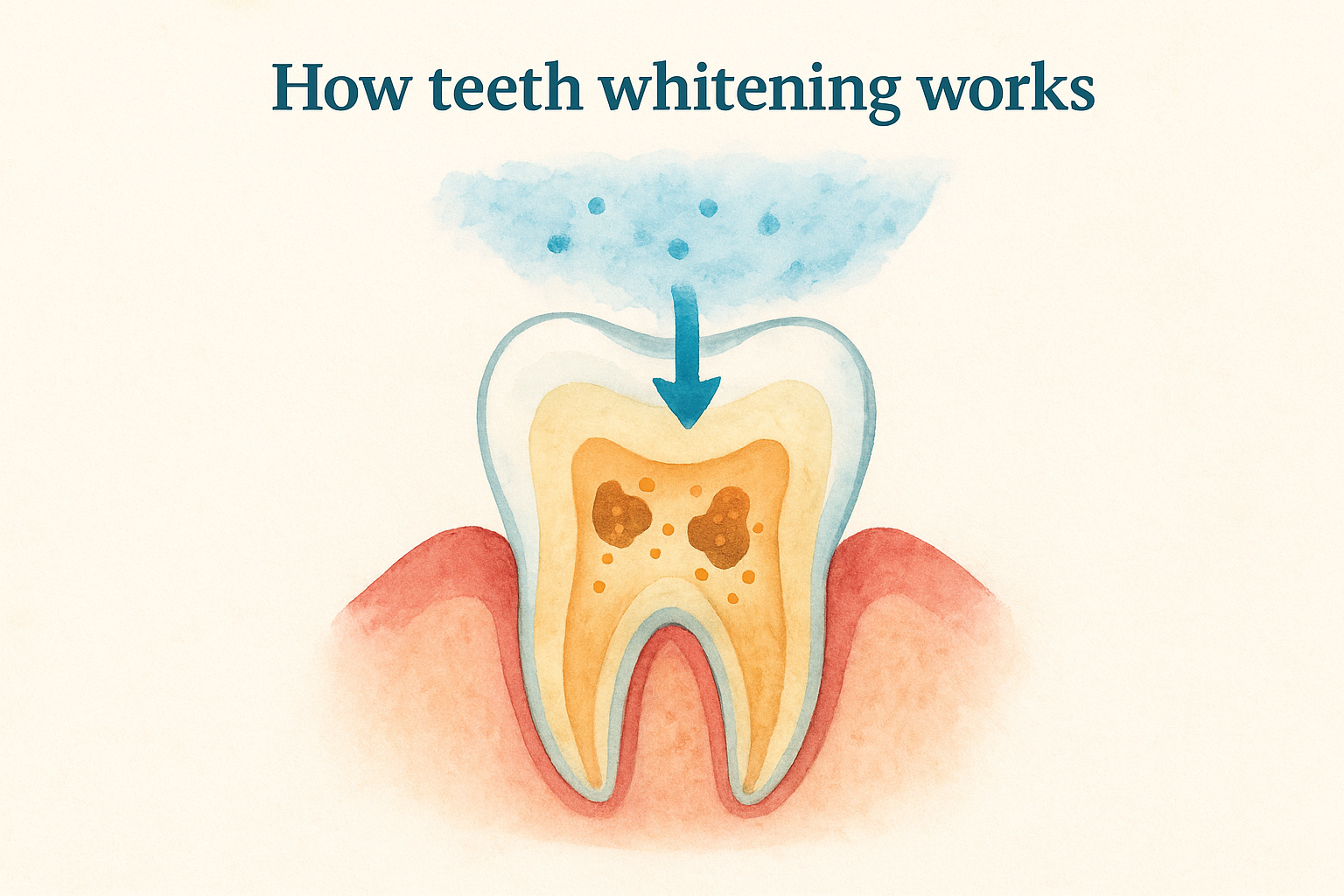
Teeth whitening is a chemical process, not a mechanical one. Whitening agents penetrate the outer layer of your tooth and break apart the compounds responsible for discoloration. Most products on the market, whether you buy them at a pharmacy or get them through your dentist, rely on the same fundamental chemistry to produce results.
The bleaching reaction explained
The active ingredient in nearly every whitening product is either hydrogen peroxide or carbamide peroxide, which breaks down into hydrogen peroxide when it contacts your teeth. Once the peroxide reaches the enamel, it triggers an oxidation reaction that targets the chromogens, the pigmented molecules, sitting inside the tooth structure. These molecules absorb light in ways that make teeth appear yellow or brown, and the oxidation process breaks their chemical bonds, reducing how much color they reflect.
The concentration of peroxide in a product directly determines how aggressive this reaction is, which is why dental supervision becomes more important as the strength of the formula increases.
Carbamide peroxide releases hydrogen peroxide at a slower rate, which is why dentist-supplied take-home trays often use carbamide peroxide formulas, allowing longer contact time with lower moment-to-moment intensity. Hydrogen peroxide products work faster but require more careful application to avoid irritating soft tissue.
Surface stains versus deeper discoloration
Understanding the difference between extrinsic and intrinsic staining helps you set realistic expectations before you start any whitening treatment. Extrinsic stains sit on the outer surface of your enamel and come primarily from foods, drinks like coffee and red wine, and tobacco use. These respond well to most whitening methods because the peroxide can reach them relatively easily.
Intrinsic discoloration originates inside the tooth itself, often from antibiotic exposure during tooth development, trauma, excessive fluoride intake during childhood, or natural aging that thins enamel over time. When you look into mayo clinic teeth whitening guidance, this distinction comes up clearly: bleaching agents are largely ineffective against intrinsic staining, which may require veneers or bonding instead. Knowing which type of discoloration you are dealing with before you invest in a treatment saves you time, money, and potential frustration when results do not match your expectations.
Whitening toothpaste and rinses
Whitening toothpastes and rinses are the most accessible entry points into teeth whitening, and they line pharmacy shelves in overwhelming numbers. Understanding what these products actually do, versus what their packaging implies, helps you decide whether they fit your whitening goals or are better used as maintenance tools after a more effective treatment.
How abrasives and peroxide work in toothpaste
Most whitening toothpastes rely on two mechanisms: mild abrasives that polish away surface stains and low concentrations of hydrogen peroxide that begin the oxidation process. The abrasive component, often silica or baking soda, physically scrubs the enamel surface each time you brush. This works against the fresh, surface-level staining you pick up daily from coffee, tea, and dark foods, but it does very little for deeper discoloration that has built up over years.
When you look at mayo clinic teeth whitening guidance, the takeaway on toothpastes is clear: they can help remove surface stains and maintain results from stronger treatments, but they are not designed to change the underlying shade of your teeth.
Peroxide-based toothpastes contain concentrations far lower than professional-grade or strip-based products, which limits their bleaching effect significantly. Contact time is also a major factor. You brush for two minutes and rinse, which does not give hydrogen peroxide enough time to penetrate enamel and break apart deeper chromogens. For day-to-day stain prevention, these toothpastes serve a real purpose. For meaningful shade changes, they fall short on their own.
What whitening rinses actually do
Whitening rinses work on a similar principle but with an even greater limitation: contact time drops to roughly 60 seconds, twice a day. The hydrogen peroxide concentration in most rinses sits between 1.5% and 2%, and that brief exposure does not generate enough oxidation to shift your tooth shade noticeably. Where rinses add genuine value is in reducing new stain accumulation between more intensive treatments, while also freshening breath at the same time.
Your best approach is to treat whitening toothpastes and rinses as supporting tools rather than standalone solutions. Using them consistently helps slow re-staining after you have addressed the underlying discoloration with a stronger method, whether that is professional whitening, strips, or a dentist-supplied tray system.
Whitening strips, gels, and trays at home
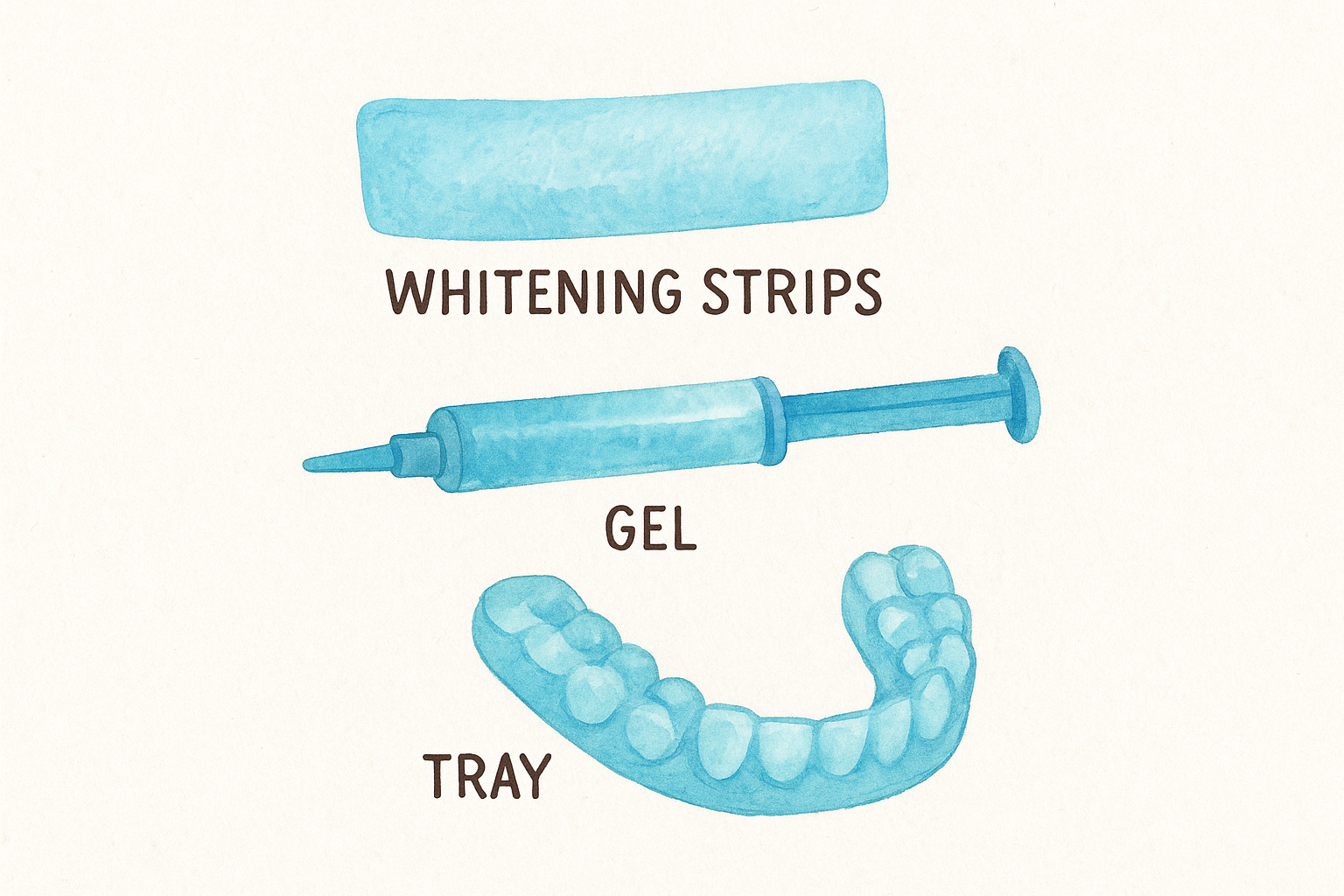
At-home whitening products that use meaningful peroxide concentrations sit in a different category than toothpastes and rinses. Strips, gels, and custom trays actually deliver enough peroxide at sufficient contact time to produce visible shade changes, which is why they are the most popular step-up option for people who want real results without an in-office visit. When you look at mayo clinic teeth whitening guidance, these products land in the middle ground: more effective than daily-use products but carrying a higher risk of sensitivity if used incorrectly.
How strips and gels work
Whitening strips use a thin polyethylene film coated with a peroxide gel that adheres directly to your teeth. Most over-the-counter strips contain hydrogen peroxide in concentrations ranging from 6% to 14%, and you wear them for 30 minutes to an hour once or twice a day. That extended contact time is what separates strips from toothpaste: the peroxide has enough time to penetrate the enamel and break apart stain-causing molecules sitting beneath the surface.
The key variable with strips is consistent application over the full recommended treatment period, usually 10 to 14 days, which is when you start to see cumulative results rather than overnight changes.
Gel syringes work on the same chemistry but give you more control over placement. You apply the gel directly to each tooth, which lets you avoid your gumline more precisely than strips typically allow. This reduces the risk of gum irritation, a common complaint with strips that shift during wear and deposit peroxide onto soft tissue. Both formats require you to avoid food and drinks that stain immediately after each session, while your enamel is temporarily more porous from the treatment.
Dentist-supplied take-home trays
Dentist-supplied take-home trays use custom-molded trays fitted specifically to your teeth and come filled with a carbamide peroxide gel that typically ranges from 10% to 22% concentration. The custom fit keeps the gel in consistent contact with your enamel while reducing how much reaches your gums. This is a meaningful upgrade over one-size strips in both comfort and coverage uniformity.
Carbamide peroxide releases its active hydrogen peroxide slowly, so these trays often involve wearing them for several hours or overnight, depending on the concentration your dentist recommends. Results tend to be more even and longer-lasting than strips because the delivery system is tailored to your actual tooth shape.
Dentist-supervised whitening options
Dentist-supervised whitening sits at the top of the effectiveness ladder, and for good reason. Your dentist controls the peroxide concentration, application method, and treatment duration in ways that no at-home kit can replicate. When you review mayo clinic teeth whitening guidance, professional options are consistently described as producing the fastest and most significant shade changes because the clinical setting allows for higher-strength formulas applied with proper protective measures.
In-office bleaching treatments
In-office bleaching uses hydrogen peroxide concentrations ranging from 25% to 40%, which is dramatically higher than anything available over the counter. Before applying the gel, your dentist places a rubber dam or liquid protective barrier over your gums to shield soft tissue from the high-concentration formula. This protective step is what makes the treatment safe at those strength levels, and it is something you simply cannot do on your own at home.
The combination of high peroxide concentration and professional-grade gum protection is what separates in-office whitening results from what at-home products can realistically achieve.
A single in-office session typically lasts 60 to 90 minutes, with the gel applied in multiple intervals rather than one long continuous application. This approach gives your dentist control over how your teeth respond in real time. If you show signs of sensitivity or uneven absorption, your dentist can adjust the process immediately rather than waiting until after the treatment to identify a problem.
Laser and light-activated whitening
Some dental offices use light or laser activation to accelerate the bleaching reaction after applying the peroxide gel. The light source raises the temperature of the gel slightly, which speeds up the oxidation process and can shorten overall chair time. You may see these marketed under brand names like Zoom, but the underlying chemistry is the same as standard in-office bleaching.
The evidence on whether light activation produces meaningfully better results than peroxide alone is mixed, with some studies showing modest improvements and others finding little difference. What matters more is the peroxide concentration and the fit of the application. Your dentist's skill in applying the gel evenly and protecting your gums consistently contributes more to your outcome than the specific light device used. Ask your dentist which approach fits your tooth sensitivity history and shade goals before committing to a specific in-office method.
Safety, sensitivity, and gum irritation
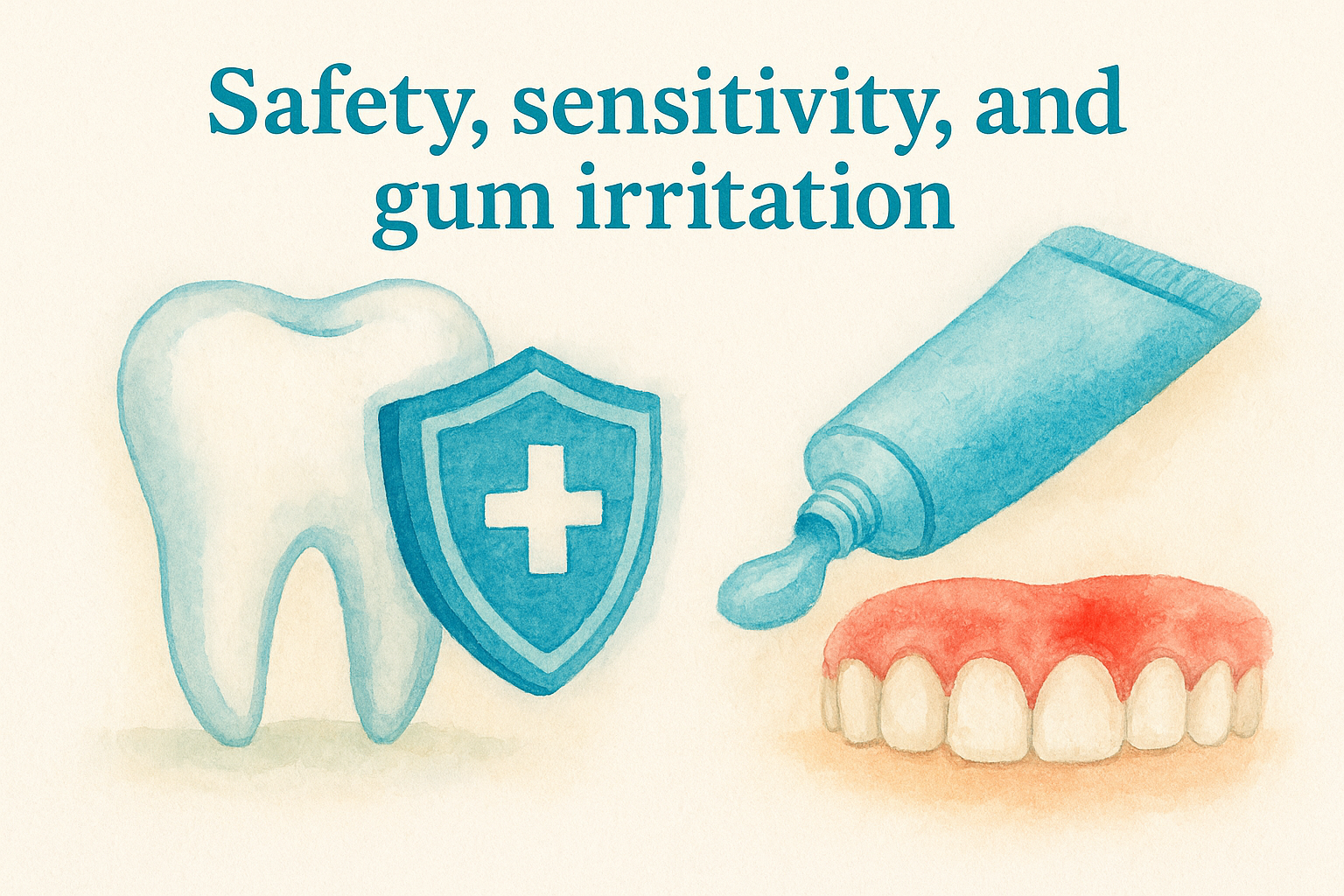
Whitening is considered safe for most healthy adults when you follow product instructions and match the peroxide concentration to your current dental health. That said, side effects are common enough that the mayo clinic teeth whitening guidance treats them as expected rather than exceptional. Sensitivity and gum irritation do not mean something went seriously wrong, but they do signal that your teeth and soft tissue are responding to the bleaching agent, and how you manage that response affects both your comfort and your long-term enamel health.
Tooth sensitivity during and after treatment
Tooth sensitivity is the most frequently reported side effect of whitening, occurring because peroxide temporarily increases the porosity of your enamel, allowing temperature changes and tactile pressure to reach the nerve more easily. You may notice sharp, brief pain when drinking cold water or breathing through your mouth during or after a session. This is a known and predictable reaction, not a sign of permanent damage, and it typically fades within 24 to 48 hours after you stop treatment.
If you already experience sensitivity before starting any whitening treatment, you should talk to your dentist first, because pre-existing sensitivity usually intensifies with peroxide exposure.
Reducing how often you whiten and spacing out treatment sessions gives your enamel time to recover between applications. Switching to a toothpaste formulated for sensitive teeth, which typically contains potassium nitrate or stannous fluoride, can blunt the nerve response when used during your treatment period. Some dentist-supplied tray systems also include a desensitizing gel you apply before or after the bleaching gel for this exact reason.
Gum irritation and how to reduce it
Gum irritation occurs when peroxide contacts soft tissue directly, which happens most often with strips that shift out of position during wear or with trays that carry too much gel and allow overflow onto the gumline. The irritation usually appears as temporary whitening or redness of the gum tissue, and it resolves on its own within a day or two once exposure stops.
You can reduce this risk significantly by applying the minimum amount of gel needed to cover your teeth without excess, wiping away any overflow immediately after seating your tray, and choosing a custom-fitted tray over a universal one whenever possible. The precise fit limits contact between the gel and your gums in a way that stock trays simply cannot match.
When whitening will not work
Whitening is effective for a specific type of discoloration, and recognizing its limits before you start saves you from wasted effort and money. Not all tooth discoloration responds to peroxide, and certain dental conditions, restorations, and medications actively work against the bleaching process regardless of how strong the formula is or how consistently you apply it. Mayo clinic teeth whitening guidance is direct on this point: whitening works on natural tooth enamel affected by extrinsic staining, and it does not work beyond that boundary.
Intrinsic staining and developmental discoloration
Some discoloration originates inside the tooth structure itself, making it unreachable by peroxide bleaching. Tetracycline antibiotics taken during childhood, when teeth are still developing, can cause deep gray or brown banding that sits within the dentin layer. Excessive fluoride exposure during tooth development produces a condition called fluorosis, which shows up as white spots or brownish pitting on the enamel surface. Neither of these conditions responds to standard whitening treatments, because the discoloration is structural rather than surface-based.
If you notice gray undertones rather than yellow discoloration, that is a strong indicator of intrinsic staining, and a dentist should evaluate it before you invest in any whitening product.
Trauma to a tooth can also trigger internal discoloration over time as the pulp tissue breaks down. This type of graying requires a different clinical approach, typically internal bleaching performed by a dentist directly inside the tooth, rather than any external whitening method you would use at home.
Dental restorations and veneers
Crowns, veneers, bonding, and dental implants do not respond to peroxide at all because the materials used in these restorations, porcelain, composite resin, and ceramic, do not contain the chromogens that bleaching agents target. If you whiten your natural teeth while leaving restorations in place, you create a visible mismatch in shade between your treated natural teeth and the unchanged artificial surfaces.
If your front teeth include any restorations, you should discuss your whitening goals with your dentist before starting treatment. Replacing or adjusting restorations to match a new shade is possible but involves additional cost and planning that you need to factor in before committing to a whitening program.
How long results last and how to maintain them
Whitening results do not last forever, and how long they hold depends on the strength of the treatment you chose and your daily habits immediately afterward. In-office professional whitening can preserve visible results for one to three years with consistent maintenance, while at-home strips typically hold for three to six months before re-staining becomes noticeable. Mayo clinic teeth whitening guidance makes clear that lifestyle factors, especially diet and tobacco use, are the primary drivers of how fast your teeth return to their pre-treatment shade.
How quickly teeth re-stain
The first 48 hours after any whitening treatment carry the highest re-staining risk because your enamel is temporarily more porous from the bleaching process, making it easier for pigmented compounds from food and drink to absorb into the tooth structure. Avoiding coffee, tea, red wine, dark sauces, and berries during this window gives your enamel time to remineralize before heavy daily staining resumes.
Treating those first two days as a "white diet" period, focusing on foods and drinks with little to no pigment, is one of the most effective steps you can take right after whitening.
Tobacco use accelerates re-staining faster than almost any dietary habit, because nicotine and tar bind directly to tooth structure in ways that standard peroxide bleaching cannot fully reverse over repeated exposure. Continuing to use tobacco products after whitening essentially cancels out a meaningful share of the results you worked to achieve.
Maintenance strategies that extend your results
Using a whitening toothpaste consistently after your initial treatment removes daily surface stains before they accumulate and shift your shade noticeably backward. Combining that with a whitening rinse builds a practical daily defense against the staining that comes from normal eating and drinking habits without requiring any additional treatment sessions.
Scheduling touch-up treatments every six to twelve months keeps your baseline shade from drifting too far between full whitening cycles. If you used dentist-supplied take-home trays initially, you can typically reuse those trays with fresh gel your dentist provides, which makes maintenance straightforward and cost-effective. Routine dental cleanings every six months also remove surface buildup and tartar that dull enamel between sessions, giving your maintenance routine a strong professional foundation.
Key takeaways
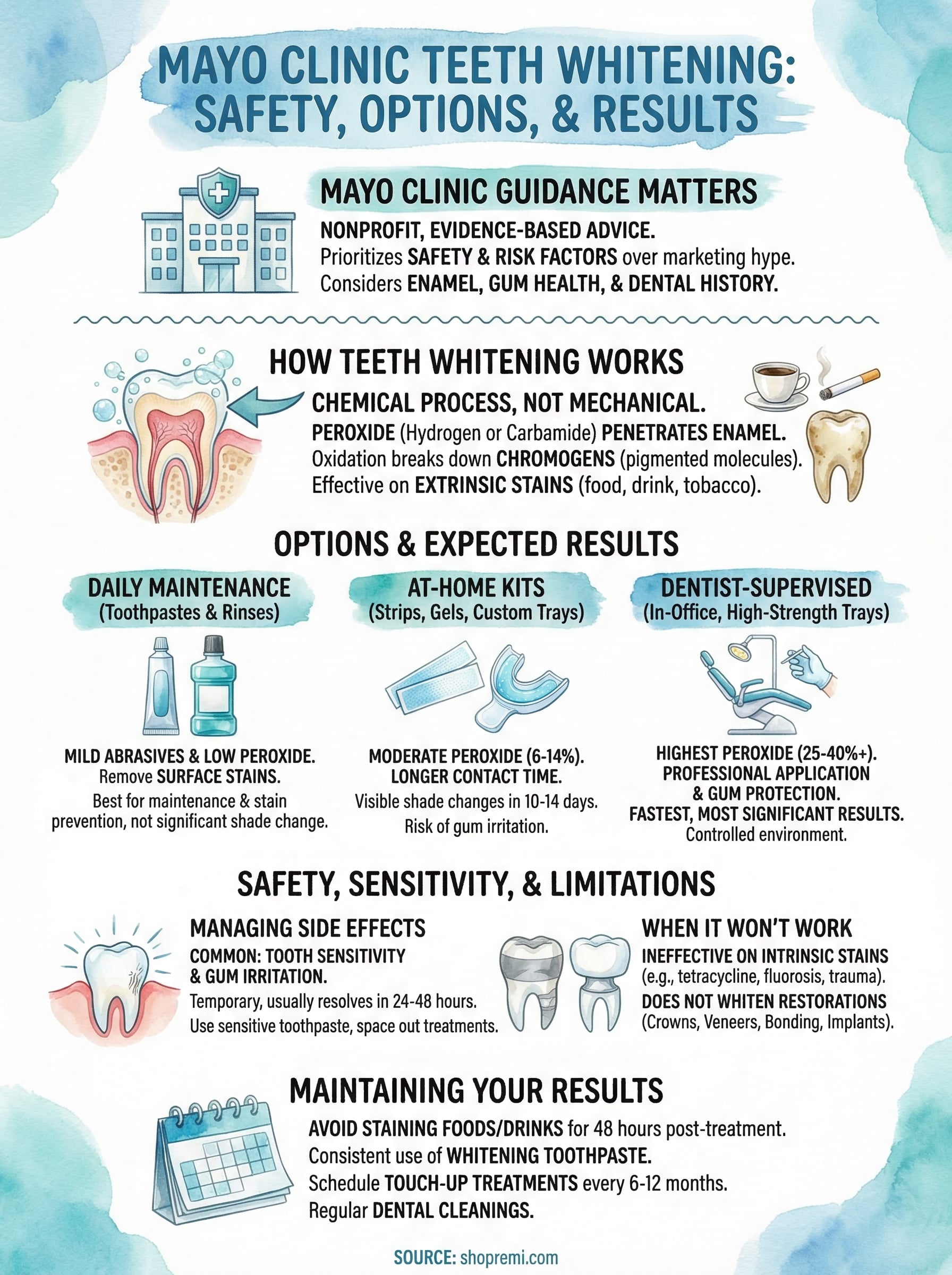
Mayo clinic teeth whitening guidance comes down to one consistent principle: match the treatment to your specific dental situation, and do not skip the safety steps. Whitening works well on extrinsic, surface-level staining caused by food, drink, and tobacco, but it cannot fix intrinsic discoloration, and it does nothing for crowns or veneers. The peroxide concentration in any product you choose determines both how fast you see results and how much sensitivity risk you take on.
Your daily habits after whitening matter just as much as the treatment itself. Avoiding heavy staining foods and drinks for the first 48 hours, using a whitening toothpaste consistently, and scheduling touch-up sessions every six to twelve months all extend how long your results hold. Protecting your teeth does not stop at whitening. If you grind at night, you are wearing down that enamel faster than any stain. A custom night guard keeps that work from going to waste.

