
 Guards + Retainers
 Custom Night Guard
 Retainer
 Emergency Order

 Whitening
 Whitening Kit
 Teeth Whitening Gel
 Dual-Action Foam
 Cleaning + Care
 Ultrasonic Cleaner Pro
 Water Flosser
 UV Toothbrush Sanitizer
 Deep Clean + Freshening Tablets
 Accessories
 Guard Removal Tool
 Replacement Nozzles
 Bundles

Quip made a name for itself with sleek electric toothbrushes, and now the brand has moved into quip teeth whitening with a pair of dissolvable strip formulas. If you've been eyeing these strips but aren't sure which option actually fits your routine, or whether they're worth it at all, you're in the right place.
Quip currently offers two whitening strip products: Rapid and Ritual. They differ in active ingredients, wear time, and intended use case. One is built for speed, the other for gradual, everyday maintenance. Understanding those differences matters before you spend your money, especially since whitening results vary depending on the product's formulation and how consistently you use it.
At Remi, we know a thing or two about oral care routines. Our custom night guards and teeth whitening foam are designed to work together, so whitening is something our customers ask us about constantly. That's why we put together this breakdown, to give you a clear, honest look at both Quip strips so you can decide what belongs in your routine and what doesn't.
What Quip teeth whitening is and how it works
Quip teeth whitening uses a dissolvable strip format that sets it apart from most whitening products on the market. Rather than peeling off a gel-covered strip after 30 minutes, you place a thin strip on your teeth and it dissolves completely during the wear period. No removal step, no leftover residue, and no sticky gel sliding onto your gums. The brand positions this as a cleaner, lower-effort approach to at-home whitening.
The dissolvable strip format
Quip's strips are made from a water-soluble film that breaks down as saliva contacts the material. You press the strip against your teeth, and it adheres long enough for the active ingredients to work before fully dissolving. This delivery method is convenient, but it also means the contact time is fixed by the strip's design rather than something you can extend. Once the strip dissolves, the whitening action stops.
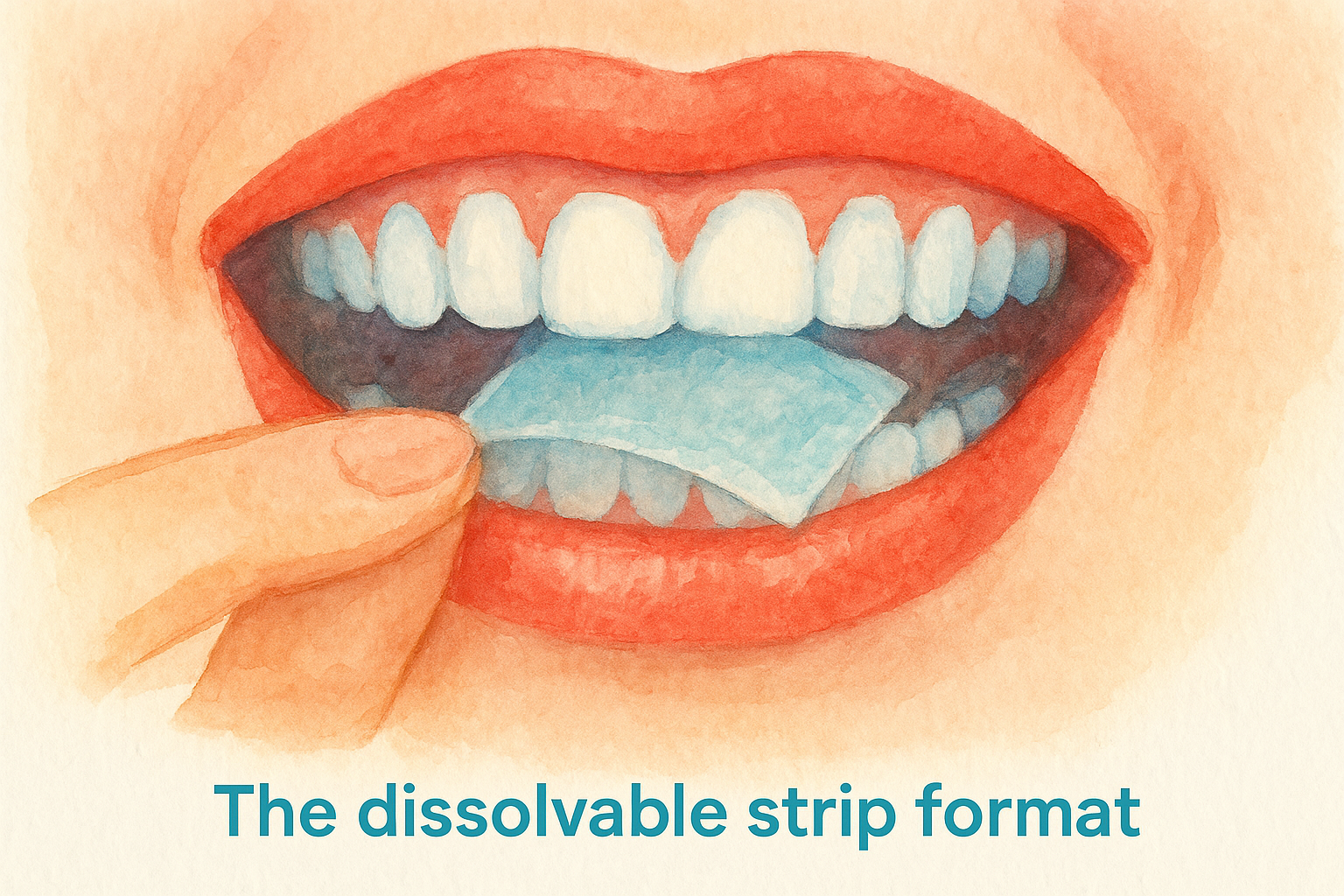
The format also reduces the chance of product migration. With traditional gel strips, whitening agents can shift onto soft tissue and cause irritation. Because Quip's film stays put while it dissolves, you get more targeted application along the tooth surface. That said, placement still matters, and sloppy application can leave gaps where the strip never contacts enamel at all.
How peroxide breaks down stains
Both Quip formulas use hydrogen peroxide as the active whitening agent. Hydrogen peroxide is an oxidizing compound that penetrates the outer layer of enamel and breaks apart the molecular bonds holding chromogens in place. Chromogens are the colored compounds found in coffee, tea, red wine, and similar foods and drinks. Once those bonds break, the stain becomes colorless or significantly lighter.
Hydrogen peroxide whitens teeth by oxidizing the stain molecules themselves, not by scrubbing or abrading the enamel surface.
The concentration of hydrogen peroxide in each formula directly affects how fast and how dramatically your teeth whiten. Higher concentrations produce faster results but also increase the chance of temporary tooth sensitivity, particularly in people who already have thin enamel or exposed root surfaces. Lower concentrations work more gradually, which tends to be gentler but requires more consistent use to see visible change.
What the strips do not do
Whitening strips of any kind, including Quip's, work only on natural tooth enamel. They have no effect on crowns, veneers, bonding, or fillings. If you have restorations on visible front teeth, whitening strips may create a color mismatch because the surrounding natural teeth lighten while the restorations stay the same shade.
Strips also cannot address every stain type equally. Surface stains from food and drink respond well to peroxide-based whitening. Intrinsic stains, which form inside the tooth from factors like certain antibiotics or fluorosis, are much harder to treat with over-the-counter products and often require professional intervention. Understanding this distinction helps you set realistic expectations before you start any whitening routine. If your discoloration comes from something internal, no strip on the market will fully resolve it regardless of the brand or formula you choose.
Rapid vs. Ritual strips: the differences that matter
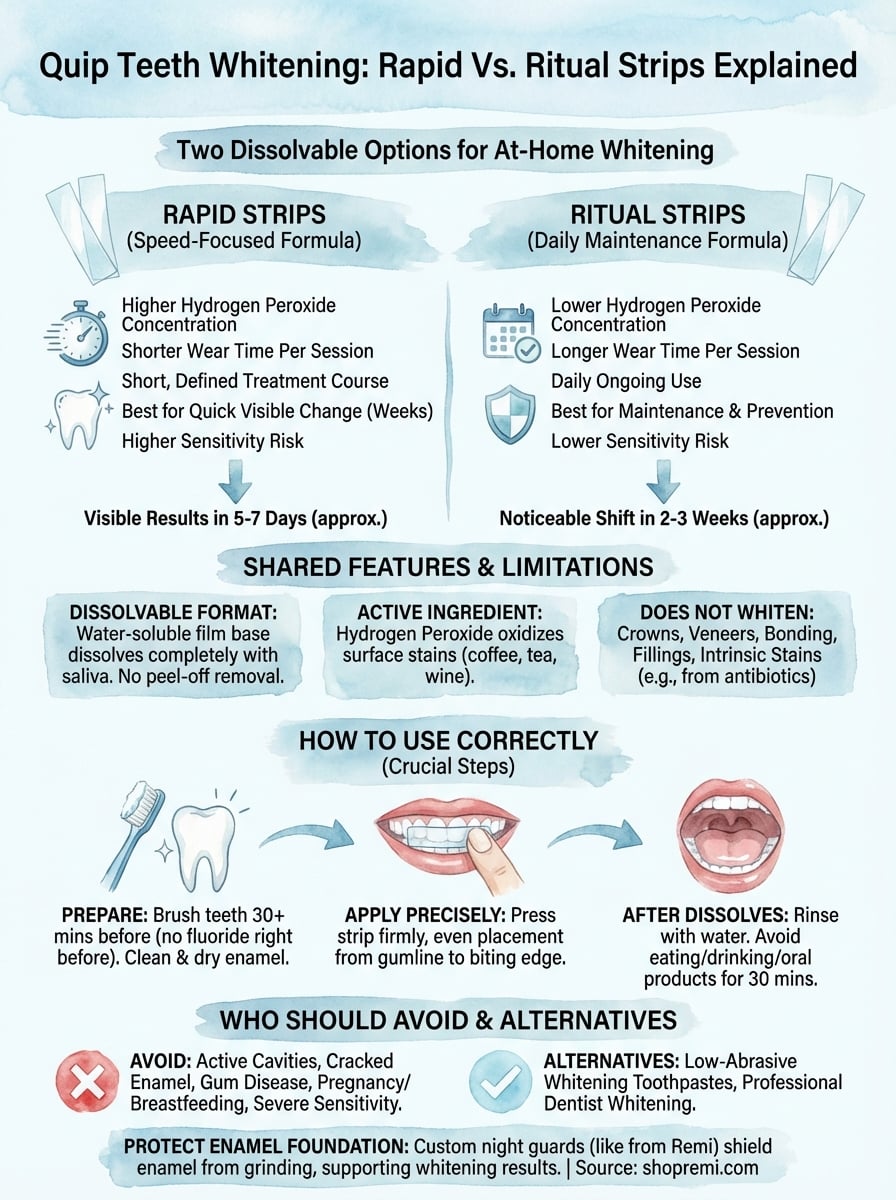
Choosing between these two quip teeth whitening options comes down to one core question: do you need a fast result or a consistent long-term routine? Both strips use the same dissolvable film technology, but the formulas, wear times, and intended use frequencies differ enough that picking the wrong one can mean slower results, unnecessary sensitivity, or money spent on a product your schedule won't support.
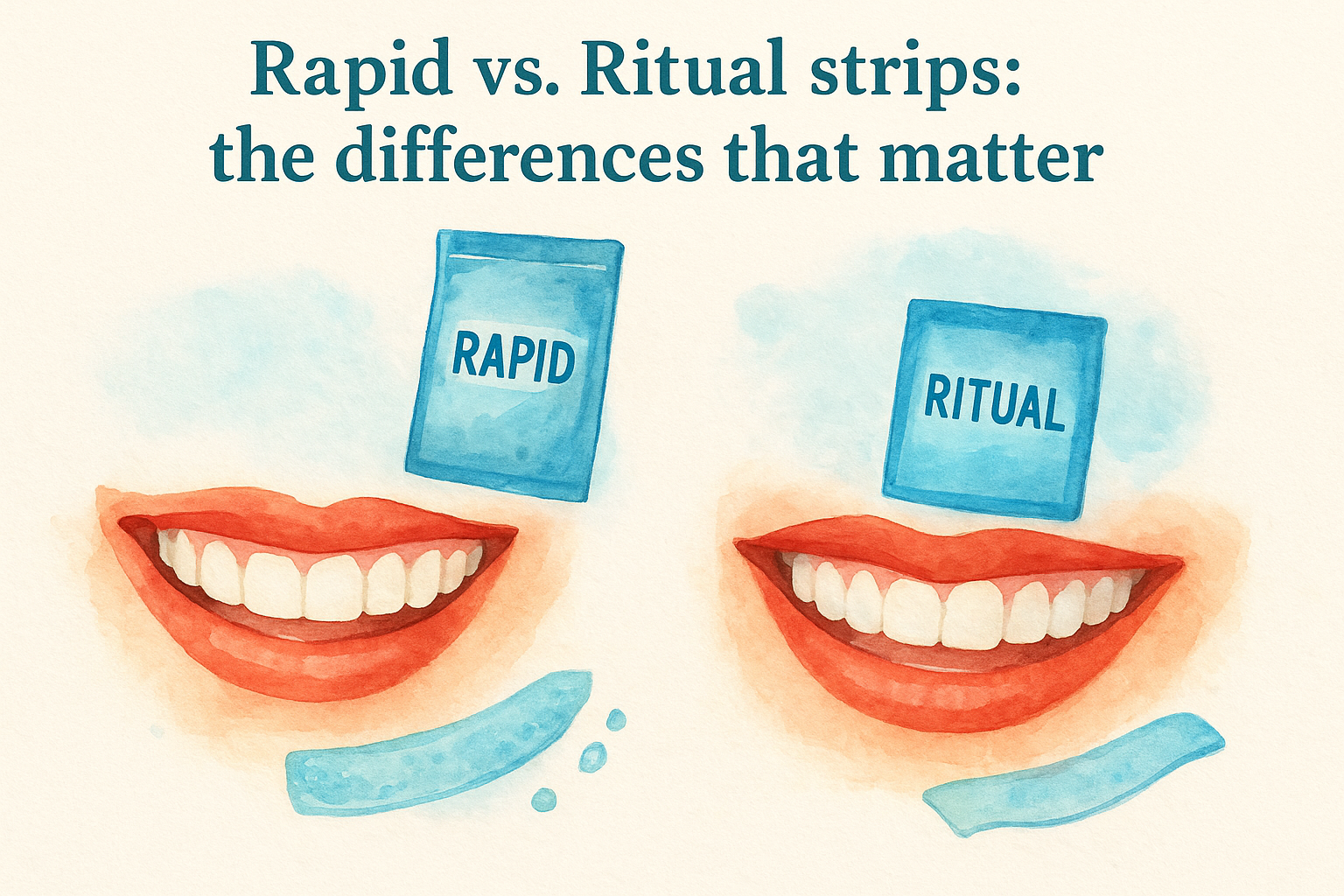
| Feature | Rapid | Ritual |
|---|---|---|
| Peroxide concentration | Higher | Lower |
| Wear time per session | Shorter | Longer |
| Frequency | Short treatment course | Daily ongoing use |
| Best for | Quick visible change | Maintenance and prevention |
Rapid strips: the speed-focused formula
Rapid strips use a higher hydrogen peroxide concentration and deliver visible whitening within a condensed treatment window. You use them over a defined period rather than daily indefinitely. This makes the Rapid formula a practical choice if you have an event coming up or want a noticeable shade change within a week or two of starting.
The trade-off is sensitivity. A higher peroxide load increases the chance of temporary tooth and gum discomfort, especially if your enamel is already thin or you have exposed root surfaces. Rapid strips are a treatment course you complete and then reassess, not something you layer into your routine every single morning without pause.
Ritual strips: the daily maintenance formula
Ritual strips carry a lower peroxide concentration and are built for ongoing, consistent use. The approach is gradual: regular oxidation keeps surface stains from building up over time rather than reversing heavy discoloration all at once. If you drink coffee or tea every day, this format helps you stay ahead of new staining rather than waiting until the buildup becomes obvious.
Ritual strips work best as a preventive tool, not a correction strategy for teeth that are already heavily stained.
Because the active ingredient load is lower, Ritual strips carry less sensitivity risk over extended use. You can fold them into your daily routine more comfortably than the Rapid formula allows. The short-term results are subtler, but your overall tooth tone stays more consistent across weeks compared to cycling through intense treatment courses.
Ingredients, sensitivity, and enamel safety basics
Both quip teeth whitening formulas list hydrogen peroxide as the primary active ingredient. Beyond that, dissolvable strips typically contain a water-soluble film base, which is what holds the strip together until saliva breaks it down. You'll also find humectants and stabilizers in the formula that keep the peroxide active during shelf storage and help the strip adhere evenly to your enamel before it dissolves.
What the label tells you and what it doesn't
The ingredient label on whitening strips gives you the active concentration, but it rarely explains how that percentage behaves against your specific enamel condition. Hydrogen peroxide at 6% or above is generally considered a higher-strength over-the-counter formulation and works faster than lower concentrations. Ritual strips stay below that range, which is why they carry less short-term sensitivity risk. Rapid strips push closer to or above that threshold, which speeds up stain breakdown but also increases oxidative exposure to the surrounding tissue.
Checking the percentage before you buy matters, especially if you've had sensitivity issues with whitening products in the past. A product marketed as "gentle" can still cause discomfort if your enamel is compromised.
Sensitivity: what causes it and how to manage it
Sensitivity during whitening happens because hydrogen peroxide can temporarily penetrate enamel and reach the dentin layer underneath. Dentin contains microscopic tubules connected to the tooth's nerve. When peroxide contacts those tubules, some people feel sharp twinges or a general aching sensation, usually during the treatment and for a few hours afterward.
Sensitivity from whitening strips is almost always temporary, but it signals that you should reduce frequency or switch to a lower-concentration formula if it becomes uncomfortable.
You can manage sensitivity by using a desensitizing toothpaste with potassium nitrate or stannous fluoride in the days before and after a whitening session. Spacing out your sessions also helps because it gives your enamel time to remineralize between exposures.
Enamel safety over time
Repeated peroxide exposure does not permanently damage healthy enamel when you follow the product's recommended usage guidelines. The risk increases if you use whitening products far more frequently than the label instructs or combine multiple high-concentration products at the same time. Sticking to one product at the correct frequency keeps your enamel mineral content stable and avoids cumulative over-exposure.
How to use Quip dissolvable strips correctly
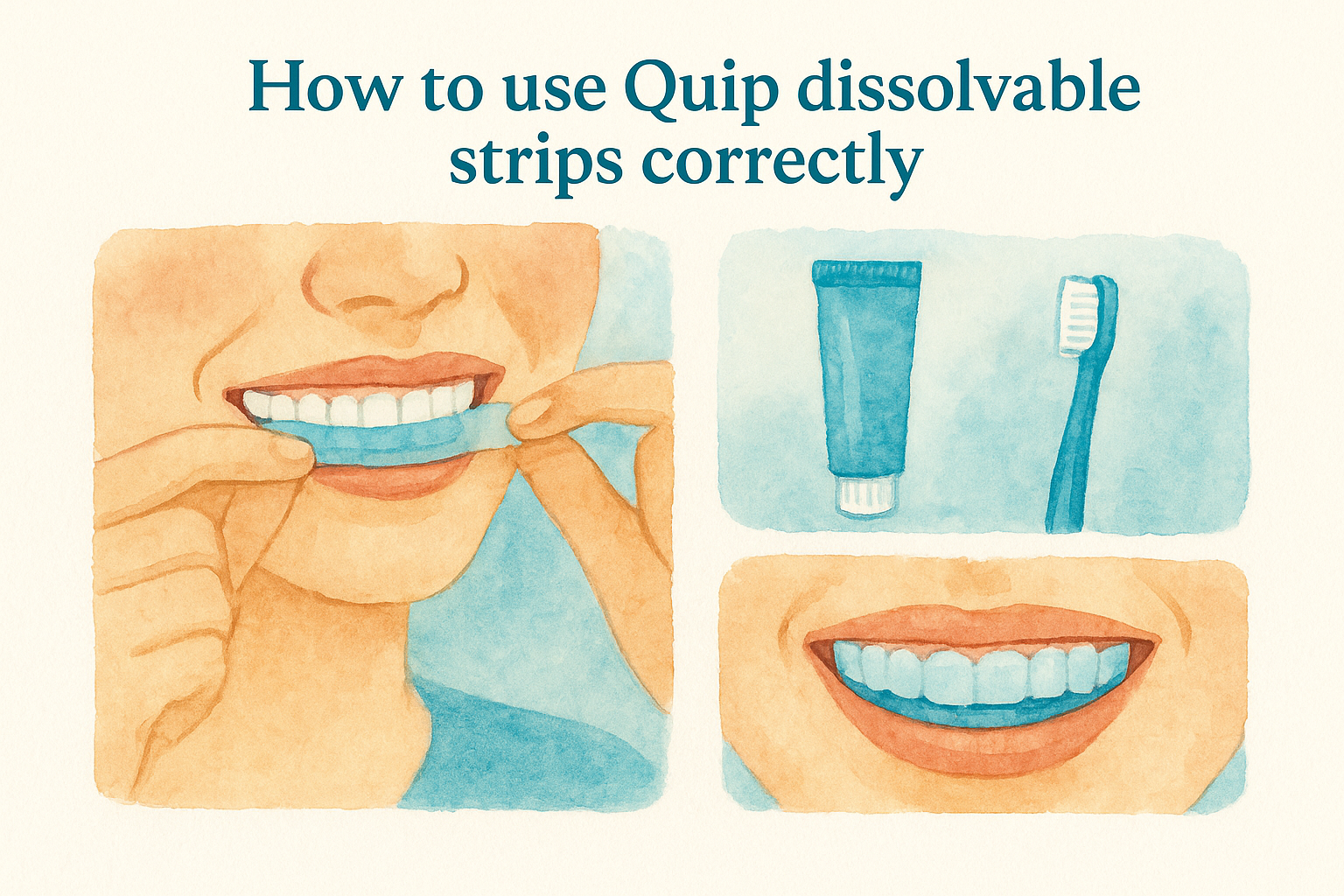
Using quip teeth whitening strips correctly makes a bigger difference than most people expect. The dissolvable format is straightforward, but a few preparation and timing habits determine whether the active ingredients reach your enamel the way they're supposed to.
Prepare your mouth before applying
Your teeth need to be clean and dry before you place a strip. Brush your teeth at least 30 minutes before applying, and avoid using a fluoride toothpaste immediately beforehand because fluoride can create a temporary barrier that slows peroxide absorption. If you rinse with mouthwash, do it before brushing rather than right before you apply the strip. Pat your teeth lightly with a tissue if you want the strip to adhere well from the moment it makes contact.
Clean, dry enamel gives hydrogen peroxide the clearest possible path to surface stains.
Apply the strip with precision
Even placement across the full tooth surface is what separates effective whitening from patchy results. Press the strip firmly against your front teeth, starting at the gumline and smoothing it down toward the biting edge. Make sure the strip contacts the entire face of each tooth rather than bridging gaps between teeth without actually touching the enamel. A strip that sits unevenly will dissolve before it reaches certain areas, leaving those spots untreated.
Work with the top arch first, pressing firmly for a few seconds, then repeat for the bottom arch. Once both strips are in place, keep your mouth slightly open to allow airflow and avoid pressing the strips flat against the inside of your lips, which can cause minor soft tissue irritation as the peroxide activates.
What to do after the strip dissolves
Once the strip fully dissolves, rinse your mouth with water to clear any remaining residue. Avoid eating, drinking anything other than water, or using other oral care products for at least 30 minutes after the session. This gives the peroxide time to finish its oxidation cycle without interference from food acids or competing compounds in toothpaste and mouthwash.
Stick to your product's recommended session frequency rather than doubling up to accelerate results. More daily applications do not proportionally speed up whitening, and they raise your sensitivity risk without delivering meaningful extra benefit.
Results timeline, stain types, and upkeep plan
Most people want to know one thing before they commit to any whitening product: when will they actually see a difference? With quip teeth whitening strips, the honest answer depends on which formula you're using, how consistently you apply it, and what kind of staining you're working against. Setting realistic expectations from the start keeps you from quitting too early or pushing too hard.
When results typically appear
With Rapid strips, most users notice a visible shade change within five to seven days of starting a treatment course, assuming daily use as directed. The change is more dramatic in the first week than it is in subsequent sessions because surface stains are the easiest to oxidize. Results plateau after the initial course, which is why Rapid is designed as a defined treatment period rather than an open-ended routine.
Ritual strips work on a longer curve. You may not see a noticeable shift until two to three weeks of consistent daily use. The gradual pace is intentional because the formula is built to prevent new staining rather than reverse heavy existing discoloration all at once.
If you're not seeing change after three weeks of daily Ritual use, your staining may be intrinsic rather than surface-based, and strips alone won't fully resolve it.
Surface stains versus deeper discoloration
Surface stains from coffee, tea, red wine, and tobacco respond best to peroxide-based strips. These stains sit on or just below the outer enamel surface, so oxidation reaches them without difficulty. Intrinsic stains, which originate from inside the tooth due to factors like antibiotic exposure during tooth development or fluorosis, do not respond reliably to over-the-counter strips. If your discoloration has no clear dietary cause, a dentist can help you identify whether it's intrinsic before you invest further in at-home products.
Keeping your results between treatment courses
Maintenance requires two habits. First, limit your intake of heavily pigmented foods and drinks, or rinse your mouth with water immediately after consuming them. Second, fold a consistent cleaning routine into your schedule. A quality oral hygiene setup, including a night guard cleaner if you wear one, removes the daily film that lets stains take hold before they bond to enamel.
Who should avoid whitening and safer alternatives
Quip teeth whitening strips work well for many people, but they are not appropriate for everyone. Certain dental and health conditions make peroxide-based whitening risky rather than beneficial, and using strips without considering those factors can cause real harm that is harder to fix than the original discoloration.
People with active dental issues
If you have untreated cavities, cracked enamel, or gum disease, whitening strips are not the right starting point. Hydrogen peroxide enters the tooth more aggressively through damaged enamel or exposed root surfaces, which can cause severe pain or nerve irritation rather than the minor temporary sensitivity healthy users experience. Get those issues resolved with your dentist before you add any whitening product to your routine.
Using whitening strips over compromised enamel or active decay can push peroxide directly toward the nerve, turning a cosmetic step into a dental emergency.
Your gums also need to be in good shape before you start. Inflamed or receding gum tissue has less tolerance for oxidative exposure, and even a well-placed strip can cause significant soft tissue irritation when the surrounding gum is already compromised.
Pregnant individuals and those with extreme sensitivity
Pregnant or breastfeeding individuals should avoid whitening strips entirely. There is not enough safety data to confirm that peroxide exposure at these concentrations is risk-free during pregnancy, and the standard recommendation from dental professionals is to postpone elective cosmetic treatments until after breastfeeding ends. It is a straightforward precaution worth following.
People with severe existing sensitivity also fall into the avoid category. If your teeth already ache with cold water or air, a peroxide treatment will likely make that worse, not better. Addressing the underlying sensitivity first with a remineralizing or desensitizing toothpaste is a smarter starting point.
Safer alternatives when strips aren't appropriate
If strips are off the table for you, whitening toothpastes with low-abrasion formulas offer a gentler approach by removing surface stains through mild polishing rather than chemical oxidation. Another option is [a professionally supervised whitening treatment](https://shopremi.com/blogs/night-mouth-guard-blog/teeth-whitening-side-effects), where your dentist controls the concentration and application environment to reduce risk. These routes take longer or cost more, but they fit situations where standard over-the-counter strips create more problems than they solve.
Final takeaways
Quip teeth whitening gives you two clear options: Rapid for a defined treatment course when you need faster visible results, and Ritual for ongoing maintenance that keeps surface stains from accumulating. Neither strip works on intrinsic discoloration, and neither is appropriate if you have active dental issues or compromised enamel. Those facts narrow the decision considerably for most people.
Your whitening results also depend on what else is happening in your mouth. If you grind your teeth at night, you wear down enamel faster than whitening strips can keep up with, which means protecting your enamel is just as important as brightening it. A custom night guard from Remi fits over your teeth precisely, shields your enamel from grinding damage, and costs a fraction of what a dental office charges. Strong enamel is the foundation any whitening routine needs.

