
 Guards + Retainers
 Custom Night Guard
 Retainer
 Emergency Order

 Whitening
 Whitening Kit
 Teeth Whitening Gel
 Dual-Action Foam
 Cleaning + Care
 Ultrasonic Cleaner Pro
 Water Flosser
 UV Toothbrush Sanitizer
 Deep Clean + Freshening Tablets
 Accessories
 Guard Removal Tool
 Replacement Nozzles
 Bundles

If you've ever searched WebMD teeth whitening for straight answers on what actually works, you're not alone. Millions of people turn to WebMD each year hoping to cut through the noise around whitening strips, gels, professional treatments, and everything in between. The problem? Even trusted medical sources can leave you with more questions than answers when it comes to picking the right method for your teeth.
That matters because not every whitening approach is safe for every person, especially if you wear a night guard or retainer. Harsh chemicals and abrasive products can damage custom dental appliances while also irritating your gums and enamel. At Remi, we see this firsthand. Our customers use our teeth whitening foam alongside their custom night guards, so understanding what's safe (and what to skip) is something we take seriously.
This article breaks down the key whitening methods WebMD covers, explains the safety considerations you should know about, and flags the approaches worth avoiding. Whether you're weighing professional treatments against at-home options, you'll walk away with clear, practical guidance to make a confident decision.
Why WebMD teeth whitening advice matters
When you search for health information online, you face a wall of conflicting claims. Brands promise dramatic results, bloggers share personal experiments, and the advice varies wildly from one site to the next. WebMD cuts through much of that noise because its content goes through review by licensed medical and dental professionals, which gives it more weight than the average article you stumble across.
WebMD's role in health decision-making
WebMD sits at the top of many health-related searches because it built its reputation on sourcing information from credentialed dental and medical professionals. When the site covers teeth whitening, the information reflects what dentists actually recommend in clinical practice, not what a supplement company or influencer wants you to buy. That foundation is exactly why so many people treat webmd teeth whitening content as a starting point before making any decisions about their oral health.
Relying on professionally reviewed sources reduces the risk of choosing a whitening method that irritates your gums, damages your enamel, or interacts poorly with dental appliances you already use.
The practical value here is straightforward. You might see a whitening product with a bold claim on the packaging, but WebMD's coverage helps you check those claims against what the dental community actually supports. That kind of verification matters especially when you're choosing between treatments with very different concentrations of active ingredients.
Why not all whitening advice applies to you
General dental advice works for a general audience. The issue is that your mouth is not a general situation. If you wear a night guard or retainer, standard whitening instructions may not account for how certain products interact with those appliances. For example, high-concentration peroxide gels can degrade the material in custom dental guards over time, shortening their lifespan and potentially compromising their fit.
Your enamel condition also shapes which methods are appropriate. People with thin enamel, existing sensitivity, or recent dental work like crowns and veneers need to be more selective. A blanket recommendation to use whitening strips daily might work fine for someone with healthy, unrestored teeth, but it could cause real discomfort if your situation is different.
What this means for your whitening choices
Understanding the source behind any whitening advice tells you how seriously to take it. Professionally reviewed guidance, like what WebMD publishes, helps you spot the difference between marketing claims and evidence-backed recommendations. That doesn't mean every suggestion applies equally to every person, but it gives you a reliable baseline to work from.
Your next step is understanding the actual mechanism behind whitening so you can evaluate each method on its own merits. Knowing how whitening agents interact with your teeth gives you the context you need to compare products, weigh the risks, and match the right approach to your specific situation rather than guessing based on a before-and-after photo.
How teeth whitening works and what it can fix
Teeth whitening relies on a chemical reaction, not physical scrubbing. Most whitening products use hydrogen peroxide or carbamide peroxide as the active ingredient. When you apply these compounds to your teeth, they break down into oxygen molecules that penetrate the enamel and dentin, oxidizing the colored compounds responsible for staining. The result is a lighter appearance as those discolored molecules are broken apart at a molecular level, leaving the tooth structure itself intact.
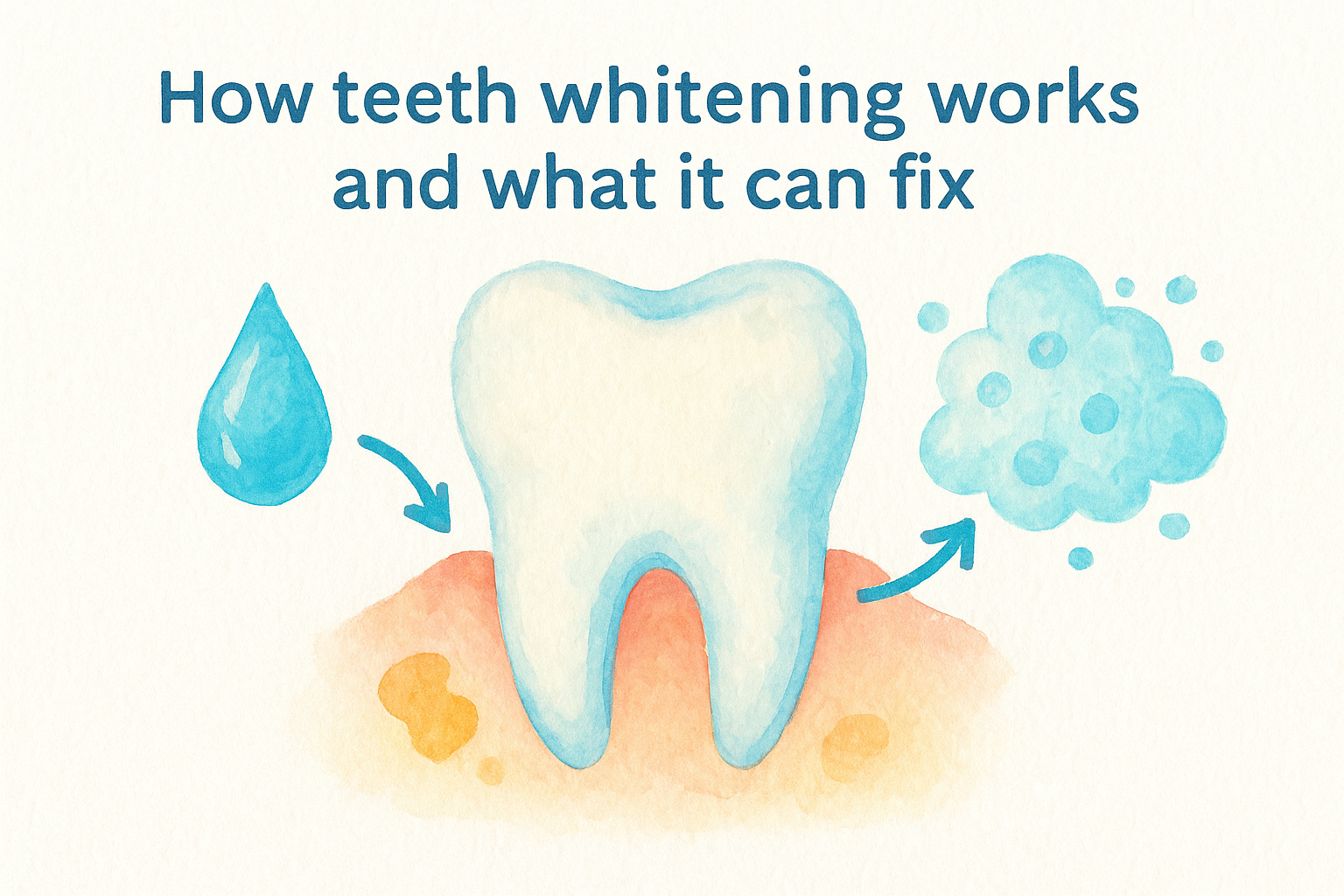
The science behind whitening agents
The concentration of peroxide determines how fast and how much change you'll see. Over-the-counter products typically contain between 3% and 10% hydrogen peroxide, while professional treatments can reach concentrations of 25% to 40%. That gap explains why in-office results tend to be more dramatic and faster than what you get from a whitening strip. WebMD teeth whitening content consistently notes that higher concentrations also increase the risk of tooth sensitivity and gum irritation, which is why professional treatments include protective measures that at-home kits cannot replicate.
Higher peroxide concentration means faster results, but it also raises the risk of sensitivity, especially if your enamel is already thin or compromised.
What whitening can and cannot change
Understanding what whitening actually addresses helps you set realistic expectations before spending money on any product. Extrinsic stains sit on the surface of your enamel and come from coffee, tea, red wine, and tobacco. These respond well to peroxide-based treatments because the active ingredient can reach and oxidize those surface pigments directly.
Intrinsic discoloration is a different story. Staining that originates inside the tooth from antibiotic use during development, excessive fluoride, or physical trauma does not respond to standard whitening products. The same applies to discoloration on crowns, veneers, or bonding material, since peroxide only acts on natural tooth enamel. If your discoloration comes from these sources, whitening products will leave those areas unchanged while lightening your natural teeth, which can create an uneven appearance rather than solving the problem.
At-home whitening options and expected results
At-home whitening products fall into several categories, each with different delivery methods, active ingredient concentrations, and realistic timelines for results. WebMD teeth whitening coverage consistently points out that most consumers overestimate how quickly at-home products work and underestimate the importance of consistent, correct application over several days or weeks.
Whitening strips and gel trays
Whitening strips are the most widely used at-home option. You apply thin, peroxide-coated strips directly to your teeth for a set amount of time, usually between 30 minutes and an hour per session. Most over-the-counter strips contain between 6% and 10% hydrogen peroxide, and you can expect to see a noticeable difference after seven to fourteen days of consistent use. Gel trays work on a similar principle, using a tray filled with peroxide gel that sits over your teeth. Custom-fitted trays from a dentist deliver better coverage than generic boil-and-bite trays because they conform more precisely to your tooth surface, reducing gel waste and gum contact that causes irritation.
Custom-fitted trays distribute the whitening gel more evenly, which means you get more consistent results with less sensitivity than generic tray options.
Whitening toothpastes and foams
Whitening toothpastes work differently from peroxide-based strips and gels. Most rely on mild abrasives or low concentrations of hydrogen peroxide to remove surface stains rather than bleach the underlying tooth structure. That makes them useful for maintenance rather than dramatic shade changes. You can use them to preserve results after a whitening treatment, but do not expect them to shift your shade several levels on their own.
For people who already wear night guards or retainers, a whitening foam designed for dental appliances solves a practical problem. Products like Remi's cleaning and whitening foam let you apply a low-concentration whitening agent to your teeth while simultaneously cleaning your appliance, so you get two tasks done in a single step without adding anything extra to your routine.
Professional whitening options and when to choose them
Professional whitening treatments differ from at-home options in two important ways: the concentration of active ingredients and the level of professional supervision involved. In-office treatments use peroxide concentrations that are not available over the counter, and a trained dentist manages the process to protect your soft tissue from direct chemical contact.
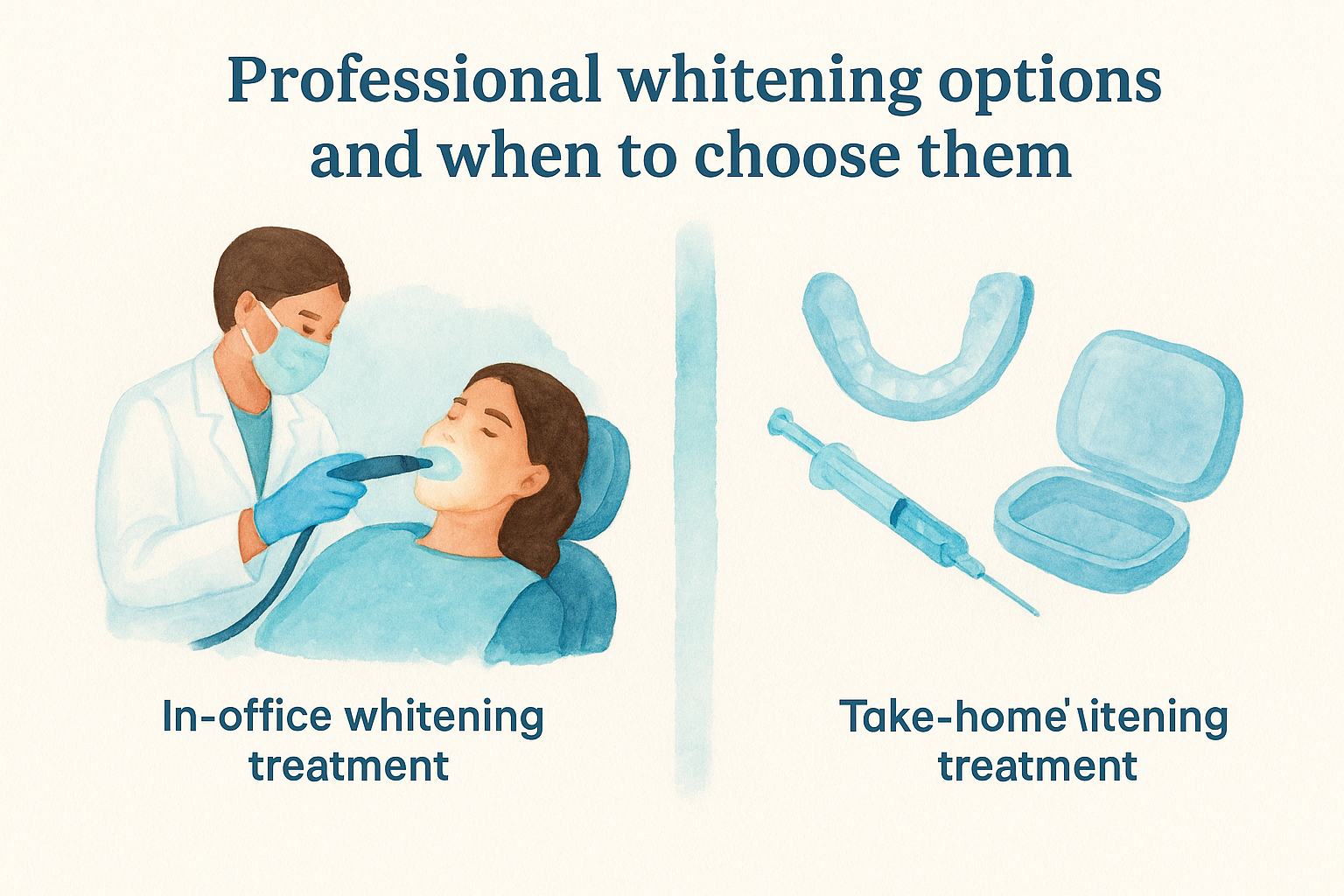
In-office whitening treatments
The most common professional option is chairside bleaching, where your dentist applies a high-concentration hydrogen peroxide gel directly to your teeth, often activating it with a curing light or laser. A single session typically lasts between 60 and 90 minutes and can produce results several shades lighter than what weeks of at-home strips achieve. Your dentist also applies a protective barrier to your gums before treatment begins, which reduces the irritation risk that comes with higher peroxide concentrations.
A single in-office session often delivers more noticeable results than two to three weeks of daily at-home whitening.
Dentist-dispensed take-home kits sit between over-the-counter products and in-office treatments. Your dentist creates custom-fitted trays using impressions of your actual teeth and provides a professional-grade gel, usually around 15% to 20% carbamide peroxide. You apply the treatment at home, but the fit and concentration are significantly better than anything you can buy at a pharmacy.
When professional treatment makes sense
WebMD teeth whitening guidance points to several situations where a professional approach is worth the added cost. If you have significant intrinsic discoloration, a history of tooth sensitivity, or existing dental restorations like crowns and veneers, a dentist can evaluate whether whitening is appropriate and which method minimizes risk for your specific situation.
You should also consider professional treatment if previous at-home attempts produced uneven results or persistent sensitivity. A dentist can identify the underlying cause, whether it is thin enamel, exposed dentin, or an ill-fitting tray, and recommend a treatment path that addresses the actual problem rather than repeating the same approach with different packaging.
Safety, side effects, and what to avoid
Whitening products are broadly safe when you use them correctly, but they carry real risks if you ignore the instructions or push for faster results by applying them more often than recommended. WebMD teeth whitening guidance makes clear that the two most common problems, tooth sensitivity and gum irritation, are largely preventable if you match the product concentration to your current enamel health and follow the usage directions as written.
Common side effects and how to manage them
Tooth sensitivity is the side effect most people encounter, and it usually appears during treatment or within 24 hours of a session. The peroxide temporarily opens the dentine tubules that lead to the nerve of the tooth, which makes hot, cold, and sweet foods uncomfortable for a short period. Reducing the frequency of application or switching to a lower-concentration product typically resolves the issue without abandoning whitening entirely. Using a toothpaste designed for sensitive teeth during your whitening period also helps manage the discomfort.
If sensitivity persists beyond 48 hours after you stop treatment, contact your dentist before continuing any whitening routine.
Gum irritation happens when the whitening agent contacts your soft tissue directly, which is more likely with poorly fitting trays or strips that extend past your gum line. The irritation usually clears up within a few days once you remove the source of contact.
Products and habits to avoid
Activated charcoal products marketed as natural whitening solutions deserve real skepticism. Charcoal is abrasive, and regular use strips enamel over time rather than bleaching the tooth structure. Once enamel is gone, it does not regenerate. Lemon juice and baking soda mixtures fall into the same category: the acid in lemon juice erodes enamel before the mild abrasive of baking soda ever gets to work.
You should also avoid increasing the frequency of any peroxide treatment beyond what the label specifies. More applications do not produce faster results; they produce more sensitivity and greater risk of enamel damage. Stick to the recommended schedule and give your teeth time to recover between sessions.
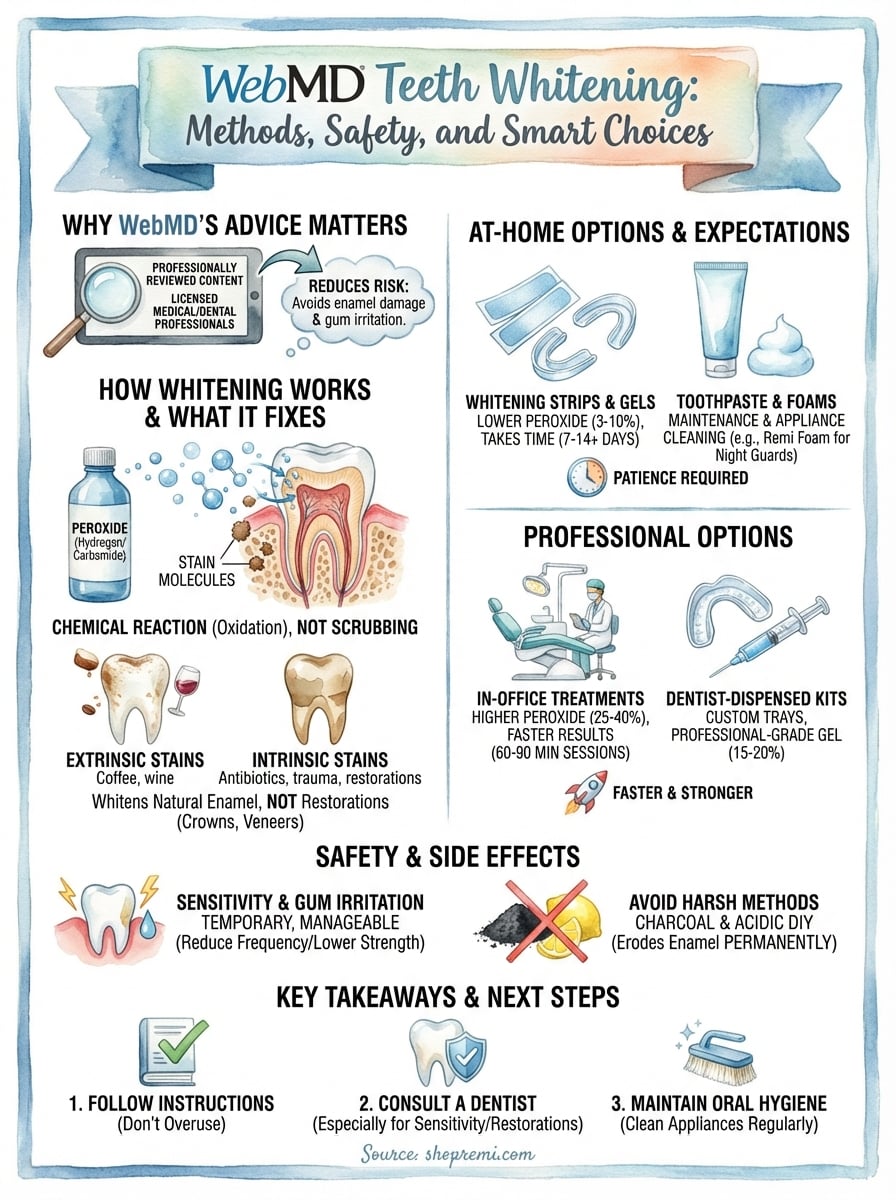
Key takeaways and next steps
Teeth whitening works through a chemical reaction, not abrasion, and matching the right method to your current enamel health determines both your results and your safety. WebMD teeth whitening guidance consistently points back to the same core principle: choose the lowest effective concentration, follow the instructions, and stop if sensitivity persists beyond 48 hours. Avoid charcoal and acidic DIY mixtures entirely since they remove enamel rather than whiten teeth.
Your daily habits after whitening matter just as much as the treatment itself. Maintaining good oral hygiene, cleaning your dental appliances properly, and using a product designed to work alongside your existing routine keeps your results lasting longer. If you wear a night guard or retainer, keeping it clean protects both the appliance and your teeth at the same time. Try Remi's night guard cleaning and teeth whitening foam to simplify your routine without adding extra steps to your day.
