
 Guards + Retainers
 Custom Night Guard
 Retainer
 Emergency Order

 Whitening
 Whitening Kit
 Teeth Whitening Gel
 Dual-Action Foam
 Cleaning + Care
 Ultrasonic Cleaner Pro
 Water Flosser
 UV Toothbrush Sanitizer
 Deep Clean + Freshening Tablets
 Accessories
 Guard Removal Tool
 Replacement Nozzles
 Bundles

If you've been searching for byte teeth whitening products recently, you've likely hit a wall. Byte, the direct-to-consumer clear aligner company that expanded into teeth whitening with its Bright Byte foam and LED kits, suspended operations in 2024, leaving customers scrambling for answers about their orders, subscriptions, and ongoing treatments.
The shutdown created a messy situation for anyone who relied on Byte's whitening products as part of their oral care routine. Does their teeth whitening still work if you already own it? Can you purchase it anywhere? And most importantly, what alternatives exist for people who need effective, affordable whitening solutions?
At Remi, we specialize in custom dental protection products and oral hygiene accessories, including our own Night Guard Cleaning + Teeth Whitening Foam. We've seen firsthand how brand closures in this space affect real people trying to take care of their smiles. This article covers everything you need to know about Byte's current legal status, whether their whitening products are worth seeking out, and what reliable options remain for achieving the results you're after.
What Byte teeth whitening is and what it includes
Byte entered the teeth whitening market by offering two main product lines: the Bright Byte Whitening Foam and various LED-based whitening kits. Both products used peroxide-based formulas designed to break down surface stains on tooth enamel, similar to professional dental whitening treatments but at a fraction of the cost. The company positioned these products as convenient add-ons for customers already using their clear aligners, though anyone could purchase them separately.
The whitening foam quickly became Byte's most popular oral care product outside of aligners. You could use it as a standalone treatment or alongside their LED device for potentially faster results. Byte marketed the foam as gentle enough for daily use while still delivering noticeable whitening within weeks. Their kits, on the other hand, followed the traditional LED whitening model that many direct-to-consumer dental brands adopted during the 2020s.
Bright Byte Whitening Foam
Bright Byte foam contained hydrogen peroxide as its active whitening ingredient, typically at concentrations between 2% and 3%. You dispensed the foam directly onto your teeth or into a tray, let it sit for the recommended time (usually 5 to 10 minutes), then rinsed. The foam format made application easier than gels or strips because it spread evenly across tooth surfaces without the mess.
The product came in mint and other flavor options to mask the peroxide taste. Byte recommended using it once or twice daily for maintenance after you achieved your desired shade, though initial treatments often called for more frequent application. Many users appreciated that the foam doubled as a cleaning agent for clear aligners, which made it practical for people juggling multiple dental products.
"The foam format eliminated the hassle of strips that wouldn't stay put or gels that slid off before the treatment finished."
Byte sold the foam in subscription and one-time purchase options, with bottles typically lasting 30 to 45 days depending on usage frequency. The subscription model offered slight discounts and automatic refills, which worked well until the company suspended operations and left active subscribers without warning or easy cancellation paths.
LED Whitening Kits
Byte's LED kits paired blue light technology with whitening gel to accelerate the bleaching process. You applied the peroxide gel to your teeth, inserted the LED mouthpiece, and let the light activate the gel for 15 to 30 minutes per session. The theory behind LED whitening suggests that light exposure speeds up the chemical reaction that breaks down stains, though research on its effectiveness compared to gel alone remains mixed.
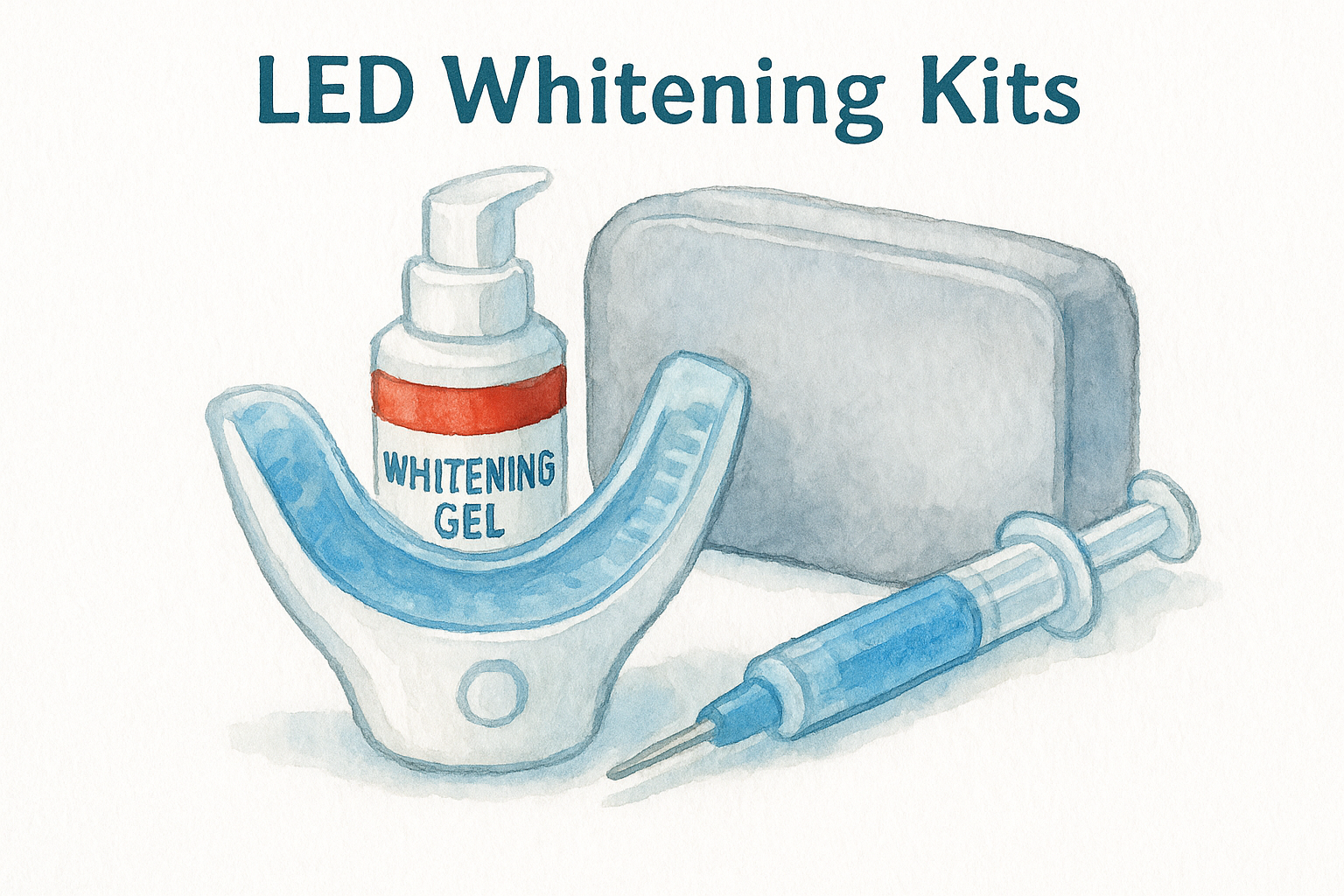
These kits typically included a rechargeable LED device, multiple gel syringes, and sometimes a carrying case. Byte offered different intensity levels depending on tooth sensitivity and how quickly you wanted results. The higher-concentration gels (around 10% to 15% hydrogen peroxide) promised faster whitening but also carried greater risk of sensitivity.
The LED device connected via USB for charging and featured automatic shutoff timers to prevent overuse. Byte positioned these kits as comparable to professional dental office whitening at a lower price point, though dental professionals often pointed out that in-office treatments use significantly higher peroxide concentrations under controlled conditions. The kits worked best for people with mild to moderate surface staining from coffee, tea, or tobacco rather than deep intrinsic discoloration.
What changed after Byte paused operations
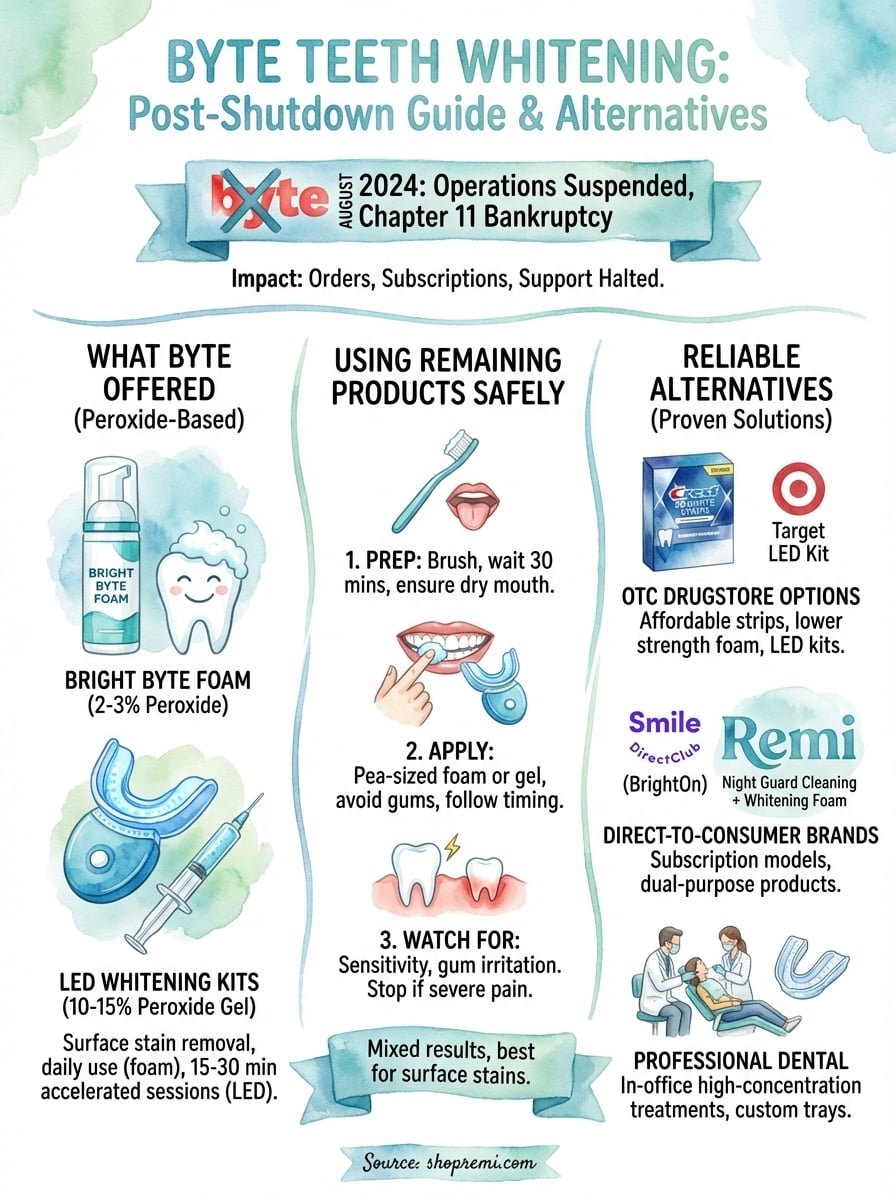
Byte announced the suspension of all operations in August 2024, catching most customers completely off guard. The company stopped taking new orders, halted production of aligners and whitening products, and shut down customer service channels within days. You couldn't reach anyone by phone or email, and the website went dark except for a brief notice about the closure. Thousands of people with active aligner treatments or whitening subscriptions suddenly lost access to products they'd already paid for.
The suspension announcement and immediate impact
The shutdown happened with minimal warning to customers, many of whom were mid-treatment with clear aligners or had just received shipments of whitening products. Byte's parent company cited "operational challenges" without providing specific financial details at the time. Your byte teeth whitening subscription would have stopped automatically, but getting refunds for unused products or prepaid treatments became nearly impossible as the company's infrastructure collapsed.
"The lack of communication left customers stuck between filing chargebacks with credit card companies or hoping for eventual refunds that never materialized."
Customer service representatives disappeared overnight, leaving you with no direct path to resolve issues with orders, refunds, or treatment plans that required ongoing dental monitoring. Social media accounts went silent, and the knowledge base that once provided product instructions became inaccessible.
Current legal and bankruptcy status
Byte filed for Chapter 11 bankruptcy in late 2024, which triggered automatic stays on customer refund requests and lawsuits. The bankruptcy proceedings revealed that the company owed millions to creditors, suppliers, and customers who'd prepaid for products or services. You now fall into the category of unsecured creditors if you're owed money, which typically means you'll receive little to nothing once the bankruptcy process concludes.
The bankruptcy trustee took control of remaining inventory and intellectual property. Any leftover whitening foam or LED kits became part of the bankruptcy estate, though no organized liquidation sale materialized for consumers. Your best option for recovery involves filing a claim in the bankruptcy case, but expect lengthy delays and minimal payouts based on how similar cases typically resolve.
Does Byte teeth whitening work for most people?
Byte teeth whitening delivered noticeable results for many users, particularly those dealing with surface stains from coffee, tea, wine, or tobacco. The products contained hydrogen peroxide at concentrations between 2% and 15%, which matches what dental professionals use in milder professional treatments. Your results depended heavily on your starting shade, the type of staining you had, and how consistently you followed the recommended application schedule.
Clinical evidence and user results
The active ingredient in Byte's whitening products, hydrogen peroxide, has decades of research backing its effectiveness at breaking down chromogen molecules that cause tooth discoloration. When you applied the foam or gel consistently over two to four weeks, you could typically expect shade improvements of two to five levels on standard dental color charts. This matches the performance range of similar direct-to-consumer whitening products from other brands.
Customer reviews before the shutdown showed mixed but generally positive feedback. Most people reported visible whitening within the first week of daily use, though sensitivity issues stopped some users from completing their planned treatment cycles. The foam format received better tolerance ratings than the higher-concentration LED kit gels because you could control application time more easily and start with shorter sessions.
"Surface stains responded much better than deep discoloration caused by medications, genetics, or childhood fluorosis."
Who saw the best results
You achieved the fastest whitening if you had yellow or brown surface stains rather than gray intrinsic discoloration. The peroxide formulas worked best on organic staining from food, drinks, and lifestyle habits because these discolorations sit on or near the tooth surface. People with naturally darker teeth or medication-induced staining (like tetracycline) saw minimal to no improvement regardless of how long they used the products.
Your age and tooth health also affected outcomes. Younger users with less enamel wear typically reported better and faster results than older adults whose enamel had thinned over time. Teeth with existing dental work like crowns, veneers, or large fillings didn't whiten at all since peroxide only affects natural tooth structure, which created uneven coloring for some users.
How to use Byte whitening foam and kits
Even though Byte suspended operations, many people still own their products and want to use them correctly to maximize remaining supplies. The application process for byte teeth whitening products followed straightforward steps, though you needed consistency to see results. Understanding the proper technique helped you avoid wasting product and reduced the risk of uneven whitening or sensitivity.
Preparing for your whitening session
You started by brushing your teeth thoroughly with regular toothpaste to remove surface debris and plaque that could block the peroxide from reaching your enamel. Wait at least 30 minutes after brushing before applying any whitening product because freshly brushed teeth often have temporary microscopic abrasions that increase sensitivity. Your mouth should be completely dry before application since saliva dilutes the peroxide and weakens its effectiveness.
Check your teeth in good lighting to identify areas with heavy staining that might need extra attention during application. You wanted to avoid getting whitening products on your gums or soft tissues because peroxide can irritate these areas. Having paper towels or tissues ready helped you quickly wipe away any foam or gel that spread beyond your teeth.
Applying the Bright Byte foam correctly
The foam required you to dispense a pea-sized amount directly onto your front teeth or into a custom tray if you had one from your aligner treatment. You spread the foam evenly across visible tooth surfaces using your finger or the applicator tip, making sure to cover areas between teeth where stains accumulated. The foam expanded slightly after application, so you didn't need as much product as you might think.
"Applying too much foam didn't speed up results but did increase your risk of sensitivity and wasted product."
Keep your mouth slightly open during the 5 to 10 minute treatment time to prevent dilution from saliva. You could talk or move around normally, but avoid eating, drinking, or rinsing until the timer finished. After the session ended, you spit out excess foam and rinsed thoroughly with water.
Using the LED kit step by step
LED kits started with applying the whitening gel directly to your teeth using the provided syringes, usually one full syringe per session. You inserted the charged LED mouthpiece, positioned it comfortably against your teeth, and activated the light for the recommended 15 to 30 minutes. The device automatically shut off when the cycle completed, eliminating guesswork about timing.
Safety, side effects, and when to stop
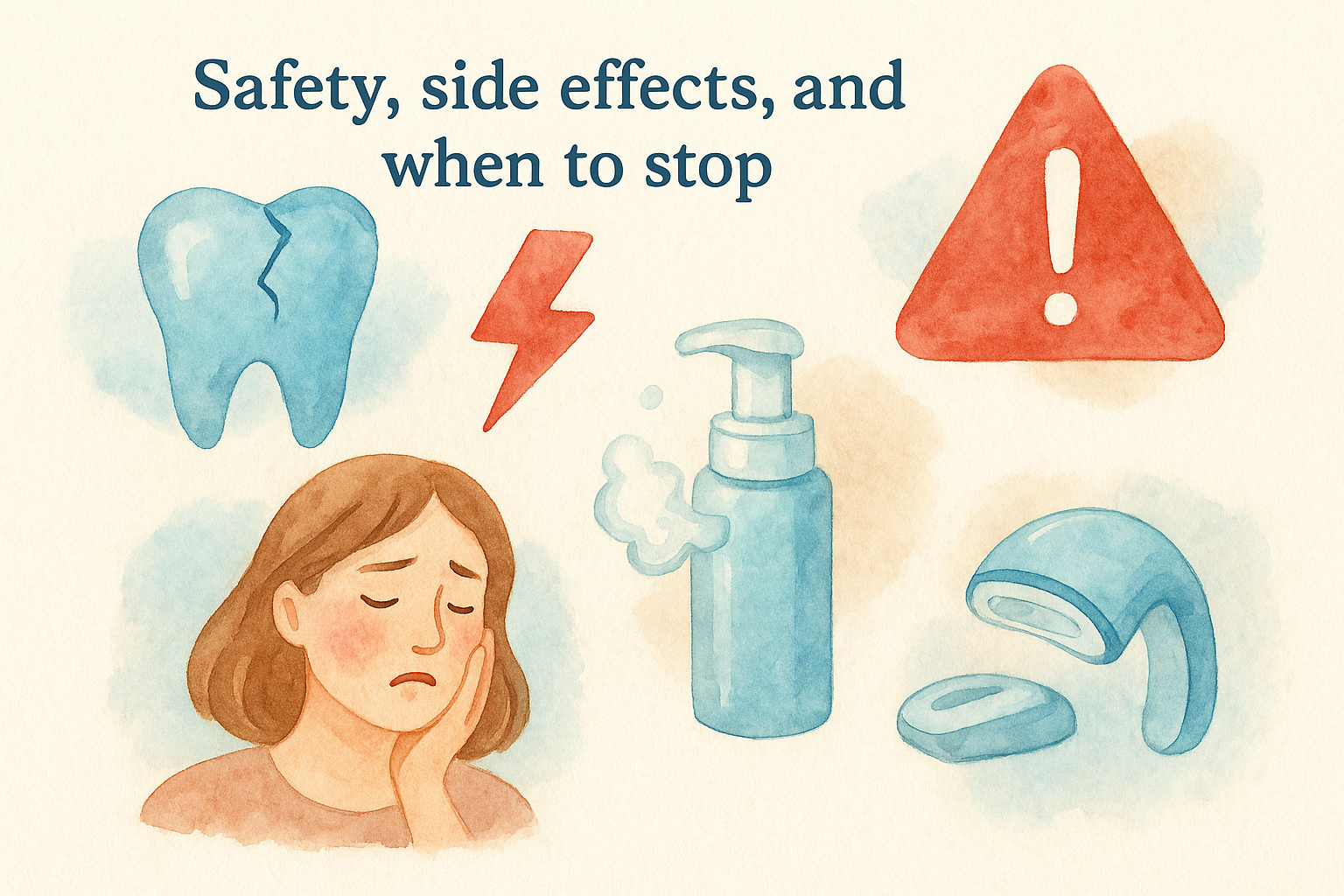
Byte teeth whitening used the same peroxide-based formulas found in professional dental treatments, which meant the products carried similar safety profiles and side effect risks. Most users tolerated the whitening foam and LED kits without serious problems, but you needed to watch for warning signs that indicated you should stop treatment. Understanding what constituted normal discomfort versus actual damage helped you use the products safely, especially now that you couldn't contact Byte's customer service for guidance.
Common side effects you might experience
The most frequent complaint from users involved tooth sensitivity during or after treatment sessions. You might notice sharp pain when consuming hot, cold, or sweet foods and drinks, which typically lasted a few hours to a few days after application. This sensitivity happened because peroxide temporarily opened pores in your enamel, exposing the dentin layer underneath. Your sensitivity usually decreased as you continued treatments and your teeth adapted to the peroxide exposure.
Gum irritation occurred when the foam or gel contacted soft tissue for extended periods. You saw white spots on your gums, felt burning sensations, or noticed temporary blanching where the product touched. These effects resolved within a day or two once you stopped application or improved your technique to keep the peroxide on your teeth only.
"Starting with shorter session times and gradually increasing to the recommended duration reduced the intensity of initial sensitivity for most people."
Some users reported increased thirst or dry mouth during LED sessions because you kept your mouth open for extended periods. Throat irritation happened occasionally if you swallowed small amounts of product, though the low peroxide concentrations in Byte's formulas rarely caused serious digestive issues.
Warning signs that mean you should stop
You needed to discontinue use immediately if you experienced severe pain that didn't subside within an hour of finishing your whitening session. Sharp, shooting pains or sustained aching indicated potential damage to your tooth structure or exposure of nerve endings through cracks in your enamel. Your best option involved scheduling a dental examination to check for underlying problems that whitening treatments might worsen.
Persistent gum swelling, bleeding, or white lesions that lasted more than 48 hours after stopping treatment required professional evaluation. Chemical burns from peroxide could damage gum tissue permanently if you ignored these symptoms. Any changes in how your teeth fit together or new difficulty chewing meant you should stop all whitening activities and consult a dentist.
Alternatives if you can't buy Byte right now
The shutdown of byte teeth whitening left a gap in the market, but you have multiple proven alternatives that deliver comparable results without the uncertainty of buying from a defunct company. Your options range from affordable drugstore products to professional dental office treatments, depending on your budget and how quickly you want to see changes. The key involves finding products with similar peroxide concentrations and application methods that worked for Byte customers.
Over-the-counter whitening options
Drugstore shelves stock numerous whitening products that use the same hydrogen peroxide formulas Byte relied on. Crest 3D White strips contain 10% to 14% hydrogen peroxide and follow the same application pattern as Byte's LED kits, requiring you to wear strips for 30 minutes daily over two weeks. Colgate's Optic White foam works similarly to Bright Byte foam but at a slightly lower peroxide concentration of around 2%, which may reduce sensitivity while extending your treatment timeline.
Target and Walmart carry LED whitening kits from brands like GLO Science and AuraGlow that replicate Byte's light-activated technology at prices between $40 and $120. These kits include rechargeable LED devices and multiple gel syringes, giving you the same basic experience Byte offered before the shutdown.
Direct-to-consumer brands still operating
SmileDirectClub continues selling its BrightOn teeth whitening system, which pairs an LED accelerator with whitening gel pens for daily application. You get professional-grade results through a subscription model that ships new gel supplies every few months, addressing the inventory problems Byte customers faced. Remi's Night Guard Cleaning + Teeth Whitening Foam offers a dual-purpose solution if you wear dental appliances at night, letting you clean your guards while whitening your teeth with a hydrogen peroxide-based formula.
"Choosing brands with proven track records and stable operations protects you from repeating the Byte situation where products suddenly become unavailable mid-treatment."
Professional dental treatments
Your dentist provides the fastest and most dramatic whitening results through in-office procedures that use peroxide concentrations up to 35%, far stronger than any home product. These treatments typically cost $300 to $800 per session but deliver shade improvements within an hour rather than weeks. Dental offices also offer custom take-home trays with professional-grade bleaching gel, giving you the convenience of home whitening with clinical oversight that catches problems before they cause damage.
Next steps
The shutdown of byte teeth whitening products created uncertainty for thousands of customers, but effective alternatives exist across multiple price points and application methods. You now understand which products deliver comparable results, how to use whitening treatments safely, and when to seek professional dental care instead of home solutions.
Your best path forward depends on your specific needs and current oral health status. If you want professional-grade whitening combined with dental appliance care, products like Remi's custom night guards offer protection against grinding while our whitening foam maintains your smile between treatments. Those dealing with heavy staining benefit more from in-office procedures that deliver faster results under clinical supervision.
Take action by choosing a replacement product that fits your budget and timeline. The whitening options available today match or exceed what Byte offered, without the risk of sudden company closures disrupting your oral care routine.

