
 Guards + Retainers
 Custom Night Guard
 Retainer
 Emergency Order

 Whitening
 Whitening Kit
 Teeth Whitening Gel
 Dual-Action Foam
 Cleaning + Care
 Ultrasonic Cleaner Pro
 Water Flosser
 UV Toothbrush Sanitizer
 Deep Clean + Freshening Tablets
 Accessories
 Guard Removal Tool
 Replacement Nozzles
 Bundles

You just walked out of the dentist's office or finished your first at-home whitening session, and your teeth look fantastic. But that immediate glow raises an important question: how long does teeth whitening last? The answer isn't as straightforward as you might hope, it depends on the method you choose, your daily habits, and how well you care for your smile afterward.
Most people can expect results to last anywhere from a few months to three years, with significant variation based on treatment type. Professional in-office whitening typically delivers the longest-lasting brightness, while over-the-counter strips and trays offer more modest staying power. The good news? Proper maintenance habits can extend your results well beyond average timelines, saving you money and keeping your confidence high.
This guide breaks down exactly what to expect from each whitening method, the factors that cause fading, and practical care tips to maximize your investment. At Remi, we help customers protect their smiles with custom night guards and our dual-purpose cleaning and whitening foam, because maintaining your teeth goes beyond just one treatment. Whether you've whitened professionally or at home, you'll find everything you need to keep that brightness lasting longer.
Why teeth whitening fades over time
Your teeth aren't static, they're constantly exposed to substances that can re-stain them. Even the most effective whitening treatments don't create a permanent shield against discoloration. The whitening process works by opening up your tooth enamel's pores and breaking down existing stains through chemical reactions, typically using hydrogen peroxide or carbamide peroxide. Once the treatment ends, those pores gradually close, but they remain vulnerable to new staining compounds for weeks afterward.
Think of your enamel like a sponge. When you whiten your teeth, you're essentially squeezing out the old stains, but the sponge structure remains porous and ready to absorb new pigments. The natural aging process also plays a role, your enamel naturally thins over time, allowing more of the yellowish dentin layer underneath to show through. This combination of factors explains why understanding how long does teeth whitening last requires looking at both the treatment method and your lifestyle choices.
The science behind tooth staining
Your tooth enamel contains microscopic pores that trap chromogens, which are pigmented molecules found in many foods and drinks. When these molecules penetrate the enamel surface, they bind to the tooth structure and create visible discoloration. Whitening treatments work by using oxidizing agents that break apart these chromogen bonds, but they can't prevent new chromogens from forming bonds later.
The process happens gradually, not overnight. After whitening, your teeth remain especially susceptible to staining for the first 48 to 72 hours because the enamel pores stay partially open during this recovery period. During this window, consuming darkly pigmented substances can cause rapid re-staining. Your saliva helps remineralize the enamel and close these pores, but complete stabilization takes time.
Professional treatments penetrate deeper into your enamel, which means they last longer but also require more careful post-treatment protection to maintain results.
Foods and drinks that accelerate fading
Coffee stands as one of the most significant culprits for rapid whitening fade. Each cup you drink contains tannins that quickly attach to your enamel, especially when consumed hot, which temporarily softens the tooth surface. Red wine presents a double threat because it combines both high acidity and deep pigmentation, creating the perfect storm for staining.
Tea, particularly black tea, actually contains more tannins than coffee and can stain teeth even faster. Dark sodas contribute not just pigment but also phosphoric and citric acids that erode enamel, making it easier for stains to penetrate. Berries, soy sauce, balsamic vinegar, and tomato-based sauces all share similar staining properties. The frequency of exposure matters more than occasional indulgence, daily consumption of these items will shorten your whitening results significantly.
Your daily habits matter more than you think
Smoking or using tobacco products causes some of the most stubborn and fastest-returning stains possible. Nicotine and tar seep into enamel crevices and create yellowish-brown discoloration that builds up quickly, often reversing whitening results within weeks. Even vaping can contribute to staining, though typically less severely than traditional cigarettes.
Your oral hygiene routine directly impacts how long your whitening lasts. Brushing within 30 minutes after consuming staining foods can prevent chromogens from fully bonding to your enamel. Flossing removes food particles trapped between teeth where discoloration often begins unnoticed. If you neglect regular brushing and flossing, plaque accumulation creates rough surfaces that trap stains more easily, accelerating the fading process and making future whitening less effective.
How long teeth whitening lasts by method
The whitening method you choose dramatically impacts your results timeline, with professional treatments lasting years while drugstore options may fade within months. Understanding these differences helps you set realistic expectations and choose the approach that fits your budget and lifestyle needs. When people ask how long does teeth whitening last, the answer depends entirely on which technique they used to achieve their brighter smile.
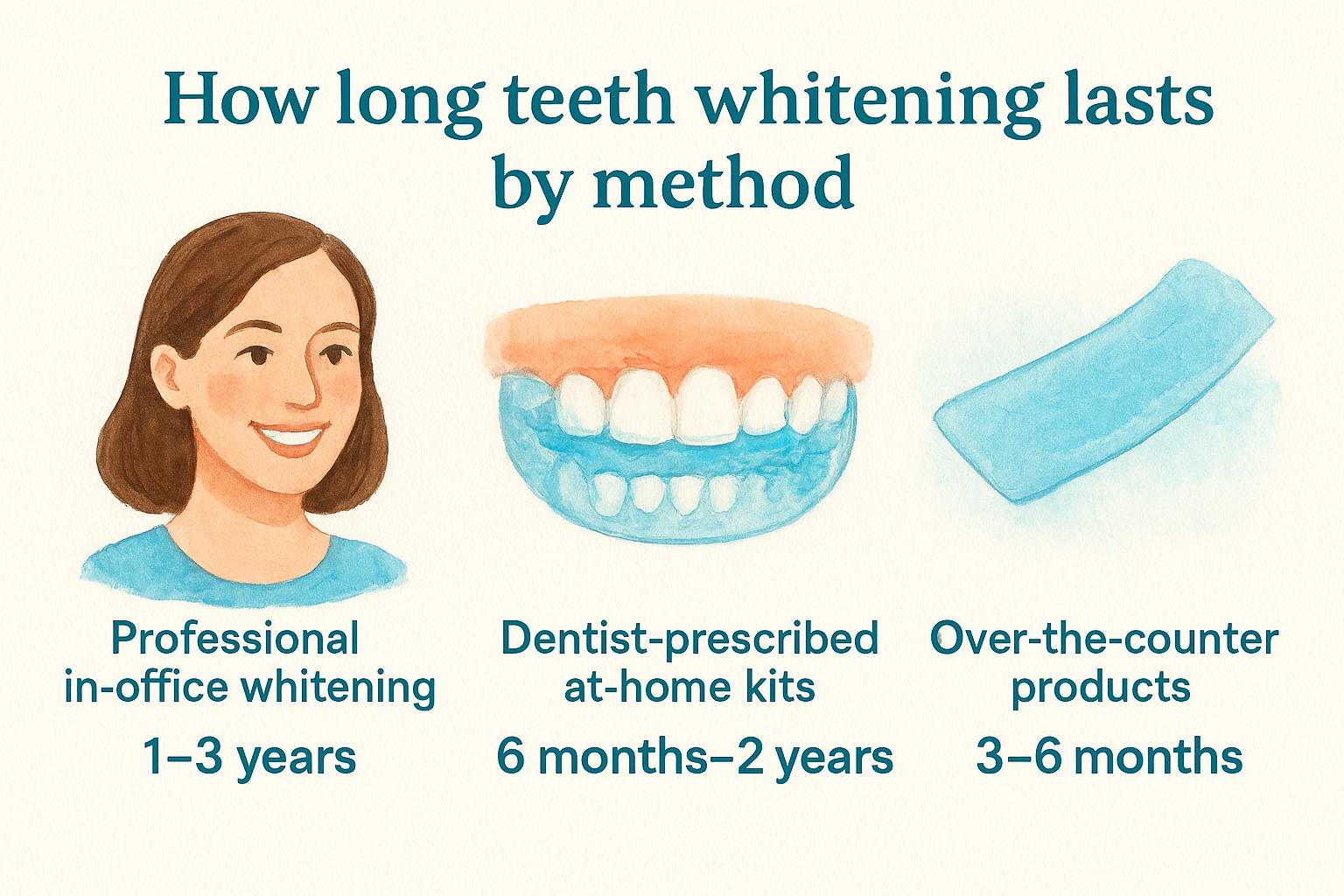
Professional in-office whitening
Your dentist's office delivers the most powerful and longest-lasting results, typically keeping your teeth bright for one to three years. These treatments use high-concentration bleaching agents, often 25% to 40% hydrogen peroxide, applied under controlled conditions with protective measures for your gums. The procedure usually takes 60 to 90 minutes, and you walk out with immediately visible results that can lighten teeth by several shades.
The longevity comes from the deep penetration of professional-grade whitening agents into your enamel structure. Your dentist may also use special lights or lasers to accelerate the whitening process, which helps the bleaching compounds work more effectively. While this method costs more upfront, the extended duration often makes it more cost-effective than repeatedly buying over-the-counter products.
Dentist-prescribed at-home kits
Custom trays from your dentist, filled with professional-strength gel, typically maintain brightness for six months to two years. These kits provide a middle ground between in-office treatments and drugstore options, using carbamide peroxide concentrations between 10% and 20%. You wear the custom-fitted trays for specified periods over several days or weeks, following your dentist's specific instructions for your situation.
The custom fit ensures even whitening and minimal gum irritation, while the professional-grade formulation delivers results that last significantly longer than store-bought alternatives. Many patients prefer this method because they control the treatment schedule and can touch up their results easily with leftover gel.
Custom trays from your dentist deliver professional results at a fraction of the in-office cost while lasting considerably longer than any over-the-counter option.
Over-the-counter products
Whitening strips, drugstore trays, and similar products keep teeth noticeably brighter for three to six months on average. These products contain lower concentrations of whitening agents, typically 5% to 14% hydrogen peroxide or carbamide peroxide, to ensure consumer safety without professional supervision. You'll see gradual improvement over days or weeks of consistent use.
Whitening toothpastes work differently by using mild abrasives and chemical agents to remove surface stains rather than changing your tooth color. They maintain existing brightness but rarely provide dramatic whitening, with any noticeable effects fading within one to three months without continued use.
What affects how long your results last
Multiple factors determine whether your whitening results fade quickly or stay vibrant for years. Understanding these variables helps you predict your personal timeline and adjust your habits accordingly. While the whitening method provides the foundation, your individual circumstances and daily choices ultimately control how long does teeth whitening last in your specific situation.
Your natural tooth characteristics
Your genetic makeup plays a significant role in whitening longevity and overall tooth color. Some people naturally have thicker, more opaque enamel that resists staining better and holds whitening results longer. Others have thinner enamel that shows more yellowing from the underlying dentin, making whitening effects less dramatic and shorter-lived.
Tooth density matters too. Denser enamel structures contain smaller pores that trap fewer staining compounds, while more porous teeth absorb chromogens faster and lose their whiteness more quickly. You can't change your tooth structure, but knowing your natural tendencies helps you set realistic expectations and plan appropriate maintenance schedules.
Your genetic tooth structure determines your baseline whiteness potential, but your daily habits determine whether you reach and maintain that potential.
Age and enamel condition
As you age, your enamel naturally wears down through decades of chewing, grinding, and acid exposure. This thinning allows more yellow dentin to show through, which means whitening treatments may need more frequent touch-ups to maintain results. Most people notice their teeth yellowing more rapidly after age 40, even with consistent whitening maintenance.
Existing dental work also impacts your results. Crowns, veneers, and fillings don't respond to whitening treatments, creating potential mismatches with your newly whitened natural teeth. Surface defects like chips, cracks, or exposed roots create rough areas that trap stains more aggressively, shortening the lifespan of your whitening results.
Diet frequency and timing
How often you consume staining foods matters more than occasional indulgence. Drinking coffee once daily causes less damage than sipping it throughout the day, which continuously exposes your teeth to staining compounds. The timing of consumption affects results too, eating or drinking staining substances right after whitening treatments can undo your progress within hours.
Temperature also plays a role. Hot beverages temporarily expand your enamel pores, making stain absorption easier, while cold drinks cause less immediate damage. Acidic foods and drinks soften your enamel temporarily, creating windows where chromogens penetrate more deeply and reduce how long your whitening lasts.
How to make teeth whitening last longer
Extending your whitening results requires consistent daily habits and strategic choices about what you consume and when. The actions you take in the first 48 hours after treatment prove especially critical, but long-term maintenance determines whether your brightness lasts months or years. Most people can double or triple how long does teeth whitening last simply by following proven care strategies and making minor lifestyle adjustments.
The 48-hour critical window
Your teeth remain most vulnerable to staining during the first two days after any whitening treatment. During this period, your enamel pores stay partially open while your teeth remineralize, creating easy pathways for chromogens to penetrate deeply. Avoid all dark-colored foods and beverages including coffee, tea, red wine, berries, and tomato sauce during this window.
Stick to white or light-colored foods like chicken, fish, rice, bananas, and cauliflower. Drink water or milk instead of colored beverages. If you absolutely need coffee or tea, use a straw to minimize contact with your front teeth and rinse your mouth immediately afterward with plain water.
Smart daily maintenance practices
Brushing your teeth within 30 minutes after consuming staining substances prevents chromogens from fully bonding to your enamel. Use a whitening toothpaste twice daily, but avoid formulas with harsh abrasives that can wear down enamel over time. Electric toothbrushes remove surface stains more effectively than manual brushing alone.
Rinsing your mouth with water after every meal or snack washes away loose food particles and dilutes staining compounds before they settle into your enamel. Consider using a straw when drinking coffee, tea, or wine to direct the liquid past your front teeth. Professional cleanings every six months remove built-up plaque and surface stains that home care misses.
Regular professional cleanings remove tartar buildup that traps stains, helping your whitening results last significantly longer between touch-ups.
Touch-up treatments and timing
Plan for touch-up whitening sessions every three to six months if you used at-home treatments, or annually if you had professional in-office whitening. These maintenance sessions require less time and product than your original treatment because you're preventing stains rather than removing years of buildup. Keep leftover whitening gel or strips specifically for these quick refreshers.
Products like our Night Guard Cleaning + Teeth Whitening Foam at Remi serve double duty by maintaining both your dental appliances and your tooth brightness between major whitening sessions. Regular use of whitening maintenance products prevents gradual yellowing and extends the time between intensive treatments.
Common questions and safety notes
Most people worry about whether whitening treatments harm their teeth or cause lasting problems. The short answer is that properly used whitening products rarely cause permanent damage, but understanding the risks and proper usage helps you avoid complications. This section addresses the most common concerns people have when trying to understand how long does teeth whitening last while keeping their teeth healthy.
Can whitening damage your teeth?
Overusing whitening products represents the primary risk to your dental health. When you whiten too frequently or use products with excessive concentrations without professional supervision, you can erode your enamel and expose sensitive dentin layers underneath. Following product instructions precisely and spacing out treatments appropriately prevents most damage.
Existing dental problems make whitening riskier. Cavities, exposed roots, and cracked teeth should receive treatment before you start any whitening regimen. Whitening solutions can penetrate these compromised areas and reach the sensitive inner tooth structures, causing pain and potential nerve damage. Your dentist can identify these issues during a routine examination.
Proper spacing between whitening treatments allows your enamel to remineralize and recover, preventing cumulative damage that weakens your teeth over time.
What to do about sensitivity
Temporary tooth sensitivity affects most people who whiten their teeth, typically lasting 24 to 48 hours after each treatment. This happens because whitening agents temporarily dehydrate your teeth and irritate the nerve endings. Using toothpaste formulated for sensitive teeth several days before and after whitening sessions reduces this discomfort significantly.
Applying treatments for shorter durations than recommended maximum times helps if you experience severe sensitivity. You can achieve the same results by extending your treatment schedule over more days rather than pushing through painful sessions. Stopping treatment immediately and consulting your dentist becomes necessary if sensitivity persists beyond three days or causes significant pain.
When you need professional guidance
Schedule a dental consultation before whitening if you have extensive dental work, gum disease, or extremely discolored teeth. Your dentist can assess whether whitening suits your situation or if other cosmetic procedures would work better. People with gray-toned tooth discoloration, often caused by certain medications or trauma, typically see poor whitening results and waste money on ineffective treatments.
Pregnant and breastfeeding women should avoid whitening treatments because limited research exists on the effects of whitening agents on developing babies. Teenagers under 16 also should wait because their tooth pulp remains enlarged, making sensitivity more severe. Anyone experiencing unusual gum irritation, tooth pain, or uneven whitening results needs professional evaluation to rule out underlying dental problems.

Final takeaways
Understanding how long does teeth whitening last empowers you to make informed decisions about which method fits your budget and lifestyle. Professional treatments deliver one to three years of brightness, while at-home options typically last three months to two years depending on the specific approach you choose. The treatment method provides your starting point, but your daily habits determine the actual longevity of your results.
The first 48 hours after whitening demand extra vigilance, but long-term success comes from consistent maintenance practices like prompt brushing after meals, strategic beverage choices, and regular professional cleanings. Touch-up treatments every few months keep your smile bright without requiring the time and expense of full whitening sessions. Protecting your investment means protecting your overall oral health too. Consider adding a cordless water flosser to your routine for thorough cleaning that removes stain-causing particles between teeth, helping your whitening results last longer while improving your gum health.

