
 Guards + Retainers
 Custom Night Guard
 Retainer
 Emergency Order

 Whitening
 Whitening Kit
 Teeth Whitening Gel
 Dual-Action Foam
 Cleaning + Care
 Ultrasonic Cleaner Pro
 Water Flosser
 UV Toothbrush Sanitizer
 Deep Clean + Freshening Tablets
 Accessories
 Guard Removal Tool
 Replacement Nozzles
 Bundles

A bright, white smile ranks high on most people's wish lists, and Philips Zoom teeth whitening has become one of the most recognized names in professional whitening treatments. Whether you've seen it advertised at your dentist's office or stumbled across their at-home kits online, you're probably wondering what makes this system different from the countless other whitening options out there, and whether it's actually worth the investment.
The truth is, Philips Zoom offers multiple pathways to whiter teeth, from quick in-office sessions that deliver dramatic results in about an hour to gradual at-home treatments you can do on your own schedule. Each approach has distinct advantages, price points, and considerations that matter depending on your lifestyle and sensitivity concerns. Understanding these differences helps you make a choice that fits both your goals and your budget.
At Remi, we're all about helping you maintain a healthy, confident smile without overpaying for dental care. While we specialize in custom night guards and teeth whitening foam for everyday oral care, we know our customers often explore professional whitening options too. This guide breaks down everything you need to know about Philips Zoom's in-office and at-home systems, how they work, what they cost, and how to decide which one makes sense for you.
What Philips Zoom teeth whitening is
Philips Zoom is a professional-grade whitening system that uses hydrogen peroxide or carbamide peroxide gels combined with proprietary technology to break down stains on your tooth enamel. Unlike drugstore strips or generic whitening trays, Zoom products are designed by Philips Oral Healthcare (a division of the larger Philips company) and distributed exclusively through dental professionals or with a dentist's prescription. You'll find this system offered in two main formats: the in-office treatment performed by a dentist and take-home kits that you use under professional guidance.
The technology behind Zoom
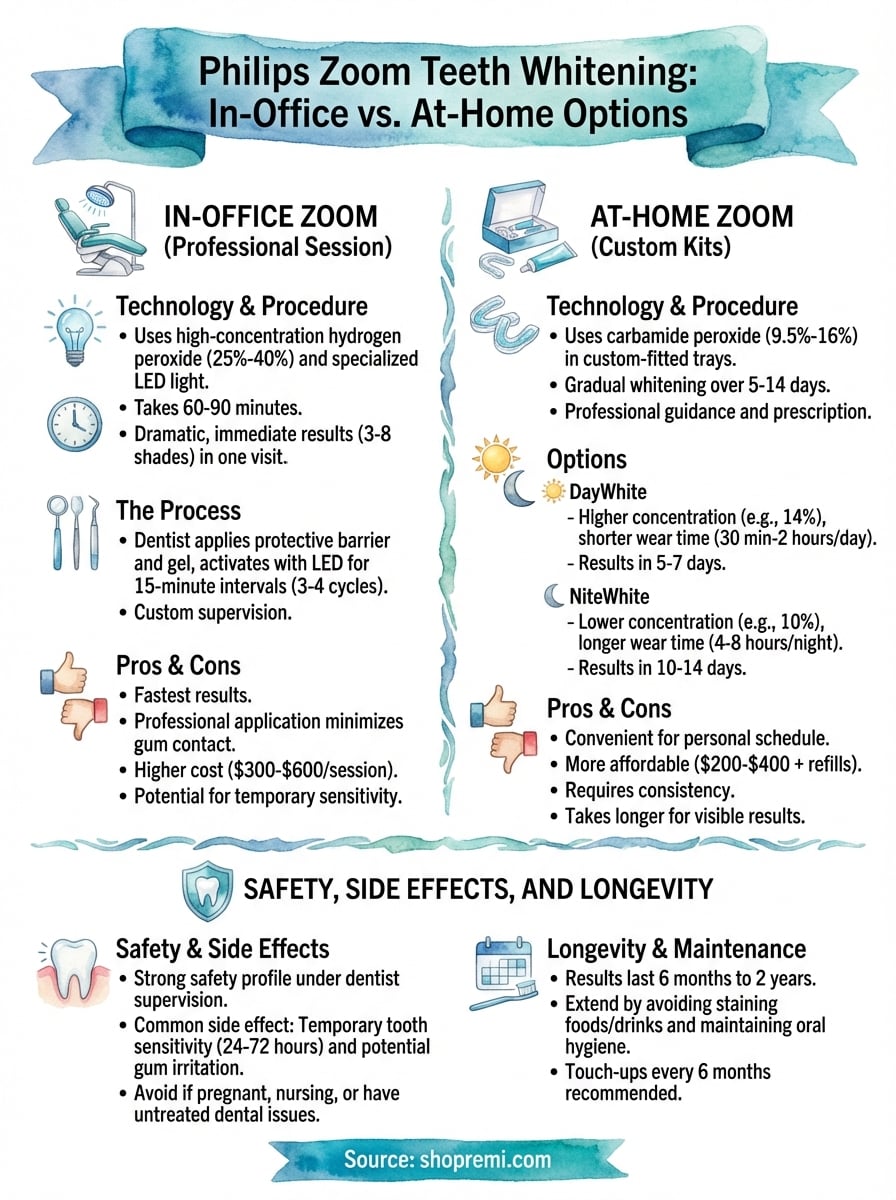
The core of Philips Zoom teeth whitening relies on light-activated or time-released whitening chemistry that penetrates your tooth enamel to remove both surface stains and deeper discoloration. In-office treatments pair a high-concentration hydrogen peroxide gel (typically 25% to 40%) with a specialized LED light that accelerates the whitening reaction, allowing the formula to work faster than it would on its own. At-home versions use lower concentrations of carbamide peroxide (usually 9.5% to 14%) that break down gradually over several hours, giving you a gentler approach that still delivers professional results.
The LED light component in the in-office system generates minimal heat and has been specifically calibrated to activate the whitening gel's chemistry without damaging your tooth structure or soft tissues. This combination allows dentists to achieve results in a single visit that might take weeks with other methods.
"The professional supervision and custom-fitted application trays in Zoom systems help minimize gel contact with your gums, reducing the sensitivity issues common with over-the-counter products."
What makes it different from other whitening products
Philips Zoom distinguishes itself through its dual delivery system and the involvement of dental professionals in every step of the process. When you use Zoom, you're getting custom-fitted trays made from impressions of your actual teeth, not the one-size-fits-all plastic strips or generic boil-and-bite trays sold at pharmacies. This custom fit ensures the whitening gel stays in contact with your teeth rather than leaking onto your gums or getting diluted by saliva, which directly impacts how well the treatment works and how comfortable it feels.
Professional oversight also means your dentist can adjust the concentration and treatment duration based on your specific tooth sensitivity, existing dental work, and whitening goals. You won't get that personalized calibration from a box you pick up at the store.
In-office Zoom: how it works and what to expect
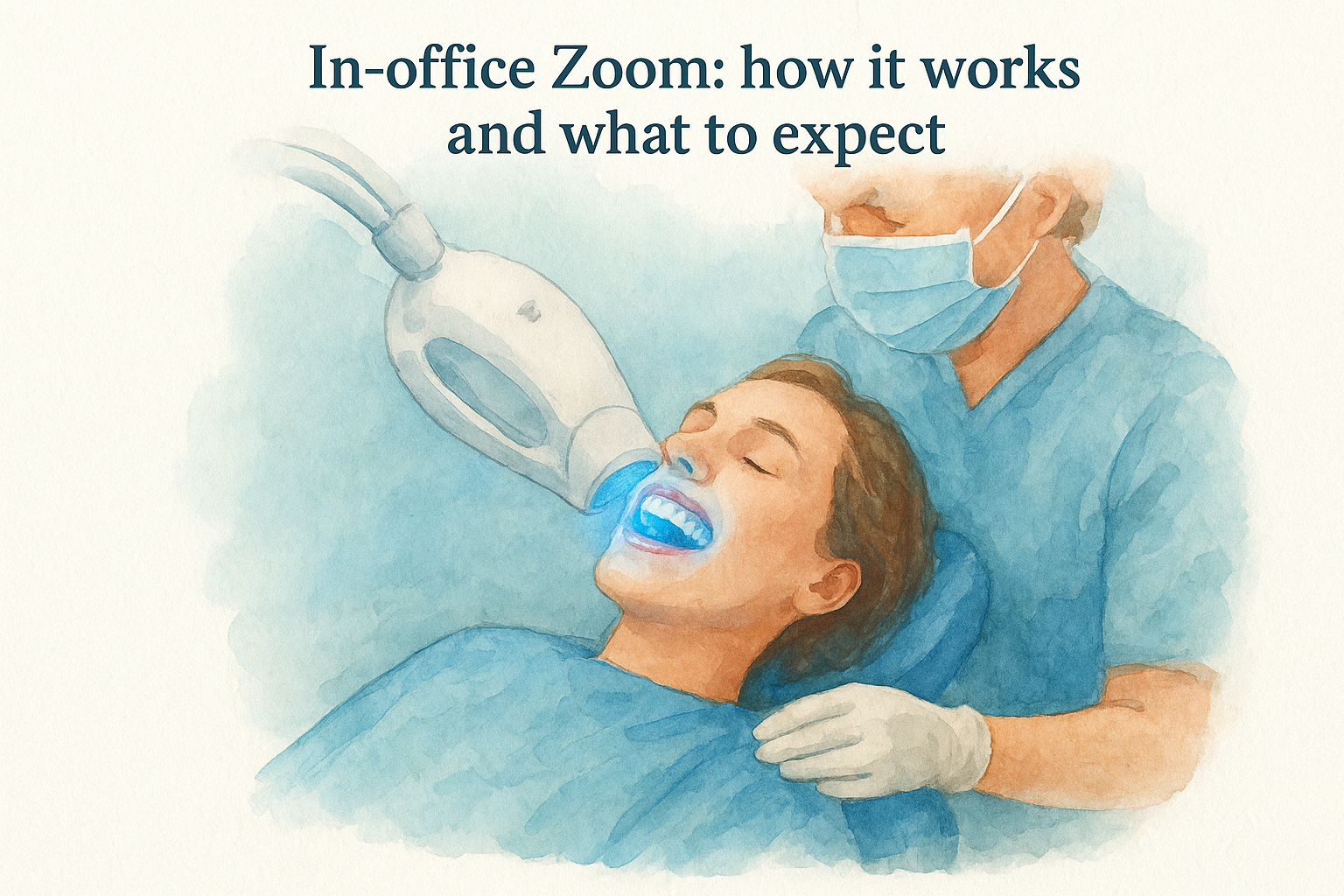
In-office Philips Zoom teeth whitening delivers the fastest results available through professional dental care, typically completing the entire treatment in 60 to 90 minutes. Your dentist applies a concentrated hydrogen peroxide gel to your teeth and activates it with a specialized LED light that speeds up the whitening process. Most patients walk out with teeth several shades lighter after just one session, though the exact results depend on your starting shade and the nature of your stains.
The appointment process
Your dentist begins by examining your teeth to confirm you're a good candidate for whitening and checking for any issues like cavities or gum disease that need addressing first. Once cleared, they'll take a shade measurement of your current tooth color using a standardized shade guide, giving you a baseline to track your improvement. The dentist then applies a protective barrier to your gums and lips before carefully coating your teeth with the high-concentration whitening gel.
The LED light gets positioned in front of your mouth for 15-minute intervals, and the process typically repeats three to four times during your visit. Between each light session, your dentist removes the old gel and applies fresh solution to maximize the whitening effect. You'll feel the gel working, and some patients notice mild tingling, but the process stays comfortable throughout.
"Most dentists recommend avoiding dark-colored foods and drinks for 24 to 48 hours after your Zoom treatment to prevent new stains from setting in while your enamel is still porous."
At-home Zoom kits: DayWhite vs NiteWhite
Philips Zoom offers two distinct at-home whitening systems that let you brighten your teeth on your own schedule under your dentist's guidance. Both DayWhite and NiteWhite use custom-fitted trays and professional-strength carbamide peroxide gels, but they differ in concentration, wear time, and how they fit into your daily routine. Your dentist prescribes the specific formula and concentration based on your sensitivity levels and how quickly you want results.
DayWhite: faster daily treatments
DayWhite delivers higher concentrations of carbamide peroxide (typically 9.5% or 14%) designed for shorter wear times of 30 minutes to two hours per day. You apply the gel to your custom trays and wear them during a convenient part of your day, whether that's during your morning routine or while watching television in the evening. The faster-acting formula produces visible results within a week for most users, making it ideal if you prefer shorter sessions and want to see progress quickly.
"DayWhite's shorter wear time reduces the risk of gel leaking from your trays and irritating your gums during extended periods."
NiteWhite: overnight whitening
NiteWhite uses lower concentrations (typically 10% to 16% carbamide peroxide) that work gradually while you sleep, requiring wear times of four to eight hours. You insert your loaded trays before bed and remove them when you wake up, making it the most hands-off approach to philips zoom teeth whitening at home. Results typically appear within 10 to 14 days, and the extended contact time can deliver more thorough whitening for stubborn discoloration.
Safety, side effects, and who should avoid it
Philips Zoom teeth whitening maintains a strong safety profile when used under professional supervision, but like any cosmetic dental treatment, it comes with potential side effects you should understand before committing. The hydrogen peroxide and carbamide peroxide used in these systems have been extensively studied and approved for dental whitening, though your individual response depends on your tooth sensitivity levels, existing dental health, and how closely you follow your dentist's instructions.
Common side effects you might experience
Temporary tooth sensitivity ranks as the most frequently reported side effect, affecting roughly half of all patients who undergo philips zoom teeth whitening treatments. You might notice increased sensitivity to hot or cold foods and drinks that typically lasts 24 to 72 hours after treatment, though some people experience it for up to a week. Your dentist can recommend desensitizing toothpaste or adjust the gel concentration if sensitivity becomes uncomfortable.
Gum irritation occurs less frequently but can happen if the whitening gel contacts your soft tissues, causing temporary redness or mild discomfort. Custom-fitted trays significantly reduce this risk compared to over-the-counter products.
"Using too much gel in your trays increases the likelihood of gum irritation without improving your whitening results, so stick to the small amount your dentist recommends."
Who should skip Zoom treatments
You should avoid whitening treatments if you're pregnant or nursing, as the safety of peroxide-based products hasn't been established for these populations. People with untreated cavities, gum disease, or exposed tooth roots need to address these issues before whitening, as the peroxide can penetrate damaged areas and cause significant discomfort.
Cost, results timeline, and how to make it last
Philips zoom teeth whitening requires a financial investment that varies significantly between in-office and at-home options, but understanding the cost alongside expected results helps you evaluate whether this treatment fits your budget and goals. In-office Zoom treatments typically range from $300 to $600 per session depending on your location and dentist, while at-home kits prescribed by your dentist cost between $200 and $400 for the custom trays and initial gel supply. You'll need to purchase additional gel refills for touch-ups, usually running $30 to $50 per tube.
How quickly you'll see results
In-office treatments deliver immediate results that you'll notice as soon as you leave your appointment, with teeth lightening anywhere from three to eight shades in that single 60 to 90-minute session. At-home systems require more patience, with DayWhite typically producing visible changes within five to seven days and NiteWhite showing results after 10 to 14 days of consistent use.
Extending your whitening investment
Your results typically last six months to two years depending on your habits and oral care routine. Avoiding staining beverages like coffee, red wine, and dark sodas helps preserve your bright smile, as does using a straw when you do drink them.
"Touch-up treatments every six months with your at-home trays maintain your results without requiring another full treatment cycle."
Next steps for a whiter smile
Philips zoom teeth whitening gives you professional results, but maintaining your bright smile requires consistent daily oral care habits beyond the treatment itself. You protect your investment by brushing twice daily with a whitening or gentle toothpaste, flossing regularly, and avoiding staining foods during the first 48 hours after each whitening session. Your custom trays need regular cleaning too, since bacteria buildup can transfer to your teeth and compromise both your oral health and whitening results.
Remi makes maintaining your smile simple with products designed for everyday use. Our ultrasonic cleaning devices deep clean your Zoom trays and dental appliances in minutes, keeping them fresh and bacteria-free between whitening sessions. We also offer custom night guards and retainers if you need protection from grinding or want to maintain your teeth alignment alongside your newly whitened smile.

