
 Guards + Retainers
 Custom Night Guard
 Retainer
 Emergency Order

 Whitening
 Whitening Kit
 Teeth Whitening Gel
 Dual-Action Foam
 Cleaning + Care
 Ultrasonic Cleaner Pro
 Water Flosser
 UV Toothbrush Sanitizer
 Deep Clean + Freshening Tablets
 Accessories
 Guard Removal Tool
 Replacement Nozzles
 Bundles

Most people don't realize their oral health is slipping until something hurts. A cavity, a swollen gum, a tooth that suddenly feels loose, these problems rarely show up overnight. They build slowly, and the signs of poor oral hygiene are usually visible long before real damage sets in. The trick is knowing what to look for early enough to do something about it.
Your mouth gives you constant feedback. Bleeding gums, persistent bad breath, tooth sensitivity, these aren't minor inconveniences to ignore. They're warnings. And when left unchecked, they can lead to infections, tooth loss, and health issues that reach well beyond your mouth.
At Remi, we work with dental professionals to create custom night guards and oral care products that help people protect their teeth at home, affordably and without the runaround. But protection starts with awareness. This article breaks down nine specific warning signs that your oral hygiene needs attention, what's actually happening when you notice them, and what you can do to turn things around before they get worse.
1. Persistent bad breath
Bad breath that shows up after a meal is one thing. Bad breath that comes back every single day, no matter how much you brush, is one of the clearest signs of poor oral hygiene your body can send. It means something in your mouth is off, and brushing harder is not going to fix the underlying cause.
What it looks and smells like day to day
Persistent bad breath, clinically called halitosis, usually has a sour, sulfurous, or stale quality that doesn't clear up after brushing or rinsing. You might notice it first thing in the morning and find that it returns within an hour of brushing. Other people in your life may notice it before you do, since you adapt to your own smell over time.
Common causes inside and outside your mouth
Most persistent bad breath comes from bacteria breaking down food particles in your mouth, especially in hard-to-reach spots like the back of the tongue, between teeth, and along the gumline. Dry mouth makes this worse because saliva normally helps wash those bacteria away. Outside your mouth, sinus infections, acid reflux, and certain medications can all contribute to breath that doesn't improve with better brushing alone.
If your bad breath keeps returning despite consistent brushing and flossing, the source is almost always bacterial buildup somewhere you're not reaching.
What to do at home this week
Start by adding tongue scraping to your daily routine, since the back of the tongue harbors more odor-causing bacteria than almost anywhere else in the mouth. Drink more water throughout the day to combat dry mouth, and make sure you're flossing at least once daily to remove food and plaque between teeth. Alcohol-free antibacterial mouthwash can reduce bacterial load without drying your mouth further.
When bad breath needs a dentist or doctor
If consistent brushing, flossing, tongue scraping, and hydration don't improve your breath within two weeks, book an appointment. Untreated gum disease and cavities both produce strong odor as bacteria break down tissue and tooth structure. If your dentist rules out an oral cause, a physician should check for systemic issues like reflux, sinus problems, or metabolic conditions.
2. Gums that bleed when you brush or floss
Bleeding gums are one of the most commonly dismissed signs of poor oral hygiene, yet most people write them off as brushing too hard. A little pink in the sink is not normal, and it is not something you should wait out.
Why healthy gums should not bleed
Healthy gum tissue is firm and resilient. When you brush and floss correctly, it should not bleed. Bleeding happens because your gum tissue is inflamed and fragile, which means bacteria have been sitting at the gumline long enough to trigger an immune response.
The plaque to gingivitis pathway
Plaque is a sticky film of bacteria that forms on your teeth daily. When plaque stays at the gumline for 24 to 72 hours, your immune system reacts by sending blood flow to the area, making gums red, swollen, and prone to bleeding. That early stage is called gingivitis, and it is reversible with better hygiene.
Gingivitis does not hurt, which is exactly why so many people miss it until it advances.
How to brush and floss without making it worse
Use a soft-bristled toothbrush and gentle circular motions rather than scrubbing back and forth. When you floss, guide the floss gently between teeth in a C-shape against each tooth instead of snapping it into your gums.
When bleeding signals gum disease
If your gums bleed consistently for more than two weeks despite improved brushing and flossing, that is a sign the inflammation has moved beyond gingivitis. See a dentist to rule out periodontitis, which damages the bone and tissue supporting your teeth.
3. Visible plaque or tartar buildup
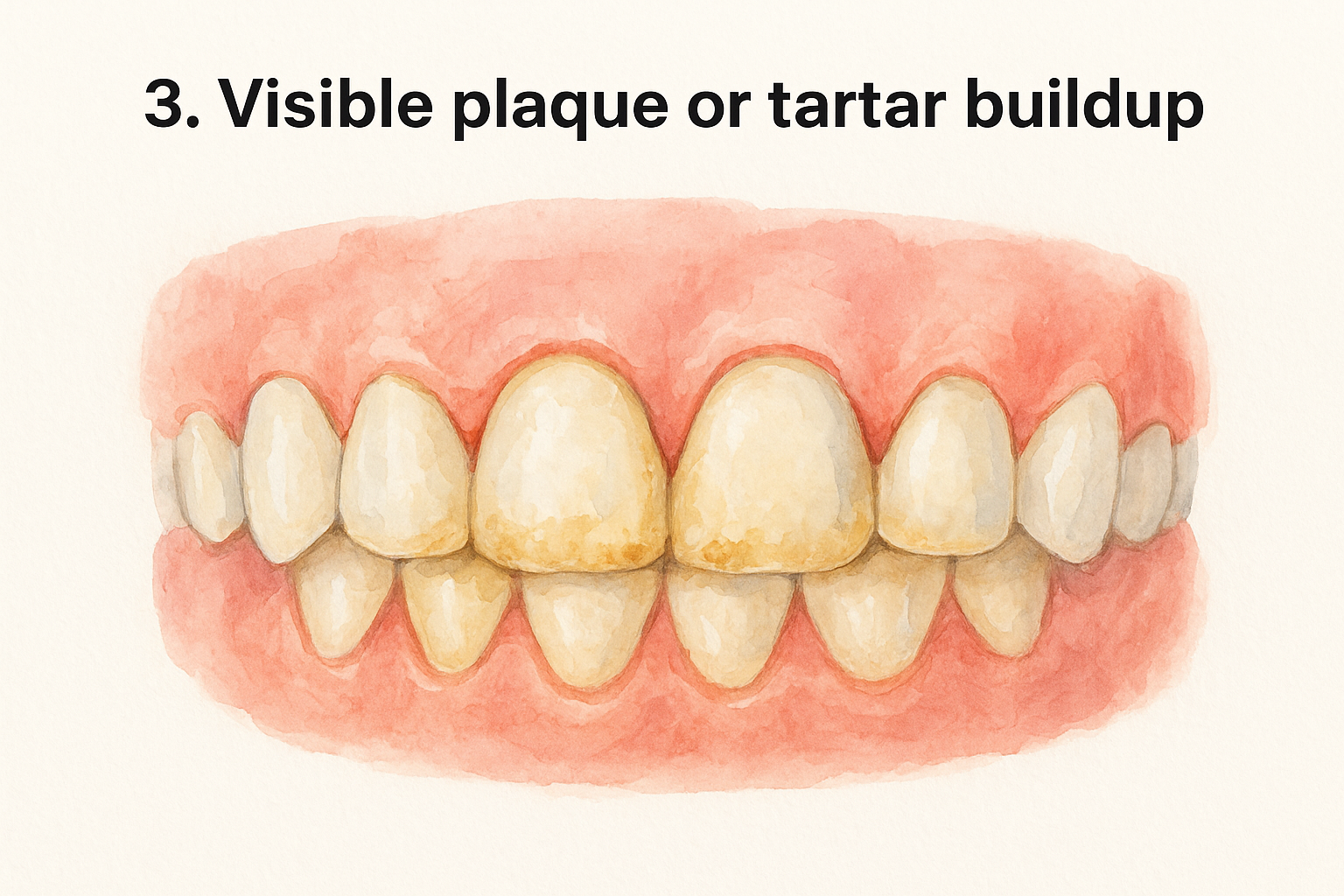
Visible buildup on your teeth is one of the most straightforward signs of poor oral hygiene you can spot in the mirror. Plaque is the soft, white-yellow film that coats your teeth when you skip brushing, while tartar is what it becomes once it hardens.
How plaque turns into tartar fast
Plaque starts forming on your teeth within hours of brushing. When you leave it undisturbed for 24 to 72 hours, minerals in your saliva bond with the bacteria and harden it into tartar. Once tartar forms, no amount of brushing at home will remove it.
The window to remove plaque yourself closes faster than most people realize, which is why daily brushing and flossing are not optional.
Where tartar hides most often
Tartar tends to build up along the gumline and behind the lower front teeth first, since those areas are closest to the saliva glands. You may notice a rough, yellow-brown crust that doesn't budge when you brush.
What you can remove at home vs what you cannot
You can remove fresh plaque by brushing twice daily with fluoride toothpaste and flossing once a day. Once plaque has mineralized into tartar, only a dental professional with proper instruments can take it off safely without damaging your enamel or gums.
How professional cleanings reset the problem
A professional cleaning scrapes away hardened tartar deposits and polishes your enamel, giving you a clean baseline. Most adults benefit from cleanings every six months to prevent tartar from progressing into gum disease.
4. Red, swollen, or tender gums
Red, swollen gums are among the clearest signs of poor oral hygiene that demand your attention. Healthy gums should look pale pink and feel firm, not puffy, shiny, or sore to the touch.
How inflammation shows up in your gums
Gum inflammation usually starts at the margin where your gums meet your teeth. You may notice redness, puffiness, or a dull ache when you press on the tissue or bite down. Some people also experience tenderness that lingers after brushing, even when using a gentle technique.
Inflamed gums are your immune system responding to bacteria, not a surface-level problem you can brush away.
Triggers that make swelling worse
Plaque buildup along the gumline is the most common trigger, but other factors can intensify gum inflammation. These include:
- Hormonal changes during pregnancy
- Certain medications like blood pressure drugs
- Low vitamin C or other nutritional deficiencies
Steps that calm irritated gums
Improving your brushing and flossing consistency is the most direct action you can take. Warm saltwater rinses twice a day reduce mild swelling by drawing out fluid from irritated tissue. Switch to a soft-bristled toothbrush with light, circular strokes rather than aggressive scrubbing. Two other quick adjustments that help:
- Rinse with warm salt water (half a teaspoon in 8 oz of water) twice daily
- Avoid alcohol-based mouthwash, which can further irritate already-sensitive tissue
Signs you may need a periodontal evaluation
If your gums stay red or tender for more than two weeks despite better hygiene, book a dental appointment. Persistent swelling that does not respond to improved home care often points to deeper gum disease that requires professional treatment beyond what you can manage at home.
5. Tooth sensitivity to hot, cold, or sweets
Tooth sensitivity is one of the more uncomfortable signs of poor oral hygiene you can experience day to day. That sharp, brief pain when you sip hot coffee or bite into something cold is your tooth telling you something underneath the surface has changed.
What sensitivity tells you about enamel and gums
Sensitivity happens when the inner layer of your tooth, called dentin, becomes exposed. Dentin contains tiny tubules that connect directly to your tooth's nerve, and when enamel wears down or gums recede, those tubules are no longer protected. Temperature changes and sugar then trigger a sharp signal straight to the nerve.
The most common causes to rule out
Enamel erosion from acidic foods and drinks is a frequent culprit, as is aggressive brushing that wears away both enamel and gum tissue over time. Other causes worth checking include teeth grinding (bruxism), which slowly flattens and thins enamel, and gum recession that leaves root surfaces exposed and unprotected.
If you grind your teeth at night, sensitivity is often one of the first noticeable symptoms you notice before any visible damage appears.
Quick changes that reduce sensitivity
Switch to a sensitivity-specific toothpaste containing potassium nitrate or stannous fluoride and use it for at least two weeks consistently. Also cut back on:
- Acidic drinks like soda and citrus juice
- Brushing with heavy pressure or a medium-to-hard bristled brush
When sensitivity points to decay or cracks
Sensitivity that focuses on one specific tooth rather than spreading across several is a strong signal of a cavity or crack. If the pain lingers for more than a few seconds after the trigger is gone, see a dentist promptly rather than waiting for it to worsen.
6. Tooth discoloration, stains, or dark spots
Tooth discoloration is one of the more visible signs of poor oral hygiene that shows up gradually, making it easy to dismiss until the change becomes hard to ignore. Your teeth can shift in color for several reasons, and not all of them carry the same level of risk.
Surface stains vs deeper discoloration
Surface stains sit on the outer layer of enamel and typically come from food, drinks, and tobacco. Deeper discoloration develops inside the tooth structure itself, often from decay, old fillings, or trauma, and cannot be polished away. Knowing which type you are dealing with changes what you should do next.
How poor hygiene changes tooth color
When plaque and tartar accumulate on your teeth, they create a dull, yellow appearance over time. Bacteria in that buildup also produce pigmented byproducts that stain enamel, and acidic erosion from neglected hygiene makes enamel more porous and prone to absorbing stains from coffee, tea, and red wine.
Discoloration from poor hygiene is a sign that bacteria have had enough time to alter your tooth surface, not just coat it temporarily.
Safe ways to brighten teeth without damage
Whitening toothpaste with mild abrasives can lift surface stains without stripping enamel when used consistently. Reducing your intake of staining foods and beverages while improving your brushing routine gives your enamel the best chance to stay clear.
When a dark spot may mean a cavity
A dark brown or black spot that does not wipe away is a warning sign of active decay. Unlike a surface stain, cavity discoloration concentrates on one tooth and may feel slightly soft or rough if you run your tongue over it. See a dentist promptly rather than waiting for pain to develop.
7. Bad taste in your mouth that keeps coming back
A persistent bad taste that returns throughout the day is one of the more overlooked signs of poor oral hygiene. It signals that your mouth has a bacterial or structural problem that a quick rinse will not fix.
How bacteria and dry mouth affect taste
Bacteria in your mouth produce sulfur compounds and acidic byproducts that sit on your tongue, gumline, and between teeth, creating a sour or metallic flavor that recycles all day. Dry mouth compounds this problem because saliva normally dilutes and flushes those compounds away. Without enough saliva flow, the taste builds and intensifies.
A persistent bad taste often shares the same bacterial source as bad breath, so addressing one usually helps the other.
Medications and habits that contribute
Certain prescription medications, including antihistamines, blood pressure drugs, and antidepressants, reduce saliva production as a side effect. Tobacco use and heavy alcohol consumption also dry out oral tissue and introduce their own compounds that alter how your mouth tastes throughout the day.
How to troubleshoot the cause at home
Drink more water consistently rather than just rinsing once. Brush your tongue daily to remove bacterial film, and floss to eliminate trapped food particles between teeth that ferment quickly.
When to get checked for infection or decay
A persistent metallic or foul taste localized near one tooth or area of your mouth often points to an abscess or active decay underneath the surface. See a dentist promptly if the taste does not improve within one week of consistent hygiene improvements.
8. Gum recession or teeth that look longer
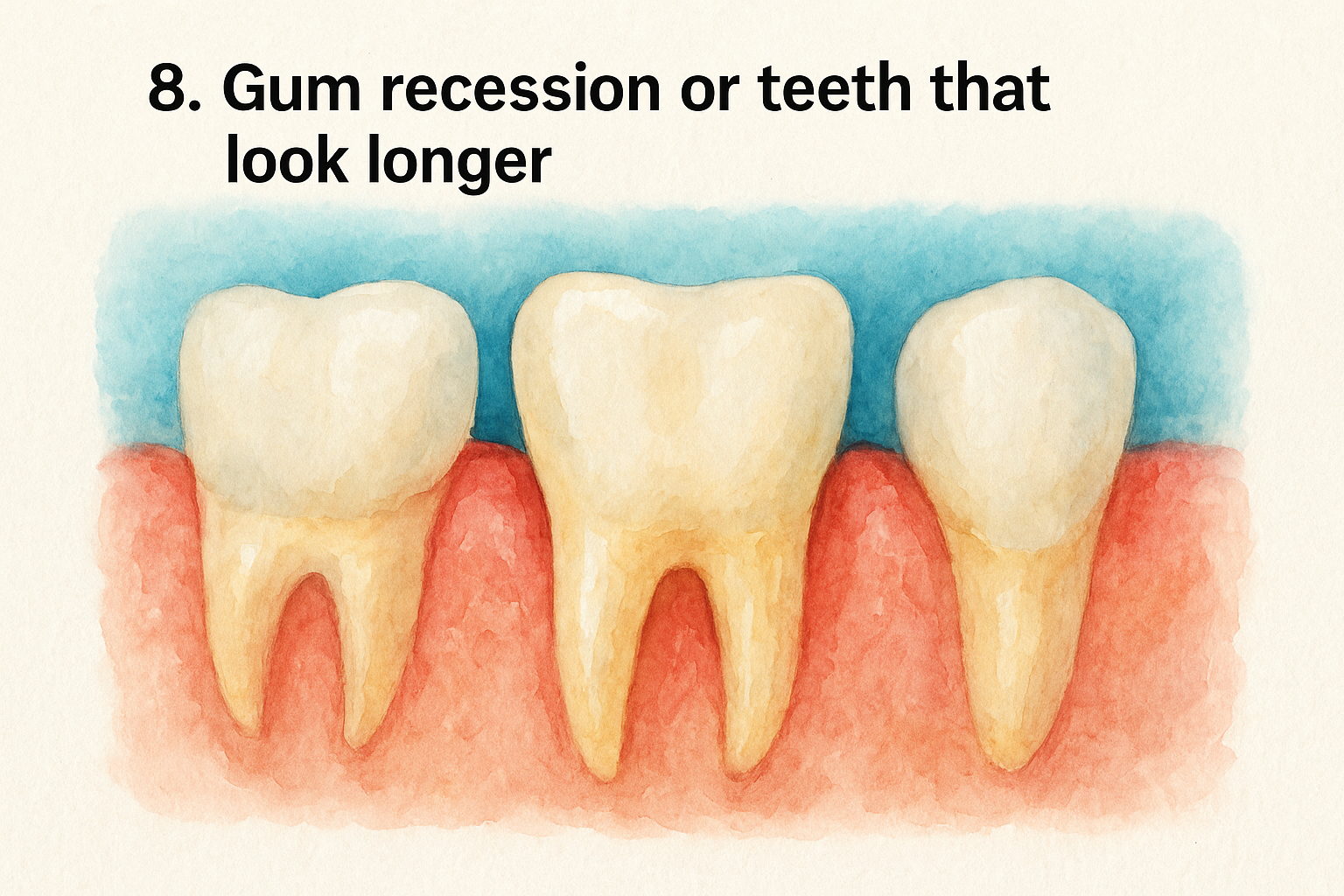
Gum recession is one of the more gradual signs of poor oral hygiene, which makes it easy to miss until significant tissue is already gone. If your teeth look longer than they used to, or if the root surfaces feel noticeably rough near the gumline, your gums have pulled back from where they should sit.
How recession develops over time
Recession happens when gum tissue wears away or pulls back, exposing the root surface underneath. Unlike enamel, root surfaces have no protective outer layer, which makes exposed roots sensitive and significantly more vulnerable to decay.
Recession does not reverse on its own. Once gum tissue is lost, it does not grow back without professional intervention.
Risk factors like brushing technique and tobacco
Aggressive brushing with a hard-bristled toothbrush is one of the most common drivers of recession, because the repeated friction gradually strips gum tissue away. Tobacco use reduces blood flow to gum tissue, weakening it and making it far more likely to recede over time, even in people who brush regularly.
How to slow or stop recession
Switch immediately to a soft-bristled toothbrush and use gentle, circular strokes rather than scrubbing horizontally. Keeping plaque under control through consistent brushing and flossing removes the bacterial pressure that also drives recession forward.
When you may need targeted gum treatment
See a dentist if you notice visible root exposure or increasing sensitivity along the gumline. Advanced recession may require a gum grafting procedure to restore protective tissue and prevent further bone loss underneath.
9. Mouth sores, irritation, or cracks that do not heal
Mouth sores that clear up within a few days are usually nothing to worry about. But sores, cracks, or persistent irritation that linger beyond two weeks are genuine signs of poor oral hygiene or a deeper underlying problem that needs attention before it gets worse.
What usually heals fast vs what does not
Minor canker sores and small cuts from biting your cheek typically resolve in seven to ten days without any treatment. A sore that stays raw, grows larger, or returns repeatedly in the same spot signals something beyond routine irritation and warrants a closer look.
Common causes like irritation, infection, and stress
Bacterial or fungal infections, such as oral thrush, produce persistent patches or soreness that will not clear without targeted treatment. High stress levels and nutritional deficiencies in B12, iron, or folate also slow tissue healing and make sores significantly more likely to keep coming back.
A sore that does not heal within two weeks needs professional evaluation, regardless of whether it causes pain.
What to do while you wait for healing
Take these steps to support healing while you monitor the sore:
- Rinse with warm salt water two to three times daily to lower the bacterial load around the area
- Avoid spicy, acidic, or sharp-edged foods that repeatedly reopen irritated tissue
When to get evaluated right away
See a dentist promptly if a sore bleeds without being touched, hardens, or spreads to surrounding tissue. Oral cancer can present as a sore that simply refuses to heal, and catching it early significantly improves your outcome.
Next steps
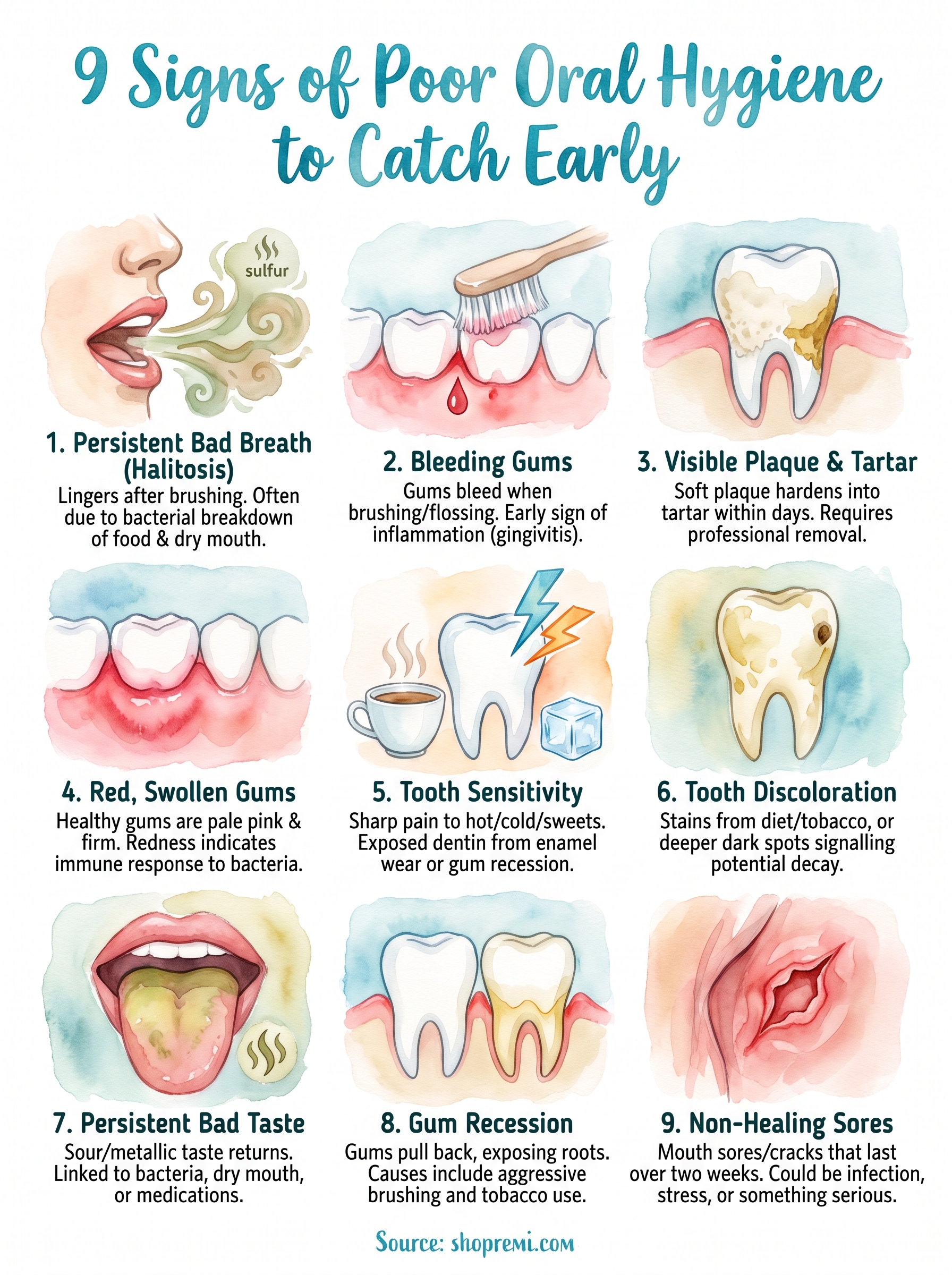
The signs of poor oral hygiene outlined in this article rarely appear all at once. They build gradually, one symptom at a time, and each one is a signal your mouth sends before a bigger problem develops. The earlier you catch them, the less treatment you'll need and the less damage you'll carry forward.
Start with the basics this week. Brush twice daily, floss once, and scrape your tongue to remove the bacterial film that drives most of these warning signs. If you notice bleeding gums, sensitivity, or sores that won't heal, book a dental appointment rather than waiting for pain to force the issue.
If teeth grinding is part of your picture, protecting your enamel at night matters just as much as your daytime routine. A custom night guard stops grinding damage before it compounds the other issues your mouth is already working against.

