
 Guards + Retainers
 Custom Night Guard
 Retainer
 Emergency Order

 Whitening
 Whitening Kit
 Teeth Whitening Gel
 Dual-Action Foam
 Cleaning + Care
 Ultrasonic Cleaner Pro
 Water Flosser
 UV Toothbrush Sanitizer
 Deep Clean + Freshening Tablets
 Accessories
 Guard Removal Tool
 Replacement Nozzles
 Bundles

Teeth grinding affects roughly 1 in 3 adults, and if you're one of them, a night guard is probably the single most effective way to protect your teeth while you sleep. The problem? There are multiple types of night guards for teeth grinding, and picking the wrong one can mean wasted money, poor sleep, or, worst case, zero protection where it counts.
Night guards differ in material, thickness, fit, and how they're made. Some are soft and flexible, others are rigid acrylic. Some you boil and bite at home, others are custom-crafted from dental impressions. Each type has real trade-offs depending on how severely you grind and what feels comfortable in your mouth.
At Remi, we make custom-fitted night guards with an at-home impression kit, professional quality without the dental office price tag. That said, we think you should understand all your options before choosing. This guide breaks down six types of night guards, with honest pros and cons for each, so you can match the right guard to your specific needs.
1. Custom night guard from Remi
A custom night guard from Remi gives you a professionally made guard without the dental office visit. You order an at-home impression kit, take your own dental molds, mail them back, and Remi's lab fabricates a guard fitted precisely to your teeth. Among the different types of night guards for teeth grinding, this approach sits at the top for quality-to-cost ratio.
What it is
Remi's night guards are made from dental-grade materials in a professional lab, using the impressions you take at home with the included kit. The process mirrors what your dentist would do, minus the overhead costs and multiple appointments. You can choose from different thicknesses depending on how severely you grind, which means the guard is designed around your specific bite rather than a generic shape.
The at-home impression kit comes with clear step-by-step instructions, and Remi's customer support team is available if you run into any questions during the process. Once your impressions arrive at the lab, your guard is fabricated to exact specifications and shipped directly to your door.
Best for
This option works best for people with moderate to severe bruxism who want a professional-quality fit without paying dental office prices. It also suits anyone who has had poor experiences with boil-and-bite or stock guards and wants something that stays in place comfortably through the night.
A custom fit is the single biggest factor in whether a night guard actually protects your teeth or just sits in a drawer.
Pros
Remi's custom guards stand out for several concrete reasons:
- Precise fit from your actual dental impressions, not a universal mold
- Multiple thickness options matched to your grinding severity
- Significantly lower cost than a dentist-made guard
- Fabricated in a professional dental lab, not mass-produced
- No dental appointments required
Cons and watch-outs
The main trade-off is turnaround time. Because your impressions are sent to a lab, you won't receive your guard immediately after ordering. You also need to take the impressions correctly for the fit to be accurate, though the kit instructions are designed to make that straightforward.
If your grinding is extremely severe or you have significant jaw alignment issues, it's worth consulting a dentist before ordering to confirm which thickness level fits your situation best.
Typical price range
Remi night guards start at around $95, which is a fraction of the $300 to $800 or more that dental offices typically charge for a comparable custom-fitted guard. Replacement guards are available too, so you can maintain your precise fit over time without going through the full impression process again.
2. Soft night guard
A soft night guard is made from flexible, pliable material similar to a sports mouth guard. It cushions your teeth rather than creating a rigid barrier, which makes it one of the most recognizable types of night guards for teeth grinding available at pharmacies and online.
What it is
Soft guards are typically made from thermoplastic or silicone-based material that gives slightly under pressure. This flexibility is what separates them from hard acrylic guards. Most are available either as boil-and-bite versions or as custom-made options fabricated from dental impressions in a lab.
Best for
This type works best for light to mild grinders who need cushioning and basic protection rather than heavy-duty durability. Soft guards are also a reasonable first option for anyone who has never worn a night guard and wants to get used to sleeping with something in their mouth before committing to a more rigid option.
Pros
- Comfortable from the start, with minimal adjustment period
- Flexible material feels less intrusive during sleep
- Generally affordable compared to hard or hybrid guards
Cons and watch-outs
The biggest problem with soft guards is that moderate to severe grinders can chew through them quickly, sometimes within weeks. The pliable surface can also work against you because your jaw muscles tend to respond to the give by clenching even harder, which defeats the purpose of wearing one.
If you grind with any real force, a soft night guard may wear out far faster than you expect and leave your teeth unprotected sooner than you realize.
Typical price range
Custom soft night guards from a dental lab typically cost $200 to $500. Over-the-counter versions are far cheaper at around $15 to $40, but the fit and durability trade-offs with those are significant.
3. Hard night guard
A hard night guard is made from rigid acrylic material and represents the opposite end of the spectrum from soft guards. Where a soft guard absorbs force through flexibility, a hard guard holds its shape completely, creating a firm barrier between your upper and lower teeth with zero give under pressure.
What it is
Hard night guards are fabricated from dense acrylic resin, the same material dentists have used for decades in appliances like retainers and splints. Because the material doesn't compress or deform, it forces your jaw muscles to work against a solid surface rather than sinking into something pliable. Most hard guards are made exclusively through a certified dental lab using precise impressions of your teeth, so they aren't something you'll find ready-made at a pharmacy.
Best for
Among the types of night guards for teeth grinding, hard guards work best for severe grinders who have already chewed through softer options. They also benefit people dealing with TMJ-related jaw tension, since the rigid surface can reduce muscle overactivation during sleep.
Pros
- Extremely durable, often lasting several years with proper care
- Holds its shape under heavy grinding pressure without warping
- Better long-term value for severe bruxism cases compared to repeatedly replacing soft guards
Cons and watch-outs
The main drawback is comfort. Hard guards require a longer adjustment period than soft options, and some people find the rigid feel too intrusive to wear consistently through the night. The bulk of the material can also make falling asleep more difficult in the first few weeks of use.
If you stop wearing your guard because it feels uncomfortable, even the most durable option on the market won't protect your teeth.
Typical price range
A custom hard night guard from a dental office typically costs $300 to $800 or more, depending on your location and your dentist's fees.
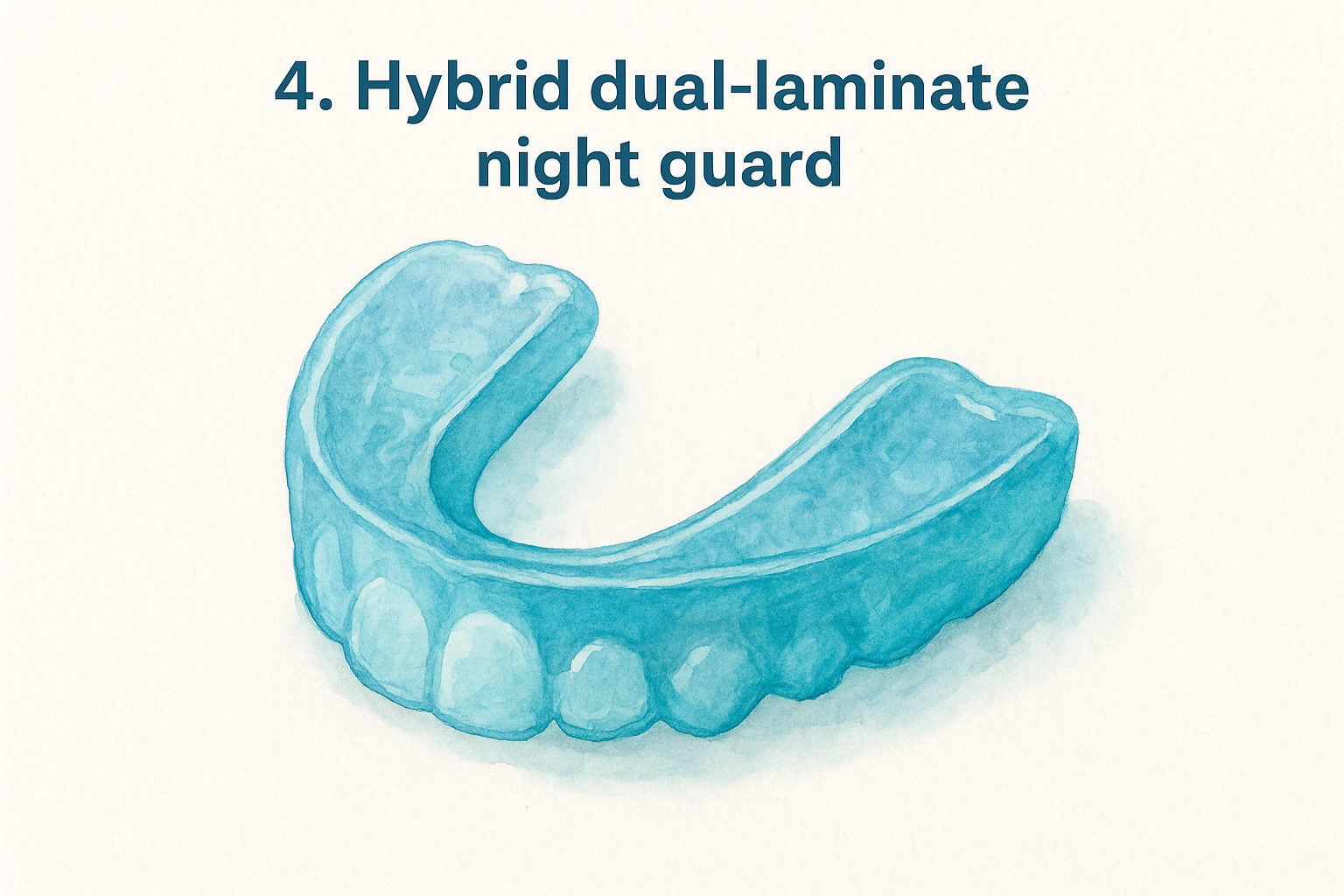
4. Hybrid dual-laminate night guard
A hybrid dual-laminate night guard combines a soft inner layer with a hard outer shell, giving you the comfort of a flexible surface against your teeth and the durability of rigid acrylic on the outside. This design makes it one of the more versatile types of night guards for teeth grinding, sitting between guards that feel comfortable and guards built to last under real pressure.
What it is
A dual-laminate guard is built from two distinct layers fused together during fabrication. The inner layer is soft and flexible, resting directly against your tooth surfaces for comfort. The outer layer is hard acrylic, which absorbs your grinding force and prevents the guard from breaking down quickly. This construction is only available as a custom appliance from a dental lab, since the two layers need to be molded precisely to your bite.
Best for
Hybrid guards work best for moderate to heavy grinders who find hard-only guards too uncomfortable but have already chewed through soft guards. If you grind with enough force to damage softer materials but want something more tolerable than a fully rigid option, this type sits in a practical middle ground.
Pros
- Comfortable inner layer reduces the adjustment period compared to hard-only guards
- Outer shell holds up under significant grinding pressure
- Longer lifespan than soft guards for moderate-to-heavy bruxism cases
Cons and watch-outs
Dual-laminate guards cost more than soft guards and require the same lab fabrication time as any other custom option. Over time, the soft inner layer can still show wear and compression, particularly if your grinding falls on the severe end of the scale.
If you sit between mild and severe on the bruxism spectrum, a hybrid guard is often the most practical starting point before committing to a hard-only option.
Typical price range
Custom dual-laminate guards typically cost between $200 and $600, depending on the lab and where you purchase them. Dental offices tend to charge toward the higher end of that range.
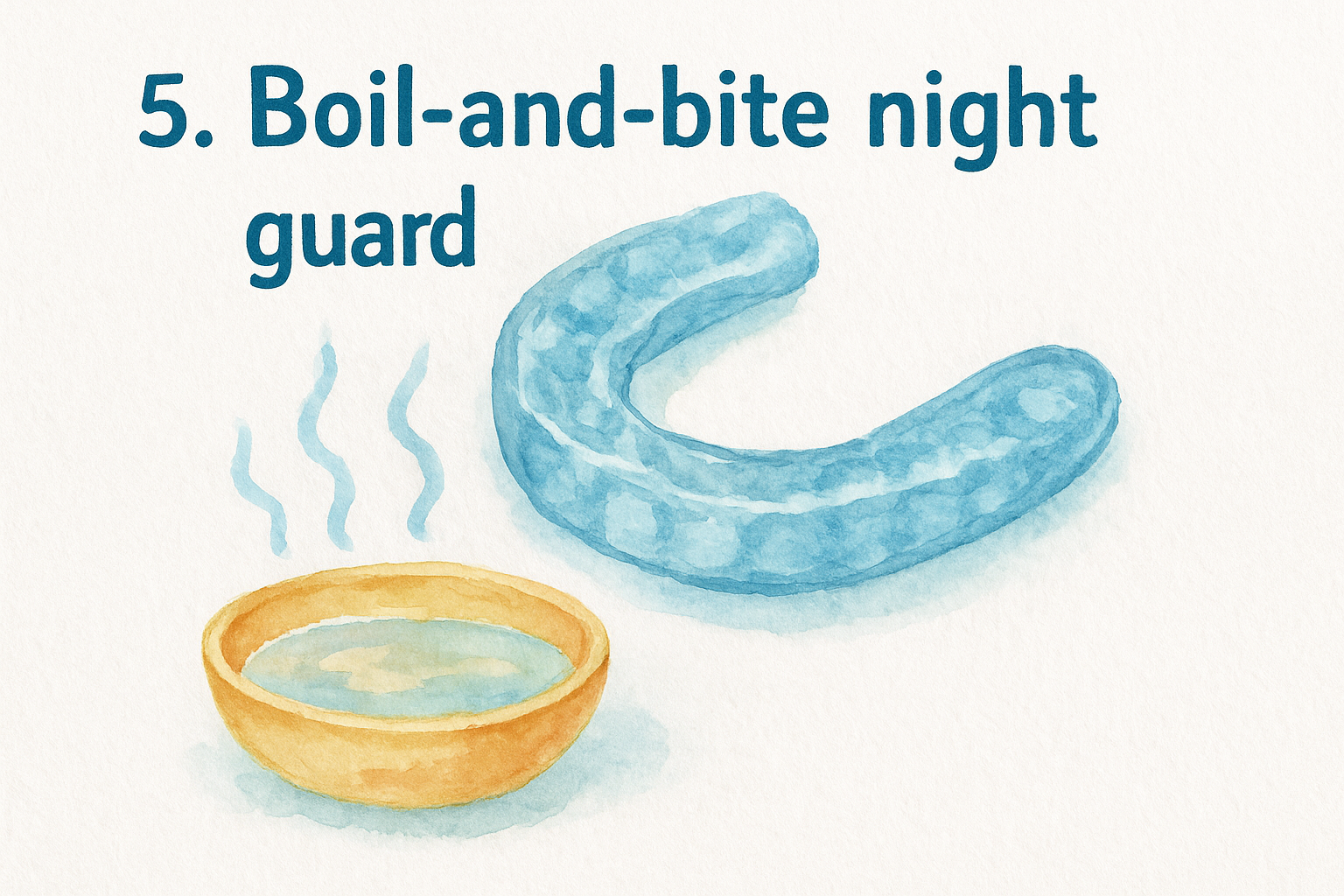
5. Boil-and-bite night guard
A boil-and-bite night guard sits in the middle ground between stock one-size guards and fully custom lab-made options. You soften the thermoplastic material in hot water, place it in your mouth, and bite down so it molds roughly to your teeth. Among the types of night guards for teeth grinding, this is one of the most widely available options at pharmacies and sporting goods stores.
What it is
The guard starts as a generic blank made from heat-moldable thermoplastic. Boiling the material softens it enough that your bite creates a partial impression when you clench down. The fit is more personalized than a stock guard but falls well short of a lab-fabricated custom appliance made from actual dental impressions.
Best for
Boil-and-bite guards suit occasional or mild grinders who want something better than a stock guard without spending money on a full custom option. They also work as a short-term solution if you need a guard quickly and are waiting on a custom order to arrive.
Pros
- Faster to fit than any custom lab option, taking only a few minutes at home
- More accessible fit compared to a fully generic stock guard
- Widely available at pharmacies without a prescription or dental visit
Cons and watch-outs
The fit quality has real limits. Most people find that the impression shifts or distorts slightly during the biting process, leaving the guard slightly uneven. The material is also soft enough that moderate to heavy grinders wear through it quickly, and repeated boiling to refit the guard weakens it further over time.
A boil-and-bite guard is a short-term stopgap, not a long-term solution for anyone who grinds consistently through the night.
Typical price range
Boil-and-bite guards typically cost $20 to $50 at most pharmacies, making them one of the most affordable options available.
6. Stock one-size-fits-all night guard
A stock night guard is the most basic option among the types of night guards for teeth grinding. It comes pre-formed in a fixed shape with no fitting process required, meaning you take it out of the packaging and it goes straight into your mouth.
What it is
Stock guards are mass-produced appliances available in a handful of generic sizes like small, medium, or large. There is no molding, boiling, or impression step involved. You wear the guard exactly as it comes from the box, which means the fit depends entirely on how closely your natural bite happens to match the manufacturer's mold.
Best for
This type suits very occasional or situational use rather than nightly wear. It can work as a short-term placeholder if your regular guard breaks or you are waiting on a custom appliance to be delivered.
Pros
Stock guards do have a narrow set of advantages, and understanding them helps you decide if this is the right temporary option for your situation:
- Immediately available with zero preparation time
- Lowest upfront cost of any option on this list
- Sold at most pharmacies without a prescription or dental visit
Cons and watch-outs
The fit on a stock guard is often loose or uneven, which means the guard shifts during sleep or falls out entirely. Because the material doesn't conform to your specific tooth surfaces, pressure distribution is inconsistent, putting strain on individual teeth rather than spreading force across your bite.
A guard that moves while you sleep offers little real protection and may disrupt your rest more than the grinding itself.
Typical price range
Stock night guards typically cost $10 to $30, making them the cheapest option available. That low price comes with significant trade-offs in fit and durability that make them a poor choice for anyone grinding consistently through the night.
How to choose and what to do next
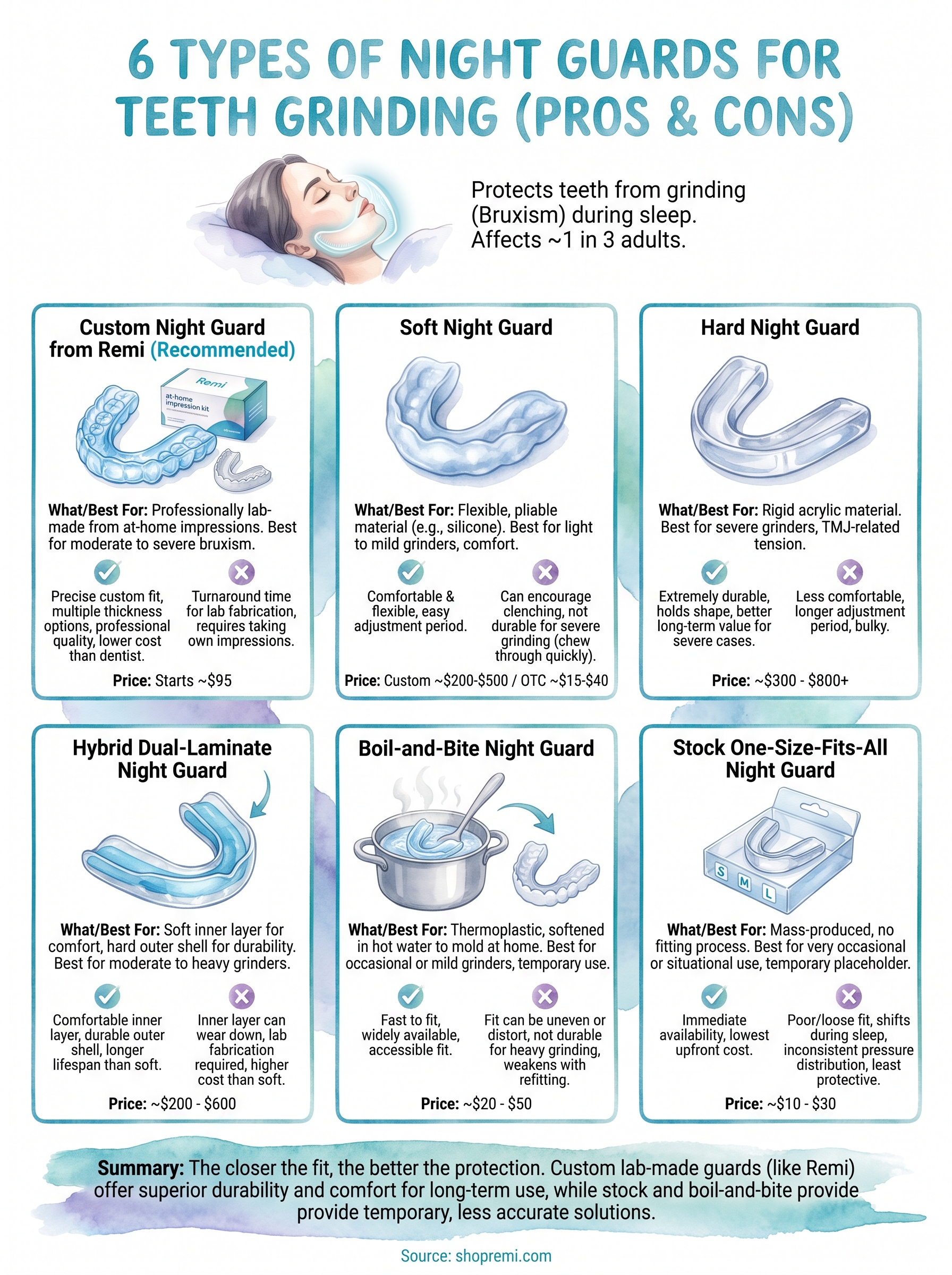
The right choice comes down to two things: how severely you grind and what you're willing to spend. If you grind lightly and occasionally, a boil-and-bite or soft guard might be enough to protect your teeth. If you grind consistently through the night with any real force, a custom-fitted option is the smarter investment from day one, since cheaper guards wear out fast and won't hold their shape under heavy pressure.
Reviewing the types of night guards for teeth grinding covered in this guide, the pattern is clear: the closer the fit, the better the protection. Stock and boil-and-bite guards offer immediate convenience but compromise on accuracy and durability. Custom lab-made guards cost more upfront but last longer and actually stay in place while you sleep.
For professional-quality protection at an affordable price, Remi is built exactly for that gap. Order the Remi custom night guard and get a guard that fits your actual teeth, not a generic mold.

