
 Guards + Retainers
 Custom Night Guard
 Retainer
 Emergency Order

 Whitening
 Whitening Kit
 Teeth Whitening Gel
 Dual-Action Foam
 Cleaning + Care
 Ultrasonic Cleaner Pro
 Water Flosser
 UV Toothbrush Sanitizer
 Deep Clean + Freshening Tablets
 Accessories
 Guard Removal Tool
 Replacement Nozzles
 Bundles

You spent months (maybe years) in braces, and now they're finally off. But here's the part your orthodontist probably stressed on your way out the door: how to wear a retainer after braces matters just as much as the braces themselves. Skip it or slack on your schedule, and your teeth can start shifting back toward their original positions within weeks.
The problem is, most people leave the orthodontist's office without a clear game plan. How many hours a day should you actually wear it? When can you switch to nighttime-only? What happens if you miss a few days? These are real questions that deserve straight answers, not vague advice. That's exactly why we built Remi, to make custom-fitted retainers accessible and affordable, delivered right to your door, without the dental office markup.
This guide breaks down your retainer wear schedule phase by phase, covers cleaning and care essentials, and gives you practical tips to protect the smile you worked hard for. Whether you just got your braces off or you're replacing a retainer that's seen better days, you'll walk away knowing exactly what to do and when to do it.
Why retainers matter after braces
When your orthodontist removes your braces, your teeth are physically held in new positions, but the bone and tissue surrounding them hasn't fully stabilized yet. The ligaments that connect your teeth to your jawbone have memory, and they naturally pull teeth back toward where they started. A retainer is what prevents that from happening.
Without consistent retainer use, most people see noticeable shifting within the first three to six months after braces come off.
Your bone needs time to catch up
Orthodontic treatment moves teeth by applying steady pressure, which causes bone to break down on one side of a tooth and rebuild on the other. When braces come off, that remodeling process is not finished. Your bone is still soft and actively reshaping around your newly positioned teeth. Wearing a retainer holds everything in place while that bone hardens, which takes at least 12 months for most people.
Think of it like a cast on a healing bone. You would not remove the cast early just because the bone looks fine from the outside. The same logic applies to understanding how to wear a retainer after braces: the visible results don't reflect what's still happening beneath the surface.
What skipping your retainer actually does
Skipping your retainer, even for a few days during the first year, gives your teeth an opening to drift. Small gaps can reappear, your bite can shift, and your front teeth can crowd again faster than you'd expect. Here's what inconsistent retainer use typically leads to:
- Front tooth crowding that undoes your alignment progress
- Bite changes that affect how your upper and lower teeth meet
- Gaps reopening between teeth that were closed during treatment
- Potential need for a second round of orthodontic treatment
Your orthodontist spent months moving your teeth into position, and you invested real time and money getting there. Wearing your retainer as directed is the only way to protect that result long-term.
Step 1. Follow your wear schedule
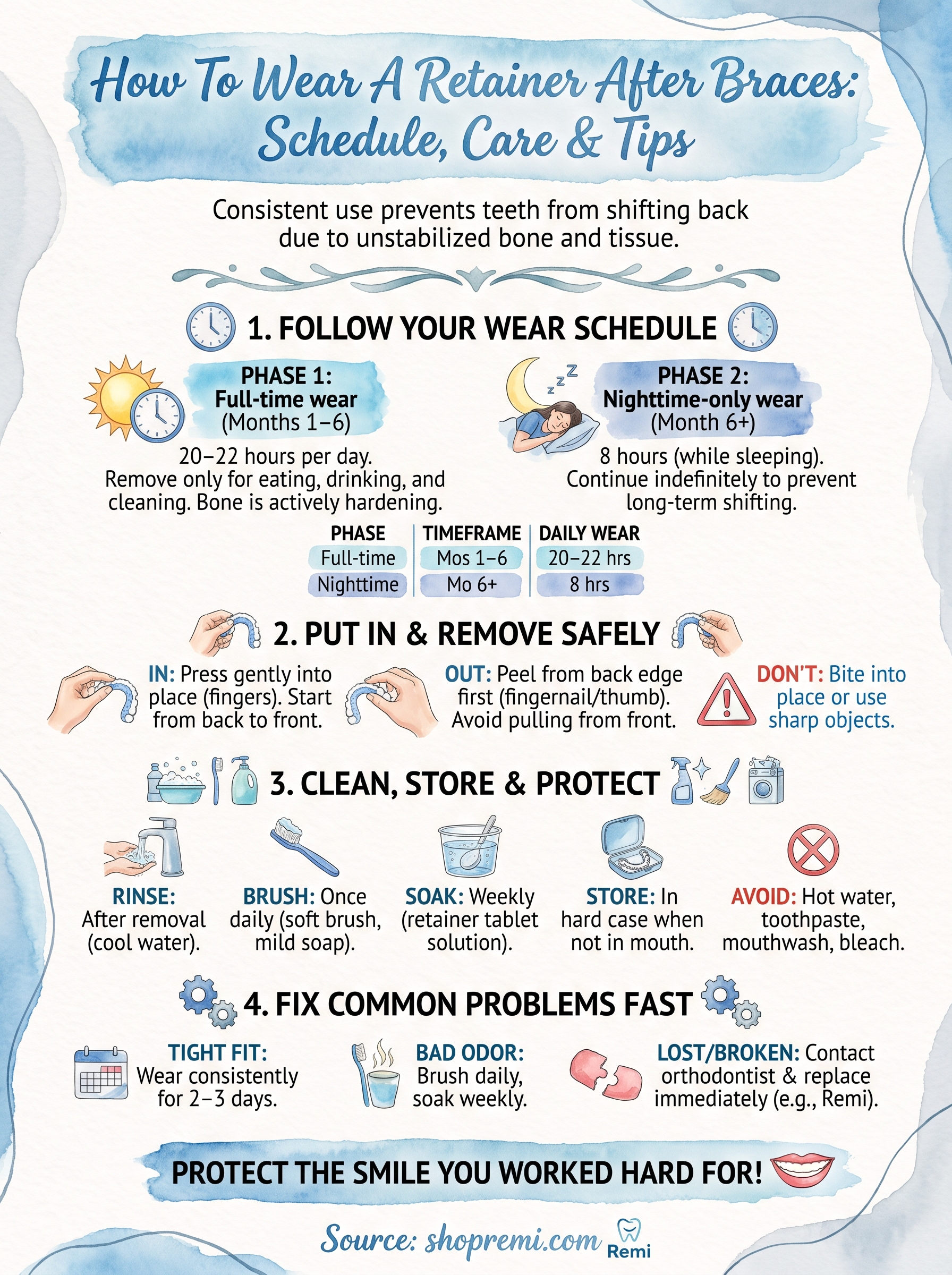
Your retainer schedule changes in two distinct phases, and knowing exactly when each phase applies is the foundation of how to wear a retainer after braces successfully. Most orthodontists prescribe a full-time wear period first, followed by a gradual transition to nighttime-only use.
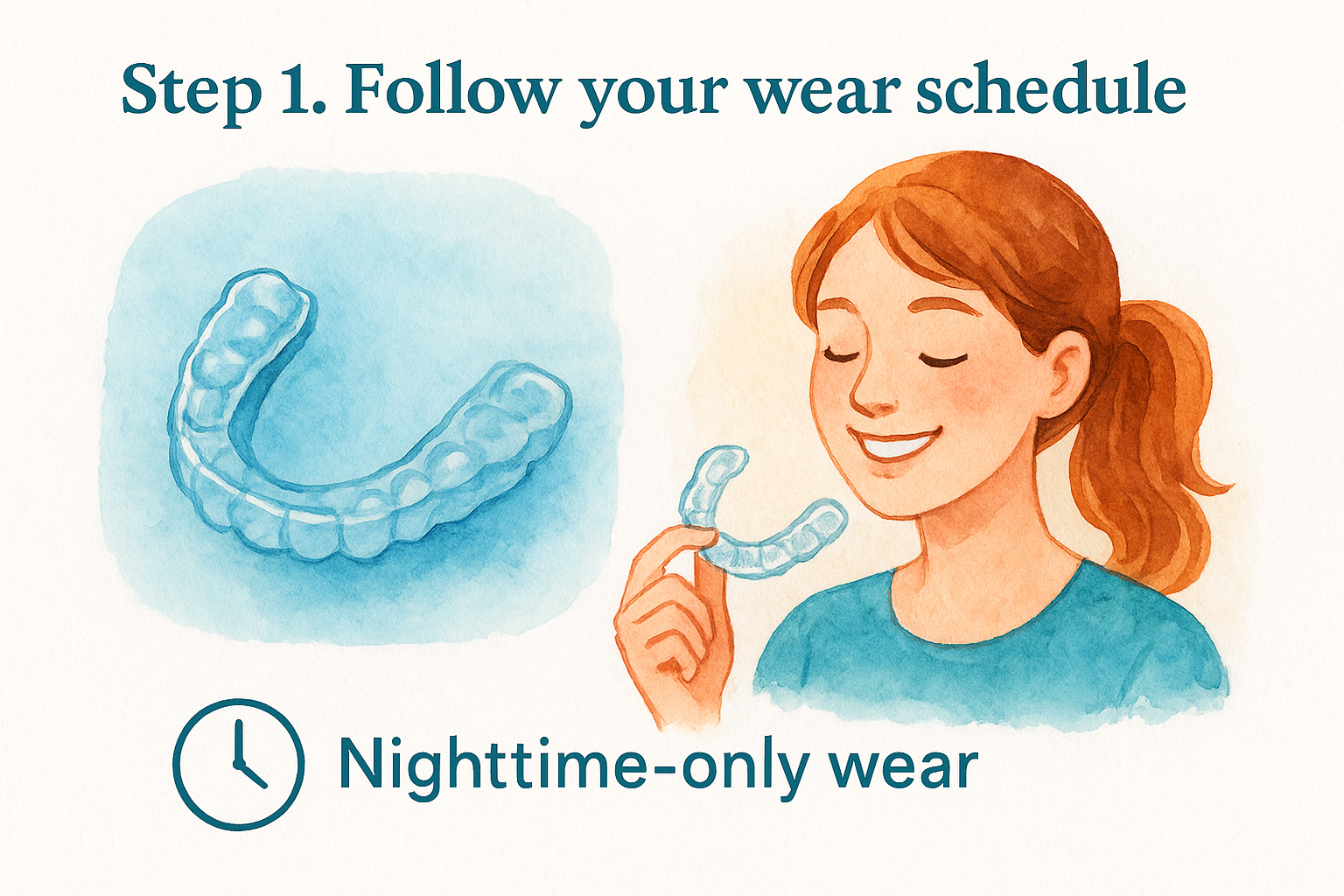
Phase 1: Full-time wear (months 1 to 6)
For the first three to six months after braces, wear your retainer 20 to 22 hours per day. The bone around your teeth is still actively hardening during this window, so consistent retainer pressure is what keeps everything locked in place. Only remove it for:
- Eating or drinking anything other than water
- Brushing and flossing your teeth
- Cleaning the retainer itself
Phase 2: Nighttime-only wear (month 6 and beyond)
Once your orthodontist confirms your teeth have stabilized, you can shift to nighttime-only wear, typically eight hours while you sleep. Many people assume they can stop wearing their retainer entirely after a year or two, but most orthodontists recommend indefinite nightly use to prevent long-term shifting.
| Phase | Timeframe | Daily wear |
|---|---|---|
| Full-time | Months 1 to 6 | 20 to 22 hours |
| Nighttime-only | Month 6 onward | 8 hours (while sleeping) |
Missing even a few nights during the transition phase can cause enough movement to make your retainer feel tight or fit poorly.
Step 2. Put in and remove your retainer safely
Knowing how to wear a retainer after braces includes the basics of getting it in and out without damaging it. Retainers are durable, but forcing them or handling them carelessly can crack the plastic, bend the wire, or distort the shape so they no longer fit correctly.
Putting your retainer in
Start with clean, dry hands before touching your retainer. Position it over your teeth and press it gently into place using your fingers, starting with the back teeth and working forward. Never bite it into position. Biting down to seat the retainer puts uneven pressure on the plastic and can crack it over time.
If your retainer feels tight after a few missed days, wear it consistently and the tightness should ease within a day or two, as long as the shift is minor.
Taking your retainer out
Hook your fingernail or thumb under the back edge of the retainer on one side and gently peel it away from your molars first, then work your way forward. Avoid pulling from the front wire only, since that puts stress on the thinnest part of the retainer and can warp or break it.
Never use sharp objects or tools to pry your retainer out. If it feels stuck, rinse your mouth with warm water first to loosen the fit before trying again.
Step 3. Clean, store, and protect your retainer
Caring for your retainer is a non-negotiable part of how to wear a retainer after braces correctly. A dirty or damaged retainer carries bacteria directly onto your teeth and gums, and a warped one stops doing its job entirely.
Daily cleaning routine
Rinse your retainer with cool water every time you remove it. Warm or hot water can warp the plastic permanently, so always keep the temperature low. For a deeper clean, use a soft-bristle toothbrush and mild dish soap to gently scrub the surface once a day. Avoid toothpaste, since the abrasives scratch the plastic and create grooves where bacteria collect.
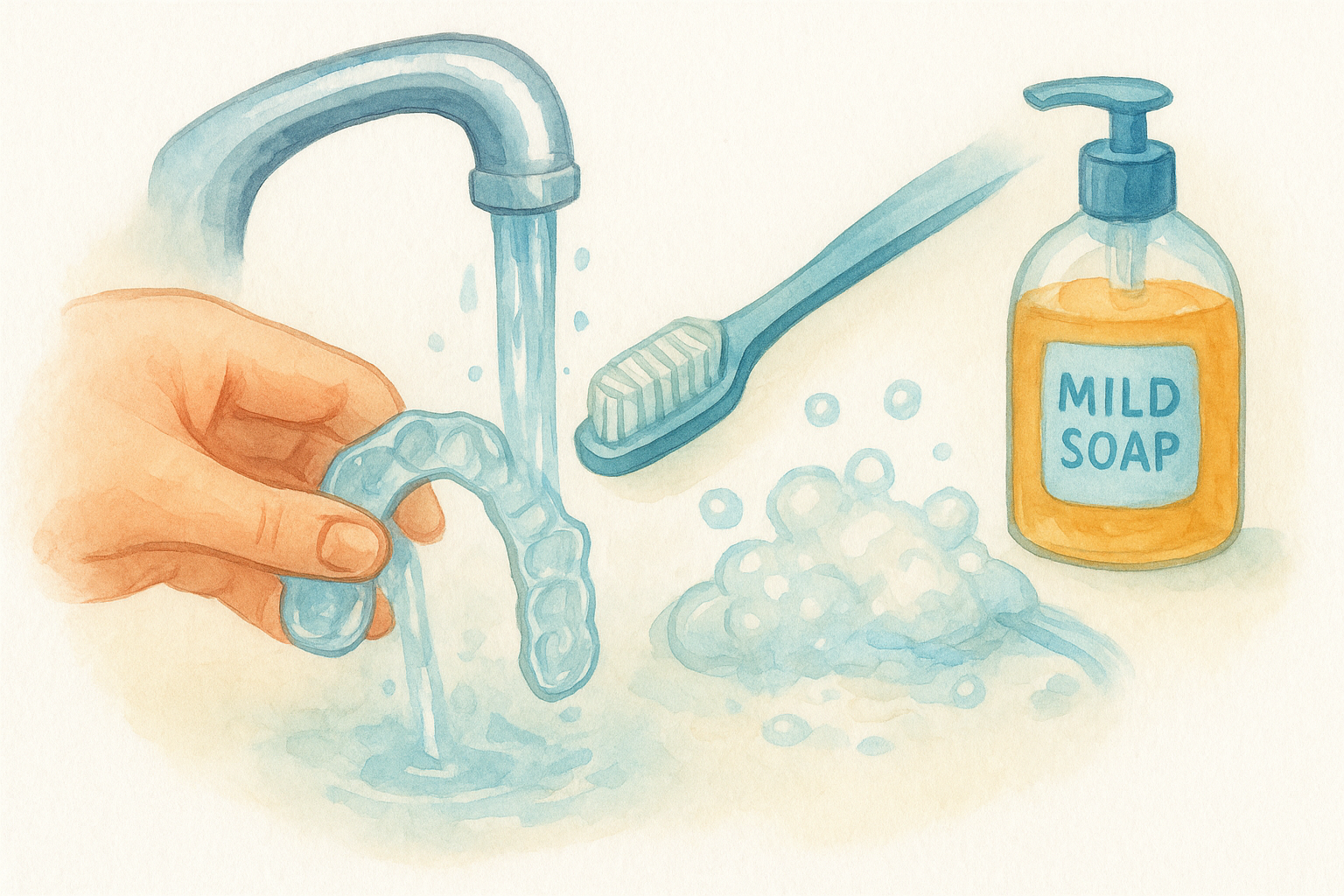
- Rinse immediately after removal with cool water
- Brush once daily with a soft toothbrush and mild soap
- Soak weekly in a retainer cleaning tablet solution for deeper disinfection
- Never use mouthwash, boiling water, or bleach on your retainer
A retainer soaked in denture cleaning tablets once a week stays significantly cleaner than one rinsed with water alone.
Storage and protection
Always store your retainer in its hard case when it is not in your mouth. Leaving it on a napkin, wrapped in a paper towel, or sitting exposed on a counter are the most common ways retainers get lost, damaged, or thrown away accidentally. Keep your case in a consistent spot so the habit sticks.
Fix common retainer problems fast
Even when you follow the right protocol for how to wear a retainer after braces, problems come up. Knowing how to handle the most common issues quickly keeps you from losing ground on your alignment.
Your retainer feels tight after missing days
A tight fit usually means minor tooth movement has already started. Do not force the retainer in or skip wearing it because it feels uncomfortable. Instead, wear it consistently for two to three days and the tightness should ease on its own as your teeth settle back. If the retainer still does not fit after a week of consistent wear, contact your orthodontist, since the shift may require a replacement.
Never leave a tight retainer out just because it is uncomfortable; that discomfort is your teeth moving back into position.
Your retainer smells or tastes bad
A persistent smell means bacteria and plaque have built up in the plastic. Step up your cleaning routine immediately: brush with mild soap daily and soak in a retainer cleaning tablet solution for 15 to 20 minutes at least twice a week. If the odor does not clear within a few days of consistent cleaning, the retainer may have deep scratches or micro-cracks harboring bacteria, and replacing it is the practical solution.
Your retainer is lost, cracked, or broken
Contact your orthodontist right away and order a replacement as fast as possible. Every day without a retainer is a day your teeth can drift. A direct-to-consumer retainer service like Remi can get you a replacement quickly without a costly office visit.
Next steps
You now have a clear, phase-by-phase picture of how to wear a retainer after braces, from the full-time wear window in the first six months to nightly use for the long term. The key takeaway is simple: consistent wear, proper cleaning, and fast action when problems come up are what keep your alignment results intact for years.
Your braces did the heavy lifting, and your retainer is what locks that work in place permanently. Missing days, skipping cleanings, or waiting too long to replace a damaged retainer are the fastest ways to undo months of orthodontic treatment.
If you need a replacement or are starting fresh, skip the expensive dental office visit. Remi's custom clear retainers are dentist-quality, custom-fitted, and delivered directly to your door at a fraction of the cost. Order yours today and keep your smile exactly where it should be.

