
 Guards + Retainers
 Custom Night Guard
 Retainer
 Emergency Order

 Whitening
 Whitening Kit
 Teeth Whitening Gel
 Dual-Action Foam
 Cleaning + Care
 Ultrasonic Cleaner Pro
 Water Flosser
 UV Toothbrush Sanitizer
 Deep Clean + Freshening Tablets
 Accessories
 Guard Removal Tool
 Replacement Nozzles
 Bundles

You put your retainer in, and it feels like it's squeezing your teeth. Maybe it's been a few days since you last wore it, or maybe it's brand new. Either way, you're wondering: how tight should a retainer be? A little pressure can be completely normal, but there's a real difference between a snug fit and something that's actually causing pain, and knowing where that line falls matters for both your comfort and your dental health.
A retainer that fits correctly should feel firm against your teeth without causing sharp pain, throbbing, or leaving marks on your gums. If it hurts to snap in or you can't fully seat it, that's your mouth telling you something needs attention. Ignoring a poor fit can lead to unwanted tooth movement or damage to the retainer itself. The good news is that most fit issues have straightforward solutions, especially when you're working with a custom-fitted retainer rather than a generic one.
At Remi, we make custom clear retainers using your exact dental impressions, taken at home, on your schedule, so fit problems tied to a one-size-fits-all approach aren't something you have to worry about. This article breaks down exactly what normal retainer tightness feels like, when to be concerned, and the specific steps to take if your retainer no longer fits the way it should. Whether your retainer is fresh out of the package or years old, you'll walk away knowing exactly what to do next.
Why retainer tightness matters after treatment
After orthodontic treatment ends, whether from braces or aligners, your teeth are not locked in place. The bone and tissue surrounding your teeth are still settling into their new positions, and without consistent retainer use, your teeth will drift. This is not a rare exception; it is the standard biological response to orthodontic work. Understanding how tight should a retainer be matters because the fit directly determines whether the retainer actually does its job.
A retainer that fits correctly holds your teeth in position; one that fits poorly either fails to hold or forces unwanted movement.
The biology behind tooth movement
Your teeth sit in a structure called the periodontal ligament, which connects each tooth to the surrounding jawbone. When orthodontic treatment shifts teeth, this ligament stretches and compresses to accommodate new positions. After treatment ends, it takes months to over a year for the bone to fully remodel and stabilize around those new tooth positions. During this window, the pull of the ligament and surrounding soft tissue can push teeth back toward where they started.
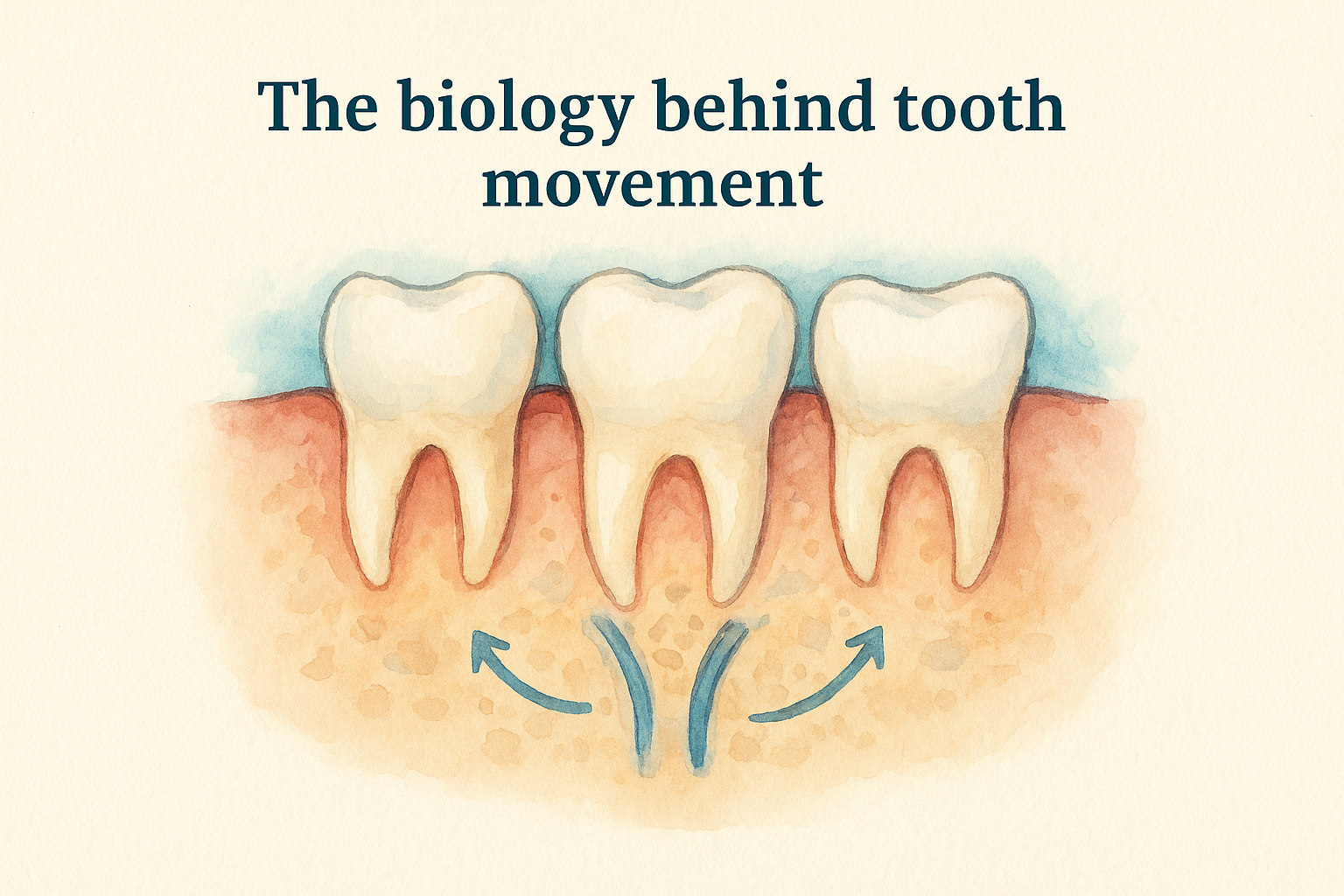
Retainers work by applying a gentle, consistent force against this movement. When your retainer feels slightly snug, that is often the pressure of the retainer doing exactly what it is designed to do. The level of force matters, though. Too much pressure from a poorly fitting retainer can move teeth in unintended directions, which is the opposite of what you need after investing time and money in orthodontic treatment.
Why skipping wear makes tightness worse
The single most common reason a retainer starts feeling tight is inconsistent or missed wear. Even skipping one or two nights can allow enough tooth drift for your retainer to feel noticeably snug the next time you put it in. Skip a week, and the fit can shift from snug to genuinely uncomfortable. Skip a month, and some retainers will no longer seat fully against the teeth.
This matters because many people interpret returning tightness as a sign the retainer is damaged or defective. In most cases, your teeth have simply moved, and the retainer is accurately reflecting that. The sooner you catch this drift, the easier it is to correct. If you wear the snug retainer consistently over a few days, your teeth will often shift back toward alignment on their own. Wait too long, and you may need a replacement retainer or additional dental intervention.
How fit connects to long-term dental stability
A well-fitted retainer does more than hold your teeth straight. It also protects your bite alignment, which affects how your jaw closes, how you chew, and even how comfortably you sleep at night. Misalignment that develops gradually from retainer neglect can contribute to jaw tension and uneven wear on tooth surfaces over time, creating problems that go well beyond cosmetics.
Custom-fitted retainers, made specifically from impressions of your teeth, maintain a much more precise fit than generic alternatives. When the fit matches your actual tooth contours, the distribution of pressure across your teeth is more even, making the retainer both more comfortable and more effective. This is why the quality of the fit at the start of retainer use sets the baseline for everything that follows, and why addressing any fit concerns early is always worth the effort.
What snug vs too tight feels like
Knowing how tight should a retainer be comes down to recognizing a specific set of physical sensations, and learning to tell them apart. A snug fit and an overly tight fit can both produce pressure, but they feel different in ways that are easy to identify once you know what to look for. Paying attention to these signals early saves you from either ignoring a real problem or panicking over something completely normal.
What a normal snug fit feels like
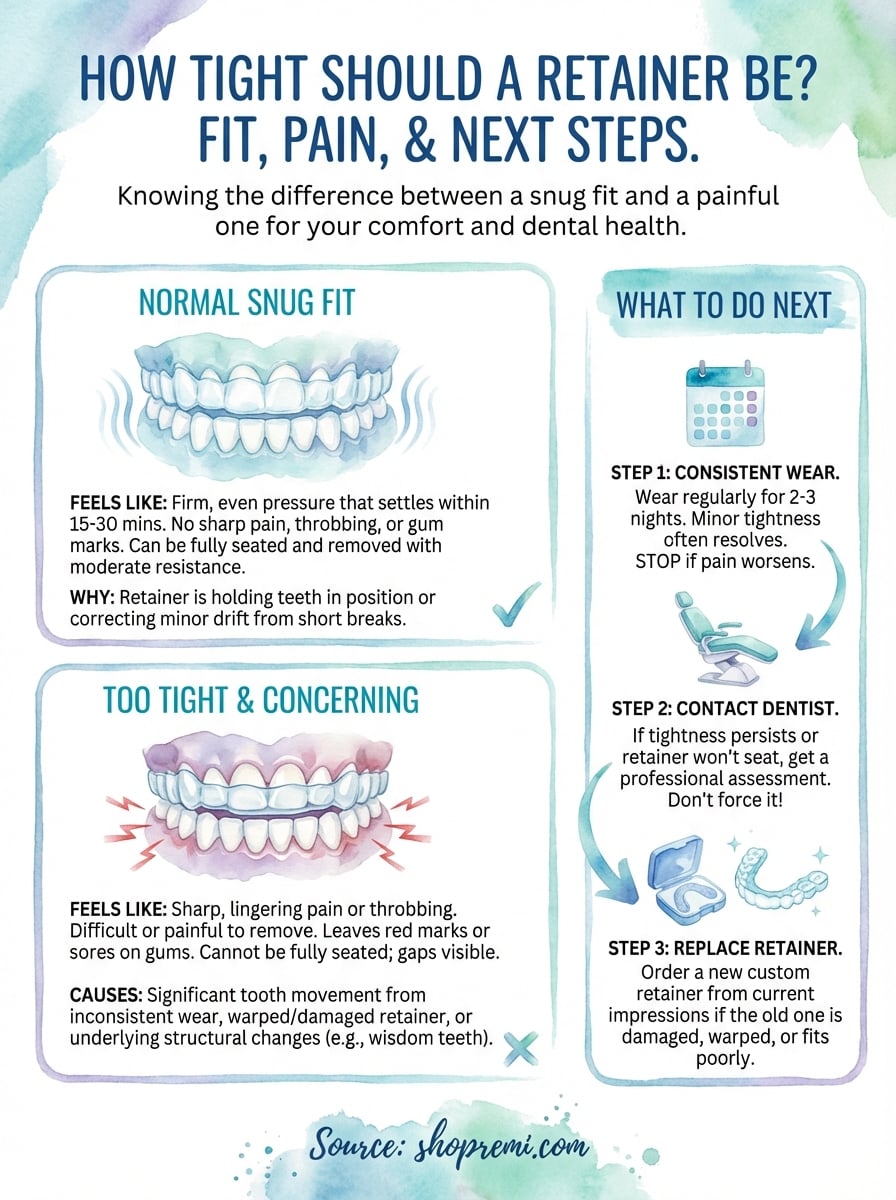
A correctly fitting retainer produces firm, even pressure across your teeth when you first seat it, especially after a short period of not wearing it. This sensation is most noticeable in the first few minutes and typically fades within 15 to 30 minutes as your teeth settle into position. You should be able to fully seat the retainer so that it sits flush against every tooth surface without forcing it or pressing it down with your fingers.
Normal tightness has a few consistent characteristics:
- Pressure feels even, not concentrated on one or two teeth
- Discomfort fades within a short time after putting it in
- You can remove the retainer without significant pain
- No visible marks, cuts, or irritation appear on your gums after wear
- The retainer clicks or snaps fully into place without resistance
If your retainer fits but feels snug at first, that is usually a sign your teeth shifted slightly and the retainer is correcting that drift.
Signs your retainer is too tight
A retainer that fits too tightly feels different from the start. The pressure does not fade after the first few minutes. Instead, it builds or remains sharp, sometimes creating a throbbing sensation in specific teeth. You may notice that the retainer does not sit flush against your teeth at all, leaving visible gaps between the retainer and your tooth surfaces, which means it is not fully seated.
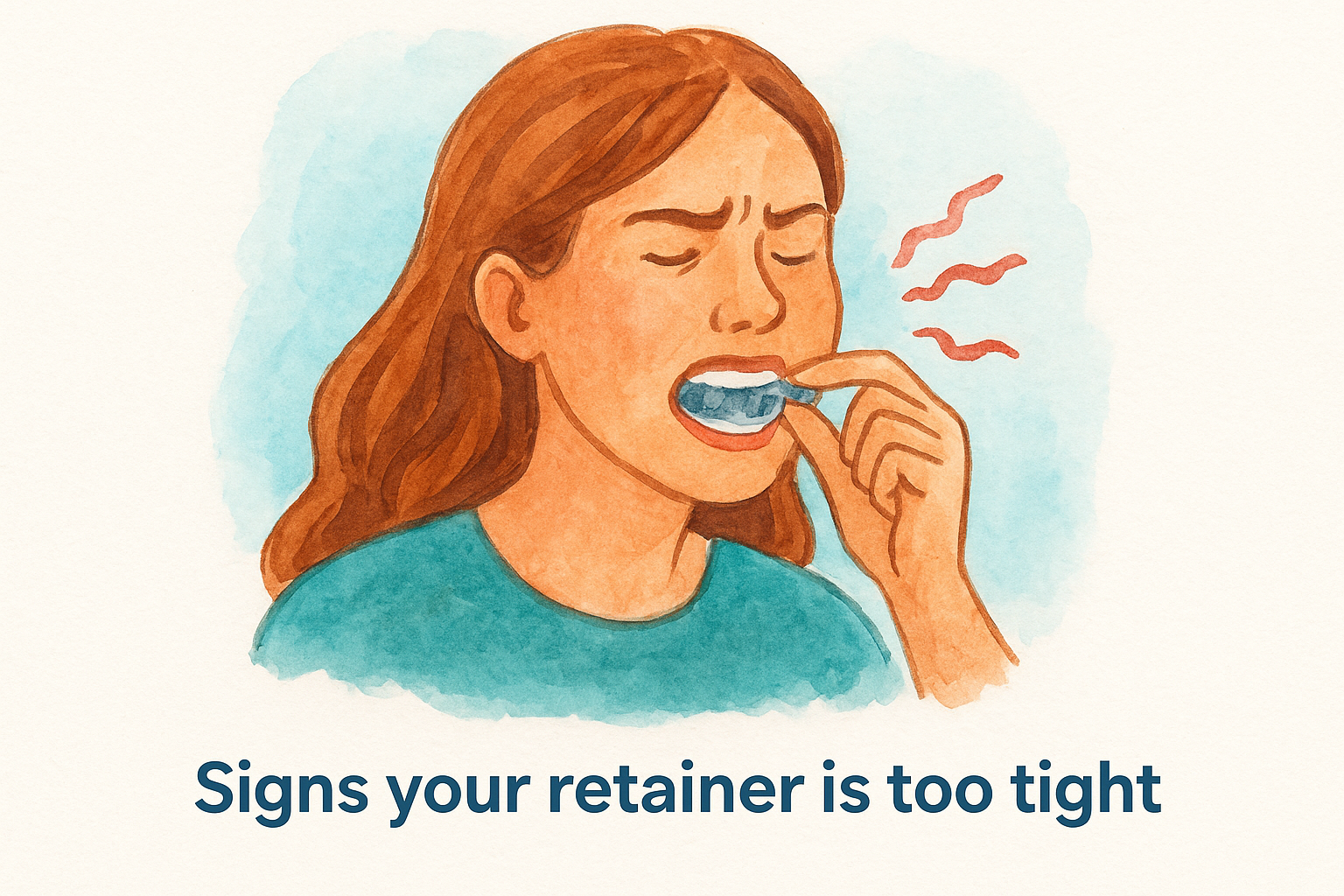
Pain during removal is another clear warning sign. If pulling your retainer out produces sharp discomfort or leaves red marks and indentations on your gums, the fit is off. A retainer should come out with moderate resistance, not pain. Similarly, if you feel soreness that lingers for hours after removing the retainer, rather than fading quickly, that level of pressure is doing more harm than good.
Sore jaw muscles after wearing your retainer overnight also suggest the fit needs attention. Your muscles compensate when your bite does not align properly, and that compensation shows up as tension or stiffness in your jaw the next morning.
Common reasons a retainer starts feeling tight
Before you decide what to do about a tight retainer, it helps to understand why it got that way. Most causes are predictable and preventable once you know what you're dealing with. A retainer does not randomly start fitting differently; something specific changed, either in your wearing habits, the retainer itself, or your mouth.
You stopped wearing it regularly
The most frequent cause of a tight retainer is inconsistent wear. Teeth are always under pressure from the surrounding tissue, and even a short gap in retainer use gives them enough freedom to drift slightly. Two nights off might produce mild snugness. A week or more without wearing your retainer can push the fit into genuinely uncomfortable territory, where the retainer no longer seats fully against your teeth.
The longer you go without wearing your retainer, the more movement accumulates, and the harder it becomes to get back on track without professional help.
Many people underestimate how quickly this happens because tooth movement is not visible in a mirror. The retainer is often the first signal that something shifted, which is why consistent daily wear, especially in the first year after orthodontic treatment, is the most effective way to keep fit problems from developing.
The retainer material has warped or aged
Retainers are not permanent devices. Over time, the plastic or acrylic material can warp, particularly when exposed to heat. Leaving your retainer on a car dashboard, rinsing it with hot water, or running it through a dishwasher can all distort the shape enough to change how it fits. Even without obvious heat exposure, daily wear and cleaning gradually wear down the material, and a retainer that is several years old may no longer match the exact contours of your teeth.
Physical damage like cracks or chips also affects fit. A crack changes the structural integrity of the retainer, which shifts how force is distributed when you seat it.
Your teeth shifted for other reasons
Retainer tightness is not always about wear gaps or material damage. Wisdom teeth coming in, dental work like crowns or fillings, or even natural age-related changes can shift your bite enough to affect how a retainer fits. If you are asking how tight should a retainer be and the answer has changed recently without any clear gap in your wear schedule, a shift in your underlying tooth or jaw structure could be the cause, and that warrants a conversation with your dentist.
How to tell if your retainer still fits
You do not need a dentist appointment to get a basic read on your retainer's fit. There are several physical checks you can run at home that tell you quickly whether your retainer is doing its job or whether it has drifted out of alignment with your teeth. Catching a fit problem early gives you more options for fixing it, so making this a regular habit is worth the small amount of time it takes.
The at-home fit test
Start by washing your hands and your retainer thoroughly, then seat the retainer in your mouth without forcing it. It should settle fully into place within a few seconds using only light, even pressure from your fingers. If you find yourself pressing hard on specific areas to get it to sit flush, or if you feel sharp resistance on one side but not the other, the fit is uneven and worth investigating further.
After the retainer is seated, run through this quick checklist:
- Gaps between the retainer and tooth surfaces indicate the retainer is not fully seated and teeth have likely shifted
- Sharp pain or throbbing during or after seating signals too much pressure in a specific area
- The retainer should sit flush along the gumline without lifting or rocking when you gently press on it
- Removal should require moderate effort, not significant pain or pulling
If your retainer lifts away from your back teeth when you bite down gently, it no longer matches your bite and needs to be evaluated.
Signs the fit has changed over time
Sometimes the change in fit happens so gradually that you stop noticing until the problem is significant. One reliable way to catch this is to pay attention to how your retainer feels after a single night off versus after a week off. If wearing it after just one missed night already produces noticeable discomfort, your teeth are moving faster than they should, which points to a fit or wear schedule issue.
Visually inspecting your retainer by holding it up to a light is another useful check. Look for warping along the edges, cracks along the surface, or areas where the material has thinned or discolored unevenly. A retainer that looks structurally compromised almost always fits differently than it should, and no amount of consistent wear will fix a warped or damaged appliance. When you spot physical damage, replacement is the right call regardless of how tight should a retainer be in your specific situation.
What to do when your retainer feels too tight
Once you've confirmed that your retainer fits poorly, the next steps depend on how tight it feels and why. A mildly snug retainer behaves differently than one that refuses to seat fully, and treating them the same way can make things worse. Understanding how tight should a retainer be in your specific situation helps you choose the right response rather than guessing.
Give consistent wear a chance first
If your retainer feels snug but still seats fully against your teeth, try wearing it consistently for two to three nights in a row before drawing any conclusions. Minor tooth drift from a few missed nights often corrects itself when you return to your regular wear schedule. Expect some initial pressure that fades within 20 to 30 minutes of putting it in.
If the pressure does not ease after the first few nights of consistent wear, or if it gets sharper rather than milder, stop wearing it and move to the next step.
Never force a retainer that will not seat completely. Applying pressure to a poorly fitting retainer does not push your teeth back into alignment; it creates uneven force that can shift teeth in unintended directions, which is a problem you do not want to add to an already frustrating situation.
Contact your dentist when consistent wear is not enough
If returning to a regular schedule does not resolve the tightness within a few nights, schedule an appointment with your dentist or orthodontist. Bring your retainer so they can physically assess the fit and check whether your teeth have moved beyond what your current retainer can address. In many cases, a new set of impressions and a replacement retainer is all you need to get back on track.
Putting this off works against you. The longer significant tooth movement goes unaddressed, the more your options narrow. What requires a simple retainer replacement today could require additional orthodontic work months from now.
Order a replacement retainer when yours is damaged or worn out
When tightness comes from warping, cracking, or material breakdown rather than tooth movement, no amount of consistent wear will fix the problem. A structurally compromised retainer cannot apply force correctly, and continuing to wear it can irritate your gums or shift teeth in the wrong direction. At this point, ordering a fresh custom retainer made from current impressions of your teeth is the right move, and Remi makes that process straightforward from home.
Keep your smile stable
Knowing how tight should a retainer be gives you the information to stay ahead of problems before they become expensive or difficult to reverse. A snug fit is normal and expected, especially after a short gap in wear; sharp, lingering pain or a retainer that won't fully seat is not. The difference between those two experiences tells you exactly what action to take, whether that's returning to a consistent wear schedule or ordering a replacement.
Your retainer is the final line of defense for the investment you made in your smile. Treating it as optional is the fastest route back to misalignment, while wearing it consistently is the simplest way to keep your teeth where they belong long-term. If your current retainer no longer fits correctly or needs replacing, order a custom clear retainer from Remi and get a precise, dentist-quality fit made from your own impressions, at home, for a fraction of the dental office price.

