
 Guards + Retainers
 Custom Night Guard
 Retainer
 Emergency Order

 Whitening
 Whitening Kit
 Teeth Whitening Gel
 Dual-Action Foam
 Cleaning + Care
 Ultrasonic Cleaner Pro
 Water Flosser
 UV Toothbrush Sanitizer
 Deep Clean + Freshening Tablets
 Accessories
 Guard Removal Tool
 Replacement Nozzles
 Bundles

Most people know they should floss daily, but let's be honest, traditional string floss isn't exactly enjoyable. It's awkward, it can hurt sensitive gums, and it often ends up forgotten in a drawer. That's exactly why use a water flosser is one of the most common oral health questions people search for, and the answer might change how you take care of your teeth for good.
A water flosser uses a targeted stream of pressurized water to clean between teeth and along the gumline, reaching spots that string floss and brushing routinely miss. For people who grind their teeth, wear retainers, or use night guards, like the custom-fitted ones we make here at Remi, keeping gums healthy is especially important. Oral appliances sit directly against your gums and teeth, so a thorough cleaning routine matters more than most people realize.
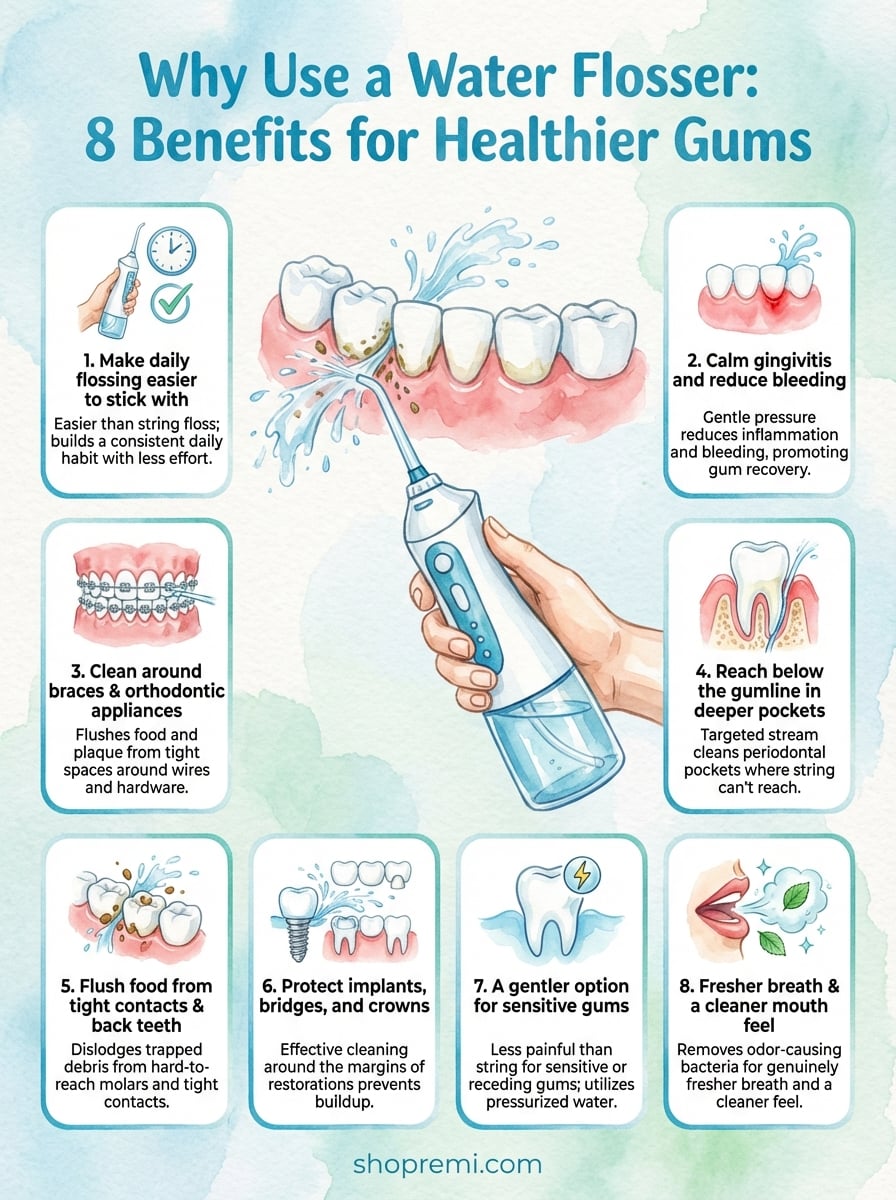
Below, we're breaking down eight specific benefits of using a water flosser that go well beyond just replacing string floss. Whether you're dealing with bleeding gums, braces, dental work, or you simply want a more effective clean, this list covers what a water flosser actually does and why so many dentists now recommend one.
1. Make daily flossing easier to stick with
The biggest barrier to consistent flossing isn't motivation, it's the experience itself. String floss requires precise hand coordination, can cut into your fingers, and feels genuinely uncomfortable if your gums are inflamed. A water flosser removes most of those friction points by turning the process into something you can complete in under a minute with minimal effort. When something is easier to do, you're far more likely to actually do it every day.
Why this matters for gum health
Gum health depends heavily on consistency. Plaque starts forming along the gumline within 24 hours of brushing, and if you skip interdental cleaning for even a few days, that buildup begins to irritate the tissue. Over time, irregular flossing contributes to gingivitis, which can progress to more serious periodontal disease if left unaddressed.
The most effective flossing routine is the one you'll actually follow through with every single day.
Building a daily habit is the real goal, and a water flosser makes that significantly more achievable than string floss for most people.
Who this helps most
People who have struggled to keep up with string flossing for years get the most value from switching. Those with limited dexterity, including older adults or people recovering from hand or wrist injuries, often find that a water flosser is the only realistic daily option.
If you wear a night guard or retainer, you're already adding steps to your oral hygiene routine. Replacing difficult string flossing with a faster, easier method keeps the whole routine manageable and sustainable over the long term.
How to get the best results
Start your water flosser on its lowest pressure setting and increase gradually as your gums adjust over the first week or two. Aim the tip at a 90-degree angle to your gumline and move slowly between each tooth without rushing. A few additional tips to build the habit:
- Use warm water to make the experience more comfortable, especially on sensitive gums
- Floss before brushing so loosened debris gets cleared away by your toothbrush
- Keep your flosser on the counter where you can see it, not stored in a cabinet
2. Calm gingivitis and reduce bleeding
If your gums bleed when you brush or floss, that's a sign of early-stage inflammation, not a reason to stop cleaning. This is one of the clearest answers to why use a water flosser: the steady stream of pressurized water removes plaque along the gumline gently, without the tissue trauma that string floss can cause.
Why this matters for gum health
Gingivitis develops when bacterial plaque irritates gum tissue, leading to redness, swelling, and bleeding. Left untreated, it progresses to periodontitis, which can damage the bone anchoring your teeth. Daily water flossing disrupts that plaque buildup consistently, giving your gums a real chance to recover.
Bleeding gums often improve noticeably within two to three weeks of consistent water flossing.
Who this helps most
Anyone with early gingivitis symptoms benefits from switching to a water flosser. The gentler cleaning action reduces the chance of further irritating already sensitive tissue, making it easier to stay consistent with daily flossing.
People who wear night guards or retainers face added risk because appliances trap bacteria against gum tissue overnight. Adding daily water flossing helps offset that extra bacterial exposure and protects gum health over time.
How to get the best results
Direct the tip just below the gumline and hold it briefly at each tooth to flush the pocket. As sensitivity decreases, increase the pressure setting gradually. A few practical tips:
- Floss daily at the same time to build a habit
- Use warm water for extra comfort
- Track bleeding reduction after two weeks of consistent use
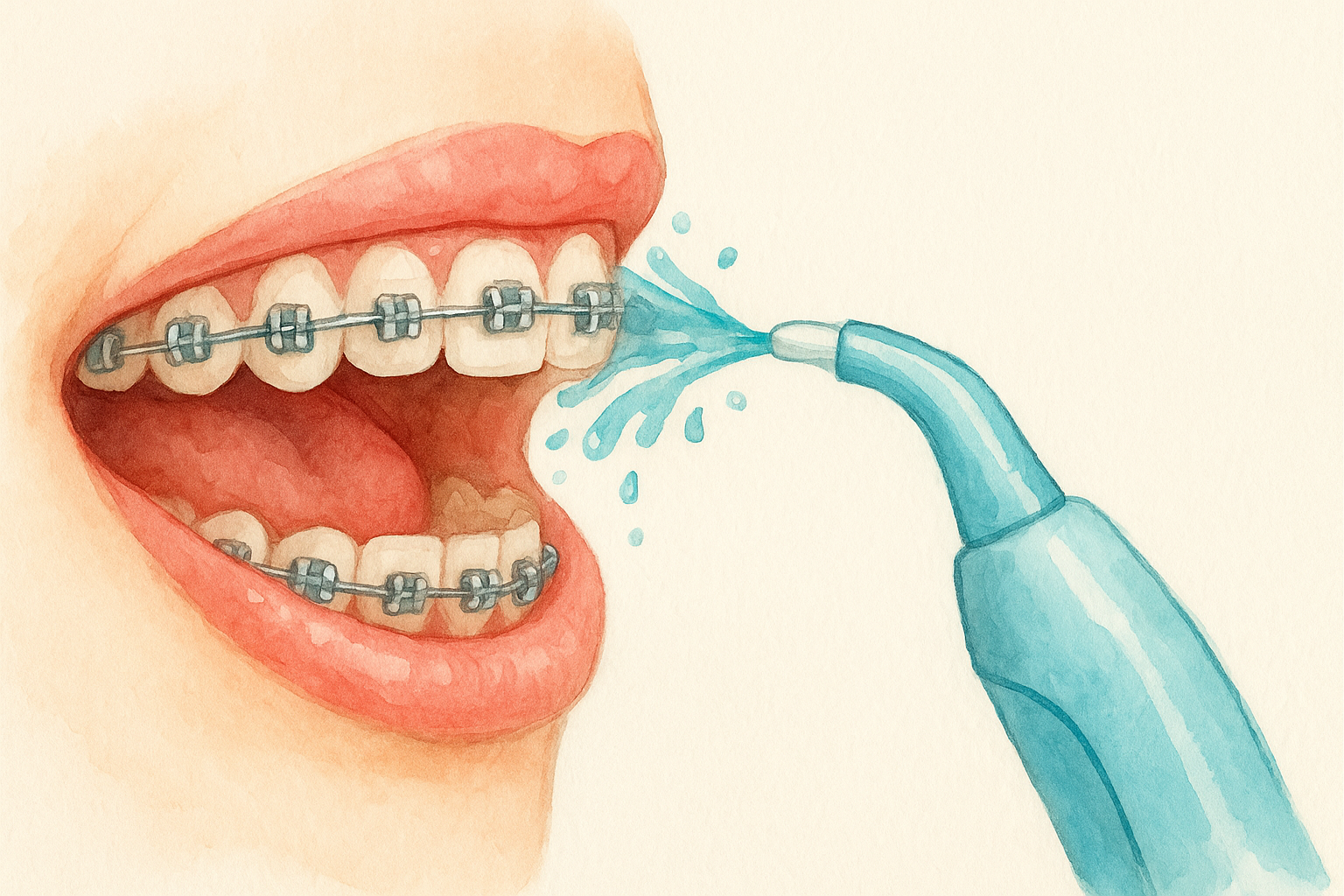
3. Clean around braces and orthodontic appliances
Braces and orthodontic appliances create dozens of tight spaces where food and plaque collect every day. Threading string floss through wires takes several minutes and still misses many areas, leaving your gums at risk. This is one of the most practical reasons why use a water flosser is such a common question among orthodontic patients.
Why this matters for gum health
Food trapped around brackets and wires feeds bacteria that attack gum tissue and enamel simultaneously. Without thorough daily cleaning, inflammation and white spot lesions develop quickly, causing damage that remains visible even after your braces come off.
Orthodontic patients who use a water flosser consistently show significantly less gum inflammation than those relying on string floss alone.
A water flosser directs a precise stream of water into every gap around your hardware that string floss simply cannot navigate efficiently or quickly.
Who this helps most
Anyone wearing traditional metal or ceramic braces gains an immediate advantage from using a water flosser. Patients with fixed retainers, which bond directly to the back of your teeth, also struggle to clean underneath the wire with string floss. A water flosser handles both appliance types with the same ease and speed.
How to get the best results
Set your flosser to a medium pressure level and guide the tip along each bracket, spending a few seconds above and below the wire. A few targeted tips:
- Angle the tip directly at the gumline around each bracket
- Rinse from back teeth forward to push debris out
- Use it after every meal when possible, not just once daily
4. Reach below the gumline in deeper pockets
String floss cleans the surface between teeth, but periodontal pockets, the small gaps between your teeth and gums, need a different approach entirely. A water flosser delivers a concentrated stream of water that penetrates several millimeters below the gumline, flushing out bacteria and debris from areas that string floss simply cannot reach.
Why this matters for gum health
Deeper gum pockets form when gum tissue pulls away from the tooth due to inflammation or bone loss. Bacteria that colonize these pockets cause ongoing damage that worsens quietly over time, often without noticeable pain.
Consistent water flossing can reduce the depth of periodontal pockets by disrupting the bacterial colonies that drive inflammation.
Removing that bacterial load daily gives your gum tissue a real opportunity to tighten back around the tooth and recover over time.
Who this helps most
People diagnosed with early or moderate periodontal disease benefit significantly from daily water flossing. If your dentist has measured pockets deeper than 3 millimeters at a recent cleaning, a water flosser becomes an important tool for managing those areas between professional visits.
- Adults with a history of gum disease
- People who skip flossing due to discomfort
- Anyone whose dentist has flagged deeper pocket measurements
How to get the best results
Use a periodontal or sulcus tip attachment, designed specifically for deeper pocket access, and set your flosser to low or medium pressure. Angle the tip just below the gumline and pause briefly at each tooth to let the water flush the pocket fully before moving on.
5. Flush food from tight contacts and back teeth
Your molars are the hardest teeth to clean thoroughly, and tight contacts between back teeth trap food in ways that brushing never addresses. A water flosser jets water directly into those narrow spaces, dislodging debris that sits against your gum tissue for hours if you don't remove it. This is one of the most practical answers to why use a water flosser regularly.
Why this matters for gum health
Food particles left between tight contacts feed the bacteria that produce acid and toxins directly at your gumline. The longer that debris sits, the more it fuels the inflammation cycle that leads to gingivitis and, eventually, deeper gum problems.
Removing food from tight contacts the same day it gets trapped significantly reduces the bacterial load your gums deal with overnight.
Back teeth carry most of the force of chewing, which also means they collect the most debris. Keeping those areas consistently clean protects both the tissue and the enamel around them.
Who this helps most
People with naturally tight tooth contacts or crowded back teeth struggle most with this issue. If your dentist regularly finds inflammation specifically around your rear molars, food retention between those teeth is likely a major contributing factor.
How to get the best results
Angle the tip toward your back teeth first, then work forward to push debris out of your mouth rather than further in. A few focused tips:
- Use medium to high pressure on back teeth where contacts are tightest
- Rinse both the cheek side and tongue side of each molar
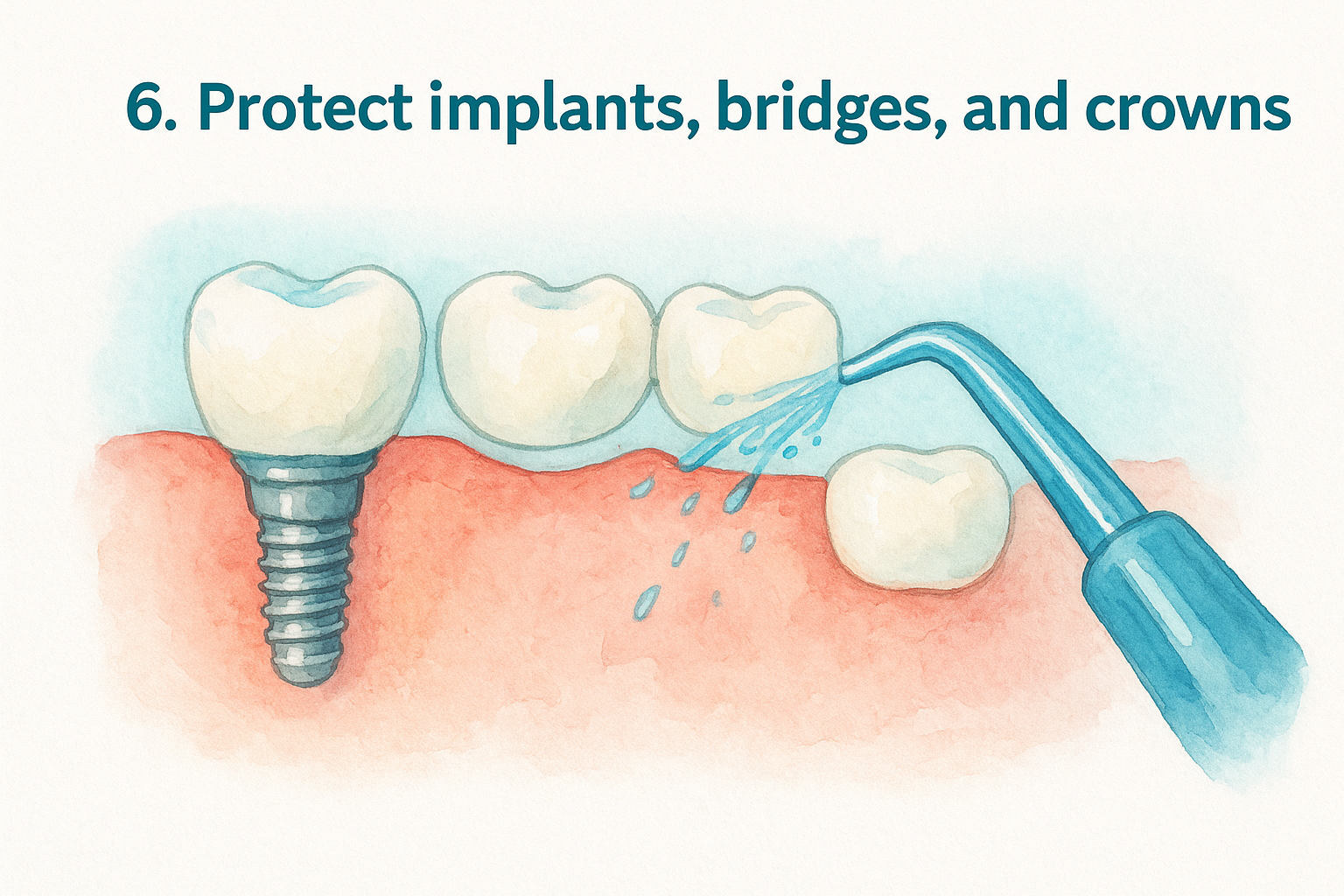
6. Protect implants, bridges, and crowns
Dental implants, bridges, and crowns require more careful cleaning than natural teeth because bacteria can cause serious damage around them without your body's natural warning signals. This is another strong reason why use a water flosser makes sense: the pressurized stream reaches the margins where restorations meet your gum tissue, areas that are particularly vulnerable to bacterial buildup.
Why this matters for gum health
Peri-implantitis, which is infection around a dental implant, develops when bacteria accumulate at the implant's base. Once peri-implantitis takes hold, it can destroy the bone that holds your implant in place, potentially leading to implant failure. Bridges create a similar challenge because the pontic (the false tooth spanning the gap) sits directly against your gum tissue, trapping debris underneath it every single day.
Protecting the tissue around restorations with daily water flossing significantly lowers your risk of expensive repair or replacement procedures down the road.
Who this helps most
Anyone with one or more dental implants, fixed bridges, or large crown restorations benefits most from this approach. String floss around bridge pontics requires a threader, which most people skip entirely due to the extra time it takes.
How to get the best results
Set your flosser to a low to medium pressure level and angle the tip directly at the margin where your restoration meets the gum tissue. A few targeted tips:
- Trace around every crown margin slowly and deliberately
- Flush under bridge pontics from both the cheek side and tongue side
- Clean daily without exception to prevent buildup from accumulating at those margins
7. A gentler option for sensitive gums
String floss pulls through tight spaces with direct contact against gum tissue, which can cause bleeding, irritation, and real pain if your gums are already sensitive. A water flosser uses pressurized water instead of physical scraping, so the cleaning action doesn't traumatize fragile tissue the same way. For people with chronically sensitive gums, this gentler approach removes another major reason to skip daily cleaning.
Why this matters for gum health
Sensitive gums are often inflamed gums, and inflamed tissue tears and bleeds more easily under direct contact. When flossing hurts, most people stop doing it, which makes the underlying inflammation worse over time. A water flosser breaks that cycle by delivering effective cleaning without the sharp discomfort that pushes people away from the habit entirely.
Consistently cleaning sensitive gums gently is far more effective than aggressively cleaning them occasionally.
Who this helps most
People with diagnosed gum sensitivity, receding gums, or a history of gingivitis get the most immediate relief from switching to a water flosser. This is one of the clearest answers to why use a water flosser when string floss feels genuinely painful. A few other groups who benefit include:
- Those recovering from dental procedures where gum tissue is still healing
- People taking medications that cause gum tenderness as a side effect
How to get the best results
Start at the lowest pressure setting and stay there until your sensitivity decreases noticeably, which typically takes one to two weeks of daily use. A couple of practical tips:
- Use warm water to reduce the shock to sensitive tissue
- Increase pressure only after your gums show clear improvement
8. Fresher breath and a cleaner mouth feel
Bad breath most often comes from bacteria and decaying food debris collecting between your teeth and below your gumline, not from deeper sources. A water flosser flushes those areas completely each day, removing the odor-causing buildup that brushing alone never fully clears. This daily flush is one of the most immediately noticeable answers to why use a water flosser as part of your regular routine.
Why this matters for gum health
The bacteria responsible for bad breath are the same bacteria driving gum inflammation. When you flush them out consistently with a water flosser, you reduce both the unpleasant odor and the tissue damage they cause at the same time. Your mouth feels genuinely clean because you're removing the actual source of the problem, not covering it with a flavor.
Addressing bacterial debris between teeth daily is the most reliable way to improve breath at the source rather than masking it.
Who this helps most
People with persistent bad breath despite regular brushing and mouthwash get the most noticeable improvement from adding a water flosser. If you wear a night guard or retainer, bacteria accumulate against your teeth while you sleep, which makes thorough evening cleaning especially critical for fresher breath the following day.
How to get the best results
Use your flosser in the evening before bed to clear the full day's debris before bacteria work overnight. Two practical tips to get the most out of each session:
- Use warm water for a more comfortable and thorough rinse
- Follow with brushing immediately to clear any remaining loosened debris
Next steps
Every benefit covered in this article points to the same conclusion: consistent daily cleaning between your teeth and below your gumline protects your gums far better than brushing alone. Whether you're dealing with sensitivity, dental work, or simply struggling to stick with string floss, why use a water flosser comes down to getting a more effective clean with less effort and discomfort every single day.
Your next step is straightforward. Pick up a water flosser, start on the lowest pressure setting, and give yourself two weeks to feel the difference. Most people notice reduced bleeding and a noticeably cleaner mouth feel within the first week of consistent use. If you wear a night guard or retainer, adding evening water flossing to your routine makes your entire oral hygiene routine more complete and effective. The Remi Cordless Water Flosser is rechargeable, portable, and built for exactly that kind of everyday use.

