
 Guards + Retainers
 Custom Night Guard
 Retainer
 Emergency Order

 Whitening
 Whitening Kit
 Teeth Whitening Gel
 Dual-Action Foam
 Cleaning + Care
 Ultrasonic Cleaner Pro
 Water Flosser
 UV Toothbrush Sanitizer
 Deep Clean + Freshening Tablets
 Accessories
 Guard Removal Tool
 Replacement Nozzles
 Bundles

If you've ever wondered what is teeth whitening, the short answer is this: it's a process that uses bleaching agents or abrasives to remove stains and lighten the color of your teeth. But the full picture involves more than just a before-and-after photo.
Teeth whitening is one of the most popular cosmetic dental procedures in the U.S., and for good reason. It's relatively straightforward, widely accessible, and, depending on the method you choose, surprisingly affordable. Still, not every option works the same way, and some carry risks worth knowing about before you commit.
At Remi, we help people take better care of their teeth at home with products like our dual-purpose cleaning and whitening foam, designed to work alongside night guards and retainers. So breaking down how whitening actually works, what types are available, what they cost, and whether they're safe felt like a natural topic for us to cover. Here's everything you need to know.
Why teeth whitening works and what it changes
To understand what is teeth whitening at a chemical level, you need to look past the surface. Most whitening methods use peroxide-based compounds that penetrate the outer enamel and break apart the molecules responsible for discoloration. That's a fundamentally different process from brushing or polishing, which only clears debris from the surface. Knowing this distinction helps you pick the right product and set realistic expectations before you spend money on anything.
The chemistry behind the whitening process
The active ingredient in nearly every effective whitening product is either hydrogen peroxide or carbamide peroxide. Carbamide peroxide breaks down into hydrogen peroxide once it contacts your teeth, so both ultimately work through the same mechanism. Once the peroxide soaks through the enamel and reaches the dentin underneath, it triggers an oxidation reaction that targets chromogens, which are the large, discolored molecules responsible for the staining you see.
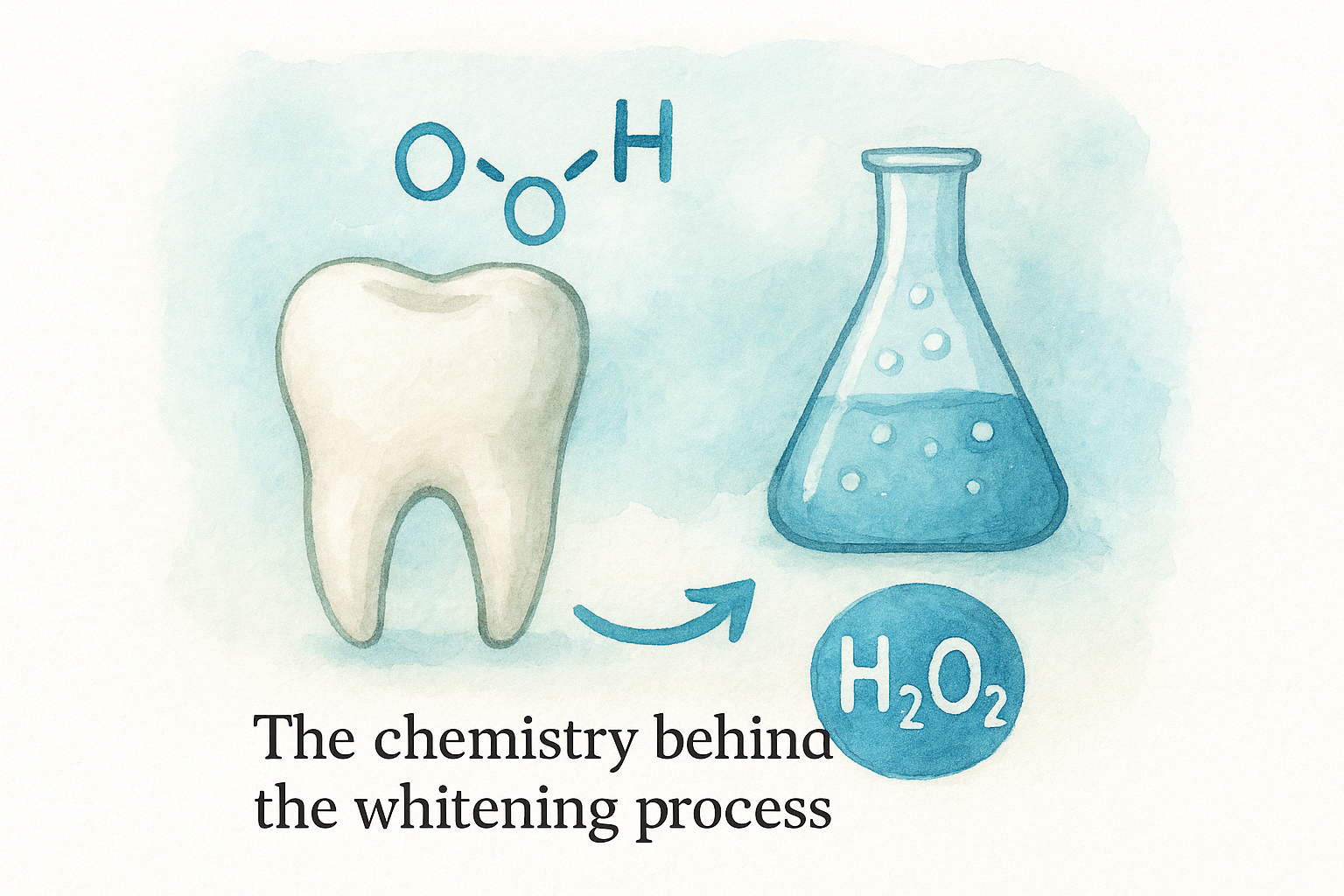
Oxidation breaks the chemical bonds that hold those pigment molecules together, scattering them and making the tooth appear significantly lighter without stripping away enamel when used at safe concentrations.
This is why peroxide-based whitening works on internal discoloration and not just surface buildup. The chemistry is doing real structural work inside the tooth, not simply cleaning the outside the way toothpaste does.
What actually gets lighter (and what doesn't)
Not every stain responds to whitening, and recognizing the difference saves you frustration. Extrinsic stains from coffee, tea, red wine, and tobacco are the most common targets, and they respond well because the discoloration sits on or near the enamel surface where peroxide can reach it efficiently. These are also the stains most people are trying to address, which is why whitening has such a broad appeal.
Intrinsic stains are a different situation. These form inside the dentin from causes like tetracycline use during childhood, excessive fluoride exposure during development, or natural aging. Peroxide can still improve them, but the process takes longer and the results are usually less dramatic. Some intrinsic discoloration won't respond at all and may require a cosmetic procedure like veneers instead.
One more thing to keep in mind: crowns, veneers, and composite fillings don't whiten because peroxide doesn't penetrate those materials. If you have visible dental restorations, your natural teeth may end up noticeably lighter than the surrounding work, creating an uneven appearance. A quick conversation with your dentist before you start can help you map out the smartest approach based on your specific situation.
Types of teeth whitening and who each fits
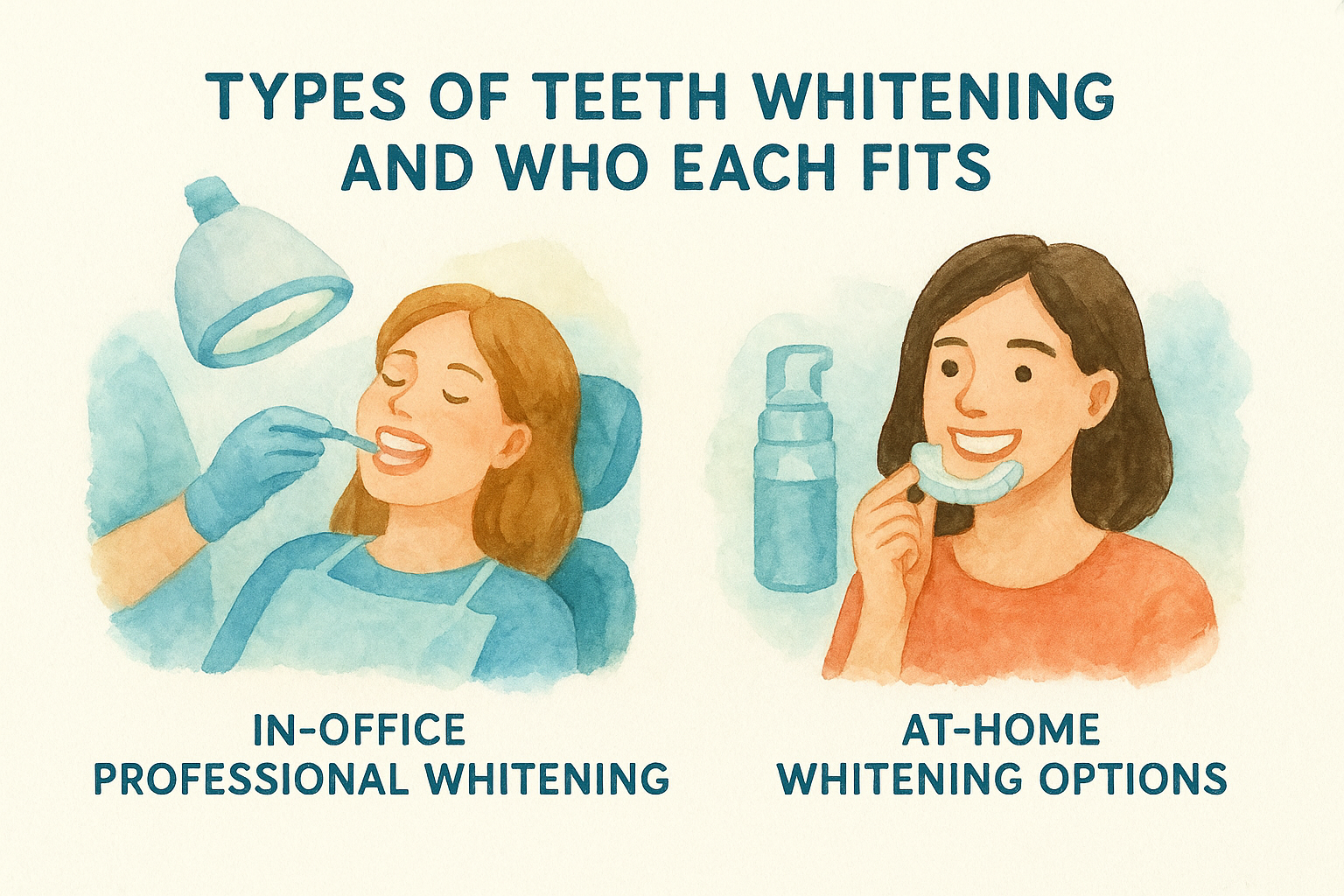
Once you understand what is teeth whitening at a chemical level, the next step is figuring out which method actually fits your situation. The two main categories are in-office professional treatments and at-home options, and they differ considerably in peroxide concentration, speed, and cost. Choosing the right one depends on your timeline, how sensitive your teeth are, and how much you want to spend.
In-office professional whitening
Professional whitening is performed in a dental office using high-concentration hydrogen peroxide gels, typically ranging from 25% to 40%. Your dentist protects your gums before applying the gel, and some offices use a light or laser to speed up the reaction. You can see noticeable results in a single session lasting around 60 to 90 minutes, which makes this the right fit if you need fast, significant change before a specific event or deadline.
In-office whitening delivers the most dramatic results in the shortest time, but it also carries a higher risk of temporary tooth sensitivity compared to lower-concentration at-home methods.
At-home whitening options
At-home whitening covers a wide range of products with very different formulations. Custom-fitted whitening trays from your dentist use lower-concentration peroxide gels you wear daily over roughly two weeks. Over-the-counter strips, gels, and rinses use even lower concentrations and take longer to produce visible results. Whitening foams, like the one Remi makes, work well as a maintenance tool once you have reached your target shade, especially if you already wear a night guard or retainer and want a product that pulls double duty.
Your teeth's sensitivity level matters a lot here. If sensitivity is already an issue for you, starting with a low-concentration at-home option gives you more control over pace and helps you avoid unnecessary discomfort.
What teeth whitening costs in the US
Cost is one of the biggest factors people weigh when deciding what is teeth whitening method to pursue. Prices vary significantly depending on whether you go through a dental office or handle the process yourself at home, and understanding the range upfront helps you avoid overpaying for results you could realistically get with a less expensive option.
In-office professional whitening costs
Professional whitening at a dental office typically runs between $300 and $1,000 per session, with the national average sitting around $650. The exact price depends on your location, the specific system your dentist uses, and whether a light or laser is included in the treatment. Some dental offices also offer take-home custom trays as a follow-up to the in-office session, which adds to the total cost but extends your results.
If you're considering professional whitening, check whether your dental insurance covers any portion. Most plans classify whitening as cosmetic and exclude it entirely, so you'll likely pay the full amount out of pocket.
At-home whitening costs
At-home options cover a wide price range, which makes them accessible to far more people. Custom whitening trays from your dentist typically cost between $100 and $400, since they combine professional-grade gel with a tray fitted specifically for your teeth. Over-the-counter strips from major pharmacy brands generally run $30 to $60 per kit, while whitening foams and rinses sit even lower, often under $30.
Maintenance products, like Remi's cleaning and whitening foam, fall into this lower tier and work particularly well if you already wear a night guard or retainer. You get a dual-purpose product without adding a separate step or significant cost to your routine.
Is teeth whitening safe and what to expect
For most healthy adults, teeth whitening is considered safe when you use products at recommended concentrations and follow the instructions. The process has been studied extensively, and at-home and professional options have both demonstrated solid safety profiles. That said, "safe" doesn't mean side-effect-free, and knowing what to anticipate before you start helps you avoid surprises and make smarter choices about which method suits you.
Side effects to know before you start
The two most common side effects are tooth sensitivity and gum irritation. Sensitivity typically shows up during or shortly after treatment and happens because peroxide temporarily opens the microscopic tubules in your enamel, leaving the nerve endings underneath more exposed to temperature and pressure. This usually fades within 24 to 48 hours after you stop using the product.
Gum irritation most often results from the whitening gel making direct contact with soft tissue, which is more likely when a tray doesn't fit properly or you apply more gel than the instructions recommend.
Using the correct amount of product and choosing a well-fitted tray reduces both risks considerably. If sensitivity is already a concern for you, look for products formulated with potassium nitrate or fluoride, since both ingredients help calm the nerve response during treatment.
Who should check with a dentist first
Certain situations call for a conversation with your dentist before you pursue any whitening method. Pregnant or nursing individuals should hold off entirely, since the safety of peroxide in those circumstances hasn't been fully established. People with active cavities, cracked enamel, or exposed roots should also get clearance first, because peroxide can reach the inner tooth more easily in those cases and cause significant discomfort or damage.
How long it lasts and how to keep results
Results from teeth whitening don't last forever, but how long they hold depends almost entirely on your habits after treatment. Understanding what is teeth whitening in terms of longevity means recognizing that the procedure lightens your teeth but doesn't protect them from future staining. Most results fade gradually, and you have more control over the timeline than you might expect.
How long whitening results typically last
In-office professional whitening tends to produce results that last between six months and two years, depending on your diet, whether you smoke, and how consistently you follow up with maintenance. At-home methods like strips or custom trays produce lighter initial results, but they can last just as long if you stay diligent after treatment.
The biggest factor in how long your results last isn't the method you chose, it's what you put in your mouth after treatment.
Coffee, tea, red wine, and tobacco are the primary culprits that accelerate staining after whitening. The first 48 hours post-treatment are especially critical because your enamel's pores are more open during that window and absorb pigment more easily than usual.
Habits that help you hold onto your results
Keeping your teeth whiter for longer comes down to a few consistent practices. Rinsing your mouth with water after consuming staining foods or drinks limits the contact time pigment-rich liquids have with your enamel. Adding a maintenance product like a whitening foam to your daily routine, particularly if you already wear a night guard or retainer, gives you an extra layer of protection without much added effort.
Scheduling touch-up treatments every three to six months prevents gradual discoloration from building back to where you started. Small, consistent actions outperform intensive treatments done infrequently every time.
Key takeaways
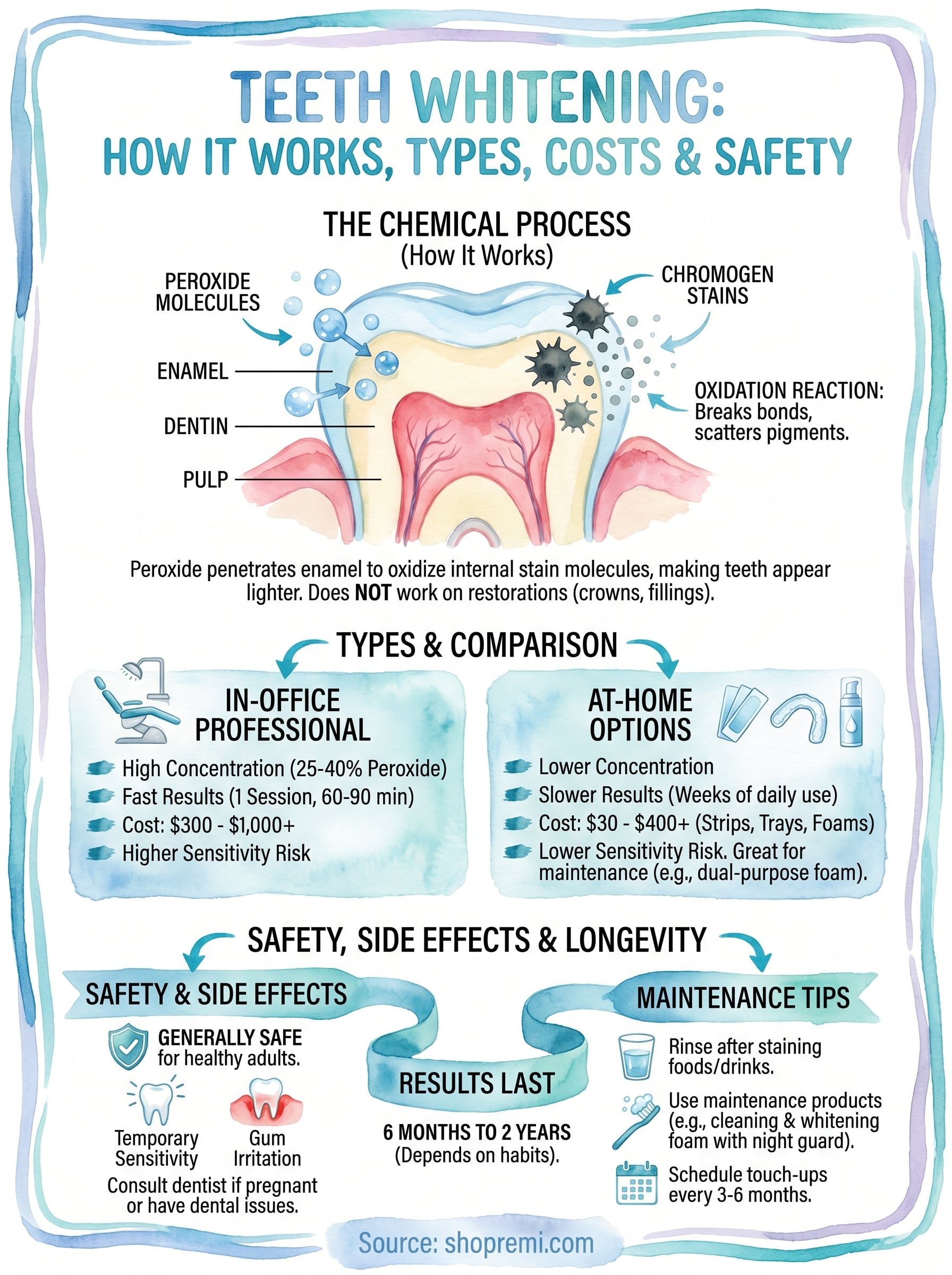
Understanding what is teeth whitening comes down to one core fact: peroxide penetrates your enamel and breaks apart stain molecules from the inside, making it fundamentally different from surface cleaning. Results depend on the stain type, method, concentration, and your habits afterward, not just the product you pick.
Professional in-office treatments deliver the fastest change but cost significantly more than at-home options. At-home methods, including strips, custom trays, and whitening foams, can produce strong results at a fraction of the price if you stay consistent. Avoiding staining foods, rinsing after meals, and using a maintenance product regularly makes the biggest difference in how long your results hold.
If you already wear a night guard to protect your teeth from grinding, pairing it with a product that cleans and whitens at the same time is a straightforward, cost-effective way to protect your progress. Start with Remi's custom night guard to guard your teeth while you sleep.

