
 Guards + Retainers
 Custom Night Guard
 Retainer
 Emergency Order

 Whitening
 Whitening Kit
 Teeth Whitening Gel
 Dual-Action Foam
 Cleaning + Care
 Ultrasonic Cleaner Pro
 Water Flosser
 UV Toothbrush Sanitizer
 Deep Clean + Freshening Tablets
 Accessories
 Guard Removal Tool
 Replacement Nozzles
 Bundles

So, what is oral hygiene, exactly? Most people would say it's brushing your teeth twice a day, and they wouldn't be wrong. But that answer only scratches the surface. Oral hygiene covers every habit, tool, and routine you use to keep your mouth, teeth, and gums healthy, from flossing and rinsing to protecting your enamel while you sleep.
Getting it right matters more than you might think. Poor oral care doesn't just lead to cavities, it's linked to gum disease, chronic bad breath, and even serious systemic health issues like heart disease and diabetes. The good news? A solid daily routine is straightforward once you understand what's actually involved and why each step counts.
At Remi, we build custom night guards, retainers, and oral care products designed alongside dentists to help people protect their teeth without overpaying at a dental office. This guide breaks down the full definition of oral hygiene, its proven benefits, and a practical daily routine you can start using right away.
What oral hygiene means and what it includes
When people ask what is oral hygiene, the answer goes well beyond brushing. Oral hygiene is the complete set of practices you use to keep your mouth free of disease, decay, and harmful bacteria. That includes your teeth, gums, tongue, and the soft tissues lining your cheeks and the roof of your mouth. Every part of your mouth needs consistent attention to stay healthy, not just the surfaces you can see in the mirror.
The daily practices that count
Most people start with brushing their teeth, which removes plaque from the surfaces you can easily reach. But brushing alone misses roughly 35% of tooth surfaces, which is exactly where flossing and interdental cleaning become essential. Rinsing with an antiseptic mouthwash after brushing and flossing reduces bacteria that survive mechanical cleaning and gives your routine an extra layer of protection.
A complete oral hygiene routine covers brushing, flossing, tongue cleaning, and rinsing every single day, not just when you think about it.
Tongue scraping is another step many people overlook entirely. Bacteria accumulate on the tongue's textured surface and contribute to bad breath, as well as reinfecting your teeth and gums after you clean them. Cleaning your tongue adds less than 30 seconds to your routine and produces a measurable difference in how fresh your mouth feels.
Protection that goes beyond brushing
Nighttime habits matter just as much as your daytime routine. If you grind your teeth or clench your jaw while you sleep, you are wearing down enamel and stressing your jaw joints whether you notice it or not. A custom-fitted night guard sits between your upper and lower teeth and absorbs the pressure of grinding so your enamel stays intact night after night.
Retainers also belong in the oral hygiene conversation because they maintain the alignment your orthodontic treatment established. When alignment shifts, teeth become harder to clean properly, and plaque builds up in tight gaps that a toothbrush cannot reach. Keeping both your retainer and night guard clean matters too, since bacteria colonize dental appliances the same way they colonize your teeth.
Why oral hygiene matters for teeth, gums, and health
Understanding what is oral hygiene is the first step, but knowing why it matters keeps you consistent. Your mouth is the entry point for everything you eat and breathe, which makes it a prime environment for bacterial growth. Without regular cleaning, that bacteria builds into plaque, then hardens into tartar, then triggers decay and gum inflammation that no amount of brushing can reverse on its own.
How poor oral care damages teeth and gums
Plaque that sits on your teeth for 24 to 72 hours begins to harden into tartar, a substance only a dental professional can remove. Once tartar forms along your gumline, it irritates the surrounding tissue and starts the progression toward gum disease, which begins as gingivitis and can advance to periodontitis, a condition that destroys the bone holding your teeth in place. Tooth loss is a real outcome of untreated gum disease, not just a worst-case scenario.
The link between oral health and your body
The connection between your mouth and your overall health is well-documented. Harmful oral bacteria can enter your bloodstream through inflamed gum tissue and travel to other parts of your body. Research published by the National Institutes of Health has associated poor oral health with increased risk of heart disease, diabetes complications, and respiratory infections.
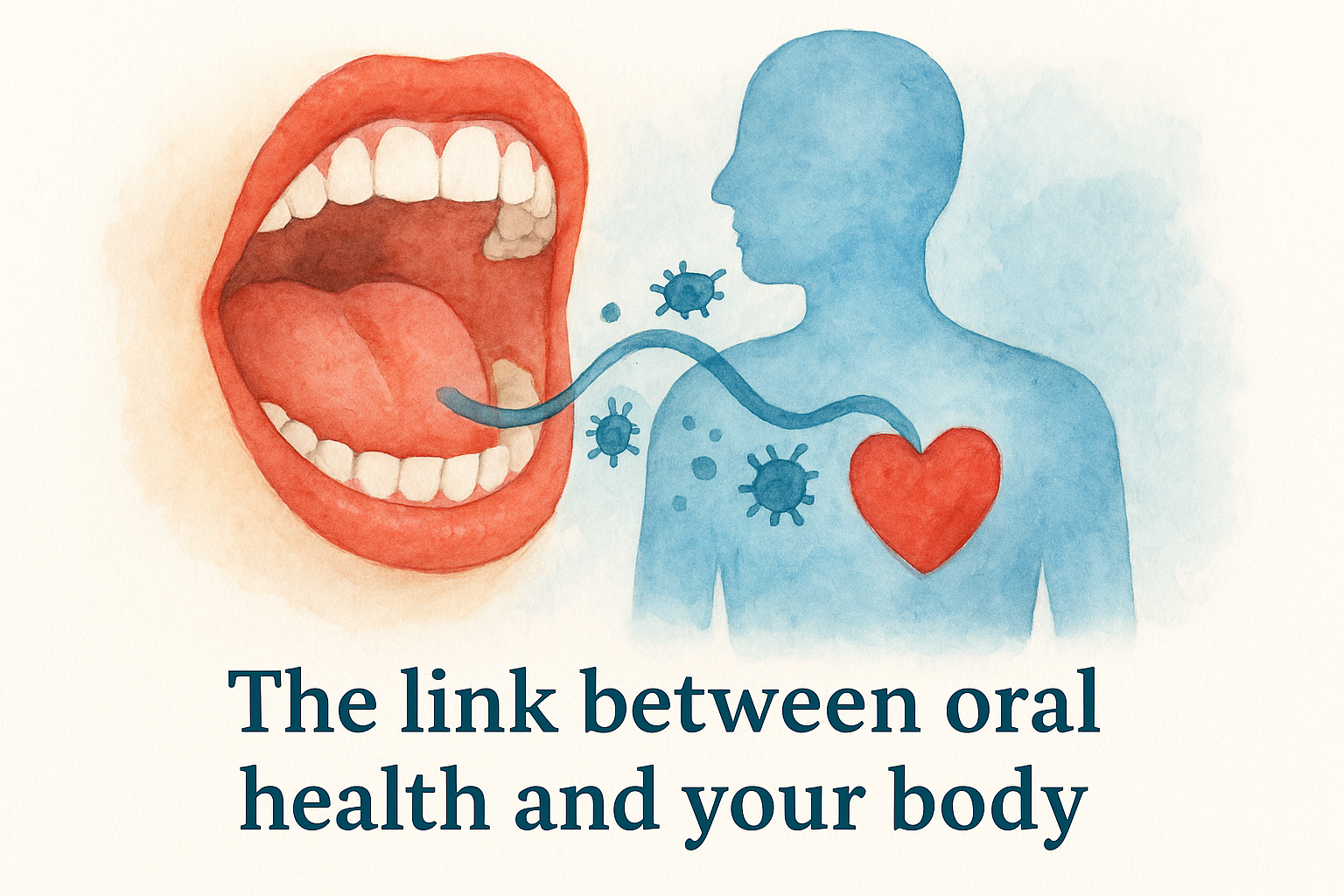
Your mouth does not exist in isolation; what happens there affects the rest of your body directly.
Protecting your teeth and gums protects far more than your smile.
Daily oral hygiene routine you can follow
A reliable routine removes the guesswork from daily oral care. Understanding what is oral hygiene is useful, but putting it into a repeatable daily structure is what actually protects your teeth and gums long-term. The routine below covers morning, evening, and nighttime steps you can start using right away.
Morning routine
Your morning routine sets the baseline for the rest of your day. Run through this sequence in under five minutes before you eat breakfast, since brushing after eating can spread acid across your enamel:
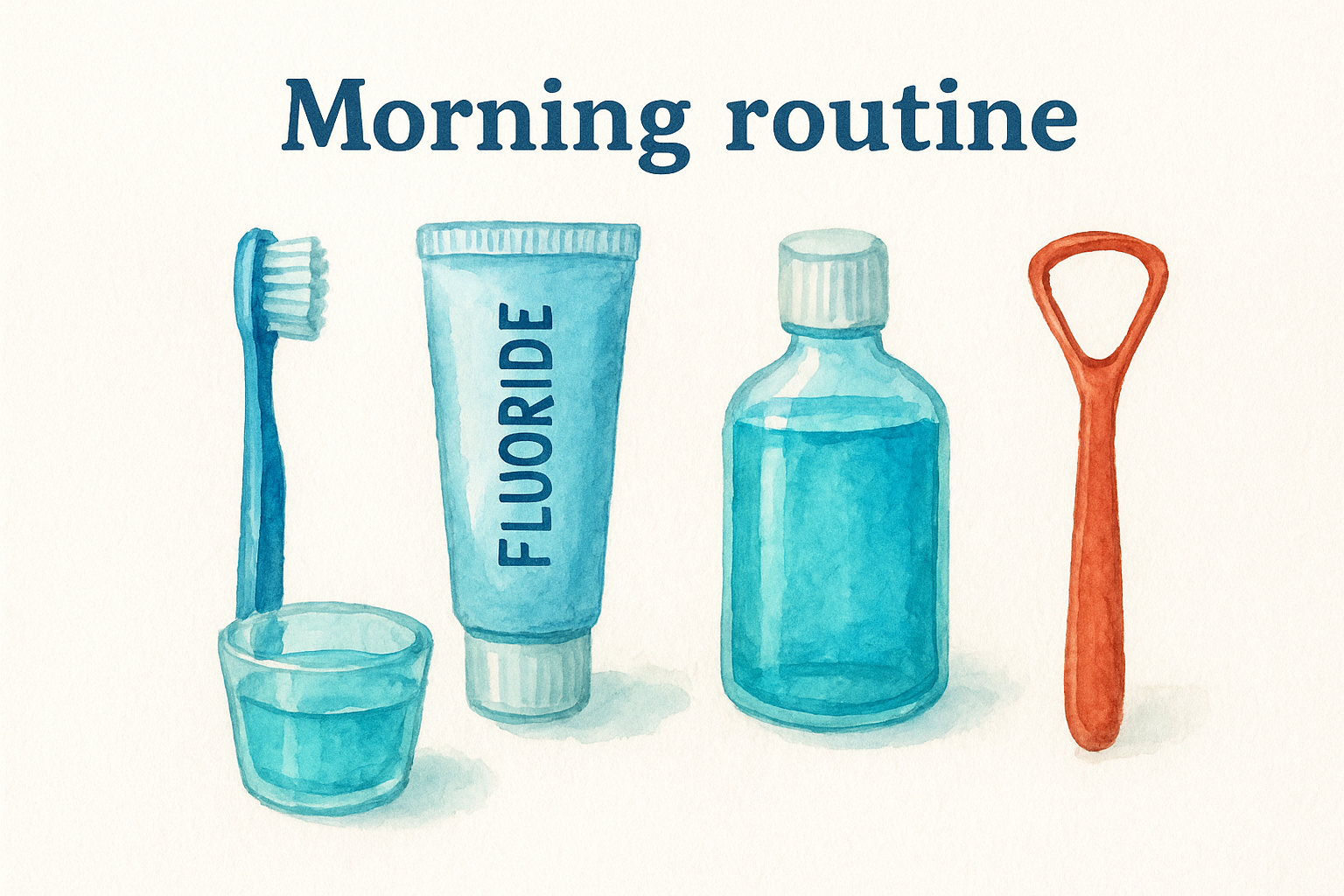
- Brush for two full minutes with a soft-bristled toothbrush and fluoride toothpaste
- Floss or use a water flosser to remove debris between teeth
- Scrape your tongue from back to front two or three times
- Rinse with an antiseptic mouthwash for 30 seconds
Evening and nighttime routine
The evening routine matters most because bacteria accumulate undisturbed during sleep. Brush and floss again before bed, scrape your tongue, and rinse. If you grind your teeth, place your custom night guard before sleeping to protect your enamel from the pressure of clenching.
Skipping your evening routine is the single fastest way to undo the progress your morning routine builds.
Retainer wearers should clean their retainer daily and insert it right after brushing. Bacteria colonize dental appliances overnight just as they do your enamel, so keeping appliances clean is as important as cleaning your teeth.
Oral hygiene tools and products that help
Understanding what is oral hygiene in full means knowing which tools actually do the work. Your routine is only as effective as the products you use consistently, and the right tools remove more plaque, protect enamel, and keep your mouth cleaner than improvised alternatives ever will.
Cleaning tools for daily use
Your toothbrush and floss are the foundation, but a few additions make a real difference. A soft-bristled brush prevents enamel abrasion while still removing plaque effectively. A water flosser clears debris between teeth and along the gumline with pressurized water, reaching spots that traditional string floss can miss, especially around dental appliances.
Switching to a water flosser does not mean abandoning string floss; using both gives you the most complete clean.
A tongue scraper and antiseptic fluoride mouthwash round out your daily toolkit. Scrapers physically lift bacterial film off your tongue's surface, and mouthwash kills remaining bacteria after mechanical cleaning finishes.
Protective appliances and specialized products
Custom-fitted dental appliances like night guards and retainers belong in your oral hygiene toolkit, not just your dental history. A night guard protects your enamel from grinding and clenching pressure while you sleep, and a retainer keeps your alignment stable so teeth stay easier to clean properly.
Keeping those appliances clean requires dedicated tools. An ultrasonic cleaner uses sound wave vibrations to remove bacteria from surfaces that brushing cannot reach, and a specialized cleaning foam handles daily maintenance between deeper cleaning sessions.
Common oral hygiene mistakes and warning signs
Knowing what to do is only half the equation. Many people follow a routine that looks complete on the surface but contains small, consistent mistakes that quietly damage their teeth and gums over time. Recognizing what is oral hygiene fully means identifying the habits you need to stop just as much as the ones you need to build.
Mistakes that undermine your routine
Brushing too hard wears down enamel and pushes your gums away from the base of your teeth over time, especially when paired with a hard-bristled brush. Another common error is skipping your evening routine when you are tired, which leaves bacteria undisturbed for eight or more hours overnight. You should also replace your toothbrush every three months, since worn bristles remove significantly less plaque than fresh ones do.
Rinsing your mouth with water right after brushing washes away fluoride before it can protect your enamel, so skip that rinse entirely.
Warning signs your oral health needs attention
Several signs tell you that your current routine is falling short and you need to take action:
- Bleeding gums when you brush or floss signal early gum disease that consistent care can still reverse
- Persistent bad breath that survives brushing and tongue scraping points to a deeper bacterial problem or an underlying condition worth discussing with a dentist
- Tooth sensitivity to hot, cold, or sweet foods means enamel is thinning and needs attention before it progresses to decay
- Visible gum recession or loose teeth require a professional dental evaluation without delay
Key takeaways
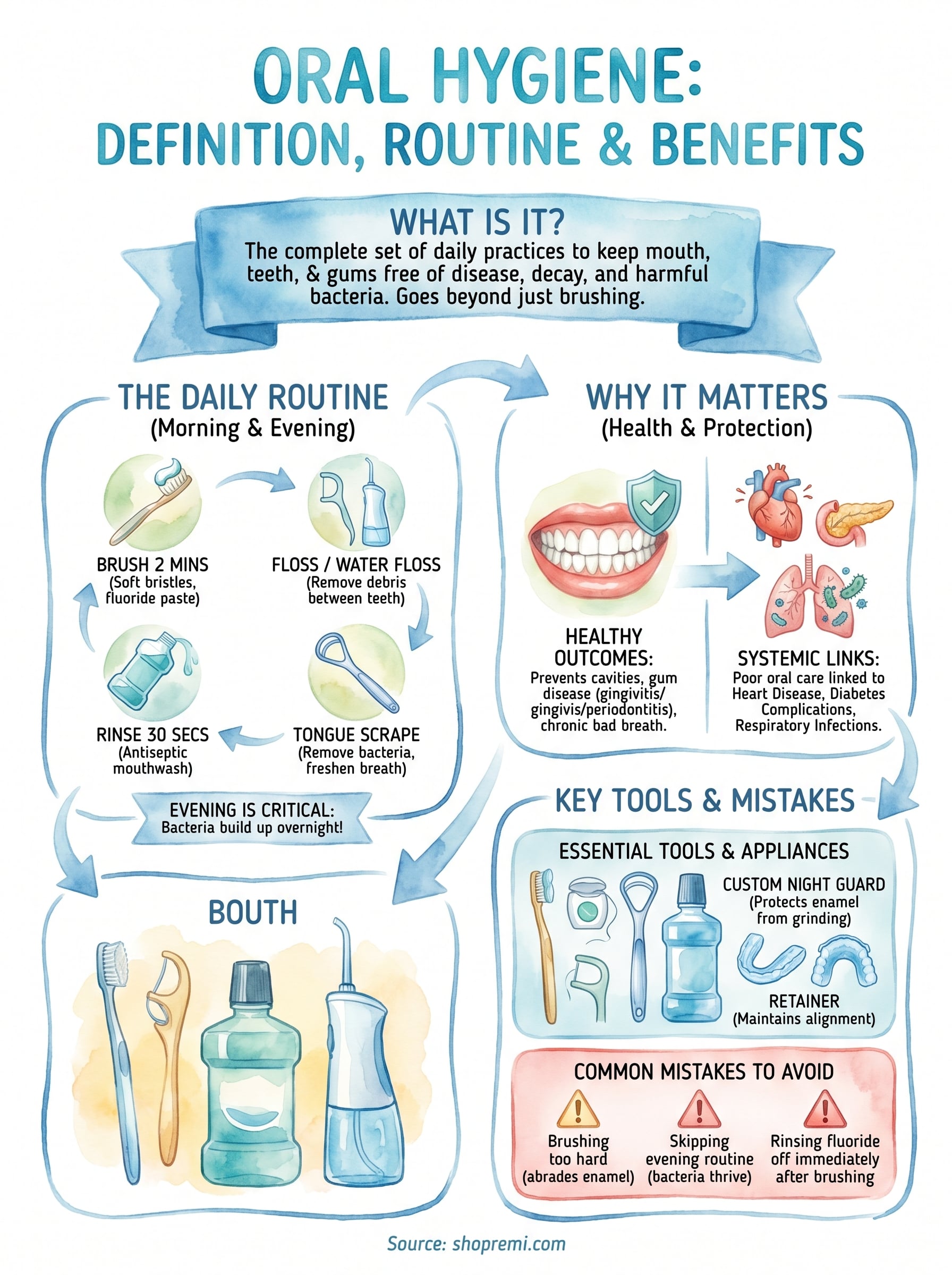
What is oral hygiene? It is the complete set of daily practices that keep your teeth, gums, and soft tissues free from disease and decay. Brushing, flossing, tongue scraping, and rinsing form the core of a routine that protects both your mouth and your broader health. Skipping even one consistent step gives bacteria the opening it needs to cause real damage over time.
Oral health does not stop at your gumline. Poor gum health links directly to serious systemic conditions like heart disease and diabetes, which means every step of your daily routine carries more weight than most people realize. Protective appliances like night guards and retainers belong in that routine too, especially if you grind your teeth at night and wear down enamel that cannot grow back.
Start with the right tools and you protect your teeth for the long term. Remi's custom night guard delivers professional-grade enamel protection at a fraction of dental office prices, shipped directly to your door without a single office visit.

