
 Guards + Retainers
 Custom Night Guard
 Retainer
 Emergency Order

 Whitening
 Whitening Kit
 Teeth Whitening Gel
 Dual-Action Foam
 Cleaning + Care
 Ultrasonic Cleaner Pro
 Water Flosser
 UV Toothbrush Sanitizer
 Deep Clean + Freshening Tablets
 Accessories
 Guard Removal Tool
 Replacement Nozzles
 Bundles

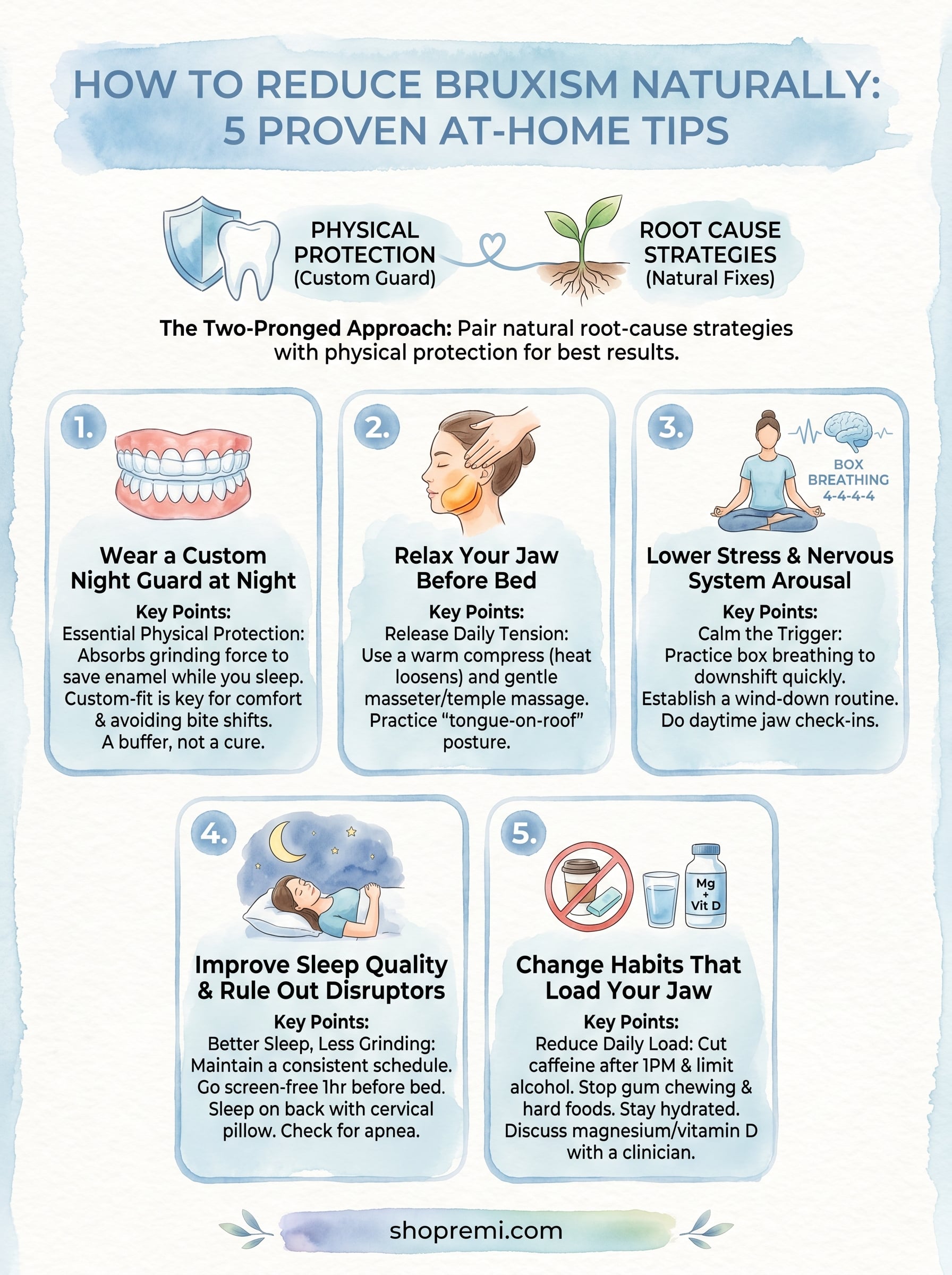
If you've ever woken up with a sore jaw, a dull headache, or teeth that feel like they've been through a wrestling match overnight, you're probably familiar with bruxism. Teeth grinding affects roughly 10% of adults on a regular basis, and stress, sleep habits, and lifestyle factors can all make it worse. The good news? Learning how to reduce bruxism naturally is entirely possible, and it starts with a few changes you can make right now, at home.
You don't need a prescription to start managing your grinding habit. Simple adjustments to your daily routine, stress management, and jaw care can make a real difference in how often and how intensely you clench or grind. These natural strategies work especially well alongside a custom night guard (like the ones we make here at Remi), giving your teeth physical protection while you address the root causes driving the habit.
Below, we're sharing five proven, actionable tips you can put into practice today. Each one is backed by dental health research and aligned with the guidance our in-house dental team recommends to Remi customers every day. Whether you're dealing with occasional clenching or full-on nightly grinding, these steps will help you take control of your bruxism, no dentist's office visit required.
1. Wear a custom night guard at night
Natural strategies are powerful, but your teeth still need physical protection while those habits take hold. A custom-fitted night guard is the most practical layer of defense you can add right now, running alongside every other natural fix you try.
Why protection matters even if you want natural fixes
Even when you're actively working on how to reduce bruxism naturally, grinding still happens during sleep because you have no conscious control over your jaw muscles at night. Your enamel stays at risk until the underlying causes are fully under control.
Natural remedies take time to build effect, so a night guard protects your teeth in the meantime.
What a custom night guard does and does not do
A night guard absorbs grinding force, preventing enamel wear, cracking, and sensitivity from accumulating. It does not eliminate the grinding reflex itself, but it stops the structural damage that makes bruxism so costly to treat.
Think of it as a buffer, not a cure. Combined with the lifestyle changes in this article, it covers both protection and prevention at the same time.
Who benefits most from a custom fit vs store-bought
Anyone grinding at a moderate to severe level gets far more from a custom guard than a pharmacy boil-and-bite. Store-bought guards are thick, poorly shaped, and can shift your bite with extended use, creating new alignment problems.
Custom guards fit your exact dental arch, so they stay in place without discomfort and last significantly longer than generic options.
How to get a custom night guard at home with Remi
Remi ships you an at-home impression kit, and you mail your molds back to the lab. Your professionally crafted custom guard arrives in a few days at a fraction of the typical dental office price, with no appointment needed.
Red flags that mean you should see a dentist first
If any of the following apply, schedule a dental visit before using an at-home guard:
- Jaw locking, clicking, or popping accompanied by pain
- Visible cracks or significant tooth sensitivity already present
- Facial swelling or chronic ear discomfort
2. Relax your jaw before bed with heat and release
Your jaw muscles carry daily tension that doesn't switch off when you fall asleep. A short pre-sleep routine targeting your jaw directly gives those muscles a chance to release before grinding starts.
Why jaw muscles stay "on" during sleep
The masseter is one of the strongest muscles in your body relative to its size. When you clench or chew hard foods all day, it stays in a contracted state that carries straight into sleep without a deliberate cooldown.
Warm compress vs cold pack and when to use each
Apply a warm compress for 10 minutes before bed to increase blood flow and loosen tight muscle fibers. Use a cold pack if you notice swelling or acute jaw soreness after waking up.
Heat loosens the muscle before sleep; cold reduces inflammation after waking.
Self-massage for the masseter and temples
Press two fingers along your jaw hinge and use small circular strokes for 60 seconds per side. Follow with light pressure across your temples to release connected facial tension.
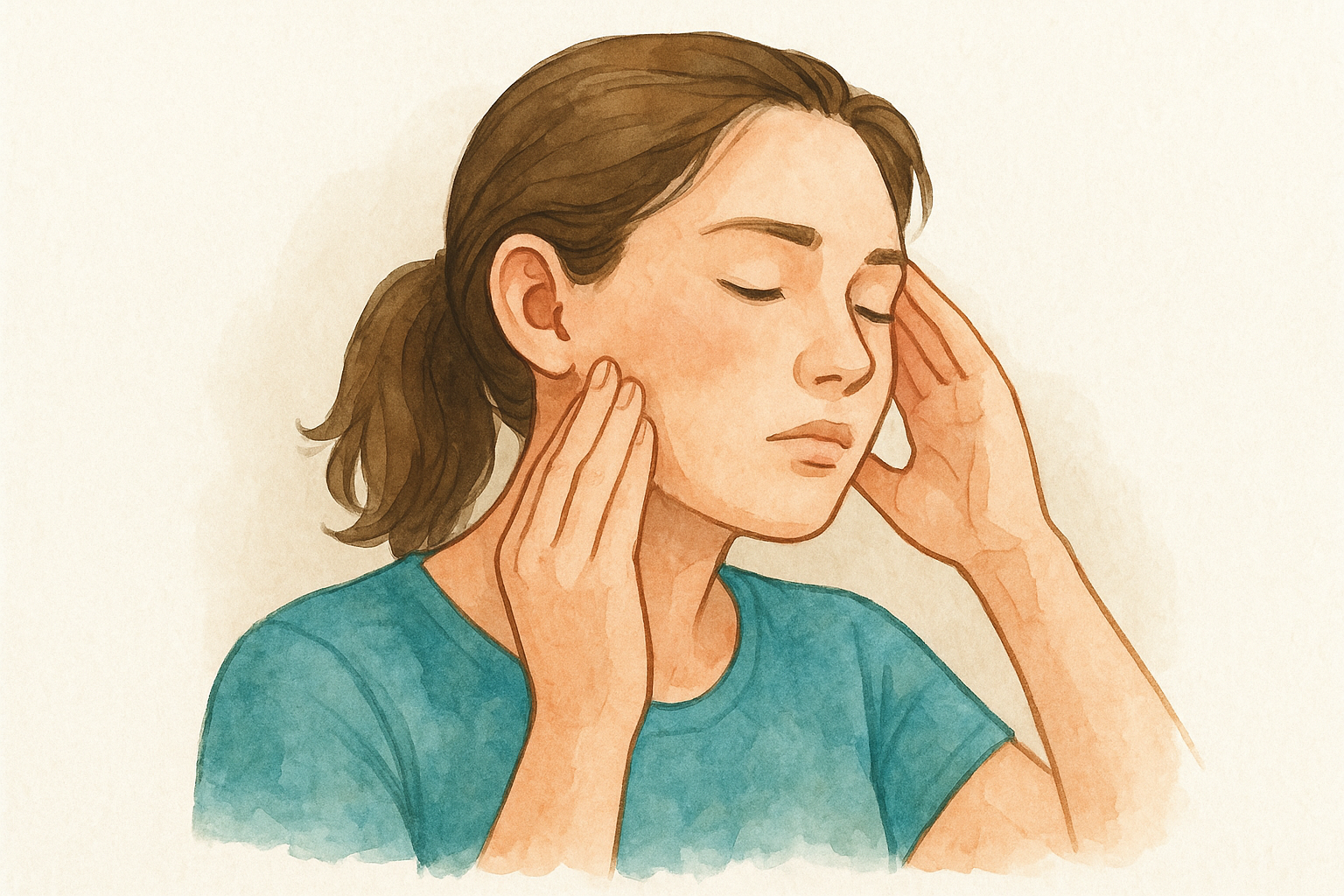
Simple jaw and tongue posture drills for bedtime
Rest your tongue flat on the roof of your mouth with lips together and teeth slightly apart. This posture naturally discourages clenching and keeps your jaw in a neutral position through the night.
What to avoid if you have TMJ pain or clicking
Skip aggressive stretching or wide-mouth exercises if your jaw clicks or locks. These movements can irritate the joint further and make symptoms worse rather than better.
3. Lower stress and nervous system arousal daily
Stress is one of the biggest drivers of bruxism, and managing it daily is core to how to reduce bruxism naturally. When your nervous system stays elevated, your jaw muscles stay primed to clench through the night.
The stress-bruxism connection and what it looks like
Your body treats psychological stress the same as a physical threat, keeping muscles tense and on alert. You might notice daytime jaw tightness or tension headaches as early signals that nighttime grinding will intensify.
Fast calming tools you can use in under 5 minutes
Box breathing, inhale 4 counts, hold 4, exhale 4, hold 4, drops cortisol quickly. Even two to three minutes before bed signals your nervous system to downshift before you fall asleep.
Consistent daily calming practice reduces grinding intensity over time, not just on the nights you do it.
Evening routine ideas that reduce clenching overnight
Dim your lights an hour before bed and avoid conflict-heavy content. A consistent wind-down sequence trains your nervous system to associate evening with safety rather than activation.
Daytime clenching check-ins and habit replacement
Set a phone reminder every two hours to check your jaw. When you catch yourself clenching, press your tongue to the roof of your mouth and let your teeth separate slightly.
When anxiety or ADHD symptoms may play a role
Chronic anxiety or ADHD can keep your nervous system in overdrive around the clock. If self-management tools alone are not enough, speak with a clinician about whether an underlying condition needs direct treatment.
4. Improve sleep quality and rule out sleep disruptors
Poor sleep and bruxism feed each other in a cycle. When your sleep quality drops, your body spends less time in restorative stages, and your jaw muscles become more reactive during the night. Fixing your sleep environment directly supports how to reduce bruxism naturally.
How poor sleep increases grinding intensity
Light, fragmented sleep puts your nervous system in a heightened state, which triggers more frequent grinding episodes. Research consistently links sleep deprivation with increased muscle tension throughout the night.
Sleep hygiene changes that actually move the needle
Keep a consistent sleep and wake schedule every day, including weekends. Cutting screen exposure 60 minutes before bed lowers cortisol and helps your body shift into a sleep-ready state faster.
A regular bedtime is one of the most underrated tools for reducing overnight grinding.
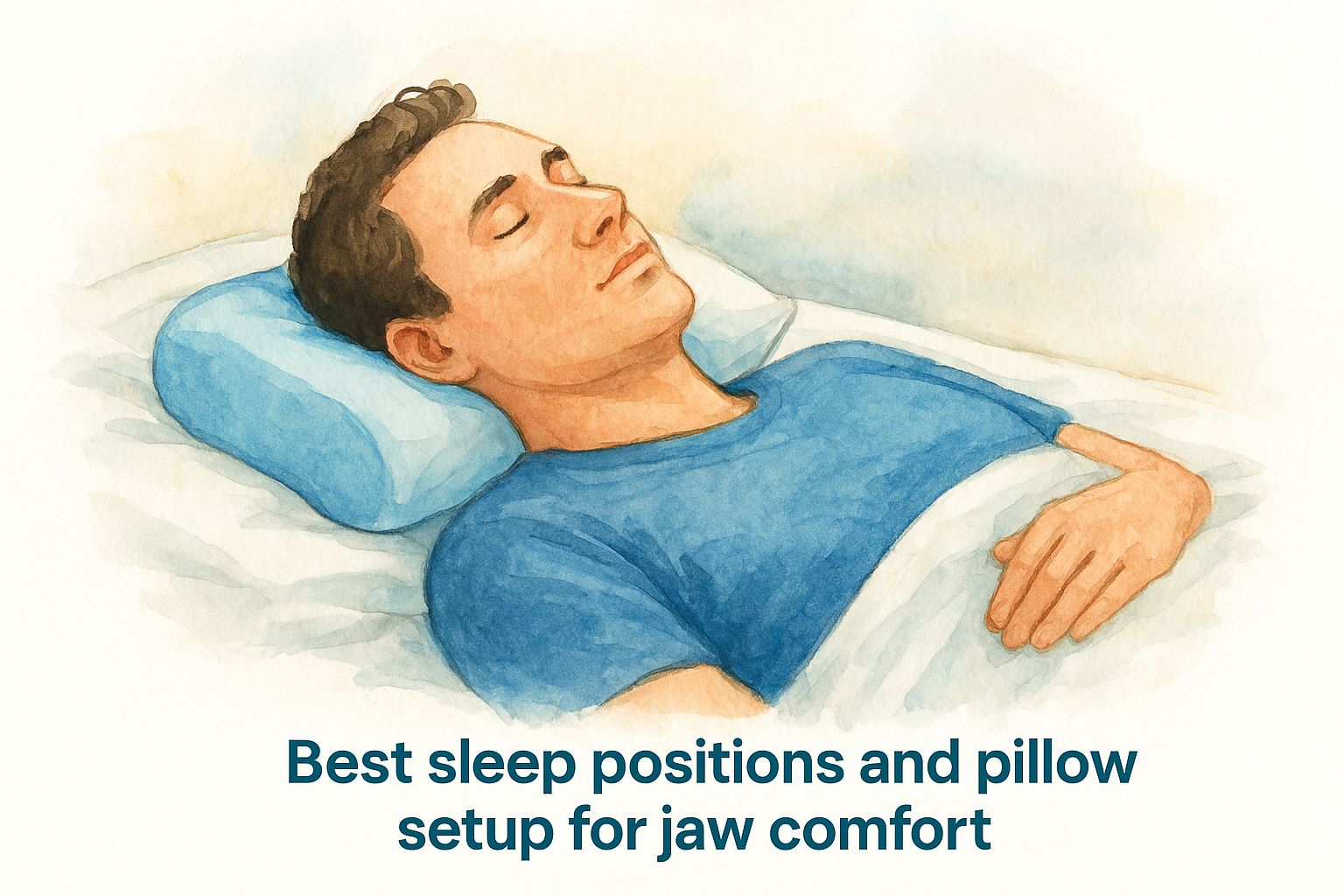
Best sleep positions and pillow setup for jaw comfort
Sleeping on your back with a supportive cervical pillow reduces jaw compression compared to stomach sleeping. Side sleepers should avoid pressing their jaw directly into the pillow, which adds sustained pressure to the masseter muscle.
Signs of sleep apnea that often overlap with bruxism
Loud snoring, waking with headaches, and gasping episodes are common signs of sleep apnea. Studies show people with untreated sleep apnea grind their teeth at significantly higher rates.
When to talk to a doctor or sleep specialist
If you wake up unrested despite solid sleep habits, ask your doctor about a sleep study. Treating underlying sleep disorders often reduces grinding intensity without requiring additional intervention.
5. Change habits that load your jaw and trigger grinding
Some common bruxism triggers are daily habits you repeat without thinking. If you want to reduce bruxism naturally, cutting even two or three of these habits can measurably lower grinding frequency within a few weeks.
Caffeine, alcohol, nicotine, and timing cutoffs
Caffeine and alcohol both disrupt deep sleep stages, increasing muscle reactivity overnight. Cut caffeine after 1 PM and limit alcohol to at least two hours before bed.
Stop gum chewing and reduce hard or chewy foods
Constant gum chewing keeps your masseter muscle loaded for hours beyond mealtimes. Avoid hard or chewy foods like raw carrots, tough meats, and bagels on high-stress days when your jaw already carries extra tension.
Hydration, electrolytes, and mouth breathing considerations
Dehydration tightens muscles, and mouth breathing compounds this by drying out oral tissues overnight. Drink water consistently throughout the day and consider nasal breathing strategies if you wake with a dry mouth.
Nutrients to discuss with a clinician, including vitamin D and magnesium
Magnesium and vitamin D both support muscle relaxation and nerve signaling. Talk to your clinician before supplementing, since dosage and form matter significantly for safe absorption.
A simple 2-week tracking plan to find your top triggers
Log your food choices, stress level, and sleep quality daily for two weeks alongside your morning jaw symptoms. Patterns surface quickly, showing you exactly which habits drive your worst grinding nights.
Tracking gives you specific targets rather than vague advice to reduce stress.
What to do if your teeth still grind
Natural strategies give you real leverage over bruxism, but they take consistent effort over time before the results fully show up. If you've worked through all five tips and your jaw still feels sore in the morning, don't interpret that as failure. It means your habits need more time to compound, or an underlying issue like sleep apnea or chronic anxiety needs direct attention from a clinician.
Your best next step is to keep a short daily log, stay consistent with your jaw relaxation routine, and protect your teeth while everything else catches up. Knowing how to reduce bruxism naturally works best when you pair lifestyle changes with reliable protection each night. A custom night guard from Remi gives your enamel a durable buffer so grinding causes no structural damage while you build the habits that reduce it long-term.

