
 Guards + Retainers
 Custom Night Guard
 Retainer
 Emergency Order

 Whitening
 Whitening Kit
 Teeth Whitening Gel
 Dual-Action Foam
 Cleaning + Care
 Ultrasonic Cleaner Pro
 Water Flosser
 UV Toothbrush Sanitizer
 Deep Clean + Freshening Tablets
 Accessories
 Guard Removal Tool
 Replacement Nozzles
 Bundles

You want a brighter smile, but not at the cost of weakening your teeth. It's a fair concern, and one that stops a lot of people mid-Google-search. So, is teeth whitening safe for enamel, or are you trading long-term dental health for short-term cosmetics? The short answer: when done correctly, most whitening methods are safe. But the details matter, and not all products or techniques carry the same level of risk.
Enamel is the hardest substance in your body, yet it doesn't regenerate once it's gone. That makes understanding how whitening agents interact with enamel not just useful, it's essential. Whether you're considering in-office treatments, at-home strips, or a dual-purpose cleaning and whitening foam like the one we developed here at Remi alongside our dental team, you deserve straight facts instead of marketing spin.
This article breaks down what current dental research says about whitening and enamel safety, the real risks of overdoing it, which ingredients to watch for, and how to get a whiter smile without compromising the protective layer your teeth depend on. Every recommendation is grounded in professional dental guidance, so you can make a decision that's actually informed, not just optimistic.
Why enamel safety matters when you whiten teeth
Whitening is one of the most requested cosmetic dental procedures in the US, and the market is flooded with products that promise dramatic results in days. Most of those products are safe when used correctly, but the question "is teeth whitening safe for enamel" matters more than the average product label suggests. Enamel is not just a cosmetic layer, it is your teeth's primary defense against decay, temperature changes, and physical wear. Once you understand what is actually at stake, you will make much smarter decisions about which whitening method to use and how often.
What happens when enamel is compromised
Enamel sits on the outer surface of each tooth and acts as a physical and chemical barrier. When whitening agents are overused or applied incorrectly, they can temporarily demineralize the enamel surface, which means the mineral structure becomes less dense and more vulnerable. In most cases, your saliva remineralizes the enamel within 24 to 48 hours after a session. But repeated exposure without adequate recovery time can push that balance in the wrong direction, leaving enamel thinner and more porous over time.
Temporary demineralization from whitening is normal. Repeated back-to-back sessions without adequate breaks are where the real risk begins.
That shift matters because thinner enamel exposes the dentin layer beneath it. Dentin is naturally yellow, so as enamel wears down, teeth can actually appear more discolored over time, not less, even if you keep whitening. You end up chasing a result that the cumulative damage is making harder to achieve.
Why sensitivity is more than just discomfort
Tooth sensitivity after whitening is your body's early warning signal, not a minor side effect to push through. When bleaching agents penetrate enamel and reach the nerve-rich dentin, the result is sharp pain with hot or cold foods and drinks. Many people treat this as acceptable, take a short break, and restart the same routine. But sensitivity that returns consistently after each session suggests the enamel barrier is thinning or the product concentration is too high for your specific teeth.
Ignoring that signal carries real consequences. Persistent sensitivity can indicate dentin hypersensitivity, a condition where the dentin tubules remain exposed and reactive to temperature and pressure. At that point, you are no longer managing a cosmetic concern. You are dealing with a structural problem that requires direct dental attention.
The gap between marketing claims and clinical reality
The whitening industry sells outcomes, and most product packaging leans heavily on phrases like "enamel-safe" without explaining what that claim actually means or under what conditions it holds. "Enamel-safe" typically refers to a product not causing irreversible damage when used exactly as directed, which means the right concentration, for the correct duration, at the appropriate frequency. Those are specific conditions, not blanket reassurances.
Many people exceed those guidelines, either because the instructions are vague or because they want results faster. Understanding the actual science behind how whitening chemistry works, rather than relying on label language, is what protects your enamel long-term. The sections that follow break down exactly how whitening agents interact with enamel and dentin, and where the genuine risks appear.
What tooth enamel is and why it does not grow back
Tooth enamel is the hard, translucent outer shell that covers every tooth from the chewing surface down to the gumline. It is the hardest tissue your body produces, even harder than bone, and it serves as a physical barrier against acids, bacteria, and the daily mechanical stress of chewing. Understanding its structure is critical when you are asking whether is teeth whitening safe for enamel, because the answer depends entirely on how you treat a tissue that has zero capacity to repair itself once damaged.
How enamel is structured
Enamel is made up almost entirely of hydroxyapatite, a crystalline calcium phosphate mineral arranged in tightly packed rods. These rods run perpendicular to the tooth surface and are bound together by a protein matrix. This arrangement gives enamel its exceptional hardness, but it also means the structure is dense and relatively inflexible. That density protects you from decay and temperature extremes, but it also makes enamel brittle under the wrong conditions, such as repeated chemical exposure without adequate recovery time.
The mineral density of enamel is what whitening agents interact with directly, which is why concentration and contact time both matter.
Why your body cannot rebuild lost enamel
Enamel forms during tooth development through cells called ameloblasts. Once your teeth fully erupt, those cells are gone. Your body has no mechanism to produce new enamel after that point. Saliva can partially remineralize early, surface-level mineral loss by depositing calcium and phosphate ions back into micro-pores, but this process only restores minor, superficial deficits. It does not rebuild enamel that has been structurally thinned or lost.
This distinction matters practically. If whitening strips or high-concentration gels cause repeated surface demineralization and you do not allow adequate recovery time between sessions, saliva remineralization cannot keep pace with the rate of mineral loss. Over months or years, that imbalance results in permanently thinner enamel, increased sensitivity, and greater vulnerability to cavities. You cannot reverse that loss with better habits later. What you lose is gone, which is exactly why getting your whitening approach right from the start protects far more than your smile's appearance.
How whitening actually works on enamel and dentin
Most people assume whitening products scrub or bleach the surface of teeth the way household cleaners work on countertops. That is not what happens. Whitening agents work through a chemical reaction that penetrates enamel entirely and targets the discolored molecules sitting inside the tooth structure itself. Knowing this process is central to answering whether is teeth whitening safe for enamel, because the chemistry involved touches structures well beneath the visible surface.
How peroxide penetrates the enamel layer
The active ingredient in virtually every whitening product is either hydrogen peroxide or carbamide peroxide, which breaks down into hydrogen peroxide when it contacts saliva. Hydrogen peroxide is a small, unstable molecule, and that instability is exactly what makes it effective. It passes through the enamel's hydroxyapatite matrix without dissolving it, moving inward toward the dentin layer where most tooth discoloration actually lives.
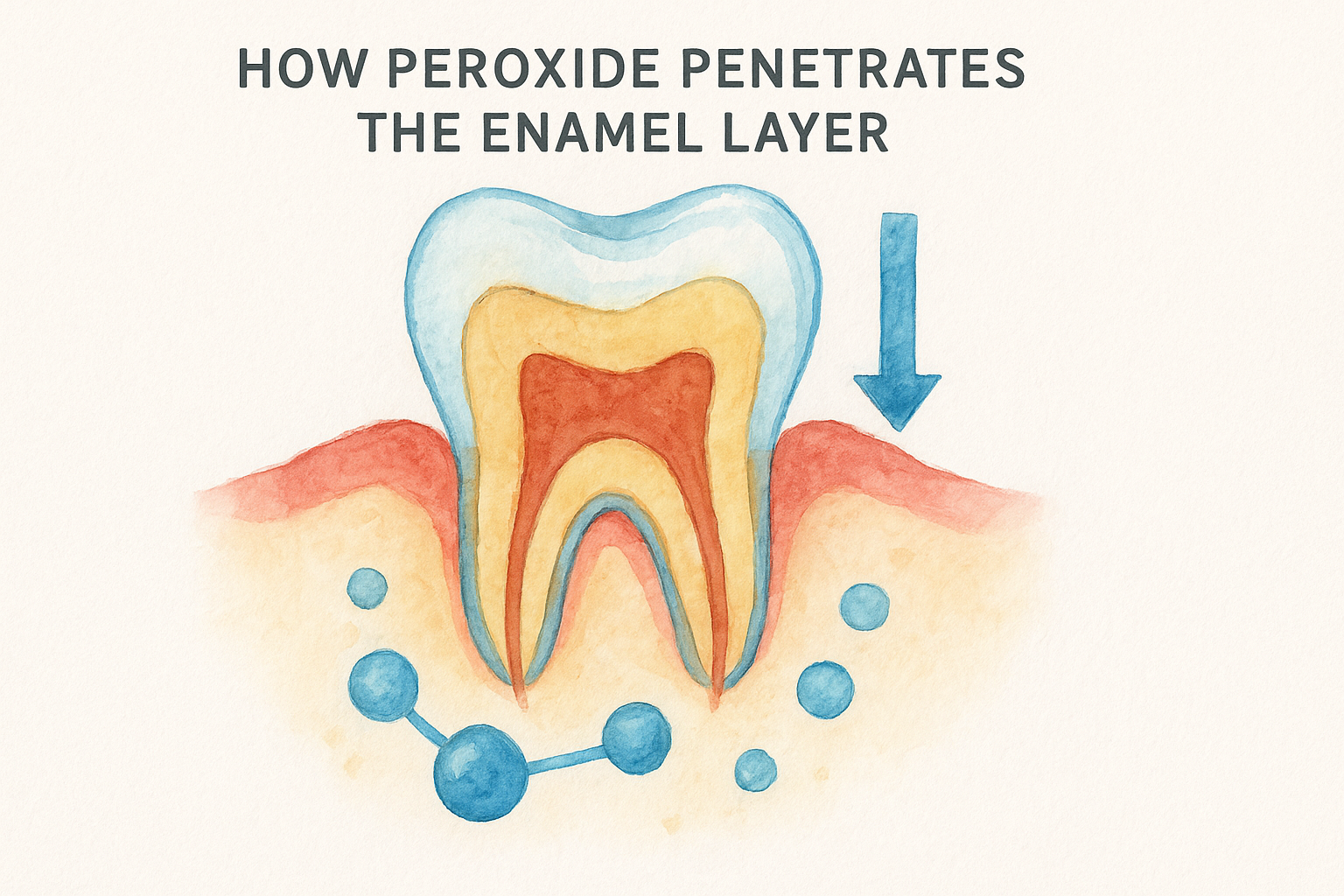
Once inside, peroxide releases free oxygen radicals. These radicals break apart the long-chain organic compounds responsible for yellow and brown staining, converting them into shorter, colorless molecules. The enamel itself does not change color during this process. What changes is the content inside and beneath it, which is why the tooth appears whiter from the outside.
The bleaching reaction happens inside the tooth, not on its surface, which is why surface-only polishing products cannot replicate what peroxide-based whitening achieves.
What happens to dentin during whitening
Dentin sits directly beneath enamel and makes up the bulk of the tooth's internal structure. It is naturally more yellow than enamel because it contains a higher proportion of organic material, including the protein collagen. When peroxide reaches the dentin, it oxidizes those organic compounds, which produces the visible brightening effect you see after treatment.
The challenge is that dentin contains microscopic channels called tubules that lead directly to the tooth's nerve. When peroxide concentration is high or contact time is extended beyond what the instructions specify, those tubules allow the chemical to reach the nerve tissue, triggering the sharp sensitivity many people experience after whitening. This is not a sign that the product is working harder. It is a signal that the chemical has gone deeper than the target zone, and pulling back on frequency or concentration is the appropriate response, not pushing through the discomfort.
What the evidence says about enamel changes and recovery
Research into whether teeth whitening is safe for enamel has grown significantly over the past two decades, and the findings offer a clearer picture than most product labels do. The short version: whitening with clinically tested concentrations causes measurable but temporary changes to enamel, and those changes reverse under normal conditions. The details, however, depend heavily on concentration, exposure time, and how often you repeat treatment.
What clinical studies actually show
Multiple peer-reviewed studies have examined enamel hardness and surface roughness before and after peroxide-based whitening. The consistent finding is that hydrogen peroxide at concentrations between 10% and 15% produces a temporary reduction in enamel microhardness during and immediately after treatment. This is not structural dissolution. It is a surface-level mineral shift caused by the acidic nature of peroxide and the oxidation process. In most study subjects, enamel hardness returned to baseline levels within 24 to 48 hours when saliva remineralization was allowed to occur naturally between sessions.
Higher concentrations, particularly those above 30% used in some in-office treatments, show a more pronounced short-term effect on surface texture. Several studies noted increased enamel porosity at those levels, which is why in-office whitening is typically limited to a single session with protective isolation of the gums and surrounding tissue. The takeaway is not that in-office whitening is inherently dangerous, but that professional supervision exists precisely because higher concentrations require controlled application.
The evidence consistently shows that damage from whitening is dose-dependent. Correct concentration and recovery time are what separate safe use from cumulative harm.
How recovery works after a whitening session
Your saliva does most of the repair work after whitening. It contains calcium, phosphate, and proteins that deposit back into the micro-pores created during a whitening session, restoring the mineral density that peroxide temporarily disrupts. This process, called remineralization, is the reason that spacing sessions at least 48 hours apart is not arbitrary caution, it is based on how long the recovery process actually takes.
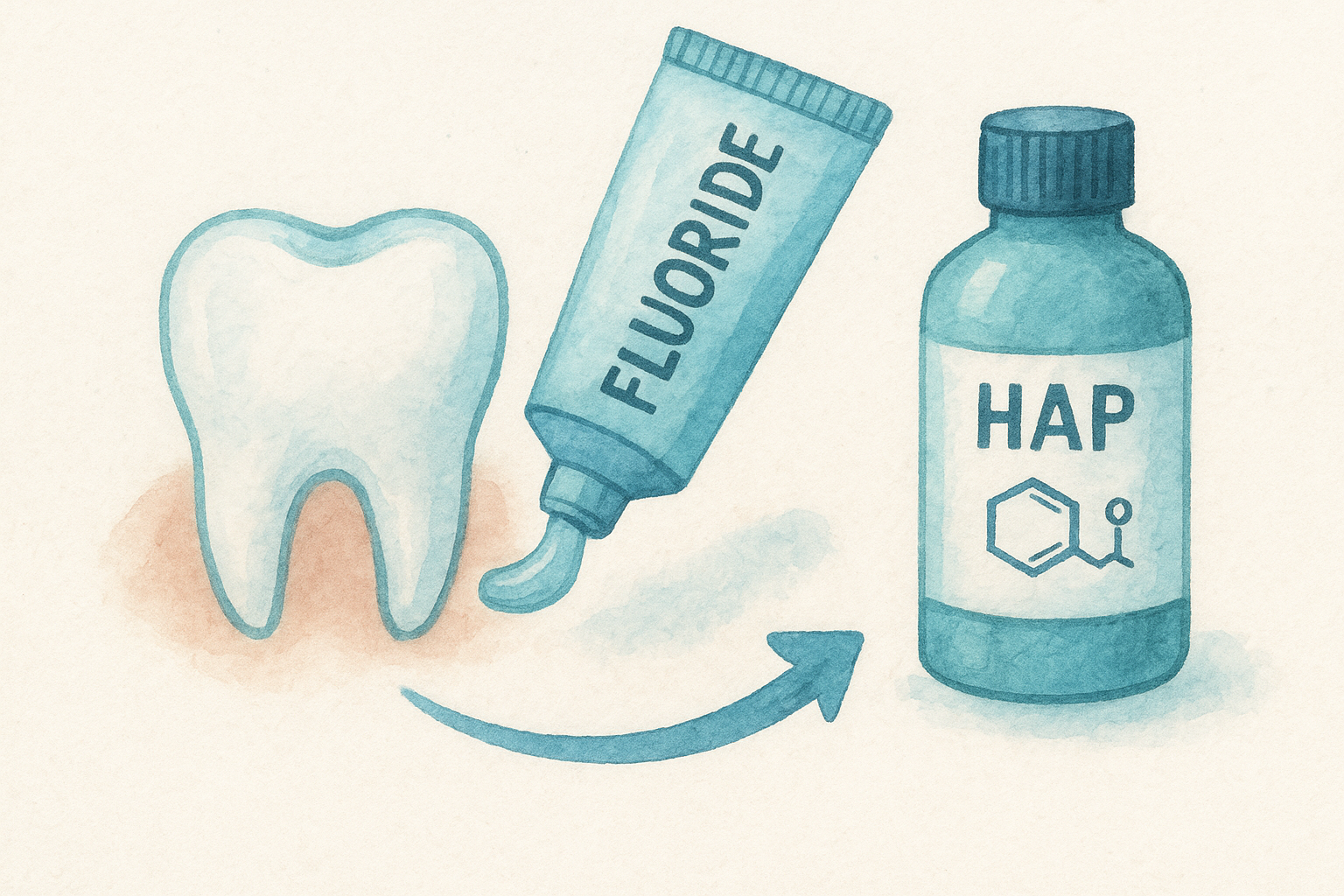
Using a fluoride toothpaste or a remineralizing product with hydroxyapatite in the days following a whitening session actively supports this recovery. Both ingredients provide the raw material your enamel needs to rebuild surface-level mineral loss. Skipping that recovery window and whitening again too soon stacks mineral loss faster than saliva alone can compensate, which is where cumulative enamel thinning begins.
When whitening can harm enamel or gums
Most whitening risks are avoidable, but only if you know where the actual danger points are. Asking whether is teeth whitening safe for enamel is the right starting question, but the fuller answer requires understanding the specific conditions under which whitening crosses from beneficial to harmful. Those conditions fall into a few clear categories.
Overuse, high concentrations, and skipped recovery time
Using whitening products more frequently than directed is the most common way people damage their enamel without realizing it. As covered in the previous section, saliva remineralization needs 24 to 48 hours to restore the mineral density that peroxide temporarily reduces. When you run another whitening session before that window closes, you are stacking mineral loss on top of mineral loss. Over repeated cycles, enamel becomes measurably thinner and more porous, which increases sensitivity and vulnerability to acid erosion from everyday foods and drinks.
Product concentration is the other major variable. Over-the-counter strips and trays typically contain between 6% and 14% hydrogen peroxide, which is appropriate for unsupervised use. Anything significantly above that range requires professional supervision because the margin for error narrows fast. Using a high-concentration gel with an ill-fitting tray, for example, increases both contact time on enamel and direct gum exposure, raising the risk on both fronts simultaneously.
Frequency matters as much as concentration. A low-percentage product used daily without breaks can cause as much cumulative damage as a single high-dose session.
Gum irritation and soft tissue exposure
Bleaching agents that contact gum tissue cause chemical irritation, ranging from mild redness to localized burning and tissue sloughing in more severe cases. This most often happens when whitening trays do not fit properly, allowing gel to pool against the gums rather than staying on the tooth surface. It can also happen with whitening strips that shift during use or overlap the gumline.
The gums typically recover within a few days after exposure stops, but repeated irritation to the same tissue can lead to gum recession over time, which exposes the root surface. Root surfaces have no enamel layer at all, only cementum, which is far softer and significantly more vulnerable to both sensitivity and decay. Protecting your gums during whitening is not a secondary concern, it directly protects the structural integrity of your teeth.
How to whiten safely at home without overdoing it
Safe at-home whitening comes down to three things: choosing the right product concentration, following a realistic schedule, and giving your enamel adequate recovery time between sessions. Whether is teeth whitening safe for enamel in your specific situation depends far more on how you use a product than which brand name is on the box.
Pick the right product concentration
Over-the-counter whitening products in the US typically contain between 3% and 14% hydrogen peroxide, or carbamide peroxide equivalents that land in a comparable effective range. For most people with healthy enamel and no existing sensitivity, starting at the lower end of that range produces solid results while giving your enamel more margin against irritation. If you already notice sensitivity to cold or hot food before you start whitening, a lower concentration is the right call, not a compromise.
Choosing a lower concentration and running a properly spaced treatment course will produce comparable results to a higher concentration used carelessly, without the added cumulative risk to your enamel.
Remi's Night Guard Cleaning and Teeth Whitening Foam is built with this balance in mind. It gives you a practical whitening option that fits directly into your existing oral care routine, so you are not adding a separate high-intensity treatment on top of everything else. Incorporating whitening into a routine you already follow makes it far easier to stay consistent with the frequency limits that actually protect your enamel.
Build a schedule and stick to it
Spacing whitening sessions at least 48 hours apart is the single most effective step you can take to protect your enamel at home. That window gives your saliva time to remineralize the surface-level mineral loss each session creates. Treat that gap as a firm boundary rather than a guideline to push when you want faster results.
Beyond individual session spacing, limit each whitening course to the number of sessions the product specifies, then take a break of at least four to six weeks before starting another round. Most people achieve the results they want within one course. Using a fluoride or hydroxyapatite toothpaste during your whitening period gives your saliva the raw material it needs to repair micro-level porosity between sessions. Also avoid acidic foods and drinks for at least an hour after each session, since temporarily demineralized enamel is more vulnerable to acid erosion during that window.
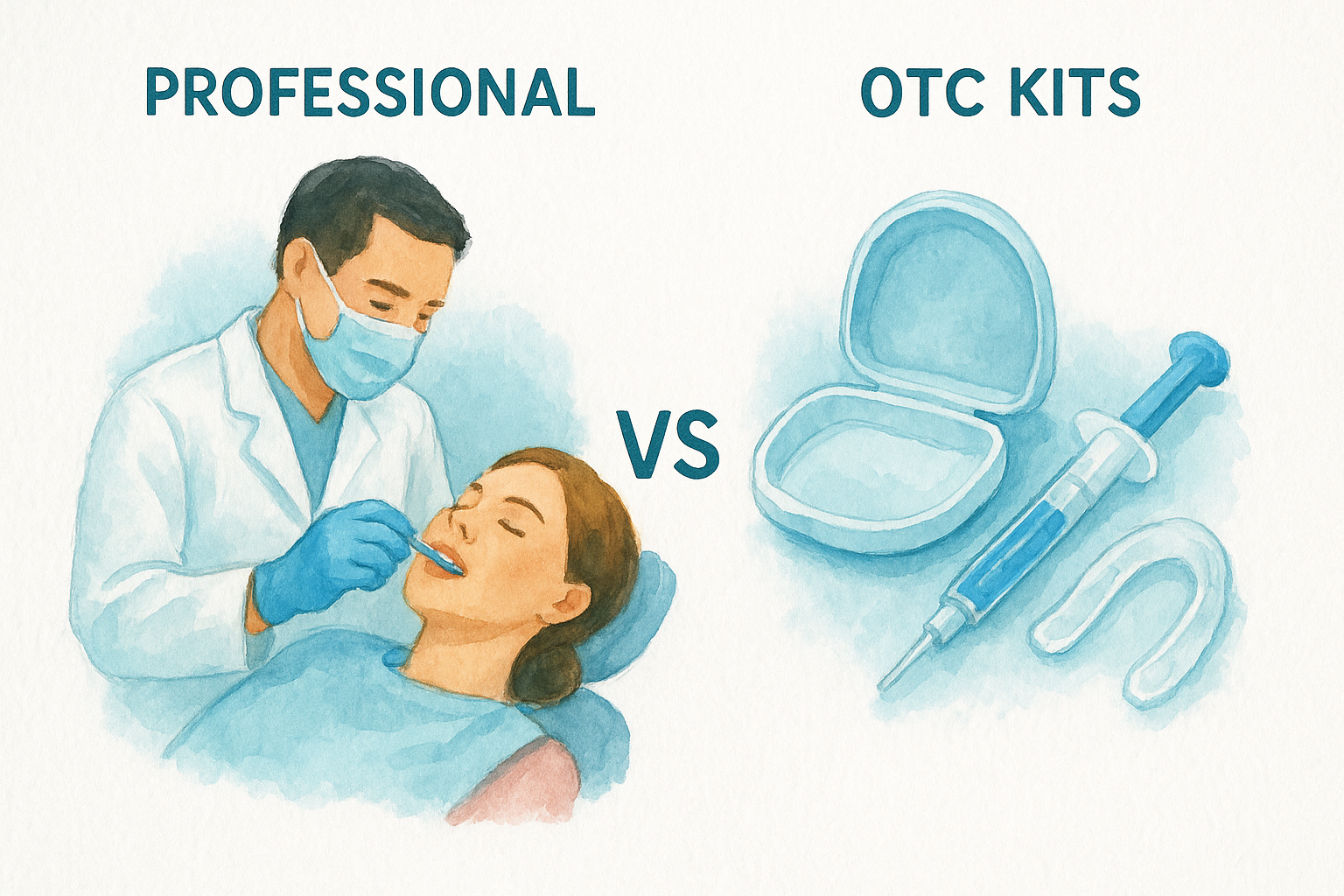
Professional whitening vs OTC kits: how to choose
The choice between professional whitening and over-the-counter kits is not simply about budget. It is about matching the treatment to your specific dental situation, and understanding what each option actually delivers in terms of results, risk, and supervision. Whether is teeth whitening safe for enamel applies to you depends in part on which route you take and whether it fits your current oral health baseline.
What professional whitening actually offers
In-office whitening uses hydrogen peroxide concentrations typically ranging from 25% to 40%, which is substantially higher than anything available without a prescription. That higher concentration produces faster, more dramatic results in a single session, but it also requires professional application to manage the risk. Your dentist isolates your gums with a protective barrier before the gel is applied, controls the exact contact time, and monitors your response throughout the process. That level of precision is what makes high-concentration treatment viable, not just the product itself.
Professional whitening is not inherently safer than OTC use. It is more controlled, which is a meaningful but specific distinction.
Dentists can also take stock of your enamel condition, existing sensitivity, restorations, and gum health before recommending treatment at all. That pre-treatment assessment catches problems that you would not know to look for on your own, which is a genuine advantage that no at-home kit replicates.
When OTC kits are the smarter choice
For most people with healthy enamel and no significant dental history, a properly used OTC whitening product delivers results without the cost of a clinical appointment. The key word is properly. OTC kits work safely when you select an appropriate concentration, follow the schedule as written, and give your enamel the recovery time it needs between sessions.
OTC options also let you pace the process across several weeks rather than compressing it into one high-intensity session, which some research suggests may be gentler on enamel overall. If you have pre-existing sensitivity, a dentist's assessment before you start still makes sense even if you plan to use an OTC product. The decision point comes down to your current dental health, not just your preference for convenience or cost savings. Knowing where you stand before you start is always the more informed move.
Special cases: thin enamel, cavities, crowns, braces
Standard whitening guidance applies to healthy teeth with intact enamel, but not everyone starts from that baseline. If you have thin enamel, active decay, dental restorations, or orthodontic hardware, asking is teeth whitening safe for enamel requires a more specific answer than the general population gets.
Thin enamel and pre-existing sensitivity
If your enamel is already thinner than average due to genetics, acid erosion, or previous overuse of whitening products, you are starting with less buffer between the bleaching agent and your dentin. Even low-concentration peroxide can trigger significant sensitivity and accelerated mineral loss in that context.
If you experience sensitivity before any whitening treatment, consult a dentist before starting a course, regardless of the product's advertised safety.
A dentist can assess your enamel condition directly and advise whether whitening is appropriate at all, and at what concentration actually makes sense for your situation rather than a general recommendation.
Cavities and active decay
Whitening over an untreated cavity is genuinely dangerous, not just inadvisable. Peroxide can seep through decayed tooth structure and reach the pulp directly, causing severe pain and potential nerve damage. Active decay needs to be restored before you whiten, full stop.
The same caution applies to cracked teeth, where peroxide can penetrate through the fracture line and irritate internal tissue without any visible warning on the tooth surface.
Crowns, veneers, and other restorations
Dental restorations, including crowns, veneers, bonding, and tooth-colored fillings, do not respond to peroxide the way natural enamel does. Whitening agents have no bleaching effect on ceramic, composite resin, or porcelain.
If you whiten your natural teeth and leave restorations unchanged, the color contrast between them becomes more visible, not less. Talk to your dentist about scheduling any new restorations after a whitening course, so the shade match reflects your final whitened color.
Braces and orthodontic appliances
Whitening while wearing fixed metal or ceramic braces creates uneven results because the brackets block the bleaching agent from reaching the enamel directly behind them. When the braces come off, those shielded areas appear noticeably darker than the surrounding tooth surface.
Most orthodontists recommend waiting until brackets are removed before starting any whitening treatment. Clear aligner wearers have more flexibility, but should still confirm timing and product choice with their provider before proceeding.
Key takeaways for enamel-safe whitening
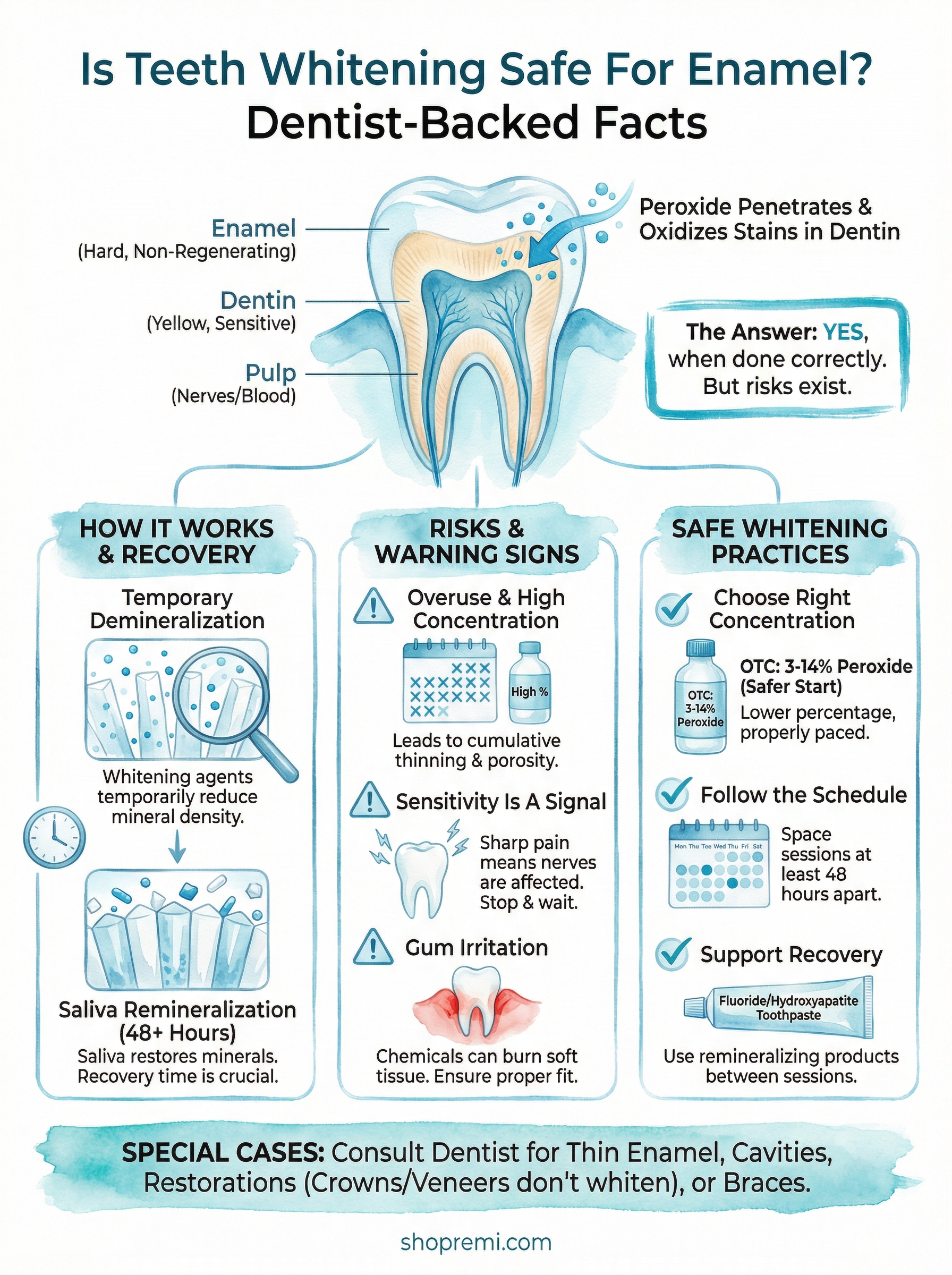
Is teeth whitening safe for enamel? Yes, when you use the right concentration, follow the schedule as written, and give your teeth adequate recovery time between sessions. The evidence is clear: temporary mineral loss from whitening reverses within 48 hours when you allow remineralization to happen. The risk is not the chemistry itself but the pattern of overuse, skipped recovery windows, and ignoring early sensitivity signals. If you have thin enamel, active cavities, or restorations, talk to your dentist before starting any whitening course.
Your enamel does not regenerate, which makes protecting it now far smarter than attempting to compensate later. Start with a lower concentration, space your sessions properly, and use a remineralizing toothpaste between treatments to support recovery. If you also grind your teeth at night, protecting your enamel from mechanical wear matters just as much as any whitening decision. A custom night guard shields the enamel you worked to protect.

