
 Guards + Retainers
 Custom Night Guard
 Retainer
 Emergency Order

 Whitening
 Whitening Kit
 Teeth Whitening Gel
 Dual-Action Foam
 Cleaning + Care
 Ultrasonic Cleaner Pro
 Water Flosser
 UV Toothbrush Sanitizer
 Deep Clean + Freshening Tablets
 Accessories
 Guard Removal Tool
 Replacement Nozzles
 Bundles

Most people think of oral care as brushing, flossing, and maybe a mint before a meeting. But the importance of oral hygiene goes far beyond fresh breath and white teeth. Your mouth is a direct gateway to the rest of your body, and what happens there, from bacterial buildup to chronic teeth grinding, can quietly affect your heart, your immune system, and even your mental health.
Poor dental habits don't just lead to cavities. They're linked to serious systemic conditions like cardiovascular disease, diabetes complications, and respiratory infections. Gum disease alone affects nearly half of adults over 30 in the United States, according to the CDC. That's a staggering number for something largely preventable with the right daily habits and protective tools.
At Remi, we see this reality every day. Hundreds of thousands of customers come to us dealing with bruxism, jaw clenching, and the dental damage that follows, problems that often start with neglected oral health and snowball into pain, worn enamel, and expensive dental work. It's exactly why we developed custom-fitted night guards and oral care products that make protecting your mouth simple and affordable, without requiring repeated trips to a dentist's office.
This article breaks down how oral health connects to your overall well-being, the real risks of ignoring it, and practical steps you can take right now to build a routine that actually works. Whether you're starting from scratch or looking to level up your habits, you'll walk away with a clear plan for a healthier mouth, and a healthier you.
Why oral hygiene matters for whole-body health
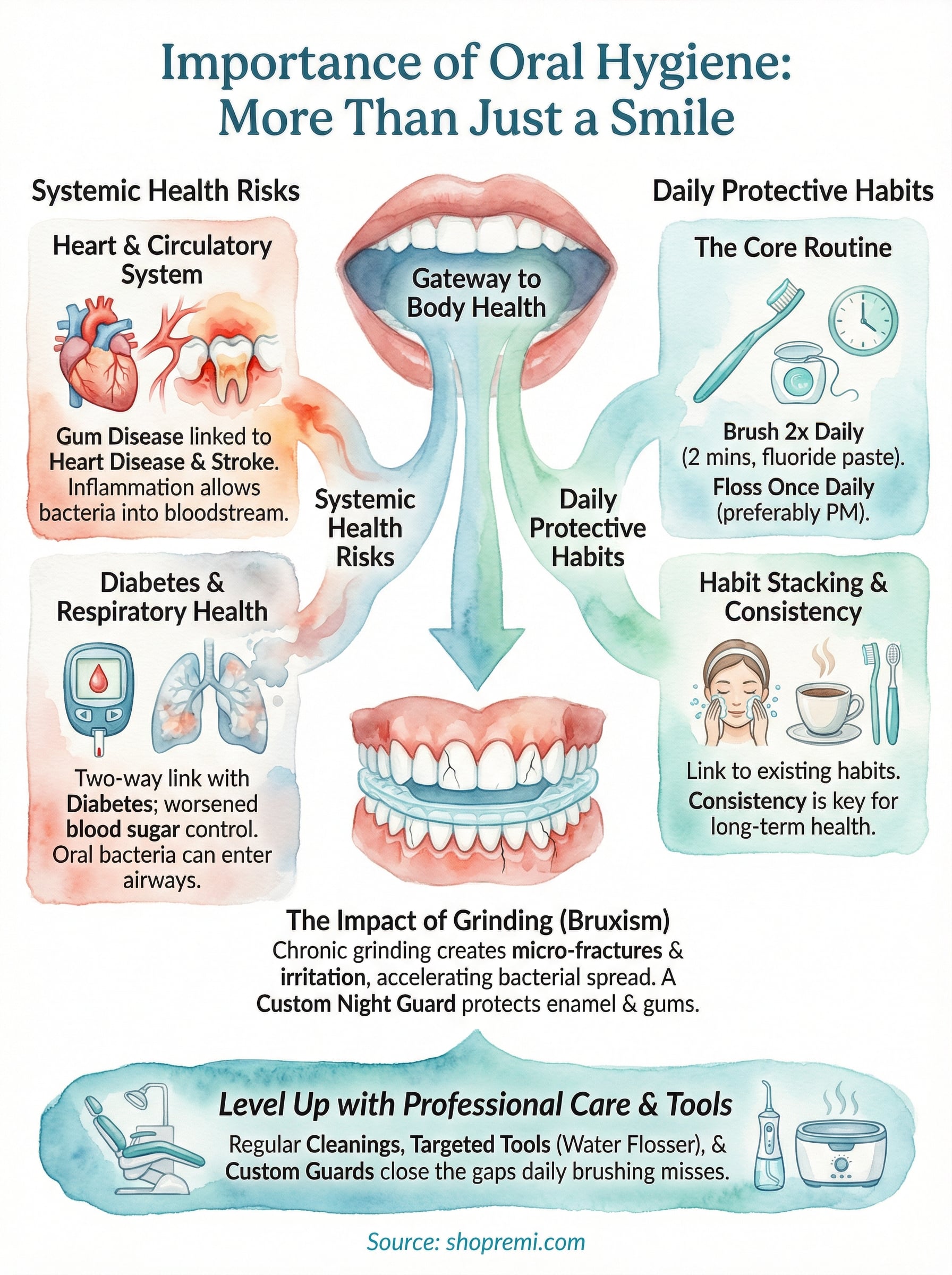
Your mouth does a lot more than chew food and form words. It's one of the most bacteria-rich environments in your body, hosting over 700 species of microorganisms at any given time. When you keep those bacteria in check through consistent daily care, most of them are harmless. Let them build up unchecked and the importance of oral hygiene becomes clear fast: infection, inflammation, and a direct path for bacteria to enter your bloodstream and reach organs far from your teeth.
The mouth-heart connection
Gum disease, specifically periodontitis, has been linked to an increased risk of heart disease and stroke in multiple large-scale studies. The mechanism isn't fully settled in the research, but the leading theory is that oral bacteria enter the bloodstream through inflamed gum tissue and trigger systemic inflammation throughout the body. That inflammation can affect the lining of blood vessels and contribute to arterial plaque buildup over time.
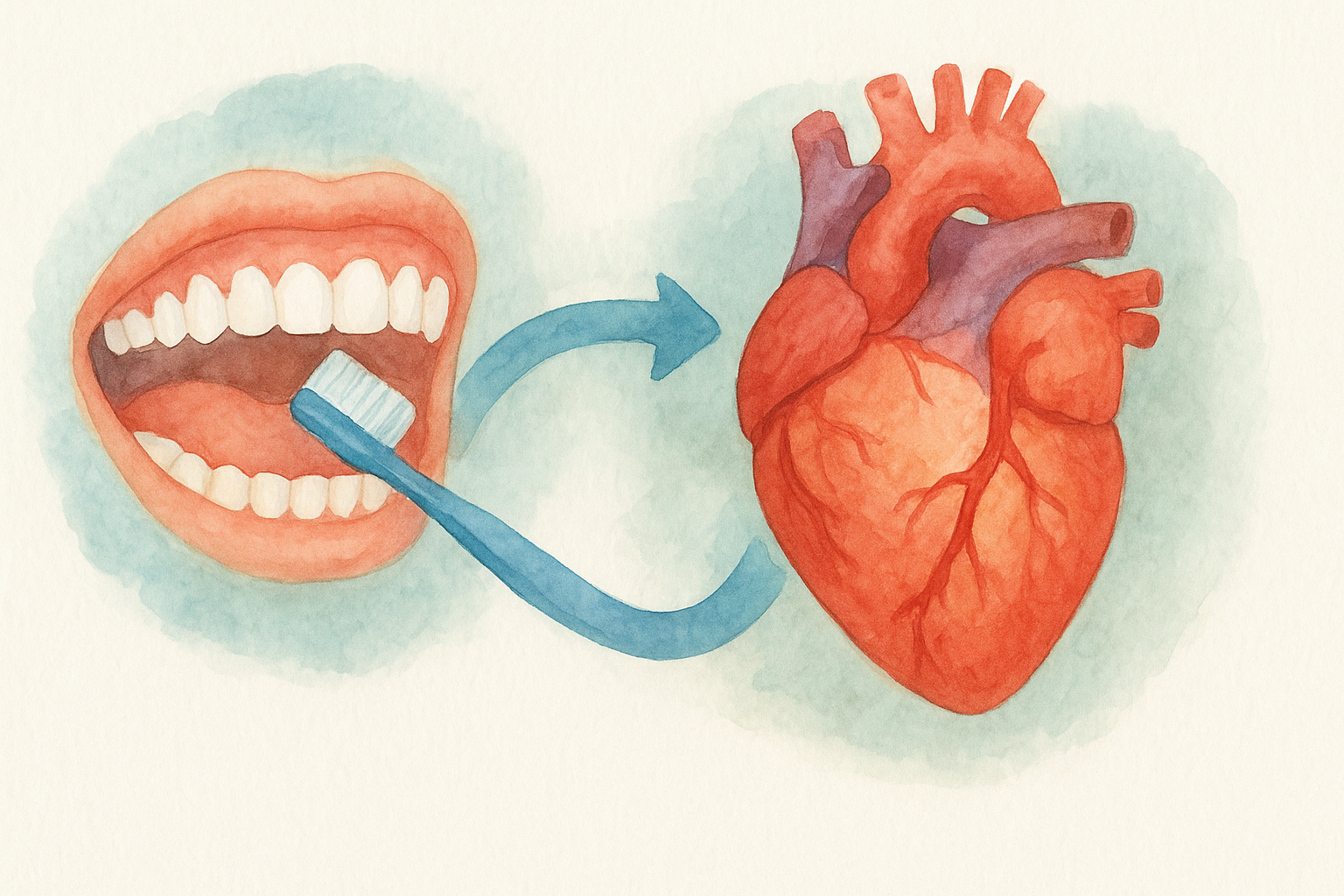
Research shared by the American Heart Association has found that people with gum disease are two to three times more likely to experience a heart attack, stroke, or other serious cardiovascular event compared to people with healthy gums.
People with periodontitis often show elevated inflammatory markers, like C-reactive protein, that doctors also monitor in cardiovascular patients. Treating gum disease has been shown in some studies to reduce those markers, which suggests that protecting your gums actively supports your heart health, not just your smile.
Oral health and blood sugar
Diabetes and gum disease share a two-way relationship that most people don't know about. High blood sugar creates an environment where harmful oral bacteria thrive, which makes gum disease worse. At the same time, untreated gum disease makes it harder to control blood sugar levels, because the chronic infection drives up the body's inflammatory response. This cycle makes both conditions harder to manage if you treat only one.
People managing diabetes who also received treatment for periodontal disease showed measurable improvements in blood sugar control in clinical research. Your mouth connects to every system in your body, and the habits you build around it either protect those systems or quietly undermine them.
How bacteria and inflammation spread from the mouth
Your mouth connects directly to your circulatory and respiratory systems, which means bacteria don't stay local. Every time you swallow, breathe, or experience even minor bleeding in your gums, oral microbes have a direct route into your bloodstream and airways. Healthy gum tissue acts as a natural barrier, but once that barrier breaks down from poor hygiene or mechanical irritation, harmful microbes move fast.
The bloodstream pathway
When gums become inflamed, the tissue lining them grows porous and fragile. Harmful bacteria like Porphyromonas gingivalis can slip through those compromised tissue walls and travel via the bloodstream to distant organs. Once circulating, they trigger your immune system to release inflammatory compounds that affect blood vessel walls, organ tissue, and immune function far beyond your mouth.
The importance of oral hygiene becomes undeniable when you consider that the same bacteria found in diseased gum tissue have been identified in arterial plaque and the lungs of patients with pneumonia.
How teeth grinding worsens bacterial spread
Chronic bruxism, or teeth grinding, adds another serious layer to this problem. Grinding creates micro-fractures in enamel and persistent gum irritation, both of which give bacteria more entry points into vulnerable tissue. The constant mechanical pressure inflames the gum line over time, accelerating the breakdown of that protective barrier. Wearing a properly fitted night guard reduces that ongoing stress and helps your gums maintain the structural integrity they need to keep harmful bacteria where they belong: outside your bloodstream.
What poor oral hygiene can lead to
Skipping brushing, ignoring flossing, and putting off dental care doesn't just cause bad breath. Neglect compounds over time, and the consequences range from painful and expensive dental problems to serious medical conditions that affect your entire body. Understanding what's at stake reinforces the importance of oral hygiene as a daily non-negotiable, not just an occasional priority.
Tooth decay and gum disease
Cavities and gum disease are the most direct outcomes of poor oral hygiene. Plaque, a sticky film of bacteria, builds up on your teeth when you don't brush and floss consistently. Left in place, it hardens into tartar, irritates gum tissue, and creates the conditions for both decay and periodontitis. Untreated gum disease progresses from surface inflammation to deep tissue and bone loss, which can eventually lead to tooth loss.
The CDC reports that nearly 1 in 5 adults over 65 has lost all their teeth, a condition strongly tied to a lifetime of inadequate oral care.
Broader health consequences
Chronic oral infections don't stay contained to your mouth. As covered earlier, bacteria travel through your bloodstream and contribute to cardiovascular disease, poorly controlled diabetes, and respiratory infections. Premature births and low birth weight have also been linked to untreated periodontal disease in pregnant individuals, according to research cited by the National Institutes of Health. Your mouth is the starting point for a chain of reactions that your body can't always contain on its own.
How to build a daily oral hygiene routine that sticks
Understanding the importance of oral hygiene is one thing; actually building habits that last is another. Most people brush inconsistently, skip flossing, and never think about timing. The good news is that a solid routine doesn't require a lot of time. It requires the right sequence and a little intention.
The core habits
Brushing twice daily with a fluoride toothpaste forms the foundation. Brush for two full minutes each time, covering all surfaces of your teeth and your gumline. Flossing once a day, preferably at night, removes plaque and food from spaces your toothbrush physically cannot reach.
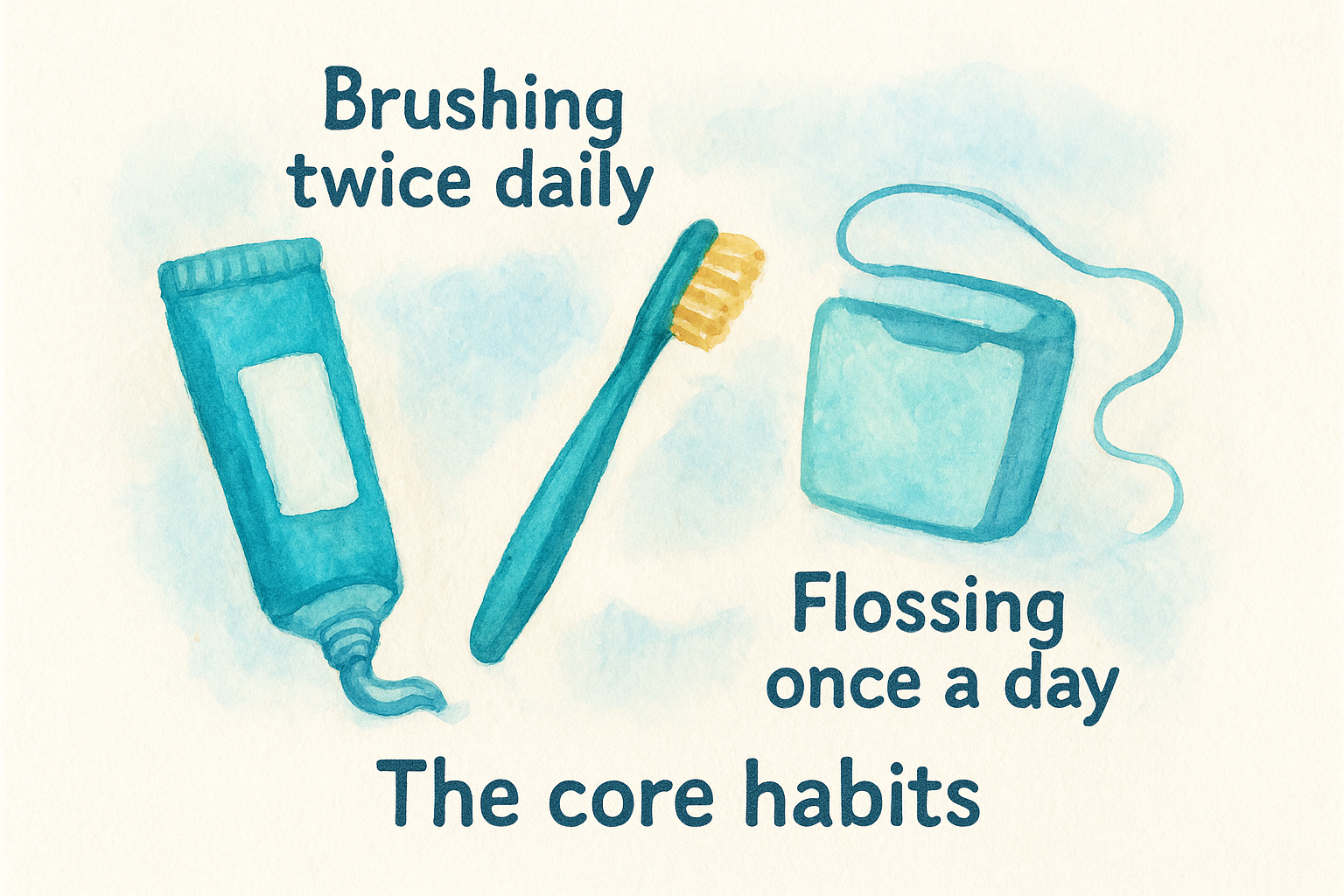
The American Dental Association recommends brushing for two minutes twice a day and flossing once daily as the minimum baseline for preventing tooth decay and gum disease.
Building consistency
Habit stacking works well here: attach your oral care routine to something you already do automatically, like washing your face or making your morning coffee. The sequence matters too. Floss before you brush so you loosen debris, then brushing sweeps it away. End with a fluoride rinse if you want an extra layer of protection.
Sticking to a routine also means protecting your teeth at night. If you grind while you sleep, a custom night guard prevents enamel damage and gum irritation that would otherwise undo your daytime care. Consistency across every hour of the day is what separates people who maintain healthy mouths from those who spend years catching up on damage.
When to get professional care and special products
Daily habits handle the baseline, but they don't replace everything. Professional cleanings and targeted products fill the gaps your toothbrush and floss can't reach, and knowing when to use them is a core part of understanding the importance of oral hygiene as a complete system, not just a morning routine.
Signs you need a dentist sooner rather than later
Bleeding gums, persistent bad breath, tooth sensitivity, or visible changes in your gum line are all signals that your mouth needs more than home care. These symptoms point to conditions like early periodontitis or enamel erosion that worsen quickly without treatment. Don't wait for pain to act; by the time something hurts, the underlying damage is usually significant.
The American Dental Association recommends professional cleanings at least twice a year for most adults, with more frequent visits for those managing gum disease or high cavity risk.
Products that close the gaps in your routine
Specialized tools make a measurable difference when your standard routine isn't enough. An ultrasonic cleaner removes bacteria and buildup from night guards and retainers far more thoroughly than rinsing alone. A water flosser reaches areas between teeth and below the gumline that standard floss misses, especially useful if you have tight contacts or dental work. For anyone grinding their teeth, a custom-fitted night guard is not optional equipment; it's the single most effective way to protect your enamel and reduce the gum irritation that accelerates bacterial damage over time.
A healthier mouth starts today
The importance of oral hygiene is not abstract. Every day you brush consistently, floss thoroughly, and protect your teeth from grinding, you actively reduce your risk of gum disease, tooth decay, and the systemic conditions connected to both. Small daily habits create real, compounding results over months and years.
You don't need to overhaul everything at once. Start with the basics, then add targeted tools as your routine develops. If you grind your teeth at night, that step deserves immediate attention because enamel damage and gum irritation work against every other good habit you build during the day. A custom-fitted night guard protects the investment you make in your oral health every single morning.
Take the first step right now and explore Remi's custom night guard to protect your teeth from the grinding and clenching that quietly damages your mouth while you sleep.

