
 Guards + Retainers
 Custom Night Guard
 Retainer
 Emergency Order

 Whitening
 Whitening Kit
 Teeth Whitening Gel
 Dual-Action Foam
 Cleaning + Care
 Ultrasonic Cleaner Pro
 Water Flosser
 UV Toothbrush Sanitizer
 Deep Clean + Freshening Tablets
 Accessories
 Guard Removal Tool
 Replacement Nozzles
 Bundles

Your teeth are meant to last a lifetime, but that only happens if you take care of them every single day. This guide to healthy teeth covers the daily habits, dietary choices, and preventative steps that actually make a difference, not just for avoiding cavities, but for protecting your smile long-term.
Most people know they should brush and floss, but there's more to it than going through the motions twice a day. From the way you brush to what you eat between meals, small adjustments in your routine can prevent serious problems like gum disease, enamel erosion, and tooth decay. And for the millions of people who grind their teeth at night, often without realizing it, protecting teeth during sleep is just as important as what you do while awake.
At Remi, we build custom night guards and oral care products designed alongside dentists to help you keep your teeth strong and healthy. Below, we'll walk you through everything you need to know about maintaining great oral health, with practical steps you can start using right away.
What healthy teeth require
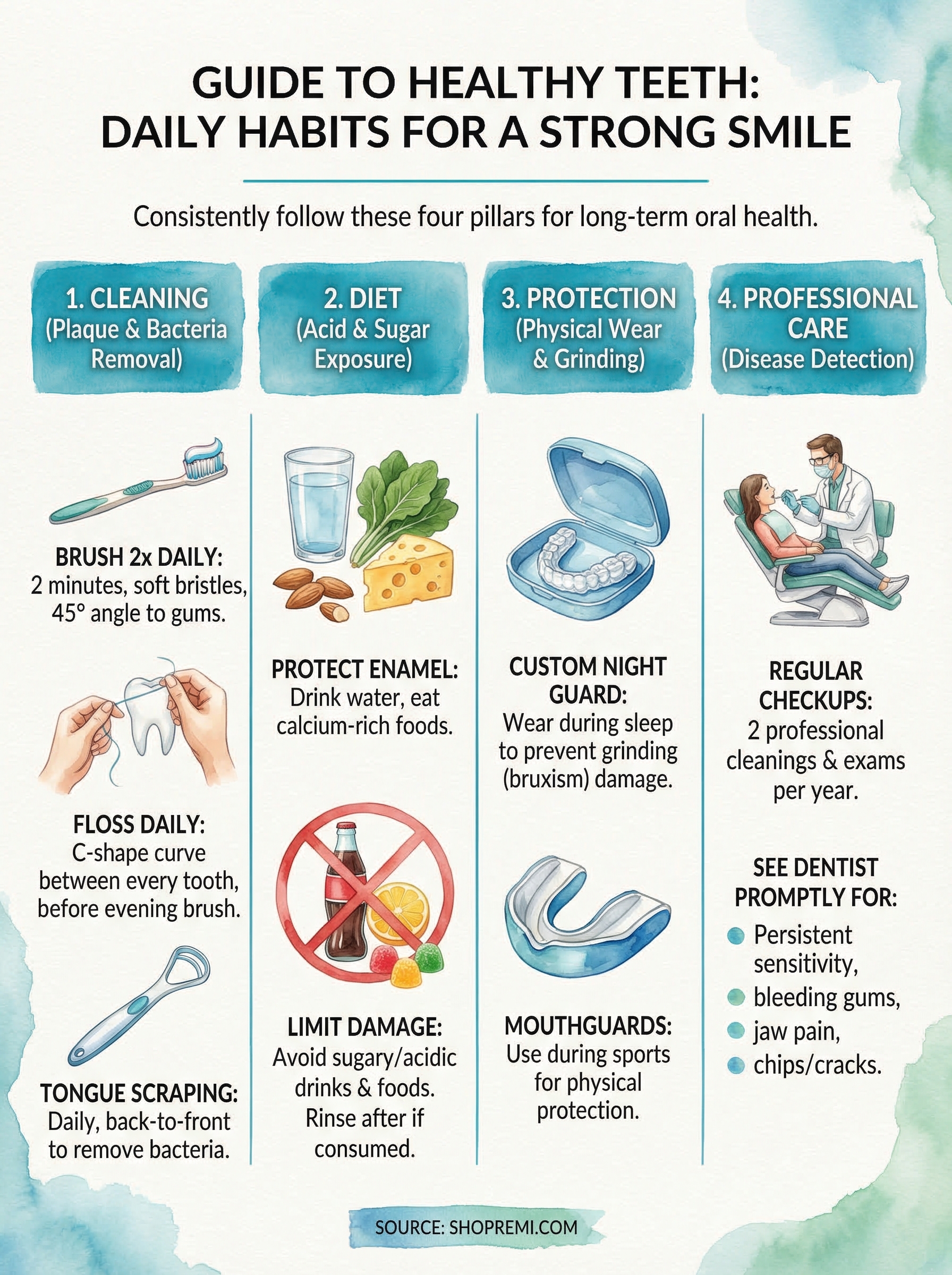
Healthy teeth don't just happen. They result from consistent daily habits combined with the right knowledge about what actually causes damage in the first place. This guide to healthy teeth is built around four core areas: cleaning, diet, protection, and professional care. Each one plays a specific role, and skipping any of them over time will catch up with you in ways that are expensive and painful to fix.
The Four Pillars of Oral Health
Most dental problems, including cavities, gum disease, and enamel erosion, trace back to the same root causes: plaque buildup, acid exposure, and physical wear. When you understand what drives these problems, you can build a routine that targets each one directly instead of just going through the motions.
Plaque is a sticky film of bacteria that forms on your teeth continuously. If you don't remove it every day, it hardens into tartar, which only a dental professional can remove.
Here's what each pillar covers and why it matters:
| Pillar | What it addresses | Key habits |
|---|---|---|
| Cleaning | Plaque and bacteria removal | Brushing, flossing, tongue scraping |
| Diet | Acid and sugar exposure | Food choices, meal timing, hydration |
| Protection | Physical damage and grinding | Night guards, mouthguards, avoiding hard foods |
| Professional care | Tartar and early disease detection | Dental checkups, professional cleanings |
Why Consistency Beats Intensity
A single thorough brushing session won't compensate for two days of skipping. Your mouth is an active environment where bacteria replenish within hours, which means your habits need to happen daily, not just when you remember. The most effective routines are simple and repeatable, not elaborate and unsustainable.
Your teeth also face different threats at different times of day. In the morning, you clear bacteria that multiplied overnight while your saliva production slowed. At night, you remove the day's food debris and acids before they sit against your enamel for eight hours straight. Both sessions matter equally, and what you do around them, including what you eat, drink, and whether you protect your teeth during sleep, shapes your long-term results more than any single product.
Step 1. Brush for two minutes, twice a day
Two minutes feels longer than you think once you actually time it. Most people brush for under 45 seconds, which leaves plaque on surfaces that lead directly to cavities and gum disease. Brushing morning and night is not optional; it is the foundation every other habit in this guide to healthy teeth builds on.
Dentists recommend a soft-bristled toothbrush with fluoride toothpaste. Hard bristles wear down enamel over time, and that damage is permanent.
The right brushing technique
Using the wrong technique scrubs away enamel rather than plaque. Hold your brush at a 45-degree angle to your gums and use short, circular strokes rather than scrubbing side to side. Apply light pressure only, because pressing harder does not clean better; it just irritates your gums and wears down enamel faster.
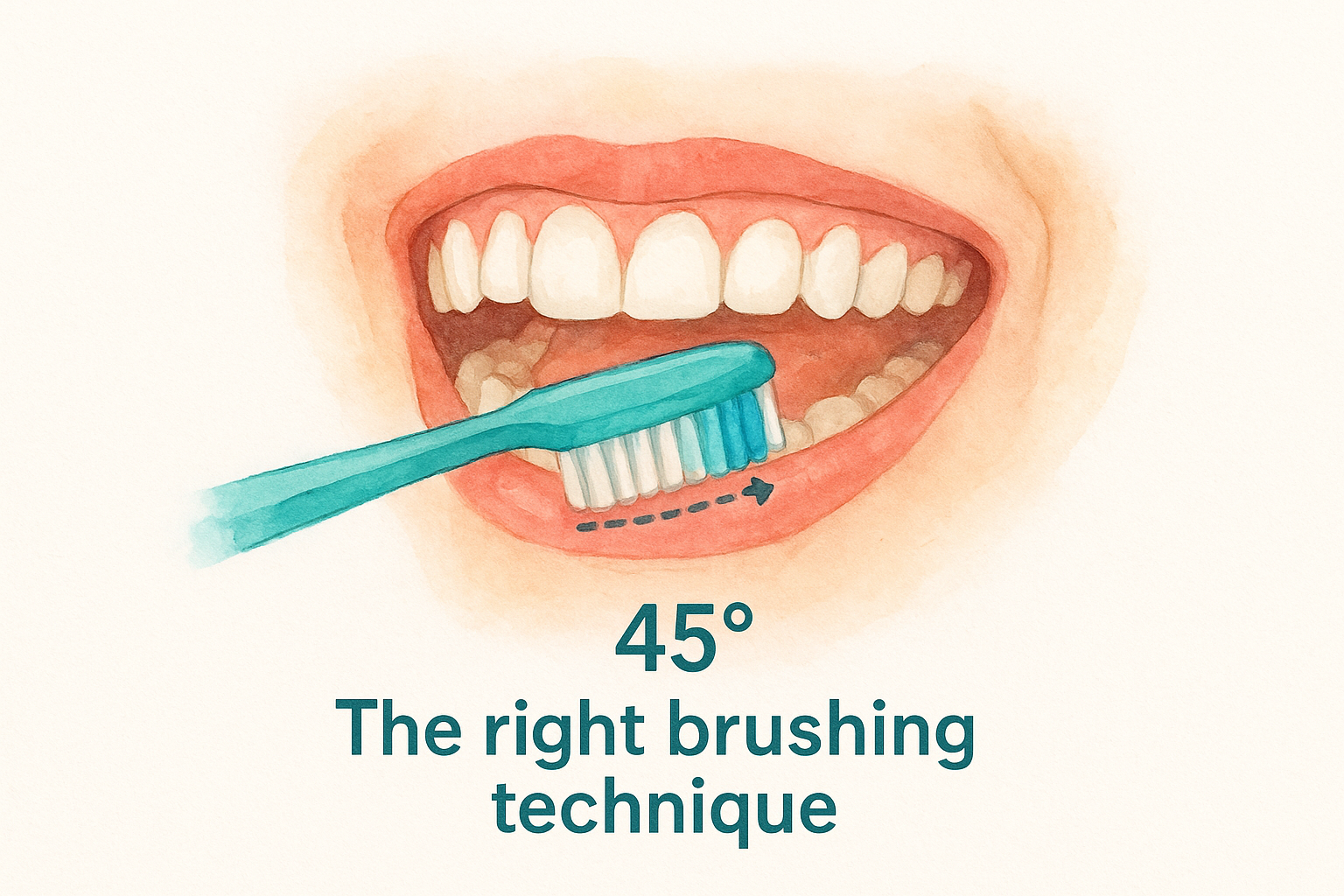
Here is a simple session breakdown to keep each brushing consistent:
- Outer surfaces: upper teeth first, then lower
- Inner surfaces: tilt the brush vertically for front teeth
- Chewing surfaces: short back-and-forth strokes
- Gumline: angle bristles toward the gum at 45 degrees
- Time per quadrant: 30 seconds each to reach 2 full minutes
Replace your toothbrush every three months, or sooner if the bristles fray. A worn brush loses its ability to reach between teeth and along the gumline effectively, which means you are brushing but not fully cleaning. Electric toothbrushes with oscillating heads can also outperform manual brushing for people who struggle to maintain consistent technique.
Step 2. Clean between teeth and your tongue
Your toothbrush cleans tooth surfaces, but it can't reach the spaces between teeth or the bacterial film coating your tongue. This step in any complete guide to healthy teeth targets the 40% of each tooth's surface your brush misses entirely, which is exactly where gum disease and cavities most commonly start.
Floss daily, not occasionally
Flossing removes food particles and plaque from between teeth where your brush never reaches. Any time of day works, but flossing before your evening brush is most effective because it loosens debris and lets fluoride toothpaste penetrate more surface area right before you sleep.
Bleeding gums when you first start flossing usually means your gums are already inflamed from existing plaque buildup, not that you're doing it wrong. Consistent daily flossing typically resolves the inflammation within one to two weeks.
Use this technique for every gap between your teeth:
- Wrap 18 inches of floss around your middle fingers, leaving about two inches to work with
- Slide the floss gently between teeth using a C-shape curve against each tooth surface
- Move up and down along the tooth, not just in and out, to remove plaque below the gumline
Scrape your tongue every morning
Bacteria accumulate on your tongue overnight, contributing directly to bad breath and reintroducing microbes onto your freshly brushed teeth. A tongue scraper removes significantly more bacteria than using your toothbrush on your tongue does.
Apply light pressure and pull the scraper from back to front three to five times, rinsing it between passes. This takes under ten seconds and makes a noticeable difference in breath freshness throughout the day.
Step 3. Eat and drink to protect enamel
What you put in your mouth between brushing sessions has a direct impact on your enamel, and enamel is the hardest substance in your body but also the only one that cannot regenerate. Once it wears away, it does not grow back. This step in the guide to healthy teeth focuses on the dietary habits that either accelerate enamel breakdown or actively support its strength.
Foods and drinks that cause the most damage
Acid and sugar are the two biggest threats to your enamel. Acidic foods and drinks lower the pH in your mouth, which softens enamel temporarily and makes it vulnerable to abrasion. Sugar feeds the bacteria that produce acid as a byproduct, compounding the problem with every meal or snack.
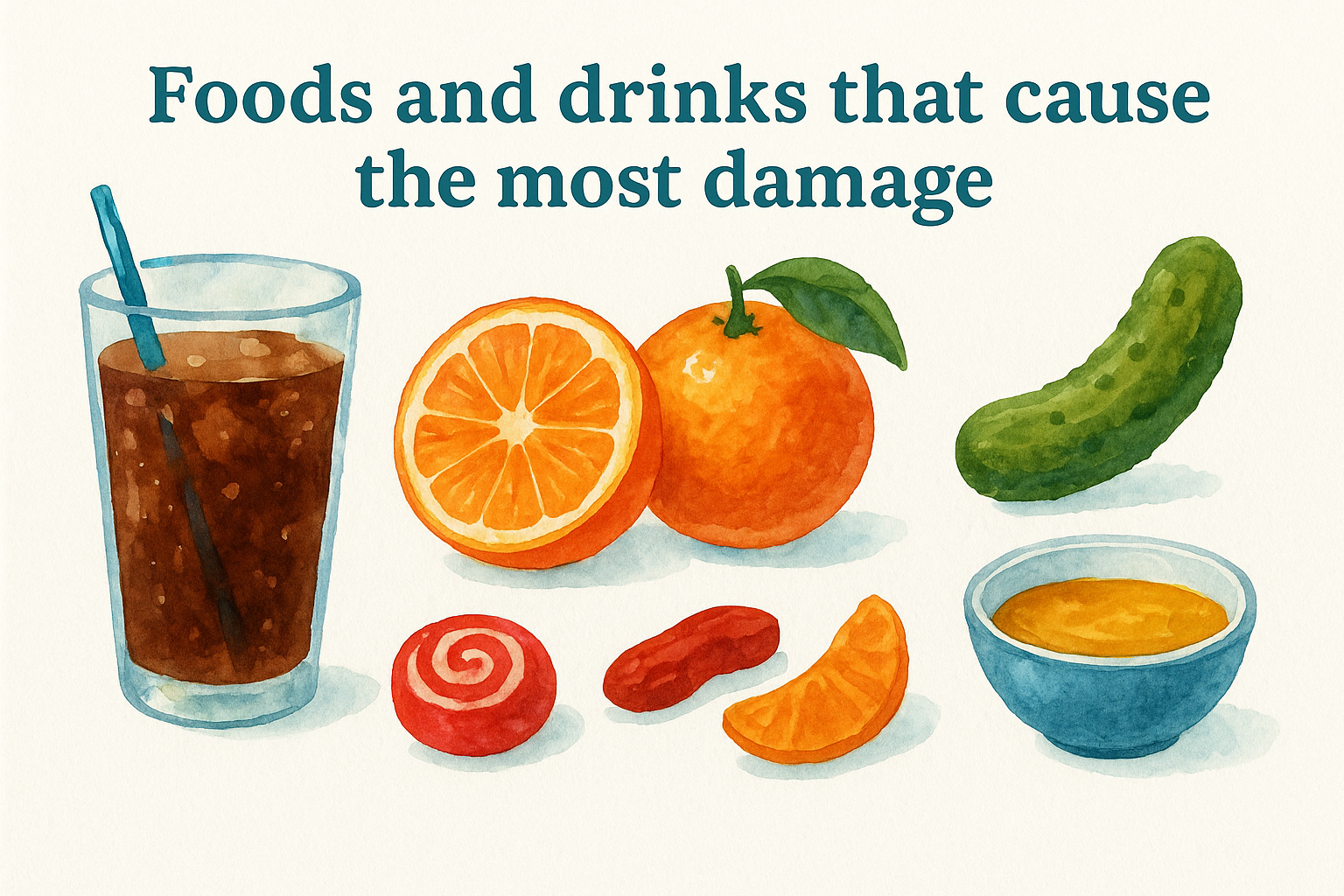
The worst offenders for your enamel include:
- Sodas and sports drinks: high acid and sugar content
- Citrus fruits and juices: natural acids that erode enamel quickly
- Candy and dried fruit: sticky sugar that clings to tooth surfaces
- Vinegar-based foods: chips, pickles, and dressings raise mouth acidity
If you do consume acidic drinks, use a straw to reduce direct contact with your teeth, and wait 30 minutes before brushing to avoid abrading softened enamel.
Habits that protect enamel between meals
Drinking water throughout the day washes away acids and food debris while maintaining saliva production, which is your mouth's natural defense against bacteria. Tap water in most U.S. cities also contains fluoride, which actively helps remineralize enamel between brushing sessions.
Eating calcium-rich foods like dairy, leafy greens, and almonds supports the mineral density your enamel depends on. Chewing sugar-free gum after meals also stimulates saliva flow, helping neutralize acids faster before your next brush.
Step 4. Prevent problems and know when to see a dentist
Prevention does more for your teeth than any treatment ever can. No complete guide to healthy teeth skips this step, because the habits that stop damage before it starts save you from costly and painful procedures later. Two professional cleanings per year give your dentist the chance to catch problems while they're small, and remove tartar buildup that your brush and floss simply cannot touch at home.
Protect your teeth from grinding and physical damage
Teeth grinding, or bruxism, often happens while you sleep, so many people don't realize they're doing it until they wake up with jaw soreness, headaches, or notice worn-down teeth. Wearing a custom-fitted night guard while you sleep creates a barrier that absorbs the pressure and prevents enamel from grinding down overnight. Over-the-counter options exist, but a custom night guard fitted to your exact bite distributes force more evenly and stays in place throughout the night.
A custom night guard from a direct-to-consumer provider like Remi costs a fraction of what dental offices charge, with the same professional-grade fabrication from an at-home impression kit.
Signs you need to see a dentist now
Some symptoms should not wait until your next scheduled cleaning. See a dentist promptly if you notice any of the following:
- Tooth sensitivity to hot, cold, or sweet that lingers after the source is removed
- Bleeding gums that don't resolve after two weeks of consistent flossing
- Persistent bad breath that cleaning doesn't improve
- Pain or pressure in your jaw, especially upon waking
- Visible chips, cracks, or dark spots on any tooth surface
Keep your smile strong for life
This guide to healthy teeth comes down to four habits done consistently: brush twice a day with proper technique, clean between your teeth and scrape your tongue daily, protect your enamel through smarter food and drink choices, and see your dentist regularly to catch problems before they grow. None of these steps require expensive products or complicated routines, just the right information applied every day.
One habit many people overlook is protecting their teeth at night. If you wake up with a sore jaw, headaches, or unexplained tooth sensitivity, grinding during sleep may be quietly damaging your enamel faster than your daily routine can compensate for. A properly fitted night guard stops that damage before it compounds. If you're ready to protect your teeth while you sleep, check out Remi's custom-fit night guard and start with an at-home impression kit today.

