
 Guards + Retainers
 Custom Night Guard
 Retainer
 Emergency Order

 Whitening
 Whitening Kit
 Teeth Whitening Gel
 Dual-Action Foam
 Cleaning + Care
 Ultrasonic Cleaner Pro
 Water Flosser
 UV Toothbrush Sanitizer
 Deep Clean + Freshening Tablets
 Accessories
 Guard Removal Tool
 Replacement Nozzles
 Bundles

Most adults know they should brush twice a day, but if you're wondering how to improve dental health beyond the basics, you're not alone. Teeth grinding, gum issues, and enamel wear don't always come from neglect, they often come from habits you don't even realize you have.
The good news? Small, consistent changes can make a real difference. You don't need expensive procedures or a complete lifestyle overhaul. You just need to know which habits actually move the needle and how to stick with them. That's something we care about deeply at Remi, where we build custom night guards, retainers, and oral care products designed alongside dentists to protect your teeth at home, without the dental office price tag.
Below, you'll find five practical habits that adults can start today to strengthen their teeth, protect their gums, and avoid bigger problems down the road. Each one is backed by dental science and easy to work into your existing routine.
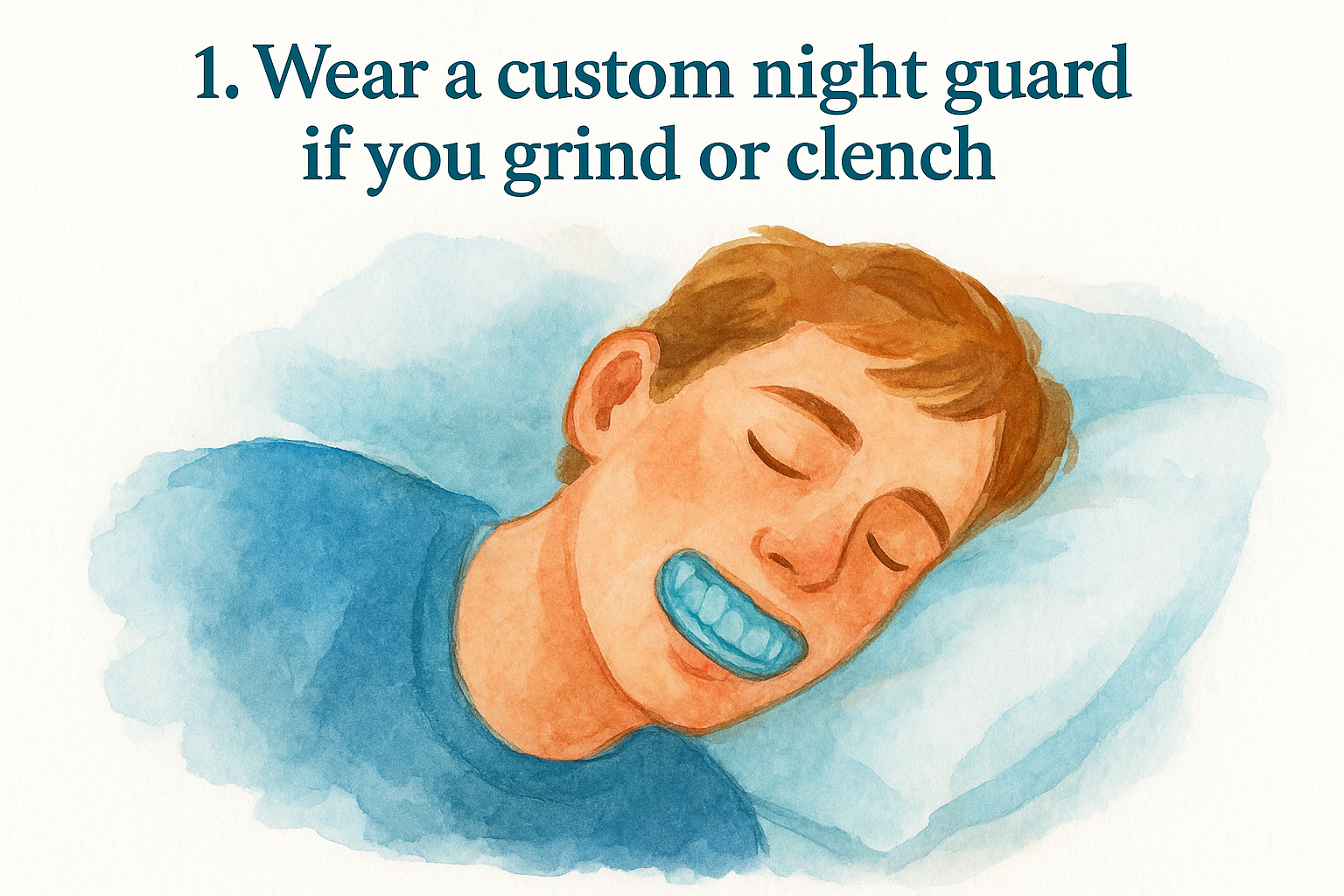
1. Wear a custom night guard if you grind or clench
Teeth grinding (bruxism) affects roughly 10% of adults, and many don't know they do it until a dentist spots wear marks or a partner notices the noise at night. Left untreated, grinding wears down enamel, cracks teeth, and strains the jaw muscles that support everything from chewing to speaking.
What to do
Start by checking for the common warning signs before you dismiss the problem as minor. If any of the following sound familiar, a night guard is likely your next step:
- Morning jaw soreness or stiffness
- Dull headaches concentrated behind the temples
- Visible flat spots or chips on your back molars
- Increased tooth sensitivity with no obvious cause
Once you identify the signs, wearing a guard every night creates a physical barrier between your upper and lower teeth during sleep.
Why it works
Your enamel is the hardest substance in your body, but repeated grinding generates far more pressure than normal chewing. A night guard redistributes that force across the guard's surface so no single tooth absorbs the full impact. Over time, this stops the micro-fractures and sensitivity that bruxism gradually causes.
Consistent night guard use is one of the most effective steps you can take when thinking about how to improve dental health long-term, because it stops structural damage before it starts.
Tools that make it easier
A custom-fitted night guard fits your exact bite in a way that pharmacy boil-and-bite options simply cannot. Remi's custom night guards use an at-home impression kit: you take the mold yourself, mail it back, and receive a professionally made guard within days. Because it fits correctly, you'll actually wear it, which is the only way a guard does its job.
When to get professional help
See a dentist if your jaw pain becomes persistent or worsens over several weeks, if a tooth has visibly chipped or cracked, or if frequent morning headaches don't improve after consistent guard use. These signs suggest grinding has already caused damage that needs clinical treatment. A dentist can also assess whether temporomandibular joint (TMJ) disorder is involved, which requires a separate treatment plan beyond a night guard alone.
2. Brush twice a day with fluoride using the right technique
Brushing is the foundation of any oral care routine, but technique matters as much as frequency. Most adults brush too hard, too fast, or skip the gumline entirely, which leaves the spots most prone to buildup completely uncleaned.
What to do
Use a soft-bristled toothbrush and fluoride toothpaste every morning and before bed. Hold the brush at a 45-degree angle to your gumline and use short, gentle circular strokes for a full two minutes rather than scrubbing back and forth. A few specifics to keep in mind:
- Spend 30 seconds on each quadrant of your mouth
- Replace your toothbrush every three months or when bristles fray
- Brush your tongue to reduce bacteria buildup at the back of your mouth
Why it works
Fluoride strengthens enamel by remineralizing spots that acids and bacteria weaken over time. Brushing twice daily removes plaque before it hardens into tartar, which a toothbrush can no longer touch once it calcifies. If you're serious about how to improve dental health, consistent brushing is one of the highest-impact daily habits you can build.
Skipping your nighttime brush is the bigger mistake of the two: saliva production drops while you sleep, leaving your teeth more vulnerable to acid overnight.
Tools that make it easier
Electric toothbrushes with built-in timers take the guesswork out of brushing duration. Many models also include pressure sensors that alert you when you're pushing too hard against your gums, which protects both enamel and soft tissue.
When to get professional help
See a dentist if your gums bleed consistently after brushing or if persistent bad breath continues despite a solid routine. Both can signal gum disease that requires professional cleaning to address properly.
3. Clean between your teeth every day
Brushing covers the outer surfaces of your teeth, but the spaces between them stay completely untouched without a separate step. Plaque and food particles sitting in those gaps feed the bacteria that cause gum disease and cavities, making interdental cleaning one of the most skipped but highest-impact habits for anyone serious about how to improve dental health.
What to do
Floss once daily, ideally at night before you brush so loosened debris gets swept away immediately. Use proper technique to get the most out of each session:
- Wrap about 18 inches of floss around your fingers and use a fresh segment for each gap
- Slide the floss in a C-shape around each tooth and go just below the gumline
- Avoid snapping or forcing the floss, which can cut soft tissue
Why it works
A toothbrush cleans roughly 60% of your tooth surfaces, leaving the remaining 40% exposed to plaque accumulation. Regular interdental cleaning disrupts that buildup before it hardens into tartar, protecting both your gum tissue and the underlying bone structure.
Skipping this step even a few times per week gives bacteria enough time to establish the early inflammation that leads to gum disease.
Tools that make it easier
If traditional floss is awkward to handle, floss picks or a water flosser make the habit far easier to maintain. A cordless water flosser delivers a pressurized stream that clears debris and massages gums without the dexterity that string floss demands.
When to get professional help
See a dentist if your gums bleed consistently during flossing past the first week, or if you notice swelling, recession, or persistent tenderness. Both signal active gum disease that requires a professional cleaning to address.
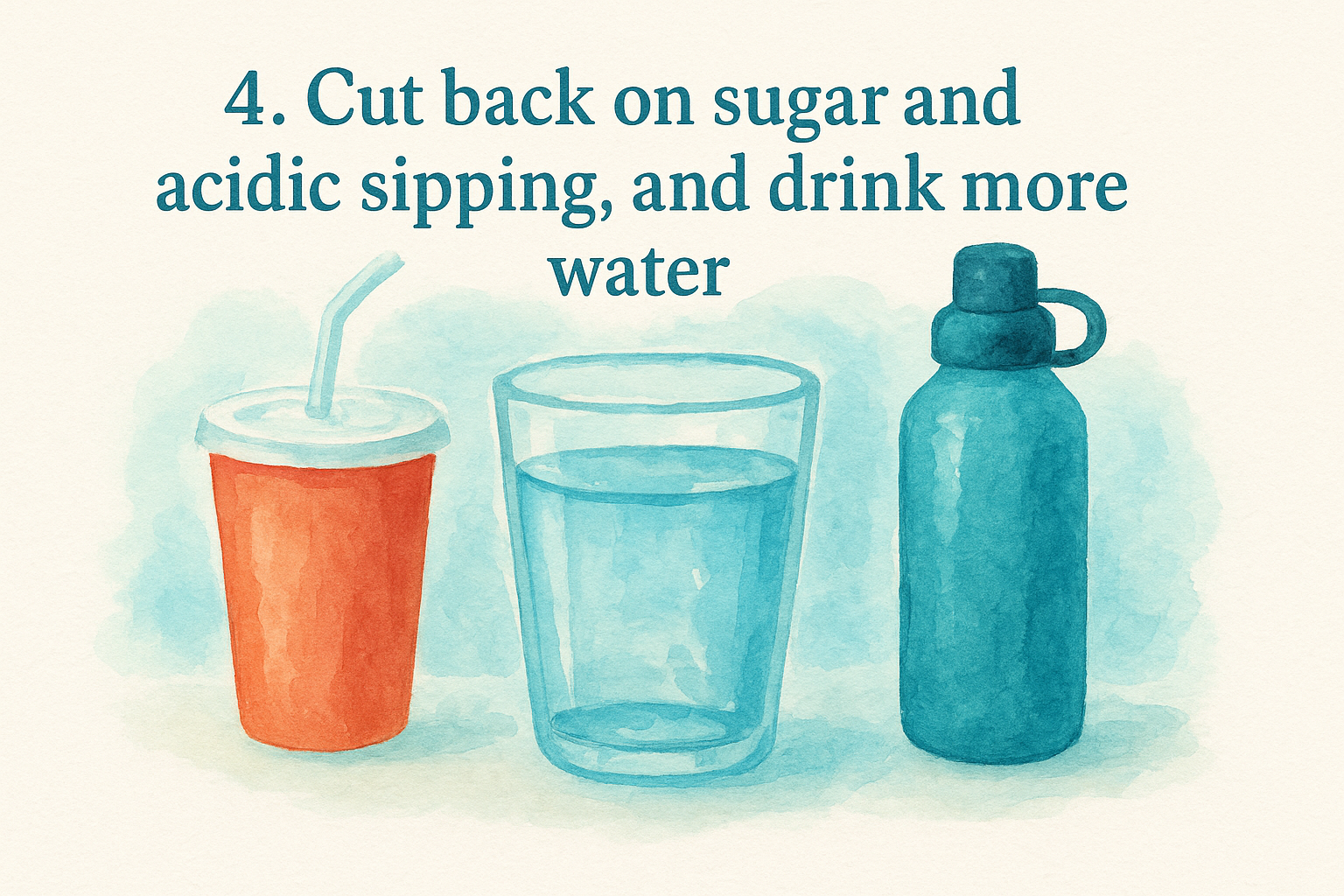
4. Cut back on sugar and acidic sipping, and drink more water
What you eat and drink shapes your enamel every single day, often without you noticing. Sugar feeds the bacteria that produce acid, and frequent sipping of sodas, juices, or sports drinks keeps your teeth bathed in that acid for hours at a time.
What to do
Limit sugary and acidic drinks to mealtimes rather than sipping them throughout the day. When you do consume them, drink through a straw to reduce direct contact with your enamel, and rinse with water immediately afterward. Swap your between-meal drinks for plain water whenever possible, and chew sugar-free, xylitol-based gum to stimulate saliva flow when water is not immediately available.
Why it works
Saliva neutralizes acid and remineralizes enamel, but it needs time to do its job. Constant sipping prevents your mouth from recovering between acid exposures, which is one of the fastest ways to erode enamel. Water supports saliva production and physically rinses debris away from tooth surfaces.
If you want to understand how to improve dental health through diet, reducing acid exposure time matters more than cutting sugar out entirely.
Tools that make it easier
A reusable water bottle you carry throughout the day removes the friction of choosing water over something sugary.
When to get professional help
See a dentist if you notice increased sensitivity or visible transparency along your tooth edges, both of which point to active enamel erosion that needs clinical evaluation.
5. Keep regular dental visits and act fast on new symptoms
No home habit fully replaces what a professional cleaning and exam catches. Tartar buildup, early-stage cavities, and gum changes often show no obvious symptoms until they've been developing for months, making routine dental visits one of the most effective tools for staying ahead of serious problems.
What to do
Schedule a professional cleaning and exam every six months, or more frequently if your dentist recommends it based on your personal history. Between visits, pay attention to new symptoms and report them promptly rather than waiting for your next scheduled appointment. Signs that warrant a call sooner include:
- A tooth that suddenly becomes sensitive to temperature or pressure
- Visible swelling, sores, or discoloration that persists for more than two weeks
- Loose teeth or a noticeable shift in your bite
Why it works
Professional cleanings remove tartar that brushing and flossing cannot touch, and dental X-rays detect decay in areas completely invisible to the naked eye. Catching a small cavity early costs far less to treat than a root canal or crown later.
If you want to know how to improve dental health over the long term, consistent professional oversight ties every home habit together.
Tools that make it easier
Setting a recurring calendar reminder every six months removes the friction of remembering to book your appointment. Many dental offices also send automated reminders by text or email, so confirm you are opted into those notifications when you register as a patient.
When to get professional help
Go in immediately if you experience sudden severe tooth pain or visible jaw swelling, or a fever alongside dental discomfort. These symptoms can indicate an abscess, which requires urgent clinical treatment to prevent the infection from spreading beyond your mouth.
Next steps for a healthier smile
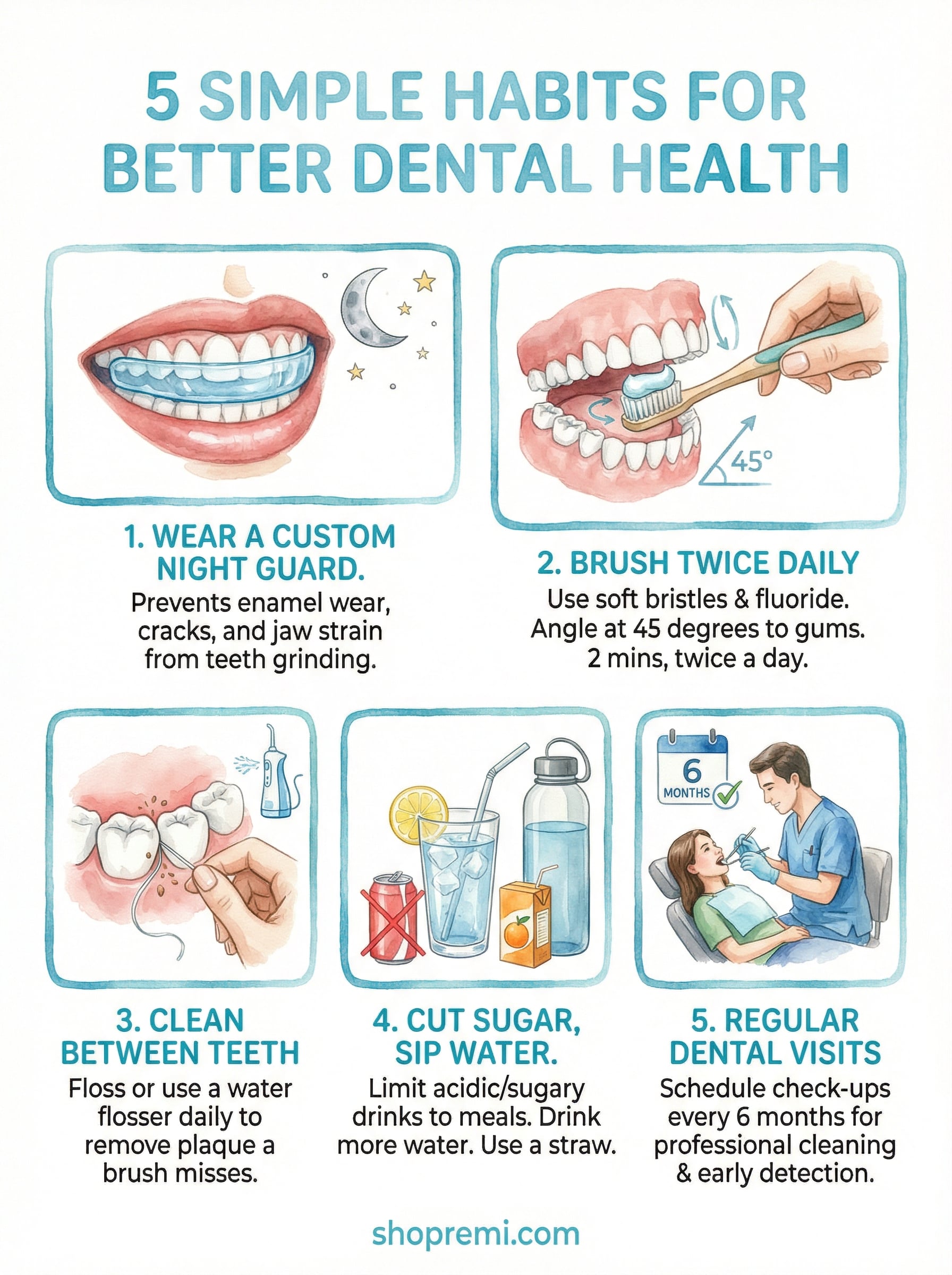
Figuring out how to improve dental health doesn't require a dramatic overhaul. Five consistent habits cover most of what adults need: protect your teeth at night, brush with proper technique, clean between teeth daily, reduce acid exposure, and stay current with professional visits. Each habit builds on the others, and the compounding effect over months is significant.
If grinding or clenching is something you deal with, that is the most urgent place to start. Structural damage from bruxism is largely preventable, but only if you act before the wear accumulates. A custom night guard is the most direct way to protect your teeth while you sleep, and you can get a professionally made one without a dental office visit. If you want to take that step today, start with Remi's custom night guard and put a barrier between your teeth before tonight's sleep.

