
 Guards + Retainers
 Custom Night Guard
 Retainer
 Emergency Order

 Whitening
 Whitening Kit
 Teeth Whitening Gel
 Dual-Action Foam
 Cleaning + Care
 Ultrasonic Cleaner Pro
 Water Flosser
 UV Toothbrush Sanitizer
 Deep Clean + Freshening Tablets
 Accessories
 Guard Removal Tool
 Replacement Nozzles
 Bundles

Your toothbrush sits in a warm, damp bathroom collecting bacteria between uses, and that bristle head can harbor millions of microorganisms at any given time. Knowing how to sanitize a toothbrush at home matters more than most people realize, especially since you're putting it directly in your mouth twice a day, every single day.
The good news? You don't need expensive equipment or specialty products to get your toothbrush clean. A few common household items, hydrogen peroxide, mouthwash, even boiling water, can significantly reduce the bacterial load on your bristles. Some methods take less than a minute.
At Remi, we think about oral hygiene beyond just night guards and retainers. That's exactly why we developed our UV Toothbrush Sanitizer, to give people a hands-off way to keep their brushes germ-free. But whether you use a dedicated device or a DIY approach, the point is the same: a clean toothbrush is non-negotiable for good oral health. Below, we'll walk you through the safest and most effective methods to sanitize your toothbrush using what you already have at home.
Before you start: safety, supplies, and expectations
Before you pick up a bottle of hydrogen peroxide, it helps to understand what sanitizing actually does and what it doesn't do. Sanitizing reduces the number of bacteria and germs on your bristles, but it won't sterilize your toothbrush to clinical levels. That's fine, and that's not the goal either. Your aim is to keep bacterial counts low enough that brushing twice a day supports your oral health rather than undermining it. Setting realistic expectations upfront means you'll stick with a routine instead of chasing perfection.
What you'll need
Most of the supplies are already in your bathroom or kitchen. You don't need to buy anything special to start practicing good toothbrush hygiene at home.
| Supply | Purpose |
|---|---|
| Hydrogen peroxide (3%) | Kills bacteria on bristles during a short soak |
| Antibacterial mouthwash | Alcohol-based rinse that reduces microbial load |
| Clean cup or small glass | Holds your soaking solution |
| Hot (not boiling) water | Rinsing bristles before and after sanitizing |
| Baking soda (optional) | Neutralizes odors and supports light cleaning |
Safety rules to follow first
Not every method works for every brush. Boiling water can warp plastic handles and break down nylon bristles faster than normal wear, so use it with caution and only on manual brushes. Electric toothbrush heads are especially heat-sensitive, meaning liquid soaking methods are the safer choice for those. Also, never combine hydrogen peroxide and mouthwash in the same soak. Mixing those two chemicals can create irritants that are harsh on your gum tissue and the inside of your mouth.
A good rule: if a method could damage the brush itself, it's not worth the trade-off, regardless of how effective it sounds on paper.
Knowing how to sanitize a toothbrush at home starts with using the right method for your specific brush type, not just whatever is closest to the sink.
Step 1. Clean your toothbrush after every use
Daily cleaning is your first line of defense, and it's something most people skip or rush through. Rinsing your bristles thoroughly after every brush removes toothpaste residue, food particles, and loose bacteria before they can sit and multiply. This basic habit costs you nothing extra and takes about ten seconds.
The right way to rinse
Hold your toothbrush under fast-running tap water for at least 15 to 20 seconds after each use. Use your thumb to work the water through the bristles from the base to the tip. You want the water pressure to physically push debris out, not just wash over the surface.
Running water works better than a quick dip because the pressure disrupts bacterial buildup at the base of the bristles where buildup is heaviest.
Give the brush a firm shake to remove excess water once you finish rinsing. Leftover moisture trapped in the bristles creates the warm, damp environment bacteria need to thrive overnight. Keeping your brush as dry as possible between uses makes every other step in learning how to sanitize a toothbrush at home significantly more effective.
Step 2. Sanitize it with simple at-home methods
Once your toothbrush is rinsed clean, sanitizing it takes only a few extra minutes and significantly cuts down the bacteria left behind. Two methods work reliably at home, and you likely already have at least one of the required supplies on hand.
Hydrogen peroxide soak
Hydrogen peroxide is one of the most effective options when figuring out how to sanitize a toothbrush at home. Pour a small amount of 3% hydrogen peroxide (the standard pharmacy concentration) into a clean cup, place the brush bristle-side down, and let it soak for two minutes. Rinse the brush thoroughly under running water before you use it again.
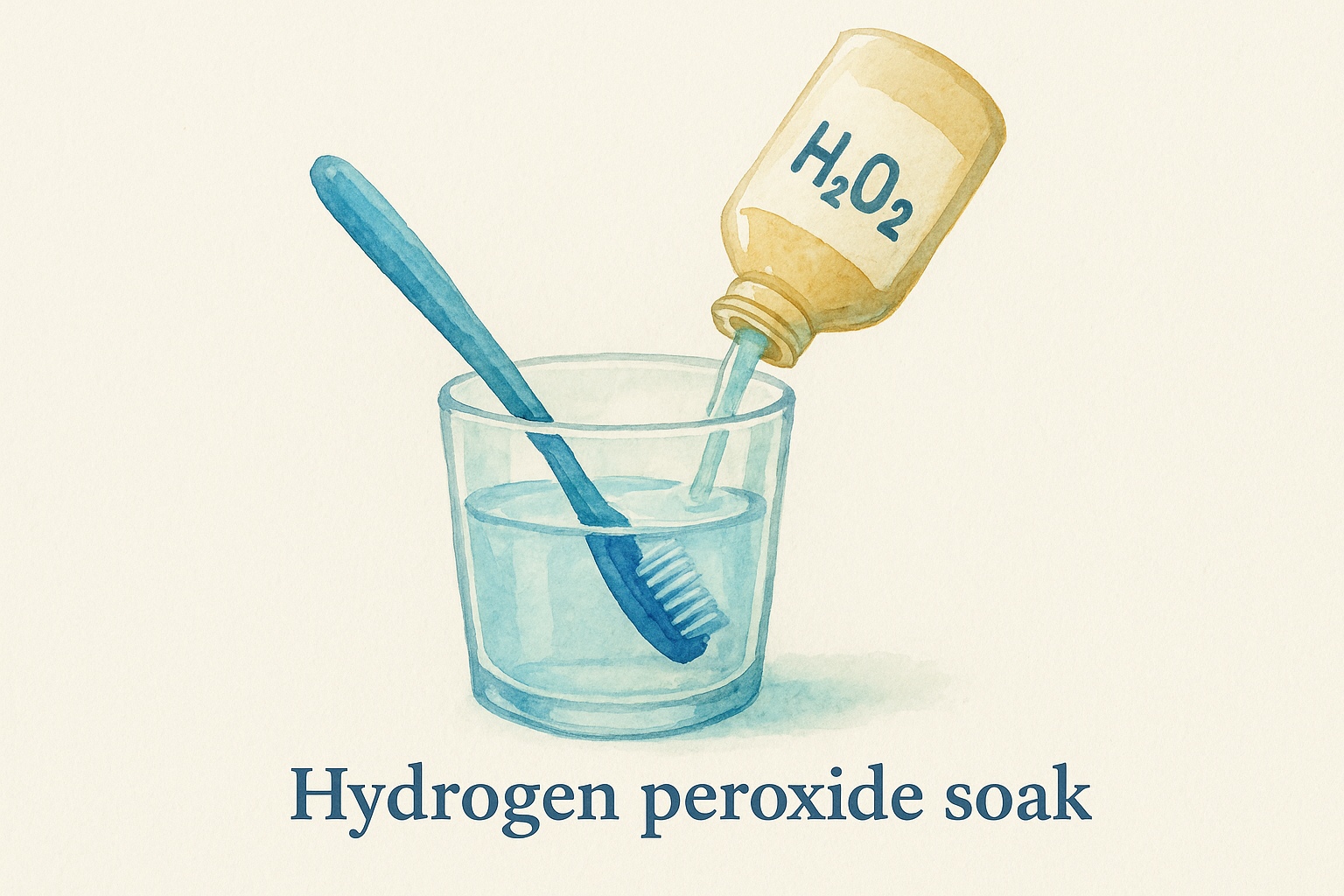
Two minutes is enough. Soaking longer does not improve results and can break down bristle fibers faster than normal wear.
Antibacterial mouthwash rinse
Pour about a capful of alcohol-based mouthwash into a clean cup and submerge the bristle head for 30 to 60 seconds. Swirl the brush gently to help the solution reach the base of the bristles where bacteria tend to cluster most. Rinse well with water before brushing.
This method works especially well for electric toothbrush heads since you avoid any heat exposure. Repeat it two to three times per week for consistent results.
Step 3. Store it the right way to prevent regrowth
Sanitizing your toothbrush means nothing if you store it in conditions that let bacteria grow right back. How you store your brush between uses has a direct impact on how clean it stays, and most bathroom habits actually work against you without you realizing it.
Keep it upright and uncovered
Store your toothbrush bristle-side up in a clean cup or holder that lets air circulate freely around the head. This position allows moisture to drip downward and dry out naturally, which is exactly what you want. Covering wet bristles with a cap or container traps humidity and creates the damp conditions bacteria thrive in.
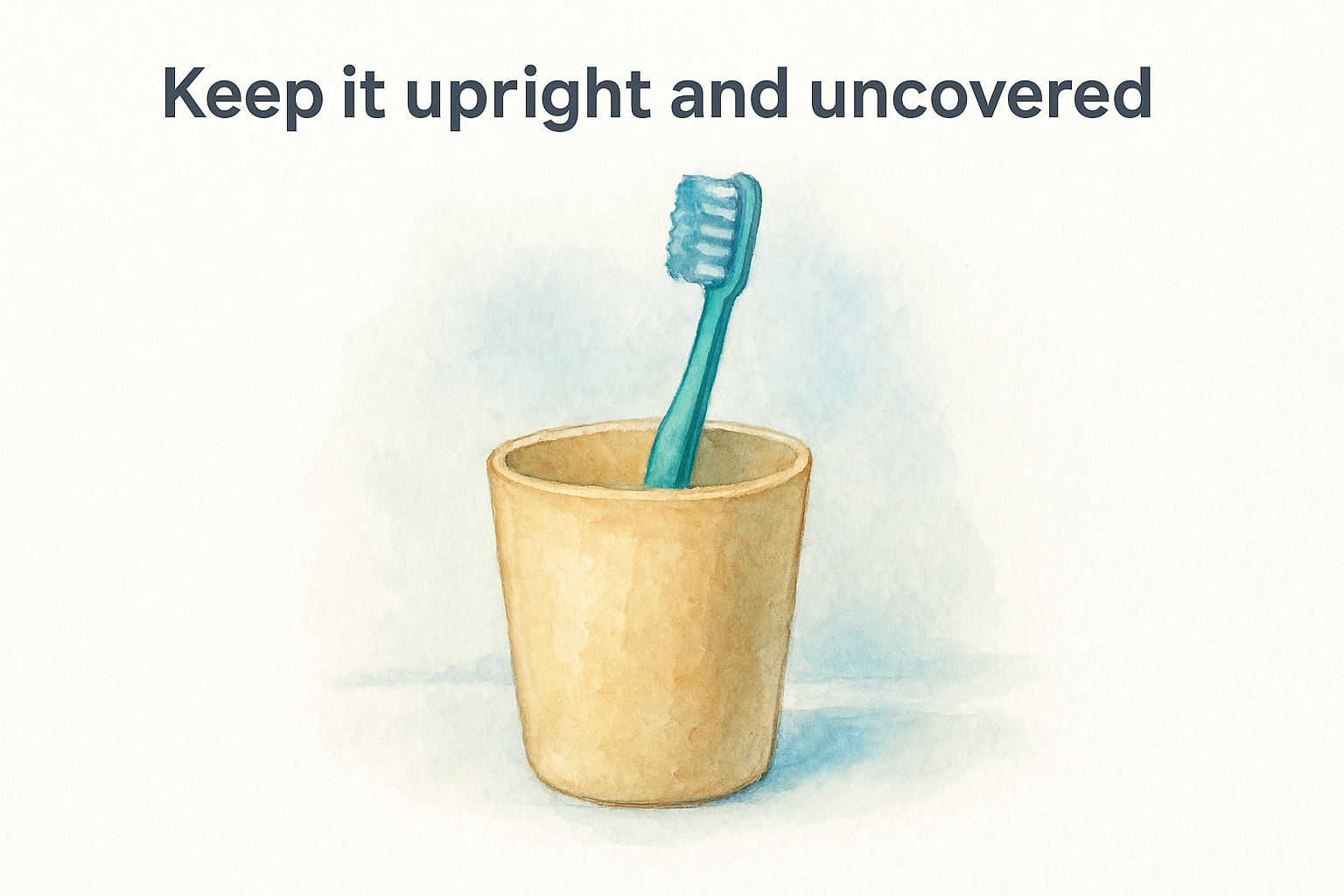
Upright, open-air storage is one of the simplest things you can do to extend the results of any sanitizing routine.
Separate it from other brushes
If multiple people in your household keep their brushes in the same holder, make sure the bristle heads are not touching. Cross-contamination between brushes spreads bacteria and germs even after you have put the effort into learning how to sanitize a toothbrush at home. Keep each brush at least an inch apart, or use individual slots in a multi-hole holder to maintain that separation consistently.
When to replace it and what to avoid
Even the best sanitizing routine has a limit. Once your toothbrush reaches a certain point, no amount of cleaning will restore it to effective use, and brushing with a worn-out brush can actually irritate your gums rather than protect them.
Signs it's time for a new brush
Replace your toothbrush every three to four months, or sooner if the bristles visibly fray or fan outward. Worn bristles lose their ability to clean along the gumline effectively, which defeats the entire purpose of knowing how to sanitize a toothbrush at home in the first place. You should also replace it immediately after recovering from any illness, including a cold, flu, or strep throat, to avoid reintroducing those germs into your mouth.
A frayed toothbrush is a signal your cleaning routine needs a reset, not just a sanitizing session.
What to avoid
Certain methods sound helpful but cause more harm than good. Avoid the following when caring for your brush:
- Microwaving your toothbrush: heat warps handles and melts bristles
- Dishwasher cleaning: high heat damages both manual and electric brushes
- Sharing brushes: even between household members, this spreads bacteria directly
- Soaking overnight: prolonged exposure to any solution degrades bristle fibers faster than regular wear
Final checklist
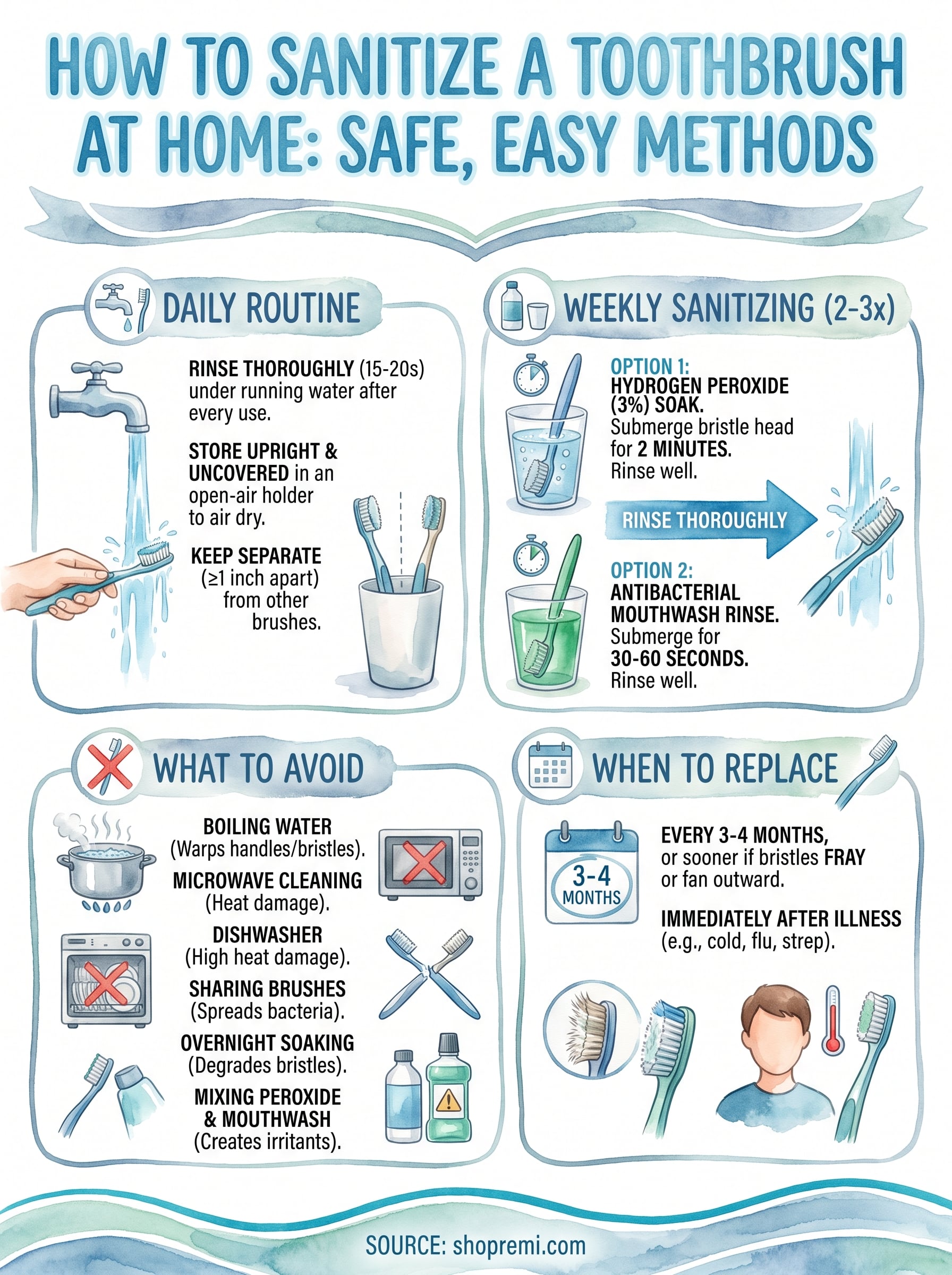
You now have everything you need to keep your toothbrush clean from one use to the next. Here is a quick reference to make sure nothing gets skipped in your routine:
- Rinse thoroughly under fast-running water for 15 to 20 seconds after every brush
- Soak in 3% hydrogen peroxide for two minutes, two to three times per week
- Use antibacterial mouthwash as an alternative soak, especially for electric brush heads
- Store your brush bristle-side up in an open-air holder, never capped or covered
- Keep bristle heads at least an inch apart from other brushes in the same holder
- Replace your brush every three to four months, or immediately after an illness
That checklist covers the full picture of how to sanitize a toothbrush at home without overcomplicating it. Oral hygiene goes beyond just your toothbrush, so if you want to step up your routine, check out the Remi cordless water flosser for easy, effective cleaning between your teeth every day.

