
 Guards + Retainers
 Custom Night Guard
 Retainer
 Emergency Order

 Whitening
 Whitening Kit
 Teeth Whitening Gel
 Dual-Action Foam
 Cleaning + Care
 Ultrasonic Cleaner Pro
 Water Flosser
 UV Toothbrush Sanitizer
 Deep Clean + Freshening Tablets
 Accessories
 Guard Removal Tool
 Replacement Nozzles
 Bundles

You spent months, maybe years, in braces. Your teeth were finally straight, your bite felt right, and then life got in the way. You skipped the retainer for a few weeks, then a few months, and now something feels off. If you're noticing teeth shifting after braces without retainer use, you're not imagining it. Your teeth are actually moving, and it happens faster than most people expect.
Here's the thing: teeth have a natural tendency to drift back toward their original positions, especially in the first year after braces come off. This process, called orthodontic relapse, can undo months of progress in a surprisingly short time. Without consistent retainer wear, the bone and tissue surrounding your teeth haven't fully stabilized yet, giving them room to shift. The longer you wait, the more pronounced the movement becomes.
The good news? You still have options. Whether your shifting is minor or more noticeable, there are steps you can take to stop further movement and protect your results. At Remi, we make custom-fitted retainers delivered directly to your door, a convenient, affordable way to keep your teeth where they belong. This article breaks down exactly why teeth shift, how quickly it can happen, and what you can do about it right now.
Why teeth shift after braces
Understanding why teeth shift helps explain why your retainer isn't optional. During orthodontic treatment, your orthodontist applied steady, consistent pressure over months or years to move your teeth into alignment. But removing your braces doesn't lock them in place. The surrounding bone and soft tissue need considerable time to fully rebuild around your teeth's new positions, and during that window, movement is easy to trigger without the right support.
Your periodontal ligament pulls back
Each tooth connects to your jawbone through the periodontal ligament, a flexible band of tissue that stretches and reshapes during orthodontic treatment. After your braces come off, this ligament still holds tension from your teeth's original positions, and it actively pulls your teeth back toward where they started. This is the core reason teeth shifting after braces without retainer use is so predictable and so common.
The periodontal ligament can start pulling your teeth back toward their original positions within days of skipping your retainer.
Your retainer works directly against this pull. It holds your teeth steady while the bone around them hardens into the new configuration your braces created. Skip the retainer, and the ligament wins every time.
Your bone and jaw keep changing
When braces move your teeth, bone on one side of each tooth breaks down while new bone forms on the other side. This remodeling process continues for months after treatment ends, leaving your teeth sitting in relatively soft, unsettled bone. The first six to twelve months after braces come off are the most critical and vulnerable period, but the risk does not simply disappear after that.
Beyond early relapse, your jaw continues to change as you move through your 20s and 30s. Natural forces from chewing, swallowing, and speaking place low-level pressure on your teeth every single day, and over years, that pressure causes gradual crowding and shifting. Layer age-related jaw development on top of that, and it becomes clear why wearing a retainer is a long-term commitment rather than a temporary step right after braces.
How fast teeth can shift without a retainer
Most people assume that skipping a retainer for a few days won't cause real damage. That assumption is wrong. Teeth shifting after braces without retainer wear can begin within 24 to 72 hours, especially in the months right after treatment when the surrounding bone is still soft and unsettled.
The first few days and weeks matter most
Your teeth are most vulnerable immediately after your braces come off. In that window, the periodontal ligament is still under tension and the bone hasn't hardened around your new alignment. Measurable movement can occur within the first week, particularly in the lower front teeth where constant tongue pressure pushes against them all day.
Skipping your retainer for even a few days during the first year post-braces can trigger a chain of small shifts that compound quickly.
Within two to four weeks without a retainer, the device will start to feel tight when you try to put it back in. That tightness signals that active relapse has already started and your teeth are resisting correction.
What happens over months and years
After the first year, shifting slows but does not stop. Most people develop noticeable crowding in their lower front teeth within two to three years of going without a retainer. Here is how the timeline tends to unfold:
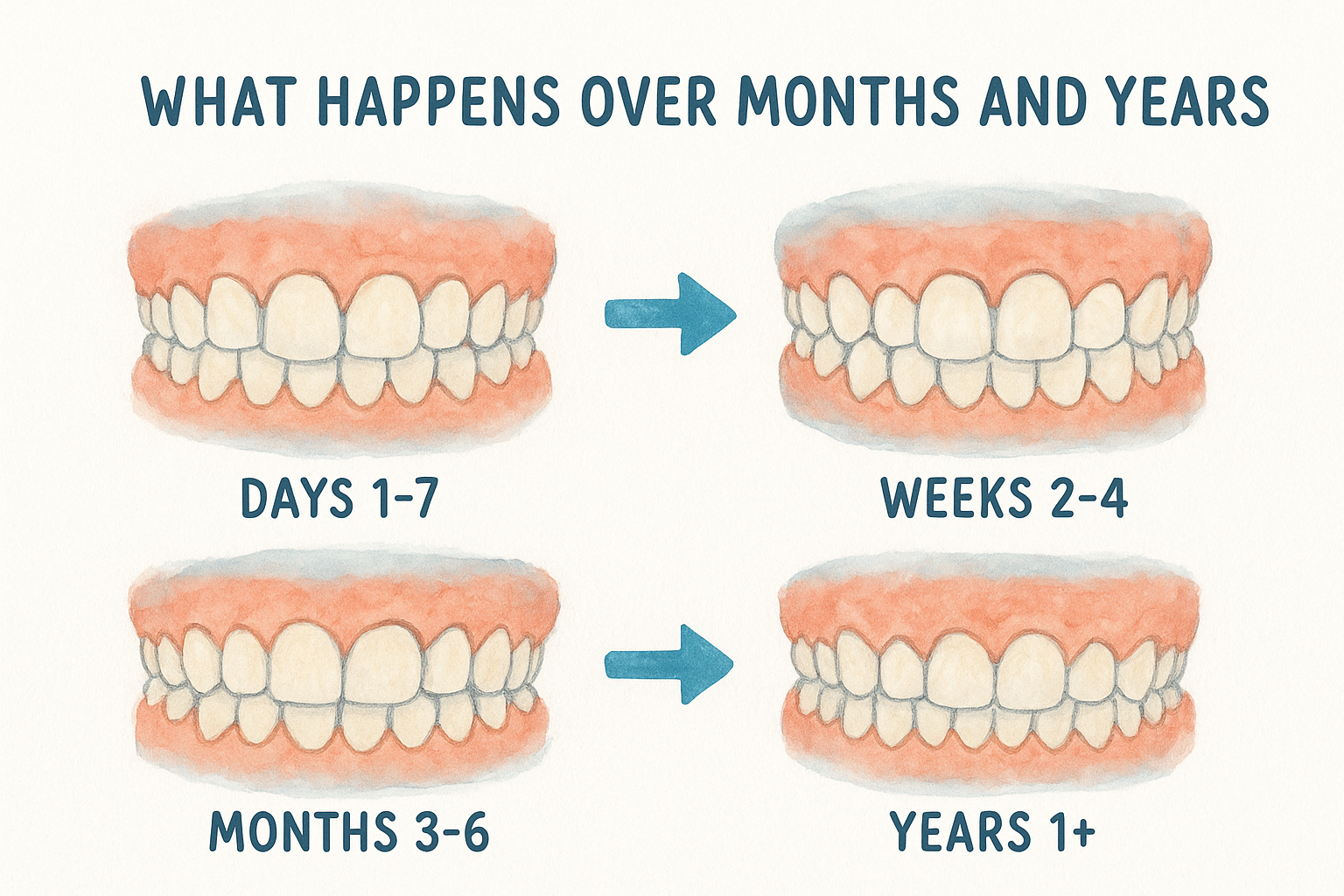
- Days 1-7: Minor movement begins, especially in the front teeth
- Weeks 2-4: Retainer fits tightly or won't seat fully
- Months 3-6: Visible crowding develops
- Years 1+: Significant relapse without intervention
Signs your teeth are shifting and why it matters
Catching teeth shifting after braces without retainer use early gives you the best chance of correcting the problem without needing orthodontic treatment again. Your teeth won't announce a dramatic change overnight, but your body sends clear warning signals if you know what to look for.
Physical signs to watch for
The most common early sign is tightness or discomfort when you put your retainer back in after skipping it for a few days. That resistance means your teeth have already moved. Other physical signs include visible crowding or gaps in your front teeth, changes in how your upper and lower teeth meet when you bite down, or a feeling that your teeth don't sit quite right anymore.
- Retainer feels tight or won't fully seat
- Noticeable crowding, especially in lower front teeth
- Changes to your bite alignment
- New gaps between teeth that weren't there before
- Increased tooth sensitivity from shifting pressure
Why catching it early matters
Early movement is far easier to correct than advanced relapse. If you catch the shift within the first few weeks, wearing your retainer consistently can often guide your teeth back without professional intervention. Wait several months, and you may need new orthodontic treatment to undo the damage.
The earlier you act on shifting teeth, the less it costs you in time, money, and discomfort.
Ignoring the signs doesn't slow the movement. Your teeth will keep shifting until something actively stops them, and waiting only narrows your options.
What to do if you stopped wearing your retainer
If you've noticed teeth shifting after braces without retainer wear, your first step is simple: don't panic, and don't force your old retainer in. The right move depends on how long you've been without it and how much your teeth have actually moved since you last wore it consistently.
Try your retainer first
Put your retainer in and note how it feels. If it's slightly tight but still seats fully over your teeth, wear it for a few hours each day and gradually increase that time. Mild tightness usually signals minor movement that consistent daily wear can often correct over days or weeks. Never force a retainer that won't seat properly, as doing so can damage both your teeth and the appliance.
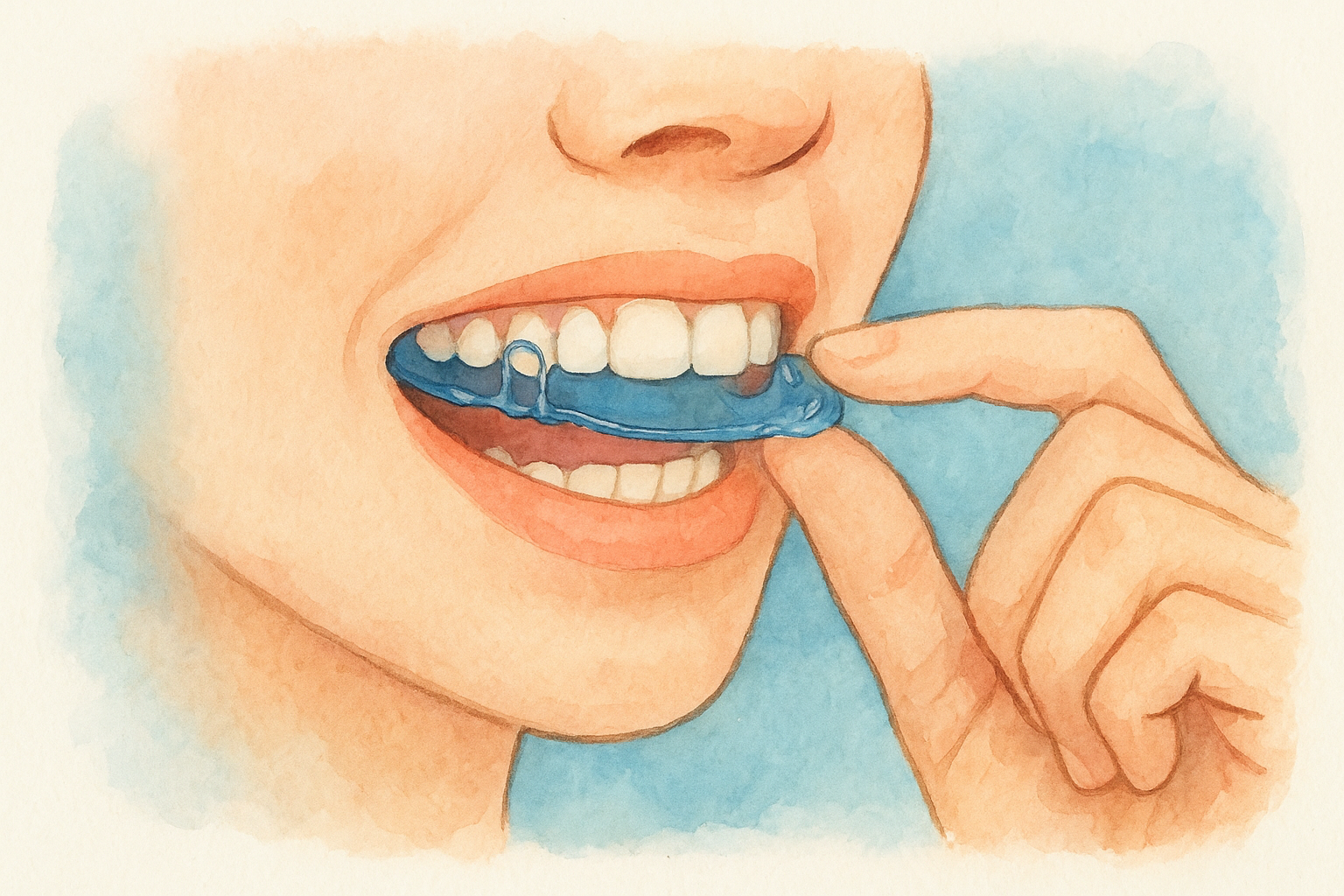
Here's a quick guide based on fit:
- Fits normally: Resume consistent wear immediately
- Slightly tight: Wear gradually, increase daily hours
- Won't seat fully: See your orthodontist before using it
If your retainer fits with only minor resistance, consistent wear is often enough to guide your teeth back on its own.
See your orthodontist if the shift is significant
Schedule an appointment with your orthodontist if your retainer no longer fits or you've gone without it for more than a few months. They can assess how much movement has occurred and determine whether a new retainer, aligners, or retreatment is the right path forward. Waiting longer only increases both the complexity and cost of correction.
Getting a replacement custom retainer at this stage is often the most practical fix for moderate shifting. It holds your teeth in their current position while you and your dental provider sort out the best plan going forward.
How to prevent teeth shifting long term
Preventing teeth shifting after braces without retainer use comes down to one non-negotiable habit: wearing your retainer consistently, for life. Most orthodontists recommend full-time wear for the first six to twelve months after braces, followed by nightly wear indefinitely. That timeline isn't arbitrary. Your bone and ligaments need sustained support to stabilize, and natural jaw changes continue well into adulthood.
Retainer wear isn't a phase you graduate from. It's the permanent price of keeping your results.
Build a retainer routine that actually sticks
Consistency is easier when wearing your retainer becomes automatic rather than optional. Attach it to an existing habit, like brushing your teeth at night, so you never have to remember it separately. Keep your retainer case on your nightstand or bathroom counter where you'll see it, and set a phone reminder if skipping has been a pattern for you. Small friction reductions make a measurable difference in follow-through over time.
Replace your retainer before it fails
Retainers wear out. A cracked, warped, or ill-fitting retainer provides little to no protection and can actually put uneven pressure on your teeth. Plan to replace yours every one to two years, or immediately if it no longer seats properly. Custom-fitted retainers, made from accurate impressions of your current alignment, give you the best fit and the most reliable long-term protection. Checking the fit regularly means you catch problems before shifting has a chance to start.
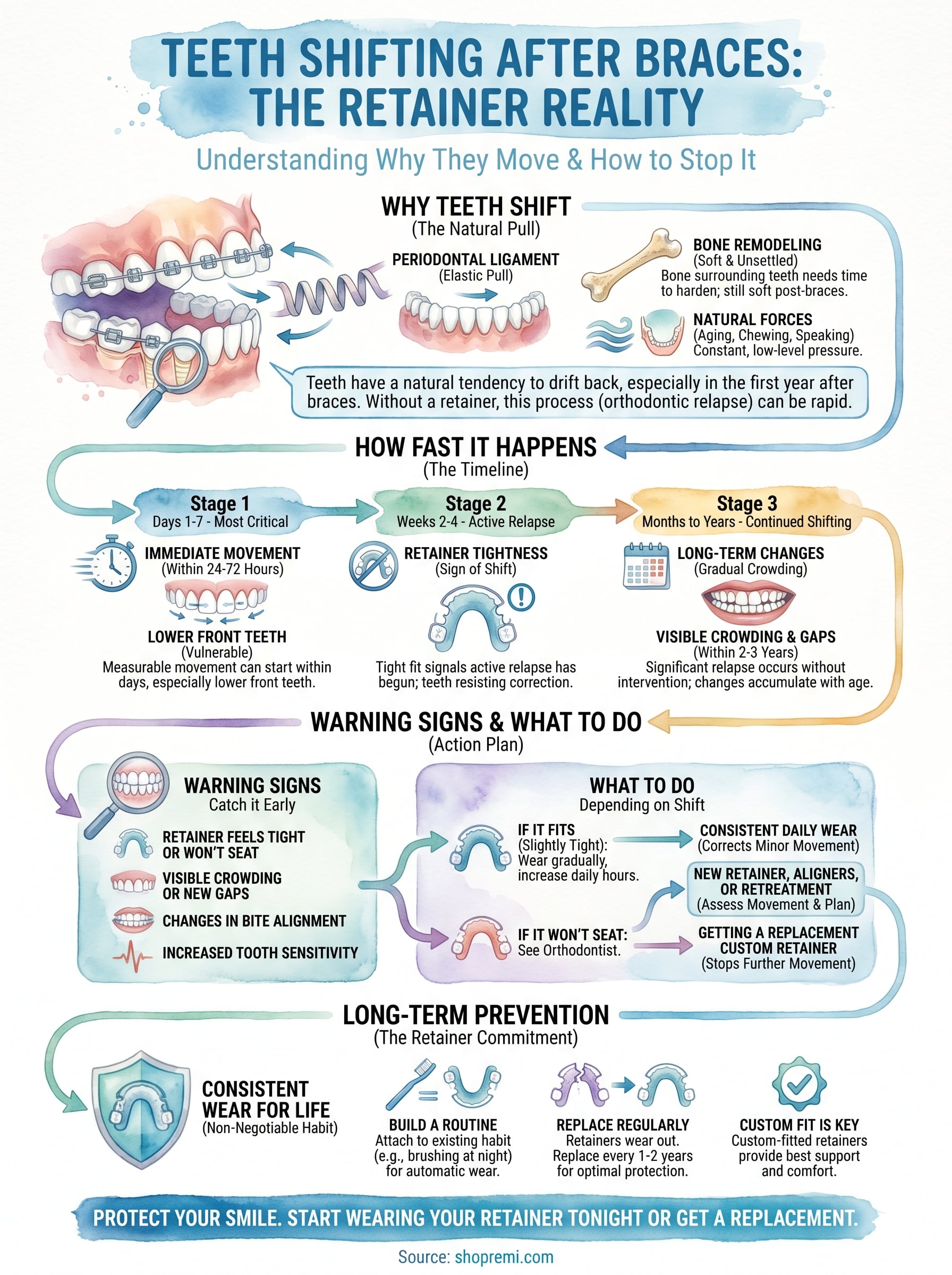
Next steps for protecting your smile
Teeth shifting after braces without retainer wear is a fixable problem, but only if you act on it. If your retainer still fits, start wearing it tonight and commit to nightly use going forward. If it no longer fits or you've been without one for months, your clearest next step is getting a replacement retainer that matches your current alignment so you stop any further movement now.
Your long-term results depend on consistent, ongoing protection, not a single corrective action. Replacing a worn or lost retainer doesn't have to mean another trip to the dental office or a steep bill. Remi makes it straightforward: order a custom clear retainer from home using an impression kit, and your retainer ships directly to your door at a fraction of what a dental office charges. Your smile took real effort to build. Keep it.

