
 Guards + Retainers
 Custom Night Guard
 Retainer
 Emergency Order

 Whitening
 Whitening Kit
 Teeth Whitening Gel
 Dual-Action Foam
 Cleaning + Care
 Ultrasonic Cleaner Pro
 Water Flosser
 UV Toothbrush Sanitizer
 Deep Clean + Freshening Tablets
 Accessories
 Guard Removal Tool
 Replacement Nozzles
 Bundles

You just spent months, maybe years, in braces. The brackets are off, your teeth look great, and now your orthodontist hands you a retainer. If you're wondering do you need a retainer after braces, the short answer is yes, absolutely. Without one, your teeth will start shifting back toward their original positions, and that can happen faster than you'd expect.
Braces move teeth by remodeling bone and soft tissue, but that tissue needs time to stabilize in its new arrangement. A retainer holds everything in place while your mouth catches up. Skip it, and you risk undoing the investment you made in your smile.
This article breaks down exactly why retainers are non-negotiable after braces, how long you'll need to wear one, and what happens if you don't. At Remi, we make custom-fitted clear retainers delivered straight to your door at a fraction of what a dental office charges, so once you understand the "why," we'll help you find a convenient, affordable way to protect your results long-term.
Why you need a retainer after braces
When people ask do you need a retainer after braces, the answer comes down to basic biology. Braces apply continuous pressure to shift your teeth into alignment, but the bone and ligaments surrounding each tooth have to remodel around those new positions. That process takes months, sometimes longer, and your retainer is what keeps everything stable while it happens.
Your teeth have a memory
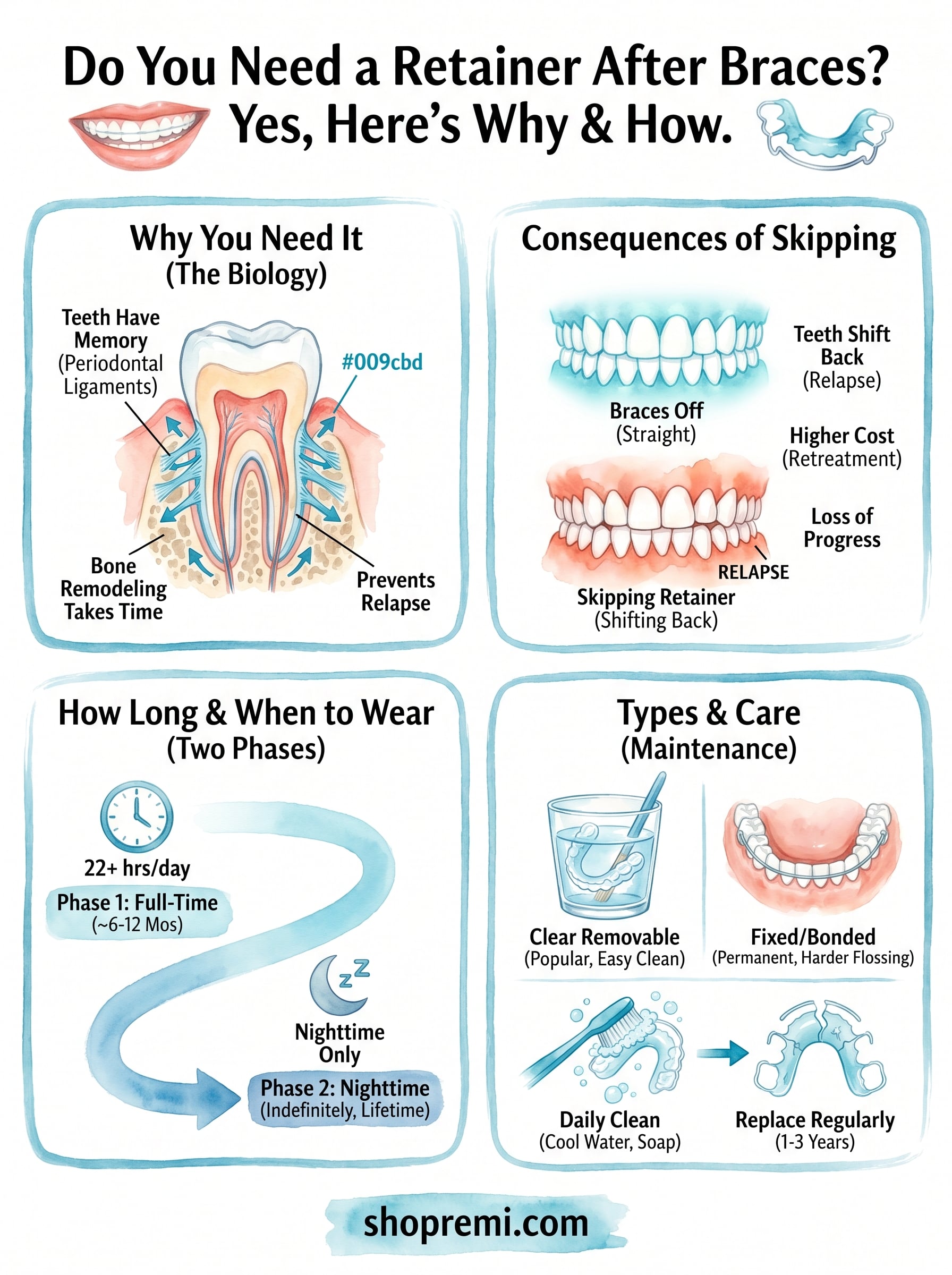
Teeth sit in a bed of periodontal ligaments, elastic fibers that connect each tooth root to the surrounding bone. During orthodontic treatment, those fibers stretch and compress as your teeth move. Once braces come off, those ligaments want to pull your teeth back toward where they started. This tendency is called relapse, and it's the main reason retainers exist.
The first few months after braces come off are when your teeth are most vulnerable to shifting, which is why your orthodontist will typically ask you to wear a retainer full-time initially.
Without a retainer, those stretched ligaments act like rubber bands pulling your teeth out of alignment. The shift can begin within days of removing your braces, not weeks or months.
Bone remodeling takes longer than you think
Your body needs time to lay down new bone tissue around each tooth's repositioned root. Until that new bone solidifies, your teeth don't have a stable foundation to hold their new position. Think of it like concrete that hasn't fully cured. Your retainer keeps each tooth exactly in place while that bone hardens around the corrected alignment.
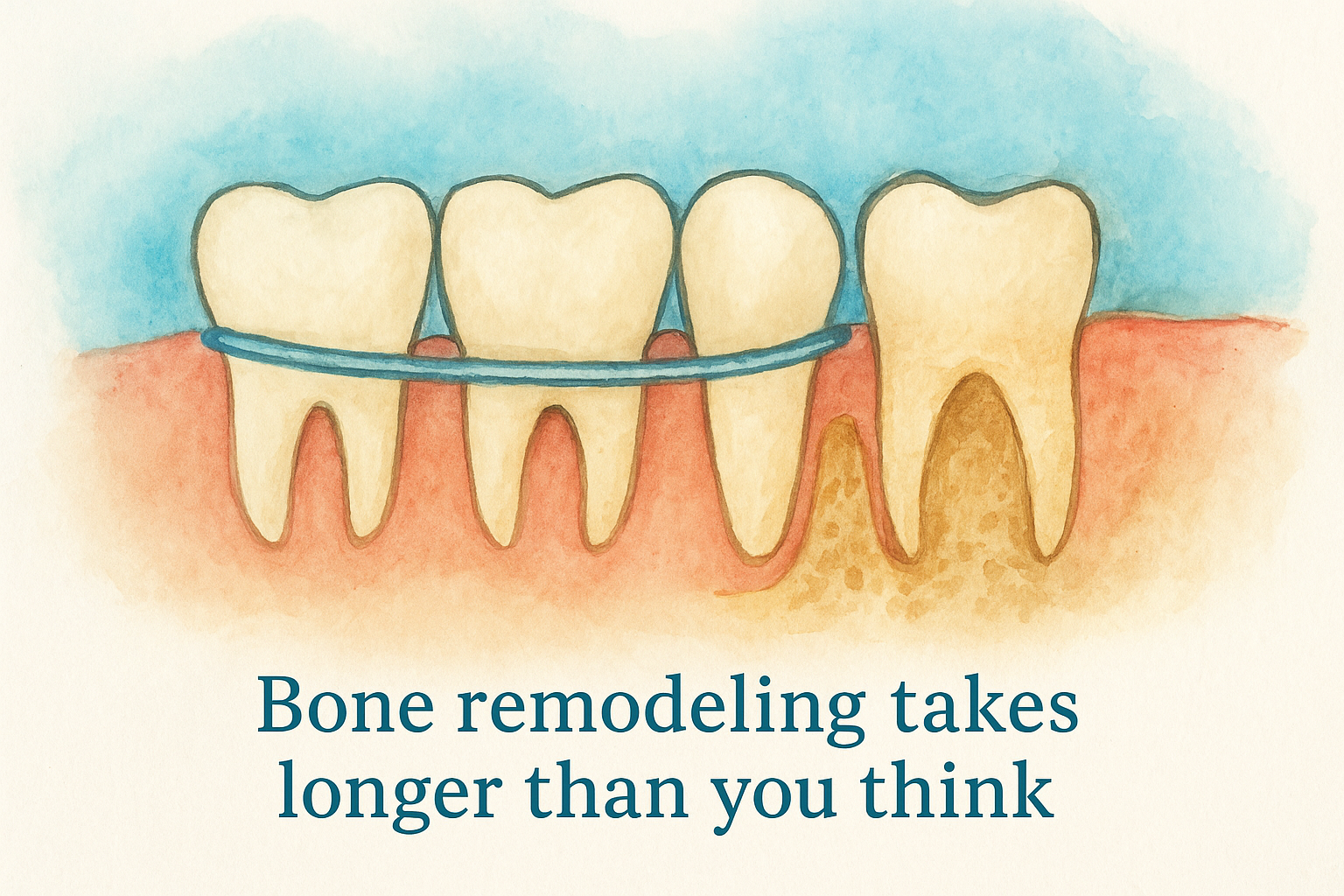
Skipping the retainer during this window doesn't just risk minor drifting. It can reverse months of orthodontic progress and put you right back in treatment, costing you both time and money you didn't need to spend.
How long you need to wear a retainer
The honest answer is that most people need to wear a retainer indefinitely, but the intensity changes over time. Your orthodontist will typically outline two distinct phases, and understanding both helps you stay consistent with a routine that actually protects your results.
The first phase: full-time wear
Right after your braces come off, you'll wear your retainer for most of the day and night, usually 22 hours or more. This phase typically lasts six to twelve months, though your orthodontist may adjust that timeline based on how much your teeth moved during treatment and how quickly your bone tissue remodels. The more complex your original alignment issue, the longer this initial phase tends to run.
Skipping even a few days during this first phase can cause noticeable shifting, so consistency here matters more than at any other point.
The long-term phase: nighttime wear
Once your bone has stabilized, most orthodontists transition you to nighttime-only wear, meaning you sleep with your retainer in. This phase has no defined end date for the majority of people. Many orthodontists now recommend wearing your retainer at night for life, because teeth continue to shift gradually as you age regardless of whether you ever had braces. Committing to that habit protects your results permanently.
Choose the right type of retainer
Once you understand do you need a retainer after braces (yes, you do), the next step is picking the right type. Retainers come in a few different forms, and each has trade-offs worth knowing before you commit.
Clear removable retainers
These are the most popular option today. A clear plastic tray fits snugly over your teeth and is nearly invisible when worn. You can take it out to eat, brush, and floss, which makes daily hygiene simple to manage. Custom-fitted versions hold their shape far better than boil-and-bite alternatives from a pharmacy, and they deliver a more precise fit that keeps your teeth exactly where your orthodontist positioned them.
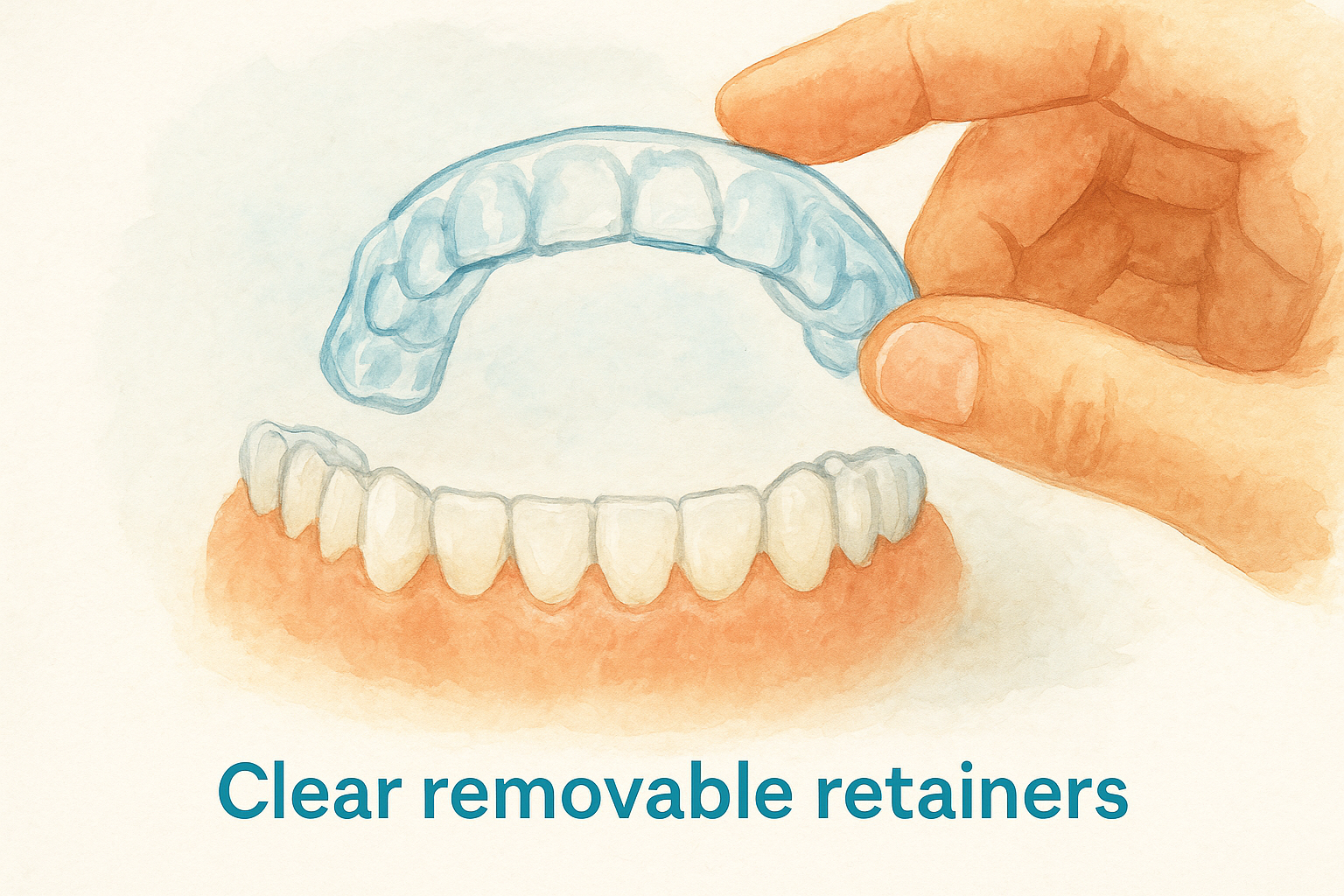
A well-fitted custom clear retainer is one of the most cost-effective ways to protect your orthodontic results long-term.
Fixed (bonded) retainers
A bonded wire retainer is cemented to the back surface of your front teeth by your orthodontist. You cannot remove it yourself, which means you never have to think about putting it in. The downside is that cleaning around the wire requires more effort, including floss threaders or a water flosser. Fixed retainers work well alongside a removable option, particularly on the lower teeth where relapse tends to happen most.
What happens if you skip your retainer
If you've been wondering do you need a retainer after braces and you're tempted to skip it, the consequences are more immediate than most people expect. Your teeth don't hold their new positions on their own, and even a short break from wearing your retainer can trigger noticeable movement within days.
Teeth shift faster than you expect
The periodontal ligaments around your teeth stay under tension long after braces come off. The moment you stop wearing your retainer, those fibers start pulling each tooth back toward its original position. Front teeth and lower teeth are especially prone to crowding again quickly without consistent wear.
Missing your retainer for even a week during the first year can cause enough shifting that your retainer no longer fits properly.
The cost of skipping it
Letting your teeth shift back means you may need additional orthodontic treatment, such as new braces or clear aligners, to correct the relapse. That cost is far higher than the price of a replacement retainer, and consistent nightly wear is the simplest way to protect the investment you already made.
A replacement retainer typically costs a fraction of retreatment, yet many people only replace theirs after the damage is already done.
Care tips and when to replace a retainer
Caring for your retainer properly extends its life and keeps it effective. Daily maintenance takes only a few minutes but makes a significant difference in how long your retainer lasts and how well it fits.
Clean it every day
Rinse your retainer with cool water every time you take it out. Use a soft toothbrush and mild soap to brush away buildup, avoiding hot water since heat warps the plastic. For a deeper clean, an ultrasonic cleaner removes bacteria and debris that brushing alone misses, keeping your retainer fresh and hygienic between uses.
Skipping regular cleaning allows plaque and bacteria to build up on the plastic, which can affect both your oral health and the retainer's fit over time.
Signs it's time for a replacement
Knowing when to replace your retainer is just as important as wearing it. If you're still asking do you need a retainer after braces, the answer stays yes, and that means having a retainer that actually fits. Visible cracks, warping, or a loose fit are clear signals that your current retainer is no longer doing its job. Replace it before your teeth shift noticeably rather than after. Most clear retainers last one to three years with proper care, so budget for replacements as part of your long-term dental routine.
Keep your results for the long run
If you've been asking do you need a retainer after braces, you now have a clear answer: yes, and it never really stops being true. Your teeth shift throughout your entire life, not just in the months after treatment. Consistent nighttime wear is the single most effective habit you can build to protect everything you worked for during orthodontic treatment.
Replacing your retainer on schedule and keeping it clean are just as important as wearing it regularly. A well-maintained retainer that fits properly does its job every night without you having to think about it. Once you treat it like part of your routine, it stops feeling like a chore and starts feeling like basic maintenance for your smile.
When your retainer wears out or no longer fits right, get a replacement before your teeth drift. Order a custom clear retainer from Remi and keep your results exactly where you want them.

