
 Guards + Retainers
 Custom Night Guard
 Retainer
 Emergency Order

 Whitening
 Whitening Kit
 Teeth Whitening Gel
 Dual-Action Foam
 Cleaning + Care
 Ultrasonic Cleaner Pro
 Water Flosser
 UV Toothbrush Sanitizer
 Deep Clean + Freshening Tablets
 Accessories
 Guard Removal Tool
 Replacement Nozzles
 Bundles

You just got your braces off, your teeth look great, and then your orthodontist hands you a retainer. Within hours, your mouth is sore again. Retainer pain after braces is one of the most common complaints people have during this transition, and it catches a lot of folks off guard. The good news? Most of that discomfort is completely normal, and it doesn't last long.
That said, there's a difference between typical soreness and pain that signals something needs attention. Knowing where that line is can save you unnecessary stress (and potentially a trip back to the dentist). Whether you're wearing a retainer from your orthodontist or a custom-fitted retainer from Remi, understanding what's happening in your mouth makes the adjustment period much easier.
This guide breaks down exactly why retainers hurt, how long the pain should last, and what you can do right now to find relief.
What normal retainer pain feels like
When you first put in a retainer after braces, your teeth haven't fully settled yet. The bone and ligaments surrounding your teeth are still adapting to their new positions, which means even a small amount of pressure from a retainer can create real soreness. This is the same basic mechanism that made your braces uncomfortable, just at a lower intensity. Knowing what to expect takes most of the anxiety out of it.
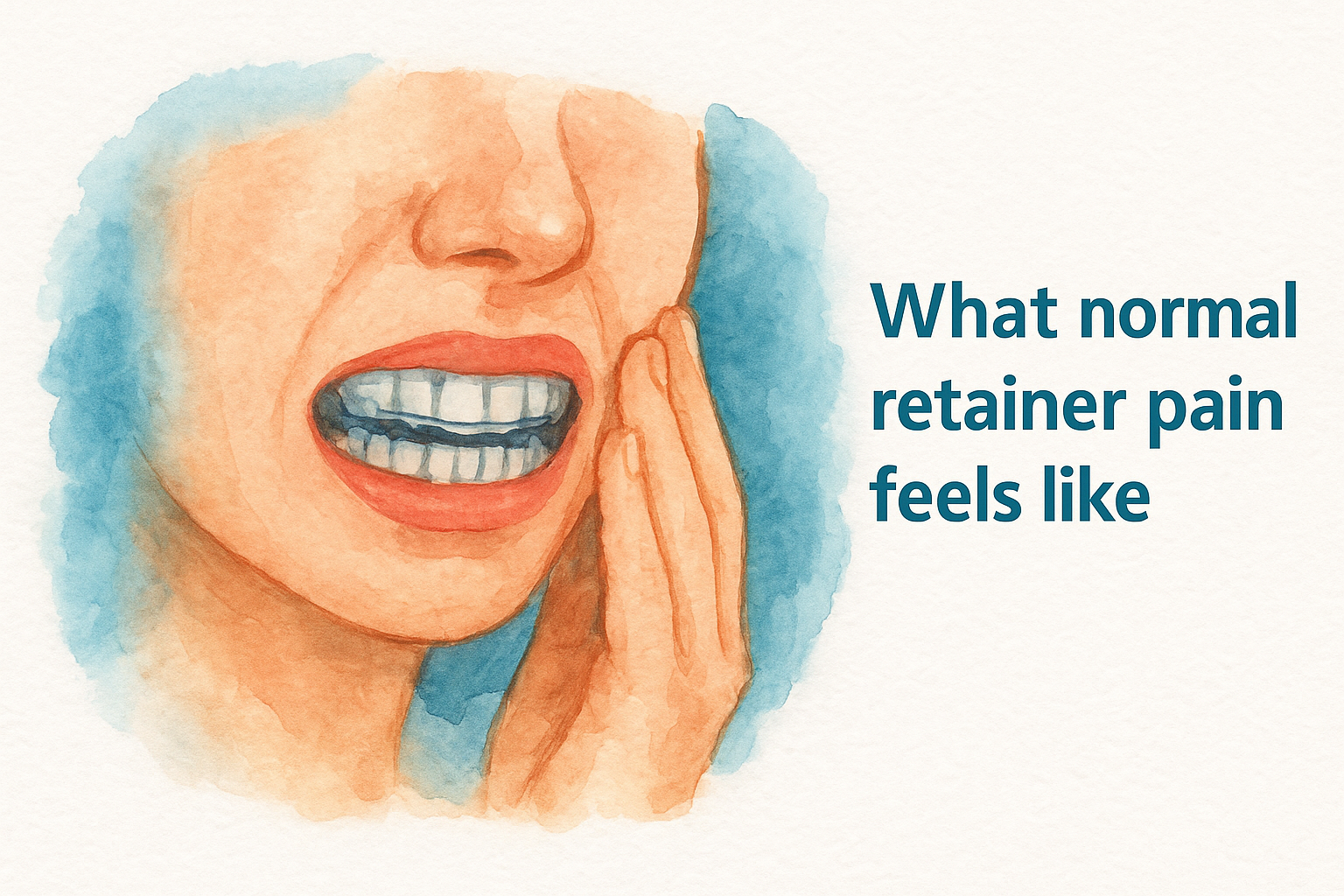
The pressure sensation explained
Retainer pain after braces almost always feels like a dull, generalized pressure rather than a sharp, localized ache. You'll typically notice it most on your front teeth, since those are the teeth most likely to shift. The discomfort usually peaks within the first few hours of wearing a new retainer or after going without one for several days, then gradually fades on its own. You might also notice your teeth feel slightly tender when you bite down on food during the first couple of days.
If your pain feels sharp, stabbing, or is concentrated on one specific tooth rather than spread across several, contact your orthodontist rather than push through it.
How long soreness typically lasts
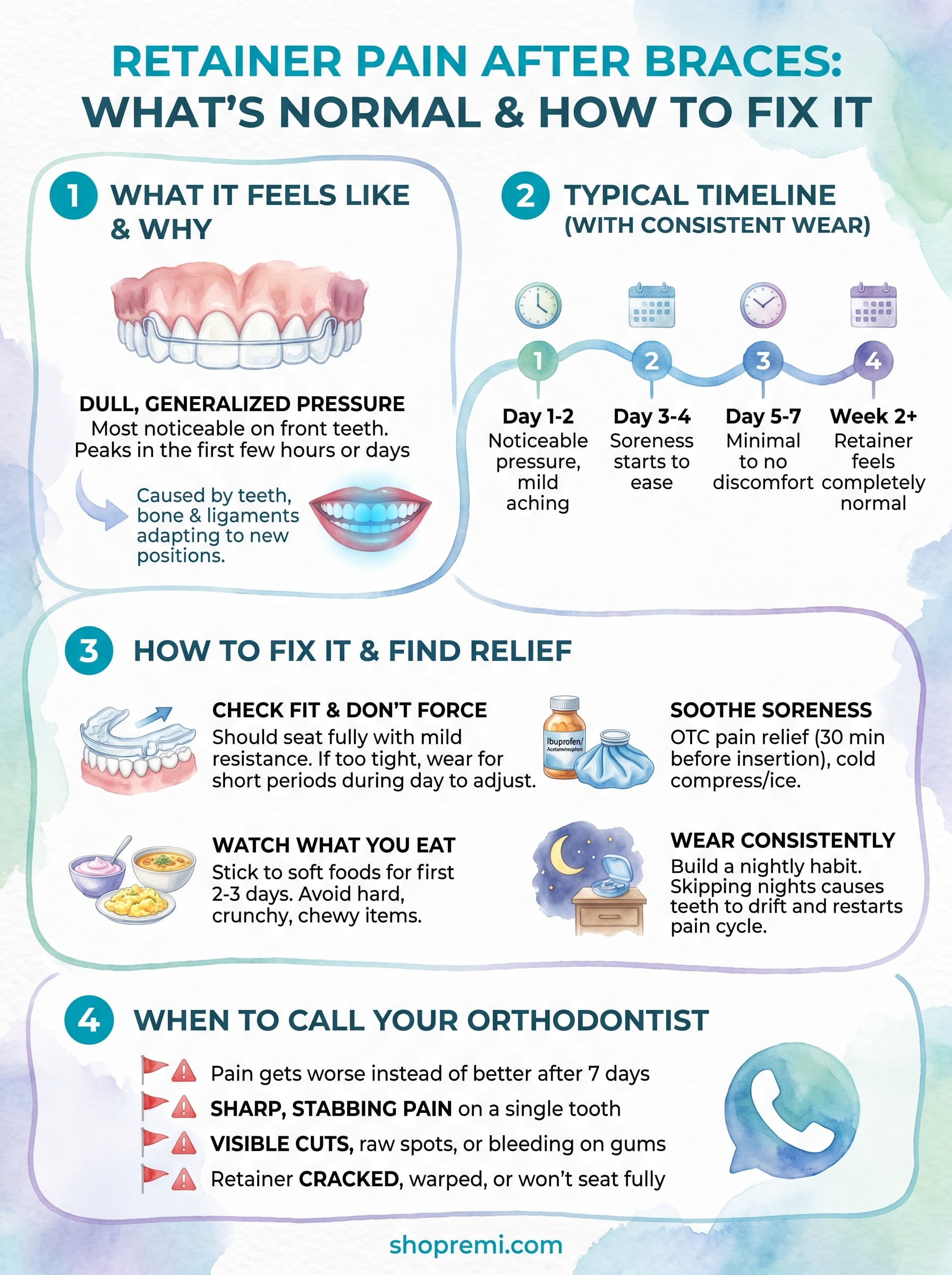
For most people, the soreness from a new retainer fades within three to five days. After that initial adjustment window, you should only notice mild discomfort when you first put it in each night. Here's a rough timeline of what to expect:
| Day | What you'll likely feel |
|---|---|
| Day 1-2 | Noticeable pressure, mild aching |
| Day 3-4 | Soreness starts to ease |
| Day 5-7 | Minimal to no discomfort |
| Week 2+ | Retainer feels completely normal |
Consistent wear is the single biggest factor in how quickly your mouth adjusts. Skipping nights causes your teeth to drift slightly, which makes the retainer feel tight and painful all over again the next time you put it in.
Step 1. Check fit and don't force it
Before you assume soreness is just part of the adjustment period, check whether your retainer actually fits correctly. Forcing a retainer that doesn't seat properly is one of the most common causes of sharp, uneven retainer pain after braces that gets worse instead of better.
Signs your retainer fits correctly
A well-fitting retainer seats fully within a few seconds without you pressing hard on it. Run through this quick checklist each time you put yours in:
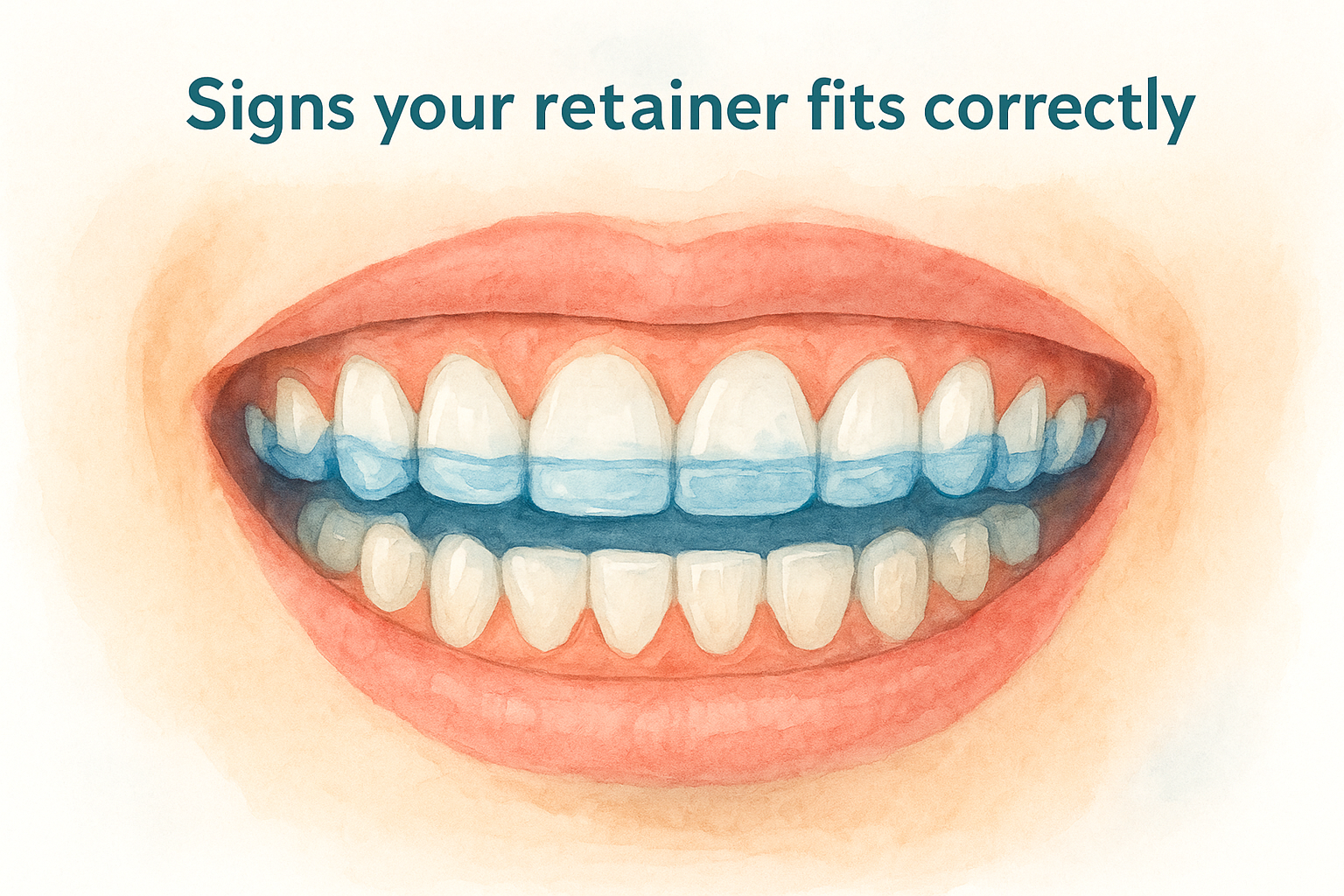
- It slides in with mild resistance, not force
- Both sides sit flush against your teeth at the same time
- You can speak without it shifting or falling out
- It doesn't create a sharp pinching sensation on your gums
If your retainer fails more than one of these checks, stop wearing it and call your orthodontist before the next scheduled wear session.
What to do if it feels too tight
Start by counting how many nights you skipped wearing it. Even two missed nights can let your teeth drift just enough to make reinsertion uncomfortable. Try wearing the retainer for a short stretch during the day to let your teeth gradually readjust.
Once it seats without significant force, return to wearing it every night without breaks. Consistent wear is what stops the cycle of tightness, skipping, and pain from repeating itself each week.
Step 2. Soothe soreness the right way
Once you've confirmed your retainer fits properly, managing the soreness comes down to a few reliable techniques. Most retainer pain after braces responds well to simple at-home remedies, and you don't need anything complicated to get through the first few days comfortably. The goal is to reduce inflammation and give your teeth a chance to settle without adding extra stress.
Use over-the-counter pain relief
Ibuprofen or acetaminophen taken about 30 minutes before you insert your retainer can take the edge off the initial pressure significantly. Follow the dosage instructions on the packaging and avoid exceeding the recommended amount. A cold compress or a bag of ice wrapped in a cloth applied to your jaw for 10 to 15 minutes also reduces inflammation and numbs soreness without any medication.
Watch what you eat
Your teeth are already under pressure from the retainer, so hard, crunchy, or chewy foods make the soreness noticeably worse during the adjustment window. Stick to soft foods like yogurt, scrambled eggs, mashed potatoes, and soup for the first two or three days. This single change alone can cut your discomfort significantly while your mouth adapts to the appliance.
Rinsing with warm salt water (half a teaspoon of salt in 8 ounces of warm water) two or three times a day reduces gum irritation and speeds up the adjustment period.
Step 3. Wear it consistently to stop flare-ups
Inconsistent wear is the number one reason people keep cycling through the same retainer pain after braces over and over. Every time you skip a night, your teeth drift slightly toward their old positions. When you put the retainer back in, it has to push them back again, and that repeated cycle of drifting and correcting is what keeps your mouth sore far longer than necessary.
Build a nightly habit
Treating your retainer like a non-negotiable part of your bedtime routine is the most effective way to prevent recurring soreness. Pair it with something you already do every night, like brushing your teeth, so the habit stacks naturally. A few specific anchoring strategies that work well:
- Set a phone reminder for the same time each night until the habit is automatic
- Keep your retainer case on your nightstand or bathroom counter where you'll see it
- Wear your retainer for at least 8 hours each night during the first six months after braces
The first six months after braces come off are the highest-risk window for shifting, so consistent nightly wear during this period is non-negotiable.
What to do if you miss a night
If you miss one night, put your retainer back in the next evening without skipping a second night. Don't try to compensate by wearing it during the day instead. Your teeth need consistent overnight pressure to stay stable, and doubling up on daytime wear doesn't replicate that.
Step 4. Know when to call your orthodontist
Most retainer pain after braces resolves on its own within a week, but some symptoms point to a problem your orthodontist needs to evaluate. Recognizing these early saves you from wearing a retainer that's actively damaging your teeth or gums.
Red flags that need professional attention
Pain that gets worse instead of better after the first week is the clearest sign something is off. Normal soreness follows a downward curve, so any discomfort that intensifies or stays at the same level past day seven warrants a call. Watch for these specific warning signs:
- Sharp pain on a single tooth rather than general pressure across your teeth
- Visible cuts, raw spots, or bleeding on your gums where the retainer contacts them
- The retainer no longer seats fully, even after consistent wear
- A cracked or visibly warped retainer that you're still inserting
Never continue wearing a cracked retainer. The sharp edge can cut your gum tissue and the structural break means it no longer holds your teeth in the correct position.
What to tell your orthodontist
When you call, describe exactly where the pain is located and when it started. Mention how many nights you've worn the retainer since getting it and whether the fit has changed since your last visit. This detail helps your orthodontist identify whether the issue is shifting, a manufacturing defect, or something else entirely.
Keep your smile stable
Retainer pain after braces is temporary, but tooth shifting is permanent if you stop wearing your retainer. The discomfort you feel in those first few days is your mouth adapting, not a signal to stop. Consistent nightly wear, a proper fit, and basic soreness management get most people through the adjustment period with minimal trouble. If the pain intensifies past day seven or your retainer stops seating properly, call your orthodontist rather than pushing through it.
Your retainer only works when you wear it, so protecting it matters too. A damaged or warped retainer can't hold your teeth in position, which means all the work your braces did starts to unravel. Keep it clean, store it in its case, and replace it before cracks become a problem. If you need a high-quality custom replacement retainer delivered straight to your door, check out Remi's custom clear retainers for a dentist-grade fit at a fraction of the office cost.

