
 Guards + Retainers
 Custom Night Guard
 Retainer
 Emergency Order

 Whitening
 Whitening Kit
 Teeth Whitening Gel
 Dual-Action Foam
 Cleaning + Care
 Ultrasonic Cleaner Pro
 Water Flosser
 UV Toothbrush Sanitizer
 Deep Clean + Freshening Tablets
 Accessories
 Guard Removal Tool
 Replacement Nozzles
 Bundles

If you've ever searched how long does teeth whitening take, you probably got a dozen different answers, and most of them left out important context. That's because the timeline depends entirely on the method you choose. A single in-office session works differently than whitening strips you use at home for two weeks, and both deliver very different results on very different schedules.
The short answer: anywhere from a few minutes a day to about an hour in a dentist's chair, with visible changes showing up in one session or over several weeks. The longer answer requires breaking things down by method, including professional treatments, at-home trays, strips, and dual-purpose products like Remi's Night Guard Cleaning + Teeth Whitening Foam, which lets you whiten while you clean your dental appliance, no extra step required.
This guide covers session times, expected timelines to visible results, and how long whitening typically lasts for each method, so you can pick the approach that fits your schedule and your budget without guessing.
Why whitening timelines vary
The single biggest factor is what's causing the discoloration on your teeth. Surface stains from coffee, tea, or wine respond much faster than deep stains embedded inside the tooth enamel. When you're asking how long does teeth whitening take, you're really asking two questions at once: how long per session, and how many sessions before you see the results you actually want.
The type of stain matters
Extrinsic stains sit on the surface of your enamel and are the easiest to lift. A whitening toothpaste or a dual-purpose product like a cleaning foam can reduce these stains over days to weeks. Intrinsic stains, which live deeper inside the tooth structure, take longer to treat and sometimes don't respond to over-the-counter products at all. If your discoloration comes from antibiotics, trauma, or fluorosis, you'll likely need a professional-grade treatment or a dentist consultation before anything works.
The deeper the stain, the longer the timeline and the stronger the whitening agent you'll need to see real change.
The concentration of the whitening agent
Hydrogen peroxide is the active ingredient in most whitening products, and its concentration directly determines how fast you see results. Professional treatments use 15% to 40% hydrogen peroxide, which is why a single dentist visit can whiten teeth by several shades in one appointment. At-home products typically contain 3% to 10%, which is safer for unsupervised use but requires consistent daily application over days or weeks to deliver comparable results.
Your starting shade also plays a role in the overall timeline. Someone with light yellow staining will notice a visible difference within a few days. Someone with darker or more stubborn discoloration should expect to commit to a full multi-week course before seeing meaningful change.
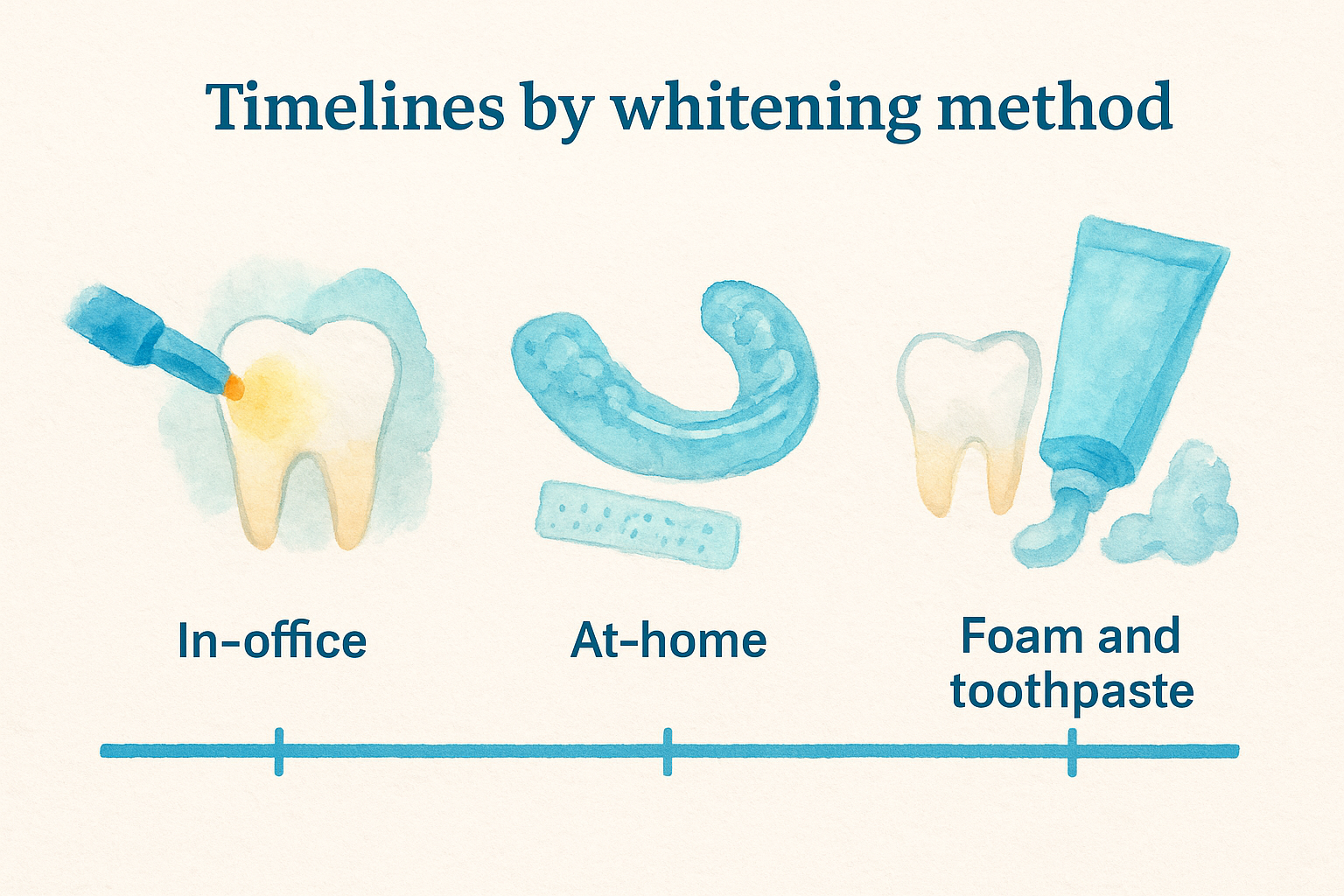
Timelines by whitening method
Understanding how long does teeth whitening take starts with knowing what each method delivers on its own schedule. Here is a breakdown of the most common options and what you can realistically expect from each.
In-office professional whitening
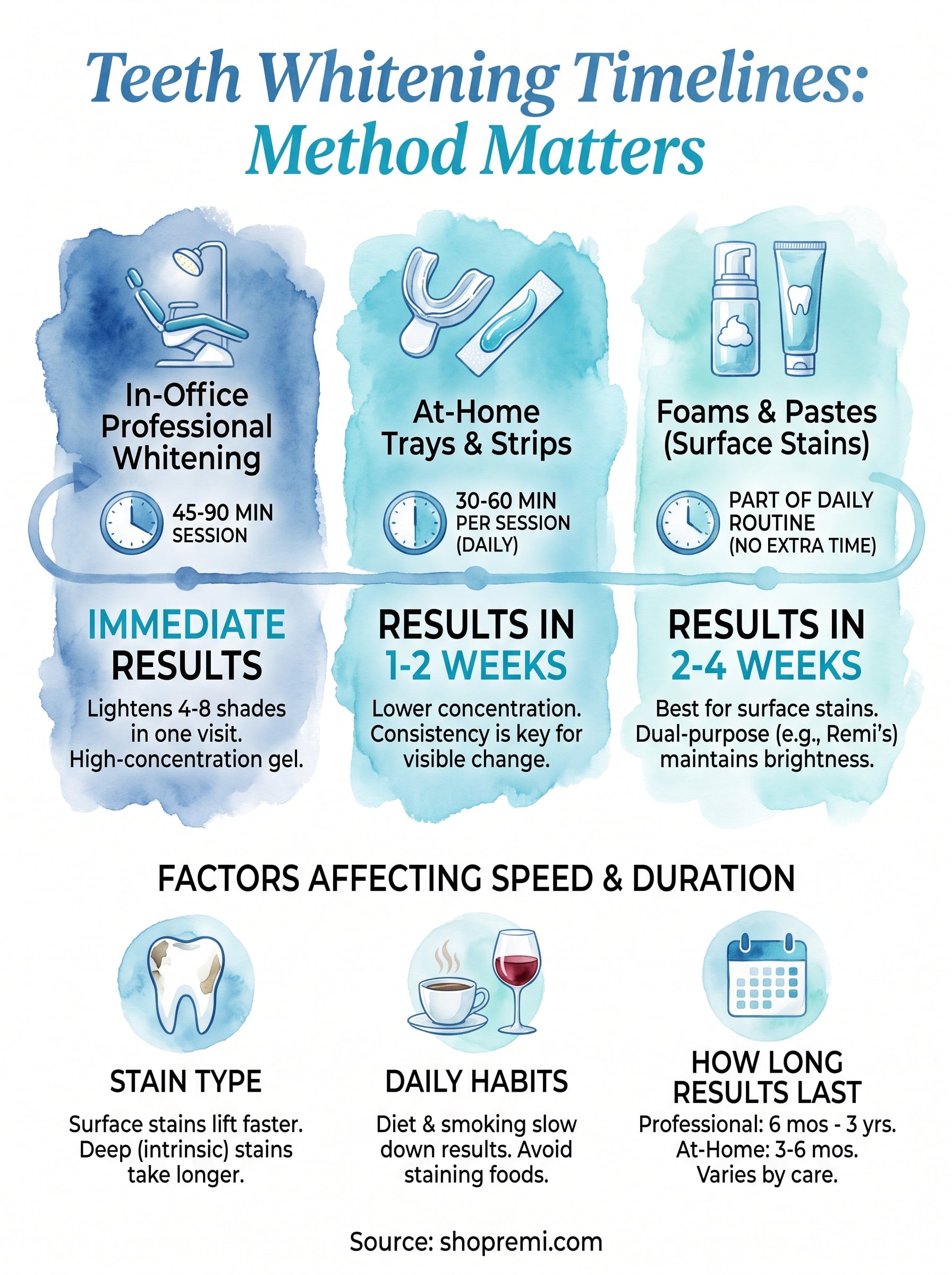
A single dentist session typically runs 45 to 90 minutes and can lighten teeth by four to eight shades in one visit. The high-concentration peroxide gel, often activated by a light or laser, works fast. Results are immediate and noticeable the same day you sit in the chair.
At-home trays and whitening strips
Custom whitening trays from a dentist take one to two weeks of daily use, with each session running 30 to 60 minutes. Over-the-counter strips follow a similar schedule but use lower concentrations, so you often need two full weeks of consistent application before results become obvious.
Consistency matters more than intensity with at-home methods. Missing days extends your timeline significantly.
Whitening foams and toothpastes
These products target surface stains and fit naturally into your existing routine. Remi's Night Guard Cleaning + Teeth Whitening Foam lets you treat stains while cleaning your night guard or retainer, adding no extra time to your day. Visible brightening typically appears within two to four weeks of regular use.
What affects how fast whitening works
Beyond the product you choose, several personal factors determine how long does teeth whitening take to deliver visible results for you specifically. Two people using the same strips for two weeks can end up with noticeably different outcomes based on things entirely within and outside their control.
Your enamel and natural tooth color
Enamel thickness varies from person to person, and thinner enamel allows whitening agents to reach the dentin layer faster, which can either speed up results or increase sensitivity. Your baseline tooth color also sets the ceiling for what whitening can achieve. Naturally gray or brown teeth respond more slowly than yellow-toned ones, regardless of the product's concentration.
Whitening works on natural tooth enamel only, so crowns, veneers, and bonding will not change color during treatment.
Your daily habits
What you eat and drink during a whitening course slows or accelerates your results significantly. Coffee, red wine, and tea re-stain teeth between sessions, which means you are effectively working against the product every single day you consume them.
Smoking is one of the fastest ways to undercut your whitening timeline, as tobacco stains penetrate deeply into enamel and require much longer treatment to lift. Cutting back on staining foods and drinks during your whitening course keeps your sessions working as intended and shortens the overall time you need to commit.
How long results last and how to keep them
Once you understand how long does teeth whitening take to produce results, the next question is how long those results actually hold. The answer depends heavily on the method you used and the habits you maintain afterward. Professional whitening lasts six months to three years with proper care, while at-home strips and trays typically deliver results that hold for three to six months before visible fading begins.
Results by method
In-office treatments deliver the longest-lasting single-session results, often staying noticeably bright for one to two years with good daily habits. At-home tray systems and strips fade more gradually but are easier to refresh with a short touch-up course. Dual-purpose products like Remi's Night Guard Cleaning + Teeth Whitening Foam work best as part of an ongoing routine, maintaining surface brightness rather than delivering a dramatic one-time result.
The method that fits your daily habits consistently will always outperform a stronger treatment you only do once.
Habits that preserve your results
Your daily routine after whitening determines how quickly staining returns. Rinsing with water after coffee or tea, using a straw for dark beverages, and brushing twice daily with a whitening-compatible toothpaste all extend your results meaningfully without requiring any additional treatment.
When to see a dentist before whitening
Knowing how long does teeth whitening take assumes your teeth are actually ready for treatment. Certain dental conditions can make whitening painful or ineffective, and starting without a checkup first wastes both your time and money.
Signs you should get a checkup first
Active cavities, cracked enamel, or gum disease allow whitening agents to reach sensitive tissue and cause real pain. If your teeth are already sensitive to cold water, any peroxide-based product will likely make that sensitivity worse before it gets better.
Treating existing dental issues before whitening consistently produces better results and a safer overall process.
You should also check with a dentist if you have crowns, veneers, or bonding on your front teeth. Whitening products do not change the color of dental restorations, so your natural teeth will lighten while the restorations stay the same shade, creating an uneven result that is more noticeable than the original discoloration.
Conditions that change your whitening timeline
Gum recession exposes root surfaces that lack enamel, making them both more sensitive and less responsive to whitening agents. Severe intrinsic staining from medications or past trauma typically requires professional-grade treatment, and a dentist can set realistic expectations before you commit weeks to a product that will not deliver the results you are expecting.
One short appointment before you start saves weeks of guesswork and prevents unnecessary discomfort along the way.
Next steps for a whiter smile
Now that you understand how long does teeth whitening take across every major method, you can make a decision based on your actual schedule, budget, and goals rather than guesswork. Pick one method and commit to it consistently rather than bouncing between products, since switching mid-course resets your timeline and makes it harder to judge what is actually working.
Start by checking your teeth for sensitivity or existing dental work, then choose a method that fits your daily routine. If you wear a night guard or retainer already, adding Remi's Night Guard Cleaning + Teeth Whitening Foam costs you zero extra time since you clean your appliance anyway. Protecting your teeth from grinding while you maintain your results is the smarter long-term play. A custom night guard keeps your enamel intact so your whitening results actually have a healthy surface to show on.

