
 Guards + Retainers
 Custom Night Guard
 Retainer
 Emergency Order

 Whitening
 Whitening Kit
 Teeth Whitening Gel
 Dual-Action Foam
 Cleaning + Care
 Ultrasonic Cleaner Pro
 Water Flosser
 UV Toothbrush Sanitizer
 Deep Clean + Freshening Tablets
 Accessories
 Guard Removal Tool
 Replacement Nozzles
 Bundles

If you grind or clench your teeth at night, you already know a night guard isn't optional, it's the barrier between your teeth and expensive dental repairs down the road. But figuring out the night guard for bruxism cost can feel like its own headache. Prices range from under $20 at a drugstore to $800+ at a dentist's office, and the gap between those numbers raises an obvious question: what are you actually paying for?
The answer depends on the type of guard, how it's made, and where you get it. A custom-fitted guard from your dentist uses professional impressions and lab fabrication, which drives the price up. Over-the-counter boil-and-bite options cut costs but sacrifice fit and durability. Then there's a middle path, direct-to-consumer custom night guards, like the ones we make here at Remi, where you take impressions at home and receive a professionally crafted guard at a fraction of the dental office price.
This article breaks down the real costs across all three options, dentist-prescribed, online custom, and OTC, so you can compare them side by side. We'll cover what influences pricing, what's included (and what isn't), and how to figure out which option gives you the best protection for your budget. No inflated claims, just a straightforward cost comparison to help you make a smart decision for your teeth.
Night guard costs at a glance in 2026
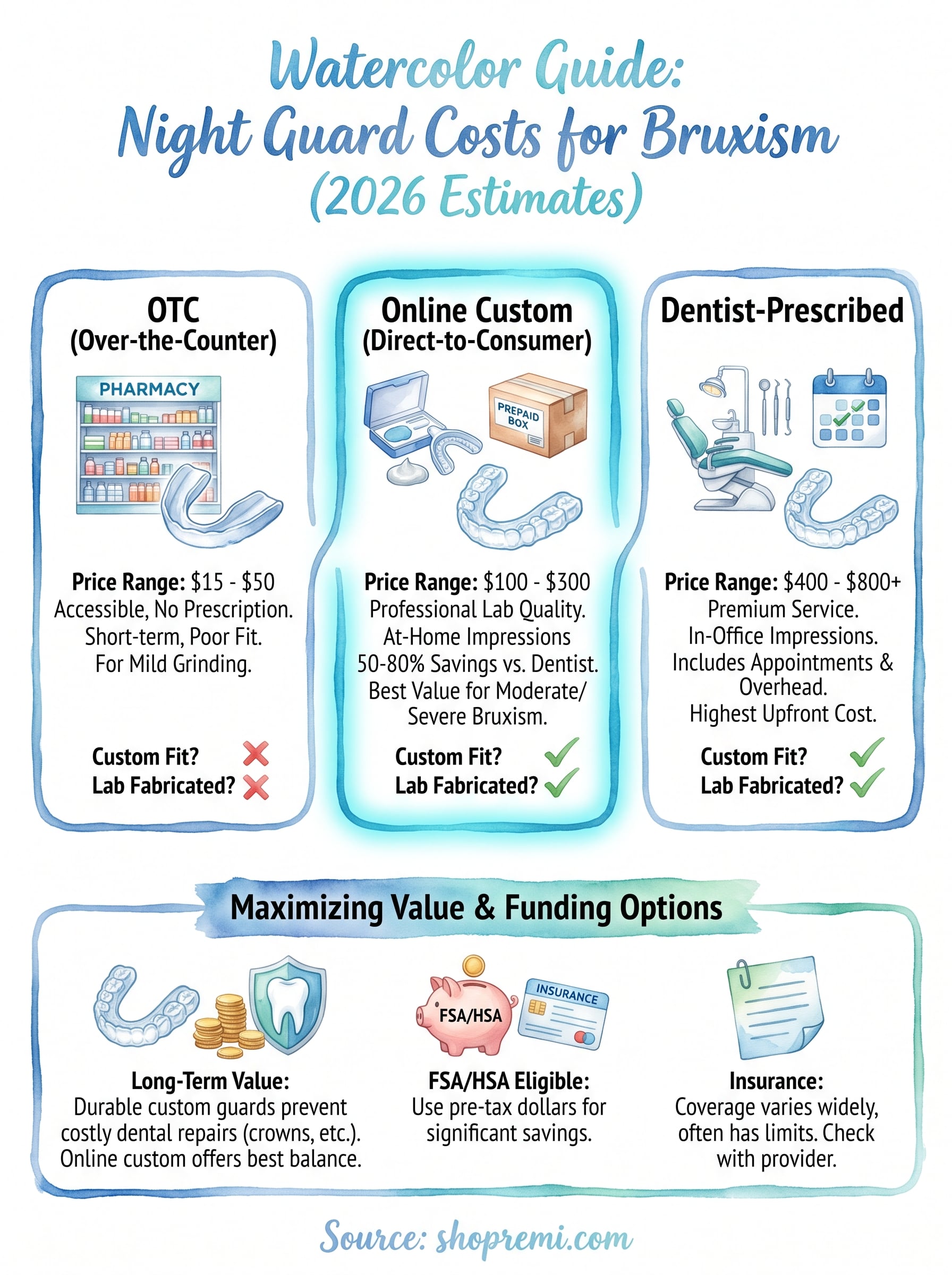
When you're comparing your options, the price spread across night guard types is striking. The three main categories, OTC, online custom, and dentist-prescribed, sit at very different price points, and those differences reflect real trade-offs in materials, fit, and the fabrication process. Here's a quick overview of what you can expect to pay in 2026.
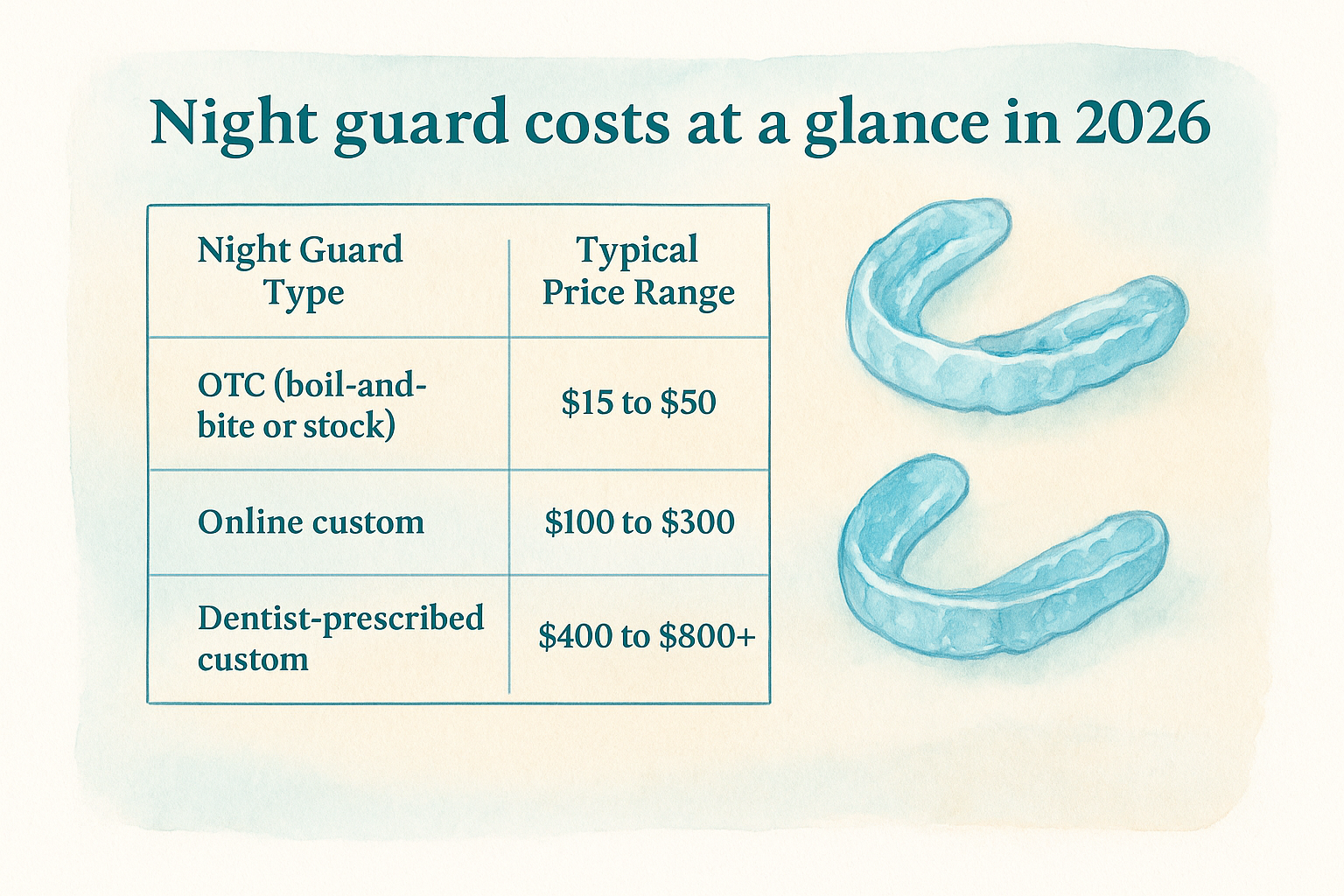
| Night Guard Type | Typical Price Range | Custom Fit? | Lab Fabricated? |
|---|---|---|---|
| OTC (boil-and-bite or stock) | $15 to $50 | No | No |
| Online/mail-order custom | $100 to $300 | Yes | Yes |
| Dentist-prescribed custom | $400 to $800+ | Yes | Yes |
The difference between a $30 OTC guard and a $600 dentist guard often comes down to fit and durability, not the level of protection the material itself provides.
Over-the-counter night guards
OTC guards are the most accessible starting point. Prices typically range from $15 to $50, and you can pick one up at any pharmacy without an appointment or prescription. Most fall into two types: stock guards that come pre-formed, and boil-and-bite guards you soften in hot water and press against your teeth to create a rough mold.
Fit is the central problem with this option. Because OTC guards aren't built from a precise impression of your teeth, they tend to sit loosely, shift during sleep, or feel bulky enough that you stop wearing them within a week. For moderate to severe bruxism, most dental professionals consider these guards insufficient for consistent, long-term protection.
Online custom night guards
Direct-to-consumer custom guards occupy a practical middle ground between pharmacy shelves and a dental office. You order an at-home impression kit, take your own molds, mail them back, and receive a lab-fabricated guard built specifically for the shape of your teeth. Prices generally range from $100 to $300, depending on the thickness and material of the guard you choose.
For most people managing bruxism, this option delivers a professional-quality fit at 50 to 80 percent less than the dentist route. When you're weighing the night guard for bruxism cost across all three options, online custom guards consistently offer the strongest value for nightly wear. At Remi, custom night guards start well under $200 and are made from dental-grade materials developed with professional input built into every step of the design process.
Dentist-prescribed custom night guards
Getting a night guard through your dentist means in-office impressions, a lab order, and at least two separate appointments. The final product is typically high quality, but the price reflects every layer of that process: the dentist's chair time, lab fabrication fees, and office overhead. Most patients pay between $400 and $800 out of pocket, and some practices charge more depending on guard thickness or material type.
Dental insurance may offset part of this cost, which we'll cover in a later section, but many plans classify night guards as elective or apply tight annual limits. Without solid coverage, you end up paying a significant premium largely for the in-office experience itself rather than a meaningfully better end product.
Why night guard prices vary so much
The night guard for bruxism cost doesn't follow a single formula. Three core factors drive the price difference between a $20 pharmacy guard and a $700 dentist guard: the materials used, the fabrication process, and the distribution channel. Understanding each one helps you see exactly what you're paying for, and where you can save without compromising protection.
Materials and thickness
Night guards are made from different grades of thermoplastic, and material quality directly affects durability, comfort, and how well the guard holds up under sustained grinding pressure. A basic OTC guard uses soft, generic plastic that wears down quickly under nightly use. Professional-grade guards, whether from a dentist or a direct-to-consumer lab, use dental-grade laminates or hard acrylic compounds that last significantly longer and resist the kind of compression damage that bruxism causes over time.
Thickness also plays a role. Thinner guards suit mild grinders and feel less intrusive, while thicker, dual-laminate options are built for heavy clenchers who put serious pressure on their guard each night. More material and more precise layering mean higher production costs, which get passed along in the final price.
How the guard is made
Fabrication method is the single biggest cost driver. OTC guards skip the manufacturing complexity entirely because they're mass-produced in standard sizes. Custom guards, whether from a dentist or an online lab, require individual impressions and hands-on lab work to trim, shape, and finish each guard to match your specific bite.
A guard built from your actual tooth impressions fits the contours of your mouth in a way no pre-formed product can replicate, and that precision is what makes custom fabrication worth paying for.
Where you buy it
The same lab-quality guard costs significantly more when purchased through a dental office because you're also paying for chair time, administrative overhead, and the markup built into the in-office distribution model. Online direct-to-consumer brands cut out those layers, which is why a professionally fabricated custom guard can cost 60 to 80 percent less when ordered outside a traditional practice.
Dentist vs. online custom vs. OTC costs compared
Understanding the night guard for bruxism cost across all three options means looking beyond the sticker price. Each category reflects a different combination of materials, service, and convenience, and the right choice depends on how severe your grinding is and how much you're willing to spend upfront.
What the dentist price actually includes
A dentist-prescribed custom guard bundles several costs into one bill. You're paying for two office visits, professional impressions taken chairside, and lab fabrication fees that the practice marks up before passing along to you. The guard itself is high quality, but a significant portion of what you pay covers time and overhead rather than the product.
For many patients, the dentist route costs three to five times more than an equivalent lab-fabricated guard ordered directly online, with no meaningful difference in the final fit or material quality.
Most practices also charge separately for adjustments if the guard doesn't fit correctly on delivery, which adds to the total cost if your bite requires fine-tuning after the first fitting.
What online custom guards deliver for less
Direct-to-consumer brands remove the in-office layers entirely. You take impressions at home using a simple kit mailed to your door, ship the molds back, and a dental lab builds your guard using the same materials a dental office would order. Turnaround is typically one to two weeks, and the finished product fits as precisely as anything produced through a traditional appointment.
The savings are substantial. An online custom guard from Remi costs a fraction of the dentist price and still gives you a professionally fabricated, dental-grade appliance built specifically from your impressions.
When OTC is and isn't enough
OTC guards work as a short-term stopgap if you need something immediately or want to try wearing a guard before committing to a custom option. They're affordable and available without a wait, which makes them convenient.
That said, if you grind with any real force, a boil-and-bite guard typically wears down or shifts out of position within weeks. For consistent nightly use and real protection, a custom guard is the more cost-effective choice over the long run.
Insurance, FSA, HSA, and what you may pay out of pocket
When you're calculating the night guard for bruxism cost, what you actually pay out of pocket depends heavily on how you fund the purchase. Dental insurance, FSA, and HSA accounts each have different rules, and knowing those rules upfront saves you from unexpected bills after the fact.
What dental insurance typically covers
Dental insurance plans vary widely in how they treat night guards. Most classify a custom night guard as a major dental appliance, which means it falls into a category with strict annual limits and co-pay requirements. Some plans cover 50 percent of the dentist-prescribed guard after you meet your deductible, which can still leave you paying $300 or more out of pocket.
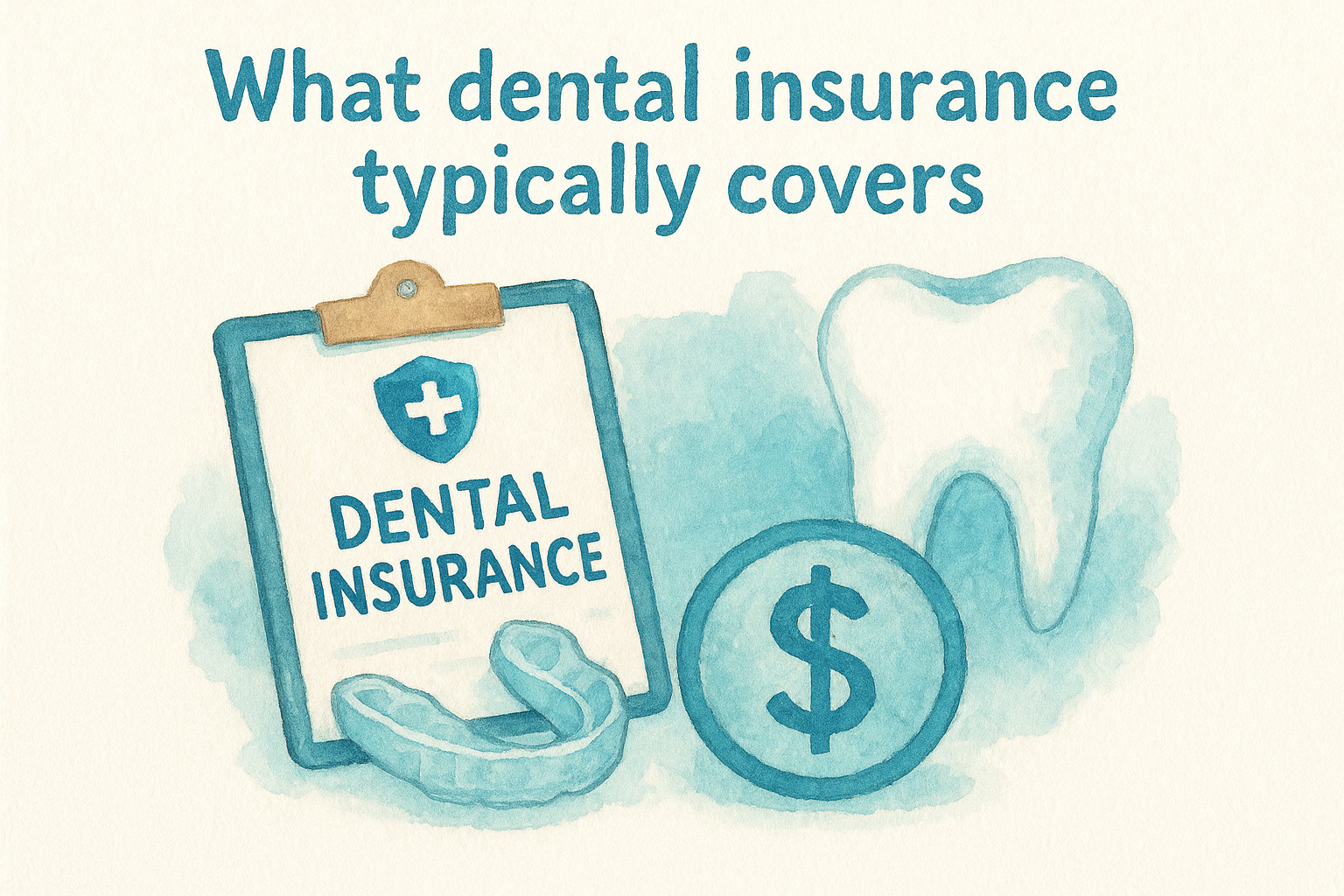
Many plans exclude night guards entirely or require a formal bruxism diagnosis documented in your dental records before approving any claim.
Even with coverage, the approval process takes time, and reimbursement is never guaranteed. Online custom guards from direct-to-consumer brands often fall outside standard insurance coverage, though that also means no pre-authorization delays or claim denials to navigate.
FSA and HSA as a smarter payment tool
A Flexible Spending Account (FSA) or Health Savings Account (HSA) lets you use pre-tax dollars to pay for eligible medical expenses, and night guards for bruxism generally qualify. The IRS recognizes dental appliances used to treat a documented medical condition as eligible under these accounts, making this one of the most practical ways to reduce your actual cost regardless of your insurance situation.
Using FSA or HSA funds effectively lowers your cost by whatever your marginal tax rate is, typically somewhere between 22 and 37 percent for most working adults. That can turn a $200 online custom guard into a net cost closer to $130 to $155 depending on your tax bracket.
Estimating your real out-of-pocket cost
To get a clear picture, contact your insurance provider directly and ask whether custom night guards are covered under your plan and what documentation is required. Then check your FSA or HSA balance as a parallel payment option regardless of what insurance does or doesn't cover.
If insurance doesn't help much, an online custom guard paid through your FSA or HSA consistently delivers the strongest combination of quality and actual savings for most people managing bruxism.
How to choose the right guard for your budget and bite
Choosing the right night guard comes down to two things: how hard you grind and what you can reasonably spend. Most people default to whatever costs least upfront, but the night guard for bruxism cost that actually matters is the total cost over time, including replacements, dental repairs, and money spent on guards you stop wearing after a week.
Match your guard to your grinding severity
Your grinding pattern should be the first filter you apply. Mild grinders who occasionally clench might find an OTC option tolerable as a short-term fix, but even mild bruxism causes cumulative wear that a loose-fitting pharmacy guard won't adequately address over months of nightly use. Moderate to severe grinders need a guard built from precise impressions, one that stays in place under sustained pressure and distributes force evenly across the bite surface.
If you wake up with jaw soreness, headaches, or visible wear on your teeth, those are signals that your grinding is serious enough to require a custom-fitted guard.
Custom guards, whether through a dentist or an online lab, fit the unique contours of your bite. That precise fit is what keeps the guard from shifting, which is the main reason people abandon OTC options within weeks.
Factor in long-term value, not just upfront price
Durability and replacement frequency change the math on cost significantly. A $30 OTC guard typically survives a few months under regular grinding before it compresses or distorts. A professionally fabricated custom guard ordered through an online lab can last one to three years with proper care, making its higher upfront price considerably cheaper per night of use.
Consider what you're protecting too. Dental repairs like crowns, veneers, or implants cost thousands of dollars, making even a $200 custom guard a straightforward investment by comparison. If you have FSA or HSA funds available, apply them here. Pre-tax spending combined with a durable, well-fitted guard is the most cost-efficient path forward for most people managing bruxism long term.
Next steps to protect your teeth
You now have a clear picture of the night guard for bruxism cost across every option, what drives the price differences, and where the real value sits. For most people managing bruxism, an online custom guard gives you the best balance of professional fit, durable materials, and a price that doesn't require dental insurance to make sense.
The practical next step is straightforward. Skip the pharmacy shelf and skip the multi-appointment dental office route. A custom-fitted guard built from your actual impressions protects your teeth the way a loose-fitting OTC product simply cannot, and it costs a fraction of what your dentist would charge for the same lab-fabricated result.
If you're ready to stop grinding your way through expensive dental repairs, take a look at Remi's custom night guard. Your teeth will thank you for the decision you make tonight.

