
 Guards + Retainers
 Custom Night Guard
 Retainer
 Emergency Order

 Whitening
 Whitening Kit
 Teeth Whitening Gel
 Dual-Action Foam
 Cleaning + Care
 Ultrasonic Cleaner Pro
 Water Flosser
 UV Toothbrush Sanitizer
 Deep Clean + Freshening Tablets
 Accessories
 Guard Removal Tool
 Replacement Nozzles
 Bundles

You want whiter teeth, but you're stuck choosing between a $500+ dental office visit and a $30 kit from the drugstore. The debate around professional vs at home teeth whitening comes down to a few key factors: how much you're willing to spend, how fast you need results, and how sensitive your teeth are. Neither option is universally "better", it depends on your priorities.
At Remi, we help people take control of their dental care at home, from custom night guards for teeth grinding to our dual-purpose Night Guard Cleaning + Teeth Whitening Foam that fits whitening into a routine you're already doing. So we know a thing or two about getting professional-level results without the professional-level price tag.
This article breaks down the real differences between in-office and at-home whitening, the costs, the science, the tradeoffs, so you can make a decision based on facts, not marketing. We'll cover what actually works, what's overhyped, and where your money goes the furthest.
Why the choice matters for your teeth and wallet
The decision between professional and at-home whitening is not just about price. It affects how quickly you see results, how long those results last, and whether you walk away with sensitivity or irritation. Making the wrong call for your situation can mean spending more money than needed, or worse, damaging your enamel with a product that was too aggressive for your teeth.
The cost gap is real
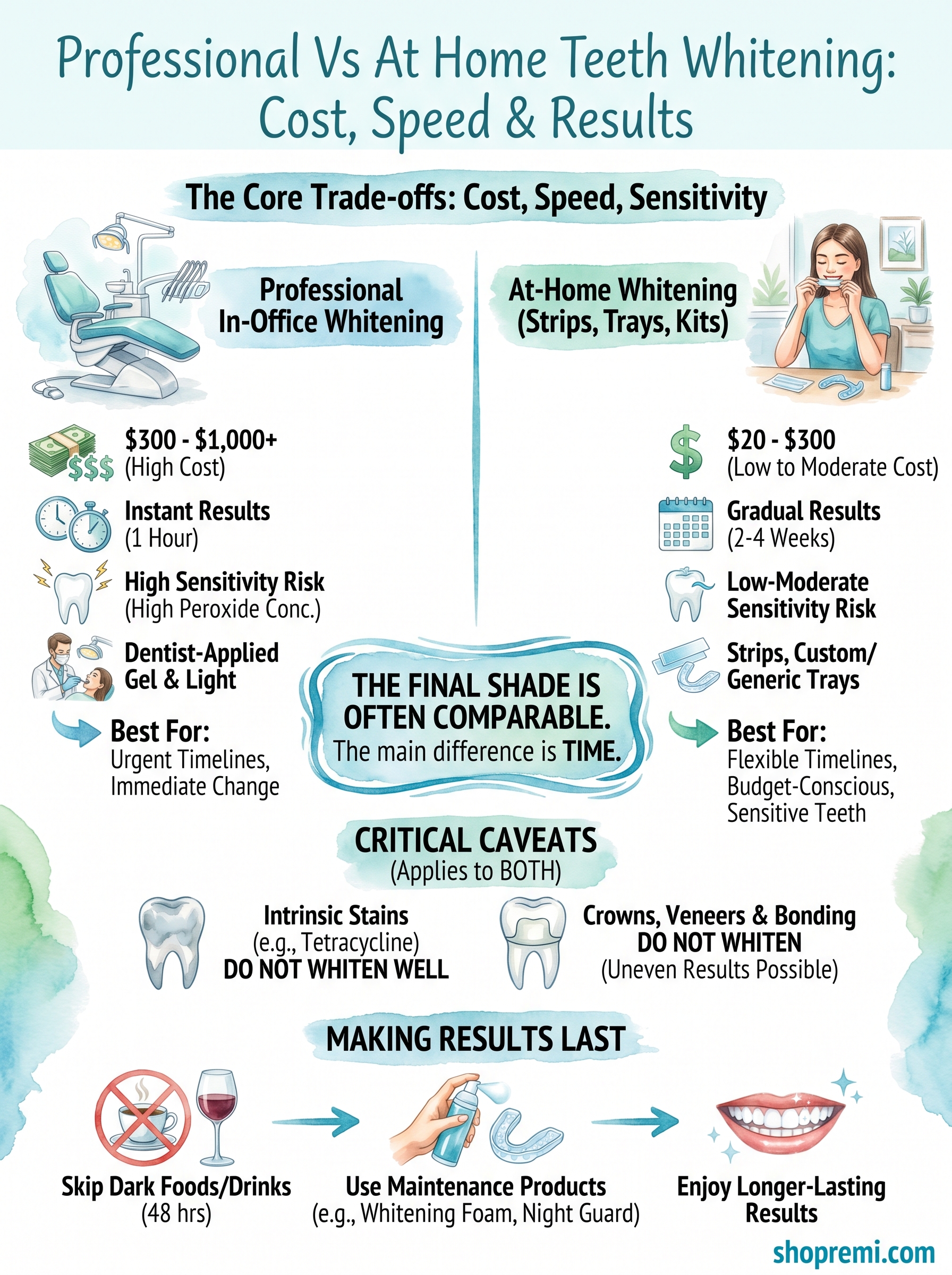
In-office whitening typically runs between $300 and $1,000 per session depending on your dentist and location. At-home options range from $20 drugstore strips to $100-$300 dentist-prescribed take-home kits. That spread is significant, and a higher price does not always mean proportionally better results. For many people with mild to moderate staining, an at-home kit delivers results close enough to in-office treatment that the price difference is hard to justify.
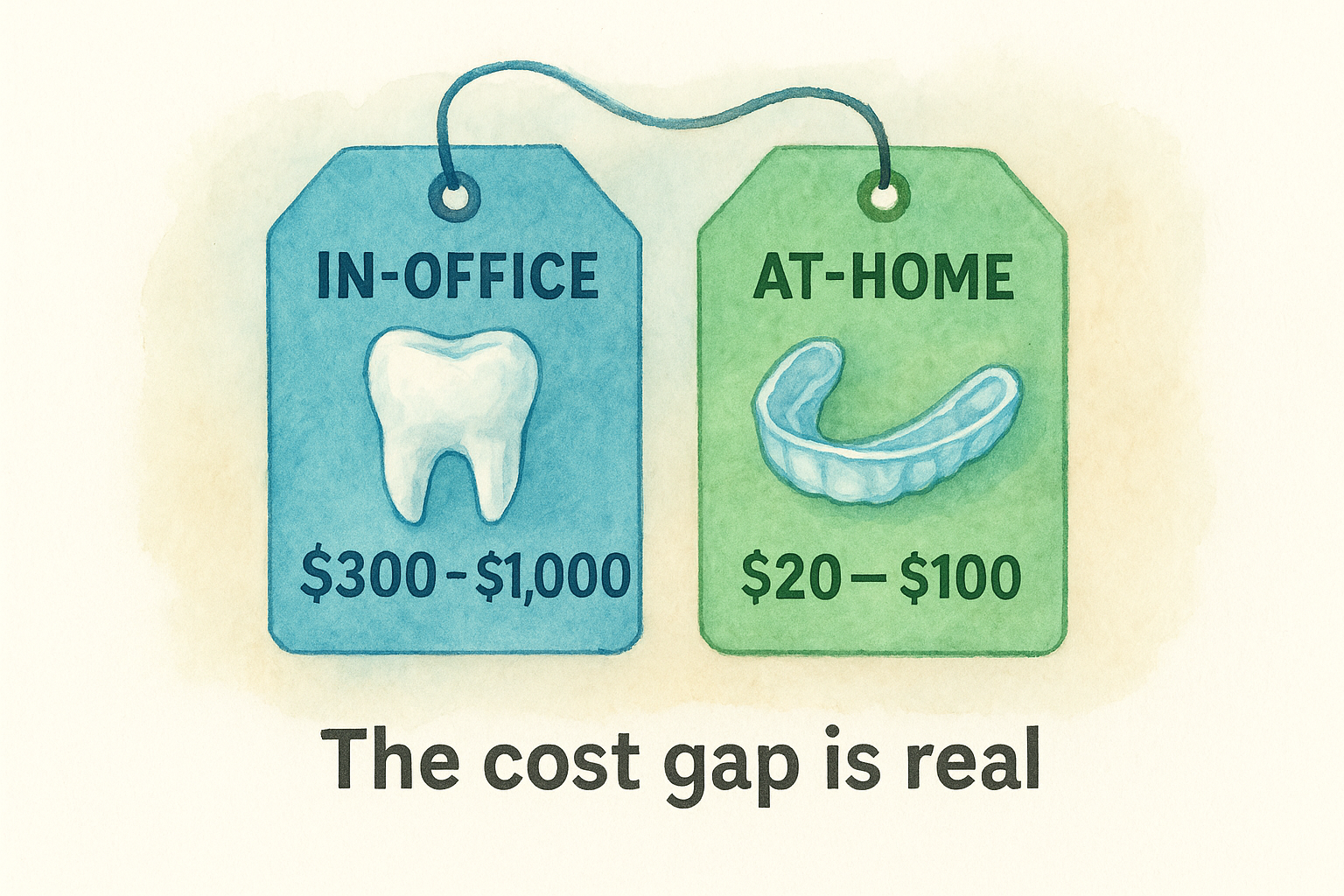
The real question is not which option is more effective in a lab setting, but which one fits your actual teeth, timeline, and budget.
Sensitivity and safety are part of the equation
Both professional and at-home treatments use hydrogen peroxide or carbamide peroxide as the active whitening agent. The core difference is concentration. In-office treatments use higher concentrations, which deliver faster results but also carry a greater risk of tooth sensitivity and gum irritation. Understanding your sensitivity baseline before picking a method can save you real discomfort.
Here is how sensitivity risk generally breaks down by product type:
- In-office laser or light-activated treatments: highest peroxide concentration, highest sensitivity risk
- Dentist-prescribed take-home trays: medium concentration, moderate risk
- Over-the-counter strips and gels: lowest concentration, lowest sensitivity risk
How teeth whitening works and when it fails
Whitening products work by using peroxide-based compounds to penetrate your tooth enamel and break apart stain-causing molecules inside the dentin layer beneath. This chemical reaction is what produces the lighter appearance, not a surface scrub or coating. The stronger the peroxide concentration, the deeper and faster the reaction occurs.
When whitening stops working
Not all stains respond to peroxide. Intrinsic stains, which come from medications like tetracycline, dental trauma, or excessive fluoride exposure during tooth development, sit too deep inside the tooth structure for standard whitening to reach. Whether you are comparing professional vs at home teeth whitening methods, both will fall short on these types of discoloration.
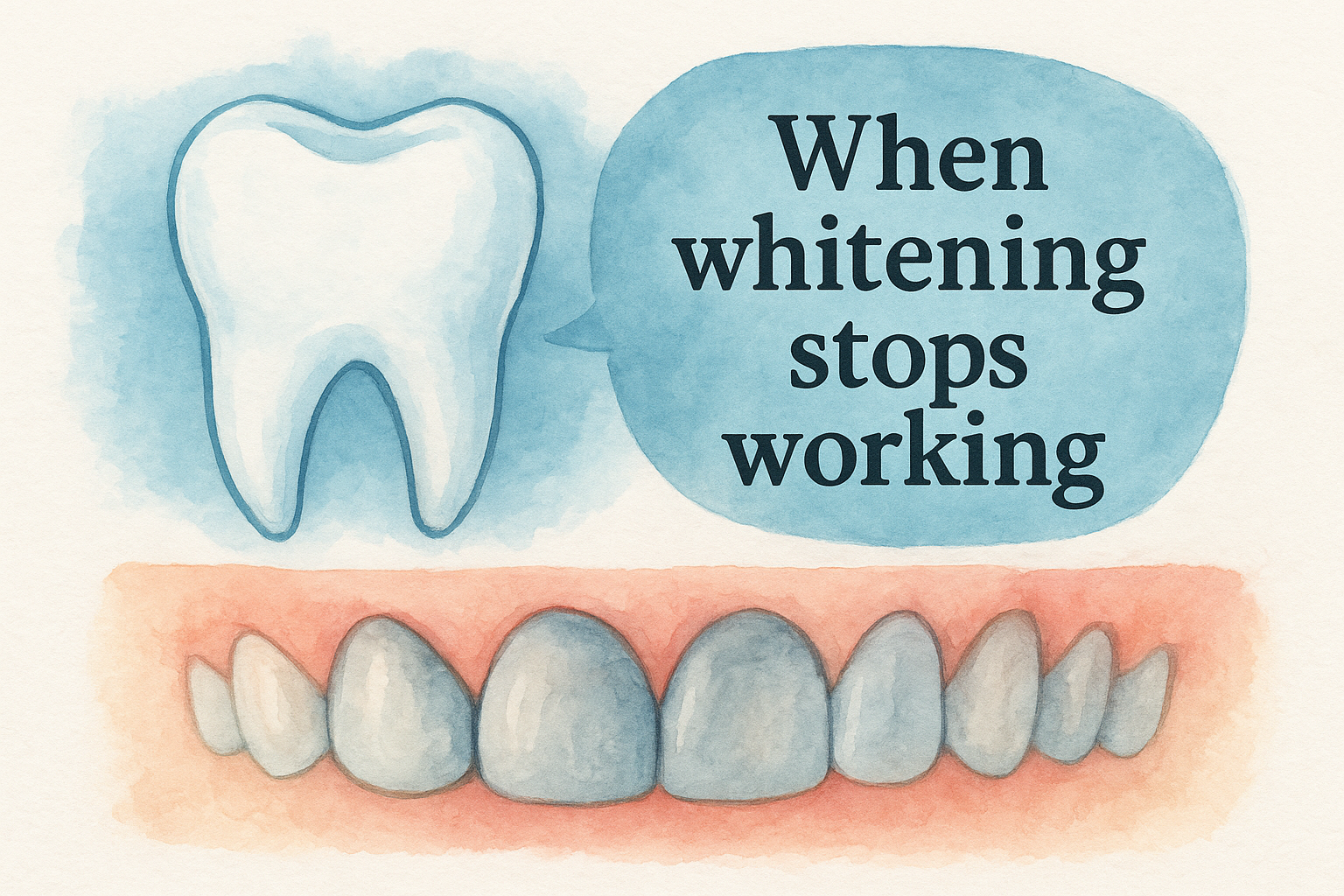
If your teeth have a gray or bluish tone rather than yellow, whitening products are unlikely to produce the results you expect.
Extrinsic stains from coffee, tea, wine, and tobacco respond well to both in-office and at-home treatments. Crowns, veneers, and dental bonding also do not whiten, so if you have significant existing dental work, results across your smile may appear uneven regardless of which method you choose.
Professional whitening at the dentist: cost vs results
In-office whitening delivers the fastest visible results of any option, often lightening teeth by one to three shades in a single appointment. Your dentist applies a high-concentration peroxide gel (typically 25-40% hydrogen peroxide) directly to your teeth and may use a light or laser to speed up the chemical reaction. The speed advantage is real, but the cost reflects it.
What you get for the price
A single in-office session costs between $300 and $1,000, depending on your dentist, location, and the whitening system used. For that investment, you get professional supervision, custom-fitted protective barriers for your gums, and visible results within about an hour. The controlled clinical setting reduces the chance of peroxide irritating soft tissue, which matters if you have existing gum sensitivity.
When comparing professional vs at home teeth whitening, the biggest advantage of the dentist's office is speed, not the final shade achieved.
The total outcome after several at-home sessions often matches what you get in the chair. Most dental research shows the final shade achieved is comparable between methods when measured weeks after treatment. If your timeline is not urgent, the price premium for in-office treatment is hard to justify for typical surface staining from coffee, tea, or wine.
At-home whitening: strips, trays, and dentist kits
At-home whitening gives you three main formats to choose from: over-the-counter strips, custom or generic trays with gel, and dentist-prescribed take-home kits. Each sits at a different price point and uses a different peroxide concentration, which directly affects how fast you see results and how much sensitivity you experience.
Strips and generic trays
Over-the-counter strips typically use 6-10% hydrogen peroxide and run between $20 and $50 per box. They work well for mild to moderate surface staining, but the one-size-fits-all design means the whitening agent does not always contact every part of your tooth evenly, which can leave patchy results along the edges and between teeth.
Dentist-prescribed take-home kits
When comparing professional vs at home teeth whitening, dentist take-home kits sit in the middle of the spectrum. Your dentist makes custom-fitted trays that hold a medium-concentration gel (10-22% carbamide peroxide) against your teeth with precision. This fit improves contact with the enamel surface and reduces gel spillage onto your gums, lowering irritation risk while still delivering meaningful whitening over time.
Custom trays from your dentist produce results comparable to in-office treatment at roughly half the cost when used consistently over two to four weeks.
How to choose and keep results longer
Picking the right option comes down to two factors: your timeline and your tooth sensitivity. If you need visible results within 24-48 hours, in-office treatment is worth the cost. If your staining is mild and your schedule is flexible, a take-home kit or quality strips will reach a comparable final shade for significantly less money.
Match the method to your situation
When weighing professional vs at home teeth whitening, check your existing dental work first. Crowns and veneers do not whiten, so significant restorations may create uneven color results across your smile regardless of method. For natural teeth with surface staining from food and drinks, at-home treatments handle the job well.
Your sensitivity level also shapes the choice. Start with a lower-concentration product and move up only if results fall short after consistent use.
Carbamide peroxide releases more slowly than hydrogen peroxide, making it a better fit if your teeth already react to temperature changes.
Make results last
After whitening, skip dark-pigmented foods and drinks for at least 48 hours while your enamel remineralizes. This is the window when your teeth are most vulnerable to picking up new stains from coffee, red wine, and similar culprits.
Ongoing maintenance matters more than most people expect. A daily whitening foam built into your existing cleaning routine, especially alongside a night guard if you wear one, extends results without the cost of repeat treatments.
Next steps
The core takeaway from the professional vs at home teeth whitening debate is straightforward: in-office treatment wins on speed, but at-home methods reach comparable results for most people at a fraction of the price. Your best move is to match the method to your actual timeline and sensitivity level, not to assumptions about which option sounds more credible.
Start by checking whether your staining is surface-level or deeper, whether your existing restorations might create uneven results, and whether your teeth already react to temperature. Those three factors narrow your options faster than any marketing claim will.
Once you have your whitening routine dialed in, protecting your results becomes the next priority. If you grind your teeth at night, a custom night guard keeps you from wearing down the enamel you just worked to improve. Combining both steps gives your smile the best long-term outcome without repeated treatment costs.

