
 Guards + Retainers
 Custom Night Guard
 Retainer
 Emergency Order

 Whitening
 Whitening Kit
 Teeth Whitening Gel
 Dual-Action Foam
 Cleaning + Care
 Ultrasonic Cleaner Pro
 Water Flosser
 UV Toothbrush Sanitizer
 Deep Clean + Freshening Tablets
 Accessories
 Guard Removal Tool
 Replacement Nozzles
 Bundles

You brush twice a day, maybe even floss regularly, and yet every time you catch your reflection you can't help but wonder, why are my teeth yellow? You're not alone. It's one of the most common dental frustrations, and the answer is rarely as simple as "drink less coffee." Multiple factors play a role, from the foods you eat to the natural aging process happening beneath your enamel.
The good news? Most causes of yellow teeth are preventable or reversible once you understand what's actually going on. Some fixes take minutes at home, while others may need a dentist's help. At Remi, we work alongside dental professionals to develop products, like our Night Guard Cleaning + Teeth Whitening Foam, that make daily oral care easier without the steep dental office price tag.
Below, we break down seven common causes of tooth discoloration and the dentist-backed solutions that can help you get a brighter smile. Each cause comes with actionable steps you can start today.
1. Coffee, tea, wine, and dark foods
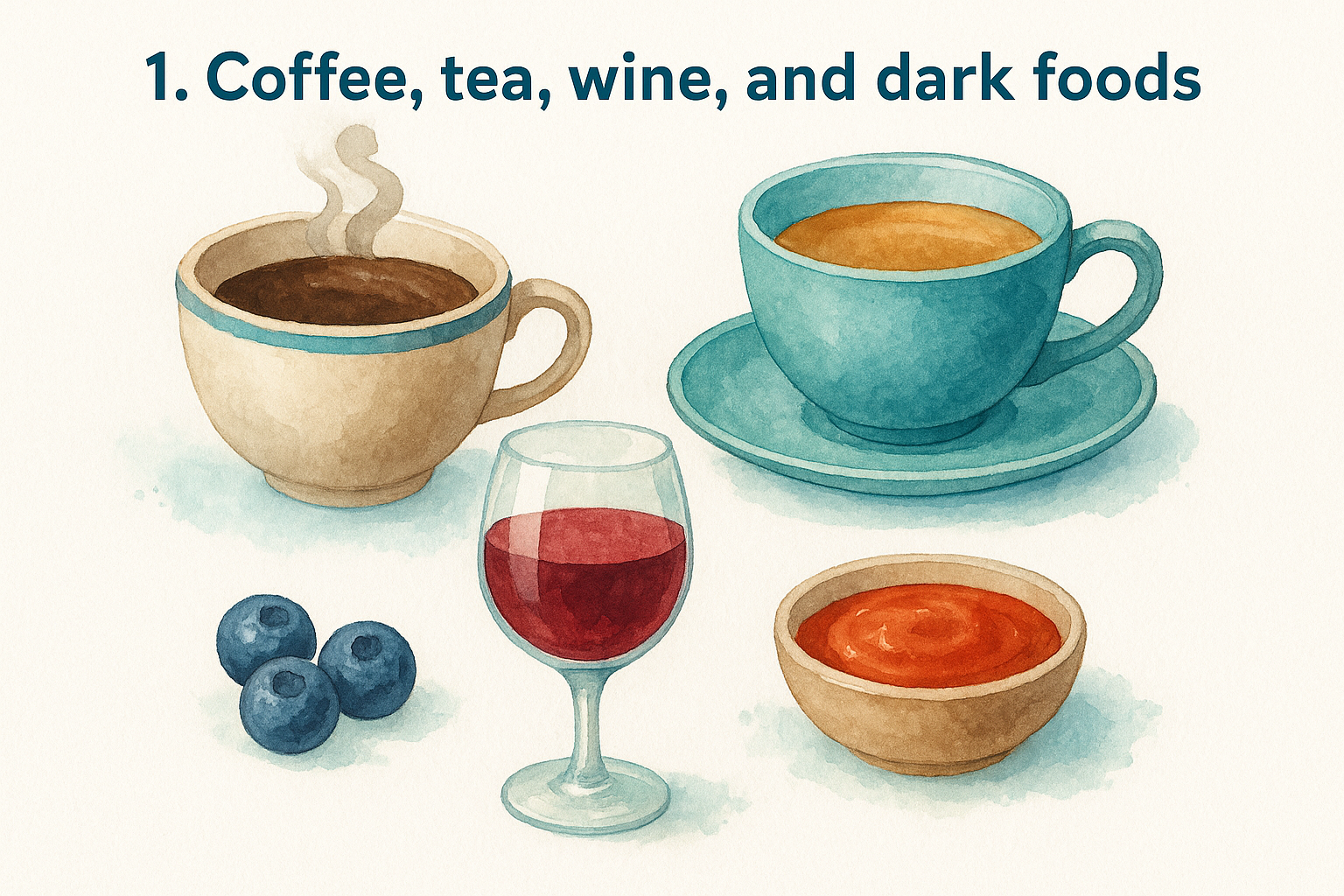
If you've been asking yourself why are my teeth yellow despite brushing consistently, your daily beverages are often the first place to look. Coffee, tea, red wine, and dark-colored foods like berries, soy sauce, and tomato-based sauces are among the most common culprits behind visible surface discoloration.
What it looks like
Staining from dark drinks and foods typically appears as a dull, yellowish-brown tint spread across your front teeth. You'll notice it most along the gumline and between teeth, where residue tends to linger the longest. Unlike discoloration from aging, this type of stain usually sits on the outer enamel surface and looks relatively uniform across multiple teeth.
Why it happens
These foods and drinks contain compounds called tannins and chromogens. Tannins are plant-based molecules that bind to enamel and create a sticky surface, while chromogens are intensely pigmented molecules that latch onto that surface. With repeated daily exposure, those pigments work their way into the microscopic pores of your enamel, making them increasingly resistant to regular brushing over time.
The more frequently you sip staining beverages throughout the day without rinsing, the less chance your saliva has to neutralize and flush those pigments away.
Dentist-backed fixes
For surface staining caused by diet, whitening treatments are typically very effective. Your main options include:
- Whitening toothpaste with hydrogen peroxide or baking soda for mild, everyday staining
- At-home whitening foams like Remi's Night Guard Cleaning + Teeth Whitening Foam for convenient daily brightening
- Professional in-office whitening or dentist-prescribed take-home trays with higher-concentration peroxide for deeper or long-set stains
Start with the least intensive option and move up if results stall after a few weeks of consistent use.
How to prevent it coming back
Preventing re-staining is mostly about adjusting small daily habits rather than eliminating everything you enjoy. Rinse your mouth with water immediately after drinking coffee, tea, or wine. Using a straw for cold beverages limits direct contact with your enamel. Waiting at least 30 minutes before brushing after acidic drinks protects softened enamel from abrasion. Scheduling professional cleanings every six months also removes surface buildup before it has a chance to set in deeper.
2. Plaque and tartar buildup from missed cleaning
If you find yourself asking why are my teeth yellow even though staining foods aren't a major part of your diet, inconsistent brushing and flossing may be the real issue. Plaque and tartar are among the most overlooked contributors to tooth discoloration.
What it looks like
Plaque buildup typically appears as a soft, dull yellow film hugging the gumline and collecting between teeth. When plaque is left to harden, it turns into tartar (calculus), which takes on a darker yellow or even brownish tone. Unlike staining from food, this discoloration tends to cluster in specific spots rather than spreading evenly across your teeth.
Why it happens
Plaque is a sticky bacterial film that forms on your enamel constantly throughout the day. When you skip brushing or flossing, that film has time to mineralize into tartar, which bonds tightly to the tooth surface. Tartar is porous, so it absorbs stains easily and makes the surrounding area look noticeably darker over time.
Once plaque hardens into tartar, no amount of brushing at home will remove it without professional tools.
Dentist-backed fixes
A professional dental cleaning is the only way to safely remove tartar. Your hygienist uses specialized instruments to break it up without damaging your enamel. From there, a polishing treatment removes the residual surface staining left behind.
How to prevent it coming back
Brush for two full minutes twice a day and floss once daily to clear plaque before it mineralizes. Using a whitening foam during your routine also helps lift early-stage buildup before it sets.
3. Smoking, vaping, and chewing tobacco
Tobacco use is one of the fastest and most aggressive causes of tooth discoloration. If you use any tobacco product and have been wondering why are my teeth yellow, this is likely a major factor working against your enamel every single day.
What it looks like
Tobacco staining tends to show up as deep yellow, brown, or even near-black discoloration that concentrates heavily along the gumline and on the back surfaces of your teeth. Unlike food-based staining, the color is often uneven and patchy, and it can darken significantly within months of regular use.
Why it happens
Cigarettes and tobacco products contain tar and nicotine, two compounds that penetrate enamel pores aggressively. Tar is a sticky, dark residue that coats your teeth with every use, while nicotine turns yellow when it reacts with oxygen. Vaping is not a clean alternative either, since many e-liquids still contain nicotine and other compounds that discolor enamel over time.
Tobacco staining sits much deeper in enamel than food staining, which is why standard whitening toothpaste alone rarely makes a noticeable difference.
Dentist-backed fixes
Professional cleaning and in-office whitening are typically needed to address moderate to heavy tobacco staining because the pigments bind so deeply to enamel. For lighter staining caught early, a whitening foam used consistently each day can help lift surface-level discoloration before it sets further.
How to prevent it coming back
The most effective prevention is stopping tobacco use entirely. Alongside that, rinsing with water after each use and maintaining a twice-daily brushing routine limits how much residue stays in contact with your enamel between cleanings.
4. Natural aging and enamel thinning
Aging changes your teeth from the inside out, and natural enamel thinning is something no amount of brushing can stop on its own. If you've been asking why are my teeth yellow and you're in your 30s or older, age-related changes to your tooth structure may be contributing more than you realize.
What it looks like
Age-related yellowing appears as a gradual, overall shift in color across all of your teeth rather than isolated spots. Your teeth may look more ivory, yellow, or slightly gray as the years pass. The change is subtle enough that you might not notice it until you compare old photos.
Why it happens
Your enamel naturally thins over decades of chewing, grinding, and acid exposure. As it thins, the underlying dentin layer becomes more visible. Dentin is naturally yellow, so less enamel means more yellow showing through. At the same time, your dentin continues to grow thicker with age, pushing even closer to the surface and deepening that yellow tone.
This type of discoloration comes from inside the tooth, which is why surface whitening treatments produce more limited results compared to stain removal.
Dentist-backed fixes
Professional whitening treatments can still brighten aging teeth, but they work best when combined with a daily at-home maintenance routine. A whitening foam used consistently helps offset gradual dentin darkening between professional visits.
How to prevent it coming back
You cannot reverse aging, but you can slow enamel thinning by limiting acidic foods and drinks, wearing a night guard if you grind your teeth, and keeping up with regular professional cleanings twice a year.
5. Acid wear and enamel erosion
Acid wear is a less obvious answer to why are my teeth yellow, but it's more common than most people realize. Frequent acid exposure from food, drinks, and even digestive issues quietly strips your enamel away layer by layer, leaving teeth looking increasingly yellow and dull over time.
What it looks like
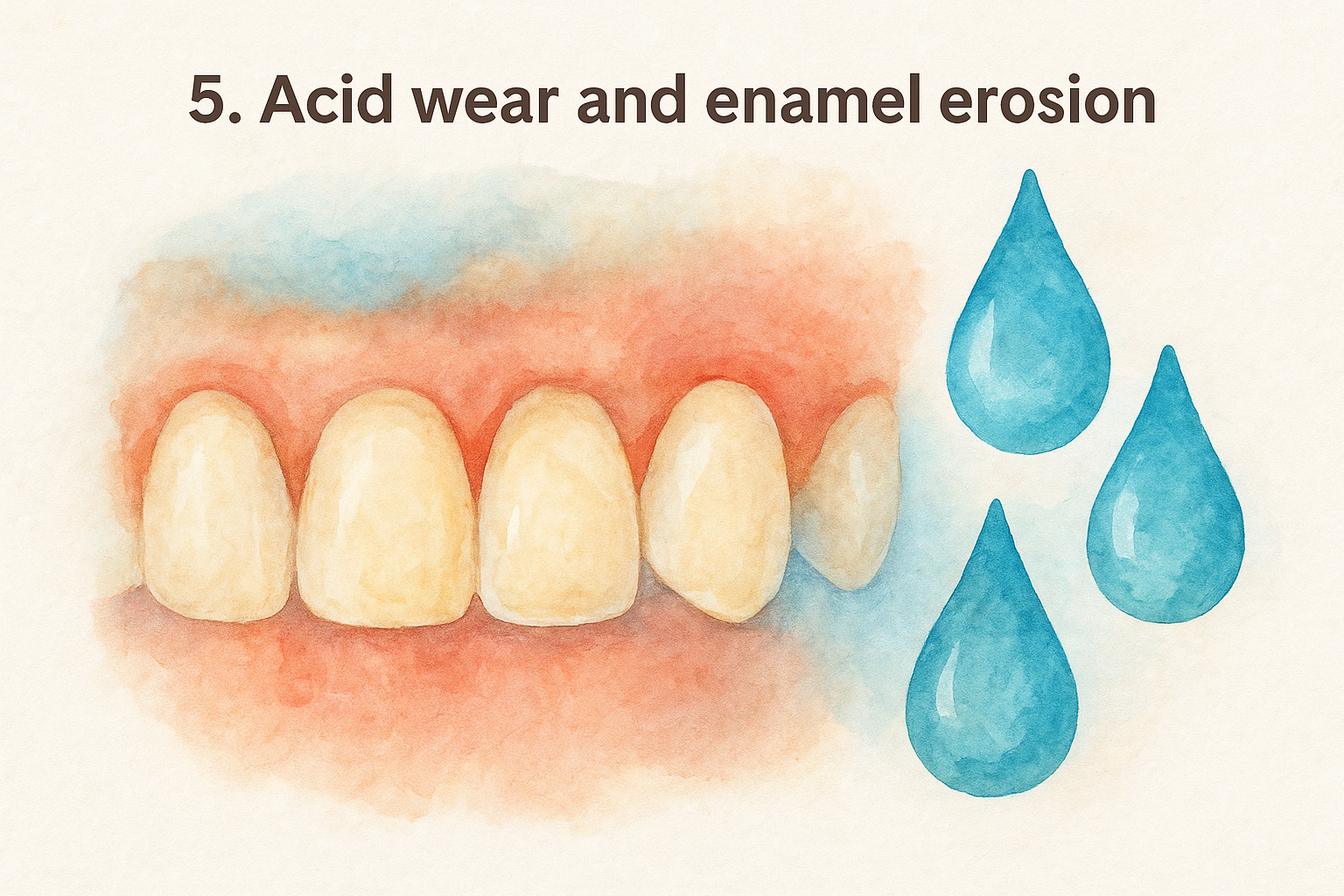
Acid-eroded teeth tend to look smooth and glassy on the surface, almost like they've been slightly buffed down. Your front teeth may appear more translucent or yellow near their edges, where the enamel is at its thinnest.
Teeth affected by long-term erosion often look shorter or more rounded than they used to. You may also notice increased sensitivity to hot and cold as enamel thins and exposes the underlying dentin layer.
Why it happens
Acidic foods and drinks, including citrus fruits, carbonated sodas, sports drinks, and vinegar-based foods, lower the pH in your mouth below 5.5, which is the threshold at which enamel begins to dissolve. Acid reflux and frequent vomiting bring stomach acid directly into contact with your teeth and speed up this process significantly.
Sipping acidic drinks slowly throughout the day is worse for your enamel than drinking the same amount in one sitting, because it extends acid contact time without a break.
Dentist-backed fixes
Your dentist can apply fluoride treatments to remineralize weakened enamel and slow further erosion. For more significant structural loss, your options typically include:
- Dental bonding to restore lost tooth structure and improve color
- Veneers for more widespread or severe erosion cases
How to prevent it coming back
Rinse with water immediately after consuming acidic foods or drinks and wait at least 30 minutes before brushing to avoid abrading softened enamel. Using a fluoride toothpaste daily helps reinforce enamel against future acid exposure between dental visits.
6. Dry mouth and medication side effects
Dry mouth might not be the first thing that comes to mind when you ask why are my teeth yellow, but reduced saliva flow plays a surprisingly large role in how your teeth look and feel over time. Many common medications list dry mouth as a side effect, making this cause far more widespread than most people expect.
What it looks like
Discoloration from dry mouth tends to appear as a gradual, patchy yellow tint that builds up across multiple teeth rather than concentrating in one area. Your teeth may also feel rough or sticky to the touch, since the protective coating saliva normally provides throughout the day is no longer doing its job.
Why it happens
Saliva is your mouth's natural defense system. It neutralizes acids, washes away food particles, and remineralizes enamel constantly throughout the day. When saliva production drops, bacteria multiply faster and staining compounds cling directly to enamel with nothing to rinse them away. Common medications that trigger dry mouth include:
- Antihistamines
- Antidepressants
- Blood pressure drugs
- Diuretics
Without enough saliva, even a consistent brushing routine struggles to prevent discoloration from accelerating between cleanings.
Dentist-backed fixes
Your dentist can apply prescription-strength fluoride treatments to compensate for lost enamel protection. Reviewing or adjusting your current medications with your prescribing doctor may also reduce the underlying cause.
How to prevent it coming back
Sipping water consistently throughout the day substitutes some of saliva's natural flushing action. Incorporating a daily whitening foam into your routine helps lift surface buildup before it sets while you manage any medication adjustments.
7. Deep intrinsic stains and single-tooth darkening
When people ask why are my teeth yellow, they usually expect an answer tied to diet or habits. But intrinsic stains form inside the tooth itself and have nothing to do with what you eat or drink.
What it looks like
Intrinsic staining often shows up as a gray, brown, or dark yellow tone concentrated in a single tooth rather than spread across your smile. In some cases, one tooth gradually darkens over months while the rest stay their normal shade, which is a clear sign something is happening beneath the enamel.
Why it happens
Several factors can cause this type of deep discoloration. Tooth trauma is one of the most common causes, where a hard knock triggers internal bleeding that stains the dentin from within. Other triggers include:
- Tetracycline antibiotics taken during childhood, which bond permanently to developing dentin
- Excessive fluoride exposure during tooth development, causing a condition called fluorosis
- Dead or dying dental pulp following untreated infection or injury
A single tooth that darkens on its own is almost always a sign of an internal issue that needs professional evaluation.
Dentist-backed fixes
Internal bleaching is a procedure your dentist performs directly inside the tooth and works well for trauma-related darkening. More severe cases may require a veneer or crown to cover the discoloration entirely.
How to prevent it coming back
Wearing a custom night guard protects your teeth from trauma caused by grinding. Scheduling regular dental checkups lets your dentist catch early signs of pulp damage before visible darkening has a chance to set in.
Next steps for a whiter smile
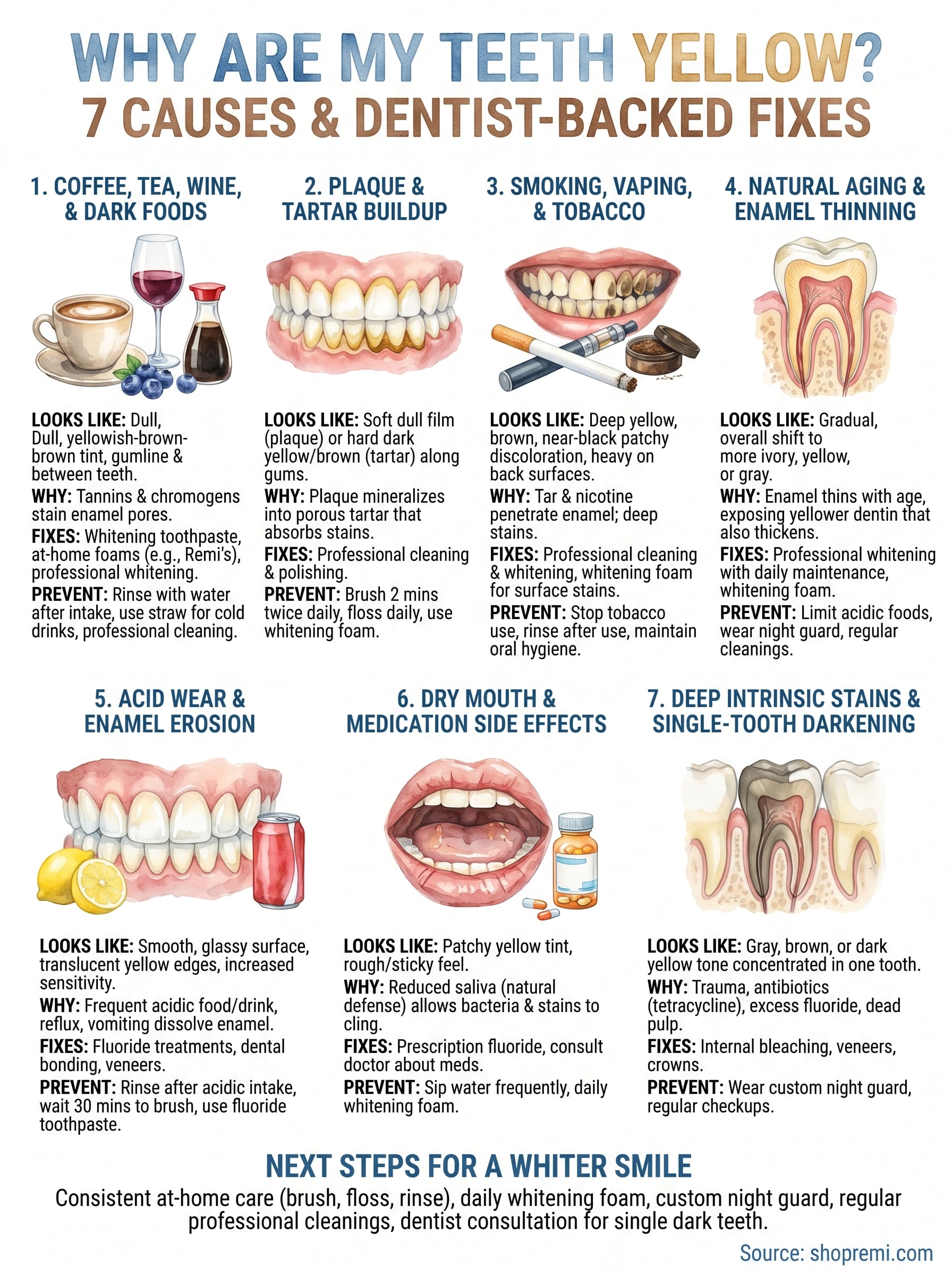
Now that you know the answer to why are my teeth yellow, the next move is picking the right fix for your specific situation. Most surface stains respond well to consistent at-home care, while deeper intrinsic discoloration or significant enamel damage will need a dentist's hands.
Start with the basics: brush twice daily, floss once, and rinse with water after meals and staining drinks. Adding a daily whitening foam to your routine is one of the simplest ways to lift surface buildup and keep your enamel looking brighter between cleanings. If tooth grinding is part of your picture, protecting your enamel with a custom night guard prevents the kind of wear that accelerates yellowing over time. Book a professional cleaning if you haven't had one in the last six months, and revisit your dentist if a single tooth is darkening on its own.

