
 Guards + Retainers
 Custom Night Guard
 Retainer
 Emergency Order

 Whitening
 Whitening Kit
 Teeth Whitening Gel
 Dual-Action Foam
 Cleaning + Care
 Ultrasonic Cleaner Pro
 Water Flosser
 UV Toothbrush Sanitizer
 Deep Clean + Freshening Tablets
 Accessories
 Guard Removal Tool
 Replacement Nozzles
 Bundles

You bought the strips, the trays, or maybe a whitening foam, and now you're wondering how often to whiten teeth at home without overdoing it. It's a fair question, because the line between a brighter smile and irritated, sensitive teeth is thinner than most product labels let on.
The truth is, whitening frequency depends on the type of product you're using, the concentration of its active ingredients, and how your teeth respond. Go too hard, too fast, and you risk enamel wear and gum irritation. Space treatments out correctly, and you get lasting results with zero discomfort.
At Remi, we help people take better care of their teeth at home, from custom night guards to our dual-purpose cleaning and whitening foam, so safe, informed routines are something we care about. Below, you'll find a clear schedule for every major type of at-home whitening product, plus the signs that mean it's time to pull back.
What at-home teeth whitening is and how it works
At-home teeth whitening uses peroxide-based compounds (typically hydrogen peroxide or carbamide peroxide) to break apart the molecules that cause tooth discoloration. These products come in strips, gel trays, pens, and foam formats, and they all work through the same basic chemistry: the peroxide penetrates your enamel and oxidizes the stain compounds sitting deeper in your dentin layer, lifting them without physically scrubbing the surface.
How whitening agents break down stains
The active ingredient in nearly every whitening product is either hydrogen peroxide or carbamide peroxide. Hydrogen peroxide works faster because it releases oxygen immediately on contact with your teeth. Carbamide peroxide breaks down more slowly, releasing roughly one-third of its weight as hydrogen peroxide over a longer contact window. This difference is why carbamide products are often used in overnight trays while hydrogen peroxide strips are built for shorter, more targeted sessions.
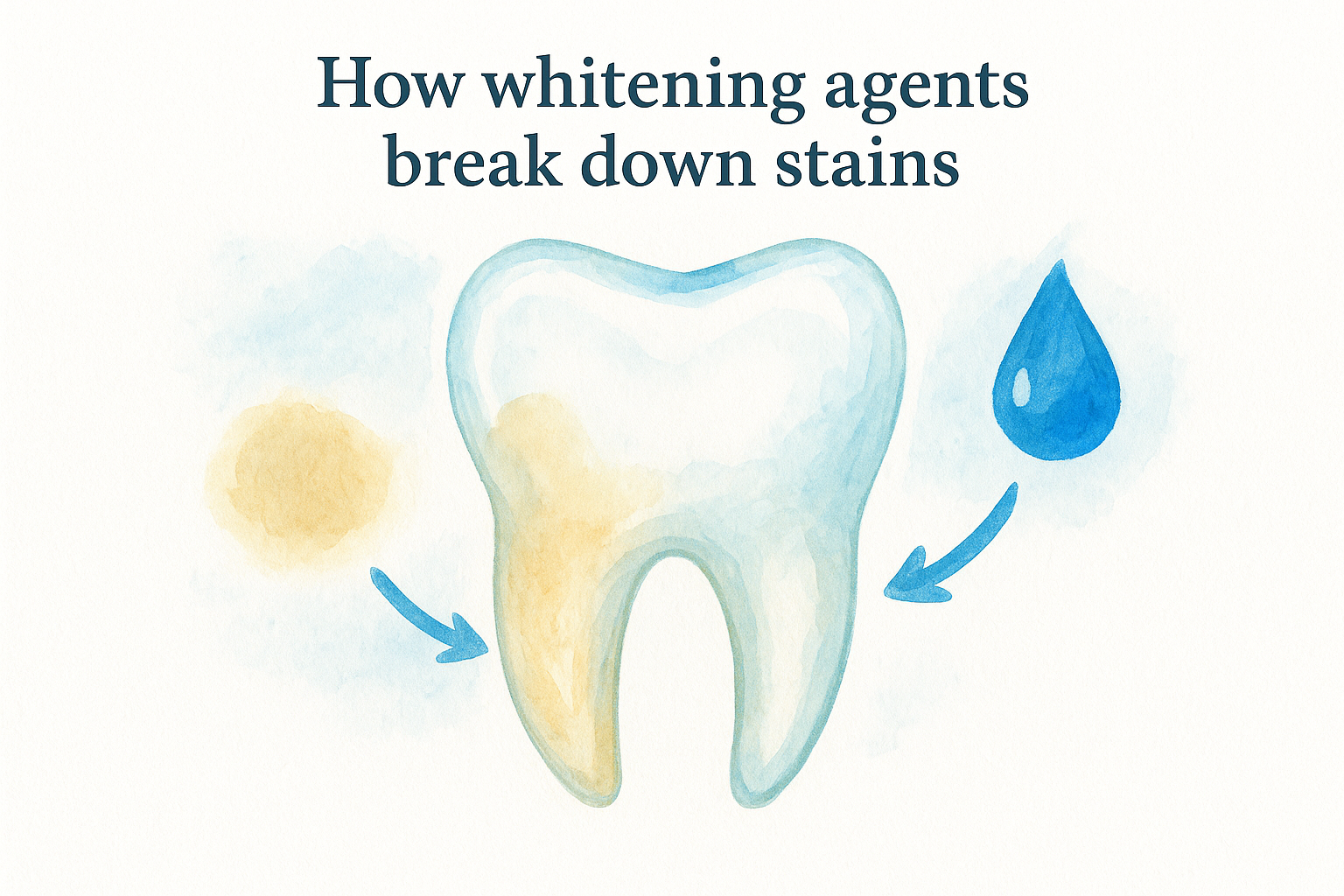
The concentration of peroxide in a product directly controls both how quickly it whitens and how much sensitivity risk it carries.
Why timing between treatments matters
Your enamel is porous, which means peroxide molecules travel through it and reach the dentin where most deep staining lives. This process is effective, but it also means the surrounding tissue absorbs real chemical exposure during each session. Repeated treatments without enough recovery time can dehydrate your enamel and irritate the pulp inside your tooth, leading to sharp sensitivity and, in some cases, longer-term damage. Understanding how often to whiten teeth at home is not just about getting results faster. It is about giving your enamel time to rehydrate and remineralize between sessions so each treatment stays safe and effective.
What affects how often you should whiten
No single schedule works for every person, because your teeth, your habits, and your product choice all shape the right frequency. Understanding the variables that matter most lets you customize how often to whiten teeth at home without guessing or risking damage.
Your baseline sensitivity
If your teeth already react to cold drinks or sweet foods, you have less tolerance for peroxide exposure and need longer gaps between treatments. People with sensitive teeth often do better with lower-concentration products and extra recovery days built into their schedule. Jumping straight to daily use can turn mild sensitivity into sharp, lasting pain.
Starting with the lowest effective concentration gives you room to adjust upward if needed without causing damage early on.
The strength of your product
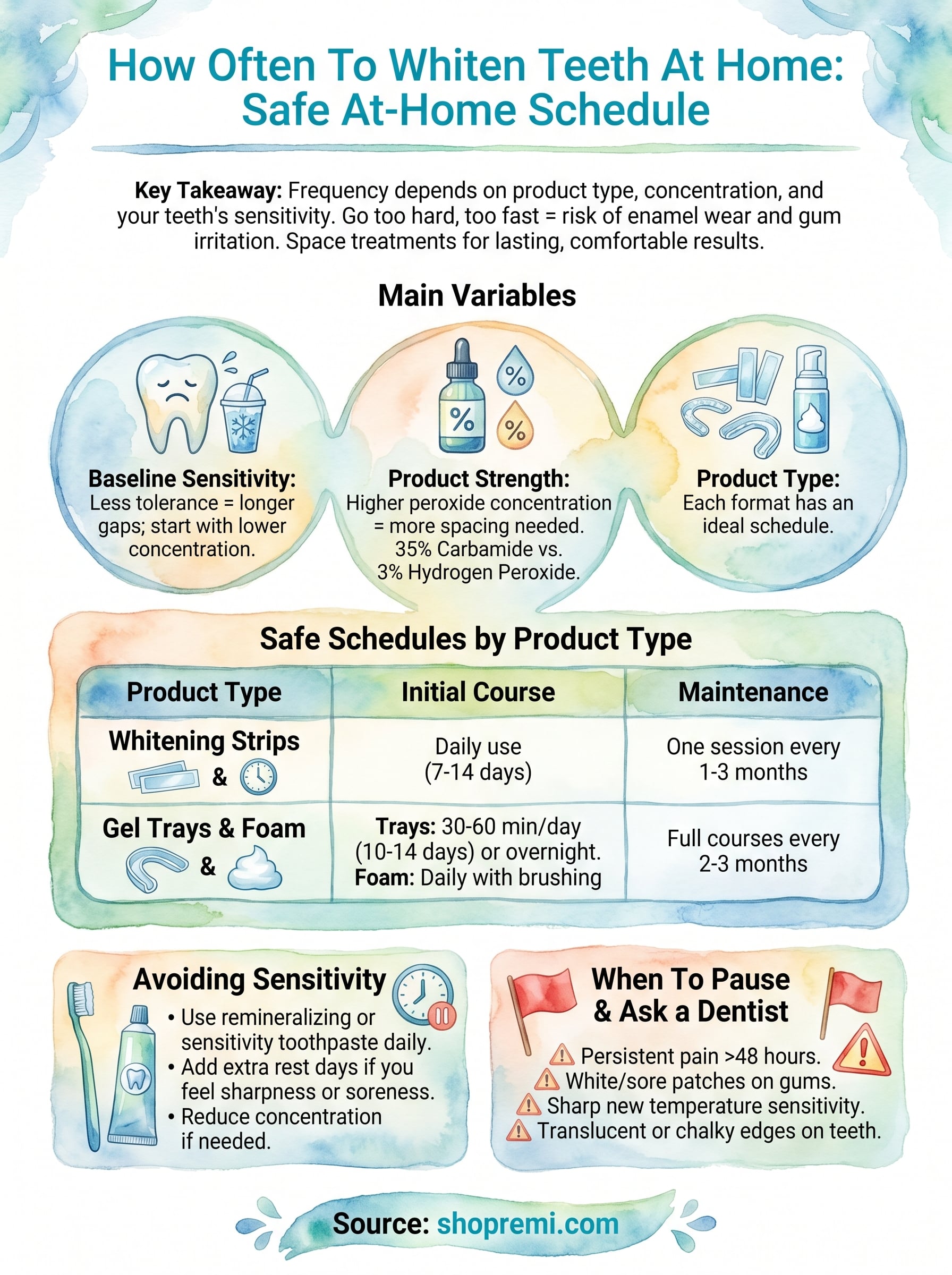
Higher peroxide concentrations produce faster results but demand more spacing between sessions. A 35% carbamide peroxide gel needs far more recovery time than a 3% hydrogen peroxide foam used for daily maintenance. Always check the label for peroxide percentage before deciding how many days to wait between treatments. Stronger products are not always better; they just require a more careful schedule.
Safe at-home whitening schedules by product type
Different products carry different peroxide loads, which means each format comes with its own ideal schedule. Matching your routine to the product you're using is the most reliable way to answer how often to whiten teeth at home without risking sensitivity or overexposure.
Whitening strips
Most over-the-counter whitening strips contain 6% to 14% hydrogen peroxide and are designed for once-daily use over a 7 to 14 day initial course. After that, one maintenance session every 1 to 3 months keeps results steady without pushing your enamel past its limit.
Stick to the exact wear time printed on the strip packaging; longer contact does not speed up results and increases irritation risk.
Gel trays and whitening foam
Custom-fitted gel trays with carbamide peroxide (10% to 22%) work best at 30 to 60 minutes per day over 10 to 14 days, or overnight for lower concentrations. Whitening foams are gentler and suit daily use as part of your regular brushing routine, with a full course repeated every 2 to 3 months:
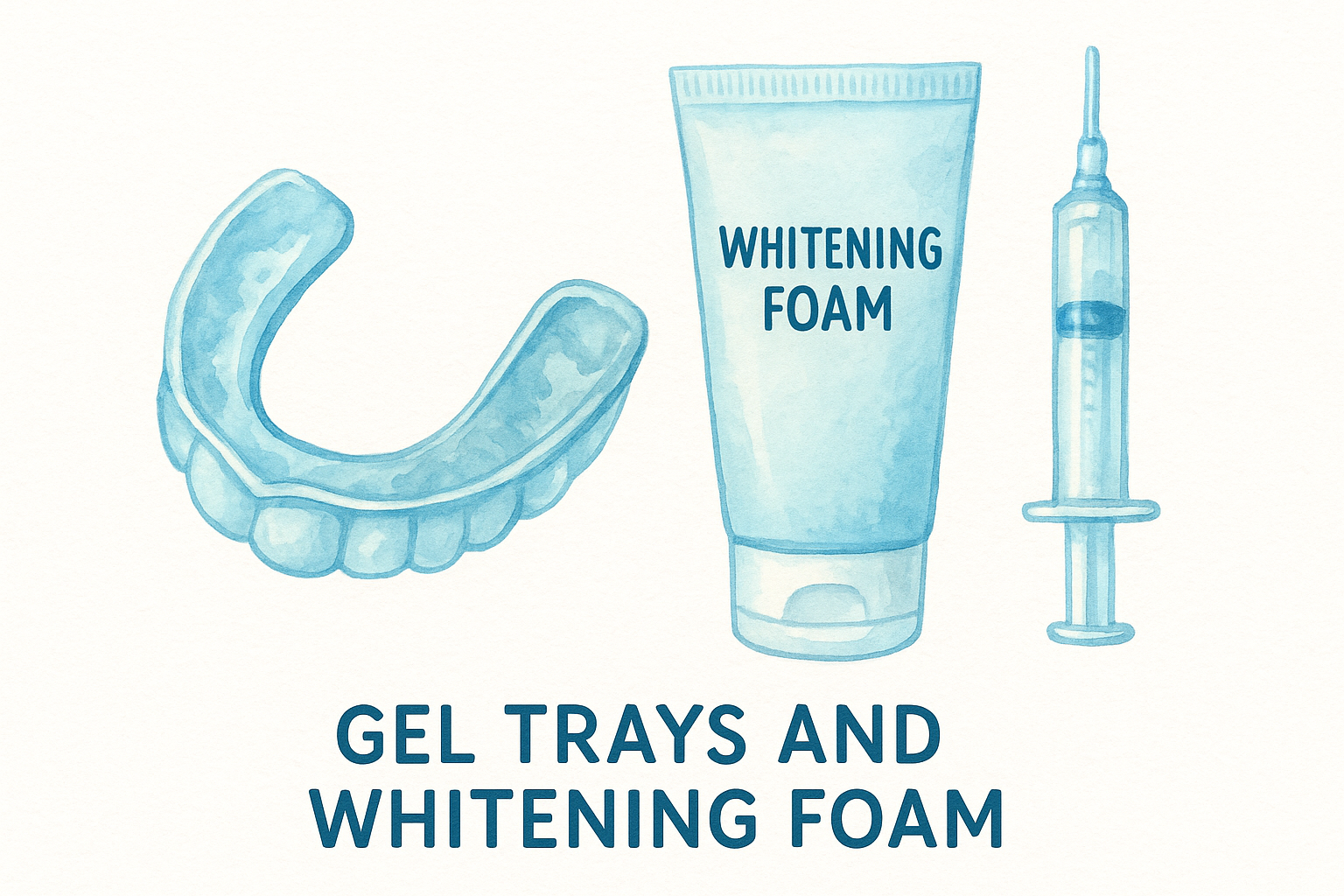
- Daily maintenance: foam-based whitening added to each brush session
- Full courses: gel trays every 2 to 3 months as a reset
How to avoid sensitivity and over-whitening
Sensitivity is the most common complaint with at-home whitening, and it almost always traces back to too much product applied too often. Knowing how often to whiten teeth at home is one part of the equation; knowing what to do between sessions keeps your enamel strong and your results comfortable.
Use a remineralizing toothpaste
After each whitening session, your enamel needs to rebuild. Fluoride or hydroxyapatite toothpastes fill the microscopic gaps that peroxide exposure creates, reducing sensitivity and extending the life of your results. Brush with one at least twice a day during any active whitening course.
Switch to a sensitivity-specific formula during and immediately after your whitening course. These products often contain potassium nitrate, which calms the nerve response inside your tooth and makes the days between sessions far more comfortable.
Space your sessions and reduce concentration
If you notice sharpness or aching after a session, add one or two extra rest days before your next treatment. Dropping to a lower peroxide concentration still gets you results on a slightly longer timeline, which beats cycling through irritation and recovery.
Pushing through sensitivity does not speed up results; it just deepens the damage.
When to pause and ask a dentist
At-home whitening works well for most people, but certain symptoms signal that you need to stop and get a professional opinion before continuing. Knowing when to pause is just as important as knowing how often to whiten teeth at home on any given schedule. Pushing through warning signs turns a cosmetic routine into a problem that takes real dental work to fix.
If you experience pain that lasts more than 48 hours after a session, stop all whitening immediately.
Signs that need professional attention
Several symptoms tell you clearly that your teeth or gums need more than an extra rest day between treatments. Watch for these specific warning signals:
- Persistent tooth pain lasting more than two days after a session
- White or sore patches on your gums directly after treatment
- Sharp sensitivity to temperature that was not present before you started
- Translucent or chalky edges on your front teeth
If any of these appear, stop your whitening routine and book an appointment with your dentist. A professional can assess whether you have enamel erosion, exposed dentin, or gum recession that makes continued at-home treatment unsafe. Resuming without that check risks compounding the damage significantly.
A simple plan you can follow
Here's the practical summary. Figure out which product you're using and match your frequency to its peroxide concentration. Run your initial whitening course as directed, then shift to maintenance sessions every one to three months to hold your results without stressing your enamel.
Between sessions, use a remineralizing or sensitivity toothpaste twice daily, and skip your next treatment if you notice any sharpness or gum soreness. Knowing how often to whiten teeth at home comes down to respecting what your specific product and your specific teeth can handle, not just following the fastest possible schedule.
Your oral health routine should cover more than whitening. If you grind your teeth at night or need to maintain your alignment, protecting your smile matters just as much as brightening it. Check out Remi's custom night guard to keep your teeth in good structural shape between whitening sessions.

