
 Guards + Retainers
 Custom Night Guard
 Retainer
 Emergency Order

 Whitening
 Whitening Kit
 Teeth Whitening Gel
 Dual-Action Foam
 Cleaning + Care
 Ultrasonic Cleaner Pro
 Water Flosser
 UV Toothbrush Sanitizer
 Deep Clean + Freshening Tablets
 Accessories
 Guard Removal Tool
 Replacement Nozzles
 Bundles

Most adults brush their teeth twice a day and call it done. But oral hygiene for adults goes well beyond just brushing, it includes habits that protect your enamel, gums, and jaw from long-term damage. Skipping even one part of a solid routine can lead to cavities, gum disease, or worsening teeth grinding that chips away at your smile over time.
At Remi, we work alongside dentists to create custom night guards and oral care products that fit into your daily routine without the dental office markup. We see firsthand how small, consistent habits make a huge difference, and how neglecting them creates problems that are expensive and painful to fix later.
This article breaks down five practical tips you can start using right now to keep your teeth and gums healthy. No fluff, no generic advice, just straightforward steps backed by dental professionals that actually move the needle on your oral health as an adult.
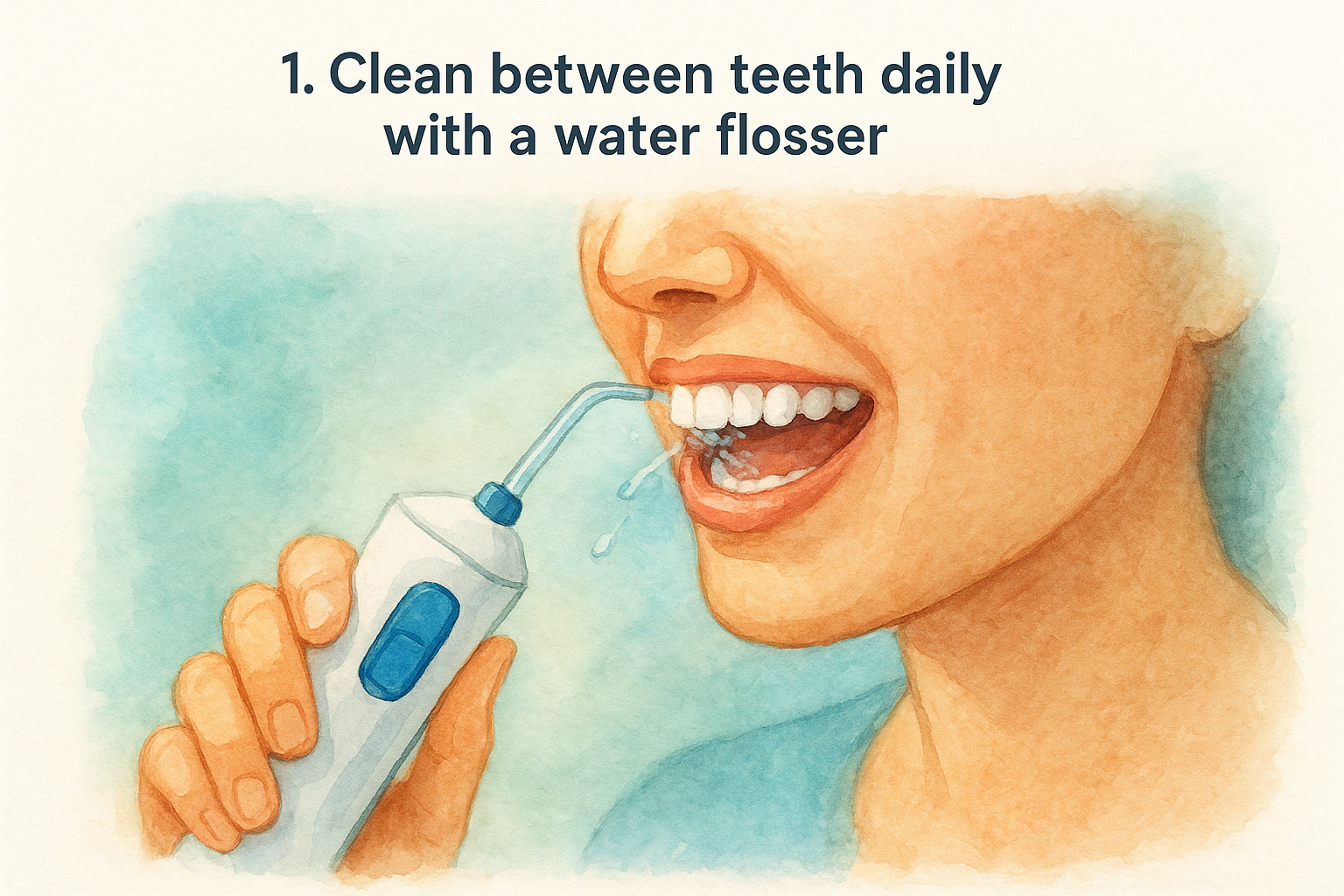
1. Clean between teeth daily with a water flosser
Brushing only cleans about 60% of your tooth surfaces, leaving plaque to build up between your teeth and along the gum line every single day. A water flosser uses a pressurized stream of water to flush out food particles and bacteria from those tight spaces, reaching areas where traditional string floss often fails to make consistent contact. Adding this one step is one of the most effective upgrades you can make to your oral hygiene for adults routine.
What to do
Use your water flosser once a day, ideally at night before bed so you clear out everything that accumulated throughout the day. Fill the reservoir with lukewarm water, lean over the sink, place the tip in your mouth, and work along the gum line and between each pair of teeth. Here is what you need to get started:
- A water flosser with adjustable pressure settings
- Fresh water in the reservoir before each use
- A replacement tip every 3 to 6 months
How to do it right
Start on the lowest pressure setting if you are new to water flossing, then increase gradually as your gums adjust over the first week or two. Aim the tip at a 90-degree angle to the gum line and pause briefly between each tooth gap to let the water flush the space fully, moving from back to front on both upper and lower teeth.
Consistent daily use reduces gingivitis and gum bleeding more effectively than skipping interdental cleaning altogether, according to clinical research.
Mistakes to avoid
Many people aim directly at the tooth surface instead of the gum line, which misses the exact spot where bacteria accumulate and cause damage over time. Another common error is using water that is too cold, which irritates sensitive gums and makes the experience uncomfortable enough that you abandon the habit entirely.
- Skipping the back molars
- Jumping straight to high pressure settings
- Reusing an old, worn flosser tip
When to talk to a dentist
If your gums bleed consistently after a full week of daily water flossing, that points to underlying inflammation that needs professional evaluation rather than just more flossing. You should also book an appointment if you notice persistent bad breath even after thorough cleaning, since that can signal an infection or gum disease that a water flosser alone cannot treat.
2. Brush twice daily with fluoride and good technique
Brushing is the foundation of any solid oral hygiene for adults routine, but doing it incorrectly still leaves plaque behind. You need the right toothpaste and technique working together to actually protect your enamel and gum line every day.
What to do
Brush your teeth twice a day for two full minutes each session, once in the morning and once before bed. Use a fluoride toothpaste with at least 1,000 ppm fluoride, which strengthens enamel and fights cavity-causing bacteria. Here is what to have on hand:
- A soft-bristle toothbrush replaced every three months
- Fluoride toothpaste suited to your sensitivity level
- A timer or electric brush with a built-in two-minute setting
How to do it right
Hold your toothbrush at a 45-degree angle to the gum line and use short, circular strokes rather than long scrubbing motions. Spend 30 seconds on each quadrant of your mouth to ensure even coverage across all surfaces, including the inner faces of your back teeth.
Brushing immediately after consuming acidic food or drinks softens enamel, so wait at least 30 minutes before you brush.
Mistakes to avoid
Pressing too hard while brushing wears down enamel and gum tissue over time rather than cleaning more effectively. Skipping your tongue and inner cheek surfaces also leaves bacteria behind that contribute to bad breath and plaque buildup.
When to talk to a dentist
If you notice tooth sensitivity that gets worse despite brushing consistently twice daily, that signals possible enamel erosion or gum recession. Bleeding gums that do not improve after two weeks of proper brushing technique also warrant a professional evaluation.
3. Limit sugar and acid to prevent cavities
Sugar and acid are two of the biggest threats to your teeth as an adult. Every time you consume sugary or acidic foods, bacteria in your mouth produce acid that attacks your enamel for up to 20 minutes per exposure. Cutting down on these exposures is one of the most impactful changes you can make to your oral hygiene for adults routine.
What to do
Cut back on sugary drinks and snacks between meals, since frequent snacking keeps your enamel under repeated acid attack throughout the day. Drink plain water consistently to rinse your mouth and help neutralize acid between meals.
- Swap soda and juice for water or unsweetened drinks
- Eat sweets as part of a meal rather than as standalone snacks
- Rinse your mouth with water immediately after consuming acidic foods
How to do it right
Timing matters more than most people realize. Eating acidic foods like citrus or vinegar-based dressings alongside a full meal lets your saliva buffer the acid rather than facing concentrated exposure on its own.
Saliva neutralizes acid and helps remineralize enamel, so pairing acidic foods with meals rather than eating them alone significantly reduces your cavity risk.
Mistakes to avoid
Sipping sugary or acidic drinks slowly over hours is worse than drinking them quickly, because prolonged exposure gives bacteria more time to erode enamel. Avoid these additional missteps:
- Brushing immediately after acidic foods, which scrubs away softened enamel
- Assuming diet drinks are safe, since carbonated water and diet soda are still acidic
When to talk to a dentist
Book an appointment if you notice white spots or small pits forming on your teeth, since those are early signs of enamel erosion. Also flag these to your dentist:
- Increased sensitivity to sweet or cold foods that is getting worse
- Visible changes in tooth color or texture after dietary shifts
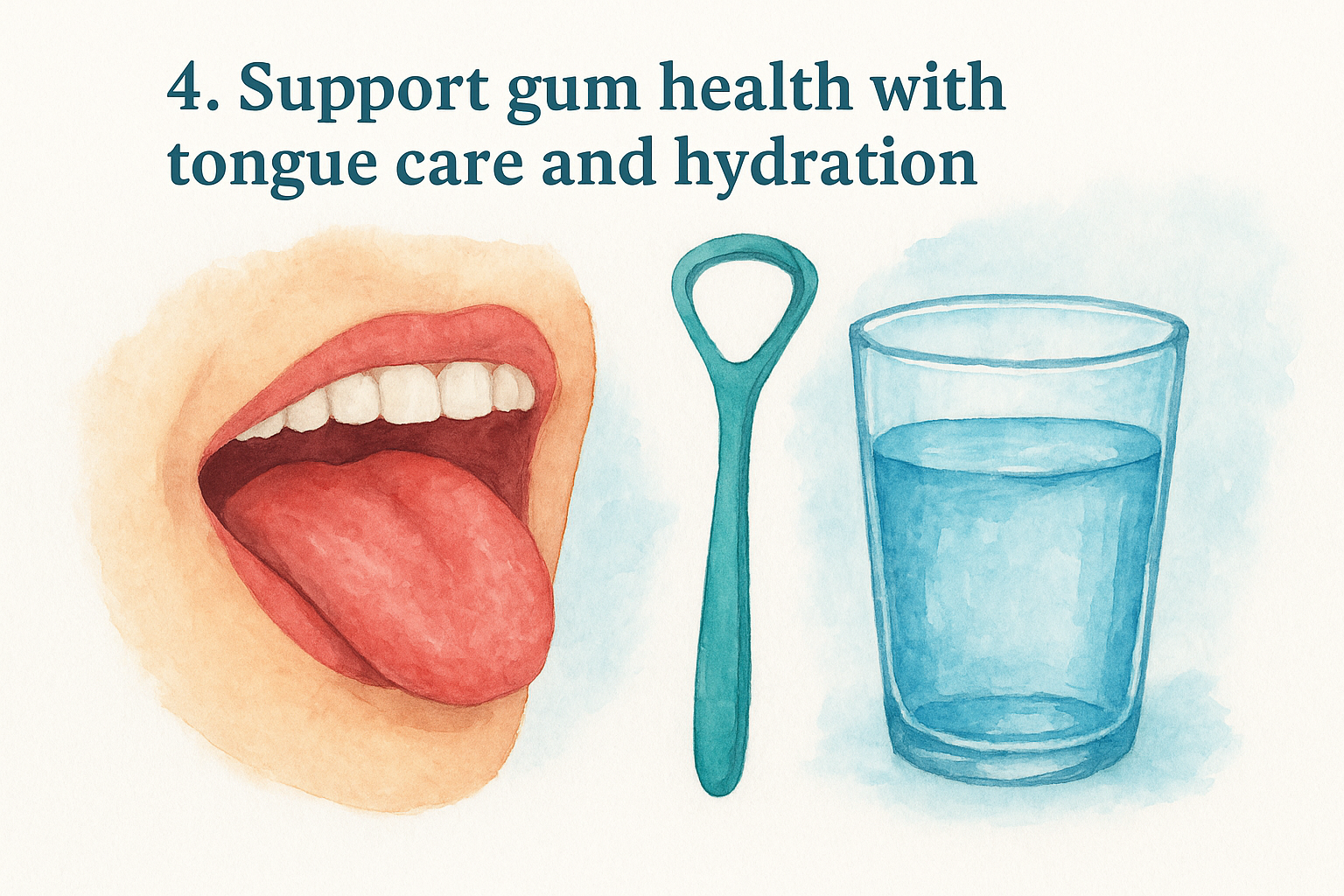
4. Support gum health with tongue care and hydration
Most people focus their oral hygiene for adults routine entirely on teeth and forget that your gums and tongue harbor bacteria that fuel gum disease and bad breath. Staying hydrated and cleaning your tongue daily keeps bacterial load down and supports the gum tissue that holds your teeth in place.
What to do
Clean your tongue every time you brush using either a dedicated tongue scraper or the back of your toothbrush. Drink at least eight cups of water per day to keep saliva production steady, since saliva is your mouth's natural defense against harmful bacteria.
- Use a tongue scraper from front to back, rinsing between each pass
- Sip water throughout the day rather than drinking large amounts at once
- Avoid mouth breathing when possible, since it dries out gum tissue quickly
How to do it right
Apply light, even pressure when scraping your tongue rather than pressing hard, which irritates tissue without removing more bacteria. Focus on the back third of the tongue, where the highest concentration of odor-causing bacteria tends to accumulate.
Dry mouth reduces saliva flow, which lets bacteria multiply faster and increases your risk of both gum disease and cavities.
Mistakes to avoid
Skipping your tongue entirely leaves a significant bacterial source untouched in your mouth each day. Relying on mouthwash as a substitute for hydration also falls short, since alcohol-based rinses can dry out oral tissue over time.
When to talk to a dentist
See your dentist if your gums look swollen, red, or pull away from your teeth despite consistent tongue care and hydration. Also flag persistent dry mouth that does not improve with increased water intake, since that may indicate a medication side effect or underlying condition.
5. Get dental checkups and act on warning signs
No home routine fully replaces what a dentist catches during a professional cleaning and exam. Tartar buildup, early-stage gum disease, and hairline cracks are things you cannot spot or treat on your own, no matter how solid your oral hygiene for adults routine is.
What to do
Schedule a dental checkup every six months as a baseline, or every three to four months if you have a history of gum disease or heavy plaque buildup. Between visits, track changes in your mouth so you can report them accurately.
- Note any new tooth sensitivity or pain
- Watch for changes in gum color, texture, or swelling
- Flag any sores that do not heal within two weeks
How to do it right
Show up to appointments with a list of any symptoms you have noticed since your last visit, even ones that seem minor. Your dentist gets a clearer picture when you report early changes rather than waiting for pain to force the issue.
Catching gum disease in its early stage, called gingivitis, is fully reversible with professional treatment and improved home care.
Mistakes to avoid
Skipping checkups because your teeth feel fine is the most common mistake adults make. Pain is usually a late signal, not an early one. Also avoid self-diagnosing based on online searches and delaying a visit when something looks or feels off.
When to talk to a dentist
Call your dentist promptly if you notice loose teeth, persistent jaw pain, or a sudden increase in tooth sensitivity. These symptoms point to conditions that get significantly harder and more expensive to treat the longer you wait.
Quick recap
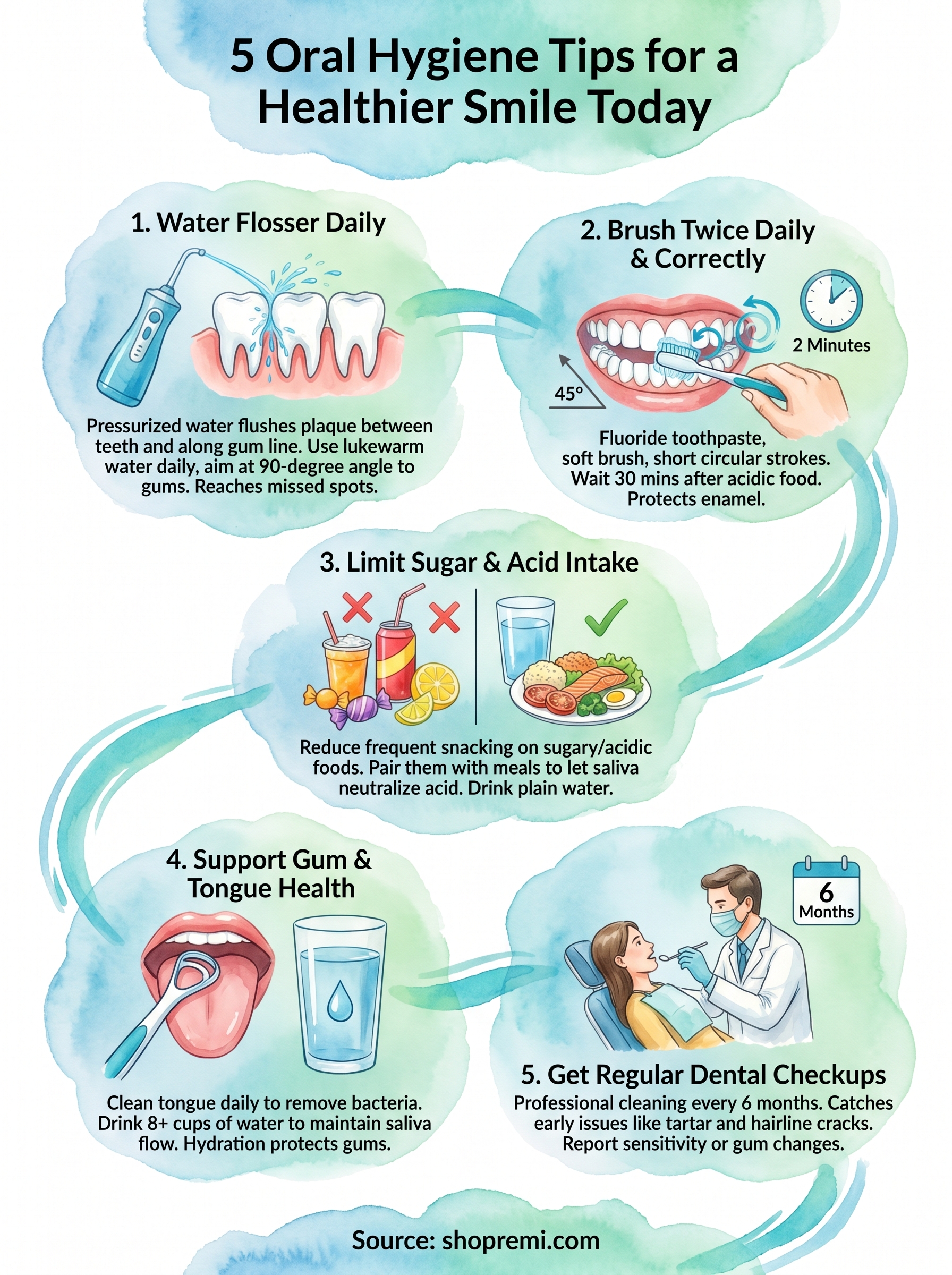
Building a strong oral hygiene for adults routine comes down to five consistent habits. Clean between your teeth daily with a water flosser to reach the 40% of tooth surfaces a toothbrush misses. Brush twice a day for two full minutes with fluoride toothpaste and proper technique. Limit sugar and acid exposure by timing your intake around meals rather than snacking throughout the day. Support your gum health by scraping your tongue and drinking enough water to keep saliva production steady. Finally, see your dentist every six months and report warning signs early rather than waiting for pain.
These steps work together. Skipping any one of them creates a gap that the others cannot cover. If teeth grinding or jaw clenching is part of your situation, a custom-fitted night guard is a practical next step to protect the progress you make with your daily routine. Check out Remi's custom night guard to get started.

