
 Guards + Retainers
 Custom Night Guard
 Retainer
 Emergency Order

 Whitening
 Whitening Kit
 Teeth Whitening Gel
 Dual-Action Foam
 Cleaning + Care
 Ultrasonic Cleaner Pro
 Water Flosser
 UV Toothbrush Sanitizer
 Deep Clean + Freshening Tablets
 Accessories
 Guard Removal Tool
 Replacement Nozzles
 Bundles

You started wearing a night guard to protect your teeth from grinding, so the last thing you want is to find out it's doing more harm than good. The question "can night guards damage teeth" comes up a lot, and it's a fair one. Between poorly fitting drugstore options and outdated advice floating around online, there's genuine confusion about what's safe and what isn't.
Here's the short answer: a well-made, properly fitted night guard shouldn't damage your teeth. But a bad one absolutely can. Ill-fitting guards can cause bite changes, tooth shifting, jaw pain, and even trap bacteria against your enamel. The difference almost always comes down to fit and quality, which is exactly why we built Remi around custom-fitted night guards made from at-home impressions and crafted with input from dental professionals.
In this article, we'll break down the real risks of night guards, separate fact from myth, and give you practical safety tips to make sure your guard is actually doing its job. Whether you already wear one or you're considering getting your first, this guide will help you make a confident decision about protecting your teeth, without second-guessing whether your night guard is part of the problem.
What a night guard does and how it can go wrong
A night guard is a removable dental appliance that sits between your upper and lower teeth while you sleep. Its main job is to absorb and distribute the force of grinding and clenching, so your enamel takes less direct impact. Think of it as a shock absorber for your jaw: instead of tooth-on-tooth contact, you get tooth-on-guard contact, which is far less destructive over time.
How a night guard is supposed to work
When you grind your teeth (a condition called bruxism), the pressure can wear down enamel, crack teeth, and strain the muscles around your jaw. A properly fitted night guard creates a physical barrier between your upper and lower teeth, reducing that direct pressure. It also helps stabilize your bite position so your jaw muscles aren't working overtime through the night. The result: less wear on your teeth, less morning soreness, and better long-term protection for your enamel.
A night guard only works as intended when it fits your teeth precisely. Even small fit issues can shift how force gets distributed across your mouth.
Fit matters because your teeth and jaw move in specific, individual patterns. A guard that matches your exact dental anatomy will move with those patterns rather than against them, which is why impression-based custom guards outperform generic alternatives in both comfort and protective function.
Where things start to go wrong
Here is where the question "can night guards damage teeth" becomes real and worth taking seriously. Most problems trace back to one source: a guard that doesn't fit correctly. A guard that sits too high on one side, for example, forces your bite out of alignment each night. Over weeks and months, that repeated misalignment can shift teeth, strain jaw joints, and create the exact kind of dental damage you were trying to avoid.
Over-the-counter boil-and-bite guards are the most common culprit. These guards are designed to fit a generic dental shape, not your specific teeth. They often sit unevenly, trap moisture and bacteria against your enamel, or apply uneven pressure that encourages unwanted tooth movement. A custom-fitted guard, made from an impression of your actual teeth, eliminates most of these risks by giving your jaw a precise, stable surface to rest against all night.
When a night guard can damage teeth
Night guards can damage teeth in specific, identifiable situations. The most common involve poor fit, inadequate material, or skipping a consistent care routine. Understanding exactly when a guard crosses from protective to harmful helps you spot warning signs before they turn into real dental problems.
Tooth shifting and bite changes
A guard that doesn't sit flush against your teeth can apply uneven pressure across your dental arch each night. Over time, that pressure can push teeth out of position, especially your front teeth, which are more vulnerable to movement. This is one of the most documented ways that ill-fitting night guards cause damage rather than prevent it.
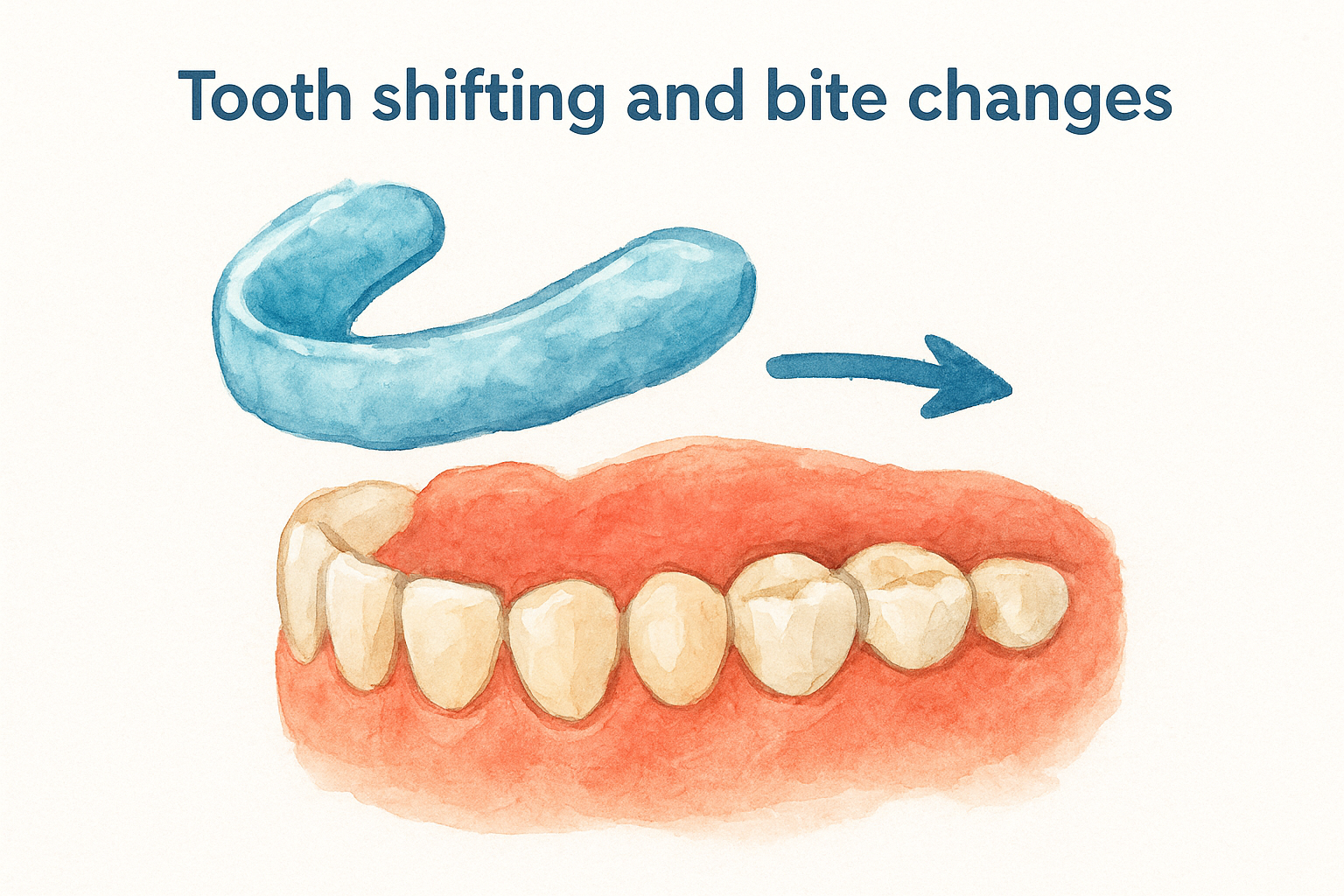
Repositioning pressure from a misaligned guard works slowly, but months of nightly wear can cause measurable tooth shifting.
Boil-and-bite guards are particularly prone to this problem because they can't account for your specific bite mechanics. A guard that shifts even slightly during sleep will repeatedly contact your teeth at the wrong angle, creating force patterns your jaw was never designed to handle.
Bacteria buildup and enamel erosion
When you wear a guard, you're holding a plastic surface tight against your enamel for hours at a time. If that guard isn't cleaned consistently, it becomes a breeding ground for bacteria and can trap food particles and acid directly against your teeth.
That prolonged contact is enough to accelerate enamel erosion and increase your cavity risk significantly, which is why people asking "can night guards damage teeth" often find poor hygiene habits at the root of their problems rather than the guard itself.
How to prevent problems and wear it safely
Most scenarios where night guards can damage teeth are preventable. The two biggest factors in your favor are starting with a properly fitted guard and keeping up with basic maintenance from the first night you wear it. Get those two things right and the risk of damage drops significantly.
Get a custom-fitted guard
A custom guard made from an impression of your actual teeth is the single most effective step you can take. Generic guards force your jaw into a position that doesn't match your specific bite, which is exactly how uneven pressure and tooth movement start. A custom guard distributes force according to your dental anatomy rather than a one-size-fits-all mold that wasn't designed for you.
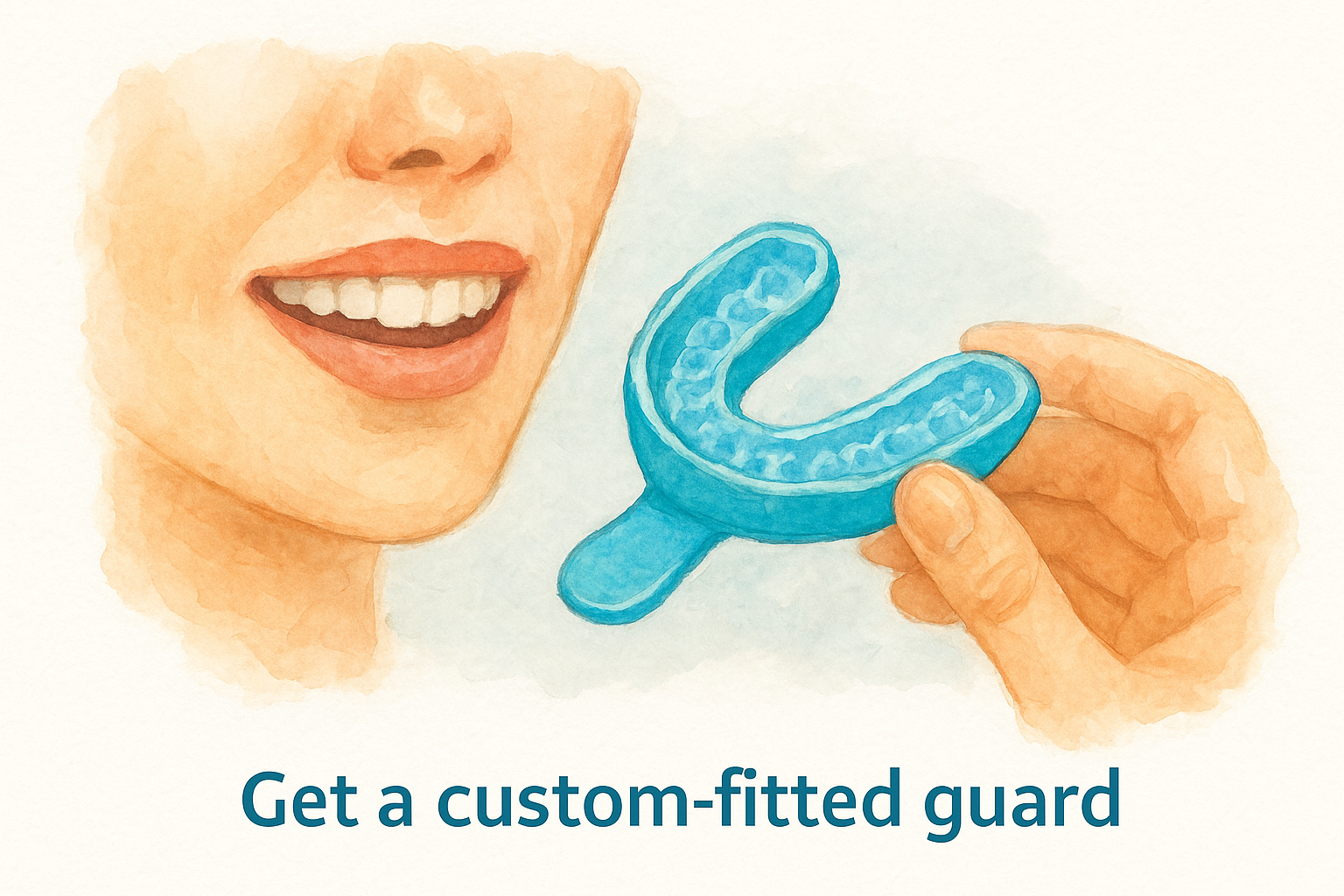
Getting your guard made from a real impression eliminates most of the structural problems that lead to bite changes and unwanted tooth shifting over time.
When you use an at-home impression kit from a reputable provider, the lab fabricates your guard to match your exact dental arch. That precision matters every single night you wear it.
Wear it correctly every night
Seating your guard fully against your teeth before you sleep is just as important as having the right fit. If it rocks, shifts, or feels uneven in your mouth, it's not positioned correctly. Over time, a guard that moves around will apply pressure at the wrong angles, creating the kind of gradual damage you were trying to prevent in the first place.
Check in with how your jaw feels in the morning. Soreness, tension, or changes in how your teeth meet are early signals worth paying attention to before they develop into a bigger problem.
How to tell your night guard is causing trouble
Catching a problem early is far easier than fixing damage after months of continued wear. If your night guard is causing trouble, your mouth will usually give you clear signals before anything becomes permanent. The key is knowing what to look for and taking those signals seriously rather than assuming discomfort is just part of adjusting.
Physical signs in your mouth
The most direct way to tell if your guard is creating problems is to look at and feel your teeth regularly. Visible wear on your enamel, new sensitivity when drinking cold or hot beverages, or cracking along tooth edges are all signs that something is off. Gum soreness or irritation along the edges of your guard is another signal worth investigating, especially if it persists beyond the first week or two of consistent wear.
If your teeth feel sensitive in the morning but not at other points in the day, that pattern points directly to your guard as the source.
Changes in how your bite feels
Your bite is one of the clearest indicators of whether a night guard can damage teeth over time. If your upper and lower teeth no longer meet the way they used to, or you notice you're biting down more heavily on one side, your guard may be gradually shifting your tooth position. Watch for these specific warning signs:
- Jaw soreness that doesn't ease after the first few weeks
- Morning headaches near your temples
- Clicking or popping in your jaw joint
- Uneven wear on one side of your guard
Any combination of these signals means it's time to reassess the fit of your guard before the issue progresses.
Night guard hygiene and cavity prevention
One of the most overlooked ways night guards can damage teeth has nothing to do with fit or pressure. It comes down to hygiene. A guard worn night after night without proper cleaning becomes a delivery system for bacteria, food debris, and acid held tight against your enamel for hours. Keeping that surface clean is just as important as having the right fit.
Clean your guard every morning
Rinse your guard with cool water immediately after removing it each morning. Then use a soft-bristle toothbrush and a small amount of gentle, non-abrasive soap to scrub both surfaces before letting it air dry completely. Skipping this step lets bacteria multiply on the guard's surface overnight, and wearing it again without cleaning means you're placing a contaminated surface directly against your teeth for another eight hours.
Never use hot water on your night guard. Heat warps the material and can ruin the precise fit your guard was made to maintain.
Protect your enamel before you put it in
Brushing your teeth before wearing your guard removes the food particles and acid that get sealed against your enamel overnight. Plaque sitting under a night guard has no exposure to saliva, which normally helps neutralize acids and wash away bacteria. That enclosed environment accelerates decay faster than plaque in open contact with your mouth. For a deeper clean, products like an ultrasonic cleaner break down buildup inside the guard material itself, reducing the bacterial load you can't reach with a brush alone.
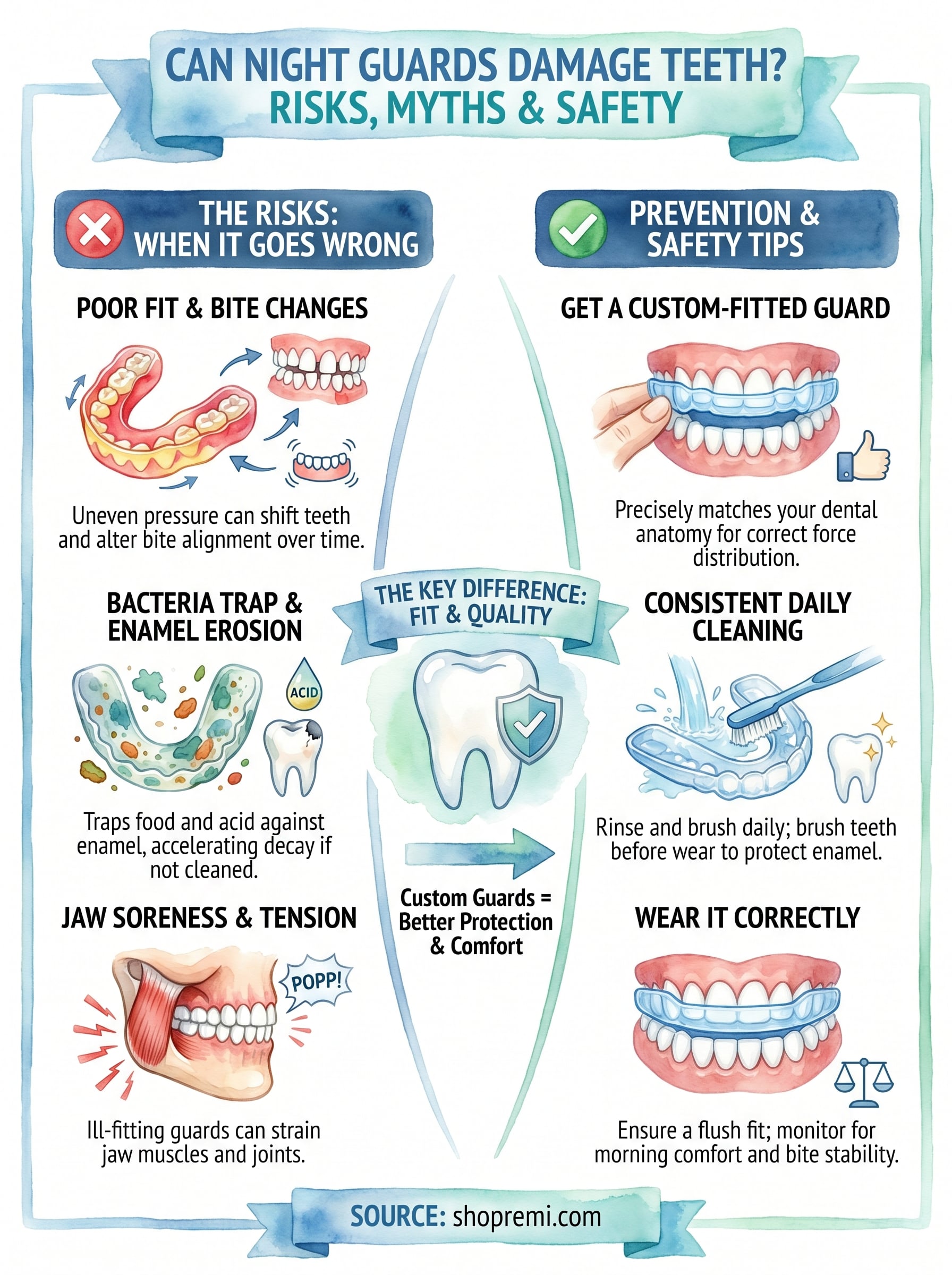
Next steps for a safer night guard
The question can night guards damage teeth has a clear answer: yes, but only when the fit is wrong, the material is low quality, or the cleaning routine is inconsistent. Every risk covered in this article comes back to those three controllable factors. A guard that matches your exact dental anatomy, worn correctly and cleaned every morning, protects your teeth the way it was designed to.
Your most important next step is getting a guard that was actually made for your mouth. A generic boil-and-bite guard introduces the exact pressure and alignment problems that lead to tooth shifting, jaw soreness, and enamel damage over time. A custom guard removes that risk from the start. Remi's custom night guard is made from a real impression of your teeth, crafted with dental-grade materials, and costs a fraction of what you'd pay at a dental office.

