
 Guards + Retainers
 Custom Night Guard
 Retainer
 Emergency Order

 Whitening
 Whitening Kit
 Teeth Whitening Gel
 Dual-Action Foam
 Cleaning + Care
 Ultrasonic Cleaner Pro
 Water Flosser
 UV Toothbrush Sanitizer
 Deep Clean + Freshening Tablets
 Accessories
 Guard Removal Tool
 Replacement Nozzles
 Bundles

You wake up with a sore jaw, a dull headache, or teeth that feel like they've been through a workout overnight. Something is clearly going on, but is it jaw clenching vs. teeth grinding, and does the distinction even matter? The short answer: yes, it does. While both fall under the umbrella of bruxism, they involve different jaw movements and can affect your teeth, muscles, and sleep in distinct ways.
Clenching means you're pressing your upper and lower teeth together with force. Grinding means you're sliding them back and forth against each other. Some people do one, some do both, and many have no idea it's happening until the damage shows up. Understanding which habit you're dealing with is the first step toward protecting your teeth and finding real relief.
This article breaks down the causes, symptoms, and key differences between clenching and grinding, plus practical fixes that actually work, including how a custom-fitted night guard from Remi can help shield your teeth from both.
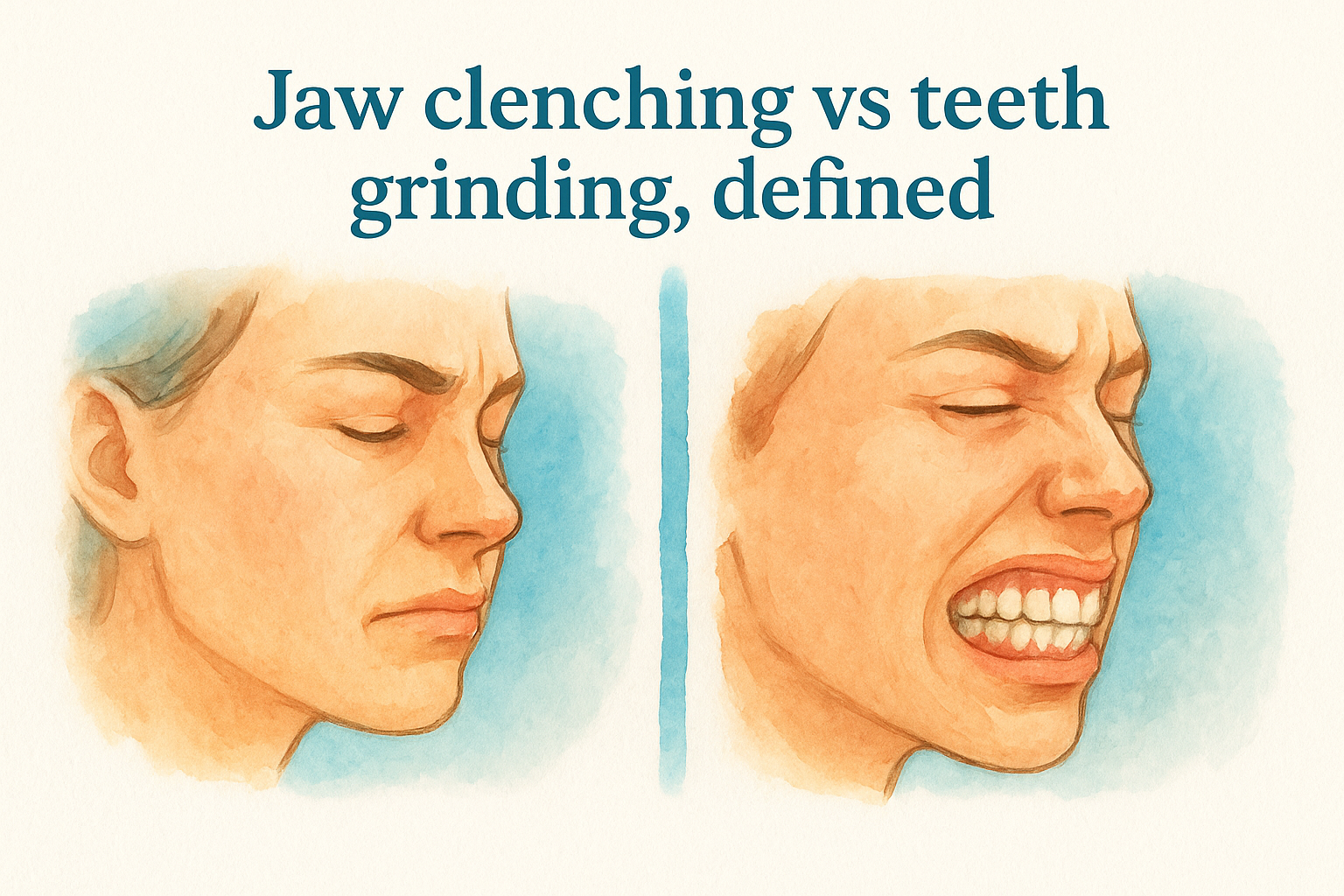
Jaw clenching vs teeth grinding, defined
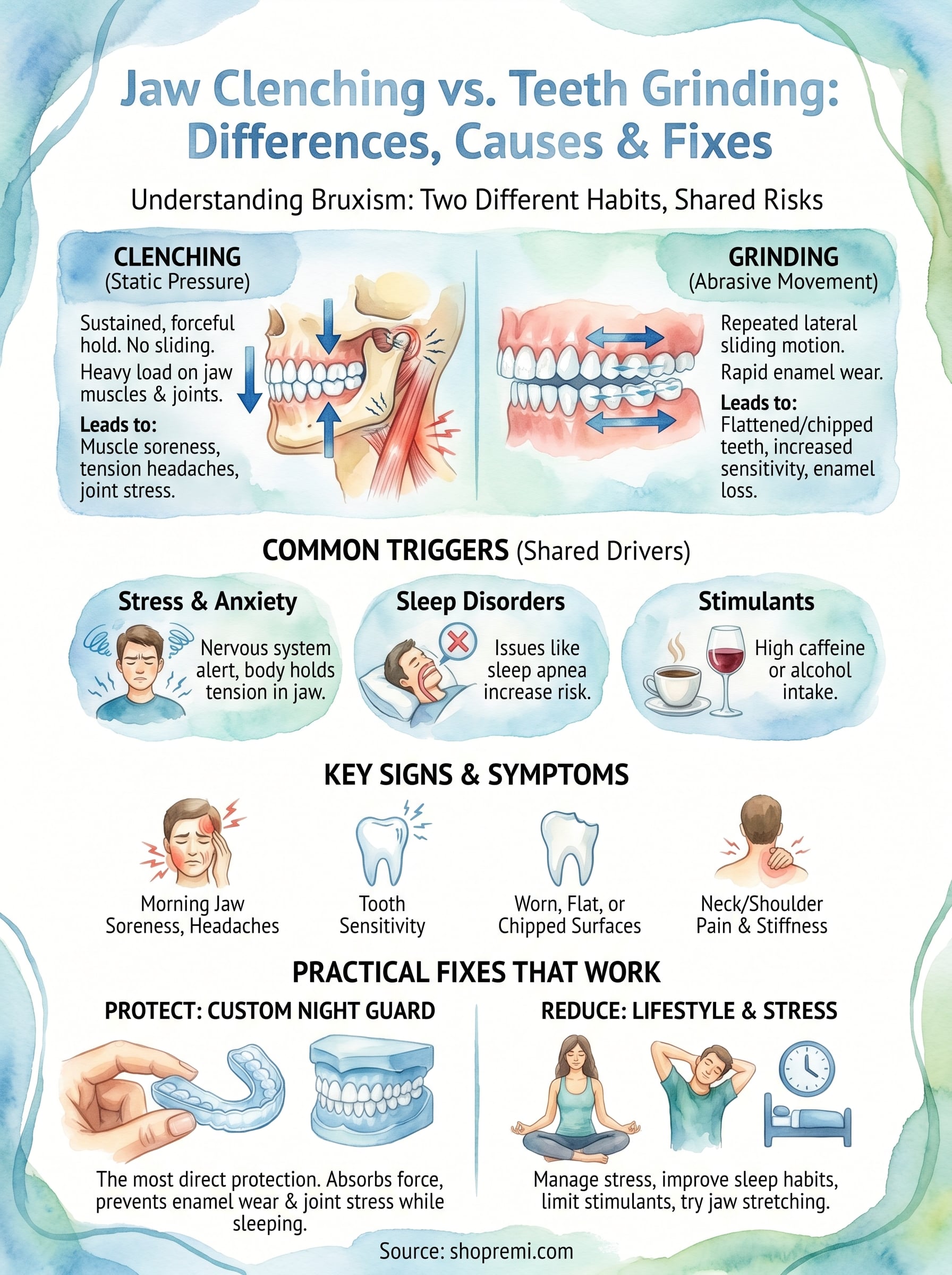
When you break down jaw clenching vs. teeth grinding, the core difference comes down to movement. Clenching is a sustained, static hold where your upper and lower teeth press firmly together without any sliding motion. Grinding, by contrast, involves a lateral or back-and-forth movement of the teeth against each other. Both habits fall under the bruxism umbrella, but your jaw muscles, tooth surfaces, and joints experience them in distinct ways.
What jaw clenching looks like
Clenching happens when you hold your teeth together with force for an extended period without moving your jaw. You might do it while concentrating at work, sitting in traffic, or sleeping without ever realizing it. The pressure you generate during clenching can be significant, sometimes exceeding the bite force your jaw normally produces while chewing. Because there's no sliding motion, tooth surfaces don't wear down as fast, but the muscles around your jaw, temples, and neck absorb a heavy load and often respond with soreness and tension headaches.
Common signs that clenching is the main issue include:
- Jaw muscle tightness or fatigue in the morning
- Tenderness around the temples or ears
- A feeling of tooth pressure without visible wear
Clenching concentrates stress on your jaw joints and surrounding muscles rather than directly on enamel, but the long-term damage to those structures is just as real.
What teeth grinding looks like
Grinding involves repeated abrasive movement of the upper and lower teeth rubbing against each other. Because that motion is constant and forceful, enamel wears down noticeably faster with grinding than with clenching alone. You might spot flat spots on your molars, increased sensitivity to hot or cold, or chipped edges on your front teeth.
Most grinding occurs during sleep, which makes it easy to miss in the early stages. A bed partner often hears the sound first. Some people also grind during the day as a stress response, usually without consciously registering that it's happening at all.
Why it happens and who it affects
Both clenching and grinding share a common set of triggers, even though they feel different in practice. Understanding what drives jaw clenching vs. teeth grinding helps you figure out whether your habits are rooted in stress, sleep disorders, or lifestyle factors. The causes often overlap, which is why many people end up doing both without realizing it.
What triggers bruxism
Stress and anxiety are the most widely cited drivers of both clenching and grinding. When your nervous system stays on high alert, your jaw muscles tend to follow. Your body holds tension somewhere, and for many people, that place is the jaw. Sleep disorders like obstructive sleep apnea also raise the risk significantly, as do high caffeine intake, alcohol consumption, and certain medications, particularly antidepressants.
Research consistently links high stress levels to increased bruxism activity, both during sleep and waking hours.
Who is most at risk
Bruxism affects people of all ages, but adults between 25 and 44 tend to report it most frequently. Children can also grind their teeth, though many outgrow the habit. If you work a high-pressure job, sleep poorly, or use stimulants regularly, your risk goes up. Genetics may also play a role, meaning a family history of bruxism raises your own likelihood.
Common risk factors include:
- Chronic stress or anxiety
- Poor or disrupted sleep
- High caffeine or alcohol intake
- Certain medications, including SSRIs
- Family history of bruxism
Signs and risks to watch for
Knowing the signs of jaw clenching vs. teeth grinding helps you catch the problem before serious damage sets in. Many people live with symptoms for months without connecting them to bruxism because the warning signs often show up in unexpected places, like your neck, your ears, or your sensitivity to cold drinks.
Symptoms to notice
Your body gives you clear signals when bruxism is active. Morning jaw soreness and tension headaches that start near your temples are two of the most common. You might also notice tooth sensitivity that wasn't there before, flattened or chipped tooth edges, or a clicking sensation in your jaw joint when you open your mouth wide.
Common symptoms include:
- Sore or tired jaw muscles upon waking
- Dull headaches around the temples or ears
- Increased tooth sensitivity to temperature
- Worn, flat, or chipped tooth surfaces
- Tightness or pain in your neck and shoulders
Long-term risks if you ignore it
Leaving bruxism untreated puts real stress on your teeth and jaw over time. Enamel loss is permanent, meaning once grinding wears it down, it does not grow back. Repeated clenching can also overload your temporomandibular joint (TMJ), leading to chronic jaw pain, limited mouth opening, and costly restorative dental work down the line.
Addressing bruxism early is significantly cheaper and less invasive than treating the structural damage it causes.
How dentists diagnose it
If you suspect bruxism, a dentist is your best starting point. Most diagnoses begin with a clinical examination and a conversation about your symptoms, sleep habits, and stress levels. You don't need specialized equipment to confirm a diagnosis in most cases, because the physical signs of jaw clenching vs teeth grinding are usually visible and measurable during a standard dental visit.
What the examination covers
Your dentist will look at your tooth surfaces for signs of wear, flattening, or chipping that suggest grinding activity. They will also press on your jaw muscles and joints to check for tenderness, and ask you to open and close your mouth to evaluate joint movement. If you clench more than you grind, the wear pattern on your teeth may be minimal, but muscle tenderness and jaw fatigue tend to be more pronounced and will still show up clearly during the exam.
Tooth wear patterns give dentists a reliable window into how long bruxism has been active and which habit is dominant.
When additional testing helps
In some cases, your dentist may refer you for a sleep study if they suspect an underlying sleep disorder like sleep apnea is driving your bruxism. Sleep studies can record jaw muscle activity overnight and give a clearer picture of when and how often episodes occur. Your dentist might also take dental X-rays to check for bone changes around your tooth roots or jaw joint that extended clenching or grinding can cause over time.
Fixes that actually help
Treating jaw clenching vs. teeth grinding effectively means tackling the problem on two separate fronts: protecting your teeth from physical damage while also reducing the habits and triggers that keep bruxism active. No single fix works for everyone, but combining a few targeted approaches gives you the best chance at lasting relief.
Protect your teeth with a night guard
A custom-fitted night guard is the most direct way to shield your enamel and jaw joints from the force of clenching and grinding while you sleep. Unlike store-bought options, a custom guard fits precisely over your teeth, distributing pressure evenly and keeping your upper and lower teeth separated. Remi's custom night guards are made from professional-grade materials using an at-home impression kit, giving you a dentist-quality solution without the dental office price tag.
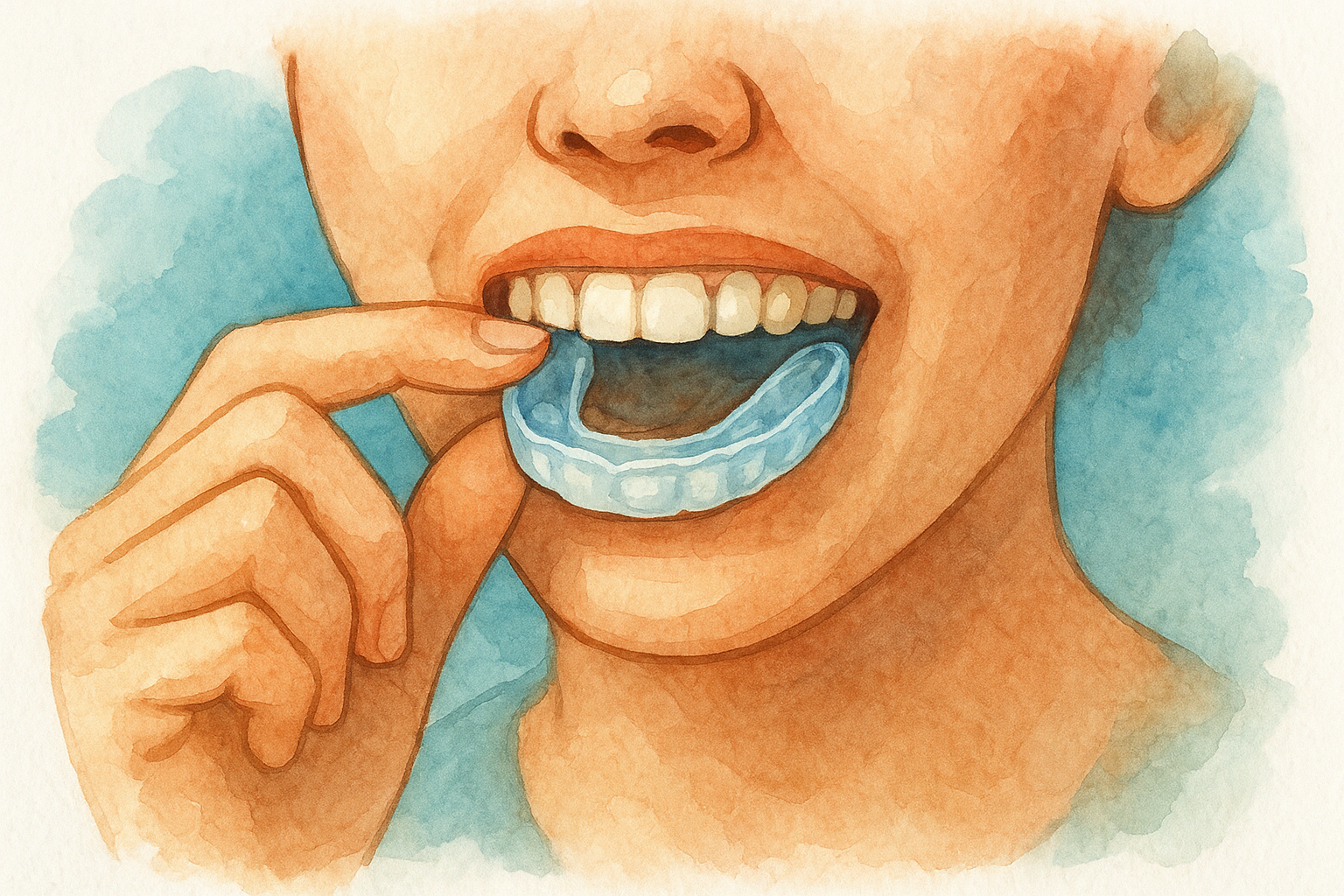
A well-fitted night guard does not stop bruxism, but it absorbs the mechanical load so your teeth and joints do not have to.
Reduce the triggers driving it
Stress management is the most impactful lifestyle change you can make if anxiety is fueling your clenching or grinding. Consistent sleep, cutting back on caffeine after midday, and limiting alcohol before bed all lower your baseline bruxism risk significantly.
Physical therapy and jaw stretching exercises can ease muscle tension built up from chronic clenching. If a medication is contributing to the habit, talk to your prescribing doctor about potential alternatives rather than stopping it without guidance.
Next steps
Now that you understand the difference between jaw clenching vs. teeth grinding, you have enough to take action without waiting for the damage to get worse. The most important move is also the most straightforward: protect your teeth tonight. A custom night guard sits between your upper and lower teeth, absorbs the force of clenching or grinding, and prevents the enamel loss and joint stress that build up silently over time.
Beyond the guard, pay attention to what drives your bruxism. Stress, poor sleep, and stimulant use are the three levers most people can adjust without a prescription or a specialist visit. Small, consistent changes in those areas compound over time. If your symptoms are severe or your jaw pain is interfering with daily life, bring your dentist into the conversation early. Start with the physical protection first, and take a look at Remi's custom night guards to get fitted from home.

