


When shopping for clear retainers, the material matters more than most people realize. Zendura retainer material has become one of the most recognized names in orthodontic thermoplastics, known for its durability and resistance to cracking. But what exactly makes it different from other retainer plastics on the market?
This article breaks down the technical specifications, key benefits, and practical considerations of Zendura material. Whether you're comparing retainer options or simply curious about what goes into a quality clear retainer, you'll find straightforward answers to help you make an informed decision.
At Remi, we craft custom clear removable retainers using professional-grade thermoplastic materials designed to maintain your teeth alignment comfortably and affordably. Understanding what makes certain retainer materials stand out helps you appreciate why material choice directly impacts how long your retainer lasts and how well it performs over time.
What Zendura retainer material is
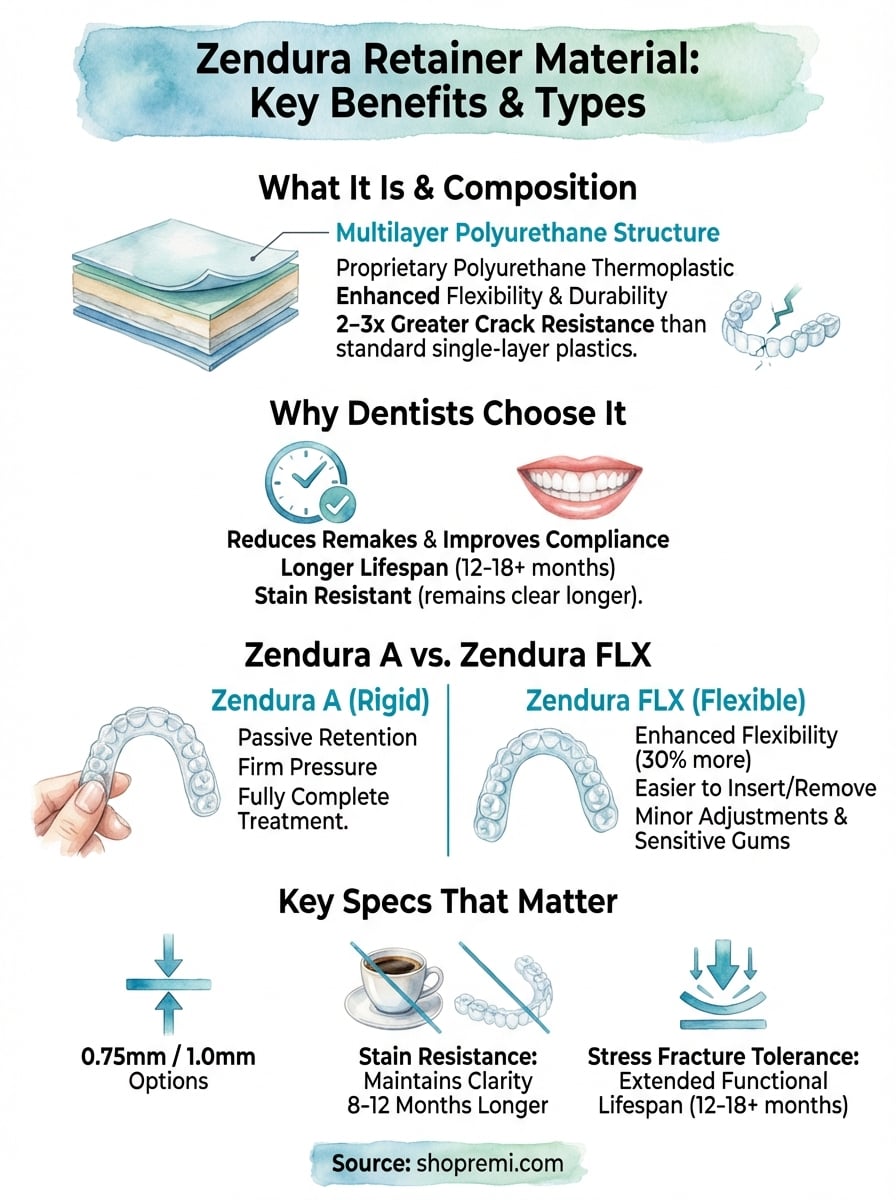
Zendura retainer material is a proprietary polyurethane thermoplastic developed specifically for orthodontic appliances like clear retainers and aligners. Bay Materials LLC manufactures this material using a multilayer sheet technology that creates a thermoplastic significantly stronger than standard single-layer alternatives. You'll find it used primarily in professional dental labs that fabricate custom clear retainers for patients maintaining their post-treatment alignment.
The core composition
The material consists of multiple layers of polyurethane bonded together during manufacturing, which gives it unique structural properties. Unlike traditional polypropylene or PETG materials commonly used in pharmacy retainers, Zendura's polyurethane base provides enhanced flexibility without sacrificing durability. This chemical composition resists stress cracking better than single-layer plastics, meaning your retainer can withstand repeated insertion and removal over months or years without developing visible fracture lines.
Polyurethane-based retainer materials like Zendura typically demonstrate 2-3 times greater resistance to cracking compared to standard thermoplastics used in over-the-counter options.
Manufacturing process
Dental labs shape zendura retainer material through a vacuum thermoforming process that molds heated sheets over your custom dental impression. The material softens at controlled temperatures, allowing technicians to precisely contour it around your tooth anatomy while maintaining consistent thickness throughout the appliance. Once cooled, the retainer holds its custom shape permanently, creating a snug fit that applies gentle pressure to keep your teeth in position.
The thermoforming technique preserves the multilayer structure throughout the retainer, ensuring you get the full strength benefits in the finished product. Labs typically use 0.75mm or 1.0mm thickness sheets depending on whether you need a light-duty retainer for passive retention or a more robust appliance for active tooth movement. This manufacturing flexibility lets your dentist or orthodontist specify exactly what your case requires.
Why dentists and labs use Zendura
Dental professionals choose zendura retainer material because it reduces remake rates and improves patient compliance, which directly impacts their practice efficiency. When your retainer lasts longer without cracking or yellowing, you schedule fewer emergency appointments for replacements. Labs appreciate that the material's consistent thermoforming behavior produces predictable results across different case types, minimizing waste and failed fabrications.
Durability that reduces remakes
The multilayer construction provides exceptional resistance to stress cracking at hinge points where traditional materials often fail first. You'll notice this difference most at the edges near your molars, where repeated flexing during insertion typically causes single-layer retainers to develop hairline fractures within six months. Zendura's structure distributes stress across multiple layers, extending the functional lifespan to 12-18 months or longer with proper care.
Retainer remakes account for approximately 15-20% of orthodontic lab work, with material failure being the leading cause for replacements within the first year.
Patient compliance benefits
Dentists report that patients wear their retainers more consistently when the appliances remain clear and comfortable over time. The material resists staining from coffee and tea better than standard thermoplastics, maintaining its transparency longer. This aesthetic stability matters because you're more likely to wear your retainer as prescribed when it doesn't develop the yellowed appearance that makes many people self-conscious about daytime wear.
Zendura A vs Zendura FLX: key differences
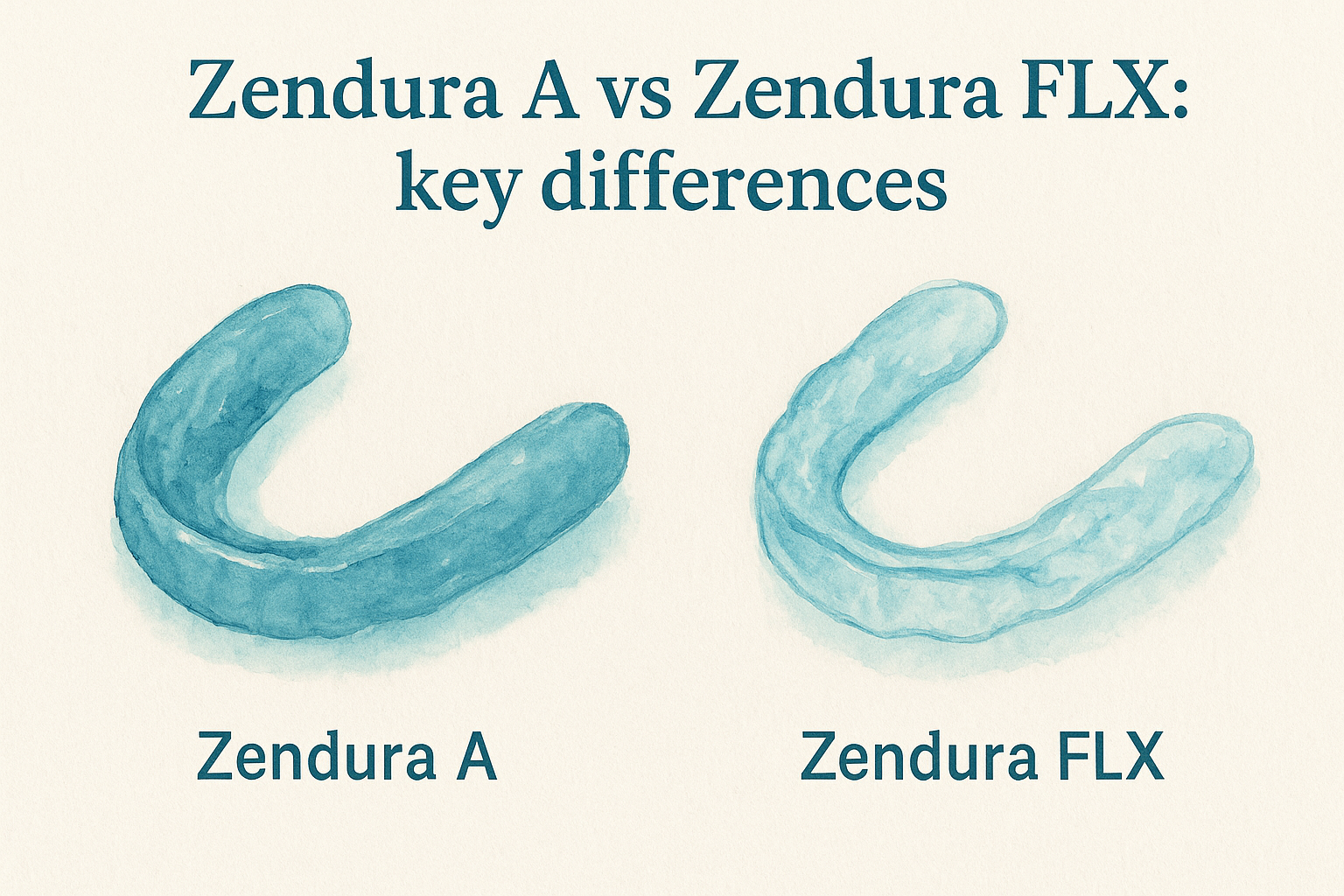
Bay Materials produces two distinct versions of zendura retainer material, each engineered for specific clinical applications. Zendura A represents the original formulation designed primarily for passive retention, while Zendura FLX offers enhanced flexibility for cases requiring more active tooth movement. Understanding which version your dentist selects depends on whether you need maintenance retention or minor adjustments to your alignment.
Zendura A characteristics
Zendura A features a rigid multilayer structure optimized for patients who have completed active orthodontic treatment and need stable retention. You'll find this version provides firm pressure against your teeth, which prevents unwanted shifting effectively but offers less give during insertion and removal. The material's stiffness makes it ideal for long-term wear when your teeth no longer require movement, just maintenance of their final position.
Dentists typically prescribe this version when your treatment is fully complete and you need a retainer that won't allow micro-movements over time. The rigidity ensures your teeth stay exactly where your orthodontist positioned them during treatment.
Zendura FLX characteristics
Zendura FLX incorporates a modified polyurethane blend that increases flexibility by approximately 30% compared to the A version. This enhanced flexibility makes the retainer easier to insert and remove, which improves comfort for patients who struggle with rigid appliances. Your dentist might choose this material if you need gentle tooth movement or have sensitive gums that react poorly to firmer plastics.
Increased flexibility in retainer materials can reduce insertion force requirements by up to 40%, significantly improving patient comfort during daily use.
The FLX version works well for teenage patients or anyone transitioning from active aligners to retention, where some minor adjustments may still be necessary.
Specs that matter for retainers
When evaluating zendura retainer material or any orthodontic plastic, specific technical specifications directly affect how well your retainer performs and how long it lasts. You need to understand these measurable properties because they determine whether your retainer will crack after three months or remain functional for over a year. The specifications matter most include material thickness, stain resistance ratings, and stress fracture tolerance.
Material thickness options
Most professional-grade retainer materials come in 0.75mm and 1.0mm thicknesses, with each serving distinct clinical purposes. Your dentist typically chooses 0.75mm sheets for passive retention when your teeth have fully stabilized, providing just enough pressure to maintain position without excessive bulk. The 1.0mm thickness delivers stronger corrective force for cases requiring minor adjustments or patients with heavy grinding habits that could wear through thinner material quickly.
Thickness directly impacts both durability and comfort, creating a tradeoff you and your dentist must consider based on your specific needs. Thicker retainers last longer but feel more noticeable in your mouth during the first week of wear.
Stain resistance performance
Professional thermoplastics like Zendura undergo standardized stain resistance testing using common dietary staining agents including coffee, tea, and red wine. Materials that score higher on these tests maintain their clear appearance for 8-12 months longer than basic options, which matters if you plan to wear your retainer during social situations or work meetings.
Laboratory stain resistance tests measure color change after 30 days of exposure to standardized staining solutions, with professional-grade materials showing 60-70% less discoloration than over-the-counter alternatives.
How to choose the right retainer material
Selecting the right retainer material requires you to evaluate your specific dental needs and lifestyle factors rather than simply accepting whatever your dentist stocks by default. You should consider where you are in your orthodontic journey, your budget constraints, and how your daily habits might affect retainer longevity. Making an informed choice means asking your dentist direct questions about material options and understanding the tradeoffs between cost and performance.
Your treatment stage matters
Your current position in orthodontic treatment determines which material properties you need most. Patients who just finished active treatment benefit from firmer materials that prevent any post-treatment shifting, while those maintaining stable alignment for years might prioritize comfort and flexibility over maximum retention force. You'll get better results when your retainer material matches your clinical situation rather than using a one-size-fits-all approach.
Budget vs quality tradeoffs
Professional materials like zendura retainer material cost more initially but typically deliver 2-3 times longer functional lifespan compared to basic thermoplastics. You pay $300-500 for a custom retainer using premium materials versus $150-200 for standard options, but the premium version often lasts 18-24 months instead of 6-8 months.
Calculating cost per month of functional use often reveals that premium retainer materials provide better value despite higher upfront prices, with professional-grade options averaging $15-20 per month versus $20-30 for cheaper alternatives that require frequent replacement.
Consider your replacement frequency realistically when comparing prices, not just the initial purchase cost.
Final takeaways
Zendura retainer material represents a significant advancement in orthodontic thermoplastics, offering multilayer construction and superior durability compared to standard single-layer alternatives. You now understand that the material comes in two versions (A and FLX), with each serving distinct clinical purposes based on your retention needs. The specs that matter most include thickness options, stain resistance, and stress fracture tolerance, all of which directly impact how long your retainer remains functional and transparent.
Making an informed material choice requires you to consider your treatment stage, budget, and daily habits that affect retainer longevity. While professional-grade materials cost more initially, they typically deliver better value through extended functional lifespan and reduced replacement frequency.
If you're looking for a custom clear retainer that combines professional-grade materials with affordability and convenience, Remi's custom clear retainers deliver dentist-quality comfort at a fraction of traditional office prices, shipped directly to your door.

