
 Guards + Retainers
 Custom Night Guard
 Retainer
 Emergency Order

 Whitening
 Whitening Kit
 Teeth Whitening Gel
 Dual-Action Foam
 Cleaning + Care
 Ultrasonic Cleaner Pro
 Water Flosser
 UV Toothbrush Sanitizer
 Deep Clean + Freshening Tablets
 Accessories
 Guard Removal Tool
 Replacement Nozzles
 Bundles

If your dentist has ever pointed out small, smooth, flattened spots on your teeth, you've likely been introduced to wear facets, and they're more common than most people realize. These subtle areas of enamel loss develop over time, often without pain or obvious symptoms, which makes them easy to overlook. But left unchecked, they can signal deeper issues like bruxism (teeth grinding) or chronic jaw clenching that quietly damage your teeth while you sleep.
Understanding what causes wear facets, how to spot them early, and what you can do to stop them from getting worse puts you in a much stronger position to protect your smile long-term. For many people, the fix starts with something as straightforward as a custom-fitted night guard, which is exactly what we make here at Remi, at a fraction of what dental offices charge.
This article breaks down everything you need to know about wear facets: what they are, why they form, the symptoms to watch for, and practical prevention tips backed by real dental science.
Why wear facets matter for your teeth
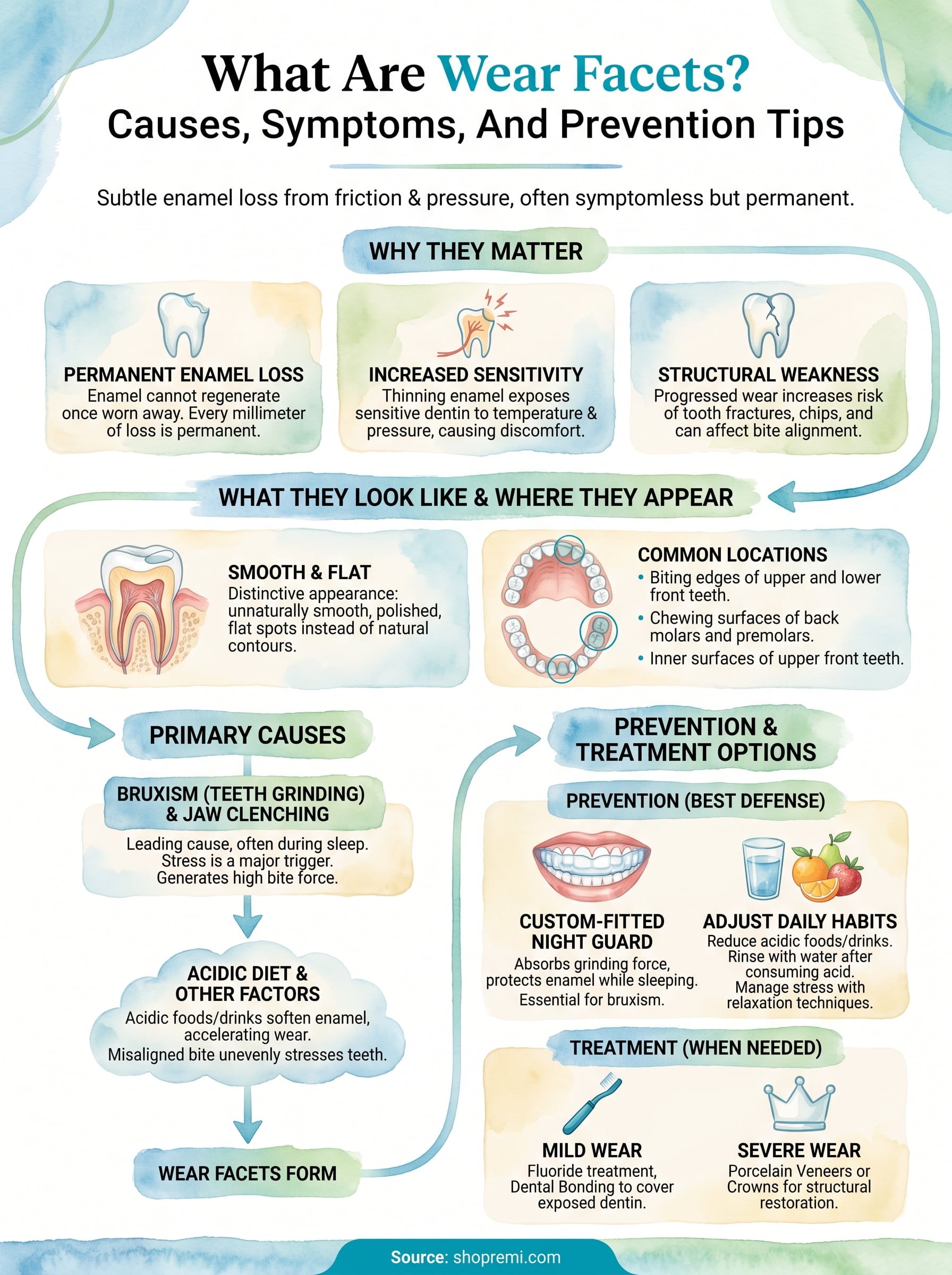
Wear facets are not just a cosmetic concern. When enamel wears away in those characteristic flat spots, it does not grow back, which means every millimeter of loss is permanent. Your enamel is the hardest substance in your body, but it cannot regenerate once it breaks down. That alone makes wear facets worth taking seriously, even when they cause no immediate pain or sensitivity.
The link between wear facets and enamel loss
Enamel acts as the first line of defense for your teeth. Once wear facets thin that protective layer, the softer dentin underneath becomes exposed. Dentin is significantly more sensitive to temperature, acidity, and pressure, so you might start noticing sharp discomfort when you drink something cold or eat something sweet. Many people first realize they have a grinding problem because of this sensitivity, not because a dentist spotted the flat spots.
Tooth enamel is the hardest biological material in the human body, yet it cannot repair itself once lost, making early intervention critical.
Repeated grinding also generates enormous bite force, sometimes two to three times the pressure your teeth experience during normal chewing. Over time, that force accelerates enamel wear far beyond what eating alone would cause. The result is a cycle where worn surfaces create uneven contact points, which increases stress on specific teeth, which leads to even more localized damage.
How wear facets affect your overall oral health
The damage from wear facets rarely stays confined to the surface of your teeth. As enamel loss progresses, teeth can become shorter, which changes how your upper and lower jaws meet. That shift in bite alignment puts strain on your temporomandibular joints and can contribute to chronic jaw soreness, headaches, and neck tension. These are symptoms people often blame on stress or poor sleep without realizing their teeth are part of the problem.
Your risk of tooth fractures also increases significantly once enamel thins out. A tooth with heavy wear facets has less structural integrity, meaning a hard bite on something unexpected can cause a crack or chip that requires a crown or more involved dental work. Catching the problem early and addressing the underlying cause, whether that is grinding, clenching, or acidic diet habits, gives you the best chance of keeping your natural teeth intact for the long term.
What wear facets look like
Wear facets have a distinctive appearance that sets them apart from other types of tooth damage. Instead of rough or jagged edges, these worn areas look unnaturally smooth and flat, almost polished, as if someone buffed down the natural contours of your tooth. Dentists can usually spot them during a routine exam, but you can sometimes notice them yourself by looking closely in a mirror at the biting surfaces of your back teeth or the edges of your front teeth.
Where they typically appear
The location of wear facets tells a lot about what is causing them. Grinding and clenching tend to produce flat spots on the chewing surfaces of molars and premolars, as well as on the incisal edges of your front teeth. You might notice your teeth look shorter than they used to, or that the natural pointed cusps of your back molars have been worn down to a flat plateau.
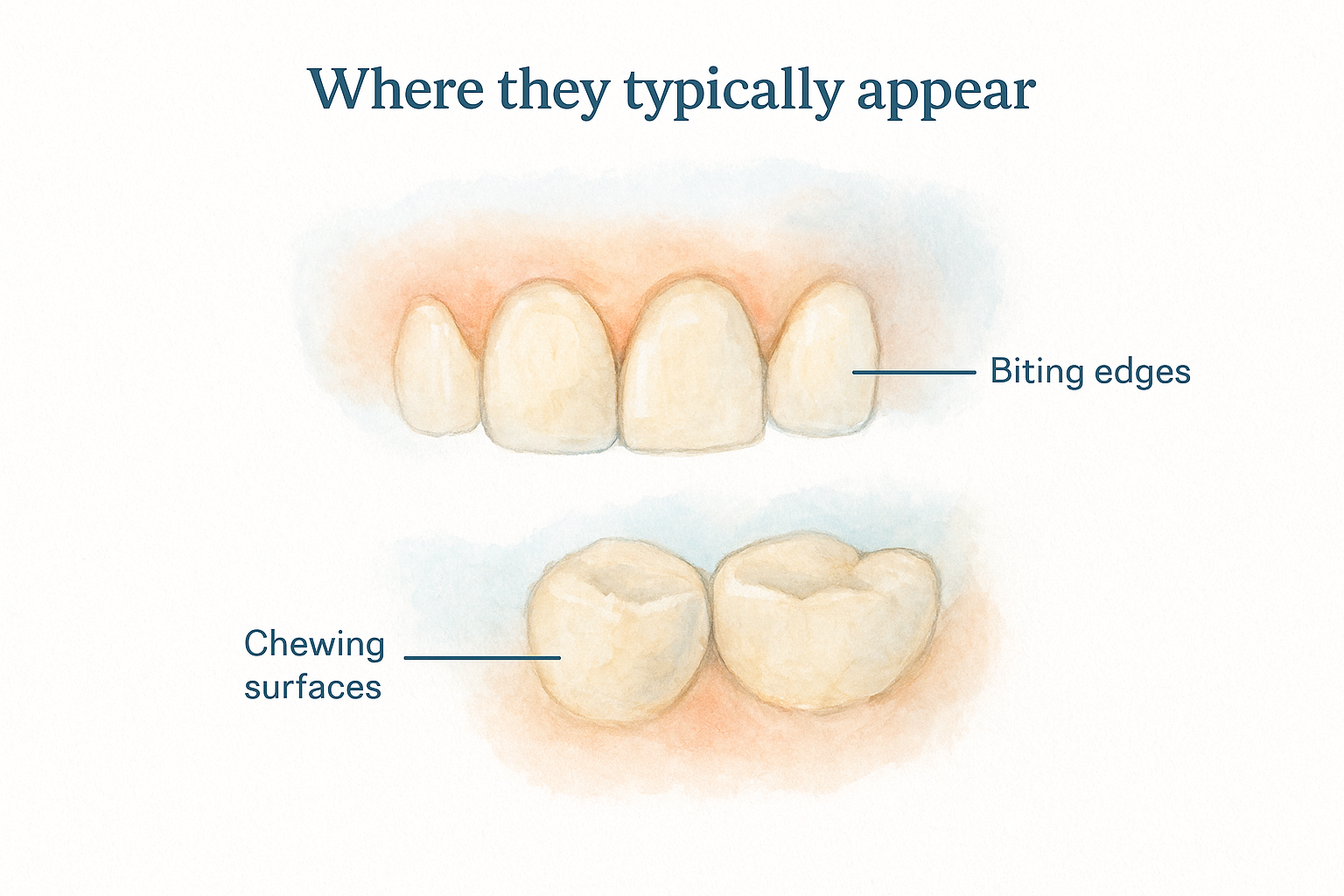
Common spots where wear facets develop:
- Biting edges of upper and lower front teeth
- Chewing surfaces of back molars and premolars
- Inner surfaces of upper front teeth in certain grinding patterns
The more symmetric the wear pattern across multiple teeth, the more likely the cause is nighttime grinding rather than a localized bite issue.
Signs you can spot at home
Beyond the flat surfaces themselves, several visual and sensory clues can help you identify a problem before your next dental visit. Look for teeth that appear shorter, unusually shiny on their biting edges, or chipped without a clear cause.
Pay attention to increased tooth sensitivity when eating or drinking, since that often signals the enamel has thinned enough for dentin to become exposed. If your partner mentions that you grind your teeth at night, treat that as a strong reason to examine your teeth in the morning for signs of jaw soreness or stiffness.
What causes wear facets
Several different forces can produce wear facets on your teeth, but the most significant ones involve either repeated mechanical pressure or chemical erosion working against your enamel over time. Understanding which cause is driving your wear helps you and your dentist choose the right approach to slow or stop the damage.
Bruxism and jaw clenching
Teeth grinding (bruxism) is the leading cause of wear facets, and it most often happens while you sleep, which means you may have no idea it is occurring. Your jaw muscles can generate far more force during nighttime grinding than during normal eating, and that pressure systematically wears down the surfaces where your upper and lower teeth make contact. Jaw clenching produces a similar effect, even without the back-and-forth grinding motion, because sustained pressure over hours still grinds enamel down gradually.
Bruxism affects an estimated 8 to 10 percent of adults, according to research published in dental sleep medicine literature, with many cases going undiagnosed for years.
Stress is a major trigger for both grinding and clenching. When your nervous system stays activated during sleep, your jaw muscles can contract repeatedly without you ever waking up. Certain medications, including some antidepressants and stimulants, are also associated with higher rates of bruxism.
Diet, acid, and other contributing factors
Acidic foods and drinks soften enamel temporarily, making it more vulnerable to mechanical wear. If you grind your teeth and also consume a lot of citrus, soda, or wine regularly, the combined effect accelerates enamel loss faster than either cause would alone. Your bite alignment also plays a role, since a misaligned jaw places uneven stress on specific teeth and creates concentrated wear patterns that match what dentists identify as facets.
How to prevent wear facets
Preventing wear facets comes down to addressing the specific forces working against your enamel before they cause lasting damage. Whether your main risk factor is nighttime grinding or a highly acidic diet, the earlier you take action, the more enamel you preserve. Most prevention strategies are straightforward and affordable, and several can be started without a dental appointment.
Protect your teeth while you sleep
A custom-fitted night guard is the single most effective tool for preventing wear facets caused by bruxism or jaw clenching. By placing a durable barrier between your upper and lower teeth, a night guard absorbs the force of grinding before it can flatten your enamel. The key is getting one that actually fits your mouth, since over-the-counter options often shift out of position during sleep and provide incomplete coverage.
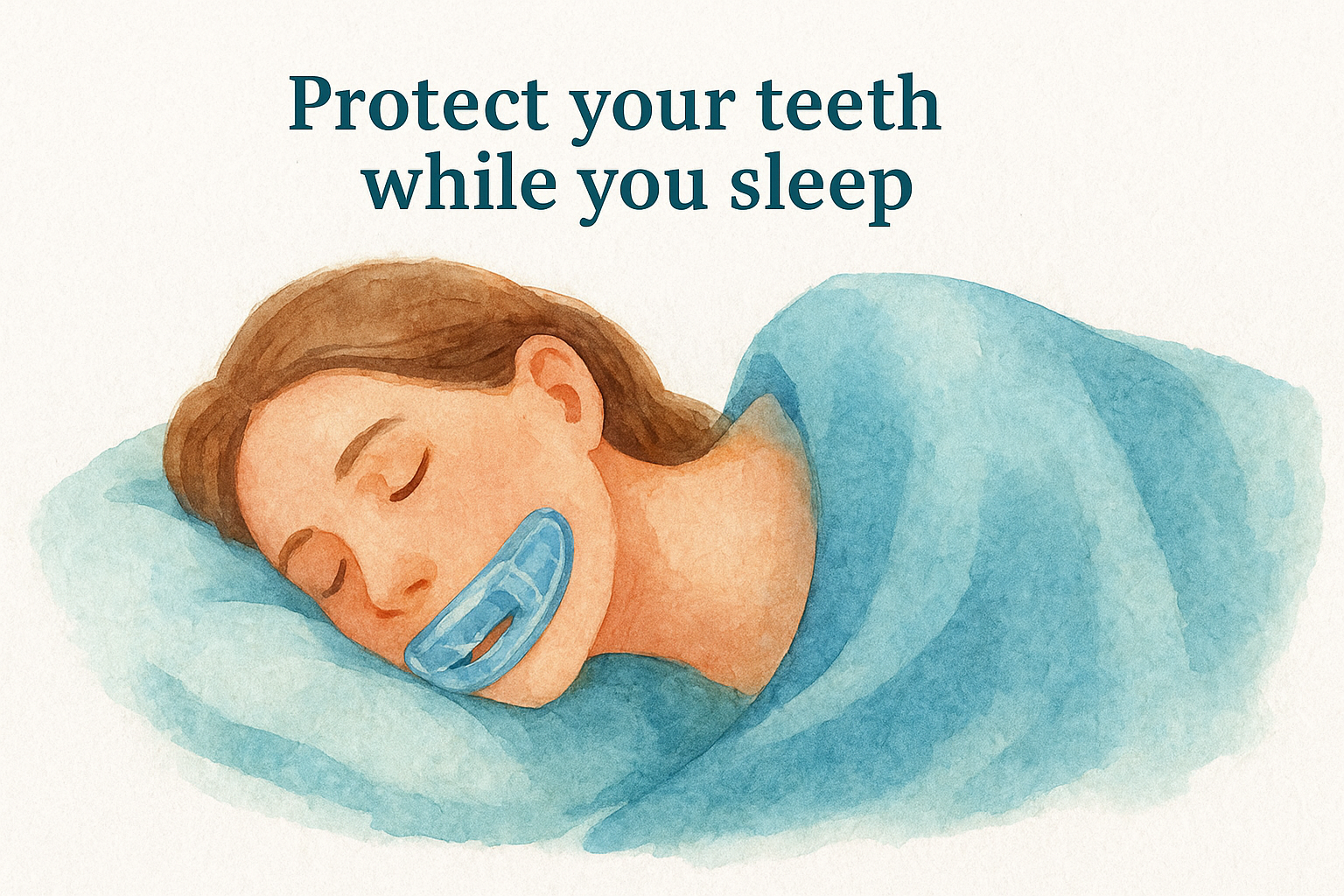
A well-fitted night guard distributes bite force evenly across the appliance rather than concentrating it on specific teeth, which is exactly where wear facets tend to form.
Adjust your daily habits
Your diet and daytime behaviors have a measurable impact on how fast enamel erodes. Reducing your intake of acidic foods and drinks, including citrus, carbonated beverages, and vinegar-based foods, gives your enamel less chemical exposure between grinding sessions. Rinsing with water after consuming acidic food or drinks helps neutralize the acid before it softens your enamel further.
Stress management plays a direct role in reducing grinding frequency, since elevated stress consistently raises bruxism activity during sleep. Building wind-down routines before bed, limiting caffeine late in the day, and practicing diaphragmatic breathing can lower the jaw muscle tension that drives nighttime clenching. If you notice jaw soreness or headaches in the morning, treat those as signals worth acting on rather than pushing through.
Treatment options and when to see a dentist
Once wear facets have already formed, the treatment path depends on how much enamel you have lost and whether the underlying cause is still active. Most dentists tackle the problem in two stages: stopping further damage first, then addressing the structural issues that have already developed. Getting that sequence right matters, because restoring worn teeth without fixing the grinding behavior just means the new dental work wears down too.
Restorative options for damaged enamel
When enamel loss is mild, your dentist may apply a fluoride treatment or a bonding agent to help protect the exposed dentin and reduce sensitivity. For more significant wear, dental bonding uses tooth-colored composite resin to rebuild the surface of flattened teeth, restoring both their shape and their protective layer. In cases where the structural damage is severe, your dentist may recommend porcelain veneers or crowns, which cap the tooth entirely and provide a durable, wear-resistant surface.
Restoring worn teeth without also treating the bruxism that caused the damage significantly increases the chance that new dental work will fail prematurely.
When to book a dental appointment
You should see a dentist if you notice tooth sensitivity that has developed recently, teeth that appear shorter than they used to, or flattened edges on your front teeth. These are signs that enamel loss is already underway and that waiting will only expand the damage. Morning jaw soreness, frequent headaches, or a partner reporting nighttime grinding noises are also strong reasons to get checked sooner rather than later.
Your dentist can confirm whether the flat spots you see are wear facets, identify the likely cause, and build a treatment plan that fits the current severity of your situation before permanent damage progresses further.
What to do next
Wear facets are a clear signal that something is working against your enamel, and the damage you have already accumulated will not reverse on its own. The good news is that you can stop the progression. Start by examining your teeth for flattened or unusually smooth surfaces, and pay attention to any morning jaw soreness or sensitivity that has crept in recently. Both are signs worth acting on now rather than later.
If nighttime grinding or clenching is driving the problem, a custom-fitted night guard is your most practical first step. Unlike the bulky options at a pharmacy, a properly fitted guard stays in place and absorbs force before it reaches your enamel. Remi's custom night guard gives you professional-grade protection at around 80 percent less than what a dental office charges, with the whole process completed from home. Order your impression kit and start protecting your teeth tonight.

