
 Guards + Retainers
 Custom Night Guard
 Retainer
 Emergency Order

 Whitening
 Whitening Kit
 Teeth Whitening Gel
 Dual-Action Foam
 Cleaning + Care
 Ultrasonic Cleaner Pro
 Water Flosser
 UV Toothbrush Sanitizer
 Deep Clean + Freshening Tablets
 Accessories
 Guard Removal Tool
 Replacement Nozzles
 Bundles

Most people don't think much about their teeth until something goes wrong, a cavity, a cracked molar, or jaw pain from grinding at night. But the best tips for healthy teeth aren't complicated fixes after the damage is done. They're small, consistent habits you build into your daily routine before problems start.
Your mouth is the gateway to your overall health, and keeping your teeth and gums in good shape doesn't require expensive treatments or endless dental visits. It does require knowing what actually works versus what's just noise. That's something we care about at Remi, where we work alongside dentists to create custom night guards, retainers, and oral care products that protect your smile at home, without the markup.
Below, you'll find five dentist-approved strategies you can start using right away. Each one is practical, backed by professional guidance, and designed to keep your teeth and gums strong for the long run. No gimmicks, just real habits that make a difference.
1. Wear a custom night guard for grinding
One of the most overlooked tips for healthy teeth is protecting them while you sleep. Teeth grinding, known as bruxism, puts enormous pressure on your enamel, gums, and jaw joints every night without you even knowing it's happening.
Why it matters for enamel, gums, and jaw health
Grinding wears down enamel faster than almost anything else, and once enamel is gone, it doesn't grow back. Chronic grinding also strains your temporomandibular joints (TMJ), which can trigger jaw pain, persistent headaches, and gum recession that compounds over time.
A night guard acts as a physical barrier between your upper and lower teeth, absorbing the force of grinding so your enamel and joints don't take the hit.
How to tell if you grind or clench at night
Most grinders don't know they do it because it happens during sleep. Common signs include waking up with jaw soreness or a dull headache, noticeably worn teeth that your dentist flags, increased tooth sensitivity, and tension in your neck or temples. A sleep partner may also hear the sound.
How to choose the right night guard thickness and fit
Thickness matters more than most people realize. Light grinders typically do well with a thin, flexible guard, while heavy grinders need a harder, thicker material to absorb greater force. Custom-fitted guards mold precisely to your teeth, so they stay in place and don't shift your bite the way loose, over-the-counter options often do.
How to use and care for a night guard daily
Rinse your guard with cool water every morning before storing it. Clean it with a soft toothbrush and let it air dry fully before placing it in its case. Avoid hot water, which warps the material. A dedicated foam cleaner or ultrasonic device removes bacteria buildup far more effectively than rinsing alone.
When to see a dentist about pain, cracks, or bite changes
If you notice jaw pain that isn't improving, visible cracks in your teeth, or your bite feels off when you wake up, schedule a dental appointment promptly. These are signs your current protection isn't doing enough, and your dentist may need to reassess your treatment before further damage sets in.
2. Brush with fluoride toothpaste twice daily
Brushing twice daily is one of the most foundational tips for healthy teeth, but doing it correctly matters more than doing it often. The right toothpaste, pressure, and timing all shape whether your routine actually protects your enamel and gums.
Why fluoride and technique beat brushing harder
Fluoride strengthens enamel by remineralizing tiny weak spots before they become cavities. Scrubbing harder doesn't clean better; it strips enamel and pulls gums back over time. Gentle circular motions at a 45-degree angle to the gumline do far more protective work than aggressive back-and-forth strokes.
Fluoride toothpaste is one of the most studied and proven cavity-prevention tools available without a prescription.
How to brush for two minutes without missing spots
Two minutes feels longer than it is. Divide your mouth into four equal quadrants and spend 30 seconds on each:
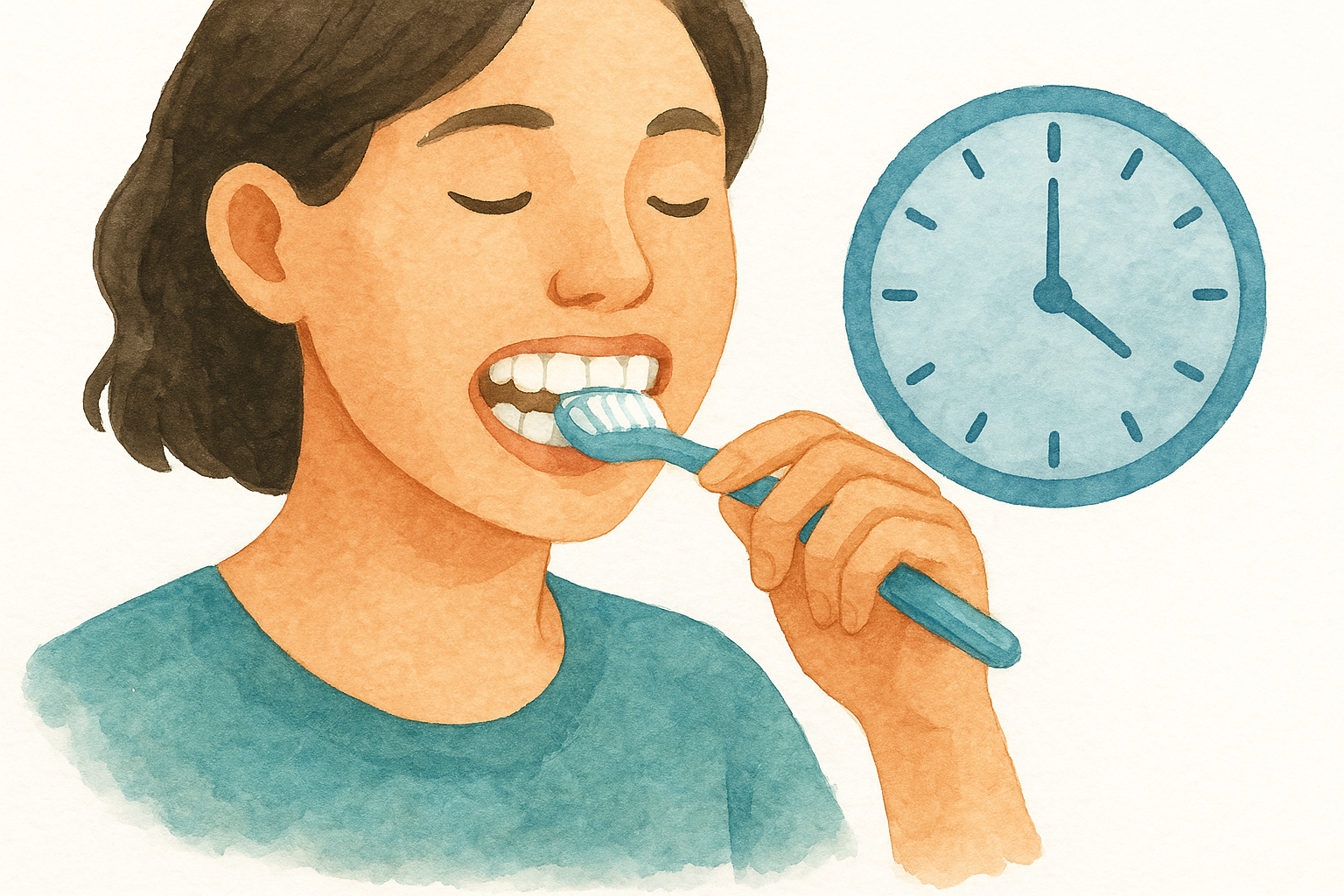
- Upper left
- Upper right
- Lower left
- Lower right
This keeps your back molars from getting skipped in favor of the teeth you can easily see.
How to pick a toothbrush and when to replace it
Choose a soft-bristled brush that fits comfortably in your mouth without straining to reach your back teeth. Hard bristles damage enamel and irritate gum tissue. Replace your brush every three months, or sooner if the bristles look splayed.
What to do after brushing, including rinsing habits
Spit out excess toothpaste but hold off on rinsing with water right away. Leaving a thin residue of fluoride on your teeth gives it more contact time to work. Waiting 30 minutes before eating or drinking extends that benefit further.
When bleeding or sensitivity needs a dental check
Occasional mild sensitivity after switching toothpaste is common, but persistent bleeding, sharp pain, or cold sensitivity lasting more than a few weeks signals something a dentist needs to evaluate rather than something you should brush through.
3. Clean between your teeth every day
Brushing handles the flat surfaces of your teeth, but it misses roughly 35% of each tooth's surface where two teeth meet. Cleaning between your teeth daily closes that gap and is one of the most impactful tips for healthy teeth you can add to your routine.
Why brushing alone leaves plaque behind
Plaque accumulates in tight spaces between teeth where bristles simply cannot reach. Left alone, that plaque hardens into tartar within 24 to 48 hours, which only a professional cleaning can remove. Skipping interdental cleaning consistently leads to gum inflammation and early decay at those contact points.
How to floss without snapping or hurting your gums
Use about 18 inches of floss, winding most of it around your middle fingers so your index fingers guide the movement. Slide the floss gently between teeth using a C-shape curve around each tooth rather than snapping it into the gum, which causes bleeding and tissue damage.
Proper flossing technique protects your gum tissue as much as it removes debris.
How to use interdental brushes and water flossers
Interdental brushes work well for wider gaps, bridges, or braces, while a water flosser effectively flushes debris and bacteria from the gumline using a pressurized stream that reaches where traditional floss struggles.
How to build a routine you will actually keep
Pair interdental cleaning with an existing habit, like brushing before bed, so it becomes automatic. Consistency matters more than technique perfection, especially in the first few weeks.
When gum swelling, bad breath, or loose teeth signal trouble
Persistent bad breath or swollen gums point to gum disease that needs professional attention. These symptoms do not resolve on their own, and delaying treatment allows infection to spread deeper into surrounding tissue.
4. Eat and drink to protect enamel and gums
What you eat and drink shapes your dental health as much as your brushing habits do. Diet is one of the most underrated tips for healthy teeth, and making a few targeted swaps reduces your cavity and gum disease risk significantly.
How sugar and frequent snacking feed decay
Bacteria in your mouth feed on sugar and produce acid as a byproduct. That acid attacks your enamel for up to 20 minutes after each bite, meaning frequent snacking keeps your teeth under near-constant acid exposure throughout the day, compounding damage well beyond a single sugary treat.
The number of times you eat matters as much as the total amount of sugar you consume.
How acidic drinks and habits soften enamel
Citrus juices, soda, and sports drinks are highly acidic and soften enamel on contact. Even diet versions cause erosion over time. Sipping these drinks slowly throughout the day prolongs that exposure and accelerates enamel thinning.
What to choose instead for daily drinks and snacks
Water and plain milk protect enamel and support saliva production. For snacks, reach for options that work with your teeth rather than against them:
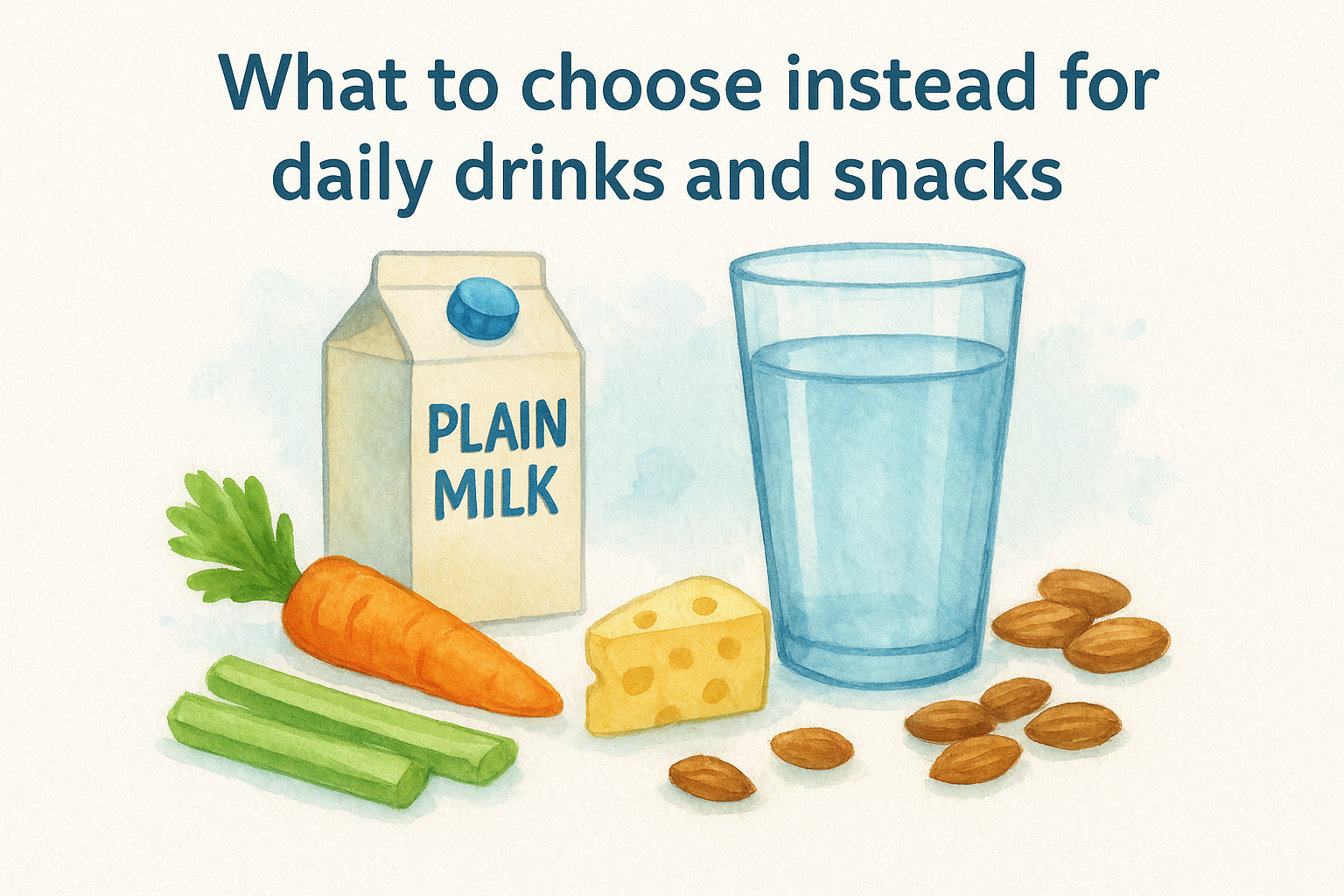
- Crunchy vegetables like carrots and celery stimulate saliva and clean tooth surfaces
- Cheese and nuts are low in sugar and help neutralize mouth acid
- Plain water after meals rinses away food particles quickly
How to time treats and use water to reduce damage
Enjoy sugary or acidic foods with meals rather than between them so saliva can neutralize acid more efficiently. Rinsing with water immediately after eating cuts acid contact time on your enamel.
When dry mouth or reflux calls for medical help
Chronic dry mouth reduces saliva production, removing your mouth's natural acid buffer entirely. Acid reflux repeatedly exposes teeth to stomach acid, wearing enamel from the inside out. Both conditions need medical evaluation since better brushing alone won't resolve the underlying damage.
5. Stay ahead with checkups and early warning signs
Consistent professional care is one of the most reliable tips for healthy teeth because it catches problems before they become costly or painful. Your daily habits build the foundation, but routine checkups protect what those habits cannot reach.
What dental cleanings and exams catch early
Professional cleanings remove hardened tartar that brushing and flossing cannot touch. Exams also detect cavities, early gum disease, and abnormal tissue changes that rarely produce obvious symptoms until they're already advanced.
Catching a small cavity early costs far less, in time and money, than treating the same tooth after infection sets in.
A quick at-home check for gums, teeth, and mouth sores
Once a month, spend two minutes in front of a mirror looking at your gums, teeth, and the soft tissue inside your cheeks and under your tongue. Healthy gums sit snugly around teeth and stay pale pink without swelling. Flag anything unusual for your next appointment.
Signs you should not ignore, including pain and changes
Sharp or lingering tooth pain, swollen or bleeding gums, and any sore that doesn't heal within two weeks all deserve prompt professional evaluation. These symptoms don't typically resolve on their own.
How meds, tobacco, and alcohol affect oral health
Tobacco use accelerates gum disease and raises oral cancer risk significantly. Many common medications reduce saliva flow, which strips away your mouth's natural defense against bacteria. Tell your dentist about any medications you take regularly.
How to plan care if you have braces, retainers, or dentures
Custom appliances like retainers require extra attention because they trap bacteria against your teeth. Clean your appliance daily, keep up with professional checkups, and replace worn appliances before fit issues create new alignment or hygiene problems.
Final takeaways
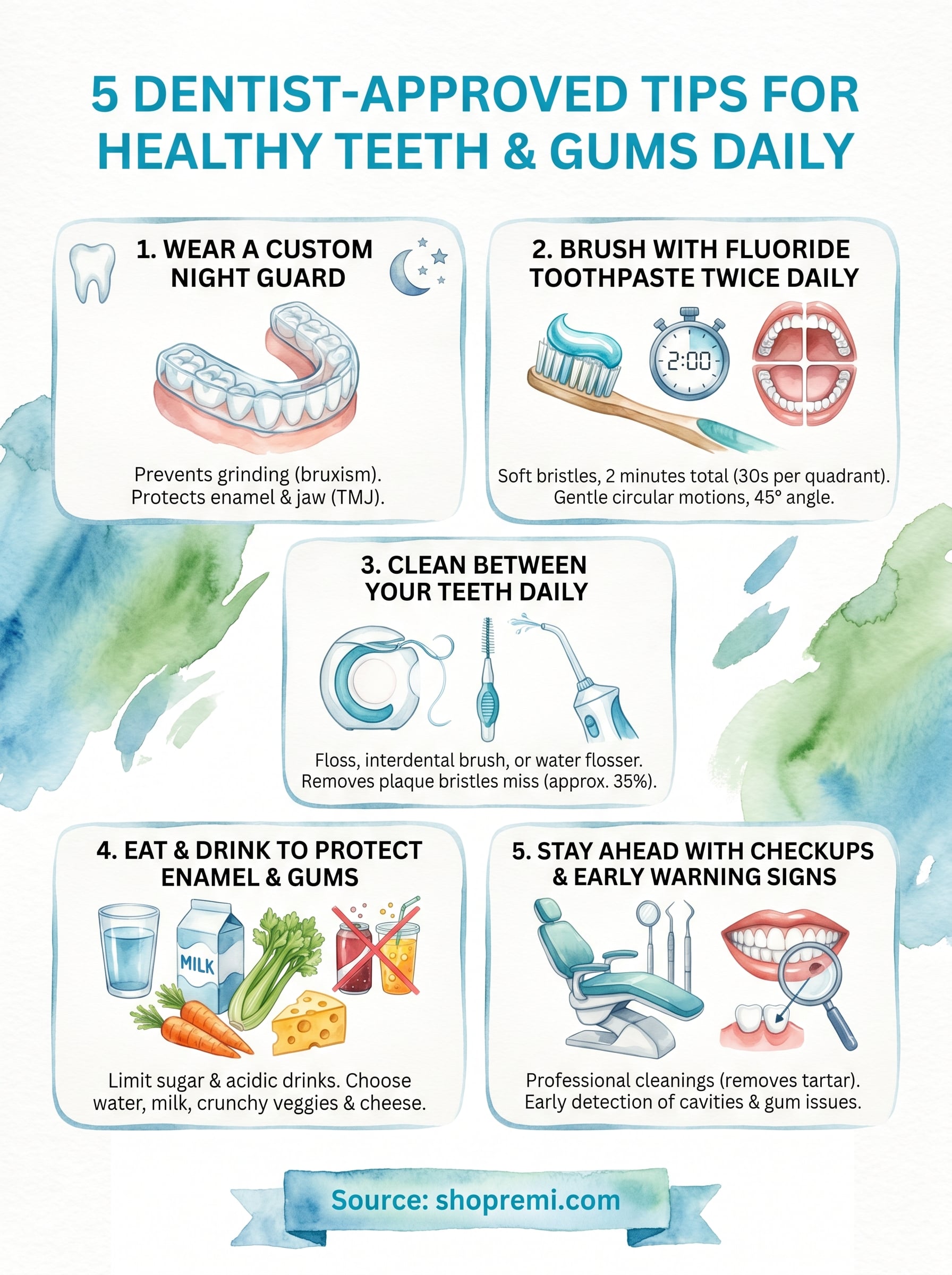
These five tips for healthy teeth all work together. Wearing a custom night guard protects your enamel while you sleep. Brushing correctly with fluoride toothpaste and cleaning between your teeth daily keeps plaque from turning into a bigger problem. Eating with your dental health in mind and staying current with professional checkups close the gaps that daily habits alone can't cover.
Small, consistent actions are what actually move the needle over time. You don't need a complicated routine or expensive treatments to keep your teeth and gums healthy. You need the right tools, the right habits, and a plan you can realistically stick to.
Protecting your teeth at night is one of the highest-impact steps you can take, especially if grinding is already wearing your enamel down. A well-fitted custom night guard makes that protection effortless. Check out Remi's custom night guard to get started.

