
 Guards + Retainers
 Custom Night Guard
 Retainer
 Emergency Order

 Whitening
 Whitening Kit
 Teeth Whitening Gel
 Dual-Action Foam
 Cleaning + Care
 Ultrasonic Cleaner Pro
 Water Flosser
 UV Toothbrush Sanitizer
 Deep Clean + Freshening Tablets
 Accessories
 Guard Removal Tool
 Replacement Nozzles
 Bundles

Your teeth and gums don't need complicated routines or expensive treatments to stay healthy. What they do need is consistency and the right habits, and knowing exactly how to maintain oral hygiene makes all the difference between a mouth that thrives and one that slowly deteriorates.
Most dental problems, cavities, gum disease, enamel erosion, are preventable. The catch? Prevention only works if you actually do it, and do it correctly. Brushing twice a day sounds simple enough, but there's more to a solid oral care routine than most people realize. From flossing technique to the tools you use (night guards, water flossers, UV sanitizers), every choice adds up.
At Remi, we build products that fit into your daily routine without the hassle or the dental-office price tag. This guide breaks down the exact daily steps you need for healthy teeth and gums, practical, straightforward, and easy to stick with starting today.
What good oral hygiene does and why it matters
Knowing how to maintain oral hygiene is one thing. Understanding why it matters is what actually keeps you consistent. Healthy teeth and gums don't just look better, they function better, hurt less, and cost you far less over time. Every cavity filled, every root canal, every extraction starts as something that could have been prevented with a daily routine.
How oral hygiene protects your teeth and gums
Your mouth constantly deals with bacteria and food debris that build up into plaque, a soft, sticky film that coats your teeth throughout the day. When you don't remove plaque consistently, it hardens into tartar, which only a dental professional can scrape off. Left unchecked, that tartar triggers gum inflammation (gingivitis), and if that progresses, you're looking at periodontitis, a serious infection that destroys the bone and tissue holding your teeth in place.
Gum disease is the leading cause of tooth loss in adults, and it's almost entirely preventable with a consistent daily routine.
The damage doesn't stop at your gums. Acid produced by bacteria eats through enamel, the hard outer layer of your teeth. Once enamel is gone, it doesn't grow back. That means every time you skip brushing or flossing, you give bacteria more time to cause permanent damage that no amount of treatment fully reverses.
Why your oral health affects your whole body
Poor oral hygiene creates real pathways for bacteria to enter your bloodstream, and the consequences go well beyond your mouth. Research has linked untreated gum disease to serious systemic conditions including heart disease, diabetes complications, and respiratory infections. People with periodontitis face a measurably higher risk of cardiovascular events compared to those with healthy gums.
This connection reframes oral care from a cosmetic habit into a genuine health priority. Taking care of your teeth isn't about vanity. A consistent daily routine keeps your bacterial load low, protects your enamel, and reduces risk factors that affect your broader health. The small effort you put in each day pays off in ways that go far beyond a clean-feeling mouth.
Step 1. Brush the right way twice a day
Brushing is the foundation of how to maintain oral hygiene, but technique matters as much as frequency. Brushing too hard damages enamel and irritates your gum line. Brushing too fast leaves plaque behind. Two minutes, twice a day with the right approach removes the bacterial buildup that causes decay and gum disease before it gets a foothold.
Choose the right tools
Your toothbrush and toothpaste are not interchangeable decisions. A soft-bristled toothbrush, whether manual or electric, protects enamel while still clearing plaque effectively. Hard bristles grind down enamel over time, especially when you press too firmly. For toothpaste, pick one with fluoride to strengthen enamel and actively prevent cavities.
- Soft-bristled toothbrush, replaced every 3 months
- Fluoride toothpaste with at least 1,000 ppm fluoride
- Electric toothbrush (optional, but consistently more effective at plaque removal than manual brushing)
The correct brushing technique
Hold your toothbrush at a 45-degree angle to your gum line and use short, gentle circular strokes. Work through every surface: the outer side, the inner side, and the chewing surface of each tooth. Pay extra attention to your back molars since they trap the most debris. Finish by brushing your tongue to cut down on bacteria and keep your breath fresh.
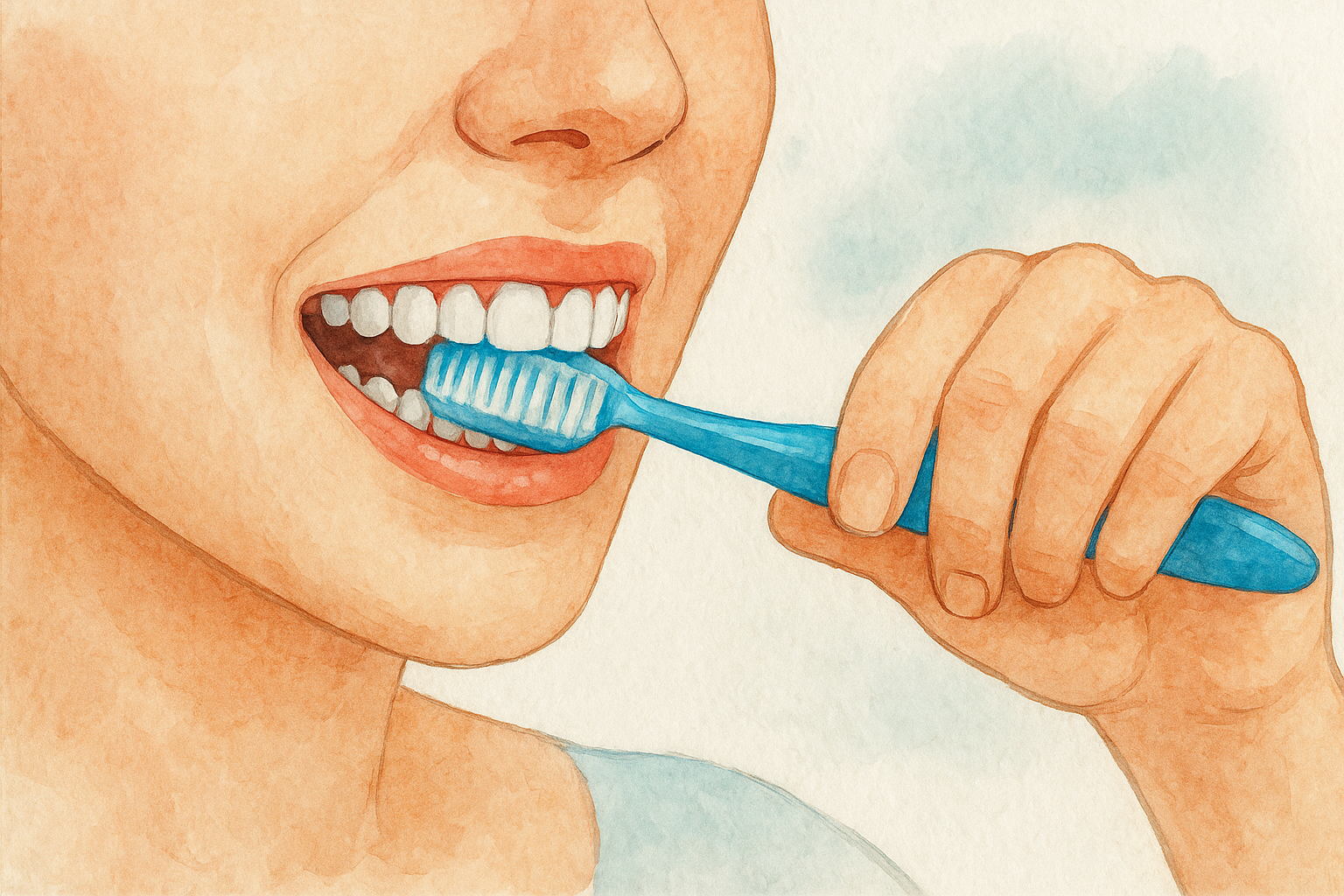
Most people brush for less than 45 seconds. Set a timer until two full minutes becomes automatic.
Step 2. Clean between teeth every day
Brushing only reaches about 60% of your tooth surfaces. The spaces between your teeth don't get touched by a toothbrush, no matter how good your technique is. That means skipping interdental cleaning leaves nearly half your mouth vulnerable to plaque buildup, cavities, and gum disease every single day. Cleaning between teeth is a non-negotiable part of how to maintain oral hygiene properly.
Gum disease almost always starts between teeth, exactly where a toothbrush cannot reach.
Your options for cleaning between teeth
You have several tools to choose from, and the best one is whichever you'll actually use consistently. Traditional string floss reaches tight contact points and removes debris effectively when used correctly. A water flosser like Remi's Cordless Water Flosser uses a pressurized stream to flush out bacteria and food from between teeth and along the gum line, which makes it especially useful if you wear a night guard or retainer.
- String floss: best for tight spaces and precise plaque removal
- Water flosser: ideal for gum line cleaning, orthodontic appliances, and people with sensitive gums
- Interdental brushes: good for larger gaps between teeth
How to floss correctly
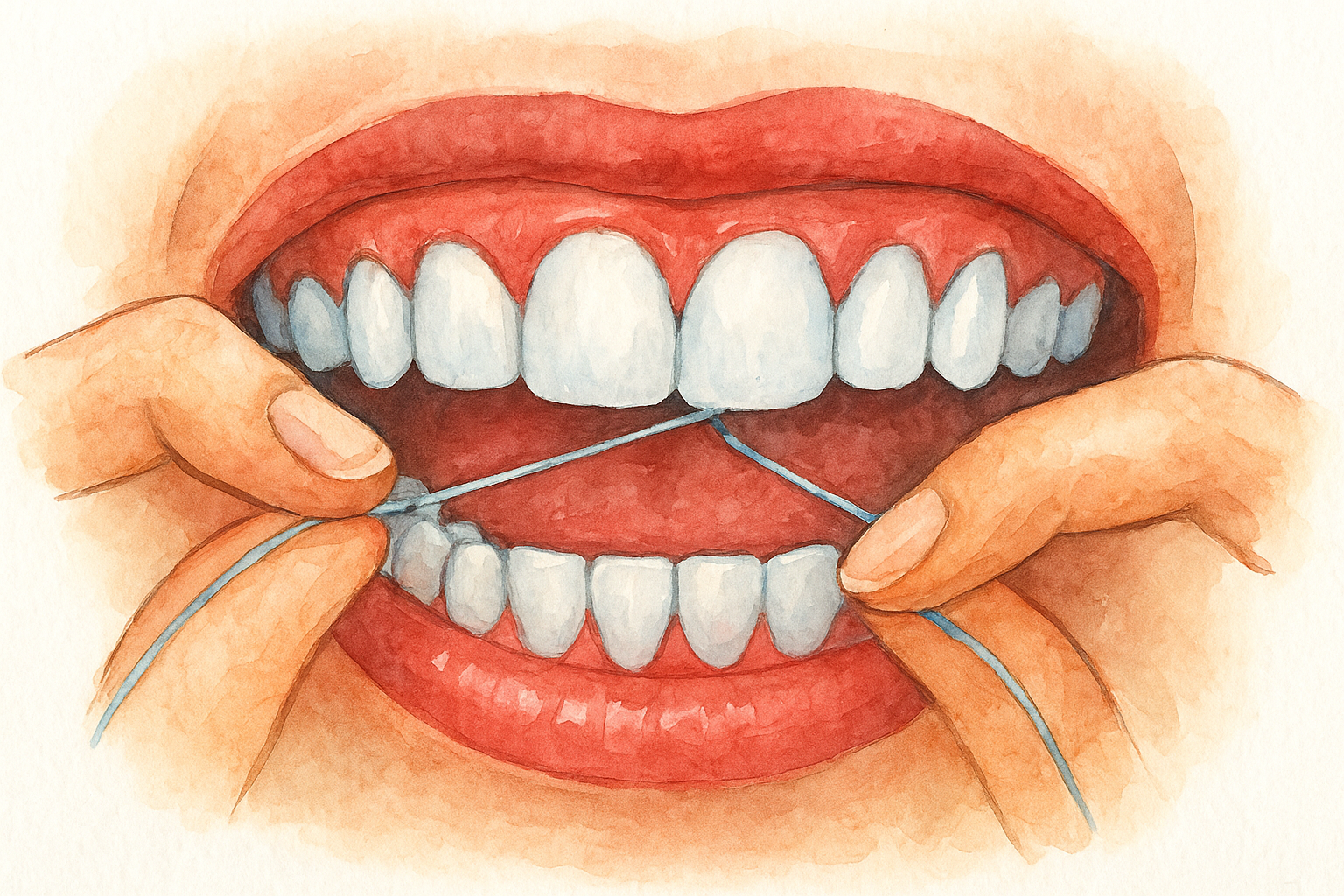
Wrap about 18 inches of floss around your middle fingers, leaving two inches to work with. Guide the floss between each pair of teeth using a gentle C-shape motion around the base of each tooth, sliding just below the gum line. Use a fresh section of floss for each gap to avoid transferring bacteria from one space to another.
Step 3. Add the habits that prevent problems
Brushing and flossing cover the basics, but fully understanding how to maintain oral hygiene means going beyond the twice-a-day routine. A few targeted habits address the problems that regular brushing misses: enamel erosion from diet, damage from teeth grinding, and bacteria buildup on dental appliances.
Limit sugar and acid, and stay hydrated
Sugary and acidic foods feed the bacteria that produce enamel-destroying acids. You don't need to cut them out entirely, but timing matters. Eat acidic or sugary foods with meals rather than as standalone snacks throughout the day, which limits how long your enamel sits exposed to acid. Rinse with water afterward, and wait at least 30 minutes before brushing to avoid scrubbing softened enamel.
Staying hydrated keeps saliva production up, which is your mouth's built-in defense system. Saliva neutralizes acids, washes away food particles, and delivers minerals that remineralize weakened enamel throughout the day.
Dry mouth significantly increases your cavity risk because there is no saliva left to buffer the acids that bacteria produce.
Protect your teeth at night
Teeth grinding (bruxism) wears down enamel faster than almost anything else, and most people who grind do it while they sleep, so they have no idea it is happening. A custom night guard fits over your teeth and absorbs the force of grinding before it reaches your enamel. Remi's custom night guards are made directly from your dental impressions, so they fit precisely instead of the bulky, loose store options that most people stop wearing within a week.
Step 4. Keep up with dental visits and catch issues early
Even the most disciplined daily routine has limits. A dentist catches problems you cannot see or feel yet, including early-stage cavities hiding between teeth, hairline cracks, and gum recession that progresses silently. Professional cleanings also remove built-up tartar that no toothbrush or flosser can touch, resetting your baseline so your daily habits stay effective.
Skipping dental visits doesn't mean nothing is happening. It means problems grow undetected until they require more invasive and expensive treatment.
How often you should go and what to expect
For most adults, two checkups per year is the standard recommendation, but your dentist may suggest more frequent visits if you have active gum disease, a history of cavities, or dry mouth. Each visit typically includes a professional cleaning, a visual exam, and X-rays every one to two years to catch decay or bone loss that isn't visible to the naked eye.
- Cleaning: removes tartar and polishes enamel
- Exam: checks for cavities, gum health, bite issues, and oral cancer screening
- X-rays: detects decay between teeth and bone loss below the gum line
Watch for warning signs between visits
Knowing how to maintain oral hygiene also means recognizing when something is wrong. Don't wait for your next scheduled appointment if you notice bleeding gums that don't resolve, tooth sensitivity that worsens, or a persistent bad taste in your mouth. Catching these signals early keeps your treatment options simpler and your costs lower.
- Gums that bleed for more than a week
- Tooth sensitivity to hot, cold, or pressure
- Loose teeth or a shifting bite
- Sores or white patches that don't heal within two weeks
Quick recap
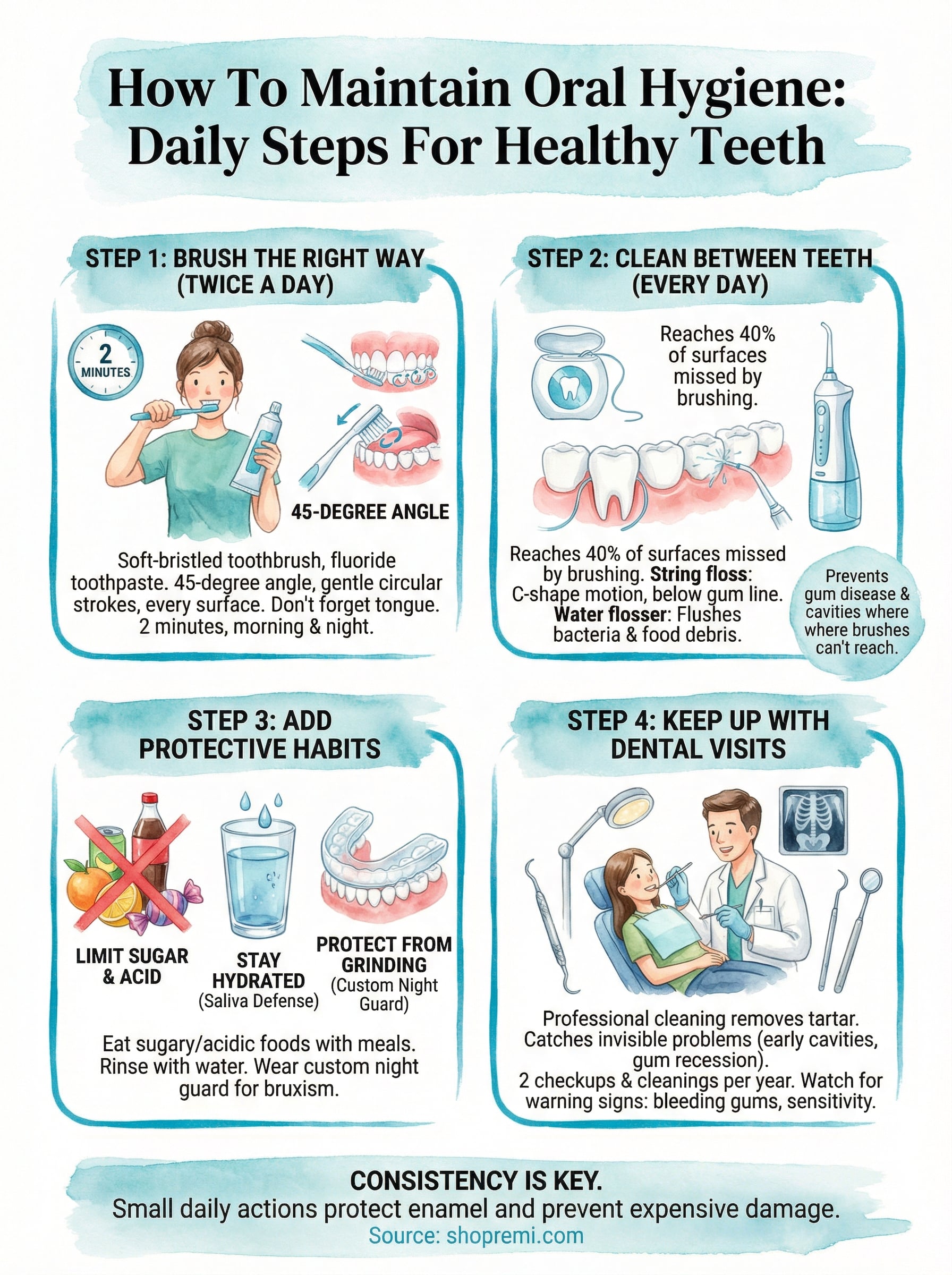
Knowing how to maintain oral hygiene comes down to four consistent daily habits. Brush twice a day with a soft-bristled toothbrush and fluoride toothpaste for a full two minutes. Clean between your teeth every single day using floss or a water flosser to reach the 40% of surfaces your toothbrush misses. Add protective habits like limiting sugary snacks, staying hydrated, and wearing a custom night guard if you grind your teeth. Then back all of that up with regular dental visits to catch problems before they become expensive to fix.
Small, consistent actions protect your teeth from permanent damage. Enamel doesn't grow back, and gum disease doesn't reverse itself, which means the daily routine you build right now determines the state of your mouth for decades to come. If teeth grinding is part of your picture, a custom-fit night guard from Remi is a straightforward, affordable way to protect the enamel you have.

