
 Guards + Retainers
 Custom Night Guard
 Retainer
 Emergency Order

 Whitening
 Whitening Kit
 Teeth Whitening Gel
 Dual-Action Foam
 Cleaning + Care
 Ultrasonic Cleaner Pro
 Water Flosser
 UV Toothbrush Sanitizer
 Deep Clean + Freshening Tablets
 Accessories
 Guard Removal Tool
 Replacement Nozzles
 Bundles

Most people brush their teeth twice a day and call it good. But if you're dealing with bleeding gums, persistent bad breath, or waking up with jaw pain from grinding your teeth at night, basic brushing clearly isn't cutting it. Knowing how to improve oral hygiene goes beyond the toothbrush, it means building a complete routine that actually protects your teeth, gums, and jaw long-term.
The good news? You don't need expensive dental visits to get there. Small, consistent changes to your daily habits can make a dramatic difference in your oral health. From flossing techniques to protecting your teeth while you sleep, each step builds on the last. At Remi, we work alongside dentists and medical advisors to create affordable, custom-fitted dental products, like night guards and retainers, that fit into a smarter oral care routine without the dental office price tag.
Below, you'll find five practical steps you can start using right now to upgrade your dental care. Whether you're starting from scratch or fine-tuning an existing routine, these tips are designed to help you keep your teeth healthier for years to come.
1. Wear a custom night guard if you grind
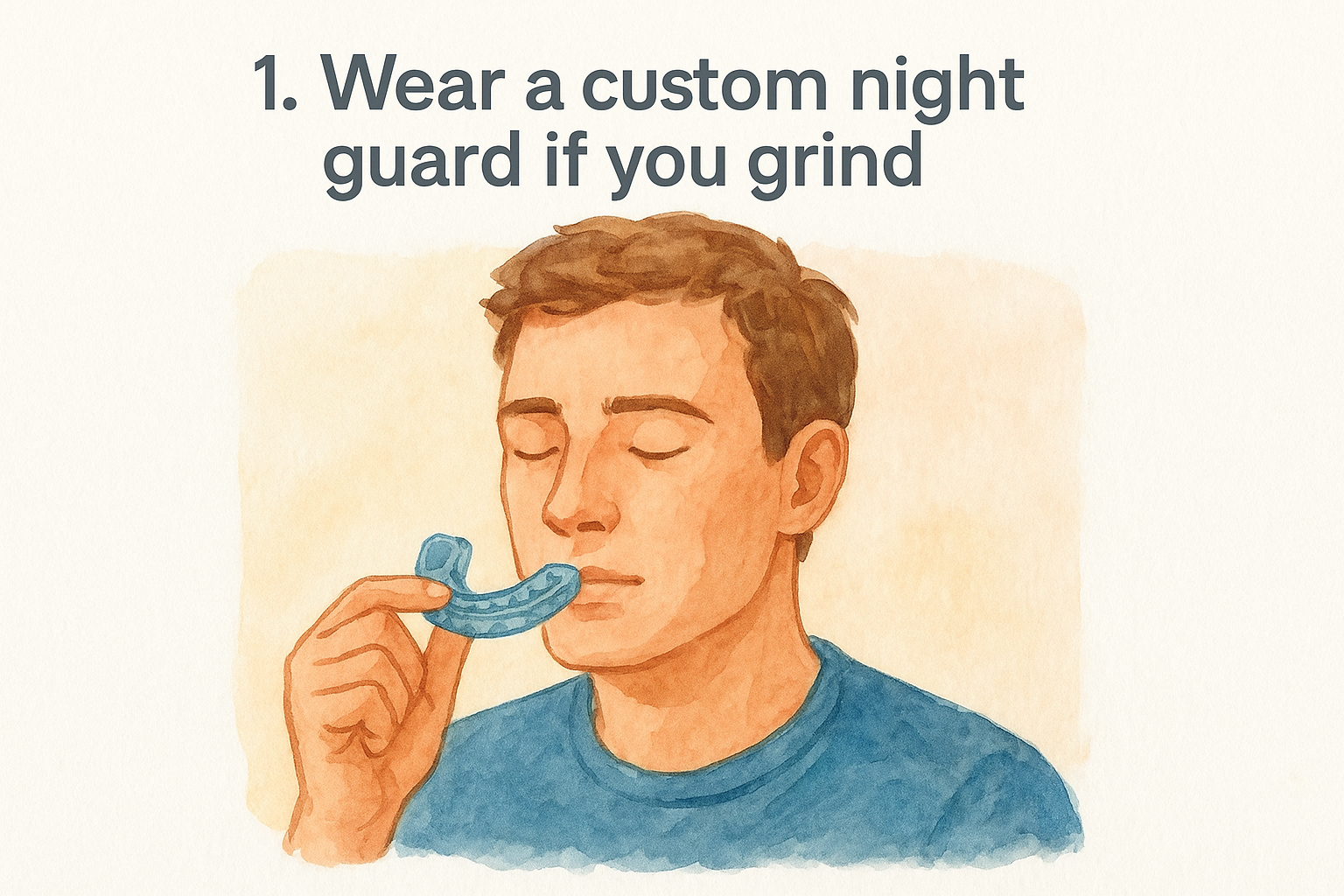
If you wake up with jaw soreness, headaches, or worn-down teeth, you may be grinding your teeth at night without knowing it. This condition, called bruxism, affects millions of Americans and quietly damages your enamel over time. Protecting your teeth while you sleep is one of the most impactful steps you can take when learning how to improve oral hygiene long term.
What to do
Get a custom-fitted night guard and wear it every night. A night guard creates a barrier between your upper and lower teeth, absorbing the pressure from grinding and clenching before it reaches your enamel or jaw joints. Without protection, that force wears down your teeth gradually, leading to sensitivity, cracking, and costly repairs down the road.
A custom-fitted night guard reduces grinding damage far more effectively than generic store-bought options, which often fit poorly and can shift your bite over time.
How to do it well
Fit matters more than most people expect. Wear your night guard consistently, even on nights when you feel fine, because grinding typically happens during deep sleep when you have no awareness of it. Clean your guard every morning with cool water and a soft brush to remove bacteria before it builds up, and store it in its case to preserve its shape.
Common mistakes to avoid
Many people pick up a boil-and-bite guard from the pharmacy and assume it will do the job. These guards are bulky, uncomfortable, and often lead to inconsistent wear because they just do not fit well. Another common mistake is skipping nights when you feel tired or rushed. Missing even a few nights per week means your teeth go unprotected for hours at a time, and that adds up faster than you might think.
Products that can help
Remi's custom night guards are made from professional-grade materials using an at-home impression kit you complete in minutes. You get a lab-crafted, precisely fitted guard delivered to your door at a fraction of the dental office price. Remi also offers an Ultrasonic Cleaner Pro that deep-cleans your night guard with minimal effort, keeping bacteria and buildup under control every day.
2. Brush twice a day with fluoride
Brushing is the foundation of any oral care routine, but how you brush matters just as much as how often you do it. When thinking about how to improve oral hygiene, most people overlook the quality of their technique and focus only on frequency.
What to do
Brush your teeth twice a day, once in the morning and once before bed, using a fluoride toothpaste. Fluoride strengthens your enamel and helps fight the bacteria that cause cavities. Two minutes per session is the standard recommendation from dental professionals.
How to do it well
Hold your toothbrush at a 45-degree angle to your gums and use short, gentle circular strokes rather than aggressive back-and-forth scrubbing. Focus on each section of your mouth for about 30 seconds, covering the outer surfaces, inner surfaces, and chewing surfaces of every tooth. Brush your tongue too, since bacteria collect there and contribute to bad breath.
Brushing too hard is one of the most common ways people damage their enamel and cause gum recession without realizing it.
Common mistakes to avoid
Many people rinse with water immediately after brushing, which washes away the fluoride before it can do its job. Spit out the excess toothpaste but skip the rinse. Also, replace your toothbrush every three months or sooner if the bristles look frayed, since worn bristles clean far less effectively.
Products that can help
Remi's Night Guard Cleaning and Teeth Whitening Foam works alongside your brushing routine to keep your dental appliances clean and give your smile a whitening boost at the same time.
3. Clean between teeth every day
Your toothbrush only reaches about 60% of your tooth surfaces, leaving the spaces between teeth completely untouched. Understanding how to improve oral hygiene means recognizing that those gaps collect food particles and plaque that harden into tartar, which is a leading cause of gum disease and cavities between teeth.
What to do
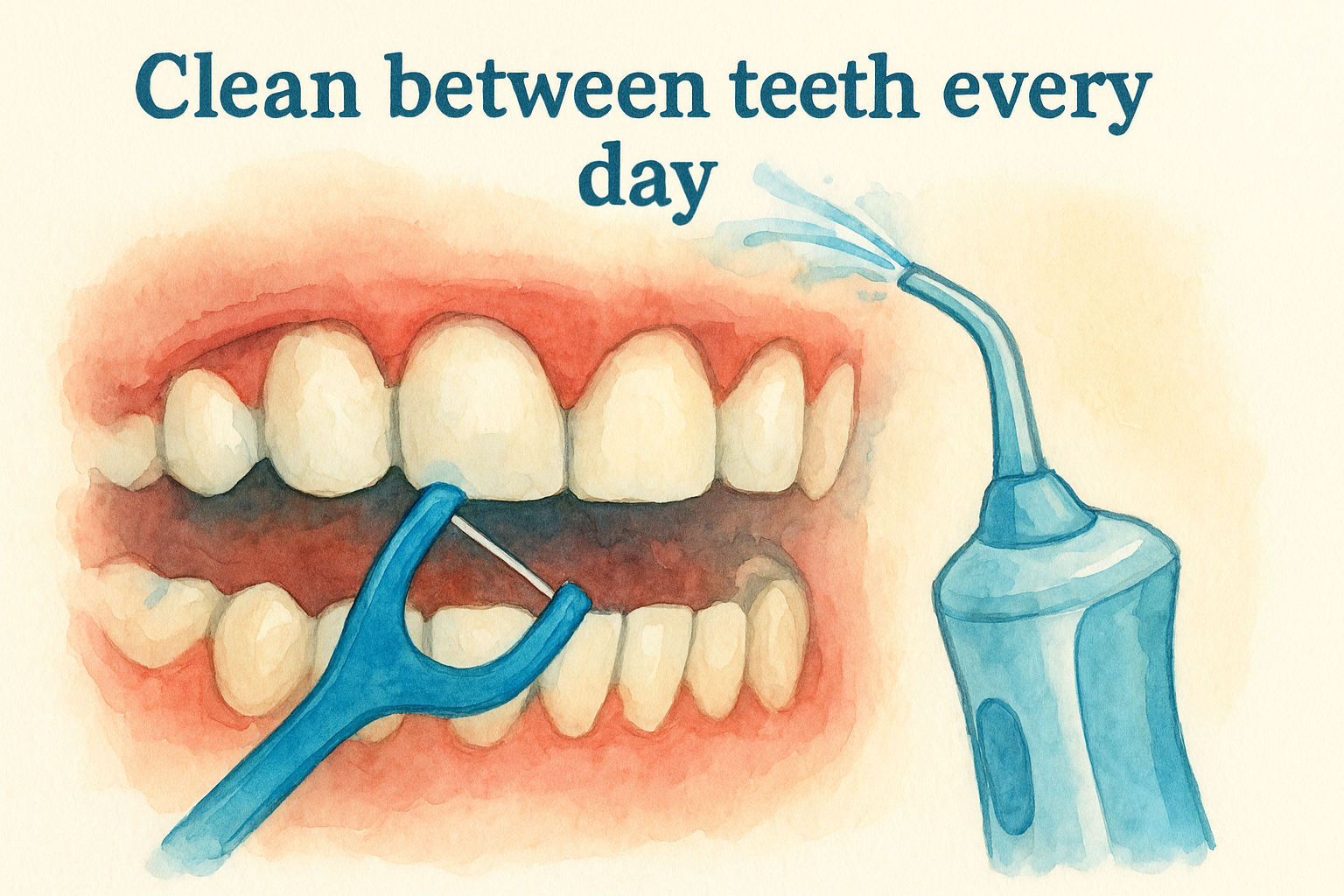
Clean between your teeth at least once a day using floss, a water flosser, or interdental brushes. It does not matter whether you do it before or after brushing; what matters is that you do it consistently every single day. Skipping even a few days allows plaque to build up along the gumline faster than most people expect.
Flossing once a day reduces your risk of gum disease significantly more than brushing alone can achieve.
How to do it well
Use about 18 inches of floss and work with a fresh section between each tooth to avoid spreading bacteria. Curve the floss into a C-shape around each tooth and slide it gently under the gumline rather than snapping it down, which can cut your gums.
Common mistakes to avoid
Many people floss only when food is visibly stuck between their teeth, treating it as a fix rather than a habit. Another common mistake is rushing through the process, which means you miss the gumline entirely, and that is exactly where the most damage accumulates over time.
Products that can help
Remi's Cordless Water Flosser makes it easy to clean between teeth and along the gumline without the hassle of traditional string floss, especially if you wear a night guard or retainer daily.
4. Upgrade your mouth care beyond teeth
Your teeth get most of the attention, but your tongue, gums, and the soft tissues in your mouth collect bacteria just as readily. If you want to understand how to improve oral hygiene fully, you need to extend your routine beyond just your teeth to cover the entire oral environment.
What to do
Add tongue scraping and mouthwash to your daily routine alongside brushing and flossing. Your tongue alone harbors millions of bacteria that contribute to bad breath and transfer back to your teeth immediately after you finish brushing. A 30-second addition targeting these areas makes a measurable difference in your overall oral health.
How to do it well
Use a tongue scraper or the back of your toothbrush to remove the white film from your tongue each morning before eating or drinking anything. When using mouthwash, choose an alcohol-free antibacterial formula and swish for a full 30 seconds to reach areas your brush cannot contact directly.
Mouthwash works best as a supplement to brushing and flossing, not as a replacement for either.
Common mistakes to avoid
Many people treat mouthwash as a quick substitute for flossing when they are short on time. Skipping the physical removal of plaque and relying only on rinse products leaves buildup in place. Brushing your tongue too aggressively can also cause irritation and soreness, so use light, sweeping strokes instead of scrubbing.
Products that can help
Remi's Night Guard Cleaning and Teeth Whitening Foam keeps your dental appliances fresh between deep cleans, fitting naturally into a broader mouth care routine that goes well beyond the basics.
5. Make your routine stick long term
Building a solid oral care routine is one thing; keeping it going for months and years is another. Knowing how to improve oral hygiene only pays off when your habits become automatic rather than occasional, something you do without having to think about it.
What to do
Anchor your oral care habits to existing daily behaviors, like brushing right after breakfast or placing your night guard on the nightstand before you sit down to wind down. Pairing a new habit with something you already do removes the need to remember it independently.
- Link flossing directly to your post-dinner brushing session
- Keep your night guard and cleaning products in the same visible spot every night
How to do it well
Start small and add one new habit at a time rather than overhauling your entire routine at once. Two weeks of consistent repetition is typically enough to make a new behavior feel natural. Keep your supplies visible and accessible on the counter so there is no friction between intention and action.
The easier your routine is to execute, the less willpower it takes to maintain it over time.
Common mistakes to avoid
Many people drop their entire routine after one or two missed nights, treating a small slip as a reason to stop altogether. Missing a night is simply an interruption, not a failure. Another common mistake is storing products out of sight, which creates a small but real barrier that adds up quickly.
Products that can help
Remi's custom night guard paired with the Ultrasonic Cleaner Pro creates a two-step nightly habit that takes under two minutes to complete. When your products work together and arrive directly at your door, staying consistent becomes the path of least resistance rather than something that requires extra effort.
Next steps
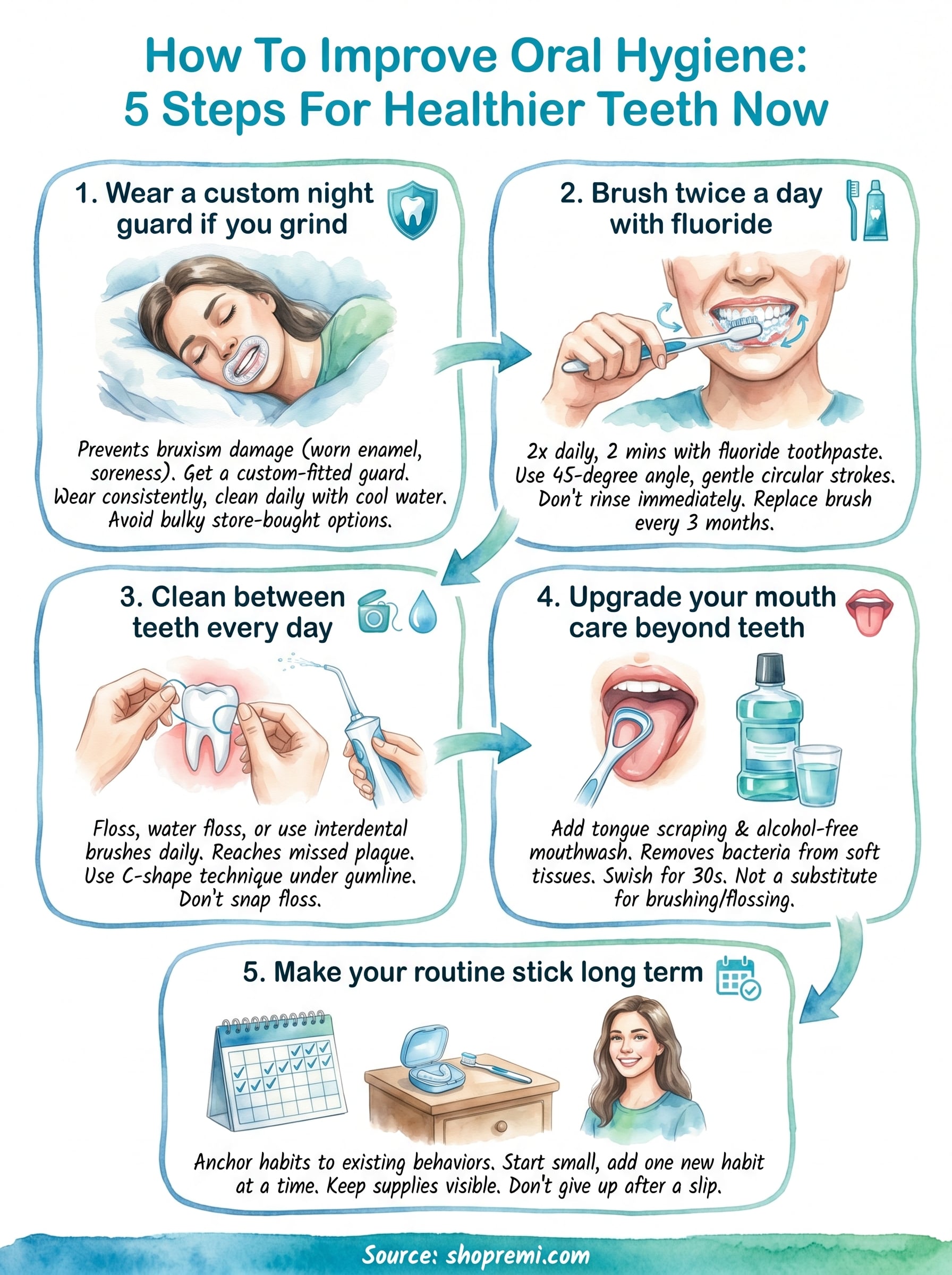
You now have a clear, practical framework for how to improve oral hygiene that goes well beyond basic brushing. Each step in this list builds on the last, so the more consistently you apply them, the faster you will see real results in how your teeth, gums, and jaw feel day to day.
Start with the habit that addresses your biggest problem right now. If you wake up with jaw soreness or worn enamel, protecting your teeth at night is the most urgent priority. If your gums bleed regularly, adding daily interdental cleaning will make the biggest immediate difference.
Custom-fitted protection is one of the most overlooked parts of a complete oral care routine. If you grind at night, a professionally made guard can stop years of silent damage before it becomes costly. Check out Remi's custom night guard and take the first step toward better oral health tonight.

