
 Guards + Retainers
 Custom Night Guard
 Retainer
 Emergency Order

 Whitening
 Whitening Kit
 Teeth Whitening Gel
 Dual-Action Foam
 Cleaning + Care
 Ultrasonic Cleaner Pro
 Water Flosser
 UV Toothbrush Sanitizer
 Deep Clean + Freshening Tablets
 Accessories
 Guard Removal Tool
 Replacement Nozzles
 Bundles

If you grind your teeth at night, you've probably stood in a pharmacy aisle staring at a wall of night guards, wondering if one of those $20 options will actually do the job. It's a fair question. The debate around OTC vs custom night guard options comes down to more than just price, it's about fit, comfort, durability, and whether the thing actually protects your teeth while you sleep.
Over-the-counter night guards are easy to grab and relatively cheap upfront. Custom night guards, traditionally made through a dentist, deliver a precise fit but often come with a hefty price tag. That's exactly why we started Remi, to give people access to custom-fitted, professional-grade night guards without the dental office markup, all through a simple at-home impression kit shipped straight to your door.
In this article, we'll break down the real differences between store-bought and custom night guards, covering cost, effectiveness, longevity, and comfort, so you can make a confident decision about which option actually makes sense for your teeth, your jaw, and your budget.
Why the right night guard matters for bruxism
Bruxism is teeth grinding or jaw clenching that happens mostly while you sleep, which means you have no conscious control over it. Most people who grind their teeth don't even realize they're doing it until they wake up with jaw soreness, headaches, or worn enamel that a dentist flags at a routine checkup. Left unaddressed, bruxism wears down tooth surfaces, cracks enamel, strains jaw muscles, and can lead to expensive restorative dental work down the road.
What bruxism actually does to your teeth
The forces generated during sleep grinding are significant. Research shows that bruxism can produce bite forces far greater than normal chewing, sometimes reaching up to 250 pounds of pressure per square inch. That kind of repeated stress causes enamel erosion, tooth sensitivity, micro-fractures, and accelerated wear on dental work like crowns and fillings. Over time, your teeth can actually change shape and your bite can shift, creating problems that go well beyond discomfort.
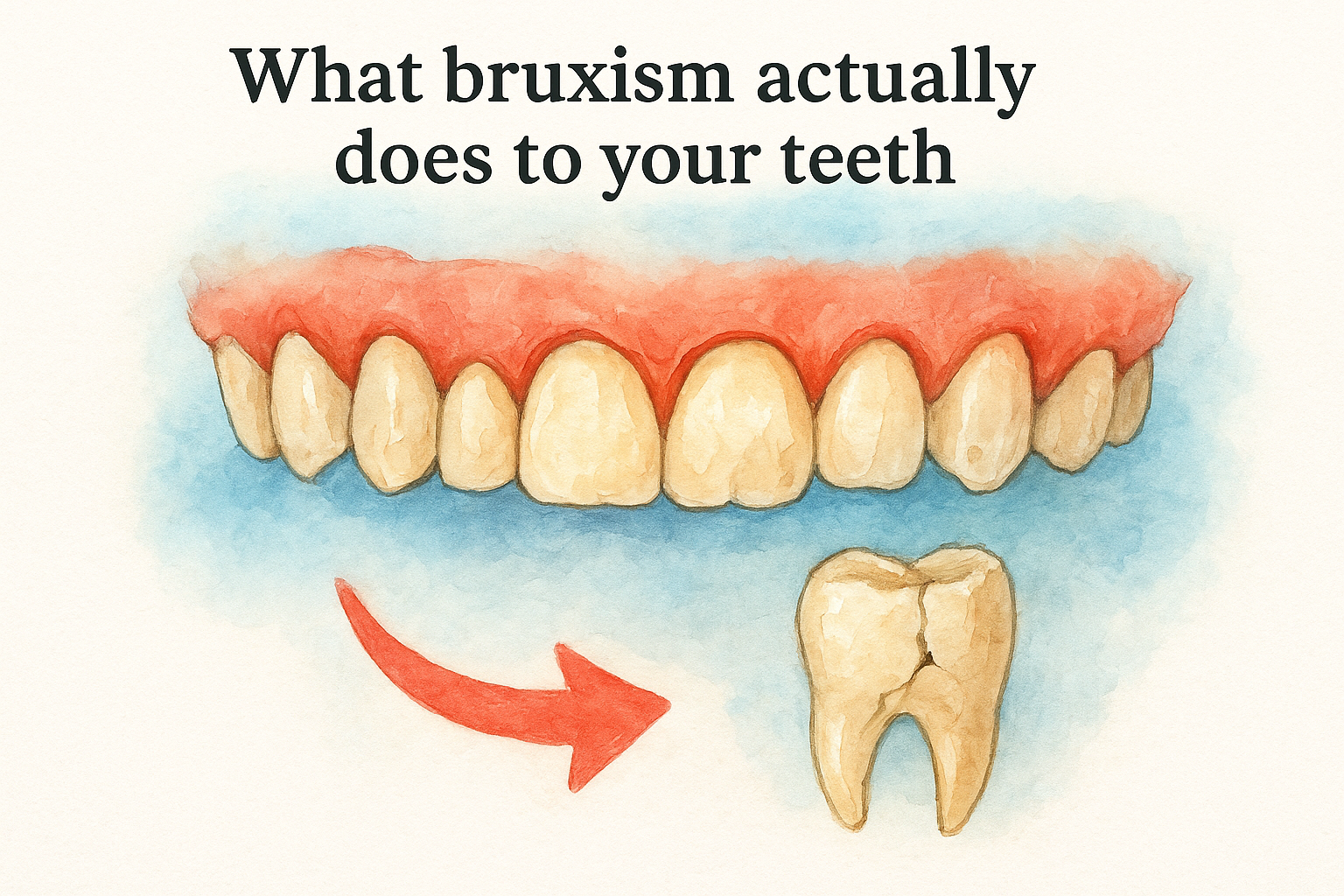
The damage from untreated bruxism builds gradually, which is why catching it early and using proper protection matters more than most people realize.
Why fit and material determine how well a night guard works
A night guard works by creating a physical barrier between your upper and lower teeth, absorbing and redistributing the force of grinding before it reaches your enamel. That only works if the guard fits correctly. A poorly fitted guard can shift during sleep, fail to cover key teeth, or force your jaw into an unnatural resting position, which can actually worsen jaw tension rather than relieve it.
This is where the otc vs custom night guard comparison becomes critical. Store-bought options use soft, generic materials molded loosely to your teeth, which limits how much protection they offer for moderate to severe grinders. Custom guards are fabricated to match the exact contours and bite of your specific teeth, distributing pressure evenly and staying securely in place throughout the night.
Your night guard also needs to match the severity of your grinding. A heavy grinder chewing through a thin pharmacy guard within weeks is not getting adequate protection, and their teeth are still taking damage every single night.
OTC night guards explained
Over-the-counter night guards are the options you find at pharmacies, big-box stores, and online retailers. They typically fall into two categories: pre-formed guards that you wear straight out of the box, and boil-and-bite guards that you soften in hot water and mold loosely to your teeth. Both are widely available and cost anywhere from $10 to $50, which makes them appealing if you're just starting to address grinding and want a low-commitment option.
The low price point of OTC guards is attractive, but it often reflects the limitations built into the product.
What OTC guards are made from
Most store-bought guards are made from soft thermoplastic materials that prioritize flexibility over durability. Some products offer a harder outer layer with a soft inner lining, marketed as dual-laminate, but even these use generic sizing rather than your actual dental anatomy. The material breaks down faster under repeated grinding pressure, especially for moderate to severe grinders, meaning you may replace them every few weeks.
Where OTC guards fall short
The core problem with OTC guards is that a generic fit cannot account for your unique bite. When a guard doesn't seat properly, it can shift during sleep, irritate your gums, or cause your jaw to sit at an awkward angle that increases muscle tension. In the otc vs custom night guard comparison, this is the most significant drawback of going the pharmacy route. Store-bought guards can work as a short-term stopgap, but they rarely deliver consistent, reliable protection over time.
Custom night guards explained
Custom night guards are fabricated specifically for your teeth, using a precise impression of your dental anatomy rather than a generic size. The result is a guard that fits snugly against every surface of your teeth, stays put throughout the night, and distributes grinding pressure evenly across your bite rather than concentrating it in one spot.
How custom guards are made
The process starts with an impression kit, either at a dental office or through a direct-to-consumer service like Remi. You press your teeth into a tray filled with impression material, let it set, and return the mold to a dental lab. From there, technicians use that exact mold to fabricate a guard that mirrors the unique shape of your teeth and bite. Professional labs use hard acrylic, dual-laminate, or hybrid materials chosen to match the severity of your grinding, not a one-size-fits-all thermoplastic.
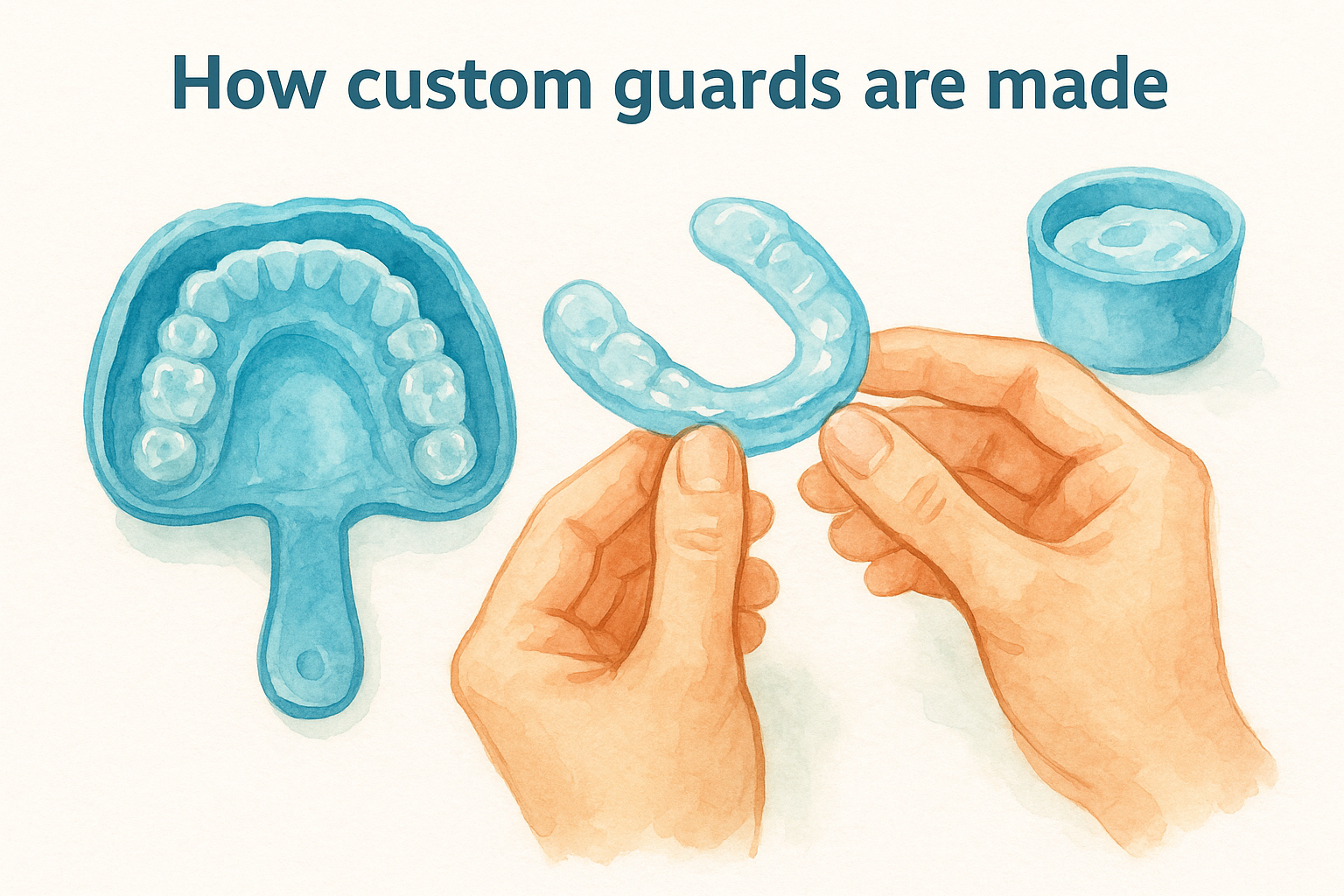
A guard built from your actual dental impression fits in a way that no boil-and-bite product can replicate.
What makes them more effective
When you look at the otc vs custom night guard debate, the core advantage of a custom guard is precision. Because it seats flush against your teeth, it does not shift during sleep, and your jaw rests in a natural, neutral position rather than compensating for an ill-fitting appliance. That means less muscle strain and more consistent protection.
Custom guards also use denser, lab-grade materials that hold up under heavy grinding forces for months or years, making the long-term value considerably better than cycling through store-bought replacements every few weeks.
Cost, durability, and comfort compared
When you break down the full cost of each option over time, the picture changes significantly from what the sticker price suggests. The otc vs custom night guard comparison is not just about what you pay today but about what you spend over a year of consistent use.
What you pay over time
OTC guards run $10 to $50 per unit, but most grinders replace them every two to eight weeks. That can add up to $130 or more annually with zero improvement in protection. A custom night guard from Remi starts at $95 and typically lasts one to three years with proper care.
When you factor in replacement frequency, a custom night guard often costs less per year than cycling through pharmacy options.
| Option | Upfront Cost | Lifespan | Est. Annual Cost |
|---|---|---|---|
| OTC guard | $10-$50 | 2-8 weeks | $130-$600+ |
| Custom (Remi) | From $95 | 1-3 years | $32-$95 |
Comfort and wearability
Comfort determines whether you actually wear the guard consistently, and skipping nights leaves your teeth unprotected. OTC guards feel bulky and loose because they are not shaped to your bite. A custom guard sits flush against every tooth surface and keeps your jaw in a neutral resting position, making it easier to wear without interruption.
Material also matters for long-term comfort during use. OTC thermoplastic softens and compresses under grinding pressure, creating an unstable feel that shifts throughout the night. Custom guards use lab-grade acrylic or dual-laminate materials that hold their shape, so your jaw stays stable from the time you fall asleep to the time you wake up.
How to choose and use the right night guard
The first question to ask yourself is how severe your grinding is. Mild grinders who occasionally wake with a sore jaw may get short-term relief from an OTC option, but if you notice worn enamel, frequent headaches, or you're burning through store-bought guards quickly, a custom guard is the stronger long-term choice. The otc vs custom night guard decision comes down to whether you need a temporary fix or lasting protection.
Matching the guard to your grinding severity
Your grinding severity should directly guide which material and thickness you choose. Light grinders can often manage with a softer guard, while moderate to heavy grinders need a hard acrylic or dual-laminate option that resists compression and holds its shape under significant force. If you clench more than grind, a hard outer layer is especially important since soft materials compress and lose effectiveness quickly.
Choosing the wrong material for your grinding level means the guard absorbs less force and your teeth take more damage over time.
- Light grinding: soft or hybrid guard, replaced as needed
- Moderate grinding: dual-laminate custom guard
- Heavy grinding or clenching: hard acrylic custom guard
Getting the most out of your night guard
Once you have the right guard, consistent wear and daily cleaning are what keep it effective and extend its lifespan. Rinse it with cool water every morning and use a non-abrasive foam or tablet cleanser to prevent bacterial buildup. Avoid hot water, which warps thermoplastic materials and distorts the fit over time.
Store your guard in a ventilated case between uses and inspect it regularly for cracks, thinning, or soft spots that signal it is time for a replacement.
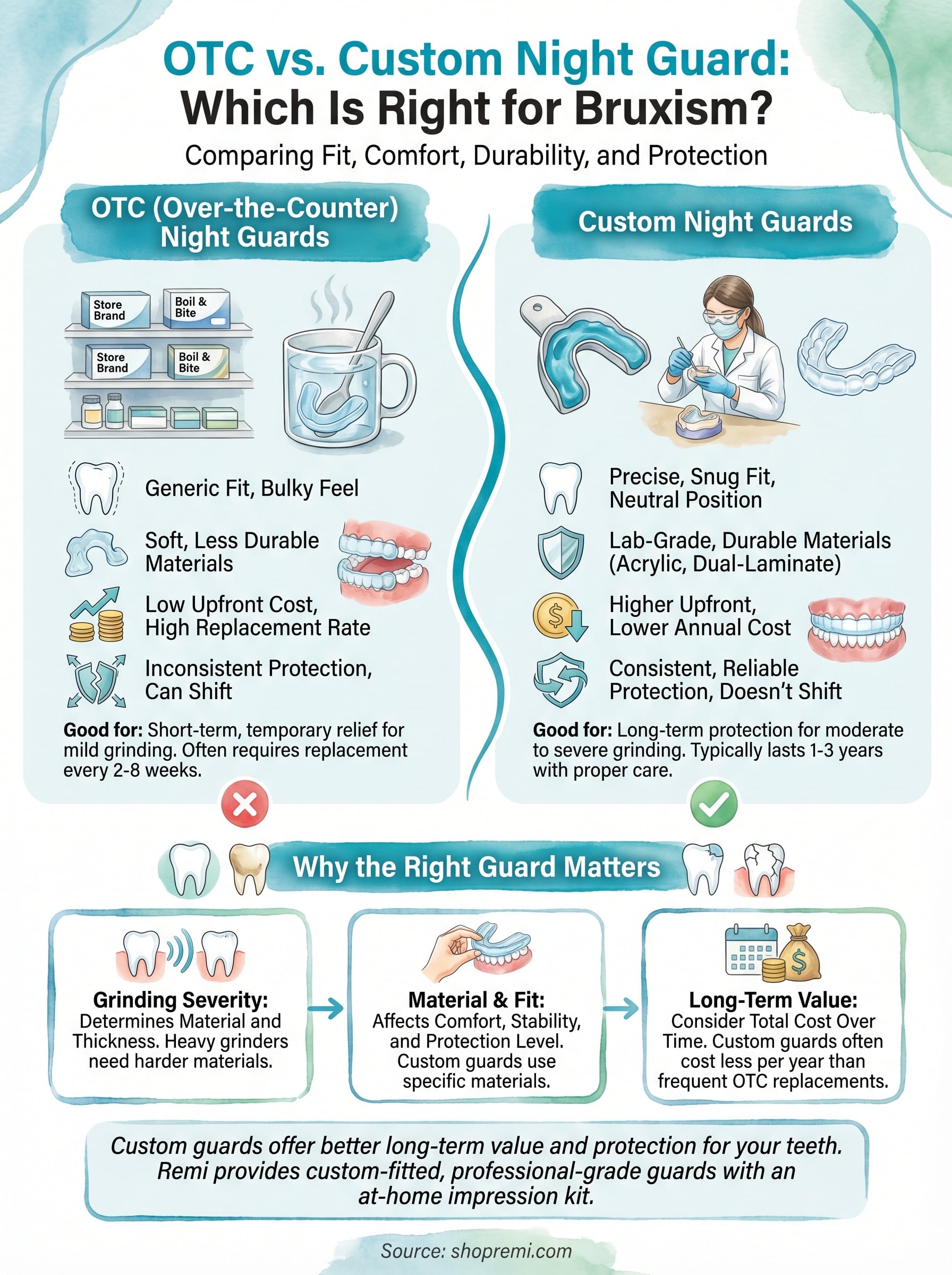
Next steps for protecting your teeth
The otc vs custom night guard decision gets easier once you look at the full picture. If you're grinding through pharmacy guards or waking up with jaw pain, a store-bought option is not giving your teeth the protection they need. A custom guard built from your actual dental impression fits better, lasts longer, and costs less per year than replacing cheap guards every few weeks.
Your teeth take real, cumulative damage from untreated bruxism, and the best time to act is before that damage shows up on a dental bill. Remi's at-home impression kit makes getting a professional-grade custom guard straightforward, with no office visits and no inflated prices. You complete the impression at home, mail it back, and receive a lab-fabricated guard built specifically for your bite. Start protecting your smile today with a Remi custom night guard and stop settling for a fit that never quite works.

