
 Guards + Retainers
 Custom Night Guard
 Retainer
 Emergency Order

 Whitening
 Whitening Kit
 Teeth Whitening Gel
 Dual-Action Foam
 Cleaning + Care
 Ultrasonic Cleaner Pro
 Water Flosser
 UV Toothbrush Sanitizer
 Deep Clean + Freshening Tablets
 Accessories
 Guard Removal Tool
 Replacement Nozzles
 Bundles

If you clench or grind your teeth during waking hours, you've probably wondered: can you wear a night guard all day? It's a fair question. Bruxism doesn't always wait until bedtime, and the discomfort from daytime clenching can be just as damaging to your teeth and jaw as nighttime grinding.
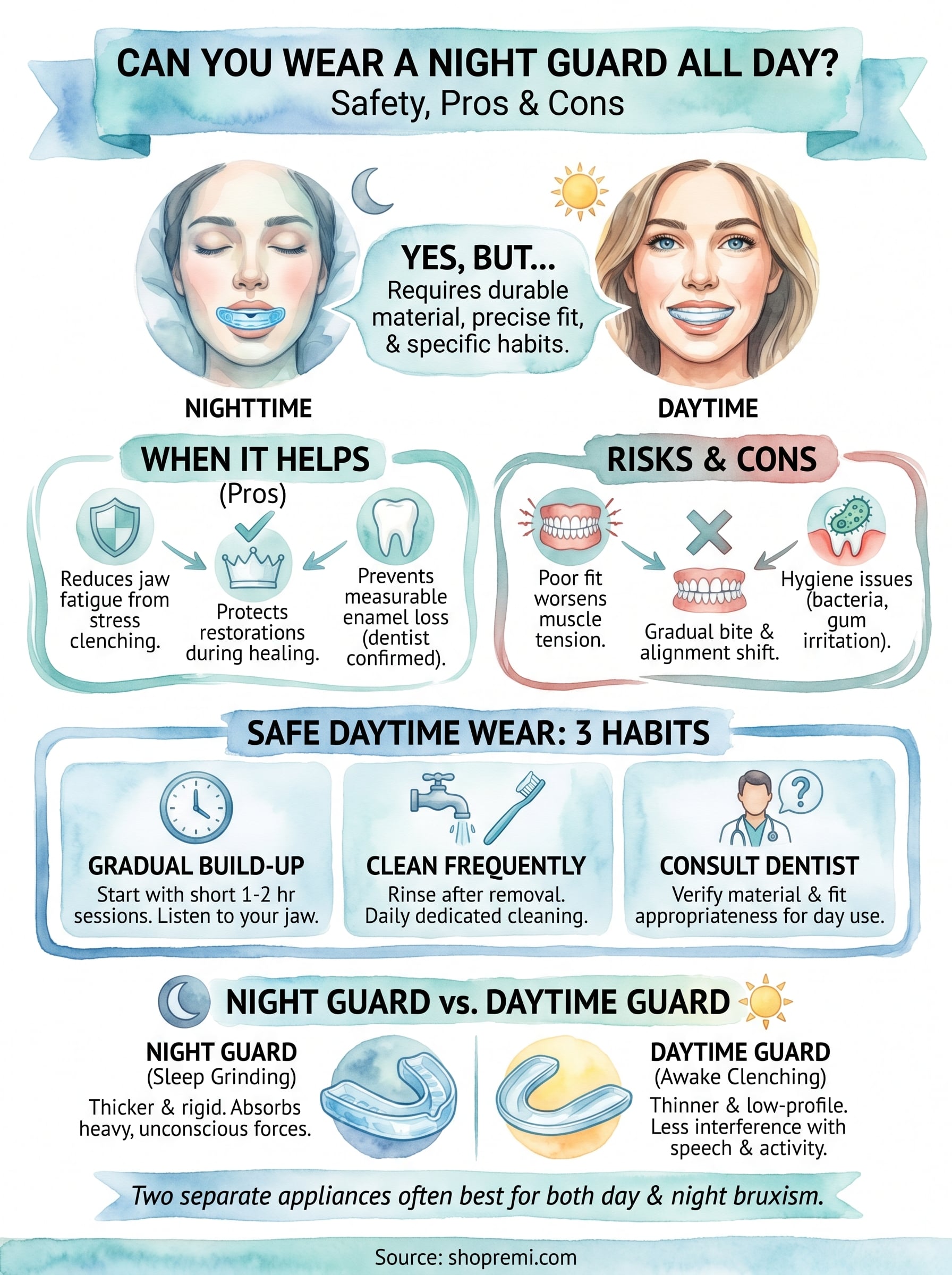
The short answer is yes, but there are some important details to consider. Not every night guard is designed for all-day use, and wearing the wrong type for extended hours can cause bite changes, soreness, or hygiene issues. The right approach depends on your guard's material, fit, and your specific grinding habits.
At Remi, we make custom-fitted night guards that are crafted from professional-grade materials with input from our in-house dental team. Below, we'll break down the safety considerations, pros and cons, and practical tips for daytime wear so you can protect your teeth around the clock without second-guessing your decision.
What it means to wear a night guard all day
A night guard is an oral appliance designed to sit between your upper and lower teeth, absorbing the force from clenching or grinding so your enamel doesn't take the hit. Most people use one exclusively while they sleep, which is why the product carries the "night" label. Asking whether you can wear a night guard all day is really asking whether that same appliance can do its job during waking hours when your clenching patterns, saliva flow, and daily activity all look different.
How night guards are typically designed
Most night guards are built with nighttime physiology in mind. During sleep, your jaw is generally relaxed between grinding episodes, you breathe through your nose at a slower rate, and you are not speaking, eating, or drinking. The thickness and coverage area of a standard night guard are shaped around these conditions. A full-coverage guard that fits snugly over your upper or lower arch works well when your jaw is largely stationary, but those same design features can feel bulky or intrusive during an active day.
Material also matters here. Softer, dual-laminate guards tend to be more comfortable for short daytime stretches, while harder acrylic guards are better suited for heavy grinders but can feel rigid when you are talking or moving your jaw throughout the day. Knowing what your guard is made from helps you predict how it will feel after several hours of continuous wear.
What changes when you wear it during the day
Daytime bruxism is a recognized condition where people clench their teeth in response to stress, concentration, or habit rather than during sleep cycles. When you wear a night guard all day to manage this, your jaw muscles, bite alignment, and oral environment all respond differently than they do overnight. Your saliva production increases during the day, which keeps the guard cleaner, but you also have to manage speaking clearly and staying hydrated.
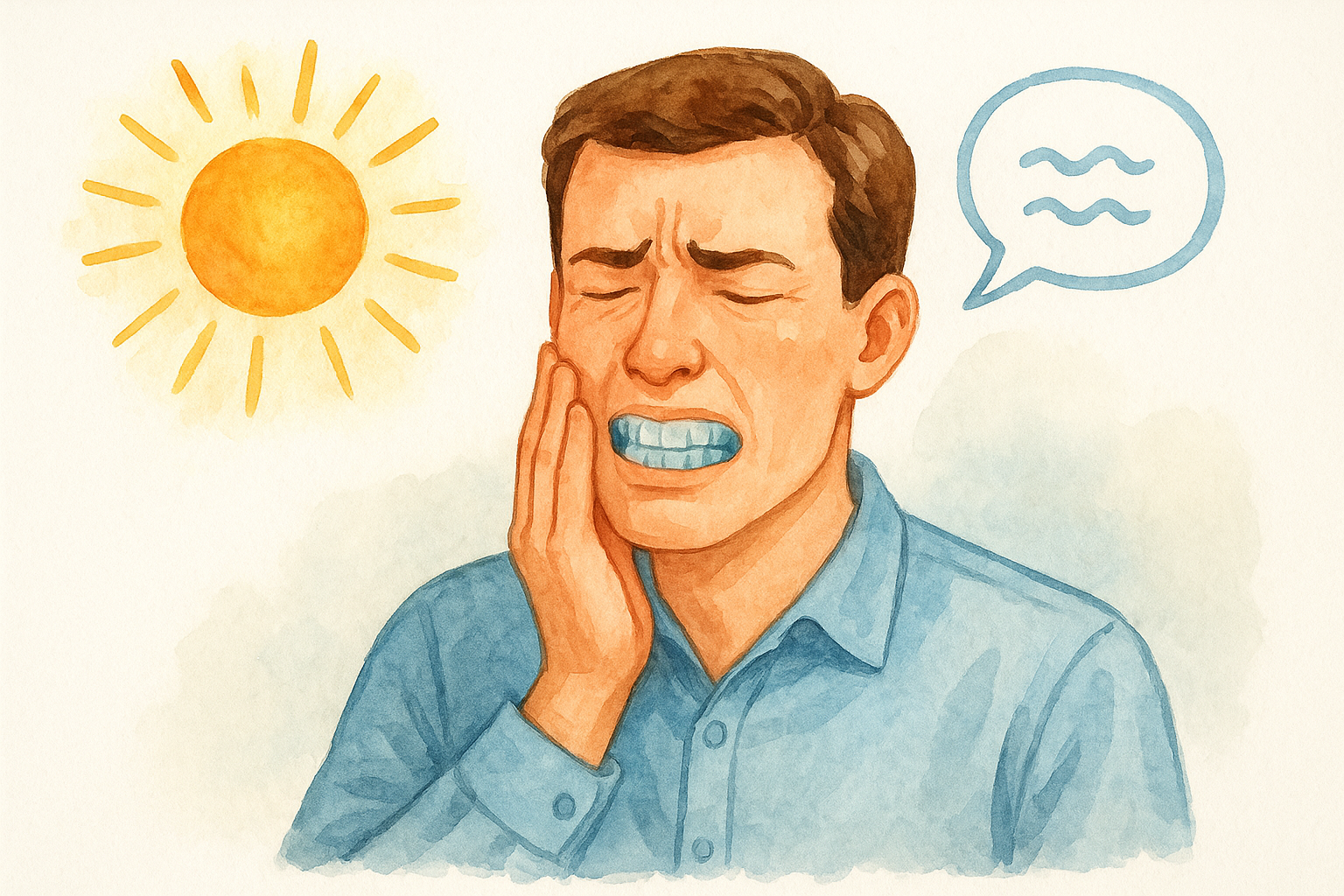
Wearing a guard during waking hours puts different demands on the appliance than nighttime use does, so fit and material become even more critical.
Your bite forces during the day can actually run higher than at night because conscious clenching involves full muscle engagement. This is another reason to confirm that your guard is built from durable, professional-grade material that can handle extended, active use without warping or losing its shape.
When daytime wear helps and when it hurts
Whether wearing a night guard during the day is a good idea depends entirely on why you clench and how severe your symptoms are. For some people, daytime wear is a practical protective measure. For others, it creates new problems while trying to solve existing ones.
When wearing a night guard during the day makes sense
If you experience stress-triggered daytime clenching, wearing your guard during high-pressure situations like long work sessions or commutes can meaningfully reduce jaw fatigue and tooth wear. People recovering from dental procedures sometimes benefit from daytime guard use to protect crowns, veneers, or recently adjusted teeth while the surrounding tissue heals. If your dentist has confirmed that your daytime bruxism is causing measurable enamel loss, wearing a well-fitted custom guard makes sense as an immediate protective step.
A custom-fitted guard made from professional-grade material gives you far better protection than a generic over-the-counter option, especially during extended daily use.
When daytime wear causes more problems than it solves
Wearing a night guard all day becomes counterproductive when the guard does not fit precisely, since a loose fit encourages your jaw muscles to work harder to hold the appliance in place, which can worsen existing tension. Extended wear can also gradually shift your bite alignment if the guard's thickness changes how your upper and lower teeth meet throughout the day. If you find yourself clenching around the guard rather than relaxing into it, or if you develop new jaw soreness within the first few days of daytime use, those are clear signs the appliance is not the right solution for your waking hours.
Risks and side effects to watch for
Even when you start with a well-fitted, professional-grade guard, wearing it for extended daytime hours introduces specific risks that nighttime-only use rarely triggers. Understanding these risks helps you catch problems early before they become harder to reverse.
Bite and jaw alignment changes
One of the most significant risks of wearing a night guard all day is gradual bite shift. When a guard adds thickness between your teeth for many consecutive hours, your jaw adapts by repositioning itself to accommodate that extra layer. Over time, your natural bite pattern can change, meaning your upper and lower teeth no longer meet the way they should when you remove the guard. This shift can cause uneven pressure on specific teeth, increasing the risk of sensitivity or cracking.
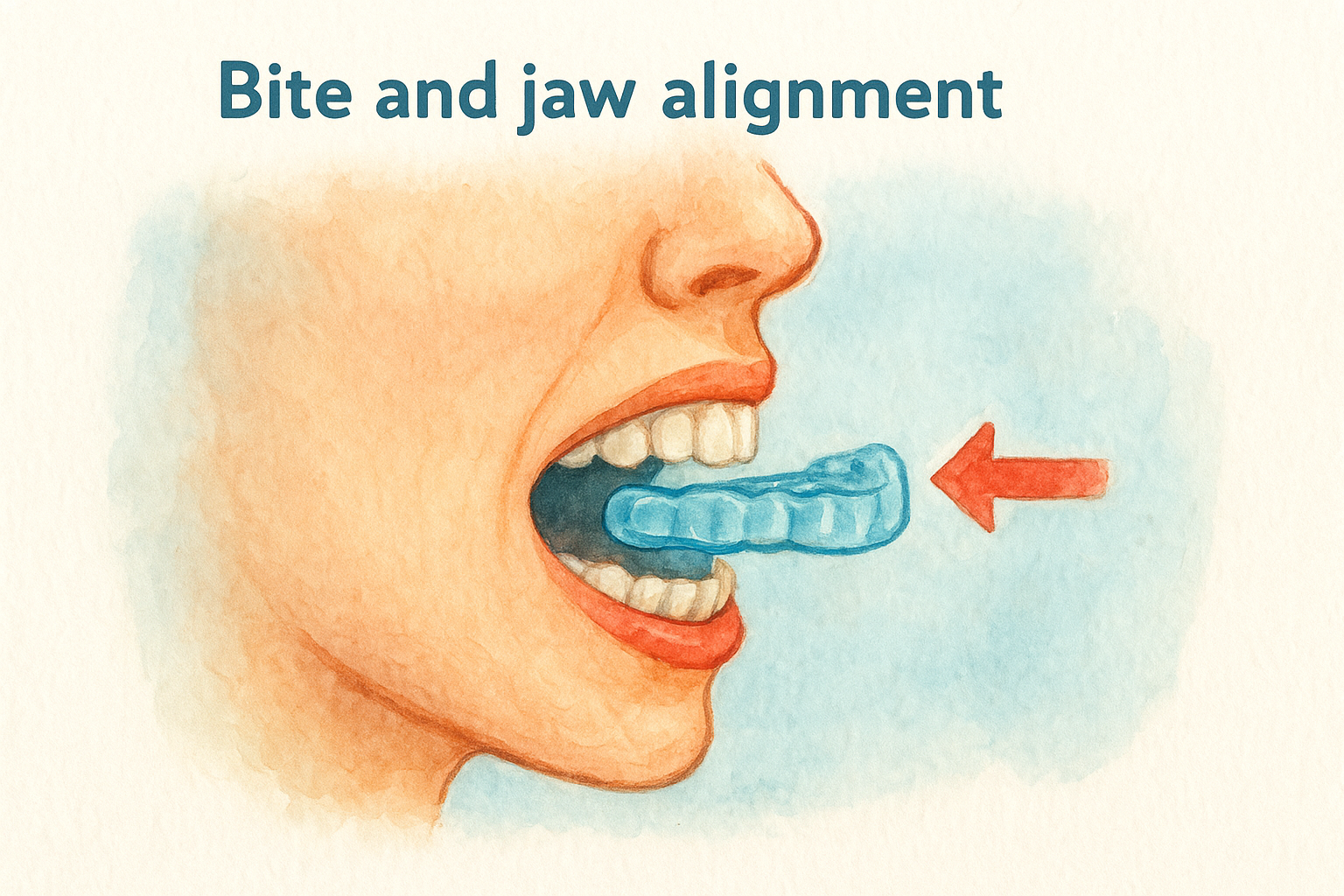
If you notice that your teeth feel "off" when you bite down after removing your guard, contact your dentist promptly.
Hygiene and soft tissue concerns
Bacteria thrive in warm, moist environments, and a night guard worn continuously through the day creates exactly that. Extended wear without cleaning breaks increases your exposure to plaque buildup along the gumline and on the guard's surface. Your gum tissue can become irritated or inflamed if trapped bacteria sit against it for hours, especially during periods of physical activity when saliva flow changes. Rinse your guard any time you remove it during the day and clean it thoroughly at least once daily with a product designed specifically for dental appliances. Skipping that step raises your risk of bad breath, gum irritation, and appliance degradation over time.
How to wear a night guard during the day safely
If you want to wear your night guard during the day, a few straightforward habits make the difference between helpful protection and unnecessary risk. Treating daytime wear with the same care you give nighttime use keeps your teeth protected and your guard in good shape.
Build up your wear time gradually
Starting with short sessions of one to two hours rather than immediately wearing your guard all day lets your jaw muscles adjust to the appliance without building tension. Track how your jaw feels after each session. If you notice soreness or fatigue, reduce the duration and increase it again more slowly over the following week.
Keep your guard clean throughout the day
Every time you remove your guard to eat or drink anything other than water, rinse it under cool water immediately before bacteria can settle on the surface. At the end of each day, clean it thoroughly with a dental appliance cleaner or foam specifically formulated for night guards. Skipping this step allows plaque and odor-causing bacteria to build up quickly with extended daytime wear.
Rinsing your guard each time you take it out is one of the simplest ways to protect both the appliance and your gum tissue.
Talk to your dentist before committing to all-day use
Before asking can you wear a night guard all day as a long-term strategy, get a direct answer from a dental professional who has examined your bite and jaw function. Your dentist can confirm whether your current guard's material and thickness are appropriate for daytime use or whether a different appliance better fits your specific needs.
Night guard vs daytime guard for awake clenching
When you ask can you wear a night guard all day, the honest answer points toward a bigger question: should you use a dedicated daytime appliance instead? Night guards and daytime guards are both oral protective devices, but they are built around different use cases, and understanding the distinction helps you make the right call for your situation.
How night guards and daytime guards differ
Night guards are typically thicker and more rigid, designed to absorb heavy grinding forces during sleep when your muscles cycle through repeated clenching without conscious interruption. Daytime guards, sometimes called occlusal splints or clenching guards, tend to be thinner and lower-profile so they interfere less with speech and daily activity.
A thinner, lower-profile appliance fits more discreetly during work hours and puts less pressure on your jaw when you talk or concentrate. The reduced bulk means your speech stays clearer and you experience less overall muscle fatigue compared to wearing a full-thickness night guard through your waking hours.
A guard designed specifically for daytime use generally causes fewer speech and bite interference issues than a standard night guard worn through the day.
Which one you actually need
Your grinding pattern and severity should drive this decision. If you only clench during the day, a slim daytime guard gives you protection without unnecessary bulk. If you grind both at night and during the day, two separate appliances often make more sense than pushing one guard into both roles around the clock.
| Situation | Recommended option |
|---|---|
| Nighttime grinding only | Standard night guard |
| Daytime clenching only | Slim daytime guard |
| Both day and night bruxism | Two separate appliances |
A simple takeaway
Can you wear a night guard all day? Yes, but only under the right conditions. If your guard fits precisely, is made from durable professional-grade material, and you keep it clean throughout the day, wearing it during waking hours can protect your teeth from the damage caused by daytime clenching. If your guard fits loosely or causes new jaw soreness, it is working against you rather than for you.
Your best move is to match the appliance to the problem. Daytime clenching and nighttime grinding are different habits that often respond better to separate, purpose-built guards. Talk to your dentist about your specific bruxism pattern, then choose accordingly. Starting with a high-quality, custom-fitted guard gives you the strongest foundation either way. If you are ready to protect your teeth with something built specifically for your mouth, check out Remi's custom night guard and take the first step today.

