
 Guards + Retainers
 Custom Night Guard
 Retainer
 Emergency Order

 Whitening
 Whitening Kit
 Teeth Whitening Gel
 Dual-Action Foam
 Cleaning + Care
 Ultrasonic Cleaner Pro
 Water Flosser
 UV Toothbrush Sanitizer
 Deep Clean + Freshening Tablets
 Accessories
 Guard Removal Tool
 Replacement Nozzles
 Bundles

You might not notice it at first, a dull jaw ache in the morning, a tooth that suddenly feels sensitive to cold, or a partner mentioning strange sounds while you sleep. But teeth grinding damage adds up quietly, and by the time most people realize something is wrong, their enamel, dental work, or jaw joints have already taken a hit. An estimated 10–15% of adults grind their teeth during sleep, many without knowing it.
The real concern isn't the grinding itself, it's what it does over time. Cracked enamel, receding gums, fractured crowns, and chronic TMJ pain are all documented consequences of untreated bruxism. Some of this damage is reversible with the right intervention. Some of it isn't. Understanding the difference matters, because it shapes which treatment path actually makes sense for you.
This article breaks down the specific types of damage bruxism causes, how to gauge severity, and what repair options exist, from conservative approaches to full restorative work. At Remi, we make custom night guards designed to protect teeth from grinding before the damage escalates, so we've seen firsthand how much a proactive step can save people in pain, stress, and dental bills down the road.
What teeth grinding damage looks like
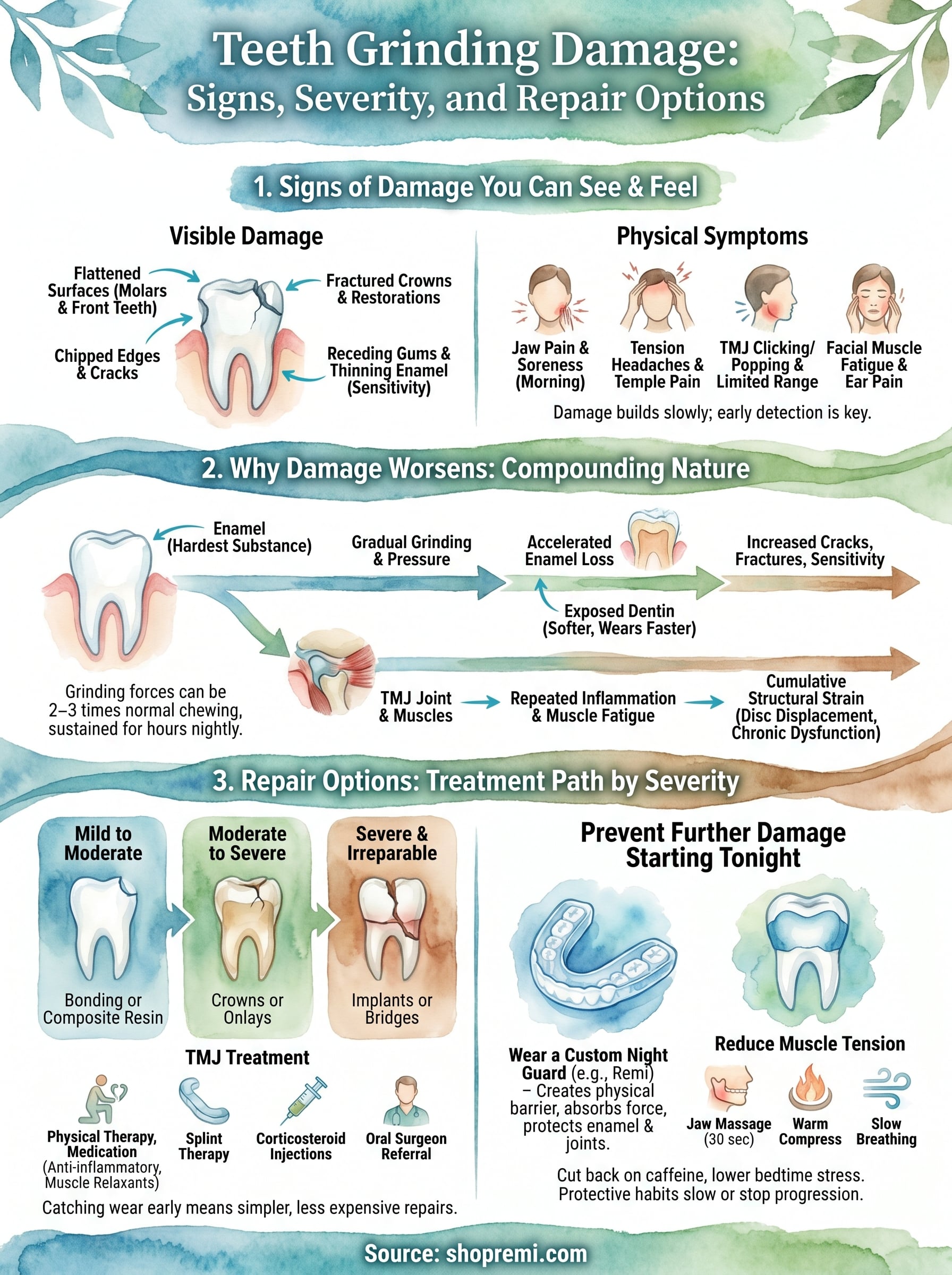
Teeth grinding damage doesn't always announce itself with a dramatic crack or sudden pain. The signs build slowly, and you often only notice something is wrong after months of grinding. The damage shows up in two main ways: visible changes to your teeth and restorations, and physical symptoms felt in your jaw, face, and head.
Damage you can see
Your dentist is often the first to spot the visible signs, but some are obvious enough to catch yourself. Flattened or shortened teeth are one of the clearest indicators. Your molars and front teeth wear down at the biting surfaces, losing their natural shape over time. You may also notice chipped edges, small cracks, or fractured cusps, especially on back teeth that absorb the most grinding force.

Existing dental work takes a hit too. Crowns, veneers, and fillings are not immune, and repeated pressure can loosen, chip, or fracture them well ahead of their expected lifespan. Tooth sensitivity to hot, cold, or sweets also increases as enamel thins, because the protective layer between your nerves and the outside world gradually gets worn away.
Once enamel is gone, your body cannot regenerate it, making early detection one of the most important steps in preventing permanent damage.
Damage you can feel
The physical symptoms extend well beyond your teeth. Jaw pain or soreness is one of the most common complaints, particularly in the morning after a night of grinding. Your temporomandibular joints (TMJ) sit just in front of your ears, and chronic grinding puts them under significant stress, leading to clicking, popping, or limited range of motion when you open your mouth.
Headaches are another frequent sign, especially tension-type headaches that start near your temples. Facial muscle fatigue and ear pain can accompany these headaches, because the muscles involved in grinding wrap around the sides of your head. If you regularly wake up with a tight, tender jaw or face, grinding is a likely cause worth taking seriously.
Why grinding can cause lasting problems
Most damage from a single grinding episode is minor, but bruxism works through relentless repetition. Your teeth are designed to handle the brief forces of chewing, which last only fractions of a second per bite. Grinding, by contrast, sustains heavy clenching pressure for hours each night, far beyond what your enamel, jaw joints, and surrounding muscle tissue were built to absorb consistently without consequence.
Research suggests that nighttime grinding can generate bite forces two to three times greater than normal chewing, sustained for far longer periods.
The compounding nature of nightly pressure
Enamel is the hardest substance your body produces, but it cannot regenerate once lost. As grinding gradually thins this outer layer, teeth grinding damage accelerates progressively: the softer dentin underneath wears down much faster, deepening sensitivity and raising your risk of cracks or full fractures with less force than before. Waiting to address this does not pause the cycle; it simply lets it run longer.
Your jaw muscles and TMJ joints absorb a separate but equally serious burden each night. Repeated grinding episodes inflame the joint and fatigue the surrounding muscles further, building cumulative structural strain over months and years. In advanced cases, this progression leads to disc displacement and chronic jaw dysfunction, both of which require more complex treatment than the straightforward enamel repair you could pursue if you caught the problem sooner.
How dentists assess the severity and the cause
When you visit a dentist with grinding-related symptoms, they don't just look at your teeth in isolation. They conduct a structured clinical evaluation that covers your bite, jaw function, muscle tenderness, and the condition of existing restorations to build a complete picture of how far the teeth grinding damage has progressed.
What dentists look for clinically
Your dentist will examine the wear patterns on your tooth surfaces, which reveal not just that grinding is happening, but how you grind. Flat, polished areas on molars typically point to side-to-side grinding, while notching near the gumline suggests heavy clenching. They'll also press on your jaw muscles and joint areas to check for tenderness, measure how wide you can open your mouth, and listen for any clicking or popping in the TMJ.
In some cases, dentists use study models or digital scans to track wear progression over multiple visits, giving a concrete baseline for comparison.
Identifying the underlying cause
Grinding rarely happens without a trigger. Your dentist will ask about sleep quality, stress levels, and any medications you take, since stimulants and certain antidepressants are known to increase nighttime grinding. They may also evaluate your bite alignment, because teeth that don't meet evenly can drive compensatory grinding patterns that worsen damage over time. Understanding the cause shapes which protective and corrective steps will actually hold.
How to repair teeth and jaw damage from grinding
The right repair approach depends on how much damage has occurred and which structures are affected. Minor enamel wear may need only monitoring and a protective appliance, while more advanced teeth grinding damage typically calls for active restorative work. Your dentist will use the clinical assessment to map out a treatment sequence that addresses the most urgent issues first.
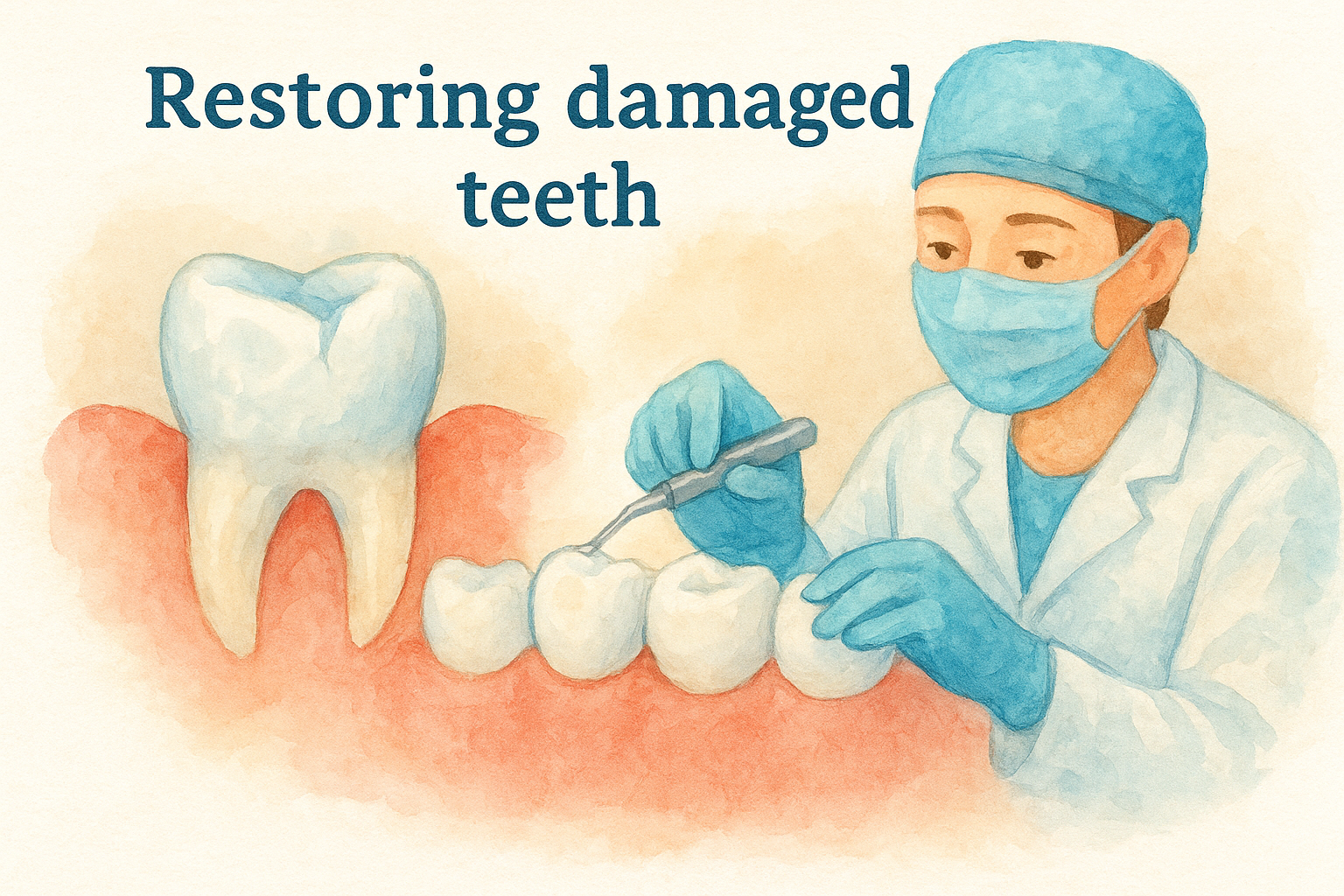
Restoring damaged teeth
For mild to moderate enamel wear, dentists often use bonding or composite resin to rebuild tooth surfaces and restore their natural shape. More significant damage, such as fractured cusps or heavily worn molars, may require crowns or onlays to cover and protect what remains. If grinding has cracked a tooth down to the root, extraction and implant placement may be the only viable path forward.
Common repair options by damage level:
- Bonding or composite resin: for minor surface wear and chipped edges
- Crowns or onlays: for moderate to severe enamel loss and fractured cusps
- Implants or bridges: for teeth that can no longer be saved
Catching wear early means simpler, less expensive repairs; a crown costs significantly more than a bonding procedure.
Treating jaw and TMJ issues
TMJ-related damage often responds well to a combination of physical therapy, anti-inflammatory medication, and muscle relaxants for short-term relief. Your dentist or an oral surgeon may recommend splint therapy or, in more severe cases, corticosteroid injections to calm an inflamed joint. Persistent disc displacement or joint degeneration sometimes requires referral to an oral and maxillofacial surgeon for a longer-term management plan.
Addressing your jaw separately from your teeth matters because untreated joint inflammation keeps surrounding muscles under constant tension. That ongoing tension puts any dental repair you invest in under renewed stress, so treating both issues together gives you the strongest long-term outcome.
How to stop more damage starting tonight
Repairing existing damage is necessary, but preventing new damage from stacking on top is equally important. You can take meaningful action before you go to sleep tonight, without waiting for a dental appointment. Protective habits combined with the right appliance can slow or stop teeth grinding damage from progressing further.
Wear a custom night guard
A custom-fitted night guard is the most direct way to protect your teeth while you sleep. It works by creating a physical barrier between your upper and lower teeth, absorbing grinding forces before they reach enamel and your jaw joints. Over-the-counter options exist, but they rarely fit well enough to stay in place or distribute force evenly.
A properly fitted night guard reduces the direct tooth-to-tooth contact that drives enamel loss and TMJ strain during sleep.
Custom night guards, like those from Remi, use an at-home impression kit to build an appliance matched to your exact bite, giving you professional-level protection at a fraction of the cost of a dental office version.
Reduce muscle tension before bed
Your jaw muscles carry tension from the day into sleep, which intensifies grinding. Spending a few minutes on targeted relaxation techniques before bed lowers baseline muscle tension and can meaningfully reduce grinding severity overnight.
- Massage your jaw muscles for 30 seconds on each side
- Apply a warm compress to your jaw joints for a few minutes
- Practice a slow breathing exercise to lower overall tension
Next steps for protecting your teeth
Teeth grinding damage is progressive, which means the window to act without major restorative work closes gradually over time. The steps that protect you most effectively combine professional evaluation with a simple nightly habit: wearing a well-fitted night guard. If you've noticed any of the signs covered in this article, worn teeth, jaw soreness, or morning headaches, those are signals worth acting on sooner rather than later.
Starting tonight costs you nothing significant. Reducing jaw tension before bed, cutting back on caffeine in the afternoon, and getting a custom-fitted appliance are all practical moves you can make without waiting for damage to worsen. A custom night guard from Remi gives you dental-grade protection at a fraction of the dental office cost, using an at-home impression process that fits your exact bite. That's a straightforward place to start protecting what you still have.

