
 Guards + Retainers
 Custom Night Guard
 Retainer
 Emergency Order

 Whitening
 Whitening Kit
 Teeth Whitening Gel
 Dual-Action Foam
 Cleaning + Care
 Ultrasonic Cleaner Pro
 Water Flosser
 UV Toothbrush Sanitizer
 Deep Clean + Freshening Tablets
 Accessories
 Guard Removal Tool
 Replacement Nozzles
 Bundles

Sleep does more than rest your body. While you sleep, your brain processes emotions, stores memories, and resets systems that control your mood and stress response. Poor sleep messes with these processes. You might feel irritable after one bad night, but chronic sleep loss can trigger anxiety, depression, and other mental health problems. The connection works both ways. Mental health conditions can wreck your sleep, creating a cycle that feeds itself.
This article breaks down what research tells us about sleep and mental health. You'll learn why sleep matters for your psychological well-being, how it affects your mood and thinking, and what happens when you don't get enough. We'll cover how much sleep you actually need and share practical steps to improve your sleep quality. You'll also discover when sleep or mood problems signal it's time to get professional help. Everything here comes from current science, not wellness hype.
Why sleep is crucial for your mental health
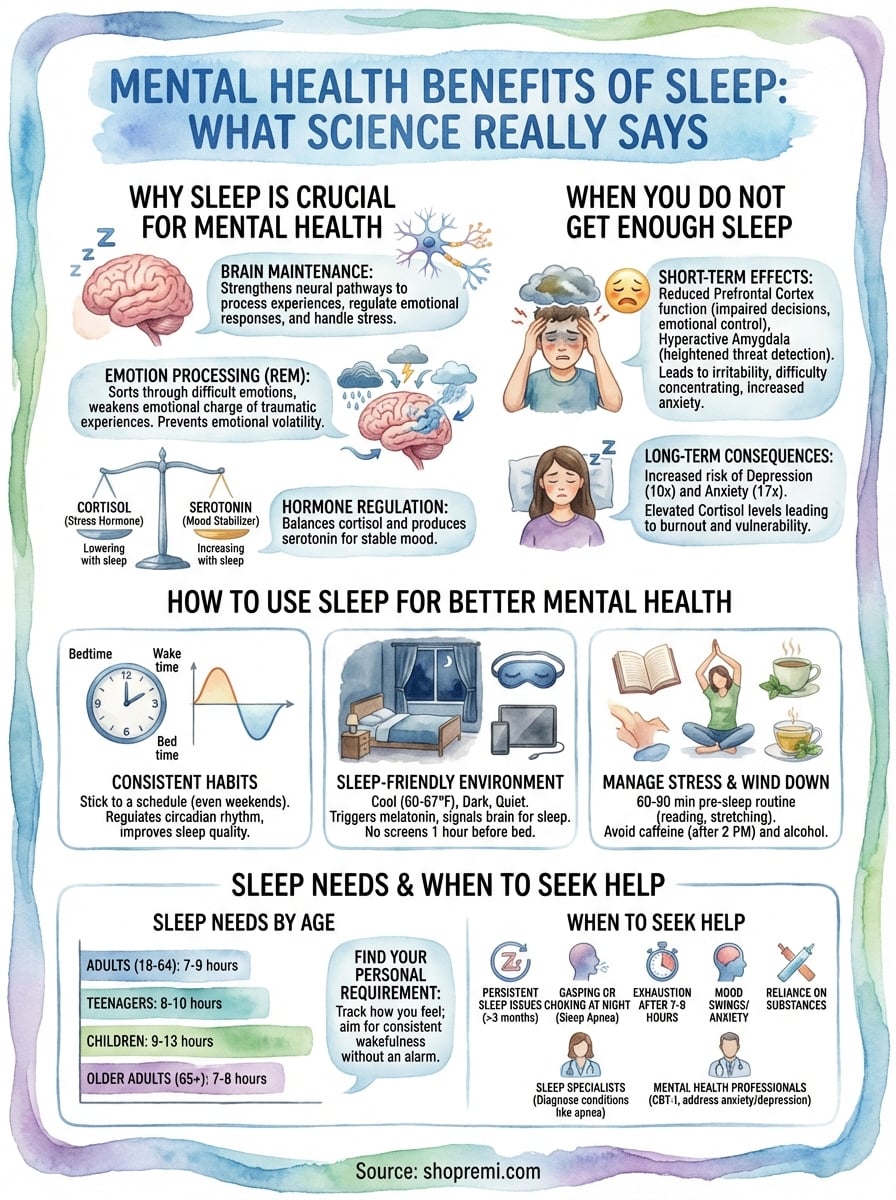
Your brain performs critical maintenance work during sleep that directly shapes your mental well-being. During sleep, neural pathways strengthen to help you process the day's experiences and regulate emotional responses. This nightly reset affects how you handle stress, control impulses, and maintain a stable mood. Without adequate sleep, these systems break down, leaving you vulnerable to mental health problems.
Your brain processes emotions during sleep
Sleep gives your brain time to sort through emotional experiences and decide what to store in long-term memory. During REM (rapid eye movement) sleep, your brain processes difficult emotions and traumatic experiences, weakening their emotional charge. This process explains why you often feel better about upsetting events after sleeping on them. Stanford Medicine researchers found that poor sleep reduces your ability to control emotions, making you more reactive to stress and negative experiences.
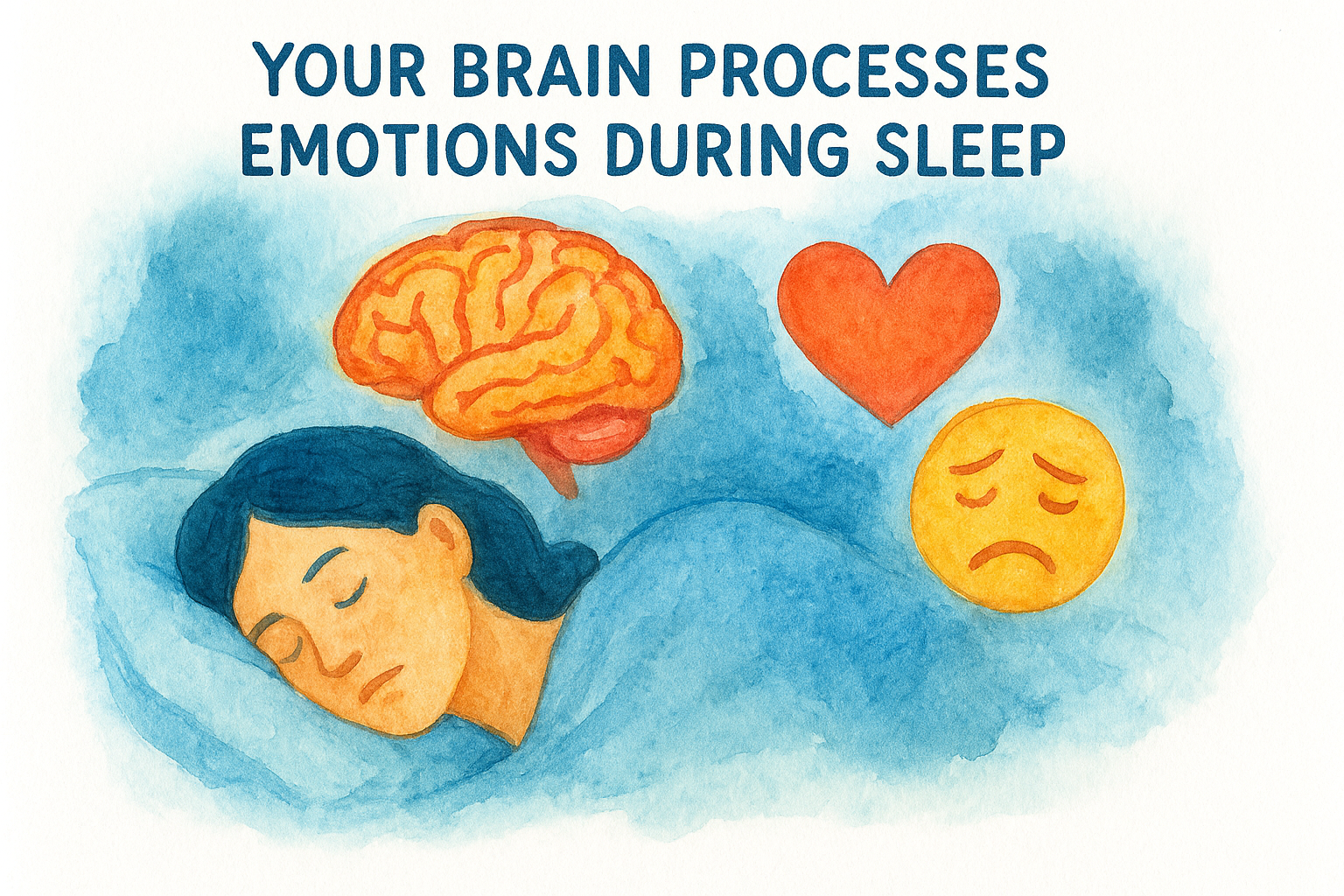
Your prefrontal cortex, which manages rational thinking and emotional regulation, becomes less active when you're sleep-deprived. Meanwhile, your amygdala (the brain's fear and threat center) becomes hyperactive. This imbalance makes everyday stressors feel more threatening and small problems seem overwhelming. Research shows that people with insomnia are 10 times more likely to develop depression and 17 times more likely to experience anxiety compared to those who sleep well.
Sleep regulates mood and stress hormones
Sleep directly controls the hormones that affect your mood and stress response. When you sleep, your body regulates cortisol (your stress hormone) and produces serotonin (which stabilizes mood). Poor sleep disrupts this balance, flooding your system with cortisol while reducing serotonin production. This chemical imbalance creates the perfect conditions for anxiety and depression to develop.
The mental health benefits of sleep extend beyond mood regulation to include improved decision-making, better impulse control, and increased resilience to life's challenges.
Research shows that sleep also affects neurotransmitters like dopamine and norepinephrine, which influence motivation, focus, and emotional stability. When these chemicals fall out of balance due to sleep loss, you experience reduced motivation, difficulty concentrating, and increased emotional volatility. The relationship between sleep and mental health works bidirectionally. Mental health conditions disrupt sleep, and disrupted sleep worsens mental health, creating a cycle that becomes harder to break the longer it continues.
How to use sleep to support better mental health
You can actively improve your mental health by treating sleep as a priority rather than an afterthought. The mental health benefits of sleep compound over time when you establish consistent habits that support quality rest. Small changes to your sleep routine, bedroom environment, and pre-sleep activities create measurable improvements in mood, stress resilience, and emotional stability. These strategies work best when you apply them consistently, giving your brain the predictable conditions it needs to complete its nightly maintenance work.
Build consistent sleep habits
Your brain relies on predictable patterns to regulate your circadian rhythm (internal clock) and optimize mental health benefits. Going to bed and waking up at the same time every day, including weekends, trains your body to expect sleep at specific hours. This consistency makes falling asleep easier and improves sleep quality by aligning your schedule with natural biological cycles. Research from Stanford Medicine shows that maintaining regular sleep times strengthens emotional regulation and reduces anxiety symptoms.
Avoid trying to catch up on sleep by sleeping late on weekends. This practice, called social jet lag, disrupts your circadian rhythm and leaves you feeling mentally foggy and emotionally unstable. Instead, stick to your schedule even when you're tired. Your body will naturally adjust by making you feel sleepy at the right time. If you need more sleep, shift your entire schedule earlier rather than sleeping in on certain days.
Create a sleep-friendly environment
Your bedroom environment directly affects sleep quality and the mental health benefits you receive from rest. Keep your bedroom cool (60-67°F), dark, and quiet to signal your brain that it's time for sleep. Darkness triggers melatonin production, which helps you fall asleep and stay asleep through the night. Block outside light with blackout curtains or use a sleep mask if needed.
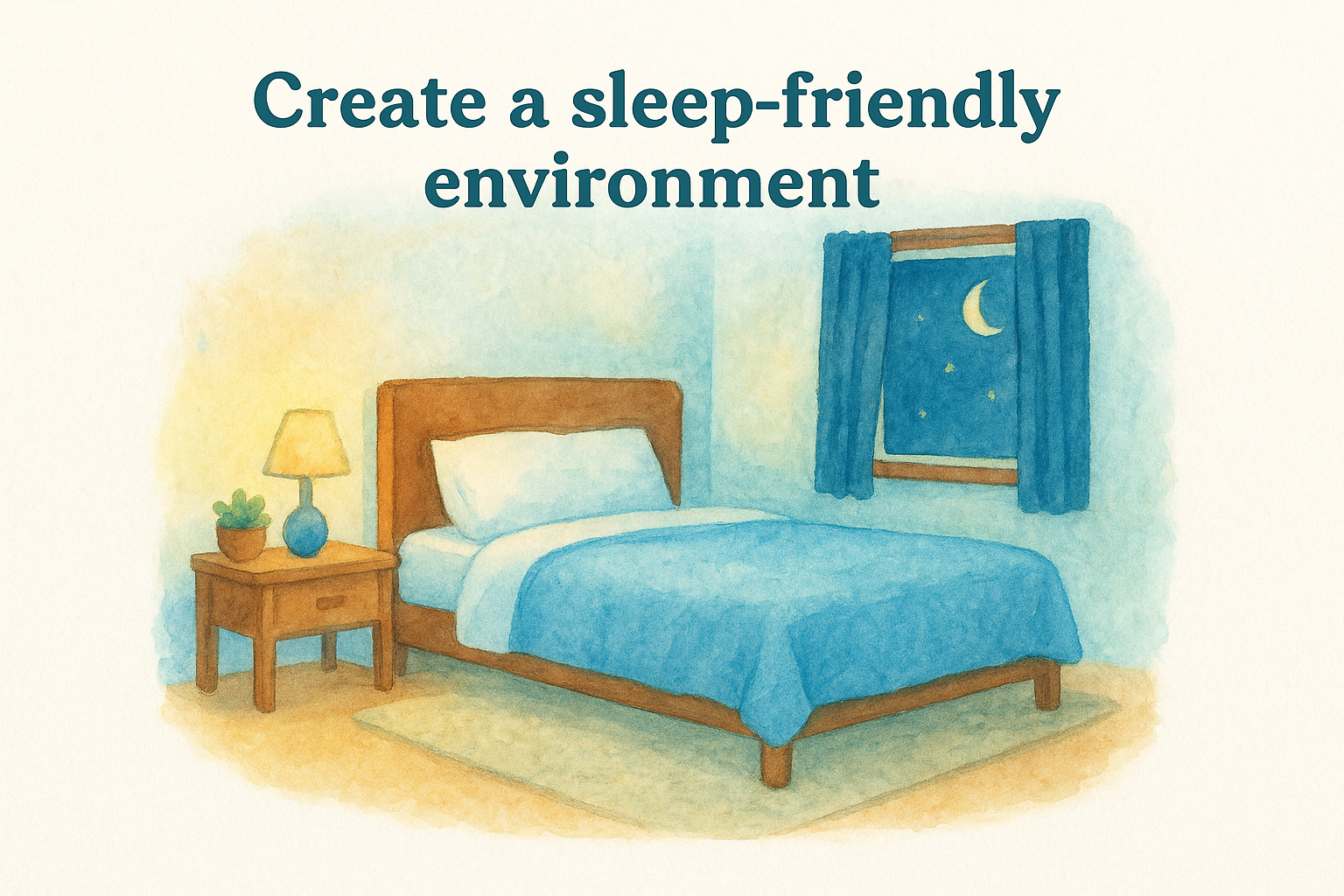
Remove electronic devices or keep them outside arm's reach. Phone screens emit blue light that suppresses melatonin and keeps your brain alert. The content you consume before bed (news, social media, work emails) also activates stress responses that interfere with sleep. Stop screen time at least one hour before bed. Use your bedroom only for sleep to strengthen the mental association between your bed and rest.
Creating the right sleep environment isn't about luxury. It's about removing obstacles that prevent your brain from completing the restorative processes that protect your mental health.
Manage stress and wind down properly
Your pre-sleep routine determines how easily you fall asleep and how well you sleep through the night. Start winding down 60 to 90 minutes before bedtime with calming activities that lower your stress hormones. Read a physical book, practice gentle stretching, or listen to calming music. These activities signal your nervous system to shift from alert mode to rest mode.
Avoid caffeine after 2 PM and alcohol within three hours of bedtime. Caffeine blocks adenosine (the chemical that makes you sleepy) and stays in your system for six to eight hours. Alcohol might make you drowsy initially, but it disrupts REM sleep and causes frequent nighttime awakenings that prevent emotional processing. If racing thoughts keep you awake, keep a notebook beside your bed to write down worries. This practice helps clear your mind by externalizing concerns rather than letting them cycle through your thoughts.
What happens when you do not get enough sleep
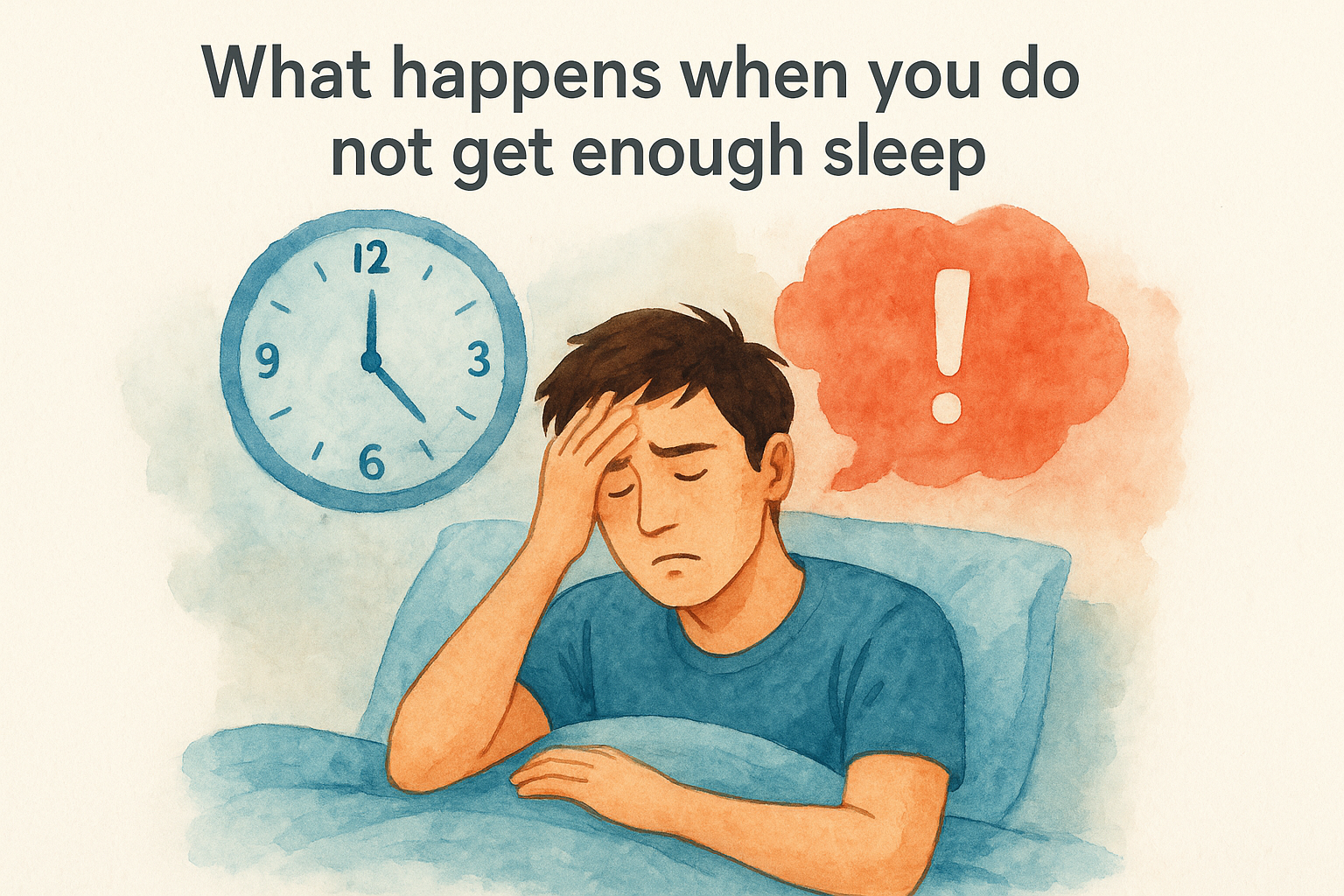
Sleep deprivation creates immediate and long-lasting damage to your mental health. Your brain needs sleep to complete essential maintenance work, and skipping this process leaves you with impaired emotional control, distorted thinking, and increased vulnerability to mental illness. The mental health benefits of sleep disappear quickly when you consistently sleep less than your body requires. Research shows that even losing one to two hours of sleep per night for several days creates cognitive and emotional deficits equivalent to staying awake for 24 hours straight.
Short-term mental health effects
You experience noticeable mental changes after just one night of poor sleep. Your prefrontal cortex function drops, reducing your ability to make sound decisions, control impulses, and regulate emotions. This explains why you snap at people or cry more easily when you're tired. Sleep-deprived individuals also show heightened activity in the amygdala (the brain's threat detection center), making neutral situations feel stressful or threatening.
Concentration and memory suffer immediately from sleep loss. You take longer to complete tasks, make more mistakes, and struggle to focus on conversations or reading. Working memory capacity decreases, making it harder to hold multiple pieces of information in your mind simultaneously. Stanford Medicine research found that sleep deprivation changes activity patterns in brain regions responsible for learning and problem-solving, leaving you mentally slower and less creative.
Long-term mental health consequences
Chronic sleep loss dramatically increases your risk of developing serious mental health conditions. People with ongoing insomnia face 10 times higher risk of depression and 17 times higher risk of anxiety disorders compared to good sleepers. Sleep apnea raises these risks about threefold. The relationship works bidirectionally, so untreated sleep problems often trigger mental health conditions that then make sleep even worse.
Extended periods of sleep deprivation can trigger symptoms that mirror mental illness, including paranoia, mood swings, and difficulty distinguishing reality from imagination.
Your body's stress response becomes permanently dysregulated with chronic sleep loss. Cortisol levels stay elevated throughout the day, keeping you in a constant state of physiological stress. This sustained activation wears down your resilience and makes you vulnerable to burnout, depression, and anxiety. Long-term sleep deprivation also affects neurotransmitter production, creating chemical imbalances that require months of consistent sleep to correct.
How much sleep you really need
Sleep requirements vary from person to person, but science provides clear guidelines based on age and individual factors. You cannot use a single number to determine optimal sleep because your genetics, activity level, and health status all influence how much rest you need. The key is finding the amount that lets you wake up refreshed and function well throughout the day. Most adults need between seven and nine hours of sleep per night to experience the full mental health benefits of sleep, though some people thrive on slightly less or need more.
Sleep needs by age group
Your age determines your baseline sleep requirement. Adults (18-64 years) need seven to nine hours, with most people falling in the middle of this range. Teenagers require eight to ten hours because their brains undergo significant development during sleep. Young children need even more, with preschoolers requiring 10 to 13 hours and school-age children needing nine to 12 hours. Older adults (65+) typically need seven to eight hours, though they often experience more fragmented sleep due to natural changes in sleep architecture.
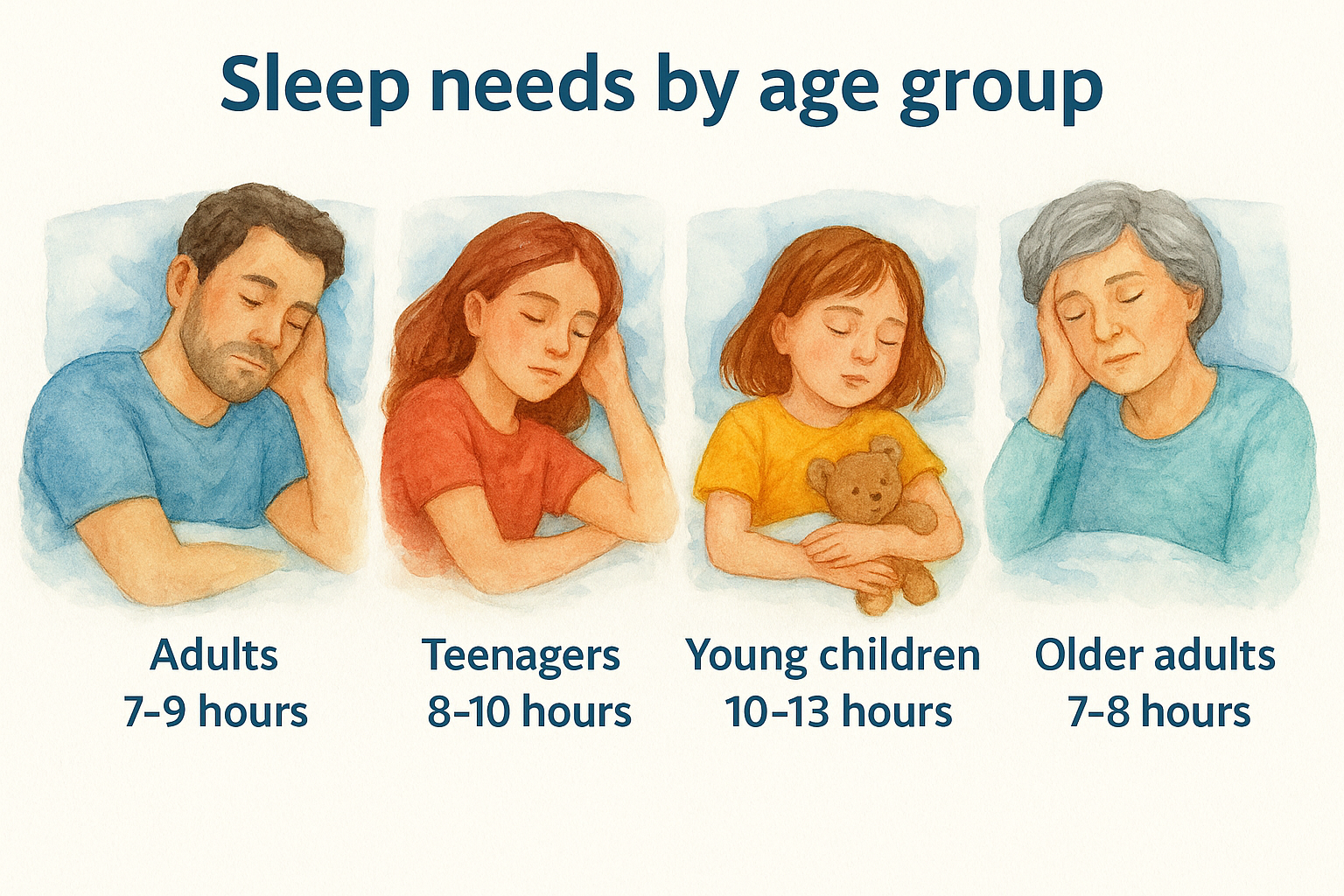
These numbers represent ranges, not strict rules. You might fall outside the typical range and still maintain good health. What matters more than hitting a specific number is consistency and waking without an alarm feeling refreshed. If you regularly sleep eight hours but still feel exhausted, you might need more sleep or have an underlying sleep disorder affecting your sleep quality.
Finding your personal sleep requirement
You can identify your ideal sleep duration by tracking how you feel after different amounts of sleep. Keep a sleep diary for two weeks, recording your bedtime, wake time, and how you feel throughout the day. Note your energy levels, mood stability, and ability to concentrate. Your optimal sleep duration is the amount that consistently leaves you alert and emotionally balanced without needing caffeine or naps.
Your body tells you when it's getting enough sleep through clear signals: you wake naturally without an alarm, feel alert during the day, and maintain stable moods without relying on stimulants.
Pay attention to weekend sleep patterns. If you regularly sleep two or more hours longer on weekends, you're accumulating sleep debt during the week and need to adjust your schedule. Your true sleep requirement is closer to the amount you naturally sleep when you have no obligations, not the amount you force yourself to accept on work nights.
When to seek help for sleep or mood problems
You should consider professional help when sleep problems persist despite trying self-care strategies or when mood changes interfere with daily life. Ongoing sleep issues lasting three months or longer qualify as chronic insomnia and require medical evaluation. Mental health professionals and sleep specialists can identify underlying conditions that self-help approaches cannot address. Many people wait too long to seek help, allowing problems to worsen and become harder to treat. Early intervention prevents minor issues from developing into severe mental health conditions that require intensive treatment.
Signs you need professional help
Seek professional evaluation if you experience persistent difficulty falling asleep or staying asleep despite good sleep hygiene, if you wake up gasping or choking at night (possible sleep apnea), or if you feel exhausted after seven to nine hours of sleep. Other warning signs include thoughts of self-harm, inability to function at work or home, panic attacks, or mood swings that seem disconnected from circumstances. You should also consult a professional if you rely on alcohol or medication to sleep, experience hallucinations from sleep deprivation, or notice your relationships suffering due to irritability and emotional instability.
Professional treatment becomes essential when sleep or mood problems persist beyond a few weeks and resist self-help strategies, as the mental health benefits of sleep remain out of reach without addressing underlying disorders.
What professionals can offer
Sleep specialists can diagnose conditions like sleep apnea, restless leg syndrome, or circadian rhythm disorders that require specific treatments beyond basic sleep hygiene. Mental health professionals provide cognitive behavioral therapy for insomnia (CBT-I), which research shows works better than sleep medication for long-term insomnia. Therapists also address anxiety and depression that fuel sleep problems, breaking the cycle between mental health and sleep issues. Your doctor can rule out medical conditions affecting sleep, adjust medications that disrupt rest, or refer you to specialists for comprehensive treatment plans.
Final thoughts
The mental health benefits of sleep emerge from your brain's nightly maintenance work. You need consistent, quality sleep to regulate emotions, manage stress, and maintain cognitive function. Small changes to your sleep habits create measurable improvements in mood and mental resilience over time. Start with one or two adjustments that fit your lifestyle, then add more as these become routine.
Remember that sleep problems and mental health issues often share underlying causes. Addressing one helps the other. If you grind your teeth at night, you're disrupting the deep sleep your brain needs for emotional processing. Protecting your teeth with a custom night guard stops the grinding that fragments your sleep and prevents you from experiencing the full restorative benefits each night. Your mental health depends on quality sleep, and quality sleep requires eliminating disruptions that keep your brain from completing its essential work.

