
 Guards + Retainers
 Custom Night Guard
 Retainer
 Emergency Order

 Whitening
 Whitening Kit
 Teeth Whitening Gel
 Dual-Action Foam
 Cleaning + Care
 Ultrasonic Cleaner Pro
 Water Flosser
 UV Toothbrush Sanitizer
 Deep Clean + Freshening Tablets
 Accessories
 Guard Removal Tool
 Replacement Nozzles
 Bundles

Jaw clenching happens when you squeeze your teeth together with force, often without realizing it. You might do it during stressful moments at work, while concentrating on a difficult task, or throughout the night as you sleep. This repeated tension wears down your teeth, triggers headaches, and leaves your jaw sore and exhausted. Most people clench occasionally, but when it becomes frequent, it develops into bruxism that can damage your teeth and disrupt your sleep.
This article breaks down what triggers jaw clenching, from stress and anxiety to sleep disorders and medications. You'll learn to recognize warning signs in your teeth and jaw, understand why this goes beyond a simple bad habit, and discover practical ways to stop clenching both day and night. We'll also cover when you need professional help so you can protect your teeth and finally find relief.
Why jaw clenching is more than a bad habit
Your jaw muscles can generate 250 pounds of force when you clench your teeth. That's roughly the weight of a baby grand piano crushing down on your teeth night after night. This isn't a simple habit you can break with willpower because your brain triggers the clenching without your conscious control, especially during sleep. When stress floods your system, your jaw locks up as part of your body's fight-or-flight response, creating a physical reflex you often can't feel happening.
Physical damage that compounds over time
Each clenching episode chips away at your tooth enamel and strains the temporomandibular joint (TMJ) that connects your jaw to your skull. You'll start noticing flattened teeth surfaces where the protective enamel has worn thin, exposing the sensitive dentin underneath. The constant pressure fractures teeth, loosens dental work, and throws your entire bite alignment off balance.
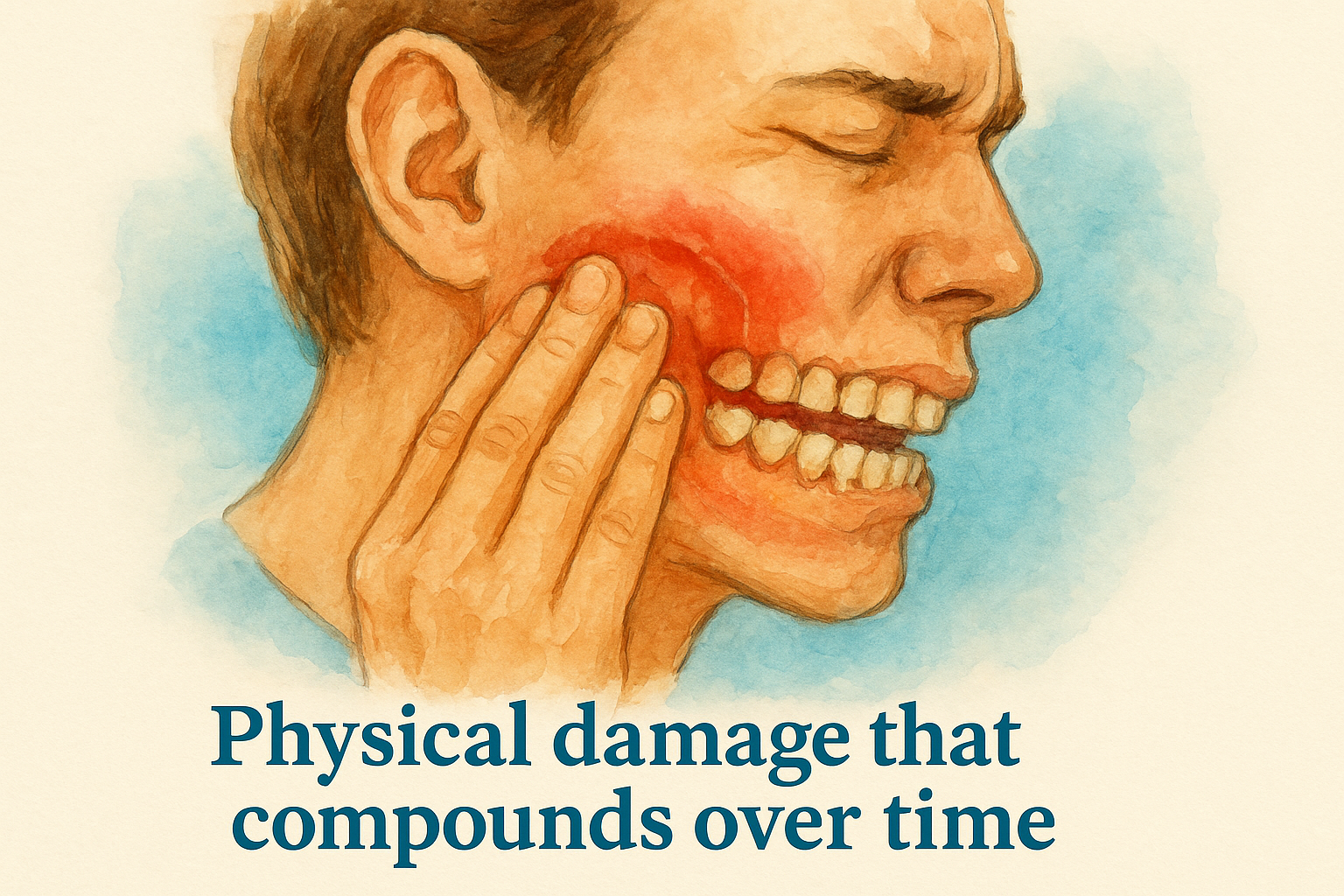
Understanding what causes jaw clenching helps you recognize it as a medical condition requiring treatment, not a character flaw you should simply overcome.
Your jaw joints weren't designed to withstand hours of sustained pressure, leading to TMJ disorders that make simple activities like eating or talking painful.
How to stop clenching your jaw day and night
Stopping jaw clenching requires different approaches depending on when you clench. During waking hours, you can train yourself to recognize and interrupt the pattern through conscious awareness techniques. At night, you need physical barriers and lifestyle adjustments because you can't control what your sleeping brain does. Most people clench both during the day and night, so you'll want to combine strategies that address both patterns for complete relief.
Daytime awareness and stress management
Your first step involves checking your jaw position throughout the day. Set hourly phone reminders that prompt you to drop your jaw, relax your face muscles, and position your tongue against the roof of your mouth. This simple habit breaks the automatic clenching cycle before tension builds up. When you catch yourself clenching, take three deep breaths and consciously separate your teeth by at least half an inch.
Stress reduction tackles what causes jaw clenching at its source. Physical exercise releases the same muscle tension that makes you clench, so a 20-minute walk or stretching session can prevent hours of jaw grinding. You can also apply a warm compress to your jaw for 10 minutes when you feel tightness building, which relaxes the muscles before they lock into a clench. Some people find that keeping their shoulders down and back prevents the forward head posture that triggers jaw tension.
Nighttime protection with custom guards
A custom-fitted night guard creates a physical barrier between your upper and lower teeth, absorbing the crushing force your jaw generates during sleep. Over-the-counter guards from the pharmacy rarely fit properly and can shift around or fall out, making them ineffective. Custom guards mold precisely to your teeth, distributing pressure evenly and positioning your jaw in a relaxed alignment that reduces muscle strain.
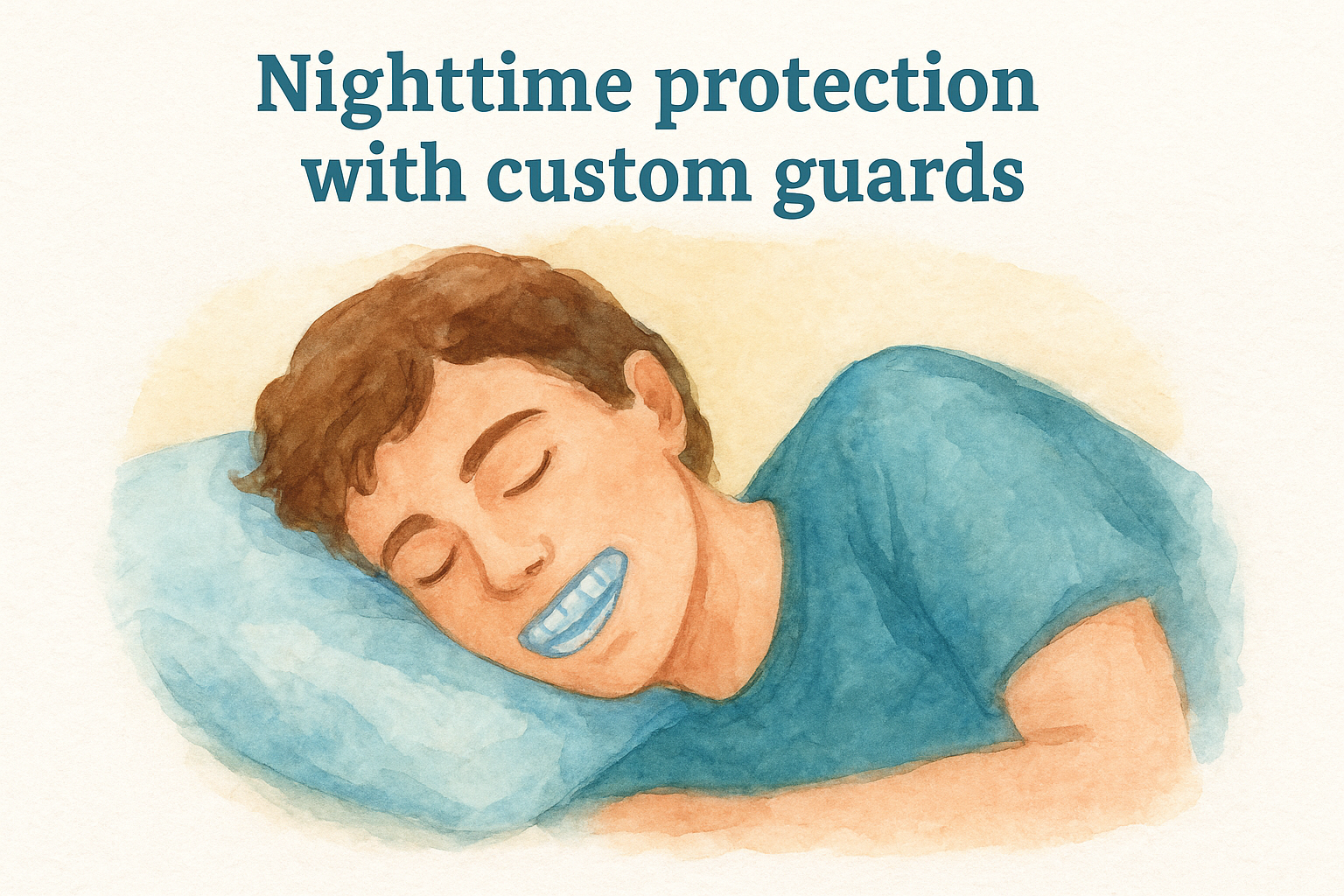
Getting a custom night guard stops the damage immediately while you work on addressing the underlying triggers of your clenching.
You should also eliminate caffeine after 2 PM and alcohol within three hours of bedtime, as both substances disrupt your sleep cycles and increase nighttime grinding. Creating a consistent sleep schedule helps your body regulate stress hormones that contribute to bruxism.
Main causes and triggers of jaw clenching
Understanding what causes jaw clenching helps you identify which triggers apply to your situation. Your clenching likely stems from multiple factors working together rather than a single cause. Some triggers happen during waking hours while others activate during sleep, and many people experience overlapping causes that compound the problem.
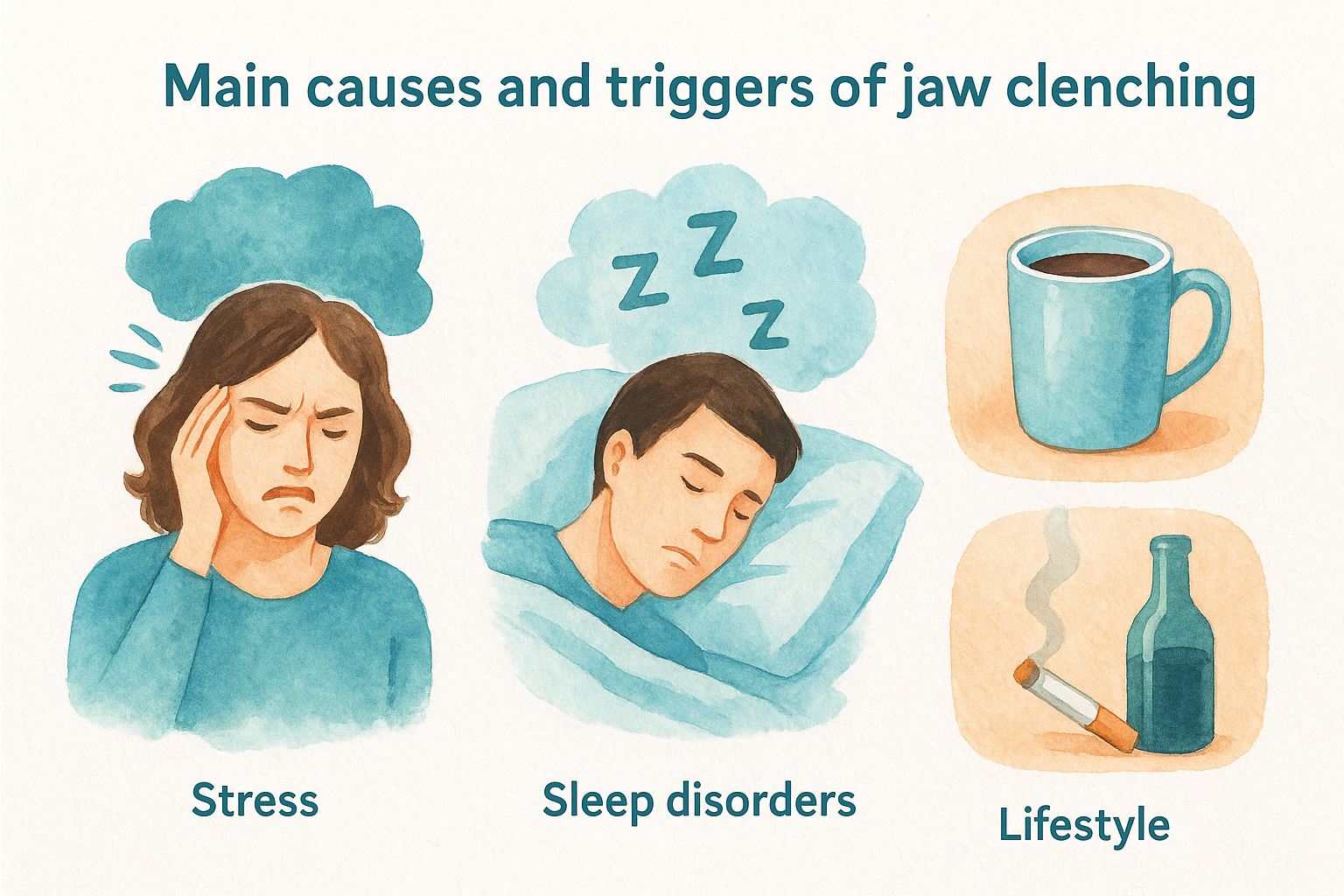
Stress, anxiety, and emotional factors
Your emotional state directly controls your jaw muscles through your nervous system. When stress hormones flood your body, your muscles tense up automatically, and your jaw becomes one of the primary holding points for that tension. People with diagnosed anxiety disorders or depression face twice the risk of developing bruxism compared to those without these conditions.
Anger, frustration, and intense concentration all trigger the same clenching response. You might notice your teeth grinding together during a difficult work project or after a frustrating conversation, even when you're not consciously aware of the tension building in your face.
Recognizing stress as the primary trigger allows you to address jaw clenching at its source rather than just treating the symptoms.
Sleep disorders and breathing problems
Sleep apnea creates a strong connection with nighttime jaw clenching. Your airway narrows or closes during sleep, and your jaw reflexively thrusts forward to open the breathing passage, causing intense clenching episodes throughout the night. Research confirms that many people with sleep apnea also grind their teeth, though scientists still debate whether apnea causes the grinding or vice versa.
Medications and lifestyle choices
Certain antidepressants, particularly SSRIs like fluoxetine and sertraline, list bruxism as a documented side effect. The way these medications alter your brain's neurotransmitters can trigger involuntary jaw movements. Your daily habits matter too: consuming more than six cups of coffee daily doubles your clenching risk, and smoking or heavy alcohol use creates similar increases. Misaligned teeth or an uneven bite can also force your jaw into positions that promote clenching.
Symptoms to watch for in your jaw and teeth
Your body sends clear signals when jaw clenching causes damage. You might wake up with headaches that start at your temples and radiate across your forehead, or notice facial pain concentrated around your jaw joints first thing in the morning. These early warnings help you catch the problem before serious damage occurs. Many people miss the connection between these symptoms and what causes jaw clenching, attributing the pain to other sources like stress or poor sleep quality.
Physical signs in your mouth
Check your teeth for flattened tips or smooth worn surfaces where the enamel has ground away. You'll see indentations along the edges of your tongue where it presses against your clenched teeth, and your cheeks may show bite marks or rough patches on the inside. Your teeth might feel more sensitive to hot or cold temperatures as the protective enamel wears thin and exposes the dentin layer underneath.
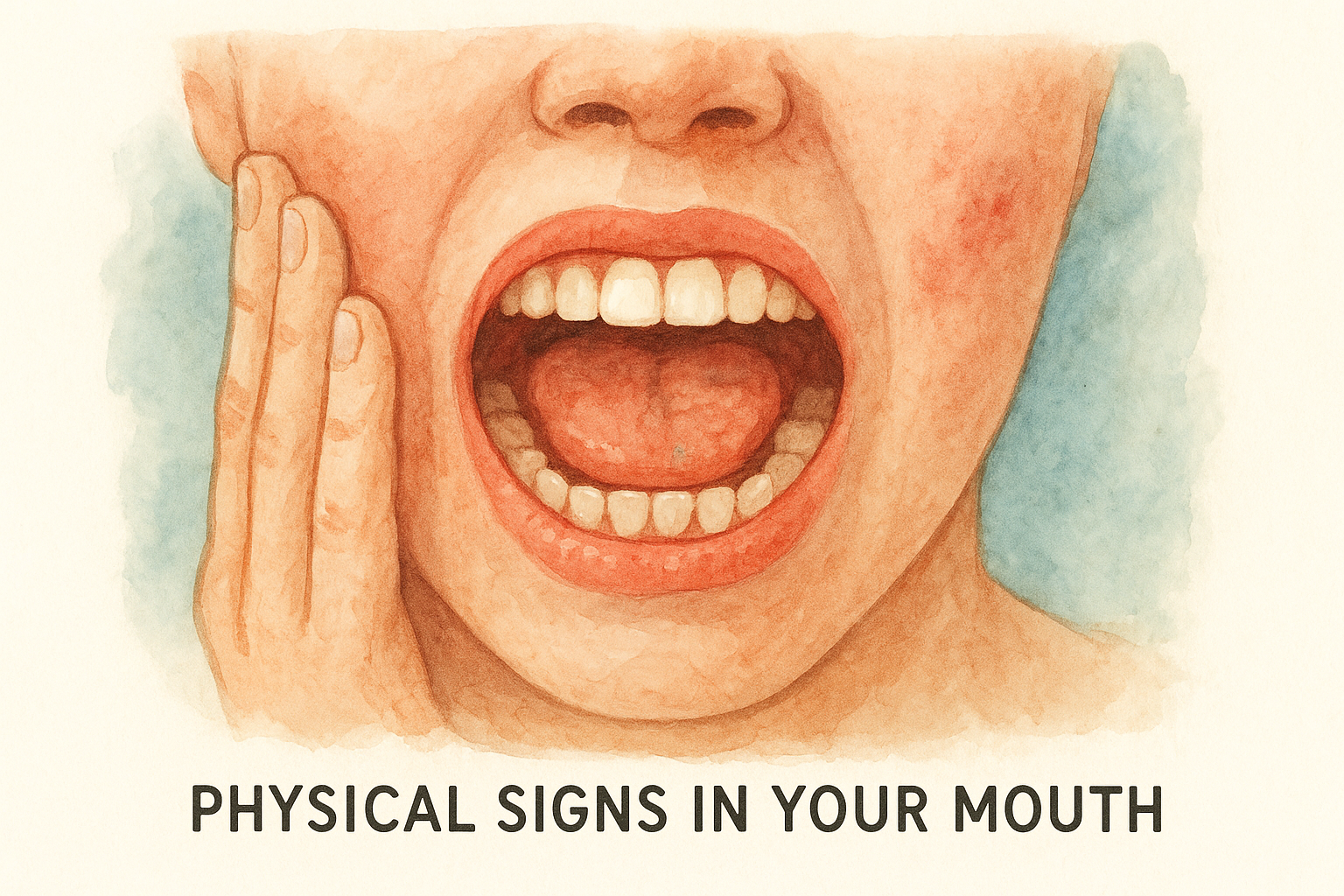
Catching these physical symptoms early prevents permanent tooth damage and expensive dental repairs down the road.
Pain patterns and timing
Morning jaw stiffness that loosens throughout the day points directly to nighttime clenching. Your jaw may click or pop when you open your mouth wide, or you might struggle to open it fully without discomfort. Some people experience earaches without infection or ringing in the ears (tinnitus) caused by tension radiating from the jaw muscles into the surrounding areas.
When to seek help for jaw clenching
You should schedule a dental appointment when jaw clenching symptoms persist for more than two weeks or start interfering with your daily life. Your dentist can examine your teeth for damage, check your jaw alignment, and recommend appropriate treatment before permanent problems develop. Understanding what causes jaw clenching helps your healthcare provider create a targeted treatment plan that addresses your specific triggers, symptoms, and risk factors.
Signs you need immediate professional attention
Seek urgent dental care if you develop severe tooth pain, visible cracks, or loose teeth from clenching force. You also need prompt evaluation when your jaw locks in an open or closed position, you struggle to open your mouth normally, or facial swelling appears around your jaw joints.
Early professional intervention prevents irreversible tooth damage and chronic jaw problems that become harder to treat over time.
These symptoms indicate significant structural damage requiring professional help beyond basic home care strategies.
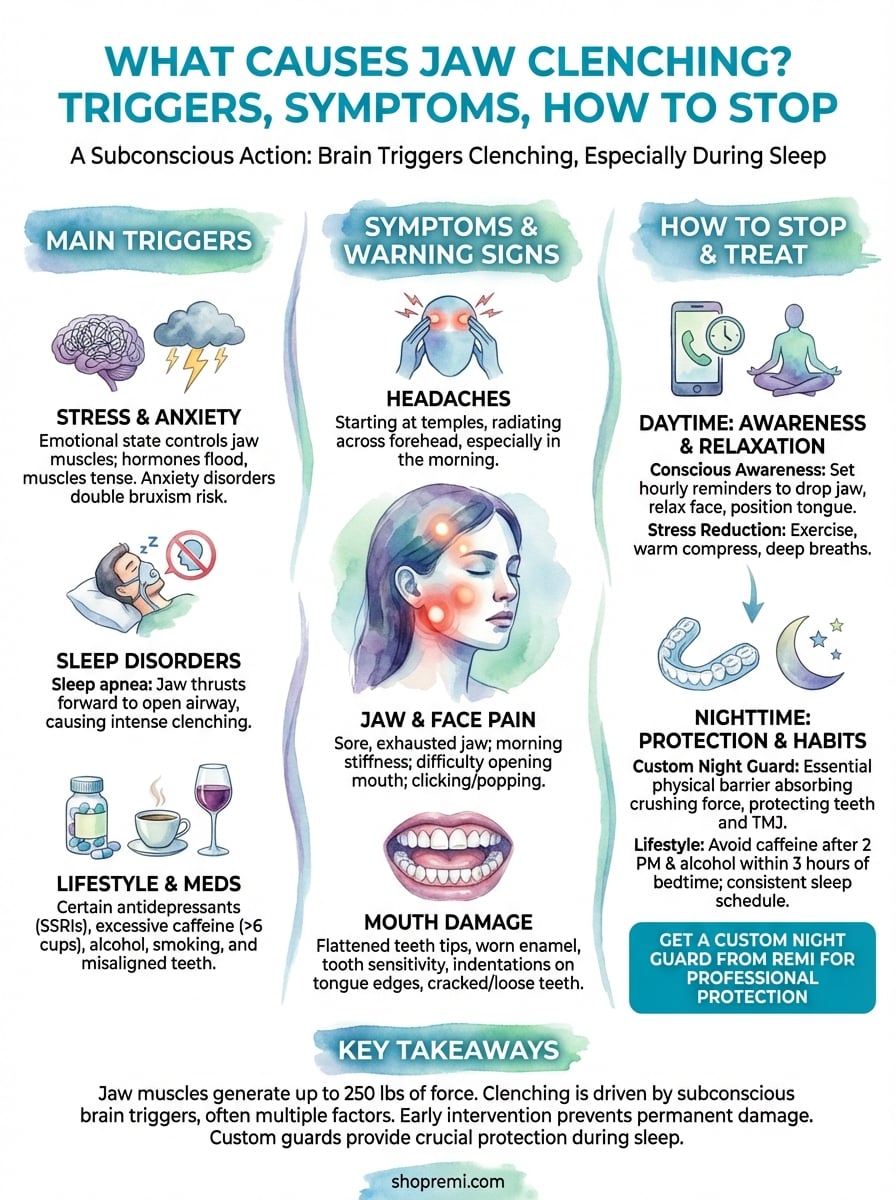
Key takeaways on jaw clenching
Jaw clenching damages your teeth through powerful forces you can't consciously control, especially during sleep. Stress, anxiety, sleep disorders, medications, and lifestyle factors all contribute to what causes jaw clenching, and most people experience multiple triggers working together. You can manage daytime clenching through awareness techniques and stress reduction, but nighttime grinding requires physical protection while you sleep.
Custom-fitted night guards provide immediate relief by absorbing the crushing force and positioning your jaw correctly. Your symptoms signal real damage happening to your teeth and jaw joints, so early intervention prevents permanent problems. Start protecting your teeth tonight with a custom night guard from Remi that costs 80% less than traditional dental options while delivering professional-grade protection.

