
 Guards + Retainers
 Custom Night Guard
 Retainer
 Emergency Order

 Whitening
 Whitening Kit
 Teeth Whitening Gel
 Dual-Action Foam
 Cleaning + Care
 Ultrasonic Cleaner Pro
 Water Flosser
 UV Toothbrush Sanitizer
 Deep Clean + Freshening Tablets
 Accessories
 Guard Removal Tool
 Replacement Nozzles
 Bundles

That subtle jaw soreness you wake up with or the occasional headache might seem harmless now. But the long-term effects of teeth grinding extend far beyond temporary discomfort. Left unchecked, this condition, known as bruxism, can permanently alter your teeth, jaw, and overall oral health in ways that become increasingly difficult to reverse.
Chronic teeth grinding generates forces up to 250 pounds of pressure per square inch, enough to crack enamel, wear down tooth surfaces, and strain your temporomandibular joint (TMJ) over time. The damage accumulates quietly, often going unnoticed until significant dental work becomes necessary. Many people don't realize they grind their teeth at all since it frequently happens during sleep.
This guide breaks down exactly what happens to your teeth, jaw, and TMJ when bruxism goes untreated for months or years. You'll learn to recognize the warning signs, understand the progression of damage, and discover protective measures that can halt further deterioration. At Remi, we've helped over 350,000 customers protect their teeth with custom night guards, and we've seen firsthand how early intervention makes all the difference.
Why teeth grinding becomes a long-term problem
Teeth grinding doesn't cause catastrophic damage overnight. Instead, it works like persistent water dripping on stone, gradually wearing away protective enamel and stressing your jaw joint through thousands of micro-traumas. Each grinding episode applies extreme pressure to structures that weren't designed to withstand such forces during sleep, when your protective reflexes are inactive. This nightly assault continues undetected because your body adapts to the gradual changes, masking the severity until visible damage emerges.
The progression follows a deceptive pattern. Your teeth can tolerate occasional grinding episodes without lasting harm, but chronic bruxism crosses a threshold where your body's natural repair mechanisms can't keep pace with the destruction. What starts as minor enamel wear escalates into exposed dentin, then potentially nerve damage, as the protective layers systematically disappear. Most people discover they have a grinding problem only after their dentist points out worn tooth surfaces or jaw muscle enlargement during a routine exam.
The silent nature of nighttime grinding
You likely won't wake yourself up by grinding your teeth. Sleep bruxism occurs during lighter sleep stages, particularly during transitions between sleep cycles, when you have less conscious control over muscle activity. Your brain doesn't register the grinding as a threat worthy of waking you, so the behavior continues night after night without your awareness. Partners sometimes notice the audible grinding sounds before the person experiencing bruxism realizes they have a problem.
This lack of awareness creates a dangerous delay in treatment. By the time you notice symptoms like jaw soreness or tooth sensitivity, you've probably been grinding for months or even years. The long term effects of teeth grinding accumulate during this silent period, establishing patterns of muscle tension and joint stress that become increasingly difficult to reverse.
Without awareness or intervention, teeth grinding can continue unchecked for years, allowing damage to progress from superficial enamel wear to structural tooth problems requiring extensive dental work.
How damage compounds exponentially
Early enamel damage actually accelerates future wear. Once grinding wears through the hard outer enamel layer, it exposes the softer dentin underneath, which wears away five times faster than enamel. This creates a feedback loop where each night's grinding causes proportionally more damage than the previous night. What took months to wear through the first millimeter of enamel might take only weeks for the next millimeter of dentin.
Your jaw joint faces similar compounding problems. Repeated stress to the TMJ gradually stretches ligaments and wears down the protective cartilage disk. As these structures deteriorate, your jaw becomes less stable, which changes your bite alignment and often increases grinding intensity. The joint damage also triggers inflammation, which causes tissue changes that further limit jaw mobility and increase pain.
Why your body can't repair the damage
Tooth enamel represents one of the hardest substances in your body, but it has a critical limitation: it cannot regenerate once lost. Unlike bone or soft tissue, enamel contains no living cells capable of producing new material. Your saliva can remineralize minor surface erosion, but this process only works for microscopic damage, not the significant wear patterns that chronic grinding creates. Once you grind through enamel, that protection is gone permanently.
Your jaw muscles and TMJ have better healing capacity, but grinding overwhelms their recovery time. Muscle fibers that tear during intense clenching need 48 to 72 hours to fully repair, yet nightly grinding reinjures them before healing completes. This constant cycle of damage and incomplete repair leads to chronic inflammation, muscle enlargement, and eventual tissue scarring that permanently alters jaw function.
How teeth grinding damages teeth over time
Your teeth undergo a predictable sequence of deterioration when subjected to chronic grinding forces. The damage starts at the surface and progressively works deeper into tooth structure, moving from cosmetic concerns to serious structural problems that threaten tooth viability. Each stage creates conditions that accelerate the next phase of destruction, making early intervention critical before you reach the point where only extensive dental restoration can repair the damage.
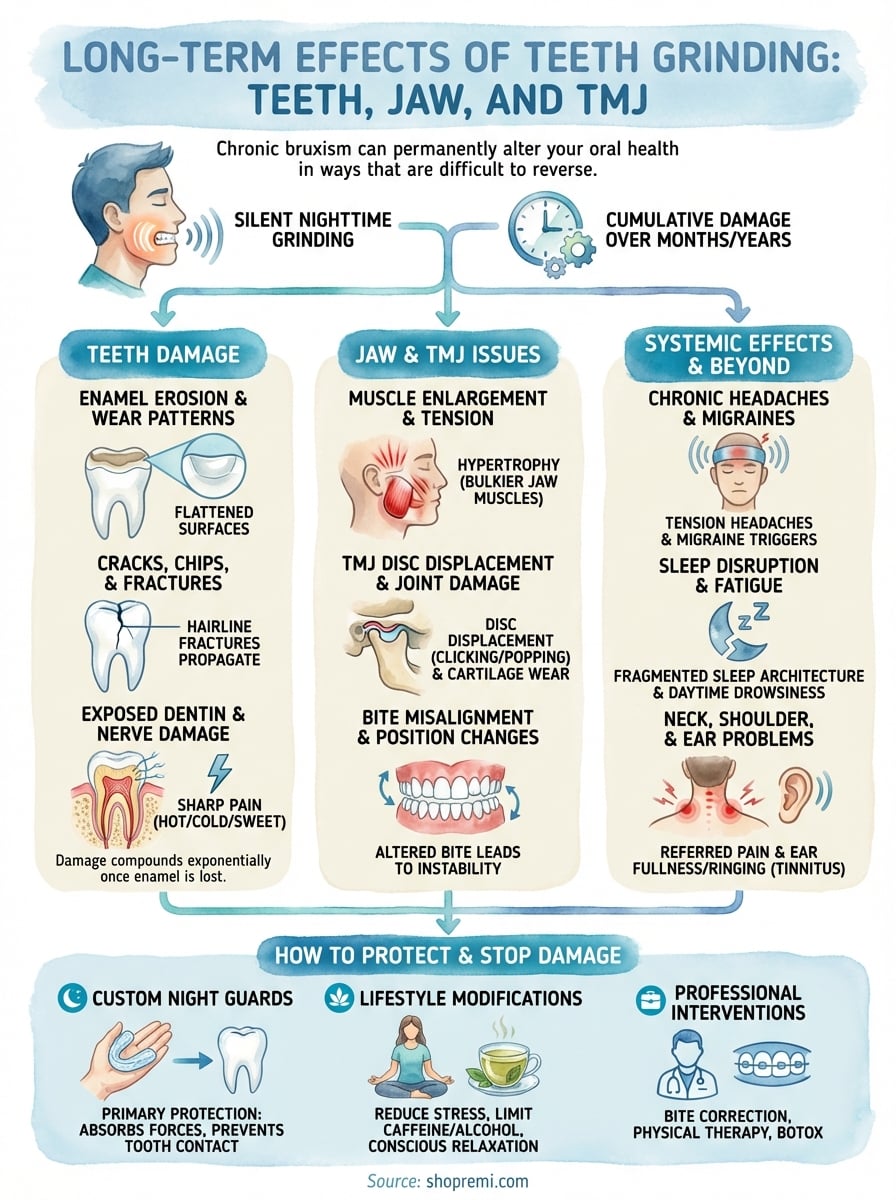
Enamel erosion and wear patterns
The first visible sign appears as flattened tooth surfaces, particularly on your molars and canines. Normal teeth have distinct cusps and contours, but grinding creates unnaturally flat wear facets that give your teeth a smooth, shiny appearance. Your dentist can measure this wear by comparing the height of affected teeth to adjacent teeth that received less grinding stress. In severe cases, you might actually see the outline of the dentin layer showing through as a darker yellowish color beneath the translucent enamel.
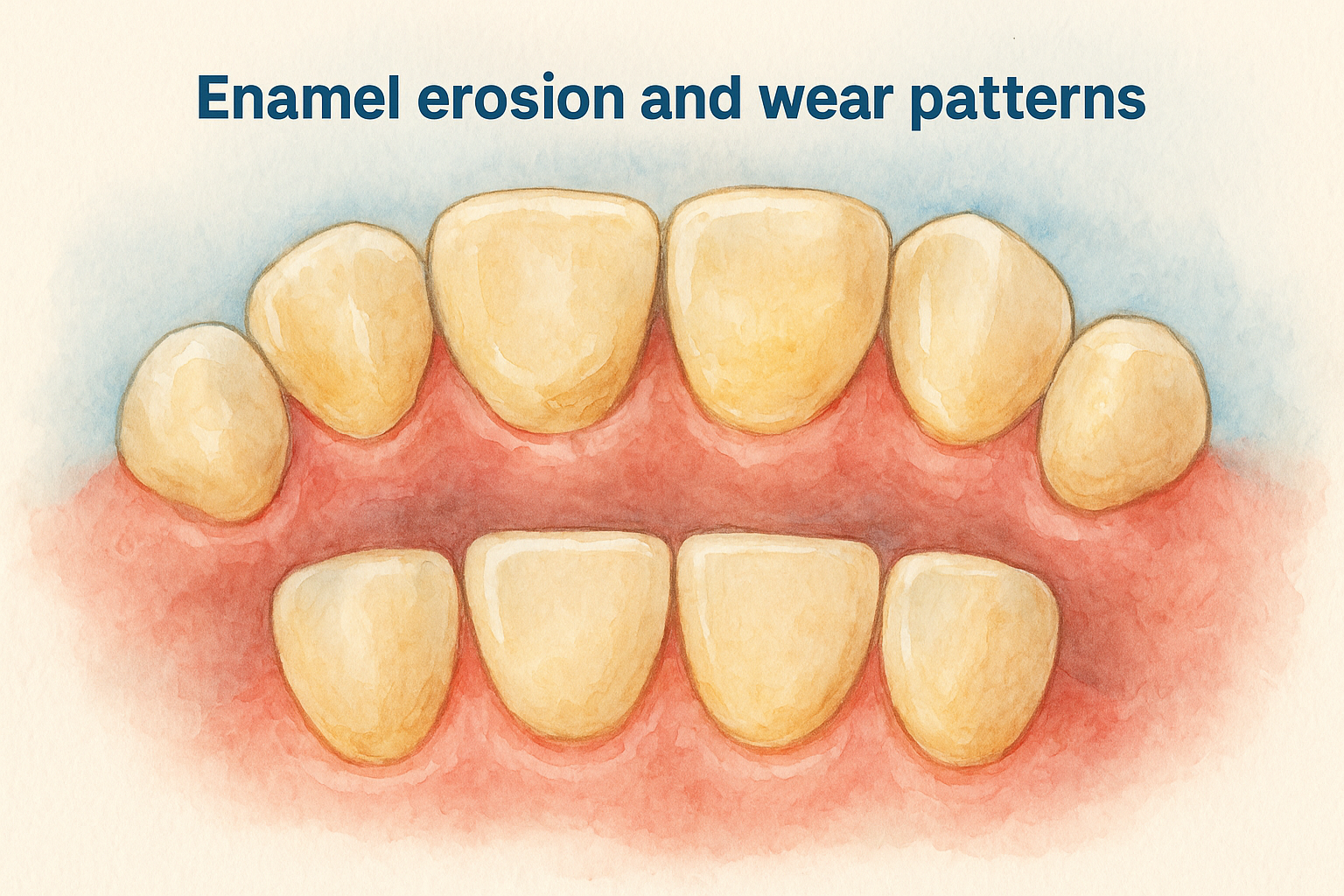
This enamel loss doesn't distribute evenly across your teeth. Grinding creates specific wear patterns that reflect your individual jaw movement during sleep. Some people wear down the front edges of their incisors, while others primarily damage their back molars. These patterns help dentists distinguish grinding damage from other causes of tooth wear like acidic erosion or aggressive brushing.
As enamel thins and disappears, your teeth lose their primary defense against decay, temperature sensitivity, and further structural damage, making every additional night of grinding progressively more destructive.
Cracks, chips, and fractures
Grinding generates lateral forces that teeth aren't designed to handle, causing microscopic cracks to form in enamel and extend into dentin. You might not notice these hairline fractures initially, but they propagate deeper with continued grinding stress, similar to how repeatedly flexing a paper clip causes it to break. Eventually, these cracks reach a critical length where a section of tooth suddenly chips or fractures during a grinding episode.
Back molars face the highest fracture risk because they absorb the greatest grinding forces. Existing dental work like fillings increases vulnerability since the bond between filling material and natural tooth creates a weak point where cracks prefer to travel. The long term effects of teeth grinding often manifest as crowns and other restorations failing prematurely, requiring replacement years before their expected lifespan.
Exposed dentin and nerve damage
Once grinding wears through enamel completely, it exposes the porous dentin layer underneath. This tissue contains microscopic tubules that connect directly to your tooth's nerve, creating pathways for temperature and pressure sensations to reach the nerve. You'll experience sharp pain when consuming hot, cold, or sweet foods as stimuli travel through these tubules. The discomfort often surprises people because it appears suddenly after years of painless grinding.
Advanced wear can expose the pulp chamber containing your tooth's nerve and blood supply. This level of damage typically requires root canal treatment or extraction, representing the most severe consequence of untreated grinding. Your tooth essentially loses too much protective structure to remain viable as a functional chewing surface.
How teeth grinding affects your jaw and TMJ
Your jaw muscles and temporomandibular joint (TMJ) weren't designed to handle the extreme forces that grinding generates. While teeth grinding might seem like primarily a dental problem, the long term effects of teeth grinding extend deeply into your jaw joint and surrounding muscles, creating structural changes that can alter your facial appearance and cause chronic pain. The TMJ represents one of the most complex joints in your body, with a delicate balance of muscles, ligaments, and cartilage that grinding disrupts night after night.
Jaw muscle enlargement and chronic tension
Grinding forces your masseter muscles (the primary chewing muscles along your jaw) to work intensely for hours during sleep. Just like biceps grow from repeated weightlifting, these jaw muscles undergo hypertrophy, becoming visibly larger and bulkier. You might notice a more square or masculine jawline as these muscles expand, though this comes at the cost of chronic muscle tension and soreness. Some people actually seek Botox injections in their jaw muscles to reduce this enlargement.
The constant muscle engagement prevents your jaw from fully relaxing during sleep. Your masseters remain in a semi-contracted state even during the day, creating tension that radiates into your temples, neck, and shoulders. This persistent activation exhausts the muscle fibers and creates trigger points, which are painful knots that refer discomfort to other areas of your head and face.
TMJ disc displacement and joint damage
Your temporomandibular joint contains a small cartilage disc that cushions the movement between your jawbone and skull. Grinding puts tremendous pressure on this disc, gradually pushing it out of its normal position, a condition called disc displacement. The disc might slip forward when you open your mouth, creating a clicking or popping sound as it snaps back into place. In severe cases, the disc stays permanently displaced, blocking smooth jaw movement and causing pain with every bite.
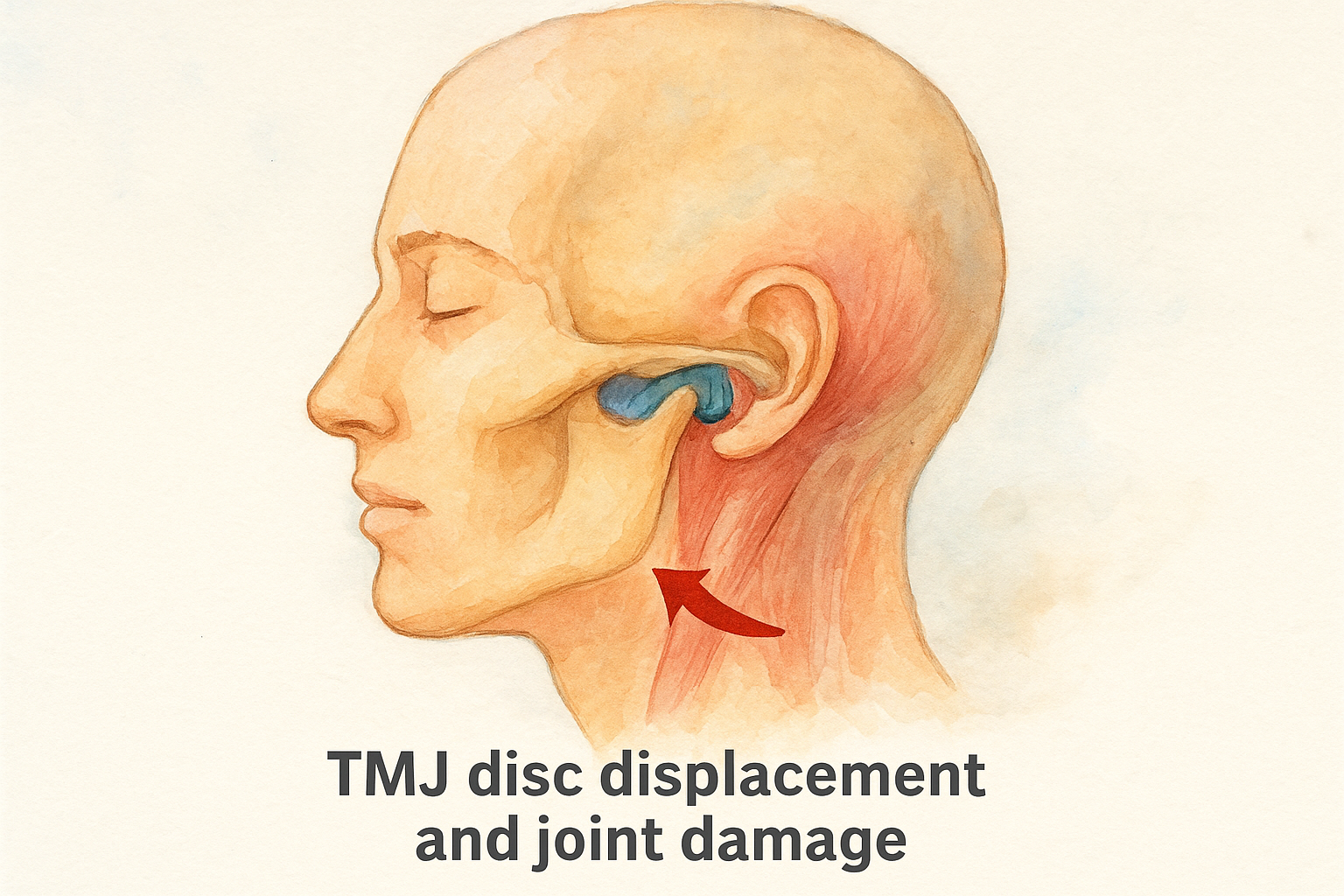
Chronic grinding can permanently damage the cartilage disc in your TMJ, leading to clicking sounds, limited jaw opening, and pain that worsens with chewing or talking.
Continued grinding wears down the protective cartilage covering your jaw joint surfaces. Without this cushioning layer, you experience bone-on-bone contact that accelerates joint degeneration. Your body responds by growing extra bone in the joint, a process called remodeling, which further limits jaw mobility and creates permanent changes to your joint structure.
Bite misalignment and jaw position changes
As your teeth wear unevenly from grinding, your bite alignment shifts because your jaw must close in a different position to bring teeth together. This altered bite forces your TMJ to adapt to an unnatural position, straining ligaments and muscles that try to maintain jaw stability. Your jaw might shift forward, backward, or to one side, creating asymmetrical wear patterns that perpetuate the misalignment.
These bite changes often worsen grinding intensity because your jaw searches for a comfortable resting position that no longer exists. The resulting instability creates a destructive feedback loop where misalignment increases grinding, which causes more wear, which further destabilizes your bite. Breaking this cycle requires both protecting your teeth and potentially correcting your bite with dental work.
Other long-term effects beyond your mouth
The long term effects of teeth grinding extend far beyond dental damage, creating a cascade of health problems throughout your head, neck, and body. Your jaw connects to numerous muscle groups and nerve pathways that radiate discomfort to seemingly unrelated areas. These systemic effects often develop gradually, making it difficult to trace symptoms back to their source, but they significantly impact your daily quality of life and overall health in ways that become increasingly difficult to ignore.
Chronic headaches and migraines
Grinding activates your jaw muscles with such intensity that tension spreads into your temporal muscles (the muscles covering your temples). This constant activation creates tension headaches that feel like a tight band around your forehead and temples. You might wake with these headaches or develop them as the day progresses and muscle fatigue accumulates. The pain typically affects both sides of your head rather than localizing to one area.
Some people develop migraines triggered by the nerve irritation that grinding causes. Your trigeminal nerve, which controls sensation in your face and head, becomes hypersensitive from constant jaw muscle tension. This nerve irritation can trigger full migraine attacks complete with visual disturbances, nausea, and debilitating pain that lasts for hours or days.
Chronic jaw muscle tension from grinding can trigger persistent headaches and migraines that disrupt your daily activities and reduce productivity, often without you realizing the connection to nighttime bruxism.
Sleep disruption and fatigue
Grinding prevents your body from reaching deep, restorative sleep stages. The muscle activity and micro-arousals that occur during grinding episodes fragment your sleep architecture, leaving you feeling unrested despite spending adequate time in bed. You might wake frequently without remembering these disruptions, or experience daytime drowsiness that affects your concentration and mood.
Poor sleep quality creates additional health consequences including weakened immune function, increased stress hormone levels, and difficulty managing weight. Your partner's sleep also suffers if your grinding produces audible sounds that wake them throughout the night, creating relationship tension and shared fatigue.
Neck, shoulder, and ear problems
Your jaw muscles connect directly to neck muscles through a complex fascial network. Grinding-related tension travels down this network, causing chronic neck stiffness and shoulder pain that you might mistake for poor posture or stress. The trapezius and sternocleidomastoid muscles become tight and develop trigger points that refer pain to your upper back.
Ear symptoms frequently develop because your TMJ sits directly in front of your ear canal. Joint inflammation and muscle tension create sensations of ear fullness, ringing (tinnitus), or pain that mimic ear infections. You might also experience dizziness or balance problems if TMJ inflammation affects the nearby structures that control equilibrium.
How dentists diagnose chronic teeth grinding
Your dentist can identify chronic bruxism through a combination of visual evidence and symptom assessment, often detecting grinding damage before you notice any problems yourself. Unlike many dental conditions that require X-rays or special tests, teeth grinding leaves distinctive physical markers that trained professionals recognize immediately during routine examinations. The diagnostic process involves examining your teeth, jaw muscles, and TMJ for characteristic signs of grinding stress, then correlating these findings with your reported symptoms to determine severity and create an appropriate treatment plan.
Visual examination of teeth and jaw
Dentists start by looking for wear patterns on your tooth surfaces that indicate grinding activity. They check for flattened cusps, chipped edges, and shiny wear facets that reflect abnormal tooth-to-tooth contact. Your molars receive the closest scrutiny because they absorb the greatest grinding forces and show damage first. The examination includes checking for vertical cracks in enamel, receding gums caused by grinding pressure, and tooth mobility that suggests ligament damage.
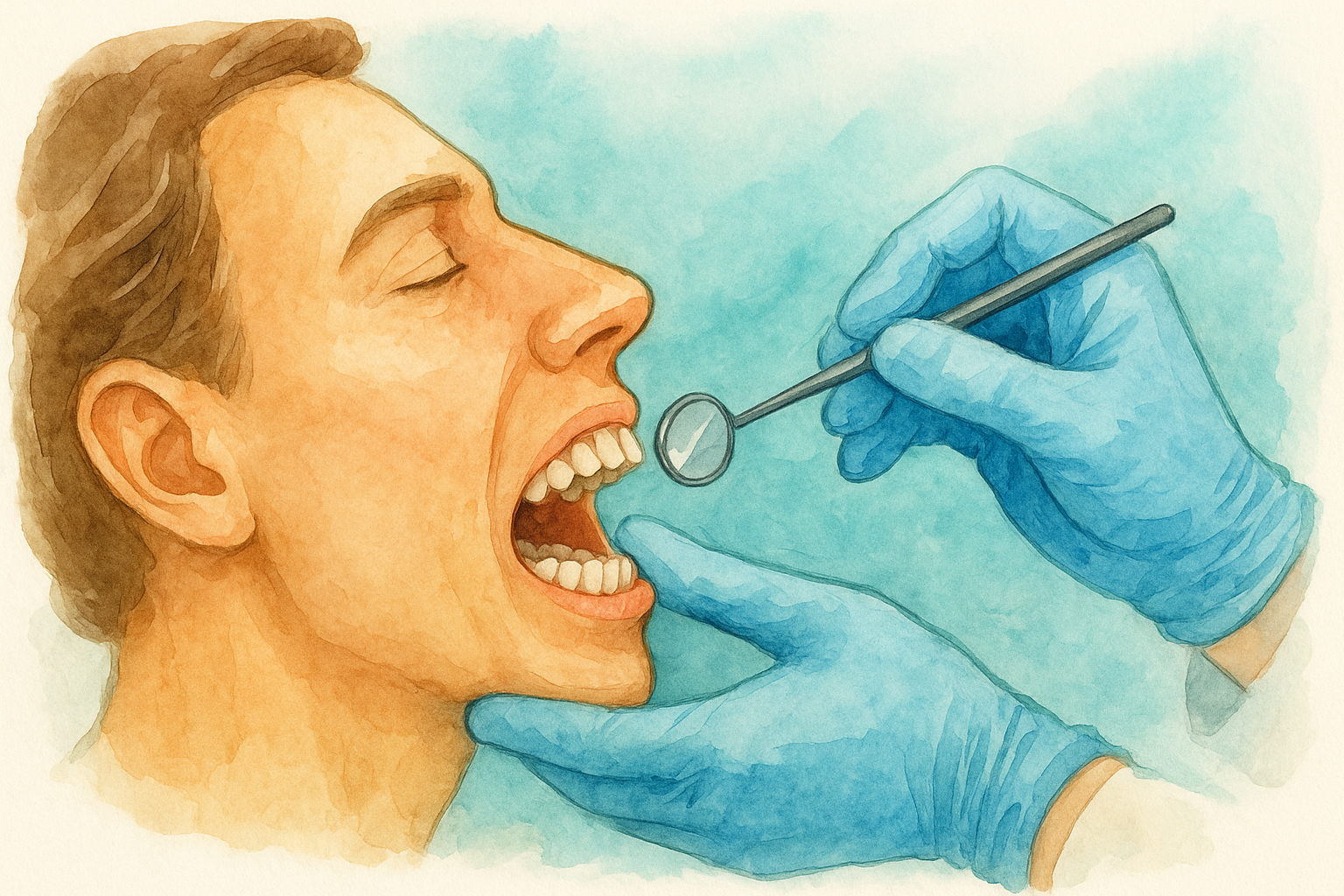
Your dentist also palpates your jaw muscles and TMJ to assess muscle enlargement and tenderness. They'll ask you to open and close your mouth while listening for clicking or popping sounds that signal disc displacement. Enlarged masseter muscles feel firm and bulky compared to normal muscle tone, indicating chronic overuse from grinding.
Dentists can diagnose chronic bruxism by identifying specific wear patterns on your teeth and muscle enlargement in your jaw, often before you experience noticeable symptoms.
Patient history and symptom assessment
Your dentist will ask targeted questions about morning jaw soreness, headaches, and sleep quality to understand your grinding frequency and intensity. They'll inquire whether your partner has heard grinding sounds during sleep, since many people remain unaware of nighttime bruxism. Questions about stress levels, medication use, and caffeine or alcohol consumption help identify potential contributing factors that might intensify grinding behavior.
The symptom assessment includes discussing any ear pain, neck tension, or tooth sensitivity you've experienced. This information helps your dentist connect seemingly unrelated complaints to grinding and assess how the long term effects of teeth grinding have impacted your overall health beyond visible tooth damage.
Advanced diagnostic tools
Some dental practices use specialized equipment to measure grinding severity more precisely. Bite force sensors can quantify the pressure you generate when clenching, while electromyography devices measure jaw muscle activity patterns. These tools help differentiate between mild and severe grinding cases, guiding treatment recommendations.
Dentists may take dental impressions or photographs to document your current tooth condition and track wear progression over time. This baseline documentation proves valuable for monitoring whether protective measures successfully halt further damage or if more aggressive intervention becomes necessary.
How to stop damage and protect your teeth
Protecting your teeth from the long term effects of teeth grinding requires immediate action rather than waiting for symptoms to worsen. The strategies that work best combine physical barriers that absorb grinding forces with lifestyle modifications that reduce grinding frequency and intensity. You can implement several protective measures simultaneously to create multiple layers of defense against ongoing damage, with some solutions providing immediate relief while others address underlying causes over time.
Custom night guards as primary protection
A custom-fitted night guard creates a protective barrier between your upper and lower teeth, preventing direct tooth-to-tooth contact during grinding episodes. Unlike store-bought guards that fit loosely and often cause gagging or discomfort, custom guards match your exact dental anatomy for comfortable all-night wear. The guard material absorbs grinding forces that would otherwise damage your enamel, while also preventing your jaw from fully clenching by maintaining slight separation between your teeth.
You'll notice the guard shows wear marks and indentations within weeks of use, visible evidence of the damage it prevented your teeth from experiencing. Custom guards from Remi cost a fraction of dental office prices while maintaining professional quality, making protection accessible before expensive dental restoration becomes necessary. Most people adapt to wearing their guard within three to five nights, after which it becomes a normal part of their sleep routine.
A properly fitted custom night guard stops enamel wear immediately by absorbing the grinding forces that would otherwise destroy your teeth, halting damage progression on the first night you wear it.
Lifestyle and behavior modifications
Reducing stress through regular exercise, meditation, or therapy decreases grinding intensity for many people. Your jaw muscles respond to emotional tension by increasing baseline activation, so addressing stress at its source creates downstream benefits for bruxism. Limiting caffeine after 2 PM and avoiding alcohol before bed also helps since both substances can intensify grinding episodes during sleep.
Practicing conscious jaw relaxation during the day retrains your muscle patterns. Place your tongue on the roof of your mouth behind your front teeth, which automatically relaxes your jaw muscles and prevents clenching. Check your jaw position throughout the day, especially during stressful activities like driving or working, to catch and correct daytime clenching before it becomes habitual.
Professional dental interventions
Your dentist might recommend correcting bite misalignment through orthodontics or selective reshaping of tooth surfaces that create grinding triggers. Some patients benefit from muscle relaxant medications or Botox injections in their masseter muscles, which temporarily reduce grinding intensity while other interventions take effect. Physical therapy for TMJ dysfunction helps restore proper jaw mechanics and relieve muscle tension that perpetuates grinding behavior.
Next steps if you think you grind your teeth
You now understand how the long term effects of teeth grinding can permanently damage your teeth, jaw, and overall health. The good news is that you can halt this progression immediately with the right protective measures. Start by scheduling a dental examination to assess existing damage and confirm your grinding diagnosis. Your dentist can identify wear patterns you might have missed and recommend appropriate interventions.
Don't wait for symptoms to worsen before taking action. Every night without protection allows additional enamel loss that your body cannot reverse. Remi's custom night guard provides professional-grade protection at 80% less than dental office prices, with the convenience of an at-home impression kit and direct delivery to your door. Most customers notice reduced jaw soreness within the first week of wearing their guard, and dental checkups confirm that tooth wear stops completely. Protecting your teeth tonight prevents thousands in dental restoration costs tomorrow.

