
 Guards + Retainers
 Custom Night Guard
 Retainer
 Emergency Order

 Whitening
 Whitening Kit
 Teeth Whitening Gel
 Dual-Action Foam
 Cleaning + Care
 Ultrasonic Cleaner Pro
 Water Flosser
 UV Toothbrush Sanitizer
 Deep Clean + Freshening Tablets
 Accessories
 Guard Removal Tool
 Replacement Nozzles
 Bundles

You wake up with a sore jaw, a dull headache, or teeth that feel like they've been through a wrestling match overnight. Sound familiar? Jaw clenching while sleeping is one of the most common, and most overlooked, oral health issues, affecting millions of Americans who may not even realize they're doing it. Left unchecked, it can lead to cracked teeth, chronic pain, and serious jaw problems that get harder to treat over time.
The tricky part is that it happens while you're unconscious, so most people don't catch it until the damage is already underway. Stress, sleep disorders, and even certain medications can all play a role, and figuring out your specific trigger is the first step toward actually fixing it. The good news? You don't need expensive dental visits to start protecting your teeth tonight.
This article breaks down what causes nocturnal jaw clenching, the warning signs to watch for, and the most effective ways to stop it, including how a custom-fitted night guard from Remi can shield your teeth from grinding and clenching at a fraction of traditional dental office prices.
Why jaw clenching while sleeping matters
Most people assume jaw discomfort is minor or temporary, but jaw clenching while sleeping is a condition that compounds over time. Every night you clench without protection, you place enormous force on your teeth and jaw joints that your mouth was never designed to handle for hours at a stretch. The damage doesn't announce itself all at once. It builds quietly, which is exactly why so many people dismiss the early warning signs until the problem becomes much harder and more expensive to address.
The physical damage it causes
When you clench your jaw during sleep, you can generate bite forces two to three times higher than what you'd produce during normal chewing. That repeated pressure wears down tooth enamel, which is the hardest substance in your body but still has a hard limit. Once enamel is gone, it does not grow back. Over months and years, this leads to cracked teeth, increased sensitivity, and, in serious cases, fractured cusps that require crowns or extractions to fix.
The longer you go without addressing nighttime clenching, the more structural damage accumulates, and the more costly and invasive the treatment options become.
Your jaw joints, known as the temporomandibular joints or TMJ, absorb a significant share of the clenching load too. Chronic strain on these joints can lead to temporomandibular disorder (TMD), a condition that causes pain, clicking, popping, and limited jaw movement. In severe cases, the joint cartilage wears down and you may need specialist care including physical therapy or surgical intervention to restore normal function. Treating TMD after the fact is far more involved than simply protecting your teeth before the damage starts.
How it disrupts your sleep and daily life
Clenching doesn't just hurt your teeth and jaw. It also fragments your sleep. Your brain registers muscular tension and micro-arousals throughout the night, pulling you out of the deeper, restorative stages of sleep without fully waking you. You end up spending eight hours in bed and still feel exhausted in the morning. Over time, that chronic sleep disruption affects your mood, concentration, and overall health in ways that are hard to connect back to a jaw problem.
The effects carry into your waking hours as well. Frequent headaches, particularly the kind that start at your temples or the back of your head, are a direct result of overworked jaw and facial muscles that never fully recovered overnight. Neck pain, shoulder tension, and ear discomfort are also common complaints. These symptoms often get misattributed to stress, poor posture, or dehydration, which means the root cause goes untreated for years before someone finally traces it back to what happens while they sleep.
Signs and symptoms of nighttime jaw clenching
Because jaw clenching while sleeping happens unconsciously, recognizing the warning signs is often the only way to catch it early. Most symptoms show up during the day, after the damage has already been done overnight. Knowing what to look for puts you in a position to act before things get worse.
Morning physical signs
The most immediate signal is waking up with jaw soreness or facial muscle pain that eases as the day goes on. Your jaw muscles have been contracting for hours, so they feel tight and fatigued the same way your legs would after a long run. Tension headaches that concentrate around your temples or radiate down your neck are also a consistent pattern, and they tend to be most intense right after you wake up.
If you regularly wake up with a headache or sore jaw and have no other explanation, nighttime clenching is one of the first things worth ruling out.
Ear pain and a feeling of fullness or pressure in the ears are less obvious symptoms that often get misdiagnosed. The jaw joints sit directly in front of your ear canals, so chronic muscle strain in that area radiates inward and mimics earache or sinus pressure.
Dental and oral warning signs
Your teeth and gums carry some of the most visible evidence of clenching. Increased tooth sensitivity to hot, cold, or sweet foods is a common early sign that enamel has started to wear down from repeated pressure. You may also notice that your tooth surfaces look flat or chipped along the edges, which reflects the gradual grinding that accompanies clenching for many people.
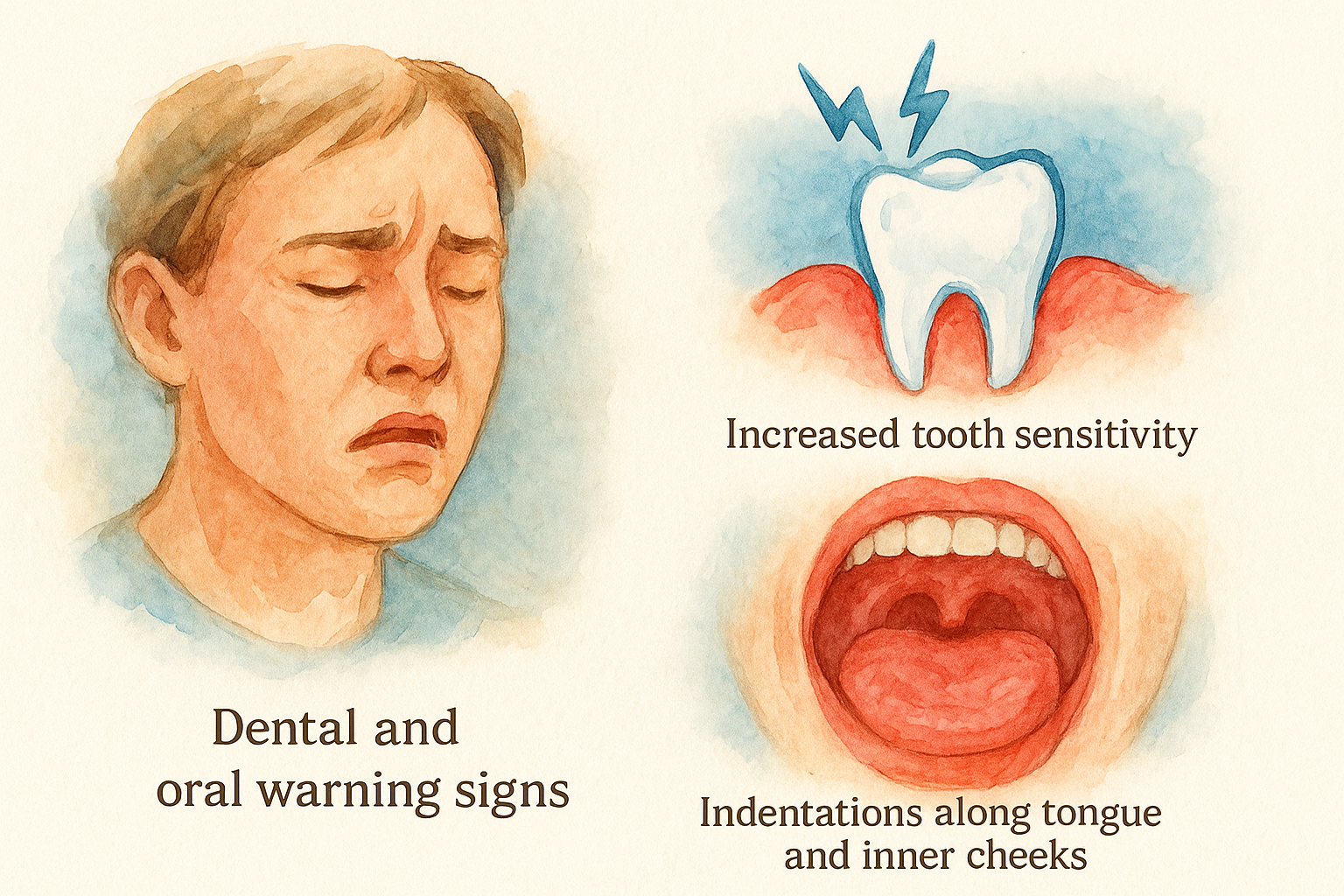
Another sign worth watching is indentations along the sides of your tongue or marks on the inside of your cheeks. These form because your tongue and cheek tissue press against your teeth under sustained force during the night. Your dentist can spot these patterns quickly during a routine exam.
Common causes of jaw clenching during sleep
Jaw clenching while sleeping rarely has a single cause. Most people who clench deal with a combination of psychological, physiological, and lifestyle factors that reinforce each other, which is why identifying your specific triggers matters more than applying a one-size-fits-all solution.
Stress and anxiety
Stress is the most well-documented driver of nighttime jaw clenching. When your nervous system stays in a heightened state during the day, your muscles carry that tension into sleep. Your brain doesn't fully switch off, and your jaw muscles reflect that by contracting through the night. Research consistently links elevated psychological stress and anxiety disorders to higher rates of bruxism and clenching, with the intensity of clenching often tracking directly with how stressful your life feels at any given time.
If you notice your jaw feels worse after particularly demanding weeks, stress is almost certainly playing a significant role.
Anxiety, even at subclinical levels, keeps your fight-or-flight response partially activated, which floods your muscles with tension that has nowhere to go while you sleep. Addressing the stress itself, through exercise, therapy, or better sleep hygiene, can reduce the severity of clenching, though it rarely eliminates it entirely on its own.
Sleep disorders and lifestyle factors
Sleep apnea and other sleep-disordered breathing conditions are strongly associated with jaw clenching. When your airway partially closes during sleep, your jaw may tense up as part of your body's reflex to reopen it. This means that for some people, clenching is a symptom of an underlying breathing issue that needs separate evaluation.
Lifestyle choices also raise your risk significantly. Caffeine and alcohol consumption, especially in the hours before bed, increase muscle activity and reduce sleep quality in ways that make clenching more likely. Certain medications, particularly stimulants and some antidepressants in the SSRI category, list bruxism as a known side effect, so reviewing your current prescriptions with your doctor is worth doing if your clenching started around the same time you began a new medication.
How to stop clenching your jaw at night
There is no single fix that works for everyone, but combining protective gear with lifestyle changes gives you the best chance of reducing the damage and breaking the cycle. The goal is to address jaw clenching while sleeping on two fronts: protect your teeth from the forces that are already happening, and reduce the conditions that trigger clenching in the first place.
Wear a custom-fitted night guard
A night guard is the most direct and reliable way to protect your teeth from clenching damage. It sits between your upper and lower teeth and absorbs and redistributes the pressure your jaw generates overnight, preventing enamel wear, cracking, and joint strain. Over-the-counter options exist, but they are bulky, poorly fitted, and uncomfortable enough that most people stop wearing them within weeks.
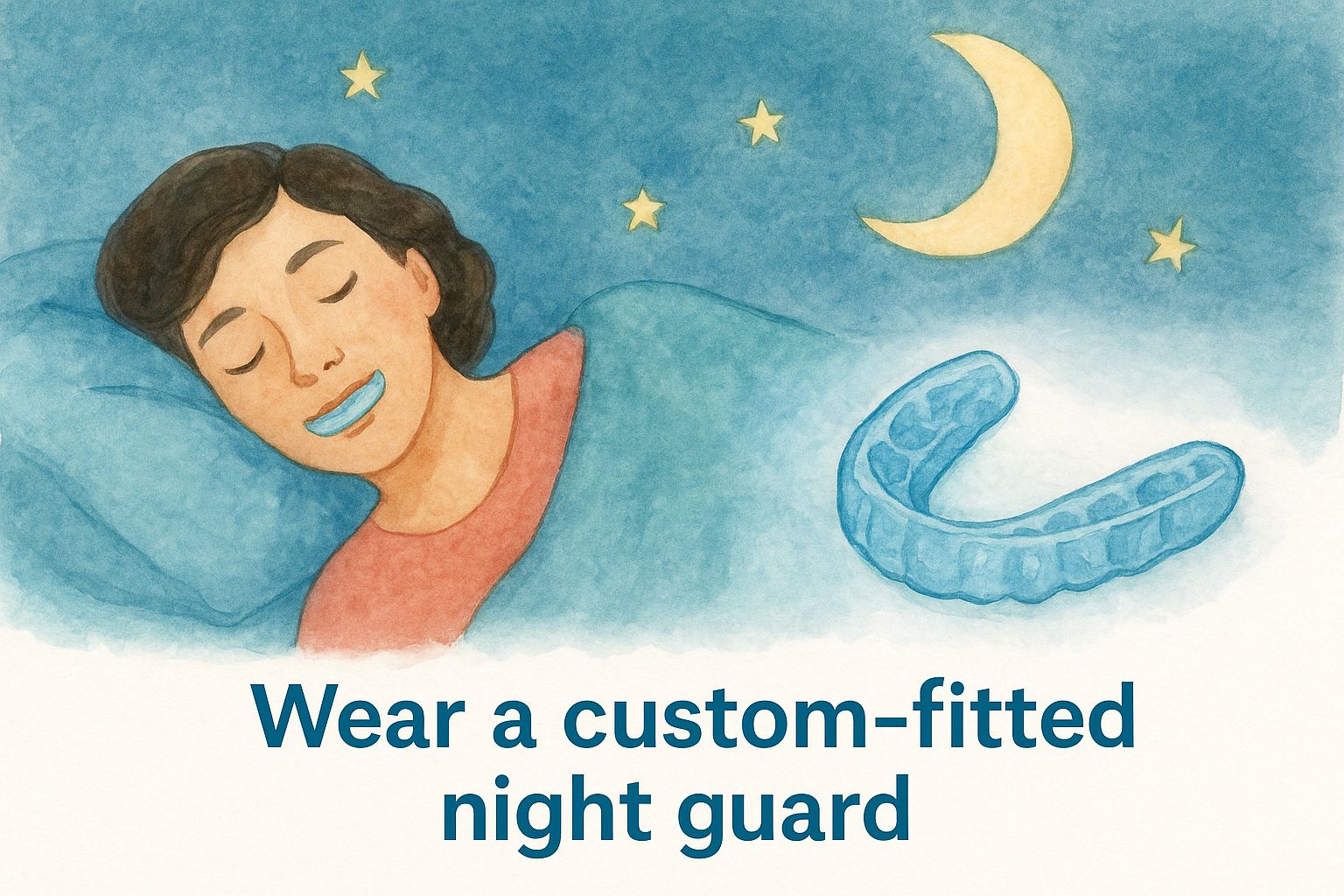
A custom-fitted night guard made from dental impressions of your own teeth stays in place, feels natural, and provides real, consistent protection night after night.
Remi's custom night guards start with an at-home impression kit you complete on your own schedule, then mail in so your guard can be fabricated to fit your exact bite. The result is a professionally made appliance at a fraction of what a dental office charges for the same quality of work.
Manage stress and adjust your habits
Reducing the triggers that drive clenching can lower its frequency and severity over time. Cutting back on caffeine and alcohol, especially in the three to four hours before bed, removes two of the most common stimulants that increase nighttime muscle activity. Building a consistent wind-down routine, whether through light stretching, breathing exercises, or limiting screen time before sleep, helps your nervous system shift out of high-alert mode before you lie down.
Tension in your jaw during the day carries directly into the night. Practicing deliberate jaw relaxation, where you consciously keep your teeth apart and your jaw muscles loose during waking hours, reduces the baseline tension your body brings into sleep and makes clenching episodes less intense.
When to see a dentist or doctor
Self-management strategies and a well-fitted night guard handle the majority of jaw clenching while sleeping cases, but some situations need professional input. Knowing when to step up from home care to a clinical evaluation can save you from significantly more invasive and expensive treatment down the road.
Signs that point to professional evaluation
If your jaw pain is severe, persistent, or getting worse despite consistent night guard use, that is a clear signal to book a dental appointment. A dentist can assess whether structural damage has already occurred, check for cracked teeth or enamel loss that needs restorative work, and evaluate whether the fit of your current guard is actually adequate for your bite.
If you hear clicking or popping in your jaw, experience locking, or find it difficult to fully open your mouth, see a dentist promptly, as these are signs of temporomandibular joint involvement that need direct assessment.
Waking up with frequent headaches or radiating facial pain that does not improve within a few weeks of wearing a night guard also warrants a visit. These symptoms can indicate muscle damage or nerve involvement that a dentist or orofacial pain specialist needs to evaluate in person.
When a doctor needs to be involved
Your primary care physician or a sleep specialist becomes the right next step when breathing irregularities or snoring accompany your clenching. Sleep apnea and clenching often occur together, and treating only the jaw without addressing an airway issue leaves the root cause unresolved. A sleep study can confirm whether disordered breathing is driving your nighttime muscle activity.
You should also talk to your doctor if your clenching started shortly after beginning a new medication, particularly an antidepressant or stimulant. A physician can review your prescriptions and explore alternatives or dosage adjustments that may reduce the side effect without disrupting your overall treatment.
Key takeaways
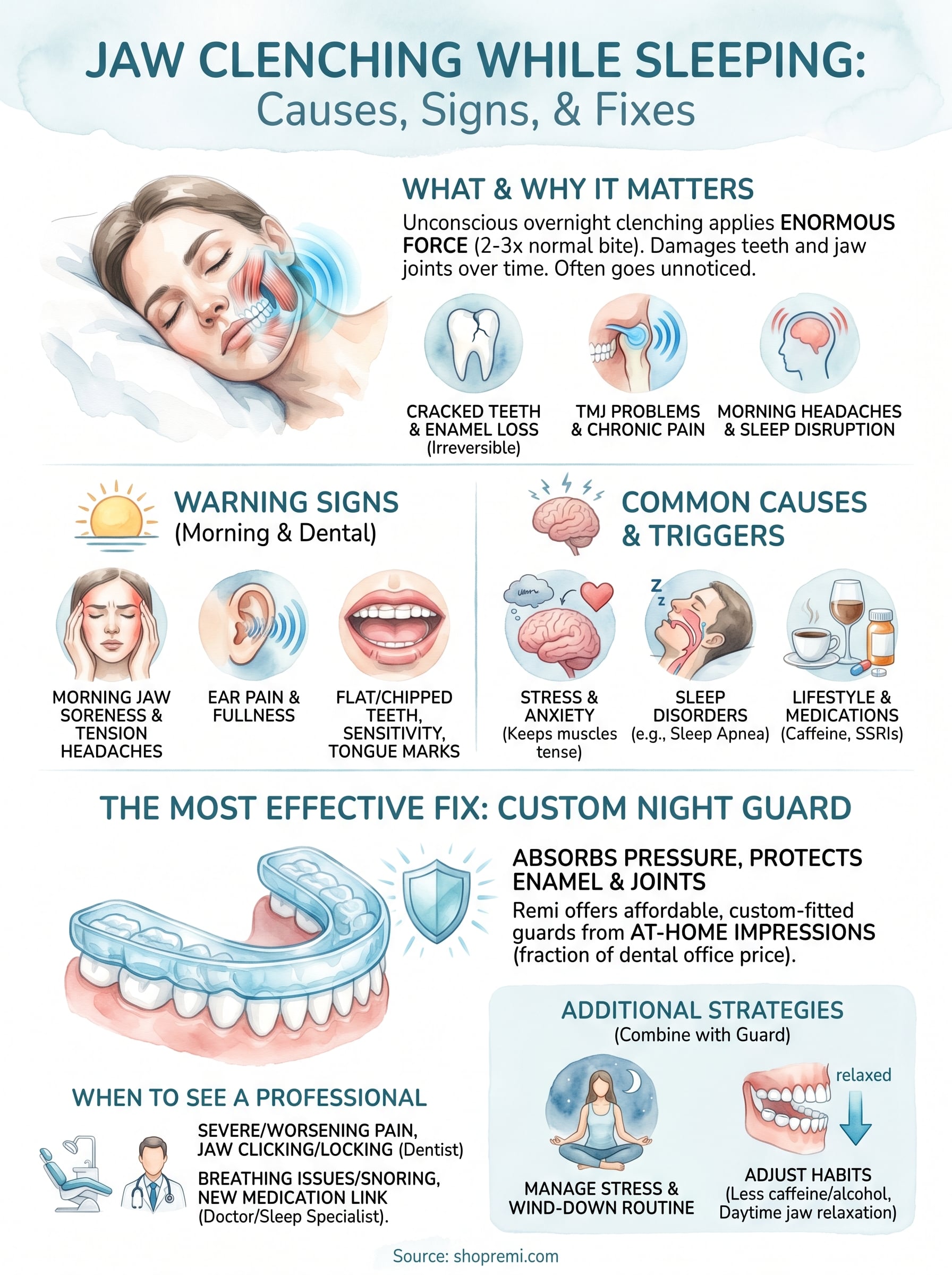
Jaw clenching while sleeping is a common but genuinely damaging habit that wears down enamel, strains your jaw joints, disrupts your sleep, and causes daily pain that most people never trace back to the right source. Stress, sleep disorders, and certain medications are the most frequent drivers, and catching it early through symptoms like morning soreness, headaches, and flat tooth surfaces gives you the best shot at preventing long-term damage.
Lifestyle changes and stress management help reduce clenching, but they rarely stop it completely on their own. Wearing a properly fitted night guard every night is the most reliable way to protect your teeth from the forces your jaw generates during sleep. You do not need to pay dental office prices to get a guard that actually fits. A custom night guard from Remi gives you dental-grade protection at 80% less than the dentist, made from impressions you take at home and delivered straight to your door.

