


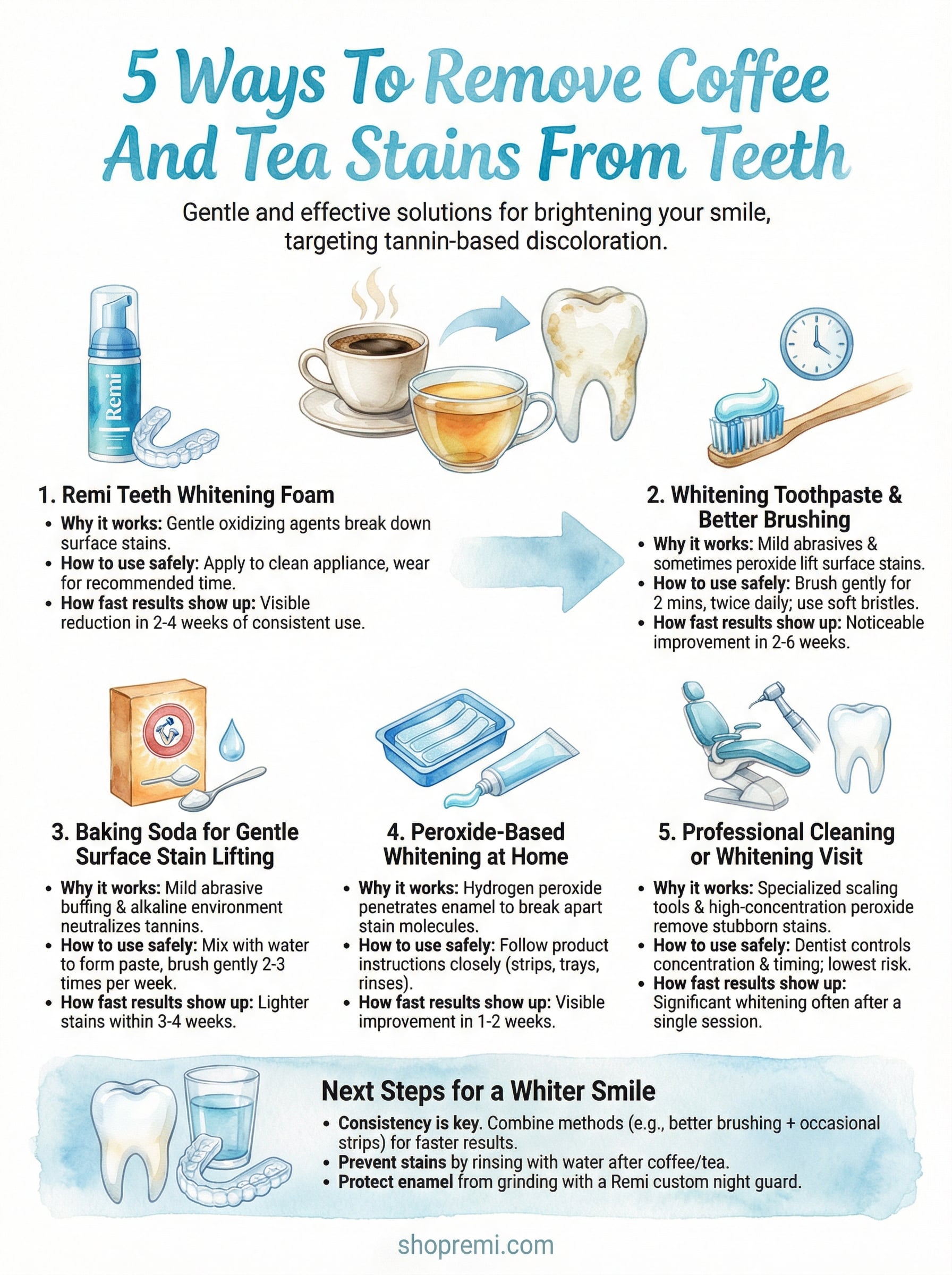
You love your morning coffee or afternoon tea, but your smile tells a different story. Those yellowish-brown stains creeping across your teeth aren't just a cosmetic nuisance; they can make you feel self-conscious every time you open your mouth. If you've been searching for how to remove coffee and tea stains from teeth, you're not alone. It's one of the most common dental complaints out there.
The good news? You don't need an expensive dental visit to fight back. Surface stains from tannins, the compounds in coffee and tea that cling to enamel, respond well to consistent at-home care and a few smart habit changes. From natural remedies to oral hygiene upgrades, there are real options that work.
Below, we break down five practical ways to lift those stains and keep them from coming back. And because stain prevention goes hand-in-hand with overall oral care, we'll also touch on how products like Remi's Night Guard Cleaning + Teeth Whitening Foam can pull double duty, keeping your dental appliances fresh while brightening your smile at the same time.
1. Remi Teeth Whitening Foam
Remi's Night Guard Cleaning + Teeth Whitening Foam is a two-in-one product that cleans dental appliances and whitens teeth at the same time. If you wear a night guard or retainer, this foam fits naturally into your existing routine without requiring extra steps.
Why it works for coffee and tea stains
Coffee and tea leave tannin-based surface stains on enamel that respond well to gentle oxidizing agents. Remi's foam uses a whitening formula that targets these stains at the surface level, breaking down discoloration without harsh abrasives. Because you apply it through your appliance, the formula stays in contact with your enamel longer than a standard rinse would.
How to use it without damaging enamel
Apply a small amount of foam to your clean night guard or retainer, then place the appliance in your mouth for the recommended wear time. The foam works while the appliance sits against your teeth, so you are not scrubbing or applying pressure that could wear down enamel. Keep use consistent rather than excessive; daily or nightly application as directed delivers steady improvement without irritating sensitive enamel.
Consistency matters more than intensity when it comes to lifting surface stains.
Who should use it and who should skip it
This product works best for people who already wear a night guard or retainer and want to combine appliance care with whitening in one step. If you have significant intrinsic staining, which is discoloration beneath the enamel surface, this foam will not address the underlying cause. People with severe enamel erosion or active cavities should check with their dentist before using any whitening product.
How fast results show up
Most users notice a visible reduction in surface staining within two to four weeks of consistent use. Coffee and tea stains are among the most surface-level discolorations, so they respond faster than deeper staining does. For the best outcome, rinse your mouth with water after drinking coffee or tea to limit how much tannin settles on your enamel between uses.
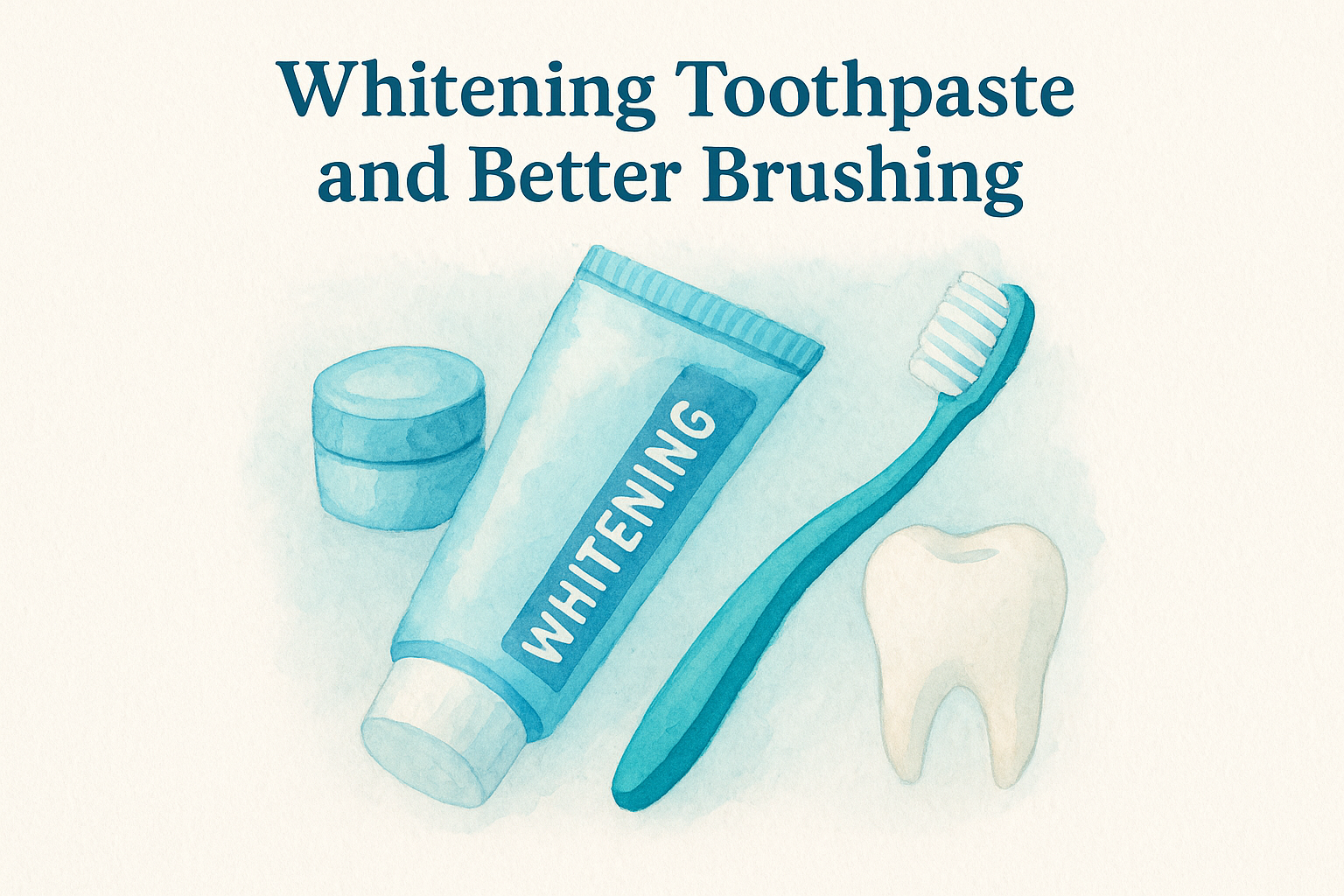
2. Whitening Toothpaste and Better Brushing
Switching to a whitening toothpaste and adjusting your brushing technique is one of the most accessible ways to tackle surface stains. If you're focused on how to remove coffee and tea stains from teeth without adding new products, this is a solid starting point that fits into your existing routine.
Why it works for coffee and tea stains
Whitening toothpastes contain mild abrasives and sometimes hydrogen peroxide or blue covarine that lift tannin-based stains from enamel. These formulas target the surface discoloration that coffee and tea leave behind, making them well-suited for this specific type of staining.
How to use it without damaging enamel
Brush for two full minutes, twice a day, using gentle circular motions rather than hard back-and-forth scrubbing. Applying too much pressure wears down enamel over time, which actually makes teeth look more yellow, not less.
Soft-bristle brushes paired with whitening toothpaste deliver better results than hard-bristle brushes used aggressively.
Who should use it and who should skip it
Most people can use whitening toothpaste safely as part of daily care. If you have sensitive teeth or thinning enamel, look for sensitivity-specific formulas, since standard whitening toothpastes can increase discomfort with regular use.
How fast results show up
You can expect noticeable improvement in surface staining within two to six weeks of consistent use. Coffee and tea stains sit close to the surface, so daily brushing with a quality whitening formula moves them faster than deeper discoloration would respond.
3. Baking Soda for Gentle Surface Stain Lifting
Baking soda has been used as a teeth-cleaning agent for decades, and it holds up well against coffee and tea stains specifically. Its mild alkalinity helps neutralize acidic compounds that tannins leave on your enamel, making stains easier to lift without the intensity of commercial whitening products.
Why it works for coffee and tea stains
Baking soda is a mild abrasive that physically buffs surface discoloration off enamel. It also creates an alkaline environment in your mouth that disrupts the bond tannins form with tooth enamel, which is exactly the mechanism behind coffee and tea staining.
How to use it without damaging enamel
Mix a small amount of baking soda with enough water to form a thin paste, then brush gently for about two minutes. Limit this to two or three times per week at most, since daily use can gradually wear away enamel.
Less frequent use with baking soda produces better long-term results than scrubbing daily.
Who should use it and who should skip it
Baking soda works well for people with mild to moderate surface staining who want a low-cost, simple option. If you have sensitive teeth or exposed root surfaces, the abrasion may cause discomfort, and you should stick to gentler alternatives.
How fast results show up
With consistent use two to three times per week, you can expect lighter surface stains within three to four weeks. Since learning how to remove coffee and tea stains from teeth comes down to targeting the enamel surface, baking soda gets the job done when applied with the right frequency.
4. Peroxide-Based Whitening at Home
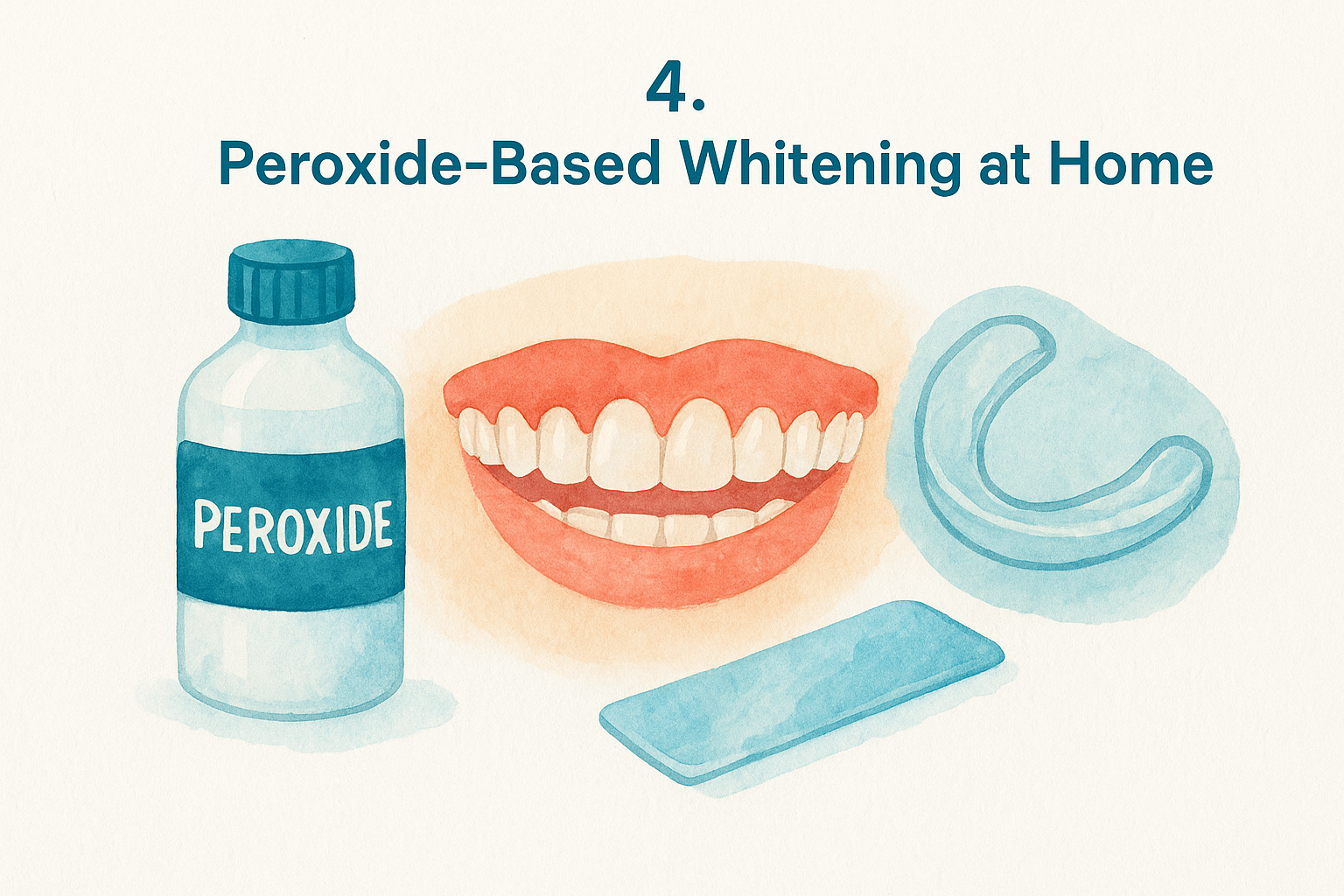
Peroxide-based products go a step further than surface-level methods. Hydrogen peroxide penetrates the outer layer of enamel to break apart stain molecules directly, making it more effective for discoloration that has built up from months of regular coffee and tea drinking.
Why it works for coffee and tea stains
Hydrogen peroxide is an oxidizing agent that breaks down the chromogen compounds tannins deposit on your enamel. Unlike abrasives that buff the surface, peroxide works from within the enamel structure to lift stubborn discoloration.
How to use it without damaging enamel
Use whitening strips or trays with a peroxide concentration between 3% and 10% for safe at-home whitening. Follow the product instructions closely and never leave strips on longer than directed, since overexposure increases tooth sensitivity and irritates gum tissue.
Shorter, consistent sessions protect your enamel better than infrequent, extended applications.
Common at-home peroxide options include:
- Whitening strips (most widely available)
- Custom or boil-and-bite trays with whitening gel
- Low-concentration whitening rinses
Who should use it and who should skip it
Peroxide suits people with moderate to stubborn staining who want faster results than baking soda or toothpaste alone can deliver. Skip it if you have open cavities, active gum disease, or severe sensitivity, since peroxide worsens all three.
How fast results show up
Most people see visible improvement within one to two weeks of consistent use. For anyone focused on how to remove coffee and tea stains from teeth, peroxide-based products tend to deliver some of the fastest results available at home.
5. A Professional Cleaning or Whitening Visit
When at-home methods have limits, a dental professional can go further. If you've been consistent with brushing and whitening products but still see persistent discoloration, a professional cleaning or in-office whitening treatment is the most direct way to reset your enamel.
Why it works for coffee and tea stains
Professional cleanings use specialized scaling tools and polishing agents that remove tartar buildup and surface stains that at-home brushing cannot reach. In-office whitening uses high-concentration peroxide applied under controlled conditions, which breaks apart deeply embedded tannin stains more aggressively than any retail product.
A professional cleaning twice a year also removes the tartar layer that traps stains close to the gumline.
How to use it without damaging enamel
Your dentist or hygienist controls the concentration and timing of any whitening agent used, which eliminates the risk of overexposure. For anyone asking how to remove coffee and tea stains from teeth safely with professional help, the supervised approach is the lowest-risk option available.
Who should use it and who should skip it
Anyone with heavy staining, tartar buildup, or staining that overlaps with gum issues should prioritize a professional visit first. If cost or access is a barrier, start with at-home options and reserve professional treatment for stubborn cases.
How fast results show up
Most patients see significant whitening after a single in-office session, with surface stains cleared immediately during a standard cleaning.
Next Steps for a Whiter Smile
Knowing how to remove coffee and tea stains from teeth gives you a clear path forward, but the real key is picking the right method for your situation and staying consistent. Surface stains respond well to routine, so whether you start with whitening toothpaste or a peroxide treatment, give your chosen approach at least three to four weeks before judging results. Combining two methods, such as a strip treatment alongside better brushing habits, often speeds things up without overloading your enamel.
Prevention matters just as much as removal. Rinsing with water after every cup of coffee or tea limits how much tannin bonds to your enamel between cleanings, keeping future staining lighter. If you grind your teeth at night, that habit actively wears down enamel and makes staining worse over time. Protecting your enamel from both angles gives your whitening efforts a real chance. Start with a Remi custom night guard to keep your enamel intact while you work on brightening your smile.

