
 Guards + Retainers
 Custom Night Guard
 Retainer
 Emergency Order

 Whitening
 Whitening Kit
 Teeth Whitening Gel
 Dual-Action Foam
 Cleaning + Care
 Ultrasonic Cleaner Pro
 Water Flosser
 UV Toothbrush Sanitizer
 Deep Clean + Freshening Tablets
 Accessories
 Guard Removal Tool
 Replacement Nozzles
 Bundles

That dull, throbbing ache along your jawline can make everything harder, eating, talking, even concentrating at work. If you're searching for jaw muscle pain relief, you're probably dealing with tension from clenching, grinding, or stress that's built up over days (or weeks). The good news: you don't need a specialist appointment to start feeling better today.
Most jaw muscle pain stems from overworked muscles, often triggered by nighttime teeth grinding or daytime clenching habits. At Remi, we work with dental professionals to create custom night guards that protect your teeth and reduce the strain on your jaw, but a night guard works best when paired with active relief strategies you can do at home.
This guide walks you through specific exercises, self-massage techniques, and proven at-home treatments to ease jaw tension fast. We'll also cover when to seek professional help and how to prevent the pain from coming back. Let's get your jaw feeling normal again.
What causes jaw muscle pain and when to get help
Jaw muscle pain usually comes down to one thing: your muscles are working too hard. Whether it's from grinding your teeth at night, clenching during a stressful workday, or chewing too much gum, the muscles around your jaw get fatigued and inflamed just like any other muscle in your body. Understanding the root cause helps you choose the right treatment and avoid making things worse.
The most common triggers
Several conditions and habits lead to the kind of soreness that makes jaw muscle pain relief feel urgent. Temporomandibular joint (TMJ) dysfunction is one of the most frequent culprits, affecting the joint that connects your jaw to your skull. Bruxism, which is nighttime teeth grinding or daytime clenching, puts enormous pressure on those same muscles. Other triggers include:
- Stress and anxiety, which cause unconscious jaw tightening throughout the day
- Misaligned bite, which forces muscles to compensate with every chew
- Teeth grinding during sleep, which can go unnoticed for months before pain develops
- Injury or trauma, such as a blow to the face or whiplash from a car accident
- Overuse habits like chewing hard foods constantly or resting your chin on your hand
Nighttime grinding is especially damaging because your muscles work for hours without any conscious feedback to stop them.
When to stop treating yourself at home
Home exercises and self-care work well for most cases of mild to moderate jaw tension. However, certain warning signs mean you should see a dentist or doctor rather than waiting it out. Book an appointment if you notice locking or popping in your jaw joint that limits how far you can open your mouth, pain that radiates into your ear or neck, swelling on one side of your face, or symptoms that get noticeably worse after two weeks of home care. These can point to structural problems that exercises alone will not fix.
Step 1. Get quick relief with heat, ice, and rest
Before jumping into exercises, your muscles need a chance to calm down. Applying heat or ice and giving your jaw a real break are the fastest ways to start finding jaw muscle pain relief without any equipment or appointments. These simple steps reduce inflammation, increase blood flow, and prepare your jaw for movement.
Heat or ice: which one to use
The choice depends on how long you've had the pain. Use ice during the first 24 to 48 hours after pain starts, applying it for 10 minutes at a time to bring down inflammation. After that window, switch to a warm compress or heating pad for 15 to 20 minutes to relax tight muscles and improve circulation. Always wrap ice or heat in a cloth and never apply either directly to bare skin.
If your jaw feels stiff in the morning after grinding at night, heat is almost always the better choice.
Give your jaw a real break
Rest means more than just skipping your morning bagel. Avoid hard, chewy, or crunchy foods for at least 48 hours and keep your teeth slightly apart during the day rather than clenched together. Holding your jaw in a neutral, relaxed position lets the overworked muscles recover faster and shortens your overall recovery window significantly.
Step 2. Try safe jaw stretches you can do now
Once your muscles have had a chance to rest and settle, gentle movement speeds up recovery faster than continued rest alone. Stretching helps restore normal range of motion, reduces stiffness, and is one of the most accessible forms of jaw muscle pain relief you can do anywhere without any tools. Move slowly and stop immediately if you feel sharp pain.
The controlled opening stretch
This stretch targets the masseter and pterygoid muscles, the two main muscles responsible for most jaw tension. Place your tongue on the roof of your mouth and slowly open your jaw as wide as you comfortably can without pain, hold for five seconds, then close gently. Repeat this eight to ten times per session, twice daily.
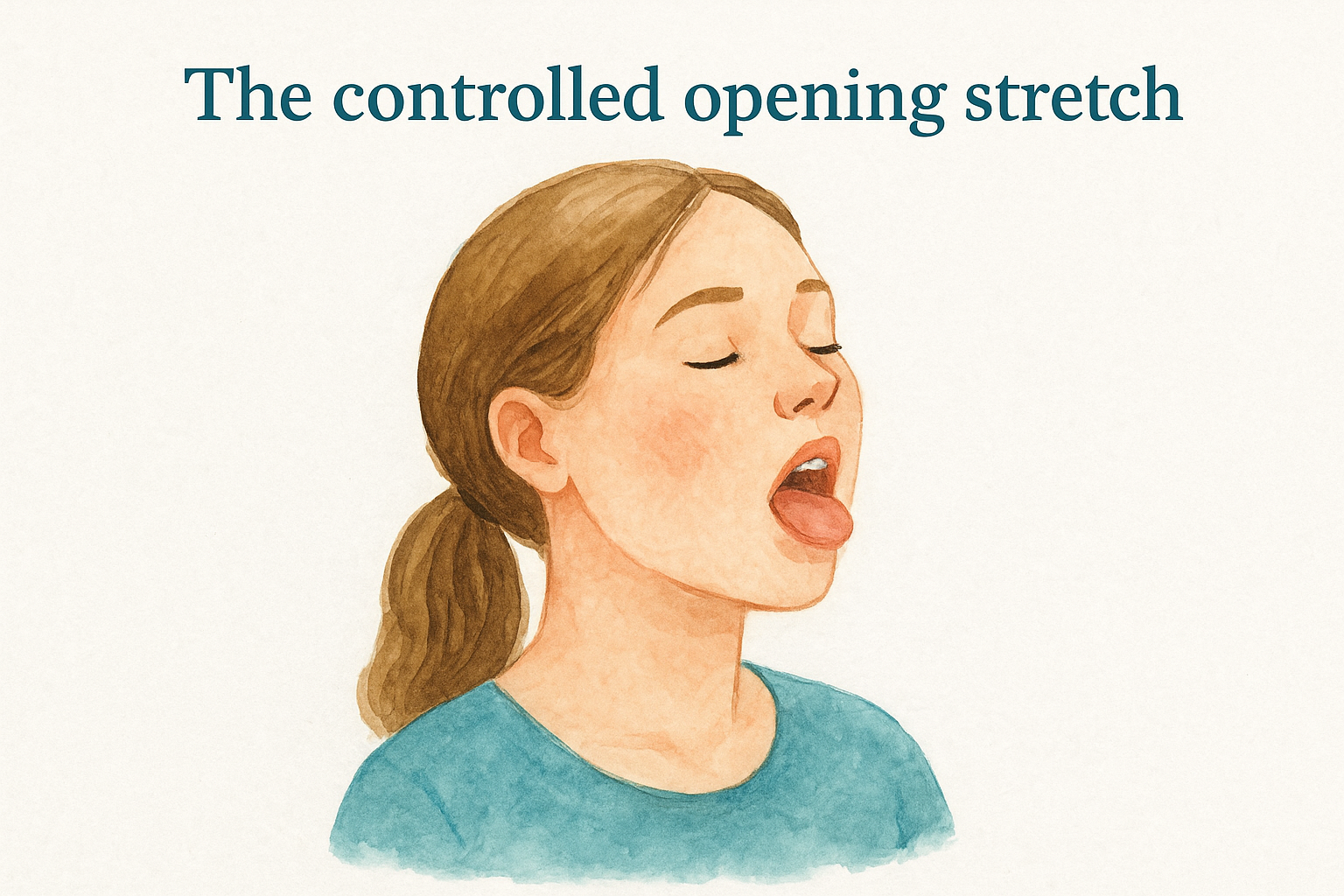
Keeping your tongue on the roof of your mouth helps guide your jaw straight down rather than forward, which protects the joint.
The side-to-side glide
This movement restores lateral mobility that tightness tends to restrict. Start with your teeth slightly apart. Shift your lower jaw to the right as far as it goes without pain, hold for three seconds, return to center, then repeat on the left side. Do five repetitions on each side. Perform this stretch after the controlled opening stretch so your muscles are already warmed up and more responsive to movement.
Step 3. Build strength with gentle resistance moves
Once your stretches feel comfortable, adding gentle resistance exercises helps your jaw muscles rebuild the endurance they need to handle daily stress without breaking down. Stronger muscles are less prone to fatigue-related tension, which makes resistance training a long-term strategy for jaw muscle pain relief rather than just a temporary fix.
The chin tuck with resistance
This move targets the muscles along your jaw and neck that often get overpowered by chronic clenching. Place your thumb under your chin and apply light upward pressure as you slowly try to open your mouth against that resistance. Hold for five seconds, then release. Repeat this six times, twice per day. The goal is gentle opposition, not a forceful push.
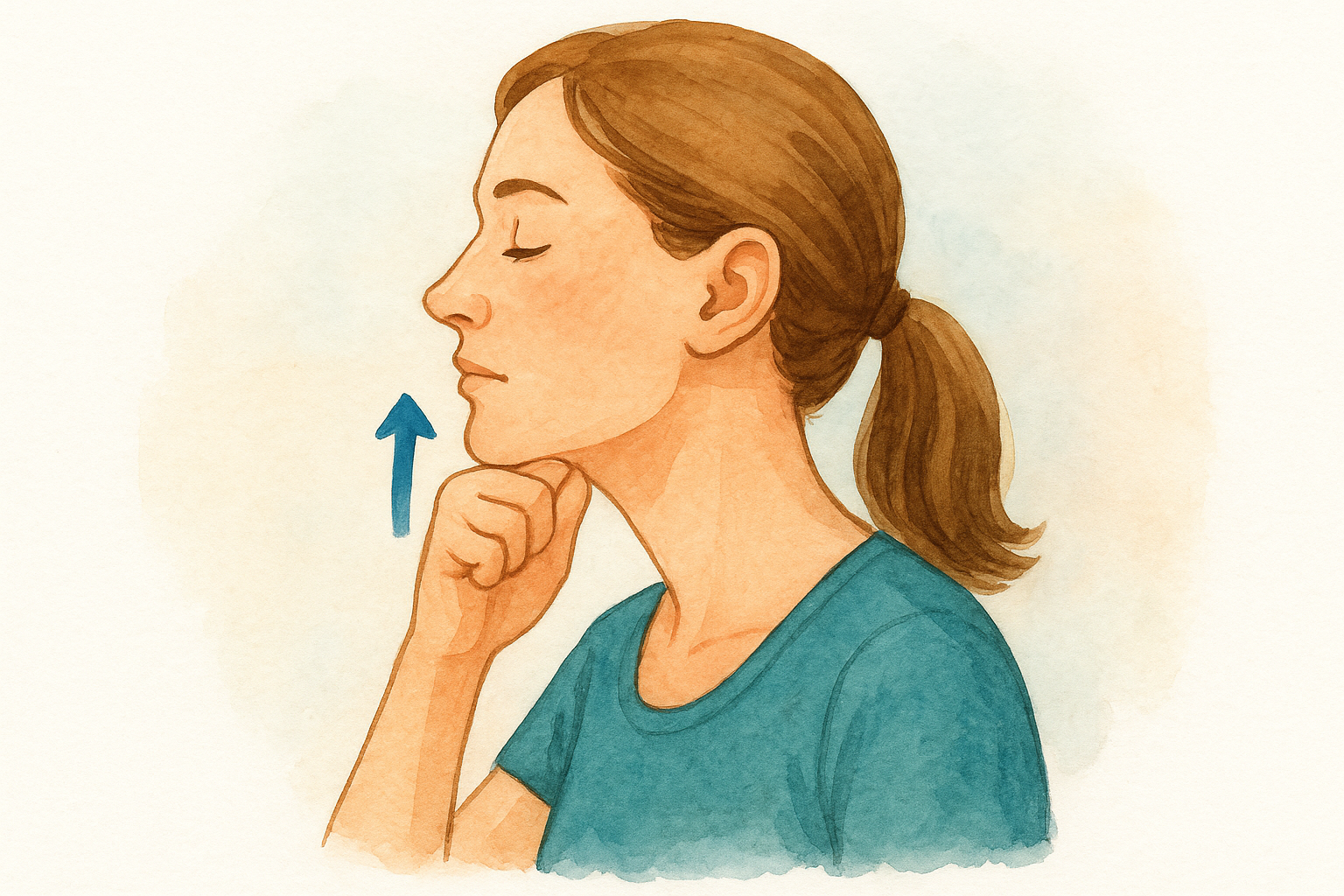
Never use enough resistance to cause pain; if it hurts, reduce the pressure immediately and try again with a lighter touch.
The closed-mouth press
Your goal with this exercise is to build the muscles responsible for controlled jaw closure, which balances out the opening muscles you already stretched. Place your fist under your chin and gently push upward while you try to open your mouth slowly against that light pressure. Hold for three seconds, release, and complete eight repetitions per session. Keep your movements deliberate and controlled throughout each rep.
Step 4. Fix daily triggers: clenching, chewing, sleep
Exercises only go so far if daily habits keep reloading the same muscles you're trying to heal. Correcting the triggers behind your tension is the most sustainable form of jaw muscle pain relief, and most changes take less than a minute to put in place.
Stop daytime clenching and overuse
Your jaw should rest with teeth slightly apart and lips closed throughout the day. Most people clench without realizing it, especially during focused work or stressful conversations. Set a phone reminder every hour to check your jaw and consciously release any tension you find. Also cut back on:
- Hard foods like raw carrots, bagels, and tough meats
- Chewing gum, which keeps your jaw muscles in constant contraction
- Habits like biting nails or chewing on pens
Small hourly check-ins add up to hours of reduced muscle strain across a full week.
Protect your jaw overnight
Nighttime grinding is the hardest trigger to control because it happens while you sleep. A custom-fitted night guard absorbs the force of grinding so your muscles take less impact each night.
Over-the-counter guards fit poorly and can shift your bite over time. A custom guard, made from an impression of your actual teeth, distributes pressure evenly across your whole bite and stays securely in place, giving your jaw the recovery window it needs to heal between sessions.
Your next steps
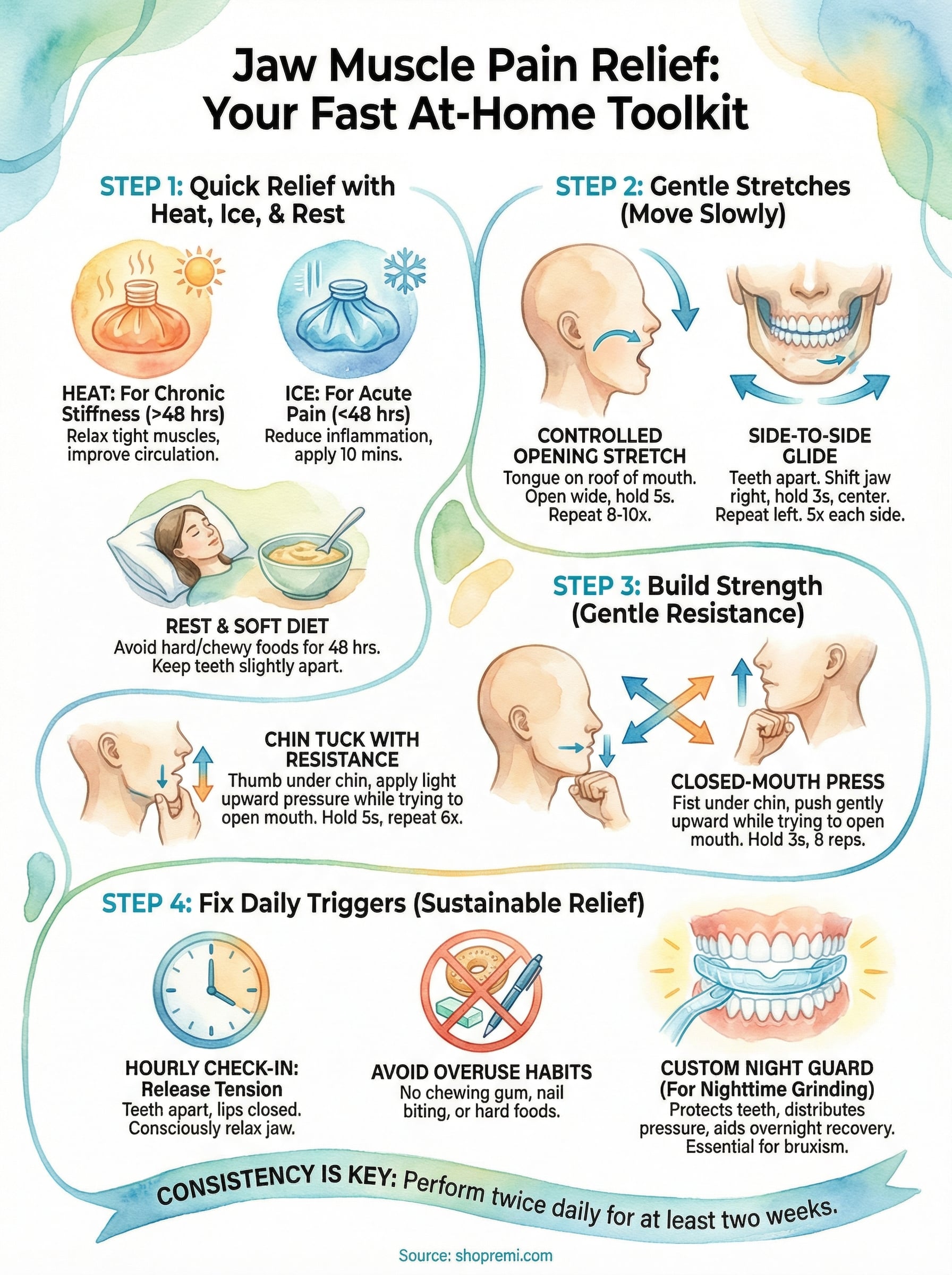
You now have a complete toolkit for jaw muscle pain relief: start with heat or ice and rest, move into stretches, add resistance exercises, and fix the daily habits that keep reloading your jaw muscles. Each step builds on the last, so work through them in order rather than jumping straight to exercises before your muscles have settled.
Consistency matters more than intensity here. Do the stretches and resistance moves twice daily for at least two weeks before judging your progress. Most people notice meaningful improvement within the first week when they pair exercises with active trigger control throughout the day.
Nighttime grinding is your biggest long-term obstacle because it quietly undoes the recovery you build during the day. A properly fitted guard changes that equation overnight. Try a custom night guard from Remi and give your jaw the nightly recovery window it needs to stay ahead of the pain for good.

