
 Guards + Retainers
 Custom Night Guard
 Retainer
 Emergency Order

 Whitening
 Whitening Kit
 Teeth Whitening Gel
 Dual-Action Foam
 Cleaning + Care
 Ultrasonic Cleaner Pro
 Water Flosser
 UV Toothbrush Sanitizer
 Deep Clean + Freshening Tablets
 Accessories
 Guard Removal Tool
 Replacement Nozzles
 Bundles

You already brush twice a day, maybe even use a night guard to protect your teeth while you sleep. But if string floss is still your only tool for cleaning between teeth, you're leaving a lot on the table. The benefits of using a water flosser go well beyond convenience, we're talking about measurably better gum health, more effective plaque removal, and a routine that's actually easy to stick with.
Whether you have braces, dental implants, or just hate wrestling with a strand of floss every night, a water flosser can genuinely change the game. At Remi, we build products, from custom night guards to our Cordless Water Flosser, designed to make dental care simpler and more affordable without cutting corners on quality. So we know a thing or two about what actually moves the needle for your oral health.
Here are eight solid reasons to make the switch today.
1. Make daily flossing easier with the Remi cordless water flosser
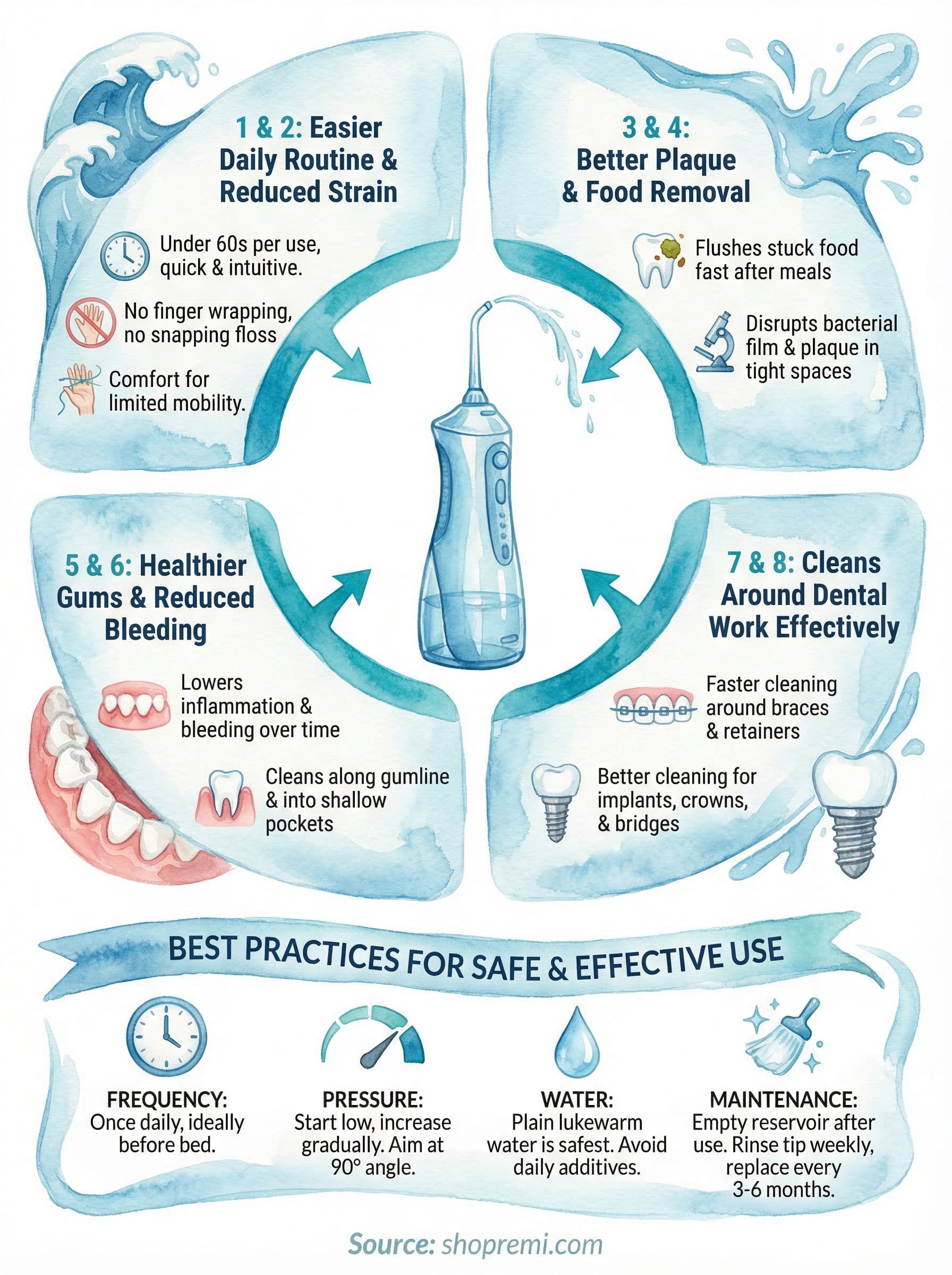
One of the biggest benefits of using a water flosser is how much it lowers the barrier to actually doing it. String floss sits in the drawer for days; a water flosser sits on the counter and takes under 60 seconds to use. That difference sounds small, but it adds up over months of better daily habits.
Reason 1: You're more likely to floss every day
Consistency drives results in oral health, and a water flosser makes consistency far easier to maintain. The process is quick and intuitive: fill the reservoir, aim at your gumline, and go. You don't need to wrap floss around your fingers or wrestle it through tight contacts, so there's almost no reason to skip it.
When flossing feels easy, you actually do it. That's the real win here.
Reason 2: You reduce finger strain and "snapping" floss issues
String floss can be genuinely uncomfortable for people with limited hand mobility, arthritis, or smaller mouths. It also tends to snap into the gum, which causes bleeding and discourages people from trying again.
A water flosser eliminates both problems because no direct gum contact is required to clean effectively. You control the pressure, so the experience stays comfortable from day one.
When a cordless water flosser beats a countertop model
Countertop models are powerful, but they demand dedicated counter space and a nearby outlet. A cordless model is smaller, travel-ready, and easy to recharge on your schedule.
If you regularly skip flossing while traveling or staying elsewhere, a cordless design removes that excuse completely.
What to look for in a cordless water flosser
Focus on three things before you buy:
- Pressure range: multiple settings let beginners start low and increase gradually
- Battery life: enough charge for at least a week of daily use
- Reservoir size: small enough to be portable, large enough to finish a session without refilling
The Remi Cordless Water Flosser covers all three while staying compact enough for a travel bag or small bathroom.
2. Clear food and plaque from places brushing misses
Your toothbrush covers tooth surfaces well, but it cannot reach the tight spaces between teeth or just below the gumline. That's where food and bacteria accumulate and cause real damage. One of the core benefits of using a water flosser is that it targets exactly those hard-to-reach areas.

Reason 3: You flush out stuck food fast
A pressurized water stream dislodges food particles and debris from between teeth faster than string floss does. You aim, pulse, and move on, making it especially useful right after meals.
Reason 4: You disrupt plaque in tight spaces between teeth
Water pressure doesn't just clear loose debris; it disrupts the bacterial film forming between teeth throughout the day. Consistent use keeps that buildup from progressing into harder deposits.
Water flosser vs string floss for plaque control
Both tools reduce plaque, but water flossers reach areas where string floss struggles, including deep pockets and tightly packed contacts.
For most people, a water flosser works just as well as string floss for daily plaque disruption.
What results to expect and what not to expect
You'll notice improved daily plaque control within a few weeks of consistent use. Keep these limitations in mind:
- It cannot remove hardened tartar, only a professional cleaning can
- Results depend on consistent technique, not just occasional use
3. Support healthier gums and reduce bleeding
Among the most overlooked benefits of using a water flosser is what it does for your gum tissue. Regular use reduces bacterial buildup along the gumline, which lowers your risk of gum disease.
Reason 5: You can lower gum inflammation and bleeding over time
Bleeding gums signal inflammation from plaque, not rough brushing. Consistent water flossing disrupts that buildup daily, giving your gum tissue time to firm up and heal over several weeks.
Most people notice less gum bleeding within two to four weeks of daily use.
Reason 6: You can clean along the gumline and into shallow pockets
Your toothbrush cannot reach the pocket between your tooth and gum. A water flosser sends a direct stream into that space, flushing out bacteria and debris before they trigger deeper inflammation.
Shallow pockets signal early gum disease. Cleaning them daily with targeted water pressure slows progression before it becomes harder to reverse.
Who benefits most if they have gingivitis or sensitive gums
People with early gingivitis see the fastest improvement since gum tissue recovers quickly once bacterial exposure drops.
Those with sensitive gums also benefit because lower pressure settings let you clean along the gumline without aggravating soreness or causing further damage.
Signs you should talk to a dentist before you start
See a dentist first if you notice:
- Heavy or persistent gum bleeding
- Consistent pain or visible gum recession
A water flosser supports gum health but cannot treat active infection or replace professional care.
4. Clean around braces and dental work with less hassle
One of the most practical benefits of using a water flosser is how well it handles complex dental work that makes string floss nearly impossible to use effectively every day.
Reason 7: You can clean around braces and permanent retainers faster
Braces and permanent retainers create extra surfaces and tight gaps where food and plaque build up quickly. Threading string floss through each bracket and wire takes several frustrating minutes.
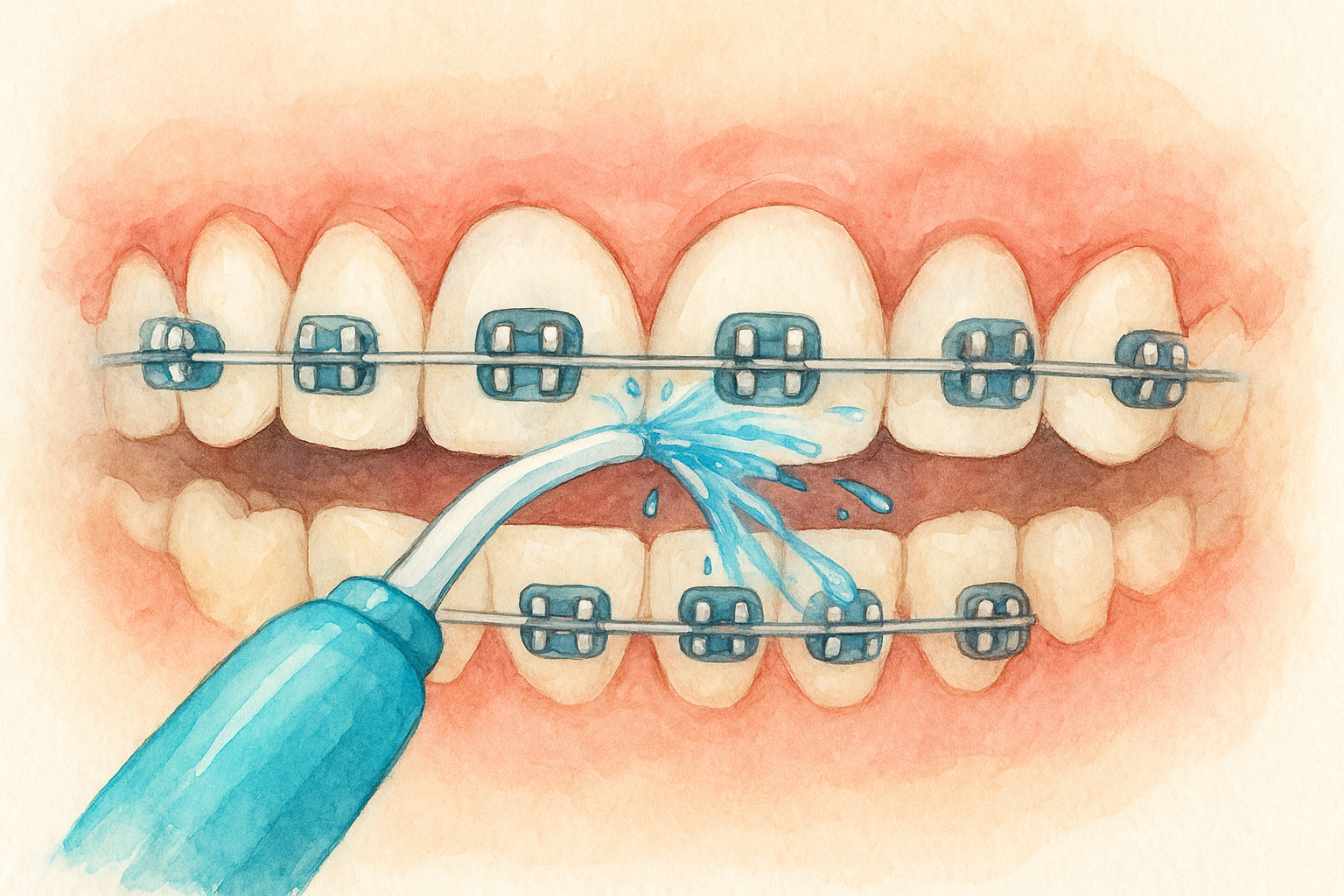
A water flosser covers the same area in under a minute without any threading, so the real barrier to daily cleaning is gone.
Reason 8: You can clean around implants, crowns, and bridges better
Implants, crowns, and bridges have margins and undersurfaces that string floss simply cannot reach. Water pressure flushes bacteria from those gaps daily, protecting surrounding gum tissue and bone from irritation before problems develop.
Keeping those margins clean consistently extends the lifespan of your dental work.
Tips and attachments that help with orthodontics and restorations
Many water flossers include an orthodontic tip designed to direct water precisely around brackets and wires. Start at a lower pressure setting to avoid irritating sensitive gum tissue near recent dental work.
Common mistakes that leave plaque behind
Rushing through the session and skipping the gumline around each bracket or crown leaves the most vulnerable spots untouched. Slow down and pause at each tooth to give water enough time to flush each contact fully.
5. Use it safely and get the most out of it
Getting the most from one of the core benefits of using a water flosser comes down to consistent, correct use from day one.
How often you should use a water flosser
Use it once daily, ideally before bed so you clear the day's buildup before sleep. Some people add a second session after lunch, but one thorough round each day is enough for most.
The right pressure setting and technique for beginners
Start at the lowest pressure setting and aim the tip at a 90-degree angle to your gumline. Pause briefly at each tooth gap before moving on.
Rushing through a session leaves the most vulnerable areas undertreated.
Water choices and add ins that can irritate gums
Plain lukewarm water is the safest choice and avoids irritating gum tissue. Antiseptic mouthwash is fine occasionally when diluted, but daily additives can disrupt your oral microbiome over time.
Disadvantages of water flossers and how to avoid them
The main drawback is mess from poor technique. Lean over the sink, keep your lips slightly closed around the tip, and move slowly to stay in control of the spray.
Cleaning and maintenance so the device stays hygienic
Empty the water reservoir after each use to prevent bacterial growth inside the tank. Rinse the tip weekly and replace it every three to six months.
Next steps
The benefits of using a water flosser are clear: better gum health, more consistent daily flossing, faster cleaning around dental work, and a routine that actually sticks. You now have eight specific reasons to swap out your old floss routine and a clear picture of how to use a water flosser correctly from day one.
Picking the right tool makes it easier to follow through. Compact design, adjustable pressure, and long battery life matter far more than flashy features you'll never use. If you want a reliable, portable option that covers all three, check out the Remi Cordless Water Flosser to see what fits your routine.
Your mouth benefits most when every part of your oral care routine works together. Start with once-daily water flossing, keep your pressure setting low until you build confidence, and watch how quickly your gums respond.

