


Clear retainers look similar at first glance, but the plastic they're made from determines how long they last and how well they protect your smile. Essix retainer material refers to a family of thermoplastic sheets specifically designed for orthodontic appliances, and understanding the differences between types like ACE, C+, and Plus can help you make smarter decisions about your dental care.
Whether you're a dental professional sourcing materials or someone curious about what keeps your teeth aligned after braces, the technical specs matter more than most people realize. Thickness, flexibility, and crack resistance all vary between material grades, and these factors directly impact comfort and longevity. At Remi, we craft our custom clear removable retainers with durability and fit as top priorities, which is why we pay close attention to material science behind every appliance we produce.
This guide breaks down the major Essix material types, compares their properties side by side, and explains what to look for when evaluating retainer quality. You'll also learn how thickness affects performance and where professionals source these thermoforming sheets. By the end, you'll have a clear picture of why not all retainer plastics perform equally, and what that means for your teeth.
Why Essix retainer material matters
The plastic you wear every night directly affects whether your teeth stay straight or shift back toward their pre-braces positions. Material quality determines how tightly your retainer grips each tooth, and even small gaps caused by warping or stretching can allow unwanted movement within weeks. When you consider that orthodontic relapse happens gradually and often goes unnoticed until it's severe, the polymer composition of your retainer becomes a critical factor in protecting your investment in a straight smile.
Material quality affects retention force
Your retainer works by applying continuous light pressure to keep teeth in their corrected positions, and this pressure depends on the plastic's ability to maintain its original shape. Inferior thermoplastics lose memory faster, meaning they stop hugging your teeth as tightly after repeated heating cycles from hot beverages or dishwasher accidents. Research on polymer fatigue shows that material degradation accelerates when exposed to temperature fluctuations and oral bacteria, both of which happen daily in your mouth.
Different essix retainer material grades handle stress differently. A lower-grade plastic might feel adequate when new but develop microscopic cracks within three months, while a premium grade maintains structural integrity for over a year. The difference isn't just about longevity but about consistent retention force throughout the product's lifespan. When your retainer starts to feel loose, your teeth have already begun shifting.
Material selection isn't just a technical detail; it directly determines whether your orthodontic results last or fade.
Cost implications of material choice
You might assume the cheapest retainer saves money, but replacement frequency tells the real financial story. A budget retainer made from thin, low-grade plastic might cost $50 but need replacing every three months, totaling $200 annually. Compare that to a premium-material retainer at $120 that lasts twelve months, and the economics flip. Professional orthodontists factor this math into their material sourcing decisions, and you should too when evaluating direct-to-consumer options.
Material quality also impacts emergency replacements. If you crack or warp your retainer on a Friday night, you're facing days without retention while waiting for a replacement. Higher-durability plastics reduce the risk of sudden failures, giving you more predictable wear patterns and fewer urgent reorder situations. The stress of discovering a cracked retainer before an important event disappears when you choose materials engineered for resilience.
Patient comfort and compliance
Retainer comfort directly influences whether you actually wear it as prescribed, and material flexibility affects how your retainer feels against soft tissues. Rigid, brittle plastics can create pressure points on your gums or tongue, especially along the edges where the material meets delicate oral tissue. You're far more likely to skip wearing a retainer that causes discomfort, which defeats the entire purpose of having one.
Modern essix retainer material formulations balance rigidity for tooth control with enough flexibility to avoid irritation during extended wear. Material thickness and edge quality both depend on the base polymer used, and professional-grade options allow for smoother finishing that reduces the scratchy sensation some patients experience. When you understand these material differences, you can advocate for retainers that you'll actually want to wear eight hours per night.
What Essix material is made of
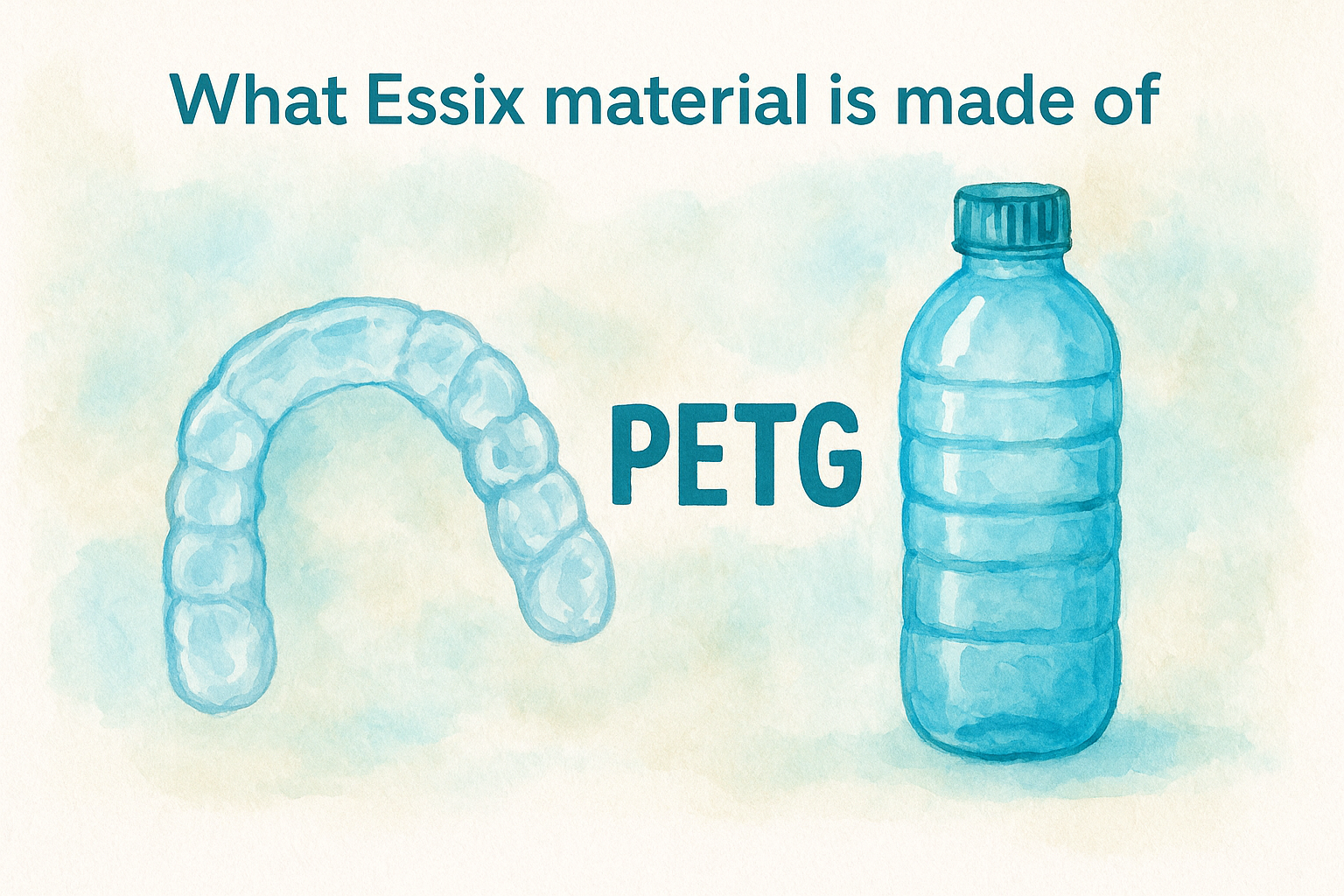
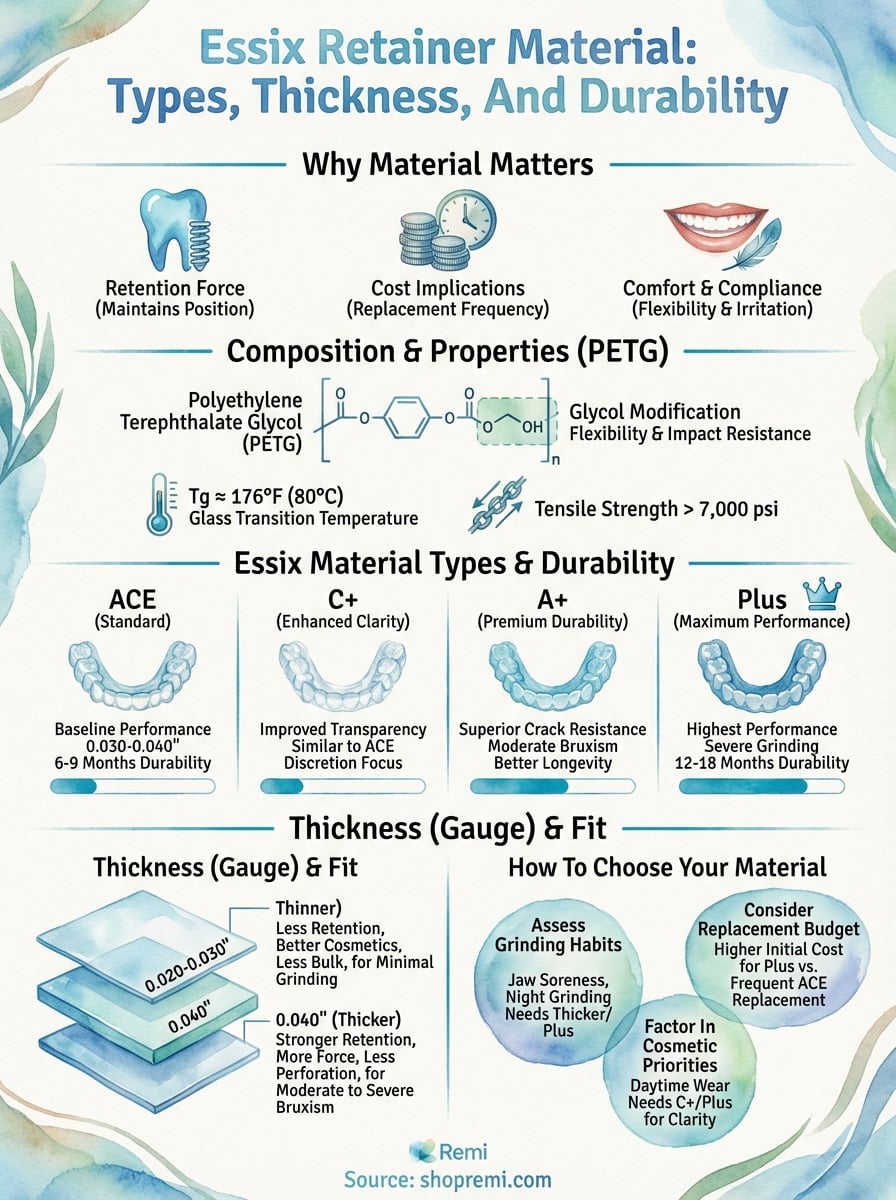
Essix retainer material belongs to a class of thermoplastics called polyethylene terephthalate glycol (PETG), which you might recognize from water bottles and food packaging. The "G" in PETG stands for glycol modification, which makes the plastic more flexible and impact-resistant than standard PET while maintaining optical clarity. This chemical modification allows the material to soften at lower temperatures during the thermoforming process, making it ideal for molding over dental casts without losing structural integrity when it cools.
Base polymer composition
The core ingredient in most essix retainer material formulations is copolyester, a polymer chain that combines ethylene glycol and terephthalic acid monomers. Manufacturers adjust the ratio of these components to control properties like flexibility, clarity, and resistance to stress cracking. Higher glycol content produces softer, more pliable sheets that conform better to complex tooth anatomy, while lower ratios create stiffer materials that provide stronger retention force.
You'll also find additives mixed into the base polymer to enhance specific characteristics. UV stabilizers prevent yellowing from sunlight exposure, and plasticizers improve flexibility without compromising strength. Some premium grades include antimicrobial agents that inhibit bacterial growth on the retainer surface, though the effectiveness of these additives remains debated in dental literature. The exact formulation varies between manufacturers and material grades, but all legitimate orthodontic PETG must meet FDA biocompatibility standards for prolonged oral contact.
The chemical structure of your retainer determines everything from how it feels in your mouth to how long it resists wear.
Chemical properties that matter
Glass transition temperature (Tg) tells you when the plastic shifts from rigid to rubbery, which matters because temperatures above this point cause permanent deformation. Quality essix retainer material has a Tg around 176°F (80°C), safely above any normal oral temperature but low enough for dental labs to thermoform the sheets efficiently. Tensile strength measures how much pulling force the material withstands before breaking, and values above 7,000 psi indicate a retainer that won't snap easily during normal handling.
Chemical resistance determines how your retainer responds to everything from coffee and mouthwash to the acidic environment created by oral bacteria. PETG resists most common substances but can degrade when exposed to acetone, strong acids, or prolonged high heat. This resistance explains why you can clean your retainer with mild soap but shouldn't use harsh solvents or place it in boiling water.
Essix material types: ACE, C+, A+, Plus
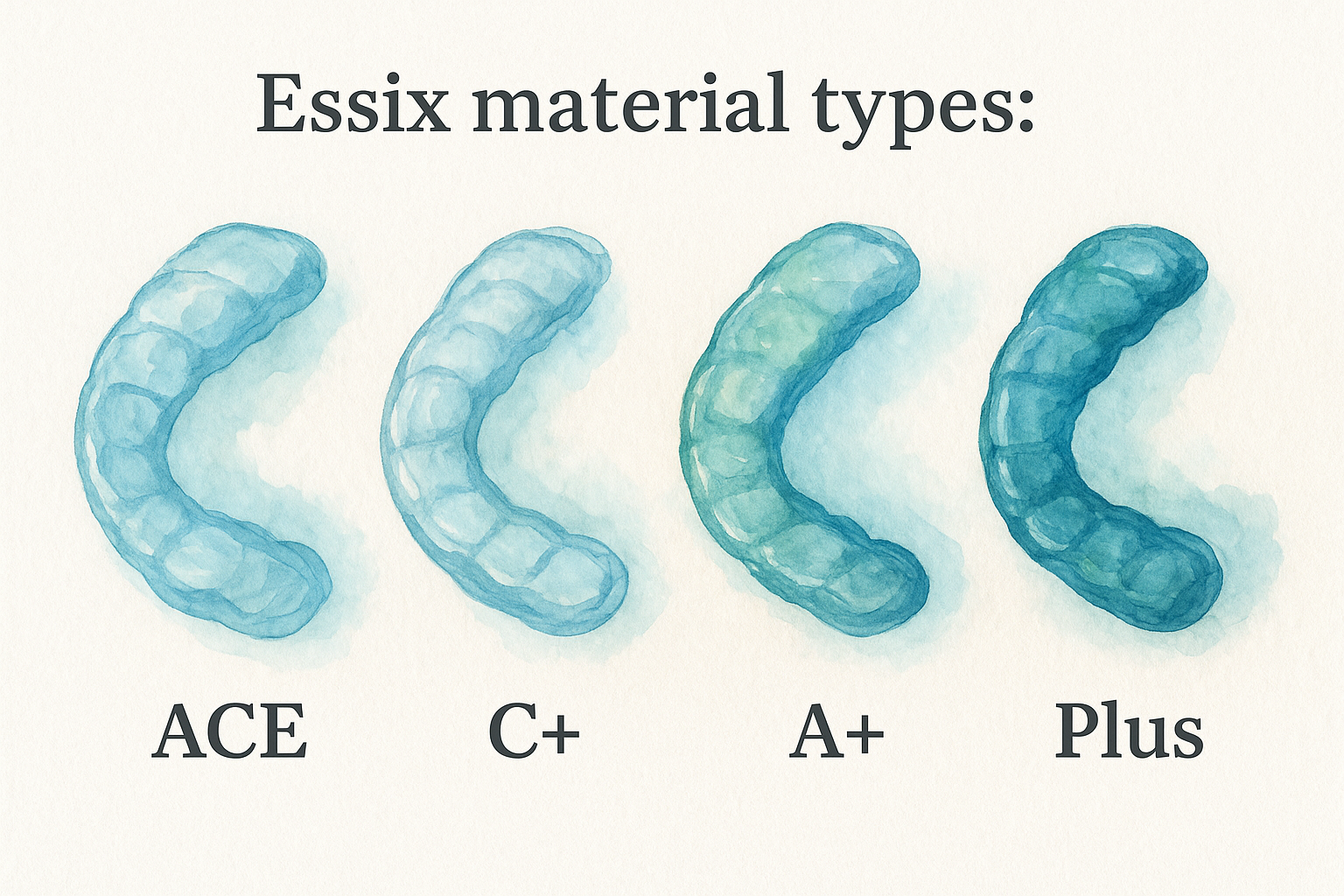
Dentsply Sirona manufactures four distinct essix retainer material grades, each engineered for specific clinical applications and patient needs. ACE represents the original formulation, while C+, A+, and Plus offer progressively enhanced properties for different retention challenges. Understanding these differences helps you evaluate what your dental provider uses and whether your retainer matches the demands of your specific orthodontic situation. Material selection directly impacts how well your retainer performs over months of nightly wear.
ACE: the original standard
ACE serves as the baseline essix retainer material that launched the clear retainer revolution in orthodontics during the 1990s. This formulation provides adequate clarity and flexibility for straightforward retention cases where patients need to maintain teeth positions after minor corrections. Dental labs choose ACE when cost matters more than maximum durability, and the clinical situation doesn't involve heavy grinding or extreme bite forces.
You'll find ACE material in 0.030-inch and 0.040-inch sheet thicknesses, making it suitable for patients with relatively stable bite patterns and minimal bruxism. The trade-off comes in longevity, as ACE typically shows visible wear within six to nine months of regular use. This material works well for temporary retention during orthodontic transitions but struggles with long-term demands.
C+: enhanced optical clarity
Dentsply designed C+ material to address the cosmetic concerns patients expressed about cloudiness in original ACE retainers. C+ offers improved transparency that makes the retainer nearly invisible on your teeth, which matters if you wear your appliance during daytime hours. The enhanced clarity comes from refined polymer processing that reduces light scattering within the material structure.
Mechanical properties remain similar to ACE, so you're trading improved aesthetics rather than gaining significant durability advantages. Dental professionals select C+ when patient compliance depends on discretion, particularly for professionals who need to wear retainers during client-facing work hours.
Material transparency affects patient compliance more than most dental professionals initially expect.
A+ and Plus: premium performance grades
A+ material introduces superior crack resistance and stress distribution compared to earlier formulations, making it the preferred choice for patients with moderate bruxism or complex bite relationships. This grade maintains its shape memory longer and resists the edge chipping that causes premature retainer failure.
Plus represents the highest-performance option in the Essix material lineup, engineered specifically for patients with severe grinding habits or those requiring maximum retention force. The enhanced polymer formulation provides exceptional durability while maintaining comfortable flexibility, though it costs approximately 30% more than standard ACE material. Labs reserve Plus for cases where retainer longevity justifies the premium price.
Thickness and fit: choosing the right gauge
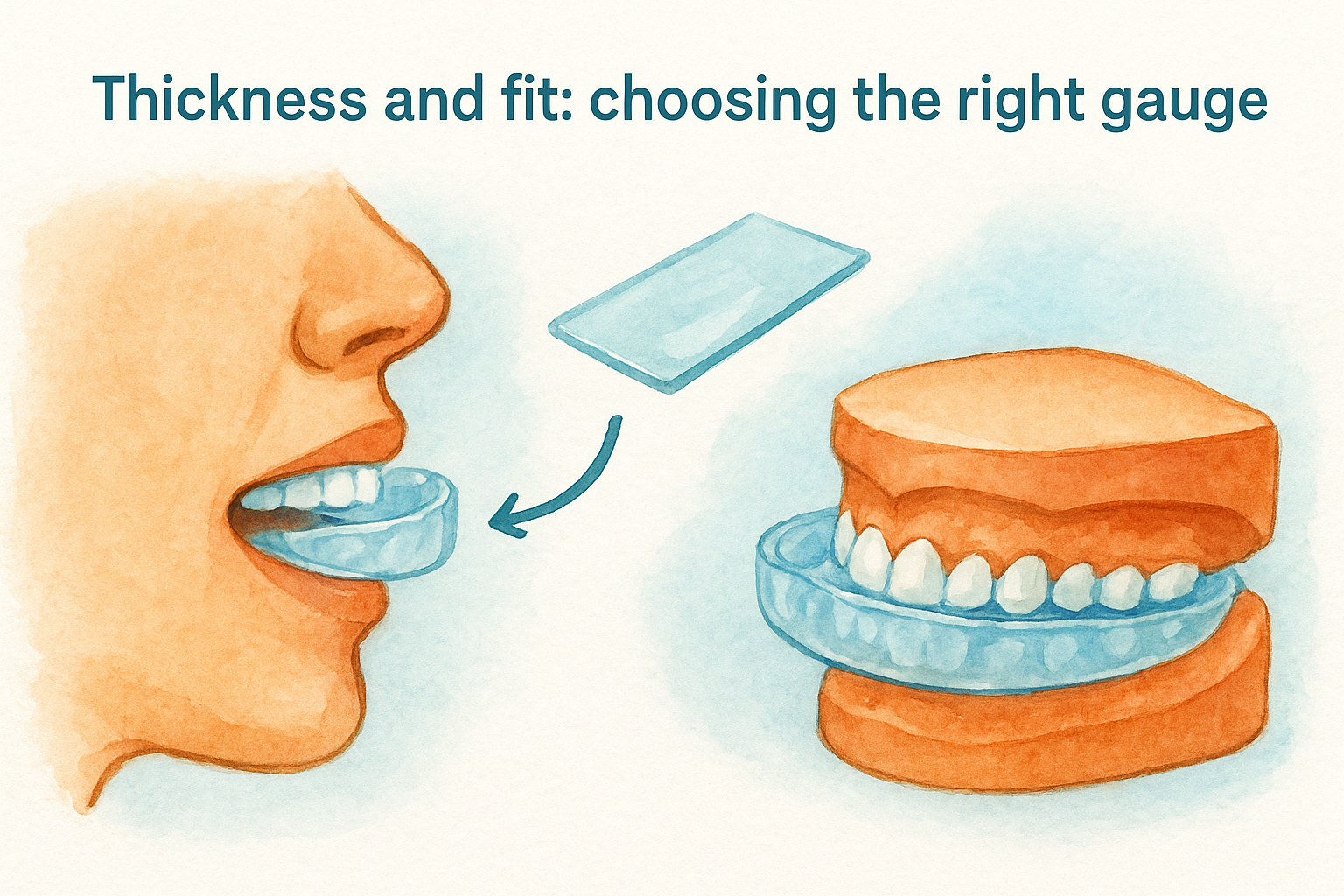
Gauge refers to the sheet thickness of essix retainer material before it gets thermoformed over your dental model, measured in thousandths of an inch. The thickness you choose affects how your retainer feels in your mouth, how much retention force it applies to your teeth, and how long it survives daily wear. Most dental labs stock sheets ranging from 0.020 inches to 0.040 inches, and selecting the wrong gauge can result in either inadequate tooth control or uncomfortable pressure points that discourage nightly use.
What gauge means in retainer materials
When your dental provider orders retainer material, they specify gauge based on your clinical needs and bite characteristics. A 0.030-inch sheet creates a retainer approximately that thickness after forming, though the final appliance varies slightly depending on how much the plastic stretches during the molding process. Thicker gauges require more force to seat properly but deliver stronger retention, while thinner options slide on easily but may lack the rigidity needed for challenging cases.
The gauge affects more than just strength. Material thickness determines how visible your retainer appears when worn, with thinner sheets offering better cosmetic discretion. You'll also notice that thicker gauges feel bulkier against your tongue and cheeks, particularly during the adjustment period when you first start wearing a new appliance.
The gauge you choose balances retention power against comfort, and getting this balance wrong affects whether you'll wear your retainer consistently.
Matching thickness to your bite pattern
Patients with minimal grinding habits typically succeed with 0.020-inch or 0.030-inch gauges that provide adequate retention without excessive bulk. These thinner options work well when your orthodontic results are stable and you need basic maintenance rather than active tooth control. Your retainer seats easily and feels less intrusive during the eight-plus hours you wear it nightly.
Moderate to severe bruxism requires 0.040-inch material to withstand the grinding forces your jaw generates during sleep. This thicker gauge resists perforation and edge chipping that destroys thinner retainers within weeks. The trade-off involves a more noticeable feel in your mouth and slightly more effort needed to insert and remove the appliance, but the extended lifespan justifies these minor inconveniences for grinders.
Bite complexity also influences gauge selection. Deep overbites and crossbites generate concentrated pressure points that benefit from thicker material's superior stress distribution. Your dental provider evaluates these factors during impressions and recommends the appropriate thickness for your specific anatomy.
Durability and wear: what lasts the longest
Your retainer's lifespan depends on material grade, thickness, and how you treat it, but expecting any clear retainer to last forever sets you up for disappointment. Most essix retainer material formulations deliver six to eighteen months of effective use before replacement becomes necessary, though this range varies dramatically based on factors you can control. Understanding which materials resist wear longest helps you make smarter choices when ordering replacements or selecting a dental provider who prioritizes durability over lowest upfront cost.
Material grade comparison for longevity
Plus-grade essix retainer material consistently outlasts other formulations in clinical studies measuring time until visible cracking or significant deformation occurs. Patients using Plus retainers report average lifespans of 12 to 18 months with nightly wear, compared to 6 to 9 months for standard ACE material under identical conditions. The enhanced polymer structure in Plus grade resists the microscopic stress fractures that propagate into visible cracks, particularly along the gumline where flexing stress concentrates.
A+ material sits between these extremes, offering durability improvements over ACE at roughly 70% of Plus pricing. Your decision between these grades depends on replacement frequency tolerance and budget constraints. Dental labs often recommend A+ for patients with moderate wear patterns who want better longevity without premium pricing.
Material grade selection becomes your most powerful lever for controlling long-term retainer costs.
Real-world wear patterns
Bruxism accelerates retainer degradation faster than any other factor, with heavy grinders destroying even Plus-grade retainers within three to six months. You'll notice wear first as cloudiness near your molars, followed by thin spots that eventually perforate. Patients who grind need thicker gauges in premium materials and should budget for more frequent replacements regardless of material choice.
Temperature exposure dramatically shortens retainer lifespan through repeated thermal cycling that weakens polymer bonds. Drinking hot coffee while wearing your retainer or cleaning it with hot water causes cumulative damage that manifests as warping or brittleness after weeks of abuse. Storage habits matter too, as leaving your retainer in direct sunlight or hot cars accelerates material breakdown.
Chemical exposure from aggressive mouthwashes, denture cleaners, or cigarette smoke degrades plastic surfaces faster than normal wear. You maximize durability by rinsing with cool water after removal and using mild soap for weekly deep cleaning rather than harsh chemicals marketed for dentures.
Safety questions: BPA and microplastics
Wearing plastic against your teeth for thousands of hours raises legitimate questions about chemical exposure and whether microscopic particles end up in your body. Modern essix retainer material uses PETG formulations that contain no bisphenol A (BPA), addressing the primary concern that launched public awareness about plastic safety in dental appliances. The microplastic question proves more complex, as research continues to evolve regarding whether normal retainer wear releases measurable particle quantities into your saliva.
BPA-free certification in retainer plastics
PETG differs chemically from polycarbonate plastics that traditionally contained BPA, meaning legitimate orthodontic-grade sheets manufactured after 2010 pose no BPA exposure risk. The polymer backbone in essix retainer material consists of ethylene glycol and terephthalic acid rather than the bisphenol compounds that raised health concerns in water bottles and food containers. You can verify this by requesting material safety data sheets from your dental provider, which document the chemical composition of the specific plastic used for your retainer.
Manufacturers of orthodontic materials must meet FDA biocompatibility testing standards for prolonged mucosal contact, which includes screening for leachable substances that could migrate from the plastic into your mouth. These tests specifically check for endocrine disruptors like BPA, and reputable material suppliers provide certification confirming compliance. Dental professionals who source materials from established orthodontic suppliers rather than generic thermoplastic vendors ensure you receive plastics engineered specifically for safe oral use.
FDA biocompatibility requirements for dental devices screen for the exact chemical risks that concern health-conscious patients.
Microplastic concerns during wear
Your retainer does release microscopic particles through mechanical abrasion as it slides over your teeth during insertion and removal, though quantifying the exposure level remains difficult without standardized testing protocols. Research on microplastic shedding from dental appliances lags behind studies of ocean pollution and food contamination, leaving patients with incomplete information about cumulative exposure from years of retainer wear.
What evidence exists suggests particle release increases with material age and surface degradation. Older retainers with visible scratches or cloudiness shed more plastic fragments than smooth, new appliances, which provides another reason to replace worn retainers beyond just retention effectiveness. You minimize potential microplastic exposure by following replacement schedules and avoiding aggressive scrubbing with abrasive cleaners that accelerate surface breakdown.
Current scientific consensus indicates the health impact of microplastic ingestion from dental appliances ranks far below concerns from food packaging and environmental sources. Your daily exposure from retainer wear likely measures in nanograms rather than the milligrams you consume from other plastic contact points throughout your day.
How to choose material for your needs
Selecting the right essix retainer material requires matching your specific dental situation to the performance characteristics each grade offers. Your grinding habits, budget constraints, and cosmetic preferences all influence which combination of material type and thickness delivers the best value for your particular needs. Most patients benefit from starting with a realistic assessment of their bite forces and wear patterns rather than defaulting to the cheapest option or assuming premium always means better.
Assess your grinding habits first
You need to know whether you grind your teeth before selecting material, as bruxism determines minimum thickness and material grade requirements. If you wake up with jaw soreness or your bed partner reports grinding sounds during your sleep, you qualify as at least a moderate grinder who needs 0.040-inch thickness in A+ or Plus grade material. Trying to save money with thinner ACE material guarantees frustration when your retainer cracks within weeks.
Non-grinders gain flexibility in material selection and can choose based on other priorities like cost or aesthetics. Your dental provider should evaluate your bite pattern and ask about morning jaw tension to help classify your grinding severity. When in doubt, choosing one grade thicker than recommended costs less than replacing damaged retainers every few months.
Material selection based on grinding habits prevents the false economy of buying cheap retainers that fail quickly.
Consider your replacement budget
Calculate annual retainer costs rather than focusing solely on upfront price, as replacement frequency dramatically affects total spending. A $120 Plus-grade retainer lasting fifteen months costs $96 annually, while a $60 ACE retainer replaced every six months totals $120 per year. You spend more over time by choosing the budget option, and you deal with the hassle of frequent reordering.
Factor in emergency replacement scenarios when budgeting, particularly if you travel frequently or lack easy access to your dental provider. Premium materials reduce the risk of sudden failures that leave you without retention protection for days or weeks.
Factor in cosmetic priorities
Material clarity matters most if you wear your retainer during waking hours, making C+ or Plus grades worth the premium for professional settings. These formulations maintain optical transparency longer than standard ACE, which tends to cloud noticeably after a few months of use. You avoid the self-consciousness that comes from visible retainer discoloration during important meetings or social events.
Thickness affects visibility too, with 0.020-inch and 0.030-inch gauges appearing less obvious than 0.040-inch options. Balance this cosmetic advantage against the durability penalties thinner materials carry, particularly if your bite generates significant forces.
Key takeaways and next steps
Understanding essix retainer material types empowers you to make informed decisions about your dental care. Plus and A+ grades deliver superior durability for patients with grinding habits, while ACE and C+ serve basic retention needs at lower price points. Thickness matters as much as material grade, with 0.040-inch sheets protecting against bruxism better than thinner options.
Your next step involves evaluating your specific situation. Check your current retainer for cloudiness, cracks, or loose fit, all signs that replacement time has arrived. Schedule a consultation if you haven't had your retention assessed in over a year, as teeth shift gradually without visible warning signs.
Custom clear retainers from Remi use professional-grade materials selected for durability and comfort. We ship impression kits directly to your door, eliminating office visits while delivering the same quality standards dental professionals demand. Our in-house dentists review every case to ensure your retainer matches your retention needs perfectly.

