
 Guards + Retainers
 Custom Night Guard
 Retainer
 Emergency Order

 Whitening
 Whitening Kit
 Teeth Whitening Gel
 Dual-Action Foam
 Cleaning + Care
 Ultrasonic Cleaner Pro
 Water Flosser
 UV Toothbrush Sanitizer
 Deep Clean + Freshening Tablets
 Accessories
 Guard Removal Tool
 Replacement Nozzles
 Bundles

You started wearing a night guard to protect your teeth from grinding, so why does your jaw feel worse? If you've been wondering can night guards cause TMJ, you're not alone. It's one of the most common concerns we hear from customers at Remi, and the short answer is: yes, the wrong night guard absolutely can trigger or worsen TMJ symptoms.
The issue usually comes down to fit, thickness, and design. A generic, store-bought guard or even a poorly adjusted custom one can shift your bite into an unnatural position, putting extra strain on your temporomandibular joint. Over time, that strain leads to pain, clicking, headaches, and stiffness, the exact problems you were trying to avoid.
This article breaks down exactly why this happens, how to tell if your night guard is the culprit, and what steps you can take to fix the problem. We'll also cover the difference between a standard night guard and a TMJ-specific appliance, so you can make a confident decision about what your jaw actually needs.
What TMJ pain is and what night guards do
Your jaw does more work than you probably realize. Every time you talk, chew, or swallow, the temporomandibular joint (TMJ) handles the load. This joint connects your lower jaw to your skull, and when it becomes irritated or inflamed, the resulting pain can radiate through your jaw, face, neck, and even your ears.
What TMJ actually is
TMJ disorder, often called TMD (temporomandibular joint disorder), is an umbrella term for a range of problems affecting that joint and the surrounding muscles. Symptoms include jaw pain, clicking or popping sounds when you open your mouth, morning stiffness, and headaches that feel like they start at the jaw and work their way up. Some people also experience their jaw locking or limited range of motion when opening wide.
Many people with TMD also grind their teeth at night, and this is where the two conditions intersect. The relationship between bruxism (teeth grinding) and TMD is well-documented: repeated, excessive grinding force lands directly on the jaw joint and the muscles surrounding it. Over time, that force accumulates and either causes or worsens joint damage.
If you grind your teeth, your jaw muscles are working overtime while you sleep, and your TMJ absorbs every bit of that strain.
What night guards are designed to do
A night guard sits between your upper and lower teeth while you sleep. Its core job is to absorb and redistribute grinding force so your teeth, gums, and jaw structures take less of the direct impact. Think of it as a buffer between two surfaces that would otherwise wear each other down night after night.
Standard night guards are built to protect tooth enamel and reduce muscle fatigue from clenching. They are not inherently TMJ appliances, and that distinction matters more than most people expect. Most guards position your bite in a neutral resting place, which typically reduces jaw strain. But when a guard shifts your bite even slightly in the wrong direction, it places new stress directly on the joint instead of relieving it.
Recognizing that difference is the starting point for understanding whether your guard is actually helping your jaw, or whether asking can night guards cause TMJ applies directly to what you're experiencing.
Can a night guard cause TMJ symptoms?
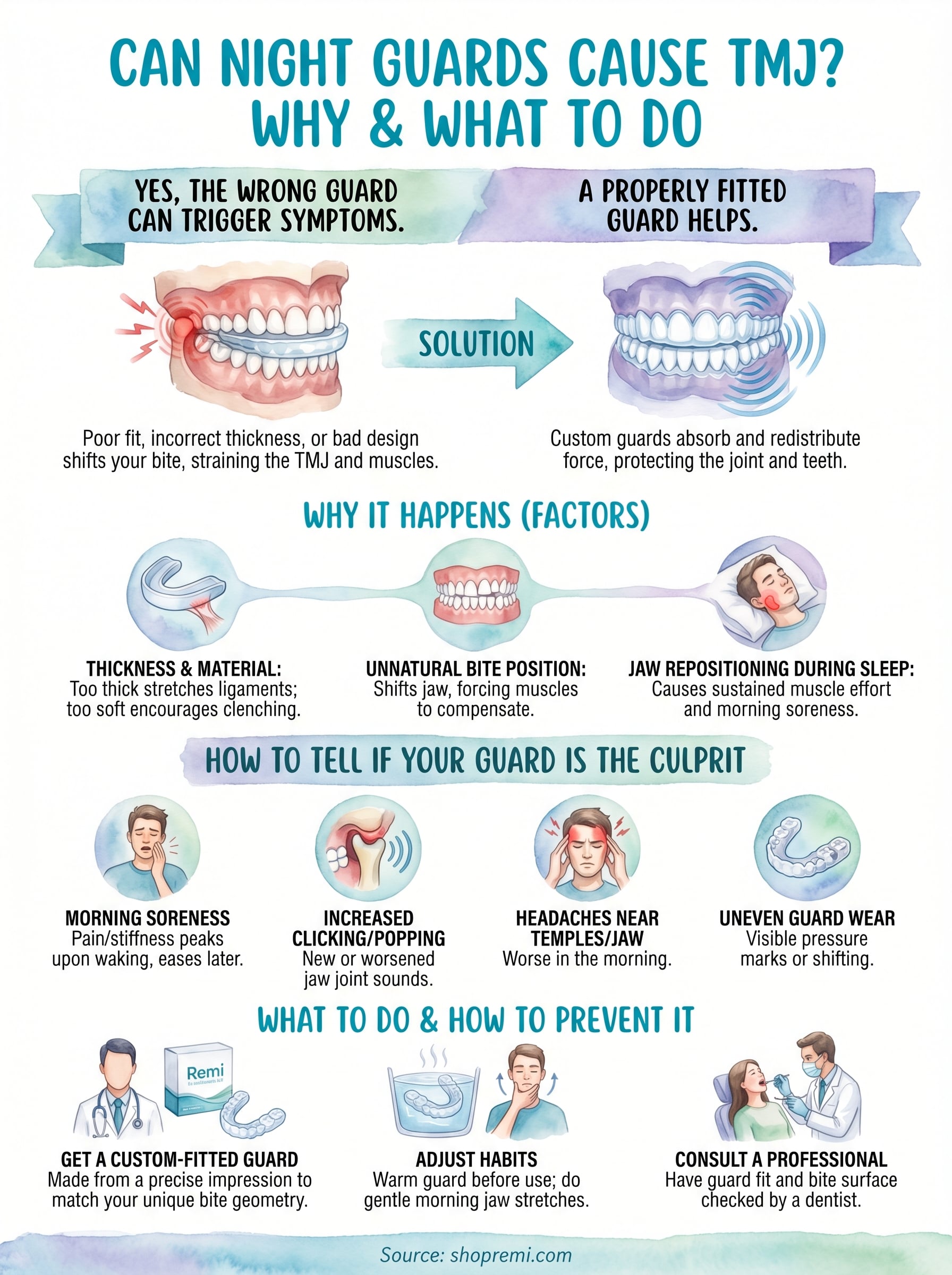
Yes, a night guard can cause or worsen TMJ symptoms, and this happens more often than most people expect. The key factor is bite position. When a guard places your jaw in an unnatural resting position, the muscles and ligaments around your temporomandibular joint are forced to compensate throughout the night. By morning, that compensation shows up as soreness, stiffness, or a dull ache along your jaw line.
When the guard is part of the problem
If you are asking can night guards cause TMJ because your pain started or intensified after you began wearing one, take that signal seriously. Generic, over-the-counter guards are the most common culprits because they rely on a boil-and-bite method that rarely captures the precise shape of your teeth and jaw relationship. A poor impression creates an uneven bite surface, and an uneven bite surface means uneven pressure on the joint throughout the night.
Custom-fitted guards carry far less risk because they match your specific bite geometry, distributing grinding force more evenly across your teeth. Even so, a custom guard can still cause problems if it uses the wrong thickness for your bite or if it was made from an inaccurate impression. The guard does not need to feel obviously wrong to cause strain; even a small shift in how your teeth meet can load the joint in ways that build up over weeks.
A guard that feels comfortable on night one can still create joint strain if it subtly repositions your jaw during sleep.
Why night guards can make TMJ worse
Several specific factors explain why a night guard can cross from helpful to harmful. Understanding these factors helps you figure out where the problem is coming from, rather than assuming all guards are bad or that your jaw pain is unavoidable.
Thickness and material issues
The thickness of a night guard directly affects where your jaw rests while you sleep. A guard that is too thick forces your jaw to drop further open than its natural resting position, stretching the joint ligaments and surrounding muscles beyond their comfortable range for hours at a time. Soft guards present a different problem: they are easy to clench into, which can actually increase muscle activity and load the jaw joint more than wearing nothing at all.
If you can chew through your guard, it is working against your jaw, not for it.
Jaw repositioning at night
This is one of the most direct answers to can night guards cause TMJ. When a guard shifts your lower jaw forward or backward, even slightly, it changes the relationship between the ball and socket of your temporomandibular joint. Your muscles spend the night adapting to that shifted position, and that sustained effort produces inflammation and soreness you feel when you wake up.
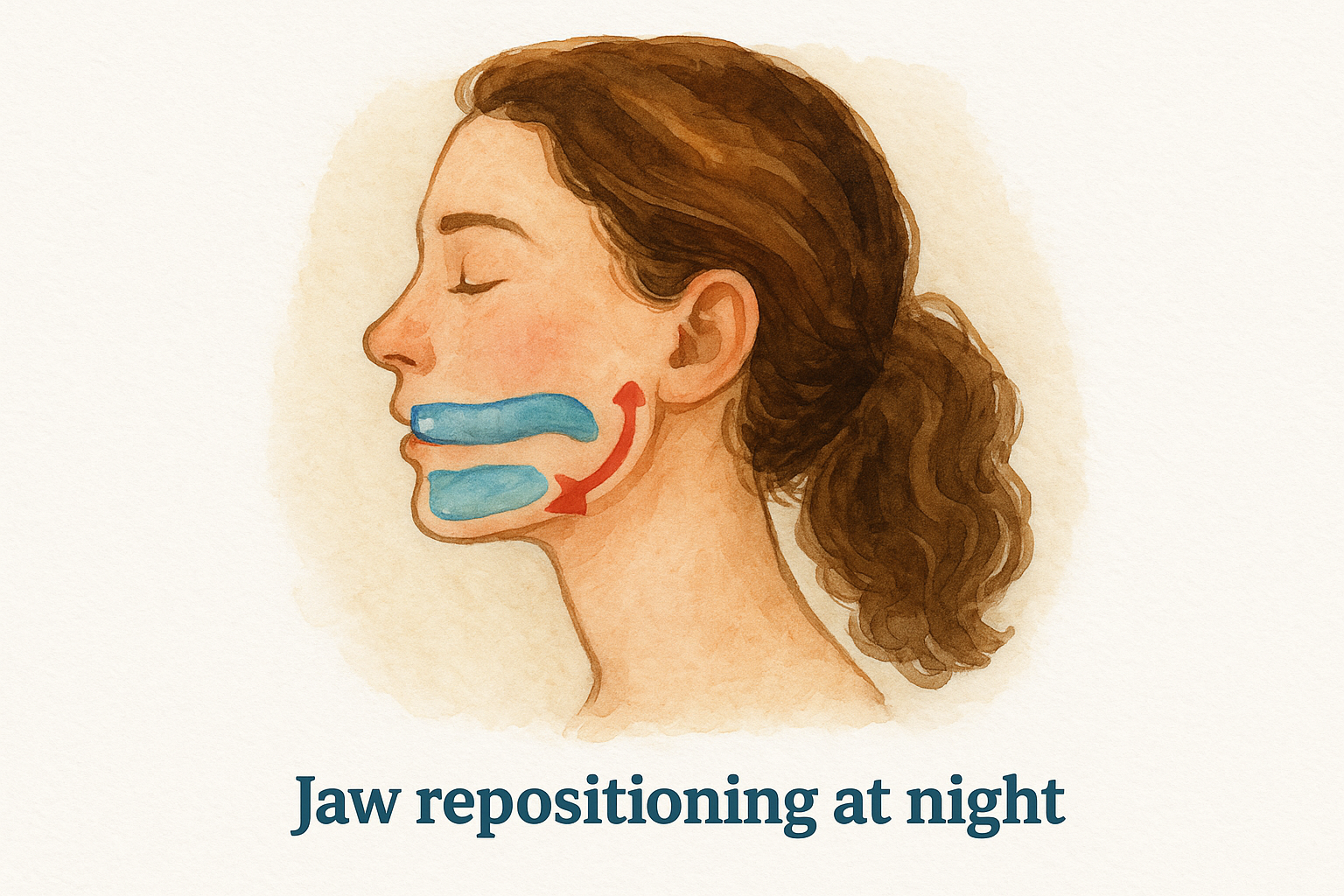
A guard that feels fine while you are awake can still push your jaw into a problematic position the moment your muscles relax during sleep. Pay attention to whether your jaw pain peaks in the morning and fades through the day, since that pattern points directly to the guard as the source.
How to tell if your guard is the problem
Distinguishing between existing TMJ pain and pain caused by your night guard takes careful observation over time. The most reliable method is tracking exactly when your symptoms appear and how they shift throughout the day, since that timing reveals a lot about the source.
Warning signs to watch for
If you're wondering whether can night guards cause TMJ applies to your specific situation, start by looking for these telling patterns:
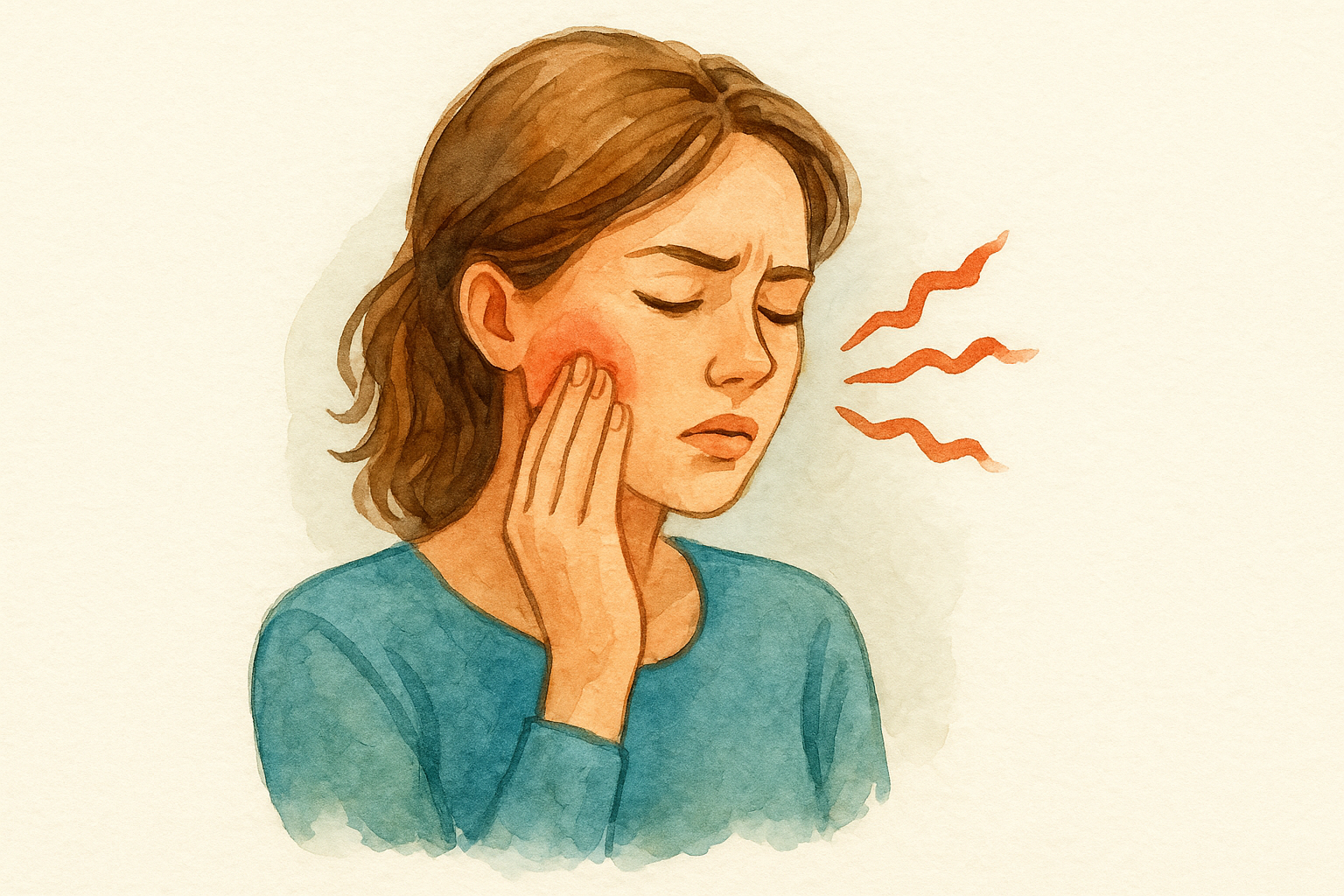
- Jaw soreness or stiffness that peaks within the first hour after waking and then eases as the day goes on
- Clicking or popping that started or increased after you began wearing the guard
- Headaches concentrated near your temples or jaw that are consistently worse in the morning than in the evening
- Visible pressure marks or uneven wear on the guard's surface, which signal that your bite contact is not properly distributed
If your symptoms consistently improve by midday, your guard is the most likely source.
How to test your guard's impact
Try going without your guard for two or three nights and track whether your jaw feels different. This is not a long-term solution since grinding without protection damages your enamel, but it gives you a concrete comparison point. If your jaw feels noticeably better after a few guard-free nights, you have strong evidence that the guard is contributing to your discomfort rather than relieving it.
Check the fit and wear pattern on the guard itself as well. Chewed-through soft sections, a guard that shifts during the night, or one side that shows far more wear than the other all point to a fit problem that needs direct attention.
What to do and how to prevent it
If your guard is causing jaw pain, the most effective first move is to stop treating the guard as a permanent solution and start treating it as a variable you can adjust. Understanding that can night guards cause TMJ is a real possibility gives you something concrete to act on rather than just enduring the discomfort.
Get a properly fitted custom guard
The single most reliable fix is replacing a generic guard with a custom-fitted night guard made from an accurate impression of your teeth. Custom guards match your specific bite geometry, which means the pressure from grinding spreads evenly across your teeth instead of concentrating on one side of your jaw joint. If you already have a custom guard but still experience pain, the impression quality or guard thickness may need a closer look.
A guard built from an accurate impression is far less likely to shift your jaw into a painful position during sleep.
Adjust your habits around wearing the guard
Beyond the guard itself, a few daily habits can reduce the strain on your jaw. Try warming the guard briefly in lukewarm water before inserting it to make seating easier on your joint. Doing gentle jaw stretches in the morning, such as slowly opening and closing your mouth, helps release tension that built up overnight. If pain continues after switching to a custom guard and making these adjustments, bring the guard to a dentist so they can check the bite surface and confirm it is not overloading your temporomandibular joint.
Next steps
The connection between night guards and jaw pain is real, but it is also fixable. Now that you understand can night guards cause TMJ symptoms and why fit matters so much, you have the information to make a better choice for your jaw. If your current guard is generic or poorly fitted, replacing it is the most direct step you can take to reduce morning soreness and protect your joint long-term.
Start by evaluating your current guard against the warning signs covered in this article. If the fit is off, the material is too soft, or your symptoms consistently peak in the morning, a custom-fitted guard is the right move. Remi's custom night guard is made from a precise at-home impression of your teeth, giving you dental-grade protection at a fraction of the dentist's price. Order one today and give your jaw the fit it actually needs.

