
 Guards + Retainers
 Custom Night Guard
 Retainer
 Emergency Order

 Whitening
 Whitening Kit
 Teeth Whitening Gel
 Dual-Action Foam
 Cleaning + Care
 Ultrasonic Cleaner Pro
 Water Flosser
 UV Toothbrush Sanitizer
 Deep Clean + Freshening Tablets
 Accessories
 Guard Removal Tool
 Replacement Nozzles
 Bundles

When you receive a custom night guard or retainer, skilled dental technicians crafted it using precise specifications. The National Board for Certification in Dental Laboratory Technology (NBC) is the organization responsible for verifying these professionals meet rigorous industry standards. For anyone considering a career in dental technology, or simply curious about who creates their dental appliances, understanding this certification body matters.
The NBC administers the Certified Dental Technician (CDT) credential, which represents the gold standard in dental laboratory professionalism. This certification demonstrates that a technician possesses verified expertise in creating dental prosthetics, orthodontic appliances, and protective devices like the custom night guards we craft at Remi.
Whether you're preparing for certification exams, exploring career requirements, or want to understand what qualifies someone to fabricate your dental products, this guide breaks down everything you need to know. You'll learn about certification pathways, exam preparation resources, specialty areas, and why these professional standards directly impact the quality of dental appliances you rely on for protection and comfort.
Why NBC certification matters for dental technicians
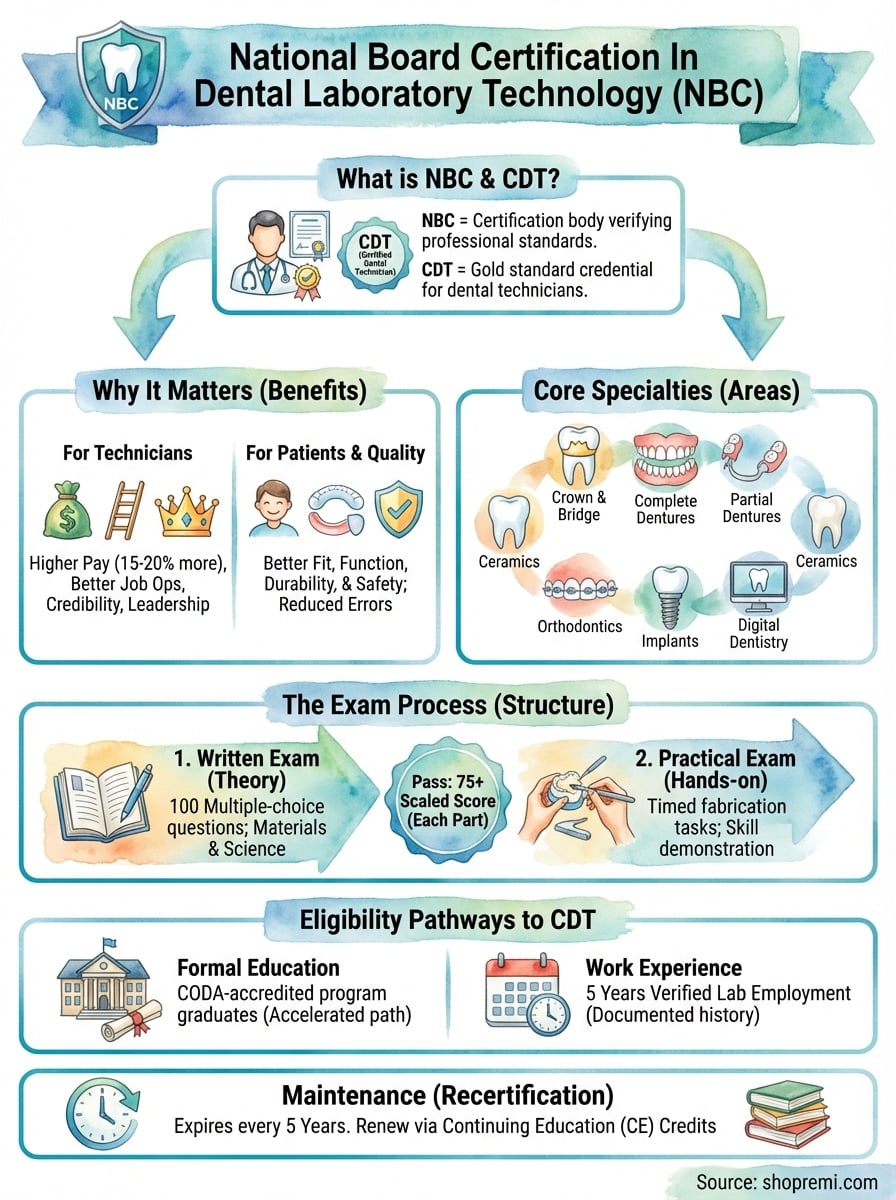
The national board for certification in dental laboratory technology establishes the benchmark that separates qualified professionals from untrained workers in dental labs. When you pursue CDT certification, you signal to employers, colleagues, and patients that your work meets verified competency standards across multiple technical specialties. This credential opens doors to better employment opportunities, higher pay scales, and leadership positions within dental laboratories.
Professional credibility and career advancement
Your CDT credential demonstrates measurable expertise that employers actively seek when hiring. Certified technicians typically command 15-20% higher salaries than non-certified counterparts, and many advanced laboratory positions require certification as a prerequisite. The credential also positions you for specialty certifications in areas like crown and bridge, orthodontics, or complete dentures, which further differentiate your skillset in a competitive job market.
Certification proves you've met objective standards rather than relying solely on years of experience or informal training.
Laboratory owners and managers prefer hiring certified technicians because it reduces quality control concerns and minimizes the risk of costly remakes. Insurance companies and regulatory bodies increasingly recognize CDT status as evidence of professional qualification, which can affect reimbursement rates and compliance requirements for dental practices.
Quality assurance for patients
Patients receiving dental appliances benefit directly from your certification status, even if they never see the credential itself. The rigorous testing process ensures you understand proper materials, fabrication techniques, and safety protocols that protect patient health. When laboratories employ certified technicians, they reduce error rates in fit, function, and durability of prosthetics, retainers, and protective devices like custom night guards.
What the NBC certifies and key terms
The national board for certification in dental laboratory technology validates your competency across specific technical disciplines rather than general lab experience. You need to understand the exact scope of certification and terminology before pursuing your CDT credential, as these distinctions affect which exams you take and how you specialize your career path.
Core certification areas
The NBC certifies technicians in seven distinct specialty areas: complete dentures, partial dentures, crown and bridge, ceramics, orthodontics, implants, and digital dentistry. You select your certification path based on your daily work responsibilities and technical strengths. Each specialty requires passing a written examination that tests theoretical knowledge plus a practical examination demonstrating hands-on fabrication skills with real materials and equipment.
Certification proves mastery in specific technical areas rather than general laboratory work.
Essential terminology
When navigating NBC materials, you'll encounter key terms that define the certification process. CDT (Certified Dental Technician) represents the base credential you earn after passing both written and practical exams in at least one specialty. The written examination tests your understanding of materials, anatomy, and technical theory, while the practical examination evaluates your actual fabrication abilities under timed conditions. Understanding these distinctions helps you prepare effectively for each component of the certification process.
Eligibility and certification pathways to CDT
The national board for certification in dental laboratory technology offers multiple pathways to CDT status, depending on your educational background and work experience. Understanding which route applies to your situation determines when you can sit for exams and how long the certification process takes. You don't need a four-year degree to pursue certification, but you must meet specific education or experience thresholds that verify your technical foundation.
Education and experience requirements
Your eligibility depends on completing either formal training or documented work experience in an accredited dental laboratory. If you graduated from a CODA-accredited dental technology program, you can apply for certification immediately after completing your studies. Graduates from these two-year programs receive comprehensive training across multiple specialties, which satisfies the NBC's educational requirements without additional waiting periods.
Formal education accelerates your path to certification compared to experience-based routes.
Alternatively, you qualify through five years of verified full-time employment in a dental laboratory, with documented experience in your chosen specialty area. Your employer must confirm your work history and technical responsibilities through official NBC forms. This pathway works for technicians who entered the field through apprenticeships or on-the-job training rather than formal programs.
Exams, specialties, and how scoring works
The national board for certification in dental laboratory technology administers a two-part testing system that evaluates both your theoretical knowledge and hands-on fabrication skills. You face a written examination testing materials science, anatomy, and technical procedures, followed by a practical examination where you physically create dental appliances under timed conditions. This dual assessment ensures you understand the science behind your work while demonstrating actual fabrication competency.
Examination structure and specialty choices
You select from seven specialty areas when applying for certification: complete dentures, partial dentures, crown and bridge, ceramics, orthodontics, implants, or digital dentistry. Each specialty requires passing both written and practical components specific to that discipline. Your written exam contains 100 multiple-choice questions covering materials, techniques, and safety protocols relevant to your chosen specialty, while the practical exam assigns you specific fabrication tasks you must complete within designated time limits.
Your specialty choice directly impacts which exam materials you study and which fabrication skills you demonstrate during testing.
Scoring criteria and passing standards
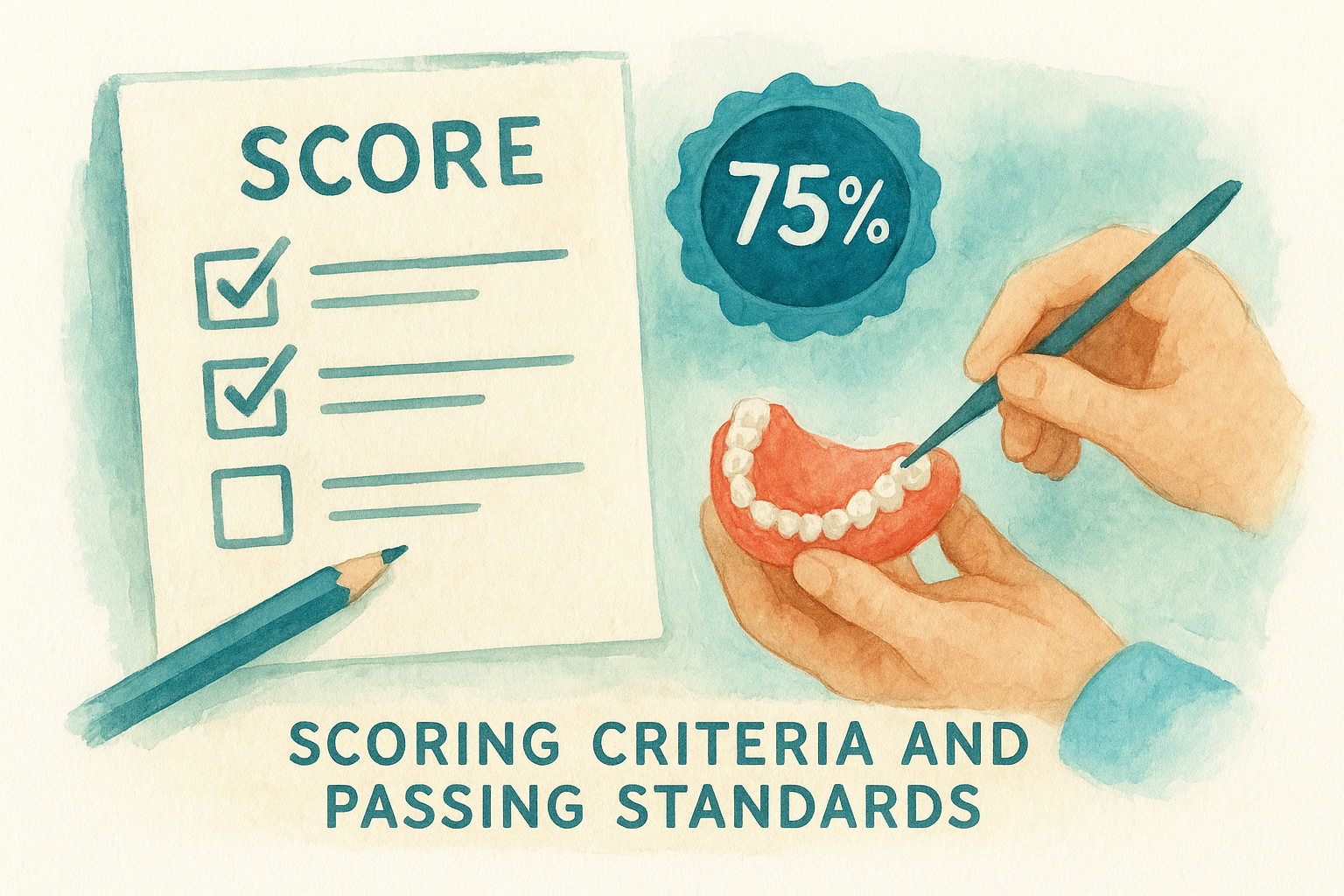
You need to achieve a minimum scaled score of 75 on both written and practical examinations to earn certification in your specialty. Examiners evaluate your practical work against detailed rubrics that measure accuracy, craftsmanship, and adherence to specifications rather than subjective opinions about aesthetics.
How to prepare and maintain certification
Your certification journey requires strategic preparation followed by ongoing professional development to keep your CDT credential active. The national board for certification in dental laboratory technology provides official study materials and practice resources, but you need to create a structured preparation plan that covers both written theory and hands-on practical skills. Budget at least three to six months of focused study time before scheduling your examinations.
Study resources and exam preparation
You access comprehensive study guides directly through the NBC website, which outline specific topics covered in each specialty examination. These materials include sample questions, technical specifications, and fabrication criteria that mirror actual test content. Join study groups with other candidates preparing for the same specialty, as collaborative learning helps identify knowledge gaps and strengthens practical techniques through peer feedback.
Hands-on practice with actual materials proves more effective than theoretical study alone for practical examinations.
Recertification and continuing education
Your CDT credential expires after five years, requiring renewal through continuing education credits or retaking examinations. You earn renewal credits by attending approved workshops, conferences, and online courses that advance your technical knowledge in certified specialties. Track your credits carefully using the NBC's online portal to avoid credential lapses that require repeating the full certification process.
Key takeaways
The national board for certification in dental laboratory technology establishes the professional standard that ensures your dental appliances meet verified quality benchmarks. Whether you pursue certification yourself or simply want to understand who creates your dental products, these standards directly impact both career advancement and patient safety. Certification separates qualified professionals from untrained workers in dental laboratories.
Certified technicians bring specialized expertise to every custom night guard, retainer, and prosthetic they fabricate. Your decision to work with laboratories employing CDT-credentialed professionals affects the fit, durability, and comfort of devices you wear nightly. These credentials prove technicians understand proper materials selection, precise fabrication techniques, and essential safety protocols that protect your oral health.
When you need a custom-fitted night guard for teeth grinding or jaw clenching, choose products crafted with professional standards in mind. Remi's custom night guards deliver dental-grade protection and comfort at prices 80% less than traditional dental offices.

