
 Guards + Retainers
 Custom Night Guard
 Retainer
 Emergency Order

 Whitening
 Whitening Kit
 Teeth Whitening Gel
 Dual-Action Foam
 Cleaning + Care
 Ultrasonic Cleaner Pro
 Water Flosser
 UV Toothbrush Sanitizer
 Deep Clean + Freshening Tablets
 Accessories
 Guard Removal Tool
 Replacement Nozzles
 Bundles

Selling through middlemen, whether that's retail chains, marketplaces, or dental offices, means giving up control over your pricing, your customer experience, and a big chunk of your margins. At Remi, we built our entire business around skipping those intermediaries to deliver custom night guards and retainers directly to customers at a fraction of traditional costs. That firsthand experience has shown us just how powerful the benefits of direct to consumer selling really are.
The DTC model has reshaped how brands connect with the people who buy their products. Instead of relying on third parties to represent your brand, you own the relationship from first click to final delivery. That means better data, stronger loyalty, and the ability to iterate fast based on what your customers actually tell you, not what a retail buyer thinks they want.
This article breaks down eight specific advantages that make DTC worth serious consideration. Whether you're launching a new brand or rethinking your current distribution strategy, these benefits apply across industries, from oral care to apparel to food and beverage. Each one builds on the others, creating a compounding effect that gets harder for traditional retail competitors to match over time.
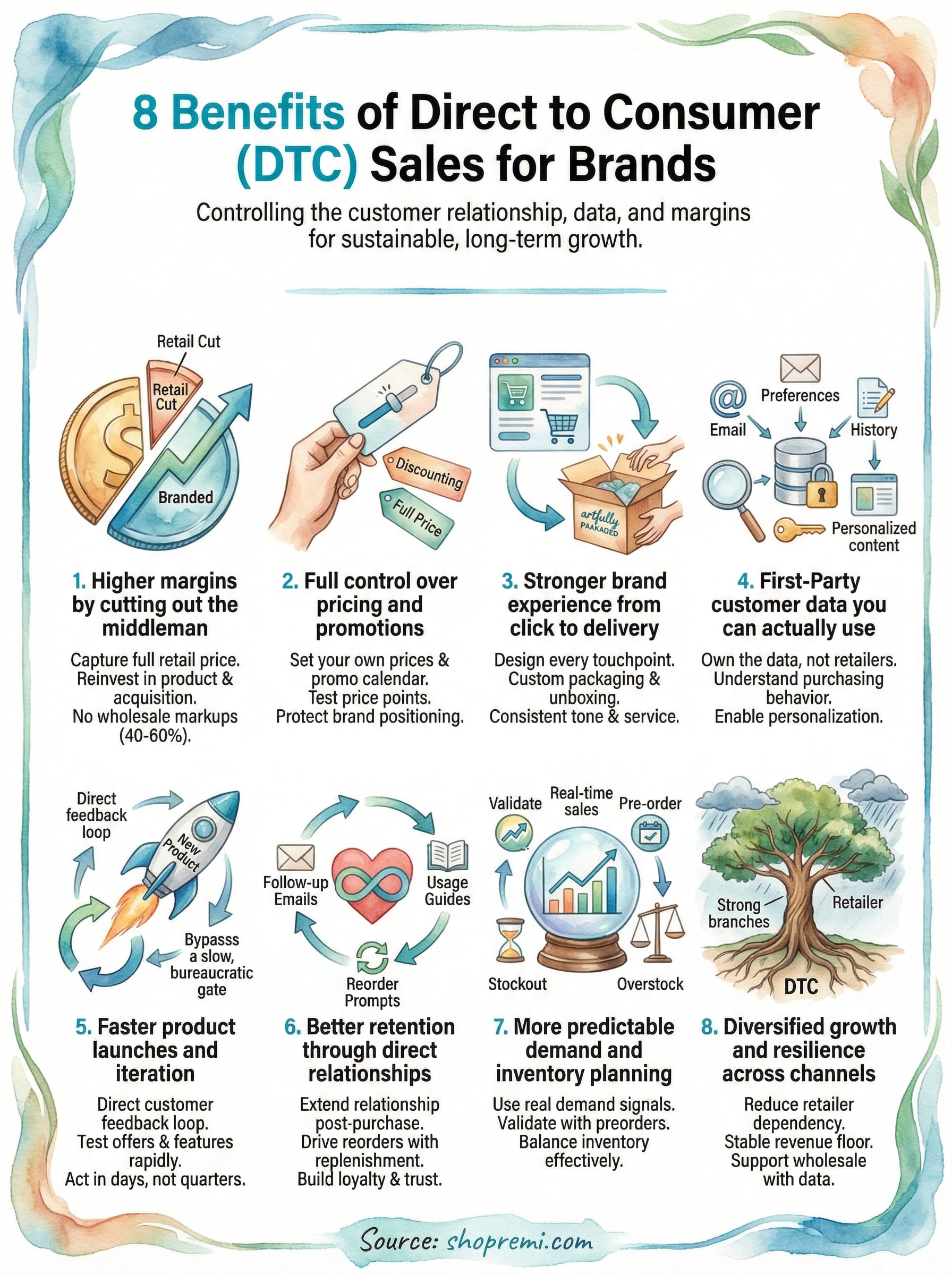
1. Higher margins by cutting out the middleman
When you sell through a retailer or distributor, that third party takes a significant cut. In many categories, wholesale margins run 40-60%, meaning a product that retails for $100 may only generate $40-50 for you before your own costs. Removing that layer entirely lets you capture the full retail price and decide how to use the difference.
Why margins improve in direct to consumer
The math behind the benefits of direct to consumer is straightforward: you receive the retail price instead of the wholesale price. A custom night guard sold for $100 DTC might earn you $45-50 through a traditional retail or clinical channel after margin splits and markups. Owning the full transaction means you keep that spread and control where it goes, whether that's reinvesting in product quality, lowering prices for customers, or improving your acquisition engine.
Every dollar you no longer share with a retailer is a dollar you can put toward product development, customer acquisition, or more competitive pricing.
What costs replace wholesale and retail markups
Selling direct introduces its own expenses. Fulfillment, shipping, payment processing, and customer support all appear on your income statement rather than being absorbed by a retail partner. You also handle returns yourself. These costs are real, but in most cases they're lower than wholesale margin concessions, and they're costs you can actively optimize as order volume scales up over time.
Metrics to watch: gross margin, contribution margin, CAC
Three numbers tell the real story of DTC margin health:
- Gross margin: revenue minus cost of goods sold
- Contribution margin: gross margin minus variable costs like shipping and packaging per order
- Customer acquisition cost (CAC): total spend divided by new customers acquired in a period
Tracking all three together gives you an honest picture rather than a flattering one.
Common margin traps that erase the upside
Many DTC brands improve gross margin only to lose it through aggressive discounting or shipping subsidies set at unsustainable thresholds. Welcome discounts that condition buyers to wait for promotions and free shipping minimums that are too low are two of the most common offenders. Always track blended contribution margin per order so you can see what you're actually keeping, not just what you're earning before variable costs hit.
2. Full control over pricing and promotions
When you sell through retailers, your pricing decisions effectively belong to someone else. Retailers set their own shelf prices, run their own promotions, and can undercut your brand positioning without your input. Going direct means you set the price and decide when, how, and whether to discount.
How direct pricing changes your strategy
DTC gives you complete authority over the price a customer sees. You can test price points, adjust based on demand, and position your product exactly where you want it in the market. One of the real benefits of direct to consumer selling is that no retail buyer can override your pricing decisions.
When discounting helps vs hurts in DTC
Discounting can accelerate early growth or clear slow-moving inventory, but habitual promotions train customers to wait for deals rather than buy at full price. Use discounts for specific, time-bound goals, not as a permanent fixture of your pricing strategy.
A discount used strategically builds demand; a discount used constantly destroys perceived value.
Guardrails: MAP, coupon rules, and promo calendars
If you sell through any wholesale partners alongside DTC, a minimum advertised price (MAP) policy protects price integrity across channels. Pair that with a clear promo calendar that limits how often and how deeply you discount so your full-price positioning stays intact.
Metrics to watch: AOV, discount rate, price elasticity
Track average order value (AOV) to see if promotions are lifting basket size or just cutting revenue. Monitor your discount rate (total discounts divided by gross revenue) to catch unsustainable promotional patterns before they compound.
3. Stronger brand experience from click to delivery
When you sell through a third party, brand experience sits outside your control. The retailer decides how your product is shelved, how returns are handled, and what the unboxing looks like. Going direct puts every touchpoint back in your hands.
How DTC lets you shape the entire experience
One of the core benefits of direct to consumer selling is that you design the full customer journey. From your website's first impression to the moment the package arrives, every interaction reflects your brand rather than a generic retail environment. You set the tone, the copy, the visuals, and the service standards.
Packaging, unboxing, and post-purchase touchpoints
Custom packaging is one of the most underrated brand investments in DTC. A well-designed box, a simple insert with care instructions, or a small personal touch can turn a one-time buyer into a loyal customer. Post-purchase emails that educate rather than just upsell extend the relationship well beyond the transaction.
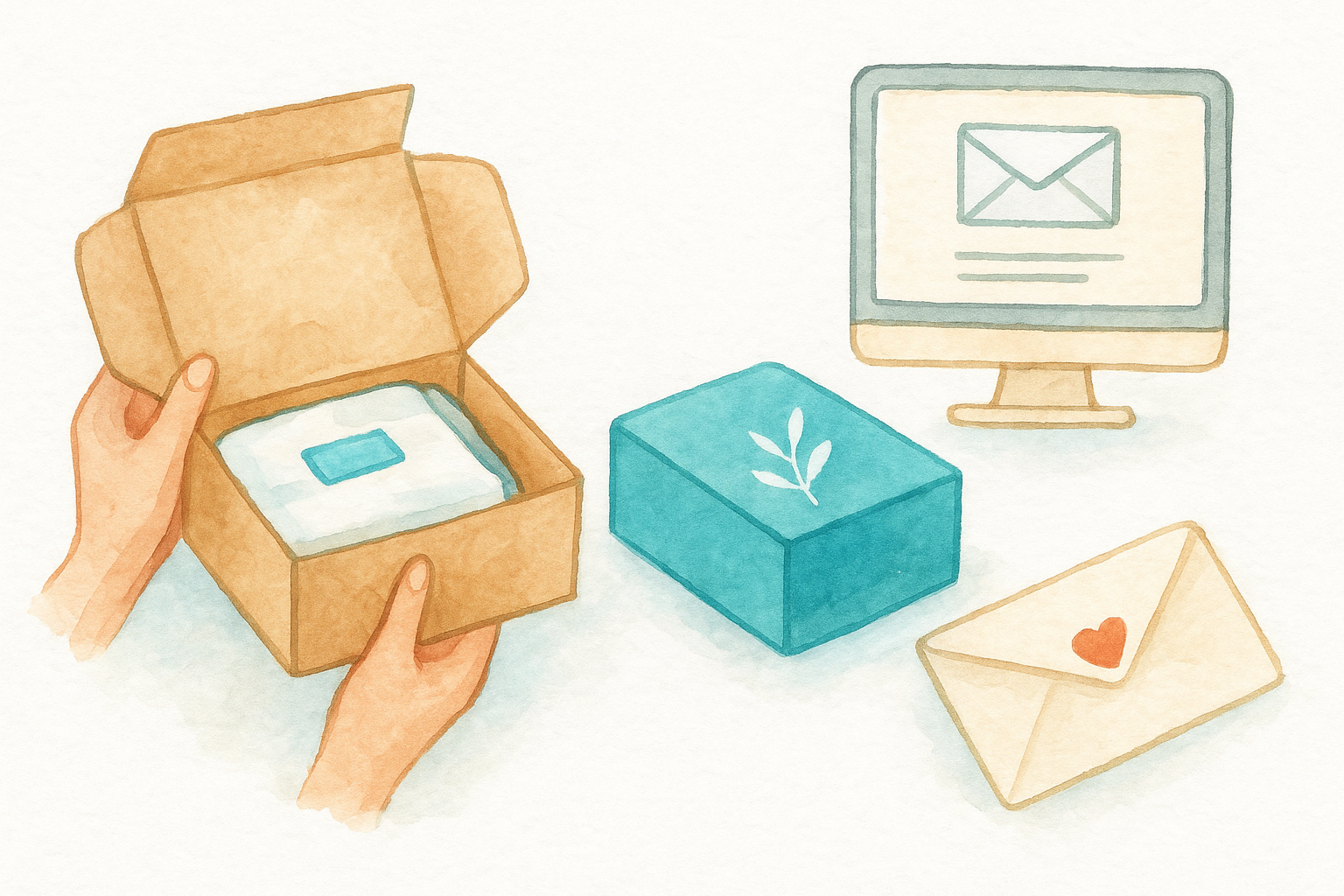
The unboxing moment is often the first time a customer physically interacts with your brand, so make it count.
Consistency across site, email, support, and returns
Consistency builds trust. Your site experience, email tone, support responses, and returns process should all feel like they come from the same brand. Inconsistency at any single point erodes confidence and accelerates churn. Auditing each touchpoint regularly helps you catch gaps before customers do.
Metrics to watch: conversion rate, return rate, NPS
Three numbers give you a clear read on brand experience quality:
- Conversion rate: shows how well your site turns visitors into buyers
- Return rate: flags mismatches between customer expectations and the actual product
- Net Promoter Score (NPS): captures how likely customers are to recommend you after the full experience
4. First-party customer data you can actually use
One of the most overlooked benefits of direct to consumer selling is data ownership. When a retailer sells your product, they keep the customer data and you get none of it. Going direct means you capture every interaction, from browsing behavior to purchase history, giving you a foundation for smarter decisions.
What first-party data you get in DTC that retail hides
Retail partners never share who bought your product, how often, or why they returned it. Direct channels hand you email addresses, purchase frequency, product preferences, and browsing patterns that you can act on immediately. That data gap in traditional retail is not just inconvenient; it is a real strategic blind spot.
How to collect data ethically and compliantly
Collecting data requires clear opt-in consent and transparent privacy practices that comply with regulations like CCPA. Make your data collection visible, not buried in fine print, and give customers a clear reason to share their information with you.
The customers who trust you with their data are the ones most likely to buy from you again.
Turning data into segmentation and personalization
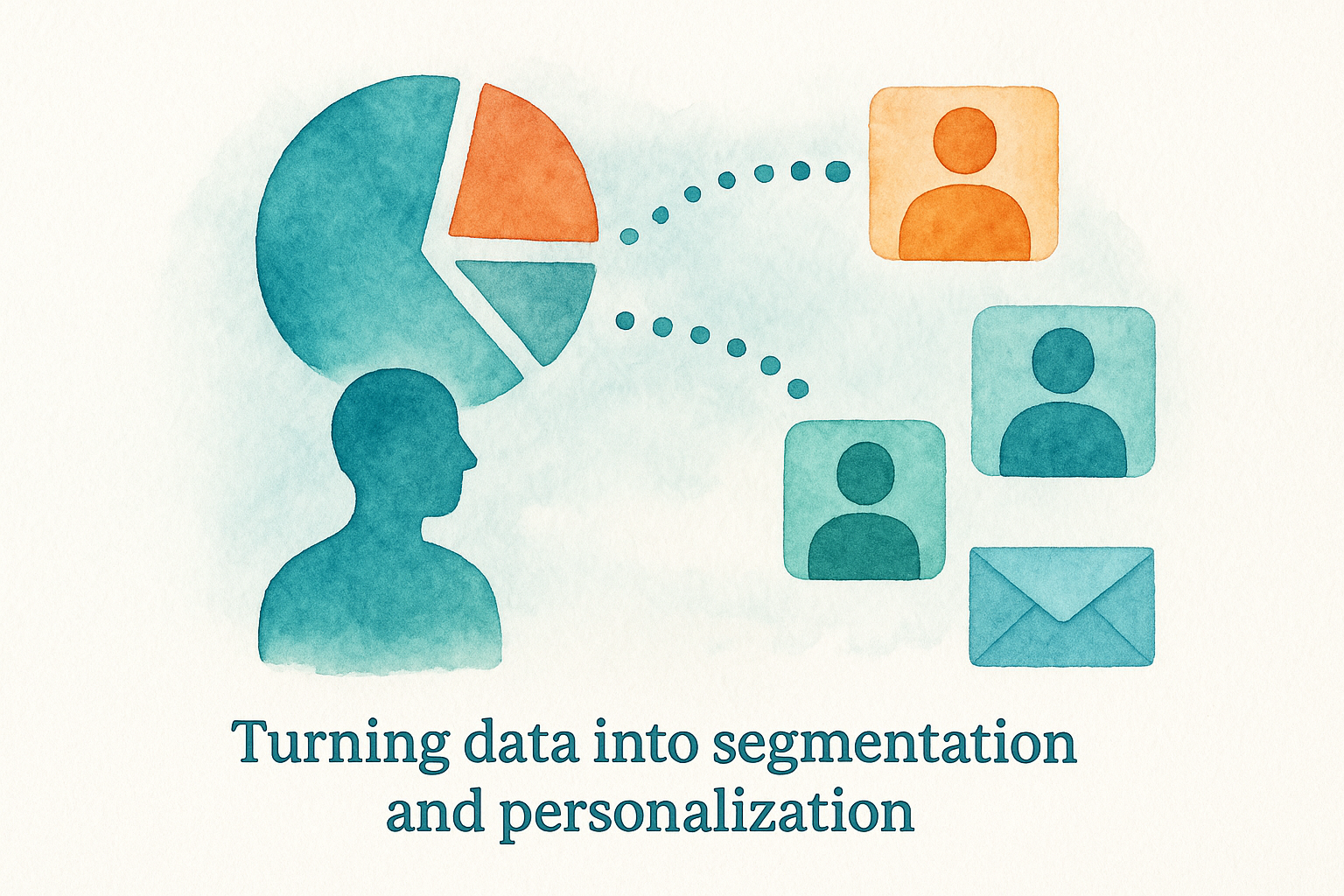
Segmented email campaigns and personalized product recommendations consistently outperform generic broadcasts. Use purchase history and behavior data to send the right message to the right customer at the right time rather than blasting your entire list with the same offer.
Metrics to watch: list growth, repeat purchase rate, LTV
Track email list growth rate and repeat purchase rate to gauge whether your data collection efforts translate into lasting customer relationships. Customer lifetime value (LTV) ties it all together by showing you the long-term return on every customer you acquire.
5. Faster product launches and iteration
Traditional retail requires long lead times, rigid planograms, and buyer approval before you can adjust anything. One of the practical benefits of direct to consumer selling is that you can move on a timeline that matches your customers' needs rather than a retailer's buying calendar.
Why DTC shortens the feedback loop
When you control the channel, customer signals reach you directly without filtering through a third party. A spike in support questions or a sudden drop in conversion tells you something is off immediately, giving you the ability to act in days rather than quarters.
How to test offers, bundles, and messaging quickly
DTC lets you run A/B tests on pricing, product bundles, and copy without asking a buyer for permission. You can launch a limited offer, measure the response, and make changes within a single week. Small controlled tests protect you from committing large inventory bets to unproven ideas.
Testing with a small segment before a full rollout is one of the most cost-effective habits you can build in a DTC operation.
Using surveys, support tickets, and returns as insights
Post-purchase surveys and support ticket patterns surface friction points that analytics alone miss. Returns are especially useful because they reveal which product claims are not landing with buyers, often before the problem appears in your reviews or ratings.
Metrics to watch: time to launch, sell-through, refund rate
Three numbers keep your iteration pace honest:
- Time to launch: how long it takes to move from concept to live product
- Sell-through rate: shows whether your demand forecasting is improving over time
- Refund rate: catches product-market fit problems before they compound at scale
6. Better retention through direct relationships
Retailers own the transaction; you own nothing that follows it. One of the clearest benefits of direct to consumer selling is that you control every post-purchase moment, which gives you a real opportunity to build loyalty that compounds over time.
How DTC creates more touchpoints after purchase
Every order you ship opens a direct line to the buyer after the sale. A retail transaction ends at checkout, but a DTC sale starts a relationship you can actively extend.
Follow-up emails, usage guides, and reorder prompts are touchpoints a shelf simply cannot replicate, and each one reinforces why the customer chose you in the first place.
Retention levers: replenishment, education, reminders
For products with a natural replacement cycle, replenishment reminders alone drive a meaningful share of repeat revenue. Educational content that helps customers get more from their purchase builds trust faster than any discount.
The customer who feels well-supported after buying is the customer most likely to return.
Building lifecycle messaging without spamming customers
Lifecycle emails tied to actual customer behavior outperform generic broadcast campaigns every time. Keep your send frequency tied to value delivered, not an arbitrary schedule, and your unsubscribe rate will reflect that discipline.
Metrics to watch: cohort retention, reorder rate, churn
Track these three key numbers to measure whether your retention efforts are actually working:
- Cohort retention rate: tracks how groups of customers behave over time
- Reorder rate: the share of buyers who come back for a second purchase
- Churn rate: flags when retention programs stop holding attention
7. More predictable demand and inventory planning
One of the practical benefits of direct to consumer selling is that you see real demand signals before they become inventory problems. When retail partners place orders, you're guessing at their guesses. DTC channels feed you actual customer purchase data that makes your forecasting far more accurate.
How DTC improves forecasting inputs
Your own sales data, traffic patterns, and repeat purchase cycles give you inputs that wholesale relationships simply cannot provide. You can see when demand spikes, which products drive the most reorders, and how seasonal patterns behave across your specific customer base rather than through a retailer's aggregated reports.
Using preorders, waitlists, and bundles to reduce risk
Preorders and waitlists let you validate demand before you commit to a production run. Bundles help you move slower products alongside your top sellers, which reduces carrying costs without requiring a clearance discount that signals poor quality to new buyers.
Validating demand before you produce is far cheaper than discounting inventory you can't move after the fact.
Balancing stockouts vs overstock in a DTC model
Stockouts damage trust fast. A customer who cannot buy when they are ready to often does not come back. Overstock ties up cash and compresses margins when you eventually need to clear it. DTC data helps you find the balance by showing you reorder frequency at the individual customer level.
Metrics to watch: inventory turns, stockout rate, cash conversion
Three numbers anchor your inventory planning and reveal where your forecasting accuracy still needs work:
- Inventory turns: how many times you sell through stock in a given period
- Stockout rate: the percentage of visits or orders blocked by unavailable products
- Cash conversion cycle: how long it takes to turn inventory investment into collected revenue
8. Diversified growth and resilience across channels
One of the less obvious benefits of direct to consumer selling is the protection it gives your business when external channels shift or disappear. Brands that depend entirely on a single retail partner or marketplace carry serious risk if that partner changes terms, cuts shelf space, or de-lists their products with little warning.
Why a DTC channel reduces dependency on retailers
When you build a direct channel, you stop relying on any single partner for your revenue baseline. Retailers change shelf allocations, stocking decisions, and margin expectations with very little notice. A healthy DTC operation gives your brand a stable revenue floor that holds even when wholesale relationships change.
Owning a direct channel is the most reliable hedge against the volatility of third-party retail.
How to run DTC alongside wholesale without channel conflict
Running both channels requires clear pricing rules and distinct product offerings so retail partners do not feel undercut. Your DTC channel can carry exclusive bundles or accessories that wholesale partners do not stock, which gives each channel a separate reason to exist without pulling customers from the other.
When retail still makes sense and how DTC supports it
Retail still drives brand discovery and physical product trials, especially in categories where buyers want to evaluate before purchasing. A strong DTC presence supports your retail pitch by demonstrating proven consumer demand with real data before a buyer ever asks for it.
Metrics to watch: channel mix, blended CAC, incremental revenue
Track your channel mix percentage over time to prevent over-reliance on any single source. Blended CAC and incremental revenue by channel show you where growth originates and whether your DTC investment produces returns independent of wholesale volume.
Quick wrap-up
The benefits of direct to consumer selling go well beyond saving on wholesale margins. When you own the channel, you control pricing, brand experience, customer data, and the full post-purchase relationship. Those advantages compound over time in ways that third-party retail simply cannot replicate, and each benefit reinforces the others rather than standing alone.
Building a DTC operation takes real work. You absorb fulfillment costs, customer support, and retention marketing that a retail partner would otherwise handle. But the long-term payoff, which includes higher margins, richer data, and stronger customer loyalty, consistently outweighs those operational costs for brands that commit to doing it well.
Start by locking down one advantage at a time rather than trying to overhaul your entire model at once. If your product needs a strong customer experience to succeed, that is a natural first step. Remi's custom night guard is a direct example of what a well-executed DTC model can deliver.

