
 Guards + Retainers
 Custom Night Guard
 Retainer
 Emergency Order

 Whitening
 Whitening Kit
 Teeth Whitening Gel
 Dual-Action Foam
 Cleaning + Care
 Ultrasonic Cleaner Pro
 Water Flosser
 UV Toothbrush Sanitizer
 Deep Clean + Freshening Tablets
 Accessories
 Guard Removal Tool
 Replacement Nozzles
 Bundles

If you grind your teeth at night or wake up with a sore jaw, you've probably searched for types of dental night guards and found a wall of confusing options. Soft, hard, dual-laminate, custom, boil-and-bite... it's a lot to sort through when all you want is a decent night's sleep without cracking a molar.
Here's the short answer: night guards fall into four main categories, and the right one depends on how hard you grind, whether you clench or grind, and how much you're willing to spend. Mild grinders often do fine with soft guards, while heavy clenchers usually need something sturdier like hard acrylic or dual-laminate.
Below, we break down each of the four types, what they're made of, who they're best suited for, and where custom-fit options beat generic drugstore versions. By the end, you'll know exactly which guard matches your grinding pattern, and why a properly fitted night guard protects your teeth far better than a one-size-fits-all mouthpiece ever could.
1. Custom night guards
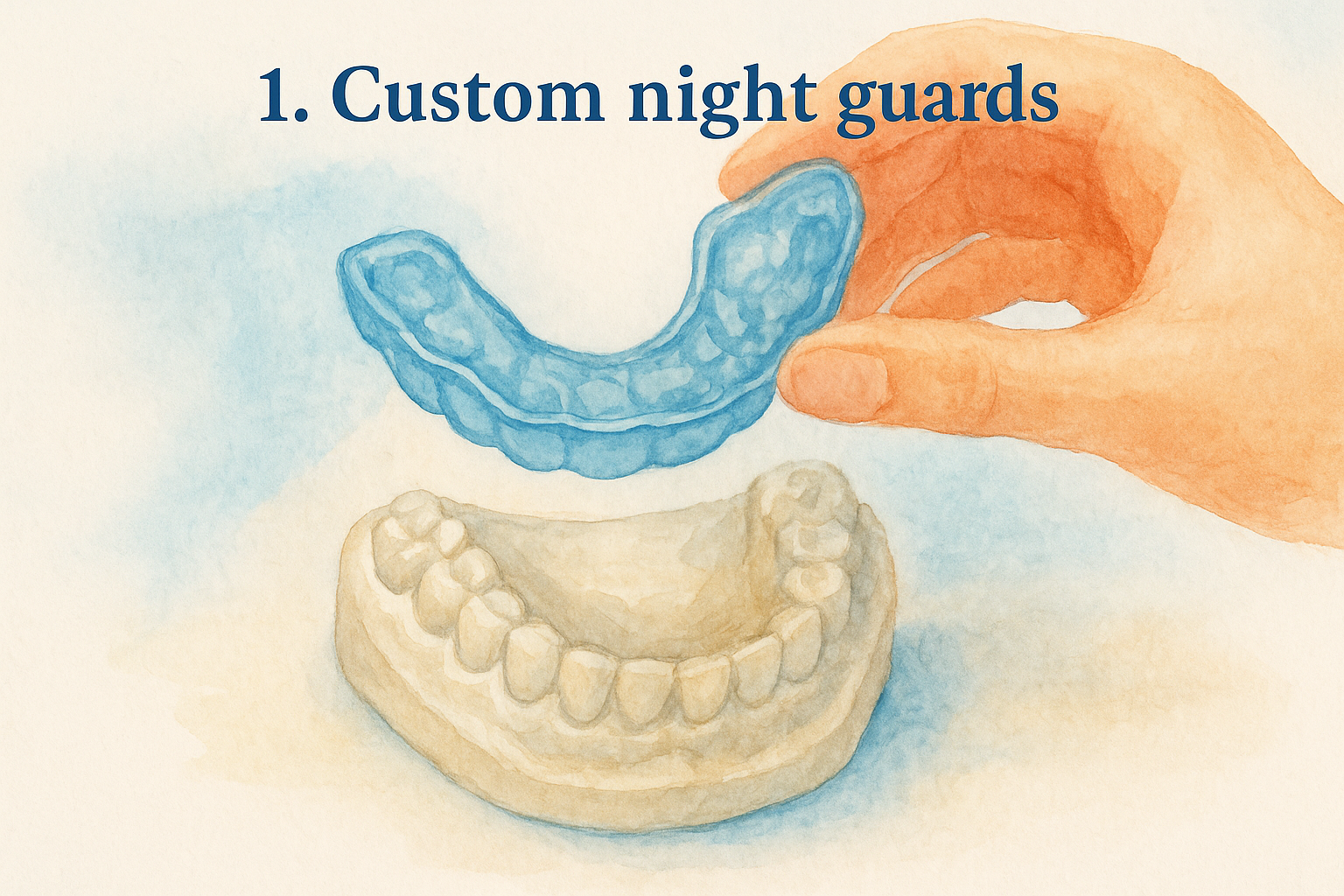
Custom night guards sit at the top of the list because they're built from an actual mold of your mouth, not a generic template. Remi's at-home impression kit works the same way a dental office impression would: you bite into a putty tray, mail it back, and a lab fabricates a guard that matches the exact contours of your teeth. This is the category most dentists recommend when grinding is frequent or severe, since fit determines how well a guard actually protects your enamel.
How it's made
Every custom guard starts with an impression, either taken in a dentist's chair or at home with a kit like Remi's. A lab technician pours that impression into a plaster model, then heat-presses or mills the guard material directly onto it. The result is a precise, tooth-specific mold with no guesswork about thickness or shape. Because the process relies on your actual bite, the guard accounts for crowding, gaps, and any dental work you've had done, something a stock guard simply can't do.
Who it's best for
Custom guards suit anyone with moderate to severe bruxism, jaw clenching, or a history of cracked or worn teeth from grinding. They're also the right call if you've tried a store-bought guard and found it bulky, loose, or prone to popping out overnight. People with crowns, bridges, or aligned teeth from orthodontic work benefit the most, since a poor-fitting guard can shift teeth or put uneven pressure on dental work.
A night guard only works as well as it fits, and nothing fits like one molded from your own teeth.
Comfort and durability
Comfort is where custom guards separate themselves from the pack. Because the material hugs your teeth instead of resting loosely against them, there's no shifting, no gagging on excess bulk, and no gaps where your jaw can still clench down hard. Thinner, more precise construction also means you can talk and drink water without the guard feeling like a foreign object. Durability follows the same logic: with even pressure distribution across your bite, custom guards typically outlast generic ones by a wide margin, often lasting one to five years depending on how heavily you grind.
Typical cost
Dental offices commonly charge $300 to $600 for a custom night guard, largely due to office visits, impression appointments, and lab fees layered on top of each other. Direct-to-consumer options change that math significantly. Remi's custom night guards run a fraction of that price by cutting out the in-office visit and shipping the impression kit straight to your door. For anyone comparing prices, that's the main reason custom guards no longer feel like a luxury reserved for dental office patients.
2. Soft night guards
Soft night guards are the mouthpieces you'll find at most drugstores, made from a flexible thermoplastic that molds slightly to your teeth with heat and water. They're the entry point for anyone who suspects they grind but hasn't confirmed how severe it is, and they're often the first product people try before spending more on a custom option.
How it's made
Manufacturers produce soft guards from a single sheet of pliable plastic, usually EVA (ethylene-vinyl acetate), formed over a generic dental arch. Some versions are boil-and-bite kits, where you soften the material in hot water and press it against your teeth for a rough fit. Others ship pre-formed with no customization at all, relying on a one-size-fits-most shape that rarely matches anyone's mouth exactly.
Who it's best for
Soft guards work best for mild, occasional grinders or people who clench lightly rather than grind with force. They also suit anyone testing the waters before committing to a custom guard, since the low upfront cost makes them a reasonable trial run. If you have moderate to severe bruxism, though, the material wears through fast and won't hold up.
Soft guards buy you time to figure out how bad your grinding is before you invest in something sturdier.
Comfort and durability
Comfort is a mixed bag with soft guards. The flexible material feels gentle against your gums initially, but that same softness means heavy grinders can bite straight through it within weeks. Durability tops out around three to six months for most users, and the guard often develops holes or thin spots exactly where you grind hardest.
Typical cost
Expect to pay $10 to $30 for a basic boil-and-bite soft guard at a pharmacy. That low price reflects the generic fit and short lifespan, meaning you'll likely replace it multiple times a year if you grind regularly.
3. Hard night guards
Hard night guards trade flexibility for maximum protection, molded from a rigid acrylic that barely gives under pressure. Dentists usually reserve this style for severe grinders who've already cracked a soft guard or worn through a dual-laminate one, since the acrylic can absorb intense clenching force without breaking down.
How it's made
Technicians fabricate hard guards from a solid sheet of dental-grade acrylic, heat-pressed over a plaster model of your teeth. The process resembles custom soft guards in that it starts with an impression, but the finished product cures into a rigid, unyielding shell rather than a pliable one. Some labs mill the acrylic instead of pressing it, producing an even tighter, more consistent fit.
Who it's best for
This style suits people with severe bruxism, TMJ complications, or a history of destroying every softer guard they've tried. It's also the go-to choice for heavy clenchers who need something that won't compress or thin out under nightly pressure.
When softer materials keep failing, a rigid acrylic guard is often the only thing tough enough to survive a heavy grinder's bite.
Comfort and durability
Hard guards take longer to adjust to since there's no give against your gums, but most people acclimate within a week or two. Durability is the real payoff here: a well-made hard guard can last three to ten years with proper care, far outpacing softer alternatives.
Typical cost
Dental offices typically charge $400 to $600 for a hard acrylic guard, reflecting the extra lab time acrylic milling requires. Direct-to-consumer labs can bring that price down substantially while keeping the same rigid material and custom fit.
4. Dual-laminate night guards
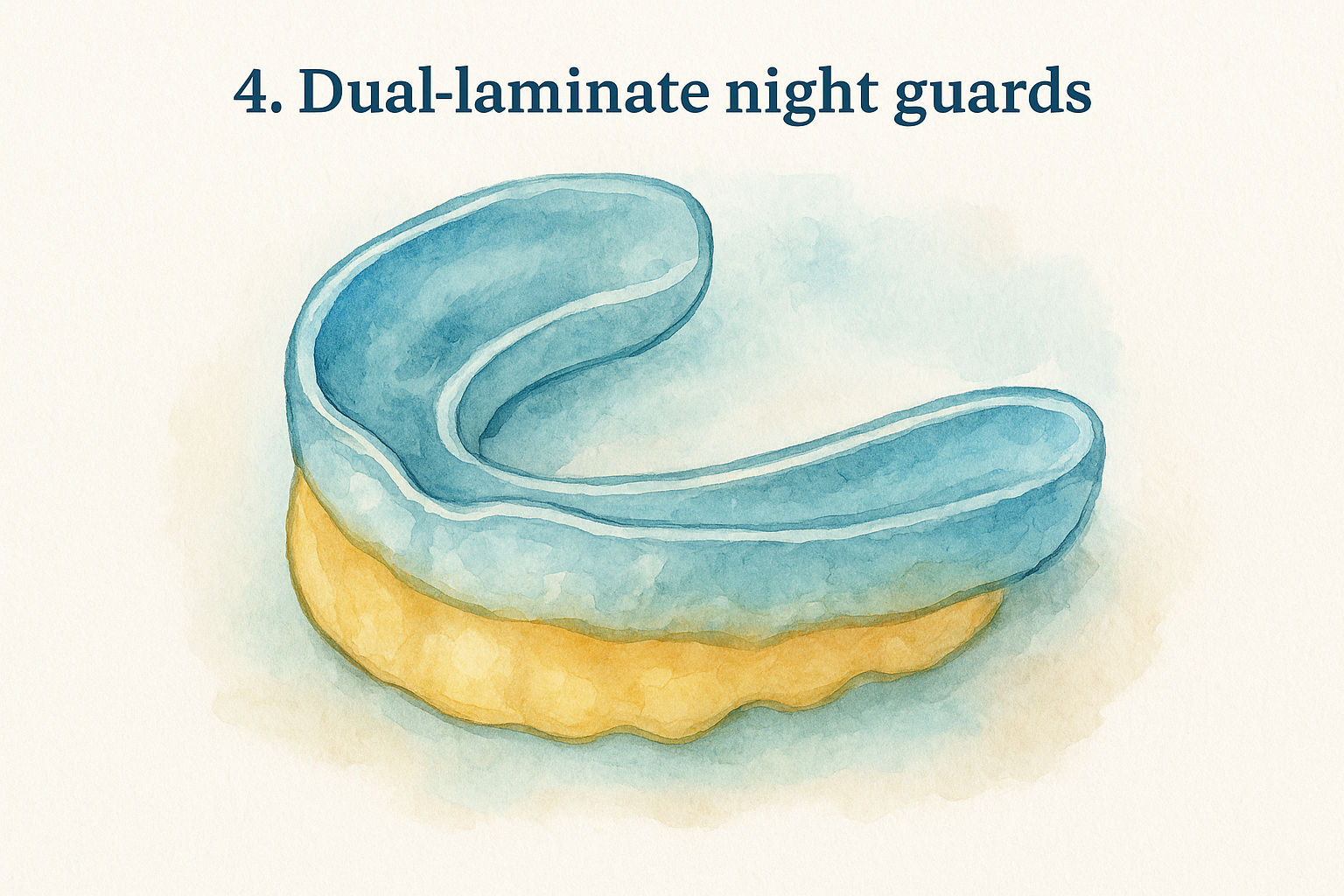
Dual-laminate night guards combine both worlds, a soft inner layer against your teeth and a hard outer shell facing your bite. This hybrid design gives you the cushioning of a soft guard without sacrificing the strength needed to withstand heavy grinding, making it a popular middle-ground choice among dentists.
How it's made
Labs construct dual-laminate guards by layering two different materials over a single impression, then fusing them under heat and pressure into one solid piece. Typically, a flexible EVA or silicone layer lines the inside where it touches your gums and teeth, while a rigid acrylic layer forms the biting surface. Because both layers bond during fabrication, the guard doesn't peel apart or separate the way a cheap two-piece product might.
Who it's best for
Grinders who clench moderately to heavily but find hard acrylic guards uncomfortable often land here. It also suits anyone who's tried a soft guard and worn through it too quickly, but doesn't want the adjustment period that comes with pure hard acrylic. Combination grinders, people who both clench and grind laterally, tend to do especially well with this style since it handles both movements without cracking.
Dual-laminate guards give you cushioning where you need comfort and rigidity where you need protection, all in one piece.
Comfort and durability
Unlike hard guards, dual-laminate versions feel gentle right out of the box thanks to that inner soft layer. Long-term durability holds up well too, typically lasting two to five years, since the outer shell resists wear while the inner layer prevents the guard from feeling bulky or irritating over time.
Typical cost
Expect to pay $300 to $500 for a dual-laminate guard from a traditional dental office. Ordering directly from a custom night guard company trims that cost considerably while keeping the same two-layer construction and custom fit.
Choosing the right night guard for your smile
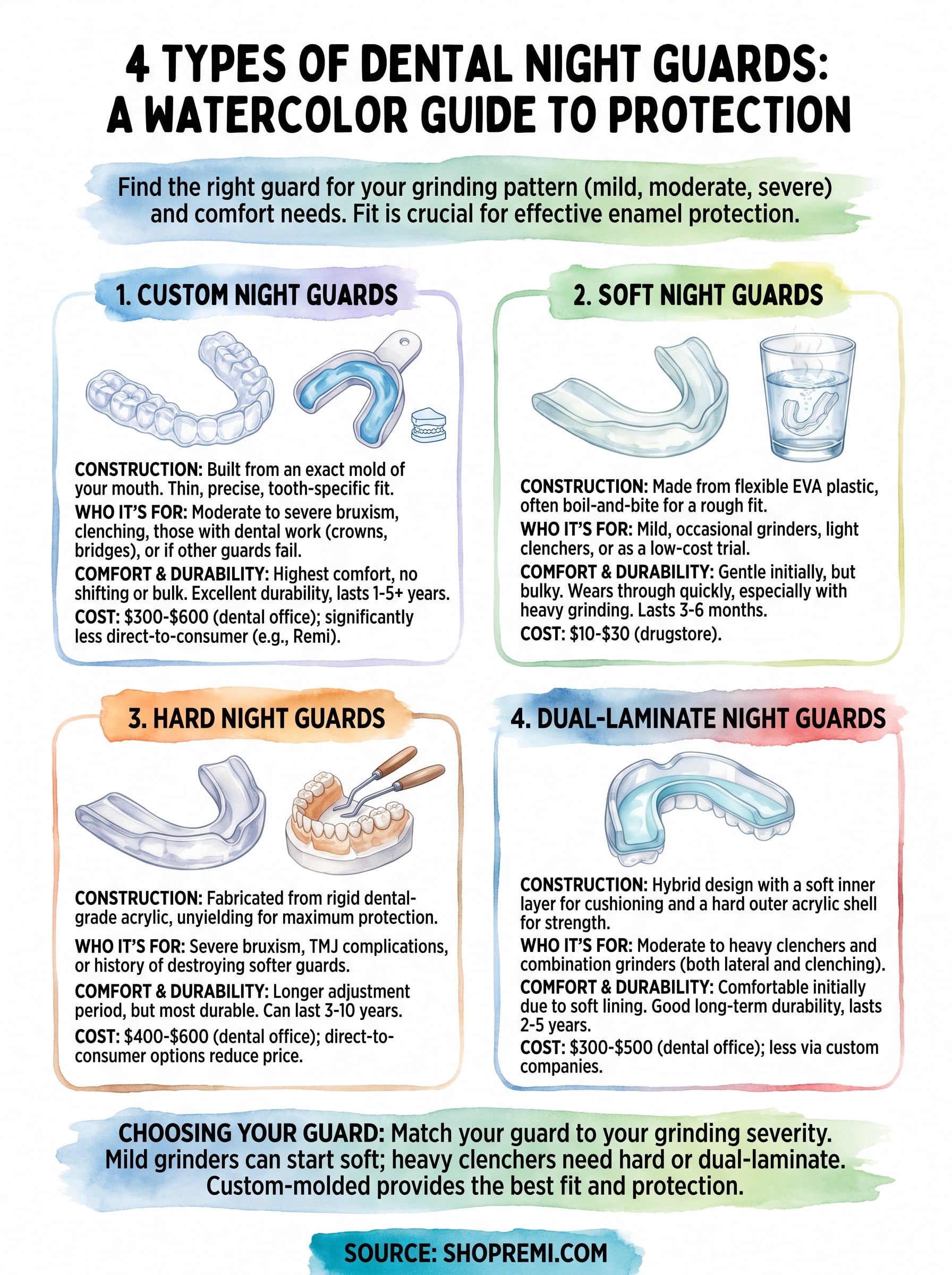
Matching your guard to your grinding pattern matters more than picking the priciest option on the shelf. Mild grinders can start with a soft guard and see how it holds up, while heavy clenchers and combination grinders need the durability that hard acrylic or dual-laminate construction provides. Anyone dealing with crowns, orthodontic work, or a track record of destroying cheaper guards should skip straight to custom.
Whatever category fits you, fit is the variable that decides whether a guard actually protects your teeth or just sits in a drawer after week one. Custom-molded guards solve that problem by building the fit around your exact bite instead of a generic template. If you're ready to stop guessing and get something built for your mouth specifically, check out Remi's custom night guards and get a dental-grade fit shipped straight to your door.

